1
Instructor Manual
Copyright © 2015 by PEC/Premier Safety
Operations, LLC
Revised July 7, 2015
All rights reserved. Printed in the United States of
America. Per the United States Copyright Act of
1976, no part of this publication may be reproduced,
stored in a retrieval system, or transmitted in any
form or by any means, electronic, mechanical,
photocopying, recording, scanning, or otherwise,
except as permitted under Section 107 or 108 of the
1976 United States Copyright Act, without the prior
written permission of the Publisher.
All trademarks and registered trademarks are the
property of their owners. Various photos and videos
used in this program are accredited to PEC Safety,
Shutterstock, and the United States Armed Forces.
Disclaimer: Course participants will not have met the
requirements to work in H2S environments above the
Occupational Exposure Limits (OEL) until such time
as the company provides and documents additional
applicable training required by 29 CFR, including
medical evaluations, fit testing, and use of respirators
and monitor and rescue equipment specific to the
workplace.
PEC Safety
233 General Patton Avenue
Mandeville, LA 70471
Phone: (800) 892-8179
Fax: (985) 892-8114
Website: www.pecsafety.com
Title: Hydrogen Sulfide 4 Hour End User
Published by: PEC Safety
PEC Safety Writing Team
Safety Analyst
Whitney Green
Writer-Editors
Catherine Ebey
Lauren Parrish
Project Assistants
David Freese
Andrew Reyes
Graphic Designers
John Simon
Jenny Woods
Subject Matter Expert
Richard Emberling
Contributors
Eric Rosemann
Dennis Schmitz
PEC Safety produces safety training materials
relative to the oil and gas industry regulations as
set forth by the Occupational Safety and Health
Administration and other regulatory agencies.
It is the goal of PEC Safety to provide current,
comprehensive materials that promote a culture of
safety and safety practices in the work and personal
environments. While instructors may choose to
supplement course materials with additional
information, it is imperative that regulations outlined
in PEC Safety course materials be covered in their
entirety.
Course Goal
Upon course completion, students will gain the
necessary knowledge to work safely in environments
contaminated with hydrogen sulfide. This course is
intended for oil and gas industry workers who may
come in contact with hydrogen sulfide during their
regular job duties.
Foreword
Instructor’s Foreword
Course Objectives
Upon course completion, students will be able to:
• Identify the hazards associated with
hydrogen sulfide
• List the major properties of hydrogen
sulfide
• Name common sources of hydrogen sulfide
• Discuss facility engineering controls
• Discuss safe workplace practices involving
hydrogen sulfide
• Describe the importance of confined space
entry procedures
• List hydrogen sulfide exposure limits
and the personal protective equipment
requirements for each limit
• Recognize symptoms of hydrogen sulfide
exposure
• Recognize warning signals for hydrogen
sulfide detection systems to be used
• Describe the correct use of monitoring
equipment
• Give examples of proper rescue and first
aid techniques for victims of hydrogen
sulfide exposure
• Name the essential parts of a hydrogen
sulfide contingency plan
• Explain the significance of wind direction
indicators
233 General Patton Ave. Mandeville, LA 70471 | 1.800.892.8179 | www.pecsafety.com
page iii
Company Responsibilities
In addition to presenting PEC Safety’s Hydrogen
Sulfide End User course material, companies must
complete the following tasks to be in compliance
with OSHA’s regulatory requirements:
• Verify that workers have completed a
hydrogen sulfide training program before
working at a facility
• Provide refresher hydrogen sulfide training
for all workers annually
• Cover site-specific hydrogen sulfide training
for individual facilities
• Implement a respiratory protection
program that conforms to the OSHA
Respiratory Protection standard, 29 CFR
1910.134
• Train workers in the required elements of
29 CFR 1910.134
• Make sure workers receive site-specific
contingency plans specifying the quantity
and location of available respiratory
equipment
Hydrogen Sulfide End User | © 2015 PEC Safety | pub. July 2015
• Provide hands-on training to workers on
the use company-provided self-contained
breathing apparatuses, hydrogen sulfide
gas detectors, and resuscitation equipment
correctly in the field
page iv
Course Materials
• Copy of the company Contingency Plan
(optional)
• Tests, SITAS, Answer Keys, and
Supplemental Answer Sheets
• Hydrogen Sulfide End User Student Manual
• Hydrogen Sulfide End User Instructor
Manual
• PowerPoint Presentation
Introduction2
Detection and Monitoring Methods22
•
Regulations and Standards
2
•
Training22
•
Responsibilities 3
•
Fixed Monitor Service and Calibration 23
•
Training3
•
Fixed Monitors
23
•
Personal Monitors
23
•
Portable Monitors
24
Sources of Hydrogen Sulfide
4
Physical and Chemical Properties5
Routes of Exposure
•
Limits of Exposure
Health Effects
7
7
8
•
Acute Toxicity
9
•
Chronic Toxicity
9
Communicating the Hazards of
Hydrogen Sulfide
10
•
Warning Signs and Alarms
10
•
Engineering Controls
11
»»
Burning and Flaring 11
•
Sulfur Dioxide
12
•
Administrative Controls
12
»»
Hydrogen Sulfide Service
Operations15
»»
Drilling and Servicing
Operations16
»»
Production Facilities/Fluid
Transfer and Maintenance
18
»»
Offshore Operations
21
»»
Gas Processing Plants
21
Using a Gas Detector
25
•
Gas Detector Operation
26
•
Bump Testing 26
•
Calibration27
Respiratory Protection
29
•
Respiratory Protection Program
30
•
Training 30
•
Medical Evaluation
31
•
Fit Testing
31
•
Types of Respirators
32
•
Respirator Limitations
33
»»
•
Air Supply
34
Selecting Respirators for Use
233 General Patton Ave. Mandeville, LA 70471 | 1.800.892.8179 | www.pecsafety.com
34
page v
Table of Contents
Contents
Hydrogen Sulfide End User | © 2015 PEC Safety | pub. July 2015
Respirator Use
36
•
Respirator Inspection
36
•
Checking the Seal 36
•
Maintenance, Cleaning, and Storage 37
•
Immediately Dangerous to Life or
Health38
•
Respirators for Use with Hydrogen
Sulfide and Sulfur Dioxide
38
Hydrogen Sulfide in Confined
Spaces 39
Emergency Response 40
•
Contingency Plans
40
•
Dispersion Models
41
•
Immediate Action Plans
41
•
Rescue
41
•
First Aid 42
•
Post-exposure Medical Evaluation 45
Emerging Technology
45
Protect Yourself
46
Glossary
47
Acronyms and Abbreviations 50
page vi
Hydrogen Sulfide
End User
Introduction
Hydrogen sulfide, or H2S, is a hazard that can
creep up on you. You cannot see it, and if the
concentration is high enough, you will not even be
able to smell it. This toxic gas is colorless and collects
in low-lying areas. H2S is so powerful that it can
kill you with one breath. It is known as “The Silent
Killer.” In this course, we will review how you can
protect yourself and your coworkers from hazardous
exposure to H2S.
Regulations and Standards
Hydrogen Sulfide End User | © 2015 PEC Safety | pub. July 2015
Several government agencies regulate H2S exposure.
OSHA enforces safety regulations, lists exposure
limits for the gas, and has specific respiratory
protection requirements listed in 29 CFR 1910.134.
The National Institute for Occupational Safety and
Health (NIOSH) and the American Conference of
Governmental Industrial Hygienists (ACGIH) provide
exposure recommendations, and the American
National Standards Institute (ANSI) provides specific
practices to use to mitigate the hazards of H2S within
the oil and gas industry. The American Petroleum
Institute (API) writes recommended practices for
operations involving H2S in the oil and gas industry.
The Environmental Protection Agency (EPA)
formed two laws, the Superfund Amendments and
Reauthorization Act (SARA) and the Comprehensive
Environmental Response, Compensation, and
Liability Act (CERCLA), which specify the reportable
quantities (RQs) for hazardous materials. H2S has
an RQ of 100 lbs., and sulfur dioxide (SO2), a
byproduct of H2S combustion, has an RQ of 1 lb.
S
H
H
H2S molecule
For more information, see the following list of
standards that address H2S:
• ANSI Z 390.1-2006 (R 2010): Accepted
Practices for Hydrogen Sulfide (H2S)
Training Programs
• 29 CFR 1910.1000 Table 2
• API Recommended Practice 49:
Recommended Practice for Drilling and
Well Servicing Operations Involving
Hydrogen Sulfide
• API Recommended Practice 55:
Recommended Practices for Oil and Gas
Production and Gas Processing Plant
Operations Involving Hydrogen Sulfide
• Bureau of Safety and Environmental
Enforcement (BSEE) 30 CFR 250.490:
Hydrogen Sulfide
• Various state regulatory agencies, such
as Texas Railroad Commission and the
Oklahoma Corporation Commission
• US Coast Guard (USCG)
• Bureau of Land Management
• State OSHA Plans
• Environment Canada
• Workplace Hazardous Materials
Information System (WHMIS)
In addition to the federal agencies, states also have
their own regulations about H2S. If you are not sure
which regulations apply to you, consult your company
representative and your state’s code of law.
page 2
Training
Each person involved in a company’s operations
has certain responsibilities. Different responsibilities
apply to companies and workers.
Responsibilities
Company
Worker
Protecting workers from
H2S exposure
Attending H2S education
and training sessions
Identifying H2S hazards
Using controls and
following safe work
practices
Providing appropriate
training to all workers
Establishing safe work
practices relating to H2S
Monitoring H2S
levels throughout the
workplace
Providing PPE
specifically designed to
shield the workers from
effects of H2S
Using required PPE and
personal monitors
Reporting exposure
incidents
Using SWA when
necessary
Companies are responsible for training workers in a
way that every worker can understand. All workers
must receive appropriate training according to their
level of potential exposure to H2S. Training should
cover
• What to do in emergencies
• Your role in the H2S contingency plan
• Participation in drills
Workers should participate in drills that simulate an
emergency involving H2S where they can practice
performing their duties and enhance emergency
planning and readiness. These drills should be
realistic simulations where equipment is deployed,
communications gear is tested, and workers roleplay as rescuers and victims. After drills, contingency
plans should be revised and retested until those
responsible for the plan are confident the plan is
operational.
Developing contingency
plans in the event of an
accident/incident
Accounting for workers
Performing a thorough
check for ignition
sources in the area
before starting any
potentially hazardous
work
Providing at least one
worker qualified to
perform first aid and CPR
for H2S victims
Establishing and
enacting drilling fluid
treatment plans before
encountering H2S
Training is a necessary part of protecting workers
233 General Patton Ave. Mandeville, LA 70471 | 1.800.892.8179 | www.pecsafety.com
page 3
Hydrogen Sulfide End User
Responsibilities
Sources of Hydrogen Sulfide
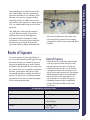
H2S can occur naturally or be produced during
industrial processes. H2S is produced in nature
primarily through the decomposition of organic
material by bacteria. Natural H2S can also develop
within low-oxygen environments, such as bogs,
swamps, and polluted water. H2S also forms part
of natural gas, petroleum and crude oil, sulfur
deposits, volcanic gases, and sulfur springs. When
people refer to certain crude oils as “sour,” they are
referring to H2S found in that crude oil.
During industrial operations, H2S can form as a
product, byproduct, or waste material. Companies
often attempt to recover byproduct H2S and convert
it into elemental sulfur or sulfuric acid, also known as
battery acid.
During oil and gas well-drilling operations, H2S may
be released at the shale shaker area, the circulation
fluid treatment areas, during tripping procedures, at
the wellhead, at the cellar, and onto the drilling floor.
Hydrogen Sulfide End User | © 2015 PEC Safety | pub. July 2015
Environments laced with H2S are known as “sour”
environments. Sour environments are defined as
Volcanic gases
A shale shaker
page 4
Some companies produce H2S for use in
manufacturing. These companies will have
containers of H2S stored in their buildings and
eventually transport the gas to other companies.
Each H2S container must have certain label elements
to warn workers of its dangerous contents. You may
see containers labeled with Globally Harmonized
System (GHS) or National Fire Protection Agency
(NFPA) ratings.
Physical and Chemical Properties
H2S may be called rotten egg gas, swamp gas, sour
gas, meadow gas, stink damp, devil’s breath, and
many other names. You may see it listed in chemical
manuals as sulfuretted hydrogen, hydrogen sulphide,
hydrosulfuric acid, or dihydrogen sulfide. In Spanish,
H2S is called “sulfuro de hidrógeno” or referred to as
“gas venenoso.” These names all refer to the same
toxic gas. H2S goes by so many unusual names
because of its distinctive smell at low concentrations.
The chemical formula for H2S is two parts hydrogen
and one part sulfur. H2S is an inorganic sulfide that
is highly toxic and colorless. Because of its toxicity,
the EPA has classified H2S as hazardous waste, and
it must be transported and disposed of as such.
Concentrations of H2S are measured in parts per
million (ppm) or percentages.
H2S is slightly heavier than air with a density of
approximately 1.5 grams per liter (g/L) and a vapor
density of 1.19 at 32°F at 760 millimeters of mercury
(mmHg). This means that H2S is approximately 19%
Parts per million
Percentages
1,000,000 ppm
100%
100,000 ppm
10%
10,000 ppm
1%
1,000 ppm
0.1%
100 ppm
0.01%
10 ppm
0.001%
1 ppm
0.0001%
heavier than air at an equal temperature and tends
to collect in low-lying areas because it will sink
below the lighter air you breathe. The gas will also
collect in confined spaces.
Areas of Potential H2S Exposure
Cellars
Manholes
Sewers
Confined
spaces
Manure pits
Tanks
Containments
dikes
Mud systems
Trenches
Pits
Vacuum
trucks
Heater
treaters
H2S will collect in any enclosed facility or piping
that contains H2S gas or H2S-contaminated fluids,
including the examples listed in the Areas of
Potential H2S Exposure chart.
H2S has a very low melting point (-117.2°F), so
it will almost always be a gas. H2S can also be
compressed into a liquid gas and transported by
sea, highway, rail, air, or pipeline.
H2S has a dangerous flammable limit of 4.3%-46%
vapor by volume in air, which means it is extremely
flammable. The gas can spontaneously combust
at high temperatures. H2S is also quite explosive.
It has an auto-ignition temperature of 500°F and
an extremely low flashpoint of -76.4°F. When H2S
contacts strong oxidizers, such as bleach or hydrogen
233 General Patton Ave. Mandeville, LA 70471 | 1.800.892.8179 | www.pecsafety.com
page 5
Hydrogen Sulfide End User
fluids that contain water and H2S. Water injection
and other enhanced recovery operations may
introduce bacteria into the pipelines that produce
soluble H2S. The H2S can accumulate over time and
leak into produced fluids. Treat drilling fluids before
drilling to prevent H2S buildup. Your company should
have a drilling treatment plan in place before you
ever begin work.
peroxide, it can cause fires, explosions, or metal
damage.
H2S is soluble in (can dissolve in) water and oil, but
its solubility decreases as the temperature of the
liquid rises. When H2S dissolves in water, it forms an
acid that can corrode metal.
Bleach and hydrogen peroxide are strong oxidizers
H2S causes severe corrosion to metals, such as
copper, carbon steel, steel, silver, brass, and bronze.
Metals housing H2S gas can suffer sulfide stress
cracking or become very brittle. If either of these
happen, a metal container, such as a pipeline, may
fail entirely, causing the gas to escape into the open
air. To avoid metal corrosion, treat drilling fluids (and
other products as necessary) to chemically reduce
the corrosive properties of H2S before you start
work.
Physical and Chemical Properties of H2S
Property
Characteristics
Hazards
Toxicity
Highly toxic
Causes severe health effects if inhaled
Density
Density: 1.5g/L
Collects in low-lying areas and confined spaces
Vapor density: 1.19 at 32°F at 760
mmHg
19% heavier than air
Hydrogen Sulfide End User | © 2015 PEC Safety | pub. July 2015
Flammability
Melting point
Combustibility
Reactivity
Flammable limit: 4.3% – 46%
vapor by volume in air
Extremely flammable
Melting point: -117.2°F (very low)
H2S is almost always in gas form, meaning it will
be invisible to you
Can be compressed into a liquid
and transported by sea, highway,
rail, air, or pipeline
If in compressed liquid gas form, can cause
frostbite upon contact
Auto-ignition temperature: 500°F
Quite explosive
Flashpoint: -76.4°F (extremely low)
Transported containers of compressed H2S may
explode if exposed to fire or handled carelessly
Reacts with strong oxidizers (e.g.,
bleach, hydrogen peroxide) to
cause fire, explosions, or metal
damage
Produces toxic SO2 gas when burned
Reacts with many metals (e.g., iron,
steel)
Can dissolve in water and oil
page 6
May spontaneously ignite at high temperatures
Forms metal sulfides that spontaneously ignite
when exposed to air
When dissolved in water, forms weak acid that
corrodes metal
Severely corrosive to metals, such as steel, carbon
steel, copper, silver, brass, and bronze
H2S is highly toxic, which means that exposure
to H2S can affect your health. H2S gives off an
unpleasant odor similar to rotten eggs that is
easily detected at low concentrations. At high
concentrations, H2S impairs and even temporarily
eliminates your sense of smell. Because of the
rapid onset of olfactory fatigue and paralysis (loss
Pipe corroded by H2S
of the sense of smell), do not rely on odor as the
only warning for the presence of H2S. At higher
concentrations, H2S also causes severe health effects
if inhaled.
Routes of Exposure
You can be exposed to H2S through inhalation or
skin contact. Practice good personal hygiene to help
prevent any damage to your health. The exposure
that poses the greatest danger to workers is death
by inhalation. Skin absorption of H2S is minimal, but
it is a concern when you are exposed to compressed
liquid H2S. Concentrations of H2S above 10 ppm
are generally regarded as unhealthy for continuous
exposure. Ten ppm of H2S is the industry accepted
exposure level. Check with your client and operator
for their accepted exposure level.
Limits of Exposure
OSHA, NIOSH, and ACGIH have exposure limits
set for H2S to protect workers from harm. Note
that their exposure limits are for air levels only.
If liquid H2S touches your skin, you can become
overexposed even if the H2S concentration in the
area is lower than the exposure limit. The Hydrogen
Sulfide Workplace Exposure Limits table lists the
exposure limits from each organization. If the
H2S concentration is at or above 100 ppm, it is
immediately dangerous to life or health (IDLH),
and you will need special PPE to work in that
environment.
H2S Workplace Exposure Limits
Organization
Exposure Limit
OSHA
ACC: 20 ppm
NIOSH (followed by API and ANSI)
REL: 10 ppm
IDLH: 100 ppm
ACGIH
TLV-TWA: 1 ppm
STEL: 5 ppm
233 General Patton Ave. Mandeville, LA 70471 | 1.800.892.8179 | www.pecsafety.com
page 7
Hydrogen Sulfide End User
Many metals (like iron or steel) will react with H2S
to form metal sulfides, which can spontaneously
ignite when exposed to air. For example, H2S will
react with iron or spent iron sponge (a treating
material) to produce iron sulfide, which can autoignite and burn when exposed to air. When exposed
to air, iron sulfide should be kept wet until it can be
disposed of.
Health Effects
When you inhale H2S, the chemical affects your
eyes, nose, brain, lungs, and the nerve pathways
that connect them to each other. Specifically, H2S
paralyzes the nerves that interpret smells for your
brain. H2S also impairs the part of your brain that
controls your breathing, which can cause you to
have trouble with or even stop breathing. Symptom
severity depends on the gas concentration and how
long you were exposed. Look at the Health Effects of
Exposure to Hydrogen Sulfide table, and notice how
the health effects become increasingly severe as the
H2S concentration increases.
H2S affects these nerve pathways
An H2S concentration of 1,000 ppm, only 1/10 of 1%,
will cause immediate unconsciousness and death.
Reactions to H2S can vary from person to person
because everyone is different. You may be more
susceptible or sensitive to the effects of H2S because
of any of several factors. These individual variables
include body mass, overall physical condition, age,
smoking habits, and personal biochemistry. For
example, if you have asthma, you will be more
sensitive to lower concentrations of H2S and may
have trouble breathing sooner than workers who do
not have asthma. Other variables that affect your
reaction to H2S include the exposure concentration,
frequency, and duration.
If you smoke cigarettes, drink alcohol, or take
prescription medications or illicit drugs, you may be
more sensitive to the effects of H2S. These substances
are toxins that your liver normally filters out of your
Hydrogen Sulfide End User | © 2015 PEC Safety | pub. July 2015
Health Effects of Exposure to Hydrogen Sulfide
1 ppm
Can smell H2S odor
10 ppm
Headaches, dizziness, nausea and vomiting, coughing, difficulty breathing
20 ppm
Irritated, inflamed eyes and irritated airways after 1 hour of exposure
50 ppm
Sense of smell eliminated after 15 minutes or more of exposure
100 ppm
Loss of sense of smell after 3 minutes
Respiratory tract and eye irritation
200 ppm
Sense of smell eliminated almost instantly
Burning eyes and nose
500 ppm
Unconscious after brief exposure
Victim will not be able to breathe if not treated quickly
700 ppm
Unconscious almost instantly
Breathing stopped
Victim will die if not rescued right away
1,000 ppm
Instant unconsciousness
Permanent brain damage or death
page 8
You can also become more sensitive to the
effects of H2S naturally. If you are repeatedly
exposed to low concentrations of H2S over a long
period of time, you can become sensitive to the
substance. When you are exposed again, you
may experience increasingly severe health effects
at lower concentrations. Wearing contact lenses
can also make you more sensitive to the effects of
H2S. Wearing contact lenses while working in an
H2S environment could cause eye irritation. Some
operators may not allow workers to wear contact
lenses on their site.
There are two categories of health effects: acute and
chronic. Acute effects occur after exposure to a high
concentration of H2S over a short period of time.
Chronic effects occur when you come into contact with
low concentrations of H2S over a long period of time.
Acute Toxicity
Acute exposure can lead to acute toxicity, the
health effects that are the result of a single dose or
exposure to a substance. A single breath of H2S at
about 1,000 ppm can paralyze your respiratory
system and result in convulsions, coma, and death.
To see what symptoms can result from acute toxicity
caused by H2S, read the Symptoms of Hydrogen
Sulfide Exposure table.
Chronic Toxicity
Chronic exposure is when you come into contact
with low concentrations of H2S over a long period
of time. Chronic exposure to H2S has been known
to cause low blood pressure, loss of appetite, weight
loss, and chronic cough. Neurological symptoms,
including psychological disorders, have also been
associated with chronic exposure. To see what other
symptoms can result from chronic toxicity caused
by H2S, read the Symptoms of Hydrogen Sulfide
Exposure table.
Symptoms of Hydrogen Sulfide Exposure
Sensitivity
Chronic Toxicity
Acute Toxicity
Loss of sense of smell
Eye irritation
Inflamed eyes
Excitement or giddiness
Headaches
Headaches
Eye irritation
Nausea
Fatigue
Coughing and sneezing
Loss of appetite (seen as
“anorexia” on SDS)
Irritability
Headaches
Nausea
Diarrhea
Dizziness and confusion
Staggering gait
Sensitivity to light [seen as “photophobia” on
Safety Data Sheet (SDS)]
Sleep disturbances
Respiratory tract irritation
Corneal blistering, pitting,
and opacity
Trouble sleeping
Trouble eating or
digesting food
Weight loss
Fluid in the lungs
Respiratory tract irritation
Fluid in the lungs (seen as “pulmonary edema”
on SDS)
Respiratory arrest
Cardiac arrest
Brain damage
Death
233 General Patton Ave. Mandeville, LA 70471 | 1.800.892.8179 | www.pecsafety.com
page 9
Hydrogen Sulfide End User
body. If you have taken or used any of these before
you are exposed to H2S, your liver has to filter
multiple toxins out of your bloodstream. As your liver
works harder to clean your blood, it may become
overwhelmed and stop metabolizing at its normal
rate, allowing toxins to linger and compounding the
effects of H2S on your body.
Communicating the Hazards of Hydrogen Sulfide
Warning Signs and Alarms
Companies use OSHA-required warning signs to
mark areas contaminated with H2S. These warning
signs correspond to the concentration of H2S within
the area.
All well-drilling sites will be classified based on
whether H2S is present or not. There are three
types of warning signs posted around H2S areas.
These three signs have color-coded flags based on
the severity of the hazard. These flags correspond
to classified API conditions. There are four API
classifications for H2S areas: No Hazard Condition,
API Condition I – Low Hazard, API Condition II
– Medium Hazard, and API Condition III – High
Hazard. These classifications are based on potential
or actual exposure to H2S. For information about
each hazardous API Condition, read the API
Hydrogen Sulfide Conditions table.
API Condition II flag shown with H2S warning sign
Hydrogen Sulfide End User | © 2015 PEC Safety | pub. July 2015
API Hydrogen Sulfide Conditions
API Condition
Suspected H2S
Concentration
(ppm)
Requirements
Minimum
Necessary Special
Safety Equipment
Assigned
Flag
No Hazard
Condition
Negligible or no
amount of H2S
No special equipment
required
None
None
API Condition I –
Low Hazard
Less than 10 ppm
Safety equipment readily
accessible
Oxygen resuscitator
Green
API Condition II –
Medium Hazard
10 ppm – 30 ppm
Audible and visual alarms
in place
Oxygen resuscitator
Safety equipment readily
accessible
API Condition III –
High Hazard
Greater than 30
ppm
1 metered H2S detector
Safety equipment readily
accessible
Oxygen resuscitator
Emergency procedures and
emergency contacts in place
At least 2 exits available
No untrained workers
allowed in area
Yellow
H2S detector
Warning signs posted
within 500 ft. of area at
all entrances in addition to
signs at entrances to space
Inspect all H2S safety
equipment before entering
page 10
H2S detector
1 pump H2S detector
Respiratory protection
3 wind socks or
streamers
2 NIOSH-approved
30-minute escape pack
SCBAs
Red
Engineering Controls
Companies use engineering controls as the first way
to protect you from H2S. Companies work from a
long list of controls to keep you from being exposed
to high concentrations of H2S. Training must include
discussion about site-specific engineering controls.
Workers must be familiar with the following:
• Design or remodeling of worksites
• Enclosed worksites
• Ventilation and monitoring equipment
• Metallurgical properties of equipment
• Burning, flaring, and venting of H2S
• Containment and dispersion
Most companies prefer to use local exhaust or
natural ventilation to control the amount of H2S in the
air. Enclosing the H2S producing process can also
keep H2S out of the air. All of these controls must be
in place to keep exposure as low as is reasonably
achievable.
Burning and Flaring
Some companies provide flaring or venting lines
when H2S could be present in concentrations
over 15 ppm. These lines provide an engineering
control designed to reduce worker exposure.
Companies may burn off the H2S gas to prevent it
from accumulating in the work area. Burning and
flaring H2S produces SO2. To protect yourself during
burning and flaring operations:
• Monitor
the SO2
concentration
in the air with
portable or
strategically
placed fixed
devices
capable of
detecting a
minimum of 2
ppm SO2
• Take readings
at least hourly
and any time
workers detect
SO2 odor or nasal irritation
Burning and flaring
• Use the protective measures specified in
your company’s H2S contingency plan if
the SO2 concentration in the work area
reaches 2 ppm
• Select and wear the appropriate PPE
following the guidelines listed in your
company’s H2S contingency plan
• Calibrate SO2 monitors every 3 months, or
as recommended by the manufacturer
233 General Patton Ave. Mandeville, LA 70471 | 1.800.892.8179 | www.pecsafety.com
page 11
Hydrogen Sulfide End User
Alarms you can hear and see must be set up
around H2S areas to coordinate with H2S monitors.
Alarms should sound when an H2S monitor picks
up a certain H2S concentration. Different alarms
should be set based on how much H2S is present.
The Typical Alarm Settings table shows you which
alarms go off at certain concentrations of H2S under
typical alarm settings. When you see flashing lights
or hear an alarm, leave the area immediately unless
you are trained and authorized to deal with an H2S
emergency.
Sulfur Dioxide
To protect yourself from SO2 exposure, API
When H2S burns, it forms another toxic gas, SO2.
Iron sulfide, a product of an H2S reaction with iron,
will also produce SO2 when burned. SO2 is a very
irritating toxic gas that is colorless and has a burned
match odor. Its vapor density of 2.26 at 32°F under
normal atmospheric pressure (760 mmHg) means
that SO2 is also heavier than air and will collect
in low-lying areas and confined spaces. When
someone inhales SO2, it produces sulfurous acid on
the nose and throat membranes and they suffocate.
Hydrogen Sulfide End User | © 2015 PEC Safety | pub. July 2015
SO2 exposure mainly affects your eyes, throat, and
lungs. As you are exposed to higher concentrations
of SO2, symptoms become increasingly severe.
Chronic exposure to SO2, or exposure to low
concentrations over a long period of time, can alter
a victim’s sense of smell and taste, cause exerciseinduced shortness of breath, predispose you to
frequent respiratory infections, and increase your
risk of developing chronic cold symptoms, known as
nasopharyngitis.
recommends you wear either a positive-pressure,
full-facepiece supplied air respirator (SAR) and an
escape pack, or an SCBA in any area with SO2
concentrations at or over 2 ppm over an 8-hour
time-weighted average (TWA). OSHA sets its
permissible exposure limit (PEL) for SO2 at 5 ppm
over an 8-hour TWA. ACGIH recommends 0.25
ppm as a short-term exposure limit (STEL) averaged
over 15 minutes. The Sulfur Dioxide table shows how
symptoms become increasingly severe as you are
exposed to higher concentrations of SO2.
Administrative Controls
Administrative controls, or proper work procedures
and practices, are the second way companies
protect you from H2S. Administrative controls can
greatly reduce the number of H2S-related accidents.
Your company should verify that you are trained to
handle H2S environments and conduct site-specific
safety meetings (tailgate meetings).
S
O
O
SO2 molecule
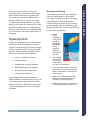
Observing a windsock will tell you what direction to evacuate in
Typical Alarm Settings
On Land
Offshore
page 12
Alarm Level
H2S Concentration
Warning Signal
Low alarm
10 ppm
Flashing amber light
High alarm
20 ppm
Intermittent siren
Low alarm
10 ppm
Flashing amber light
High alarm
20 ppm
Intermittent siren and flashing red light
Very high alarm
50 ppm
Continuous siren and flashing amber and
red light
Hydrogen Sulfide End User
Sulfur Dioxide
Concentration
in air in ppm
Exposure Limits and Typical Characteristics
0.25 ppm
ACGIH STEL
1 ppm
Burned match odor
May cause respiratory changes
2 ppm
NIOSH REL
API action level
5 ppm
Burning eyes, breathing irritation, and minor throat irritation
OSHA PEL
NIOSH STEL
12 ppm
Throat-irritating cough
Constriction in chest
Watering eyes
Nausea
100 ppm
IDLH
150 ppm
Extreme irritation
Can be tolerated for only a few minutes
500 ppm
Causes a sense of suffocation, even with the first breath
Rescue promptly and apply artificial ventilation and CPR techniques
1,000 ppm
Death may result unless rescued right away
Immediately start artificial breathing and CPR
Your company must provide you with site-specific,
hands-on H2S training before you may work in an
environment contaminated with H2S. After you have
completed all required H2S training, remember to
obtain all required work permits before you start
work in H2S environments.
controlling ignition sources, performing ventilation
and air monitoring, and using the buddy system.
During work, use the safe work practices we will
discuss in this section. If you feel that your work is
putting you in danger of death or serious physical
harm or could cause significant environmental harm,
it is your right (and the right of all workers) to use
Stop Work Authority (SWA) to stop work. Use SWA
as necessary. Attend and participate in company
provided safety meetings. These meetings should
be held before each job involving H2S. Make sure
you perform a job safety analysis (JSA) before you
start work. Now we will discuss other administrative
controls, including observing wind conditions,
Wind conditions tell you which way H2S will spread.
Stay aware of wind conditions and direction at all
times. Check the wind sock or streamer regularly
and any time you are unsure which direction the
wind is blowing. Whenever possible, start on the
upwind side when working on equipment. Make
sure you are not downwind of an H2S source. Have
an escape route, and know where the exits are in
case you have to get out immediately. Always move
crosswind and then upwind to get away from a
source of H2S. If you notice the smell of H2S or hear
an alert or alarm, stop breathing and don your
escape pack respirator, if applicable.
Make sure that all required permits are used and
that compliance is maintained with the requirements
of the permit.
233 General Patton Ave. Mandeville, LA 70471 | 1.800.892.8179 | www.pecsafety.com
page 13
Always ventilate before beginning work
Hydrogen Sulfide End User | © 2015 PEC Safety | pub. July 2015
Leave the area immediately going crosswind (at a
right angle) and then upwind.
Use non-sparking tools, non-sparking corrosionresistant ventilation systems, approved explosionPerform a thorough check for workers and ignition
sources in the area before you start any potentially
hazardous work. Notify your supervisor before
you start operations that could release H2S. If you
are working in a permit-required confined space,
maintain compliance with the permit requirements.
Ventilate work areas, vents, and purge lines on
vessels before beginning work. Always maintain
continuous air monitoring while working in confined
spaces. Never take shortcuts, and always follow all
procedures.
Use the buddy system when working in H2S areas.
When using the buddy system, workers are paired
off so that if one buddy is struggling, the other
buddy can assist or call for help. When you are
paired off, look out for your buddy. Make sure you
maintain contact with your buddy, and know where
they are at all times while in the H2S area. Keep all
non-essential workers away from the area to reduce
page 14
unnecessary H2S exposure. As a buddy, you must be
able to:
• Help your buddy with rescue operations if
trained
• Observe your buddy for signs of
hazardous exposure
• Periodically check your buddy’s PPE to
make sure it is still sound
• Notify the appropriate person if your
buddy needs emergency help
The buddy system is also a useful tool in other
hazardous situations. Having a buddy while you
enter confined spaces and hazardous areas is a
good practice. Make sure all workers working in
any of these situations are properly trained. Your
company may also have a lone worker policy. If
so, review the policy and ask your supervisor if you
have any questions.
Verify that proper safety equipment is available and
functioning. Make sure safety equipment is used
when necessary. Every worker must know where
safety equipment is stored and how to use it. Make
sure you are monitoring H2S conditions using an H2S
monitoring system.
A contractor was checking the oil level on a tank. He was using a metal wrench to remove an access panel,
when hydrogen sulfide inside the tank exploded, throwing him into his truck, which was parked 40 yds. away. He
suffered multiple broken bones, internal injuries, and burns over 85% of his body.
What went wrong?
1.
He was using a metal tool, which can cause sparks during work. Hydrogen sulfide is highly
explosive, so workers should use non-sparking tools around areas that may be contaminated
with hydrogen sulfide. [29 CFR 1910.106(e)(6)(i)]
Did you find anything else that may have contributed to this accident?
2.
There was potentially a lack of training on safe work practices.
3.
The worker should have continuously grounded himself by maintaining contact with the ladder or
handrail to prevent static buildup.
4.
Monitoring was not conducted, therefore the work environment should have been considered
IDLH.
5.
The worker was not wearing appropriate PPE, i.e. FRC and a respirator. He would have needed
the PPE because the concentrations of hydrogen sulfide were found to be high enough to support
combustion and would have far exceeded the PEL and there was no mention of respirator use.
To protect yourself and the equipment you are
working on, API recommends the following practices
for:
• Hydrogen sulfide service operations
• Drilling and servicing operations
• Production facilities/fluid transfer and
maintenance
• Offshore operations
• Gas processing plants
Hydrogen Sulfide Service Operations
Observe flow line and gathering line right-of-ways for
abnormal conditions conducive to pipeline failures,
such as those caused by excavation, construction,
trespassing, dramatic changes in landscape, or
surface erosion. Be cautious because you could be
exposed to H2S during excavation.
Inspect valves, flanges, gauges, connections, and
liquid storage tanks to see if they need repairs or
maintenance. Follow the maintenance schedule for
performing tank gauging, water line blowdown, line
repair, valve replacement, and sampling so that H2S
release hazards can be avoided.
233 General Patton Ave. Mandeville, LA 70471 | 1.800.892.8179 | www.pecsafety.com
page 15
Hydrogen Sulfide End User
Worker is Severely Injured in Hydrogen Sulfide Explosion
Test the gas phase of produced fluids periodically to
determine the H2S concentration. Assess significant
changes in wellhead pressure, gas-oil-water ratios,
flow rates, and similar parameters to prevent leaks
or failures. Test annuli of flowing wells at regular
intervals for any pressure changes because pressure
changes can indicate a down-hole failure of the
packer, tubing, or casing. Test relief valves and other
applicable components on pressure vessels according
to regulatory requirements or company policy.
Review your company’s corrosion monitoring program
to detect and mitigate internal and external corrosion
activity. Observe artificial lift wells for any change in
operating conditions that could cause leaks or failures.
Use visual observation, soap bubble testing, portable
detection equipment, and fixed monitoring equipment
to detect H2S leaks, especially in enclosed facilities.
Take necessary precautions during the following
operations because H2S may be present:
• Plugging and abandoning wells
• Hydraulic fracturing (also known as fracking)
• Snubbing
• Perforating (also known as perfing)
• Acidizing
• Fishing
• Tubing
• Wireline
Hydrogen Sulfide End User | © 2015 PEC Safety | pub. July 2015
A soap bubble test can detect small leaks
Drilling and Servicing Operations
Test tanks for H2S. If the H2S concentration exceeds
or could exceed 10 ppm during sampling or tank
gauging operations, more controls are needed and
workers must wear respiratory protection during
these operations.
When abandoning facilities, pipelines and flow lines
left in place should be purged and bullplugged, or
otherwise capped. Take precautions to prevent an
iron sulfide fire. Check vessels for the presence of
naturally occurring radioactive material (NORM).
Vessels must be flushed with water, purged, drained,
locked out and tagged out by blinding or isolating
equipment, and left open to the atmosphere.
page 16
• Any other drilling or workover operations
When performing a hydrochloric acid treatment on
a produced water injection well, the hydrochloric
acid can react with iron sulfide scale in the well
bore/rig tank to create H2S gas. Workers or the
supervisor should anticipate the potential H2S
hazard. Adequate mitigation steps should be
in place to protect workers from potential H2S
exposure. Inform all contractors and well-site
supervisors about the requirement to monitor LEL/
H2S when flowing back to an open tank. Make
sure workers onsite are equipped with personal
monitoring devices when required. Use a JSA before
this type of work to review the specific issues that
relate to the concentrations and procedures for that
site. Make sure company and contractor workers
know that acidizing procedures include the potential
hazard of H2S as a byproduct. Remind everyone that
they have SWA.
A worker was exposed to H2S gas while performing a hydrochloric acid treatment on a produced water injection
well. The worker was positioned on top of the rig tank, adding neutralizing agent to the fluids returning from
the acidized well. He was exposed to vapors from the tank, felt dizzy, and began descending the stairs from
the rig tank. It is believed that he lost consciousness while descending the stairs, falling to the ground at the base
of the tank. He immediately regained consciousness and with assistance was transported to the local medical
center. He was checked out and returned to work the next day. Readings taken at the rig tank shortly after the
incident indicated concentrations of 30 ppm H2S and during a re-enactment, readings of up to 80 ppm H2S were
generated while the neutralizing agent was being added. This field has consistently measured concentrations of
less than 1 ppm H2S.
Hydrogen Sulfide End User
A Worker Collapses During Acidizing
What went wrong?
1.
The hydrochloric acid reacted with iron sulfide scale in the well bore/rig tank, creating H2S gas. The
potential hazard of H2S was not anticipated by the workers or the job planner. Therefore, adequate
mitigation steps were not in place to protect the workers from H2S exposure. Isolated, similar
concentrations of H2S had been noted in past acid jobs but were not effectively communicated.
Did you find anything else that may have contributed to this accident?
1.
Discuss the recommended preventative actions submitted by the shown in the
PowerPoint with your instructor.
1.
Make sure well files and program templates indicate that pumping hydrochloric acid may create
or release H2S.
2.
Issue a Safety Alert on to increase H2S awareness.
3.
Inform all contractors and well site supervisors of the requirement to monitor for LEL/H2S when
flowing back to an open tank.
4.
Make sure workers on site are equipped with personal monitoring devices when required. 5.
Use a JSA before this type of work to review the specific issues relating to the concentrations
and procedures for that site.
233 General Patton Ave. Mandeville, LA 70471 | 1.800.892.8179 | www.pecsafety.com
page 17
6.
Modify the practice of flowing back live acid into an open tank. 7.
Modify the practice of adding neutralizer so workers are not exposed to vapors or gases from
the tank.
8.
Make sure company and contractors acidizing procedures include the potential hazard of H2S
as a byproduct.
9.
H2S may be released during a kick or burp during drilling or work over operations. A kick or
burp is an entry of water, gas, oil, or other formation fluid into the wellbore during drilling
or work over. It occurs because the pressure exerted by the column of fluid in the wellbore
is not great enough to overcome the pressure exerted by the fluids in the formation drilled.
Hydrogen Sulfide End User | © 2015 PEC Safety | pub. July 2015
Production Facilities/Fluid Transfer
and Maintenance
Production tanks and facilities can contain
substantial volumes of hydrocarbons and H2S.
When performing tank gauging, thieving (sampling),
fluid transfer, or maintenance operations, special
precautions should be taken to protect yourself
from these hazards. Also be aware that haulers
transporting production water are not required by
Federal DOT to label or placard their loads, even
though these tanks may contain an H2S hazard.
Products going into these tanks with concentrations
as low as 0.2 ppm could potentially create H2S
atmospheres that are above occupational exposure
levels (OELs) that require respiratory protection.
Concentrations of 2 ppm could potentially create
H2S atmospheres that would reach IDLH levels in the
tank headspace with a 50:1 ratio. Workers should
follow operator or company operating procedures
when they encounter these conditions. Operating
procedures could include:
• Grounding to bare metal before opening
hatches, valves, flanges, hoses, or pots
A pot is the catch pan that encircles the cam lock hose
connection that hooks up to storage tanks for drivers to
transfer product from the tanks to the trucks to transport
the product. There are also scrubber pots, or scrubbers,
that are placed where product is collected and either
separated or treated.
• Paying close attention when opening
fiberglass or tanks that are not grounded
• Standing upwind from the thief hatch or
source of the H2S
• Opening tanks downwind first and working
towards the upwind tanks last
• Keeping your head away from the tank
opening
• Waiting for the pressure to dissipate before
gauging, connecting hoses, or removing
valves and flanges
• Following JSA and SWA procedures
• Noting wind direction from a windsock or
streamer
• Using extreme caution on foggy days and
days with little or no wind, especially after
sundown
• Using non-spark-producing tools and
equipment
page 18
Non-pressure liquid storage tanks
Hydrogen Sulfide End User
233 General Patton Ave. Mandeville, LA 70471 | 1.800.892.8179 | www.pecsafety.com
page 19
A Worker Dies While Tank Gauging
A worker was gauging a tank when she realized the tank was full, so she started to divert the supply line to
another tank. The shutoff valve blew out, releasing sour crude and hydrogen sulfide. She tried to walk away
but only made it about 15 ft. before she was overcome by the gas and died. When investigators inspected the
incident, they found a personal gas monitor, a 30-minute SCBA, and a SAR sitting inside her vehicle, unused.
What went wrong?
1.
No air monitoring was performed. We know this because the worker left the gas detector in her
vehicle. Air monitoring must be performed before tank gauging.
[29 CFR 1910.134(g)(2)(i), API RP 55 Section 9.21]
2.
She was working alone around potentially high concentrations of hydrogen sulfide. Standby
personnel should have been present for air monitoring, and had the hydrogen sulfide
concentration been determined, standby workers should have been available for the entire
operation. [29 CFR 1910.134(g)(3)(i)-(vi)]
3.
She was not wearing respiratory protection and did not have her escape pack with her.
Respiratory protection must be worn when the area may contain hydrogen sulfide above the
PEL, as is commonly found when gauging tanks containing sour crude. [29 CFR 1910.134(a)
(2)]
Hydrogen Sulfide End User | © 2015 PEC Safety | pub. July 2015
Did you find anything else that may have contributed to this accident?
4.
There was a potential lack of training on safe work practices.
5.
There was a potential lack of training on the proper procedure to divert crude to a different
tank.
6.
There was a lack of training on the characteristics of hydrogen sulfide gas. Supply lines are
located at the bottom of tanks. With the first tank in a full condition, the gas would be pressured
out of the tank through the vent lines. Once leaving the vent lines, the gas (19% heavier than
air) would have settled on the ground near the tanks. This area inside the tank dike is typically
where the valve to divert the flow would be located. The tank battery dikes would help the gas
build up in this area, possibly contributing to the fatal atmosphere that the worker encountered.
page 20
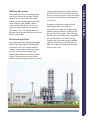
Minor problems in onshore environments can be
more critical in offshore environments. Offshore
operations are typically remote, have compact
facilities, and have limited escape and evacuation
routes. According to API and BSEE, offshore
workers must be regularly trained in the use of
oxygen resuscitation equipment. If a hazardous
H2S condition is known or suspected, boats and
helicopters should approach the site from an upwind
direction when possible.
Gas Processing Plants
Gas processing operations typically include higher
volumes of gas containing H2S, potentially higher
concentrations of H2S, and a greater number of
workers and more equipment. Many gas treating
and sulfur recovery processes happen in gas
processing plants. Because most of these methods
result in a concentrated H2S stream or reaction
product, companies using these methods must set up
a process safety management program according
to 29 CFR 1910.119. Your company should set up a
corrosion monitoring program to reduce internal and
external corrosion activity that can affect equipment
in H2S service.
If workers are working around gas and liquid
handling systems that could contain H2S
concentrations at or higher than 10 ppm, workers
should use special techniques to quickly spot and
plug any leaks in those systems. These monitoring
techniques include visual observation, soap bubble
tests, portable detectors, and fixed monitoring
equipment. API recommends regularly scheduled
inspection of equipment, such as pump seals, for
leaks. Your company must keep the results of leak
tests for at least 1 year.
A natural gas processing plant
233 General Patton Ave. Mandeville, LA 70471 | 1.800.892.8179 | www.pecsafety.com
page 21
Hydrogen Sulfide End User
Offshore Operations
Detection and Monitoring Methods
Your perception of H2S odors can give a false
sense of security to an already unseen hazard. H2S
will quickly paralyze your sense of smell at higher
concentrations. Do not depend on your sense of
smell to detect the presence of H2S. Below are the
readings, in ppm, at which you would detect the
odors of H2S. If you ever notice the smell of H2S,
hold your breath and leave the area immediately.
Companies must test your work area regularly
for H2S based on a company-created schedule
to keep you from being overexposed to it. Air
monitoring must be performed before each job and
continuously while workers are in the area. Your
company may use several different types of monitors
for air monitoring, including fixed monitoring,
portable monitors, and personal monitors. Only
workers who have been specifically trained in how
to use H2S monitors can use them.
Hydrogen Sulfide End User | © 2015 PEC Safety | pub. July 2015
Training
When training workers on methods of detection
and monitoring, the instructor must emphasize sitespecific types of detection and monitoring devices
and sampling strategies available. Training must
include an explanation of warning alarms and
emergency response procedures associated with the
specific types of detection and monitoring devices.
Training will go over:
• Types of detectors and/or monitors available
• Manufacturer’s recommendations
• Purposes, suitability, capabilities, limitations,
calibration, function testing, placement,
use, and maintenance of detectors and/or
monitors available
• Chemicals or other factors that can give
inaccurate results (based on the detection
method)
• Required hands-on training with the specific
H2S detector to be used in the field
page 22
Hydrogen Sulfide Concentrations with
Noticeable Odors
H2S Concentration
Odor
0.13 ppm
Minimal perceptible
odor
0.77 ppm
Faint but perceptible
odor
4.6 ppm
Easily detectable,
moderate odor
27 ppm
Strong, unpleasant
odor
28 – 100 ppm
Rotten egg odor or
sweet, acetone-like
odor
H2S monitors give readings in ppm. This makes it
easy to compare the readings to exposure limits,
which are also in ppm. You should receive a user
manual for each monitor. The manual should
include operating instructions, including how to
use the monitor, start up and warm up the monitor,
perform zero checks, calibrate, set and test the
alarm, perform preventative maintenance, check
performance, monitor recovery time after H2S
exposure, and perform troubleshooting.
Keep in mind that monitors cannot be exposed to
liquid spray or washdown, so clean them carefully,
and keep them out of liquid while conducting air
monitoring. The monitor will include a trouble signal
that tells you if the machine is malfunctioning. Check
your manual for this information, and make sure you
know the trouble signal for emergencies.
All H2S monitors must be serviced and tested
according to the manufacturer’s recommendations.
Monitors must be calibrated at least once every 3
months. The monitors may need to be tested more
often depending on which sector of the oil and gas
industry you work in.
During offshore operations, calibrate fixed monitors
according to the following requirements per MMS
30 CFR 250.490. When conducting drilling, drill
stem testing, well-completion, or well-workover
operations in areas classified as H2S present or H2S
unknown, detectors must be tested at least once
every 24 hours. When drilling, begin functional
testing before the bit is 1,500 ft. (vertically) above
the potential H2S zone. When conducting production
operations, test all detectors at least every 14 days.
Your company must maintain records of testing
and calibrations, including dates of testing, in the
drilling or production operations report at the
facility to show the present status and history of
each device. These records must be available for
inspection by BSEE personnel for offshore facilities.
Note that both portable and fixed H2S monitors must
meet Instrument Society of America (ISA)-S 12.15
requirements.
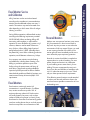
Fixed Monitors
Personal Monitors
Fixed H2S monitor
Workers must wear personal monitors to stay aware
of H2S concentrations in the air around them as
they work. Any time you enter an area where the
concentration of H2S may exceed 10 ppm, you need
to wear a personal monitor. If the alarm on the
monitor goes off, leave immediately and do not reenter without the proper respiratory protection.
Personal air monitors should take in samples that
represent the air a worker is breathing. You must
position the personal monitor’s air intake point
in your breathing zone to assess the air you are
inhaling. This zone encompasses the area just in
front of your face and shoulders, a hemisphere with
a 6-9 in. radius that centers on your nose. Check
with your client operator for their requirements.
To be effective, personal monitors must be attached
to workers near the neck and face as close to the
mouth and nose as possible to measure the air from
the breathing zone.
Fixed monitors continuously monitor H2S
concentrations in a specific location. On offshore
sites, monitors must be set up within 10 ft. of
equipment that may release H2S. Fixed monitors
are usually located in key areas, such as where
workers are likely to be present or where H2S may
be released or accumulate. Fixed monitoring systems
must have working alarms that you can both see and
hear that correspond to set concentrations of H2S.
Personal H2S monitor
233 General Patton Ave. Mandeville, LA 70471 | 1.800.892.8179 | www.pecsafety.com
page 23
Hydrogen Sulfide End User
Fixed Monitor Service
and Calibration
Two Workers Die from Hydrogen Sulfide Exposure
Two workers were getting ready to enter a confined space for maintenance work. They entered the confined
space, and after a few minutes, their personal monitors started to go off. There was hydrogen sulfide in the air.
Both workers ignored the alarm and continued to work. They were overcome by hydrogen sulfide and died.
What went wrong?
1.
The workers ignored the alarms for hydrogen sulfide, which caused their deaths. Workers must
wear personal monitors and follow the alarm in areas contaminated with hydrogen sulfide.
[1910.146(d)(5)(i), API RP Section 6.3]
Hydrogen Sulfide End User | © 2015 PEC Safety | pub. July 2015
Did you find anything else that may have contributed to this accident?
2.
There was a potential lack of training on safe work practices.
3.
There was a potential lockout/tagout (LOTO) issue.
4.
There was a lack of training for the attendant. 1910.134 requires that the attendant must
cancel the permit and evacuate the space when conditions exist that are outside the acceptable
entry conditions identified on the permit. The attendant is also required to be trained to
maintain communication with entrants. The attendant should also be trained to recognize
that symptoms of hydrogen sulfide or oxygen deficiency, which could have caused the
exposed workers to have poor judgement and decision making. The attendant should have
notified rescue personnel and evacuated the space.
Portable Monitors
Portable monitors, also known as gas detectors, are
designed to be placed between workers and the
source of H2S or in a confined space. Workers that
are required to use portable gas detectors must be
trained on their use, maintenance, and calibration.
Workers must receive hands-on training with the
specific H2S detector they will be using in the field.
Your company must document and keep a record
of all training you receive. Now that we know what
gas detectors are, let us learn how to use them in
the field. Alternatively, some companies may have
you use colorimetric gas detector tubes to monitor
H2S. Colorimetric gas detector tubes are made from
page 24
The breathing zone
of the gas or vapor in the sample because of
the fixed volume of sample, which is always 100
milliliters. Graduations printed on the tube showing
the gas concentration make it fast and easy to take a
reading with detector tubes. However, note that the
accuracy of a colorimetric gas detector tube reading
is +/- 5 to 25%.
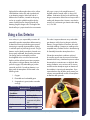
Using a Gas Detector
As a worker, it is your responsibility to monitor all
potentially hazardous atmospheres before entering
to determine if there are hazardous gases present.
Monitoring is especially important before working
in confined spaces or performing hot work. The gas
detector used to identify atmospheric hazards must
be a properly calibrated, direct-reading instrument.
Gas testing must be conducted by someone
knowledgeable in the use of the instrument and
familiar with the confined space. Most companies
will purchase a multi-gas detector that checks the
space for oxygen, LEL (combustible gas), carbon
monoxide, and H2S. If a multi-gas detector is not
being used, the atmosphere must be tested in the
following order:
1. Oxygen
This order is important because many combustible
gas detectors work by burning the gas inside the
detector. If oxygen levels are inaccurate, this could
cause false readings. Compare you readings to the
acceptable entry conditions shown in the Monitoring
for Potentially Hazardous Atmospheres chart.
If hazardous atmospheric conditions are found,
do not allow anyone into the area until it has been
deemed safe for entry. Ventilate the space to reduce
the atmospheric contaminants to a safe level. After
starting ventilation, wait a minimum of 10 minutes
and then test the atmosphere again to determine if
the ventilation is improving the atmosphere. If you
suspect that there may be other gases present, your
company must periodically monitor the atmosphere
to determine their presence.
2. Flammable and combustible gases
3. Suspected toxic gases (carbon monoxide
and H2S)
Monitoring for Potentially Hazardous
Atmospheres
Atmospheric
Condition
Acceptable Entry
Oxygen
19.5% to 23.5%
LEL (combustible gas)
0% to 10% (many
companies only allow
0%)
Carbon monoxide
0 ppm to 25 ppm
H2S
0 ppm to 10 ppm
233 General Patton Ave. Mandeville, LA 70471 | 1.800.892.8179 | www.pecsafety.com
Gas detector
page 25
Hydrogen Sulfide End User
high-quality borosilicate glass tubes with a uniform
inside diameter. Inside, each tube is packed with
a gas detecting reagent. When both ends of a
detector tube are broken, inserted into the pump,
and an air sample is pulled through the tube by
means of pulling back on the pump handle, the
detecting reagent changes color. The length of the
discolored layer is proportional to the concentration
Gas Detector Operation
All gas detectors will have different characteristics.
Be sure that you are familiar with the make and
model of the gas detector you will use. It is important
to read the user manual before you begin using a
gas detector.
Hydrogen Sulfide End User | © 2015 PEC Safety | pub. July 2015
When turning on a gas detector, make sure you
are in an atmosphere similar to the one you will be
working in (i.e. humidity, temperature, dampness,
etc.) to avoid false readings. Making sure the
atmosphere is clean and free of atmospheric
hazards is important because the gas detector will
auto-span (automatically calibrate for oxygen).
of tubing (or as per manufacturer recommendations).
Gas detectors equipped with a pump may require
a bump test. The detector will normally prompt you
to block the pump inlet during the startup process to
make sure the pump is working properly.
During startup, the gas detector will go through
an initial self-test. If the self-test or bump test is not
successful, the detector will not work properly. Even
if these tests are successful, you still have to conduct
a bump test to verify that each sensor is working
correctly.
Bump Testing
When testing the atmosphere in confined spaces,
the monitor will need to be equipped with pump
and suction tubing. This allows you to take direct
readings without putting the gas detector itself inside
the space. Take readings from various levels, such as
in the bottom, the middle, and the top of the space,
because certain gases can rest at different levels
within the space. For instance, H2S is heavier than
air, so it will settle in the bottom of the space, while
methane is lighter than air, so it will rise to the top.
Gases will stratify according to their vapor density.
How gases stratify will change with environmental
conditions, such as temperature and pressure.
Bump testing is a way to make sure a gas detector’s
alarms and sensors are functioning properly. This
process exposes the gas detector to a defined
concentration of gases. The gas detector needs to be
exposed to gases at a concentration that exceeds the
lowest alarm setting for each sensor. Exceeding the
lowest alarm setting concentration will activate the
alarm. If the alarm goes off, it verifies that all sensors
are working correctly and that the alarms are in
good working condition. Bump testing should be
performed before each use. Make sure you are in a
clean environment to perform a bump test. Bump test
according to manufacturer specifications.
When using a gas detector with pump and suction
tubing, allow enough time for the air to migrate, or
move, to the detector. Wait at least 1 second per foot
Follow the steps below to perform a proper bump
test:
1. Make sure you have an approved
calibration gas cylinder.
2. Turn the gas detector on using the normal
startup procedure.
3. Attach the proper flow-per-minute
regulator to the cylinder.
4. Attach the tubing to the calibration fitting
for your gas detector.
5. Open the regulator to apply calibration
gas to the gas detector.
Gas detector equipped with pump and suction tubing
page 26
While bump testing confirms that the sensors and
alarms are working properly, it does not confirm
the accuracy of the readings. Gas detectors must be
properly calibrated to determine the accuracy of the
readings.
Calibration
Always check the
expiration date
When you calibrate a gas detector, you are
exposing its sensors to known concentrations of
various calibration gases to make sure the detector
readings will be accurate. The concentration of the
calibration gases are listed on the calibration gas
cylinder. Performing a calibration on a gas detector
means you are comparing the readings of the gas
detector to concentrations listed on the cylinder.
Over time, a gas detector’s sensitivity will become
unbalanced. Performing a calibration gives the gas
detector the opportunity to balance its sensitivity.
If the sensors no longer accurately read the
concentration values, i.e., give readings that do not
match the gas concentrations listed on the calibration
cylinder, replace the sensors.
In order to properly calibrate a gas detector, you
will need calibration gas and a regulator. Check
the gas detector’s user manual to see which type of
calibration gas you need. Make sure your calibration
gas is not expired. Expired calibration gas can
give false readings. Regulators are used to control
the rate of gas released from the calibration gas
cylinder. The Choosing the Correct Regulator table
lists characteristics to keep in mind when choosing a
regulator.
Calibration gas cylinder
Many gas detectors now come with a docking or
calibration station. This is used to house all the
calibration equipment in one place. A calibration
station provides a hands-free calibration process
for the user. These stations are not universal, so
233 General Patton Ave. Mandeville, LA 70471 | 1.800.892.8179 | www.pecsafety.com
page 27
Hydrogen Sulfide End User
The gas detector should adjust to and accurately
read the concentrations of the different gases
contained in the calibration gas bottle. The alarms
should activate once the low alarm settings are
breached.
Choosing the Correct Regulator
Characteristic
What It Is?
Notes on Use
Flow rate
Volume of fluid that passes through a
given surface per cubic feet per second
Using a regulator with the wrong flow
rate will decrease calibration accuracy
Find the correct flow rate for the gas
detector you are using in the user manual
Demand flow
Pulls the gas from the cylinder as
needed
Use demand flow when your gas detector
has a built-in pump or when you are
performing an automatic calibration using
a calibration station
Fixed flow
Pulls the gas from the cylinder at a
fixed rate
Use fixed flow when your gas detector
does not have a built-in pump
Material type
Brass or steel
Use brass regulators for non-corrosive,
non-reactive gases
Use stainless steel regulators for corrosive,
reactive gases
Cylinder size
The cylinder size must match the
regulator size
Read the cylinder label to determine the
cylinder size for the regulator
Do not guess when choosing cylinder
size because the wall thickness and
pressure the gas is stored under cannot
be determined at a glance
Hydrogen Sulfide End User | © 2015 PEC Safety | pub. July 2015
Not all dimensions of cylinders will
indicate the same capacity
Tubing
Collects the calibration gas and funnels
it toward the air monitor
Tubing usually comes in 3-foot lengths
Check the tubing before each use to make
sure it remains defect-free
Most manufacturers recommend you
change the tubing annually
Calibration adaptor/
cup/cap
page 28
Directs and traps the calibration gas
The calibration adaptor/cup/cap forces
the gas to flow over the sensors of the
instrument
All calibrations must be performed according
to manufacturer instructions. The basic steps to
calibrating a gas detector are:
1. Gather the materials listed in the Choosing
the Correct Regulator table.
2. Turn the gas detector on using the normal
startup procedure.
3. Activate the gas detector’s calibration
feature. This varies from gas detector to
gas detector. Some require pressing and
holding two buttons simultaneously where
others require pressing one button for a
certain period of time. Check your user
manual for instructions.
4. Connect the appropriate regulator to the
appropriate calibration cylinder.
5. Connect the regulator and calibration
adapter using the tubing.
6. Apply the calibration gas from the
calibration cylinder by opening the
regulator when the detector tells you to
apply span gas.
7. Allow the gas to cycle through the detector
until it tells you that the calibration is
successful.
8. Follow the instructions on the detector
screen to set calibration dates and save the
calibration.
9. Document the calibration on the log.
Any time a gas detector is dropped or handled
in an unusually rough manner, perform another
calibration. It is important to be familiar with your
company’s policies about gas detector usage and
calibration requirements. Many companies use a
third-party vendor to perform their calibrations.
Even if the company does not want their workers to
perform calibrations, workers are still required to
perform bump tests before each use.
Respiratory Protection
If engineering and administrative controls cannot
keep levels of H2S below exposure limits, you must
wear appropriate PPE and respiratory protection.
PPE must be made from material that H2S cannot
pass through or weaken. Workers required to work
in areas contaminated with H2S concentrations over
10 ppm or their company’s action level must wear
supplied-air respiratory protection.
Respirators are the last line of defense between
workers and inhalable hazards. Respirators protect
workers from harmful dusts, fogs, fumes, mists,
gases, smokes, sprays, or vapors when engineering
and administrative controls cannot sufficiently protect
them. We will go over all aspects of respiratory
protection in this section so that you will have all the
tools you need to protect your lungs.
Your respiratory system consists of your lungs,
airways, and diaphragm. Together, these pull air
in from the atmosphere, take oxygen from that
air, and put it into your blood for use in almost all
body functions, then you exhale what is left over.
When your lungs pull oxygen from the air and
put it into your bloodstream, they are vulnerable
to any other inhaled particles or vapors that might
harm you. Thus, inhalation is one of the four main
exposure routes in which you can be exposed
to hazardous substances. If engineering controls
and administrative controls cannot keep you safe
from inhaling contaminated air, you need to don
respiratory protection.
Respirators are often needed for confined space
work. Other potentially hazardous respiratory
situations happen when using chlorine, and from
exposure to asbestos, H2S, or sandblasting. Welding
produces metal fumes that can be toxic and
hazardous if inhaled, particularly over long periods
of time, so respirators may be necessary to safely
perform welding operations.
233 General Patton Ave. Mandeville, LA 70471 | 1.800.892.8179 | www.pecsafety.com
page 29
Hydrogen Sulfide End User
make sure the specific model of the gas detector is
compatible with the calibration station.
Respiratory Protection Program
Your company should have a Respiratory Protection
Program in place. The program will include written
standard operating procedures for respiratory
protection. This program is necessary because
your company is responsible for identifying and
assessing respiratory hazards in the workplace.
Respirators must be worn in hazardous atmospheres.
Hazardous atmospheres are areas where there
are contaminants in excess of the PEL or TLV-TWA.
Contaminants can take the form of dusts, mists,
gases, vapors, or combinations of each.
Training
Your company must provide you with annual
respiratory protection training. You must be trained
in how to use a respirator. You must be taught how
to use, inspect, don, doff, and check the seals of the
respirator. Respiratory protection training must be
comprehensive and understandable. You will need
to update your training at least once a year, or
more often if any of the following situations happen:
workplace conditions or the type of respirator
changes, you are unsure of or lack the skills to use a
respirator properly, or any other situation where you
may need retraining.
This program must include:
• Respirator selection procedures
• Worker medical evaluations for those
required to use respirators
• Fit-testing procedures
• How to use respirators during routine tasks
and emergency situations
• Respirator maintenance
• How to put on and take off respirators
• Respirator limits of use
Hydrogen Sulfide End User | © 2015 PEC Safety | pub. July 2015
• Program evaluation procedures
This program is set up to help you protect yourself.
It will include steps on how to use each type of
respirator your company has available, when to use
which type, and what to do in an emergency. You
need to know these written procedures and which
respirators are available for you to use. If you ever
have any questions about respirator use or cannot
remember when you need to use which respirator,
ask your supervisor to go over the company’s
Respiratory Protection Program with you.
page 30
The respiratory system
You must be trained in proper respirator use.
Workers must take protective measures to prevent
respiratory PPE from being damaged. Respirators
that are not kept in good condition, not used
properly, or do not fit properly will not be effective
in preventing contaminants from entering your
respiratory system. If a respirator malfunctions,
workers must immediately leave the contaminated
area and report the malfunction and any changes to
• Both routine and emergency situational
respirator use
• How to respond when the respirator
malfunctions
• When a respirator is required and how
improper fit, usage, or maintenance can
compromise the effectiveness of the respirator
• How to properly store the respirator
• The general requirements of 29 CFR
1910.134
You must be trained in the following site-specific
topics before beginning work on the site:
• Location of supplied air respirators (SARs)
• Location of spare air cylinders, if
applicable
• Site-specific issues
• Situations that would require respirators
• Limitations and capabilities of positivepressure/full-facepiece respirators
• Limitations and capabilities of supplied air
respirators
• Brand/model/size of respirators available
Medical Evaluation
Your company must provide you and your coworkers
with a medical evaluation to determine if you can
use a respirator safely. This medical evaluation will
determine if you have any medical conditions that
would prevent you from using a respirator effectively.
Medical conditions that can pose problems with
respirators include lung, heart, and brain disease,
glasses or contact lenses, back injuries, and
claustrophobia.
A physician or other licensed health care provider
(PLHCP) must perform the medical evaluation
using the OSHA Respirator Medical Evaluation
Questionnaire included in Part A of Appendix C
in 29 CFR 1910.134. If the PLHCP that evaluated
you believes you need a follow-up exam, your
company must provide you with that exam. These
medical exams must take place during working
hours and at no cost to workers. You will receive a
copy of the evaluation from your PLHCP. For you
to use a respirator at work, your company must
receive a written recommendation from the PLHCP
that you can use that respirator, a statement that
the PLHCP has provided you with a copy of that
recommendation, any recommended respirator use
restrictions, and any recommendations for follow-up
exams.
You must be provided with an additional medical
evaluation if:
• You report medical signs or symptoms that
could affect respirator use
• A PLHCP, supervisor, or respiratory
program administrator says further
evaluation is needed
• Information from the respiratory protection
program, including observations made
during fit testing and program evaluation,
indicates a need for one
• There is a change in workplace conditions
that affects respirator use
Fit Testing
You must be fit tested before you can use a
respirator. Fit tests determine if a respirator fits you
properly. Fit tests are completed yearly and may be
required more frequently if there are any changes
to your facial structure that could affect the seal of a
respirator, such as dental surgery or drastic weight
changes. There are many common causes of leaks,
including head size, face shape, wrinkles, missing
dentures, and hollow temples.
For a respirator to fit, you must also meet certain
requirements. You cannot have any condition that
interferes with the face-to-facepiece seal or valve
function. If you wear glasses or safety goggles,
233 General Patton Ave. Mandeville, LA 70471 | 1.800.892.8179 | www.pecsafety.com
page 31
Hydrogen Sulfide End User
their medical condition. The company you work for
must also train you in:
the user
from another
source.
PortaCounts may be used for QNFTs
Hydrogen Sulfide End User | © 2015 PEC Safety | pub. July 2015
they cannot interfere with the seal either. You must
be clean-shaven because facial hair can interfere
with the respirator seal. The most common cause of
respirator seal leakage is facial hair. Follow your
company’s policy on facial hair. Improper fit, usage,
or maintenance can compromise the protectiveness
of the respirator.
There are two types of fit tests: a qualitative fit test
(QLFT) and a quantitative fit test (QNFT). A QLFT
passes or fails you in respirator fit based on how you
react to a test agent, usually an aerosol with a strong
smell. OSHA QLFT protocols include saccharin,
isoamyl acetate (also known as banana oil), Bitrex,
and irritant smoke. A QNFT assesses respirator fit by
numerically measuring how much outside air leaks
into your respirator. A PortaCount may be used to
perform a QNFT. A PortaCount works by measuring
the concentration of microscopic dust particles in the
ambient air and then measuring the concentration
of those dust particles that leak into the respirator.
The ratio of these two concentrations is called the
fit factor. See Appendix A of 29 CFR 1910.134 for
more information about fit-test protocols.
Types of Respirators
Two major types of respirators are air-purifying
respirators (APRs) and SARs. APRs filter out
contaminants from the existing atmosphere. Note
that APRs are not recommended for use in areas
contaminated with H2S. SARs supply clean air to
page 32
An SAR
gives the user
breathing
air from an
independent
source, such
as a cylinder
or compressor.
There are
two types of
SARs: hoseline
(or airline)
respirators
and selfcontained
breathing
Worker wearing an SCBA
apparatuses
(SCBAs). There are three types of SCBAs: work units,
rescue units, and escape packs. Escape pack SCBAs
are used for short-term emergency use, and are
also known as escape-only respirators, emergencyuse respirators, or auxiliary SCBAs. You must know
where these escape packs are located so that if
there is an emergency, you know where to get
appropriate respiratory protection quickly.
A hoseline (or airline) respirator has a hose attached
to it that draws air from an independent source that
is not carried by the user. The hoseline (or airline)
respirator limits motion based on how long the hose
is, and it may need to be used with a full facepiece
and an auxiliary SCBA. With an SCBA, the user
carries the breathing air source. This allows the
user unlimited motion, but forces the user to carry
the weight of the breathing air source. Cylinders
supply breathing air to SCBAs, while compressors
or cascade systems supply breathing air to hoseline
(or airline) SARs. A cascade system is designed
to provide breathing air to hoseline (or airline)
respirators. Make sure each bottle has been tested
before you go under air. Look for a tag.
• Compressed and liquid oxygen must meet
US Pharmacopoeia requirements
• Compressed breathing air must meet ANSI
Grade D requirements, which include:
--
An oxygen level between 19.5–23.5% O2
--
Condensed hydrocarbon content of 5
mg/m3 of air or less
--
Carbon monoxide content of 10 ppm
or less
--
CO2 content of 1,000 ppm or less
--
Lack of noticeable odor
Cylinders used to supply breathing air to SCBAs must:
• Be tested according to DOT requirements
• Be certified Grade D breathing air
• Not have moisture content over a dew
point of -50°F at 1 atmosphere of pressure
Respirator Limitations
All respirators are limited by their service life
and assigned protection factor (APF). Service life
refers to the length of time respiratory equipment
provides adequate protection to the wearer. When
you inspect your respirator, check the cylinder for
adequate service life for the work you are about to
perform. If the respirator has reached the end of its
service life, do not use it; tag the respirator out and
remove it from service.
Each type of respirator has an APF based on what
it is equipped with. A respirator’s APF refers to
the workplace level of respiratory protection that
a respirator or class of respirators is expected
to provide to workers. APFs go up based on the
respirator mask, facepiece, and mode. Respirators
with higher APF values are more protective.
Respirators that are put in positive-pressure mode
have higher APF values than those in negativepressure mode. SCBAs have the highest APFs. The
Assigned Protection Factors table describes the APFs
for each type of respirator.
• Be NIOSH-approved
Compressors used to supply breathing air to
respirators must:
Each respirator also has specific limitations inherent
in its design. One of the most common problems is
respirator seal leakage.
• Prevent entry of contaminated air into the
air-supply system
• Reduce moisture content
• Contain a suitable filter
• Have a tag attached that states the most
recent change date and the worker’s
signature
• Be NIOSH-approved
If you are using a SAR or an SCBA that contains
compressed air, do not refill the respirator with
compressed pure oxygen, or vice versa. Refill the
cylinder with ANSI Grade D air at the same oxygen
concentration that was in it before. Check the label
to make sure you are refilling with the right air
supply.
This respirator uses an air cylinder that meets ANSI Grade D requirements
233 General Patton Ave. Mandeville, LA 70471 | 1.800.892.8179 | www.pecsafety.com
page 33
Hydrogen Sulfide End User
Respirator protection systems must be NIOSHapproved. Breathing air must meet the following
requirements:
The Respirator Type Pros and Cons chart shows
the advantages and disadvantages of each type of
respirator.
Each type of respirator can only be used for so long;
the useful life of a respirator does not last forever.
• Physical properties
Air Supply
• Oxygen deficiency
The air supply in a SAR will depend on how much
air is stored and how many workers are breathing
from the air supply. Whether workers are using a
continuous air supply from a compressor system
or an air supply of multiple Grade D breathing air
compressed gas cylinders, it is important to put a
worker in charge of monitoring. Compressor systems
are monitored for proper function and to make
sure compressed gas bottles do not get completely
exhausted of air.
• Physiological effects
An SCBA’s air supply will vary between workers
depending on lung capacity, physical ability, and
their familiarity with wearing a respirator. Most
SCBAs will contain around 25 to 30 minutes of air.
The low air alarm is usually set at 25% of that air
supply, which gives workers time to get to a safe
area before they run out of air. If the low air alarm
sounds, workers should immediately leave the area.
Hydrogen Sulfide End User | © 2015 PEC Safety | pub. July 2015
user factors. Choosing the right respirator involves
determining the nature of the hazardous operation
and the type of respiratory hazards present. There
are many different types of respiratory hazards,
including:
Respirators that are not in acceptable condition
and cannot be repaired must be tagged and
removed from service. Repairs and refurbishments
are only allowed within the limitations set by the
manufacturer. Any technical portion, such as valves,
regulators, and alarms, must be repaired by a
trained technician. Any part used for repairs must be
supplied by the manufacturer and designed for the
particular respirator.
Selecting Respirators for Use
The company you work for must select respirators
based on the hazards within the workplace,
potential worker exposure to these hazards, and
page 34
• Concentration of toxic material or airborne
radioactivity level
• PELs and exposure limits
• IDLH or non-IDLH
• Health concentration of toxic material
When selecting a respirator, a respirator’s limitations
must also be taken into account. The respirator must
be NIOSH-approved. The respirator must meet the
required level of worker protection based on its APF.
The APF determines a respirator’s maximum use
concentration (MUC), or the max concentration of a
hazardous substance the respirator can protect the
user from. Your company must calculate the MUC
for the respirators available and select respirators
for workers that maintain worker exposure to the
hazardous substance at or below the MUC.
In addition to considering the respiratory hazards
involved in a job, those in charge of selecting
respirators must consider how close the nearest
area with respirable air is to the hazardous area,
how long workers will need to wear respirators to
get the job done, and what activities the workers
are performing. Other considerations include the
physical characteristics and functional capabilities of
the respirator, the respirator’s APF, and the extent of
the hazard.
If you wish to wear a respirator when you are not
required to do so, ask your supervisor for a copy
of Appendix D of 29 CFR 1910.134. Your company
must provide you with this appendix if you want to
use a non-required respirator, and it will contain
directions for use.
Type of
respirator
Quarter
mask
Half mask
Full
facepiece
Helmet/
Hood
Loose-fitting
facepiece
Demand mode
10
50
Continuous flow
mode
50
1,000
25/1,000
25
Pressure-demand
or other positivepressure mode
50
1,000
10
50
50
10,000
10,000
SAR
SCBA
Demand mode
Pressure-demand
or other positivepressure mode
Respirator Type Pros and Cons
Respirator
Type
Hoseline/Airline SAR
SCBA
Pros
Used above IDLH with an escape pack
Offers the highest APF
Used in oxygen-deficient atmosphere with escape pack
Not contaminant-specific
Not contaminant-specific
Breathing times are relatively
predictable
Low breathing resistance
Lightweight
Can be used in oxygendeficient, IDLH, and unknown
atmospheres
Air supply is carried on the
user’s body
Can access remote air supplies
via a hoseline connection
Cons
Hoseline can interfere with mobility
Cost
Hoseline can never be longer than 300 ft. from the last
high pressure connection
Requires a lot of support
equipment
May need to be used with a full facepiece and an
auxiliary SCBA
Can have a very limited
use duration under certain
circumstances
Tends to be a lot heavier and
bulkier than SAR
Usually requires more training
than SAR
233 General Patton Ave. Mandeville, LA 70471 | 1.800.892.8179 | www.pecsafety.com
page 35
Hydrogen Sulfide End User
Assigned Protection Factors
Before you use a respirator in the field, you must
know the:
• Location of hoseline/airline SARs and
SCBAs
• Location of spare air cylinders, if
applicable
• Situations that would require respirators
• Limitations and capabilities of positivepressure/full-facepiece respirators
• Limitations and capabilities of SARs
• Brands, models, and sizes of respirators
available
• Necessary site-specific respirator
information, if any
Respirator Use
Hydrogen Sulfide End User | © 2015 PEC Safety | pub. July 2015
Respirator Inspection
Inspect respirators
on a regular basis.
How frequently you
inspect a respirator
depends on what the
respirator is used
for. Respirators used
in non-emergency
situations must be
Low oxygen indicator
inspected before
each use and during
cleaning. Emergency-use respirators should be
inspected once a month and before and after each
use. Inspect emergency escape-only respirators
before bringing them into the workplace. When you
inspect a respirator, check its function, tightness of
connections, each component for wear and tear,
and elastic parts for dry rot and pliability.
When you inspect an SCBA, make sure the air
cylinders are fully charged. Check the air cylinder
pressure level to make sure pressure is at 90% or
higher before you use the respirator. Recharge the
cylinder if its pressure falls at or below 90% capacity
before you store the respirator. Also inspect the
regulator and warning devices to make sure they are
still functioning.
page 36
Keep records of emergency-use respirator
inspections. Document the inspection date, the
inspector’s name and signature, inspection results,
any required maintenance, and the respirator’s serial
number. All of this information should be available
on a tag attached to the respirator or in a report
filed at the facility. Your company must keep each
report on file until a more recent report is received.
Respirators that fail inspection should be removed
from service and thrown away or repaired. Only
trained workers can repair respirators, and some
repairs must be done by a manufacturer technician. If
a respirator needs to be repaired, let your supervisor
know so that the right person can make the repairs.
Checking the Seal
A user seal check determines if the respirator is
properly sealed to your face to keep out contaminated
air. There are two types of user seal checks: positivepressure checks and negative-pressure checks. You
must check the seal of your respirator each time
you use it. You can use either method to check the
seal, or you can follow the respirator manufacturer’s
instructions if they are equally effective.
To perform a positive-pressure check, close off the
exhalation valve with your hand and exhale gently
into the facepiece. The respirator is properly sealed if
none of your exhaled breath leaks out of the seal. For
1. Take the respirator apart. Disassemble
the facepiece by removing speaking
diaphragms, valves, hoses, and any other
parts recommended for cleaning by the
manufacturer.
2. Repair or throw away any defective parts.
Trainer demonstrating a user seal check
most respirators, you have to remove the exhalation
valve cover before closing off the exhalation valve.
Carefully replace the valve after the test.
To perform a negative-pressure check, close off the
inlet opening of the cartridge by covering it with the
palm of your hand or by replacing the filter seal.
Inhale gently so that the facepiece collapses slightly,
and hold your breath for 10 seconds. Note that
some cartridge inlets cannot be effectively covered
with the palm of your hand. If you have one of these
cartridges, cover the inlet opening of the cartridge
with a thin latex or nitrile glove. If the facepiece
remains slightly collapsed after holding your breath
for 10 seconds and no air leaks in, the seal fits.
Maintenance, Cleaning, and Storage
You may notice vapor or gas breakthrough by either
taste or smell, changes in breathing resistance,
or detecting facepiece leakage. If you notice this,
replace either the entire respirator or the expired
canister. If you cannot replace the respirator or the
expired piece, get it repaired.
To get the most out of each respirator, wash your
face and the respirator facepiece with soap and
water before and after each use. Respirators used
by more than one worker must be cleaned and
disinfected before they are worn by a different
worker. Clean and disinfect emergency-use
respirators and respirators used in training and fit
testing after each use.
3. Wash respirator parts in warm water
with a mild detergent or with a cleaner
recommended by the manufacturer. Use a
stiff bristle brush (but not a wire brush) to
remove any dirt.
4. Rinse respirator parts thoroughly in clean,
warm, running water. Drain. Make sure all
soap is removed because soap left behind
can cause skin irritation and respirator
degradation.
5. Hand-dry respirator parts using a clean,
lint-free cloth or allow them to air dry.
6. Put the respirator back together, replacing
parts when necessary.
7. Test the respirator to make sure all parts
are still working.
If the soap you used did not contain a disinfecting
agent, you must soak the respirator for 2 minutes
using either of the following cleansers before rinsing
the respirator:
• Diluted bleach (add 1 milliliter [mL] of
bleach to 1 liter [L] of warm water)
• Diluted iodine (add 0.8 mL of tinctured
iodine to 1 L of water)
• Other commercially available disinfectant
cleansers recommended by the
manufacturer
Respirators need to be stored in a safe place
away from dust, sunlight, extreme temperatures,
excessive moisture, and damaging chemicals to
prevent facepiece and exhalation valve deformation,
damage, and contamination. Emergency-use
respirators must be stored in a designated area and
according to manufacturer instructions.
233 General Patton Ave. Mandeville, LA 70471 | 1.800.892.8179 | www.pecsafety.com
page 37
Hydrogen Sulfide End User
To clean a respirator, follow these steps:
Note that before you can work while wearing a
respirator (also known as working “under air”),
your company must provide you with a medical
evaluation, fit test, and hands-on training that covers
site-specific respirator equipment use and includes
an evaluation of demonstrated proficiency.
Immediately Dangerous
to Life or Health
Hydrogen Sulfide End User | © 2015 PEC Safety | pub. July 2015
In addition to having established exposure
limits, most chemicals will have a specific IDLH
concentration. Once the established IDLH
concentrations are exceeded, the area is considered
to be an IDLH atmosphere. IDLH atmospheres
cause irreversible adverse health effects or impair
an individual’s ability to escape from a dangerous
atmosphere. Environments with less than 19.5% O2
are oxygen deficient and considered IDLH. Any
time workers are in an area that is IDLH, they are
required to wear a positive-pressure demand SCBA
or a hoseline/airline SAR with a full facepiece
and an escape pack. Any situation consisting of
an unknown hazard must be taken as an IDLH
environment.
company’s designated safe area. Either perform
the repairs yourself if you have been trained to do
so, or give the respirator to someone trained to
perform maintenance so that the respirator can be
repaired. All workers wearing SARs must use the
buddy system so their buddy can help them if their
respirator stops working.
Respirators for Use with Hydrogen
Sulfide and Sulfur Dioxide
To work in environments contaminated with over 10
ppm of H2S or at or over 2 ppm SO2, ANSI and API
recommend you wear one of the following forms of
respiratory protection:
• A positive-pressure, full-facepiece hoseline/
airline SAR and carry an escape pack
• A positive-pressure SCBA
ANSI-approved SCBAs must be provided to all
contractors and visitors if they must go into H2Sinfused areas. Offshore workers must use at least
two voice-transmission devices (“walkie-talkies”)
while wearing a respirator per 30 CFR 250.490.
If workers are using respirators within an IDLH
environment, one or more workers are required to
be on standby outside the IDLH area, and at least
one worker must be trained to perform first aid and
CPR. The standby workers must maintain visual,
voice, or signal line communication with the workers
inside the IDLH area. Standby workers may be
trained and equipped to rescue workers. If they are
not trained for rescue, they must notify a rescue team
if rescue is needed. If they are trained rescuers, these
standby workers must be equipped with pressuredemand SCBAs, or with hoseline/airline SARs and
auxiliary SCBAs, and retrieval equipment. Rescuers
must use the buddy system and wear SCBAs if the
emergency involves interior structural firefighting. Do
not respond above your level of training.
If your respirator quits working while you are
in the field, tell your supervisor and go to your
page 38
Worker getting ready to enter an IDLH atmosphere
Hydrogen Sulfide End User
Hydrogen Sulfide in Confined Spaces
H2S is extremely hazardous when present in
confined spaces. A confined space is a space that
is large enough for a worker to enter, has limited
or restricted entry or exit, and is not meant to be
occupied for a long amount of time. Many processes
that require workers to perform tasks in confined
spaces also put them at extreme risk of exposure to
H2S. Using the necessary safety measures for H2S
in confined space work will help keep you and your
coworkers safe from the hazardous effects of the
gas. These measures include:
• Obtaining a confined space permit
that relates to H2S exposure conditions
(include the GPS location on the permit, if
applicable)
• Conducting air monitoring before entering
any confined space that may contain H2S
• Ventilating the space before entering
• Conducting continuous monitoring while
workers are in the confined space
• Venting or purging lines on vessels before
beginning work
• Being aware of emergency rescue
procedures if there is an overexposure to
H2S
• Obtaining any necessary training for
procedures relating to H2S and confined
spaces
Worker entering a confined space
233 General Patton Ave. Mandeville, LA 70471 | 1.800.892.8179 | www.pecsafety.com
page 39
One Worker is Injured, One Dies from Toxic Release
Two workers were unclogging a plugged steam ejector when they lost consciousness. Materials in the pipe had
decomposed and released hydrogen sulfide and CO. The air had not been monitored for hydrogen sulfide, CO,
oxygen, or LEL (flammable gases) before the work started. Worker No. 1 passed out shortly after removing the
line’s flange. Worker No. 2 called the Emergency Response Team, telling them it looked like Worker No. 1 was
having a heart attack. Worker No. 2 tried to move Worker No. 1, but passed out. The ERT arrived and performed
CPR. Both workers were rushed to the hospital. Worker No. 2 recovered and was later released from the hospital.
Worker No. 1 never came out of his coma and died three days later.
What went wrong?
1.
The workers did not monitor the air before entering the confined space. Confined spaces must be
monitored before entry and continuously monitored during work. [29 CFR 1910.146(c)(5)(ii)(F)]
Hydrogen Sulfide End User | © 2015 PEC Safety | pub. July 2015
Did you find anything else that may have contributed to this accident?
1.
There was a potential lack of training on safe work practices.
2.
The space was not ventilated.
3.
There was a lack of training on permit-required space entry. 1910.134 requires that
all hazards in the confined space must be identified and controlled before entry.
Atmospheric testing results must be made available to the entrant before entry.
4.
There was a lack of training on permit procedure. Atmospheric testing must be documented on
the permit before entry and include the name of the person conducting the test.
Emergency Response
Contingency Plans
Company contingency plans give workers a stepby-step guide for dealing with emergencies. All
workers must know the location of the contingency
plan, assembly points (also known as muster areas),
and emergency equipment. Workers must know
and follow emergency shutdown procedures, rescue
page 40
operations, and notification procedures. Contingency
plans will have this information laid out for you.
If you work offshore, your company must turn in a
copy of its contingency plan to BSEE. Onshore, it
must be turned in to the appropriate state agency.
Workers must know the details of their company’s
contingency plan to prepare for emergencies. You
must learn how to respond to emergencies.
• An immediate action plan
• Characteristics of H2S and SO2
• How to notify facility workers and the public
• How to request aid and take follow-up
action to get the public out of the area of
the exposure
• A call list of people to notify in the event of
an emergency
• A map of the area, showing public areas,
evacuation routes, assembly point areas,
safety equipment, phones, and possibly the
radius of exposure
• Training requirements and drill schedule
• Shelter-in-place procedure (don SCBA, then
get to the nearest safe haven)
• List of names and phone numbers of
residents and government officials within
the area of exposure
• Instructions for advanced briefing of the
public within the area of exposure
• Emergency operating procedures for each
job title
• How to contain and eliminate the emergency
• Emergency medical services available,
including current names and phone
numbers (prior contact should be made
with designated medical facilities)
• Dispersion models, if applicable
Dispersion Models
Your company’s contingency plan may also include
an H2S release dispersion model. Dispersion models
should be considered when H2S concentrations and
volumes have the potential to affect workers or the
public to the extent that an emergency condition
may result from accidental release.
Dispersion models are available for predicting
conditions that may result from a release of H2S.
Computer-generated H2S dispersion models are
acceptable for use in emergency planning. These
models can be used to calculate vapor cloud travel
and exposure concentrations over specific time
periods. The effectiveness of dispersion modeling
increases with the accuracy of the H2S data input
into the model.
Immediate Action Plans
You also need to know what to do immediately
during an emergency. The immediate action plan for
H2S includes the following steps:
1. Stop breathing and purge and then don
your emergency-use respirator or escape
pack, if available.
2. If an emergency-use respirator or escape
pack is not available, stop breathing and
move away from the source of H2S or SO2
and get out of the affected area, making
sure to move crosswind (at a right angle)
and then upwind of the source.
3. Alert other affected workers.
4. Go to your company’s emergency
assembly point.
5. Account for all workers.
6. Help workers in distress if trained to do so
and you have the appropriate PPE.
Refer to the DOT’s Emergency Response Guidebook
(ERG) Guide 117 for more information about H2S
emergency procedures.
Rescue
An H2S emergency may leave a victim behind. Only
rescue a victim if you have been trained to do so
because you could easily add to the victim count if
not. You must first protect yourself before you can
rescue someone else. Companies must train workers
in site-specific rescue techniques. If you are trained
233 General Patton Ave. Mandeville, LA 70471 | 1.800.892.8179 | www.pecsafety.com
page 41
Hydrogen Sulfide End User
You can find your company’s instructions for how to
respond to H2S emergencies in the H2S section of its
contingency plan. Each contingency plan includes
but is not limited to the following:
and are going
to perform
a rescue, tell
your coworkers
first so they
know what
is going on.
When rescuing
someone,
always have
backup. Take
another trained
rescuer with
you.
Know where your company’s assembly point is
The following is a typical rescue procedure for H2S:
1. If properly trained in rescue, don all
necessary PPE.
2. With another trained rescuer, go to the
affected person.
3. Move the affected person away from the
source of hazardous exposure.
4. If the affected person has been overcome,
notify the appropriate emergency medical
services as quickly as possible.
Hydrogen Sulfide End User | © 2015 PEC Safety | pub. July 2015
5. Start your company’s established
emergency rescue procedures.
6. Remember to be aware of where rescue
equipment is kept.
According to the ERG Guide 117, you should do the
following to perform a rescue:
1. Move the victim to fresh air.
5. If the victim made contact with H2S,
immediately flush skin or eyes with running
water for at least 20 minutes.
6. If liquefied H2S got on the victim’s skin,
thaw frostbitten parts with lukewarm water.
7. If the victim was burned, immediately cool
affected skin for as long as possible with
cold water.
8. Remember that health effects of H2S
exposure may be delayed. Make sure
medical personnel are aware of the
hazardous materials involved so they can
protect themselves.
9. Send the Safety Data Sheet (SDS) the
hospital with the victim.
First Aid
For a victim to survive, EMS must be activated as
quickly as possible. In addition to quick response,
each worker must know rescue techniques and how
to give first aid to victims of H2S and SO2. Workers
must be trained in rescue breathing, CPR, and
resuscitation equipment. Your company should use
drills to let you practice these techniques. For first aid
and rescue, you need to know where each of these
items are: first aid kits, resuscitators, and stretchers.
All workers must be trained in how to use freshair breathing equipment and resuscitation
equipment. Practice drills should be frequent and
comprehensive.
To perform basic first aid for a victim of H2S, you
must first identify the type of exposure that has
occurred. Take a look at the first aid procedures in
the First Aid for Victims of Hydrogen Sulfide table.
2. Call 911 or EMS.
3. If the victim is not breathing, position
yourself on the upwind side and give
rescue breaths using a one-way valve. Be
careful not to inhale the exhaled breath of
the victim, as it may contain enough H2S
to make you a victim too. Use a bag valve
mask if available.
4. Remove and isolate contaminated clothing
and shoes.
page 42
Bag valve mask
Hydrogen Sulfide End User
Emergency Response Guidebook Guide 117
First Aid for Victims of Hydrogen Sulfide
Inhalation
exposure
Get medical attention immediately
If a person breathes in large amounts of H2S, move that person to fresh air
immediately, if you are trained to rescue.
If the victim is not breathing, perform rescue breathing, preferably with a one-way
valve.
Keep the affected person warm and at rest.
Skin exposure
If liquid H2S gets on the skin, immediately flush the contaminated skin with water.
If liquid H2S goes through your clothes, remove the clothes immediately and flush the
skin with water.
Eye exposure
Flush your eyes immediately with large amounts of water, lifting the upper and lower
lids occasionally.
If your eyes still feel irritated after washing, get medical attention.
233 General Patton Ave. Mandeville, LA 70471 | 1.800.892.8179 | www.pecsafety.com
page 43
Hydrogen Sulfide Overexposure Kills Three Workers
A worker entered a dry well confined space. As he descended an 18-ft. ladder, he was overcome by hydrogen
sulfide. A second worker tried to rescue the first worker, but was also overcome by the toxic gas. A third worker
entered the confined space to try to rescue the first two workers and suffocated. All three workers died at the
scene.
What went wrong?
1.
The second worker did not recognize the signs of hydrogen sulfide when his coworker was
overcome. [ANSI Z 390.1 3.3.2 and 3.3.3]
2.
The second and third workers rushed to rescue their fallen coworker, but were overcome
themselves because they were not prepared. They did not have appropriate rescue equipment
or respiratory protection, and neither worker notified EMS. [API RP 55 Section 6.5 and 6.6]
Hydrogen Sulfide End User | © 2015 PEC Safety | pub. July 2015
Did you find anything else that may have contributed to this accident?
1.
There was a potential lack of training on safe work practices.
2.
The air was not monitored before the first worker entered the confined space.
3.
The space was not ventilated.
4.
A winch system was not used to act as protection against a fall and was not in place for
rescue.
5.
There was a lack of training on permit-required confined space entry requirements of 1910.134
(communication, rescue, and conditions of the permit).
6.
There was a lack of supervision during the permit space entry.
7.
There was a lack of appropriate PPE for entrant and rescuer, i.e. respirators and personal
monitors.
8.
There was inadequate rescue procedure implementation and training. (Could the second
worker or third worker have manually retrieved the incapacitated first worker trapped up an
18 ft. vertical ladder?) This is evident because rescue equipment was not provided and the
workers were not trained in its use.
page 44
Hydrogen Sulfide End User
Post-exposure Medical Evaluation
Victims of H2S inhalation are in danger of
developing medical complications for some time
after rescue. Once the immediate H2S emergency
is under control, victims should be transported to a
health care facility to receive professional medical
attention and remain under observation until
released by a licensed health care professional.
Some delayed physiological effects, which may
appear at a later date, include pulmonary edema,
dizziness, photophobia, and nausea, to name a
few. In some severe exposures, hyperbaric oxygen
therapy may be recommended by the attending
physicians. Individuals overcome by H2S who have
recovered and wish to return to work must receive
medical clearance before they can return to the
workplace.
Workers using the buddy system to don PPE
Emerging Technology
Workers should be trained on emerging technologies
in the areas of respiratory protection equipment,
portable and fixed detection and monitoring
devices, and the development of chemical treatment
technologies that could potentially reduce the
presence of H2S. H2S training instructors and
supervisors should remain aware of advances in
technology.
233 General Patton Ave. Mandeville, LA 70471 | 1.800.892.8179 | www.pecsafety.com
page 45
Protect Yourself
Hydrogen Sulfide End User | © 2015 PEC Safety | pub. July 2015
H2S is an invisible hazard. To increase safety in
oil and gas settings where H2S is present or may
be present, there must be guidelines for safe
operations. In order to work safely in potential
areas of exposure, you must be aware of your
role, understand the controls that are in place, and
follow any policies and procedures required by the
operator or your company. You must receive training
on planning, selecting equipment and materials, and
operation and emergency procedures. To increase
page 46
operational safety, H2S courses may be required for
those workers who have an increased potential to
be exposed to H2S. If you are working in an area
where H2S is present, you may be required to attend
another H2S-specific course. Hazards can be fatal if
they are not fully understood or controls are not fully
complied with. Commitment to H2S safety is essential
for the well-being of everyone on the worksite.
Acute toxicity – adverse health effects that
happen after a single exposure to a substance, or
multiple exposures within a short period of time
Buddy system – a safe work practice that pairs
workers together so that if one buddy needs helps,
their buddy can assist them or call for help
Administrative controls – work practices used
to reduce worker exposure that cannot be controlled
using engineering controls
Bump test – exposing a gas detector to a defined
concentration of gases to make sure its alarms and
sensors are working properly
Air monitoring – assessing what hazards are in
the air and how concentrated they are
Burning and flaring – controlled burning of
a high vapor pressure liquid or compressed gas
in order to reduce or control the pressure and/or
dispose of the of the product
Air-purifying respirator (APR) – has an airpurifying filter, cartridge, or canister that removes
specific air contaminants by passing air through an
air purifier
Alarm system – provides an early warning
signal; required at your workplace and should be
seen and heard throughout the workplace
Calibration – exposing gas detector sensors to
known concentrations of different calibration gases
to make sure a gas detector’s readings are accurate
Cascade system – a system of breathing air
cylinders designed to provide breathing air to
hoseline respirators
Assigned protection factor (APF) – a number
that stands for the level of protection a properly
functioning respirator would be expected to provide
to properly fitted and trained users
Chronic toxicity – adverse effects that happen
after continuous or repeated exposure to a toxic
substance
Audible alarms – devices that can be
distinguished above and apart from the normal
sound level in the workplace
Compressor – a machine that is part of the system
used to provide breathing air to a hoseline suppliedair respirator
Auto-ignition temperature – the lowest
temperature at which a substance will spontaneously
ignite
Confined space – a space that is large enough
for a worker to enter, has limited or restricted entry
or exit, and is not meant to be occupied for a long
amount of time
Bag valve mask – a type of oxygen resuscitation
equipment used to give breathing air to fallen
workers in an emergency
Breathing zone – the area just in front of the
face and shoulders; a hemisphere with a 6-9 in.
radius that centers on your nose
Contingency plan – a company document that
gives workers a step-by-step guide for dealing with
emergencies
Corrosion – metal degradation caused by
hazardous chemicals
233 General Patton Ave. Mandeville, LA 70471 | 1.800.892.8179 | www.pecsafety.com
page 47
Appendix
Glossary
Crosswind – moving at a right angle to the current
wind direction
Density – a measurement of how heavy a
substance is when compared to normal air at an
equal temperature and atmospheric pressure
Dispersion model – a model used for predicting
conditions that can happen as a result of a release
of hydrogen sulfide; can be included as part of a
company’s contingency plan
Downwind – working where the wind could blow
hydrogen sulfide in your direction
Emergency Response Guidebook – details
how emergency responders should act during the
initial phase of a dangerous goods or hazardous
materials transportation incident; issued by the
United States Department of Transportation
Hydrogen Sulfide End User | © 2015 PEC Safety | pub. July 2015
Engineering controls – reduce sources of
exposure through jobsite design and modification
Escape pack – a self-contained breathing
apparatus respirator used for short-term emergency
use; also known as an emergency-use respirators,
escape-only respirator, or an auxiliary self-contained
breathing apparatus
Fit test – a test that makes sure a respirator is
completely sealed with no leaks that would let
contaminants in
Fixed monitor – a device that continuously
monitors hydrogen sulfide concentrations in a
specific location
Hazardous atmosphere – areas where there
are contaminants in excess of the permissible
exposure limit or threshold limit value-time-weighted
average
page 48
Hoseline respirator – a supplied-air respirator
that gets breathing air from a cascade system or
compressor from an attached hose; also known as
an airline respirator
Hoseline respirator – a supplied-air respirator
with a hose attached to it that draws air up from an
independent source that is not carried by the user;
also known as an airline respirator
Hydrogen sulfide (H2S) – toxic gas that
is colorless and collects in low-lying areas and
confined spaces
Immediate action plan – a plan that describes
what to do as soon as you are aware of an
emergency situation
Immediately dangerous to life or health
(IDLH) – an environment that causes negative health
effects that cannot be reversed and reduces your
ability to escape from a dangerous atmosphere
Job safety analysis (JSA) – formal review of
a jobsite for hazards that is completed before work
begins
Kick – also known as a burp; an entry of water,
gas, oil, or other formation fluid into the wellbore
during drilling or work over that occurs because
the pressure exerted by the column of fluid in the
wellbore is not great enough to overcome the
pressure exerted by the fluids in the formation drilled
Maximum use concentration (MUC) – the
maximum atmospheric concentration of a hazardous
substance a worker can be expected to be protected
from when wearing a respirator that is determined
using a respirator’s assigned protection factor and a
hazardous substance’s exposure limit
Naturally occurring radioactive material
(NORM) – made up of materials enriched with
radioactive elements found in the environment
Negative-pressure seal check – a way to
check a respirator’s integrity by closing off the inlet
opening to see if any air leaks into the respirator
Oxidizer – a chemical other than a blasting agent
or explosive that initiates or promotes combustion
in other materials, causing fire either by itself or
through the release of oxygen or other gases
Oxygen deficiency – when there is less than
19.5% oxygen in the air
Oxygen resuscitation equipment – used to
give breathing air to fallen workers in an emergency
Parts per million (ppm) – a measurement that
means parts of a vapor or gas per million parts of
air, by volume
Personal monitor – a device workers wear
within the breathing zone that measures hydrogen
sulfide concentrations in the surrounding air
Portable monitors – also known as gas
detectors; a device designed to be placed between
a worker and the source of hydrogen sulfide or in
a confined space; used to measure the amount of
hydrogen sulfide in the atmosphere
Positive-pressure seal check – a way to check
a respirator’s integrity by closing off the exhalation
valve to see if any air leaks out of the respirator
Qualitative fit test (QLFT) – an exam that relies
on your response to a test agent to determine if a
respirator is completely sealed
Quantitative fit test (QNFT) – an exam that
measures how much a respirator leaks
Regulator – a device used to control the rate
of gas released from the calibration gas cylinder
during portable monitor (gas detector) calibration
Respirator – a device that covers your mouth and
nose and is designed to improve the air your lungs
breathe in
Safety data sheet (SDS) – gives detailed
information about the hazards of a specific material
and how to control those hazards
Self-contained breathing apparatus
(SCBA) – a supplied-air respirator where the
breathing air source is designed to be carried by the
user
Service life – how long respiratory equipment
provides workers with enough protection
Shelter-in-place – staying indoors until an
emergency is over rather than trying to evacuate
Soluble – a substance’s ability to dissolve in other
liquids, particularly water
Sour – term commonly used to refer to
environments or fluids (such as crude oil) that contain
hydrogen sulfide
Sour environments – fluids that contain water
and hydrogen sulfide (Core 2015 glossary)
Spontaneous – describes something that happens
without warning
233 General Patton Ave. Mandeville, LA 70471 | 1.800.892.8179 | www.pecsafety.com
page 49
Appendix
Metal sulfide – a product formed by a reaction
between hydrogen sulfide and a metal, such as iron
or steel, which could auto-ignite and burn when
exposed to air
Standby worker – A worker required to be
outside an immediately dangerous to life or health
area while workers are inside who must maintain
communication with the workers inside and may be
trained and equipped to rescue workers inside or be
available to notify a rescue team if needed
Stop work authority (SWA) – your right to
stop work when you or your coworkers are at risk
because of the way a job is being done
Sulfide stress cracking – cracks in susceptible
metals caused by corrosive hydrogen sulfide
Sulfur dioxide (SO2) – very irritating, toxic, and
colorless gas that has a strong, nasty odor
Supplied-air respirator (SAR) – type of
respirator that supplies clean air to the user from
some other source
Upwind – working in an area away from the way
the wind is blowing the source of hydrogen sulfide;
moving opposite the direction the wind is blowing
Ventilation – a method of controlling the
environment with air flow; an engineering control
used to improve or maintain the quality of air in a
work environment
Visual alarms – the use of steady, flashing,
or strobe lights to alert workers to an emergency
situation in areas with high noise levels
Wind sock – a device used to check which way
the wind is blowing
Acronyms and Abbreviations
ACC
Hydrogen Sulfide End User | © 2015 PEC Safety | pub. July 2015
ACGIH
ANSI
APF
API
APR
BSEE
CERCLA
CFR
page 50
Acceptable ceiling concentration
American Conference of
Governmental Industrial Hygienists
CO
Carbon monoxide
CO2
Carbon dioxide
CPR
Cardiopulmonary resuscitation
DOT
Department of Transportation
EMS
Emergency medical services
EPA
Environmental Protection Agency
ERG
Emergency Response Guidebook
American National Standards Institute
Assigned protection factor
American Petroleum Institute
Air-purifying respirator
Bureau of Safety and Environmental
Enforcement
Comprehensive Environmental
Response, Compensation, and Liability Act
Code of Federal Regulations
g/L
GHS
H2S
IDLH
Grams per liter
Globally Harmonized System
Hydrogen sulfide
Immediately dangerous to life or health
Instrument Society of America
JSA
Job safety analysis
PPE
Personal protective equipment
ppm
Parts per million
LLiter
QLFT Qualitative fit test
LEL
QNFT
Quantitative fit test
Lower explosive limit
mLMilliliter
REL
mmHg
Millimeters of mercury
RP
Recommended practice
MUC Maximum use concentration
RQ
Reportable quantity
NFPA
National Fire Protection Agency
SAR
Recommended exposure limit
Supplied-air respirator
NIOSH
National Institute for Occupational
Safety and Health
SARA
Superfund Amendments and
Reauthorization Act
NORM
Naturally occurring radioactive
material
SCBA
Self-contained breathing apparatus
O2Oxygen
OEL
Occupational exposure Limit
SDS
Safety Data Sheet
SO2
Sulfur dioxide
STEL
OSHA
PAPR
PEL
PLHCP
Occupational Safety and Health
Administration
TLV
Powered air-purifying respirator
TWA
Short-term exposure limit
Threshold limit value
Time-weighted average
Permissible exposure limit
UN ID
United Nations Identification Number
Physician or other licensed health
care provider
USCG
United States Coast Guard
WHMIS
233 General Patton Ave. Mandeville, LA 70471 | 1.800.892.8179 | www.pecsafety.com
Workplace Hazardous Materials
Information System
page 51
Appendix
ISA