1
226 ◾ Managing Your Biological Data with Python
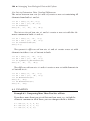
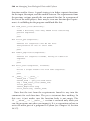
For example, if you have to calculate the mean value and the standard
deviation of several distributions of numbers, each recorded in a different
file, and then you want to automatically create one or more plots, you can
delegate many tasks of your calculation to R and use Python to connect
them. In this chapter, we assume that you already know how R works. If
not, we strongly suggest that you familiarize yourself with the basics of R
before reading this chapter.
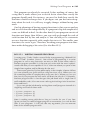
Python has two modules, RPy and RPy2, to connect with R. RPy2
is a redesigned version of RPy. All examples in this chapter use RPy2,
which we recommend to use. The module must be downloaded, installed,
and imported into a script or a Python session (see Box 13.1 for RPy2
installation).
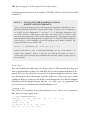
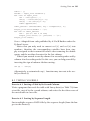
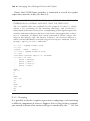
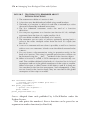
BOX 13.1 INSTALLING THE PYTHON INTERFACE TO R
Installing RPy or RPy2 may be the most difficult thing in this entire chapter.
In fact, you have to choose a release of RPy or RPy2 that is consistent with
the R and Python versions that are installed on your computer.
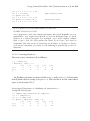
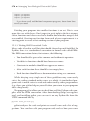
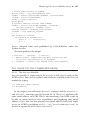
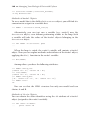
If easy_install is available on your computer, you can just type in
a UNIX/Linux shell
sudo easy_install rpy2
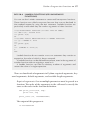
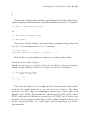
easy_install is a Python module that lets you automatically download, build, install, and manage Python packages. To check if the package
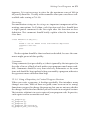
is available on your computer, go to the command line terminal and type
easy_install
If you get the warning (or a similar one)
error: No urls, filenames, or requirements specified (see— help)
instead of
easy_install: Command not found.
it means that you already have easy_install. Otherwise go to
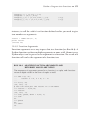
https://pypi.python.org/pypi/setuptools.
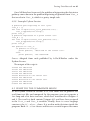
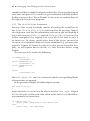
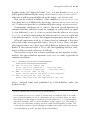
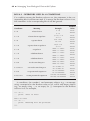
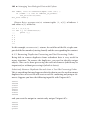
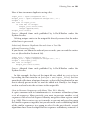
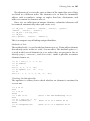
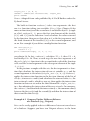
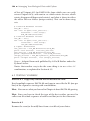
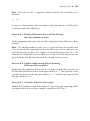
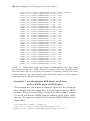
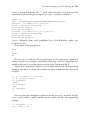
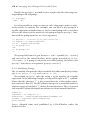
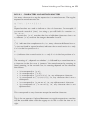
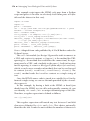
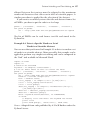
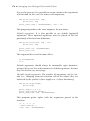
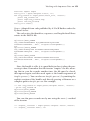
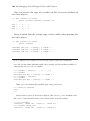
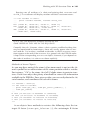
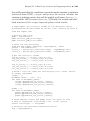
In the following session, simple R actions are performed, such as creating vectors, creating matrices, reading data from a file, and calculating the mean of a set of numbers. Once you get the philosophy behind