1
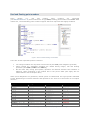
BART Addition of accessors to solve variable implementation conflict Classical refinement substitution rules (THEORY_OPERATION) may require the implementation or export of variables. Export of variables means here that the implementation of a variable is transferred to an imported machine. Resulting constraints on how variables have to be implemented in a refinement column may lead to conflicts when constraints are incompatible (a variable needs to be both implemented and exported), preventing the refinement process to complete successfully. A solution to avoid conflicts is to use a special type of substitution rule for each rule requiring the implementation of a variable: accessor rules (THEORY_ACCESSOR). These rules are elementary rules describing the refinement of a substitution requiring a variable to be implemented. Figure 6: syntax of an accessor rule In practice, this refinement is automatically imported in an “accessor” rule, which contributes to avoid conflicts when allocating operations in the refinement column. In short, the theory THEORY_OPERATION should not contain any rule requiring the implementation of a variable; similarly the theory THEORY_ACCESSOR should only contain rules implementing variables in order to read or modify them. In the operation rules, transformations of variables should be performed using abstract substitutions (the ones that are refined by accessor rules). Please refer to BART User Manual for more details about accessor rules. Components generated automatically appear differently in the project status: their names are in italic. BART generated models are not any more systematically suppressed then re-added to the project: only new components are added and suppressed components are removed. This way proof status, demonstrations and proof rules are not lost. For unchanged models, typecheck status and proof obligations are kept.