1
The CVs of people whose generational status is second generation, whose first language is
Italian and who speak French is 5.7765%. The confidence interval is between 41.6914%
and 52.2086%, with a 95% confidence threshold.
The two confidence intervals have to be compared in order to determine whether the
difference between the two estimates is statistically significant.
1st generation: Between 24.2602% and 31.7999%
2nd generation: Between 41.6914% and 52.2086%
The method for determining whether the difference between the two estimates is
statistically significant is explicit. If the two intervals overlap, we cannot confirm whether
the two estimates are different (or, in more technical terms, with a confidence level of
95%, we cannot dismiss the null hypothesis whereby there is no statistical difference
between the two estimates). However, if the two intervals do not overlap, it is possible to
confirm that the two percentages are different, with a confidence level of 95% (in more
technical terms, we can dismiss the null hypothesis whereby there is no statistical
difference between the two estimates).
In summary, given the CVs and the confidence intervals, it is possible to confirm that the
proportion of French-speaking people among those whose first language is Italian and
whose generational status is first generation is much lower that the proportion of Frenchspeaking people among those whose first language is Italian and whose generational status
is second generation.
Question 3. How does one determine a CV when the estimate is higher than 50%?
First, apply the formula to calculate a coefficient of variation:
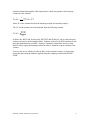
CV = Standard Error / Estimation * 100
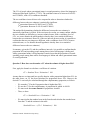
Assume that we are interested in a specific domain, with a proportion higher than 50%. As
the table shows, no CV has been calculated for proportions above 50%. However, the
desired CVs can easily be calculated through the complementary proportion, as follows:
-
We want the CV for the B proportion that is higher than 50%.
We use the CV for the complementary A proportion for which A=100-B
We must work in a same domain for proportions A and B.
Thus, we have:
CVA = Standard ErrorA / EstimationA * 100
-
We must isolate the standard error in the formula and calculate the standard error
from the CV and the estimate in the table.
Standard ErrorA = (CVA * EstimationA) / 100
Statistics Canada – Ethnic Diversity Survey
11