1
60 Int. J. of Information Technology and Web Engineering, 1(1), 59-75, January-March 2006
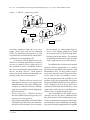
Figure 1. Mobile computing model
IS
1
F ix e d n e tw o rk
IS
2
IS
M o b ile
su p p o rt
sta tio n
3
M o b ile
clien t
ward the responses from the server to a
target client. Each cell has an identifier
(CID) for identification purposes. A CID
is periodically broadcasted to all the MCs
residing in a corresponding cell.
A wireless mobile application is defined as a software application, a wireless
service or a mobile service that can be either pushed to users’ handheld wireless
devices or downloaded and installed, over
the air, on these devices.1 Such applications must work within the daunting constraints of the devices themselves:
• Memory: Wireless devices such as cellular phones and two-way pagers have
limited amounts of memory, obliging developers to consider memory management most carefully when designing application objects.
• Processing power: Wireless devices
also have limited processing power (16bit processors are typical).
• Input: Input capabilities are limited. Most
cell phones provide only a one-hand keypad with twelve buttons: the ten numer-
W ireless
cell
IS
In fo rm atio n
server
als, an asterisk (*), and a pound sign (#).
• Screen: The display might be as small
as 96 pixels wide by 54 pixels high and 1
bit deep (black and white). The amount
of information that can be squeezed into
such a tight screen is severely limited.
In addition, the wireless environment
imposes further constraints: (1) wireless
networks are unreliable and expensive, and
bandwidth is low; (2) they tend to experience more network errors than wired networks; and (3) the very mobility of wireless devices increases the risk that a connection will be lost or degraded. In order to
design and build reliable wireless applications, designers need to keep these constraints in mind and ask themselves, what
impact do wireless devices with limited resources have on application design?
The motivation for this paper is provided in part by the above characteristics
that form some of the foundations for pervasive computing environments. Such characteristics pose several challenges in designing wireless mobile applications for mobile
Copyright © 2006, Idea Group Inc. Copying or distributing in print or electronic forms without written permission of Idea Group Inc.
is prohibited.