1
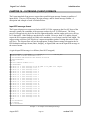
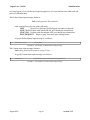
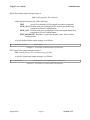
IAgent User’s Guide Introduction Key Exchange Method Cipher for Data Transfer Message Digest for creating the Message Authentication Code (MAC) These three elements are described in the sections that follow. Key Exchange Method The key exchange method defines how client and server will agree upon the shared secret symmetric cryptography key used for application data transfer. SSL 2.0 uses RSA key exchange only, while SSL 3.0 supports a choice of key exchange algorithms including the RSA key exchange when certificates are used, and Diffie-Hellman key exchange for exchanging keys without certificates and without prior communication between client and server. One variable in the choice of key exchange methods is digital signatures -- whether or not to use them, and if so, what kind of signatures to use. Signing with a private key provides assurance against a man-in-the-middle-attack during the information exchange used in generating the shared key. Cipher for Data Transfer SSL uses the conventional cryptography algorithm (symmetric cryptography) described earlier for encrypting messages in a session. There are eight choices, including the choice to perform no encryption: No encryption (NULL) (supported by IA Protocol) Stream Ciphers: RC4 with 40-bit keys RC4 with 128-bit keys CBC Block Ciphers RC2 with 40 bit key DES with 40 bit key DES with 54 bit key (supported by IA Protocol) Triple-DES with 168 bit key, and (supported by IA Protocol) Idea (128 bit key) Here CBC refers to Cipher Block Chaining, which means that a portion of the previously encrypted cipher text is used in the encryption of the current block. DES refers to the Data Encryption Standard, which has a number of variants (including DES40 and 3DES_EDE). DES has recently been supplanted by AES, the new NIST standard. Idea is not supported by IAgent, but is very popular in Europe, and is patented by MediaCrypt AG. RC2 is a proprietary algorithm from RSA Security. Digest Function The choice of digest function determines how a digest is created from a record unit. SSL supports the following: August 2003 Page 14 version 2.3.2