1
TLS session resumption impact on HTTP performance
Client
2 (12)
Server
1. ClientHello
2. ServerHello
3. ServerCertificate
4. ServerKeyExchange
5. CertificateRequest
6. ServerHelloDone
7. ClientCertificate
8. ClientKeyExchange
9. CertificateVerify
10. ApplicationData
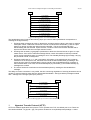
Figure 2. Message Flow in a Full Handshake
The handshake protocol involves the following steps (the numbers within parenthesis corresponds to a
message in the figure above):
1. Exchange hello messages to agree on algorithms, exchange random values, and check for session
resumption. When a client first connects to a server it must send the ClientHello (1) with an cipher
suite list, a random number and optional session identifier. The server will respond with a
ServerHello(2) with the selected cipher suite list, a random number and session identifier that is
equal to the clients if the server accepts session resume.
2. Exchange the necessary cryptographic parameters to allow the client and server to agree on a premaster secret. If the server certificate message did not contain information to build a pre-master
secret, the ServerKeyExchange (4) message is sent. The ClientKeyExchange (8) message, carrying
the pre-master secret, is always sent.
3. Exchange certificates (3, 5, 7) and cryptographic information. If the agreed-upon key exchange
method is not an anonymous one, the server must send the ServerCertificaten (3) message. The
server have the option to authenticate the user by sending the CerificateRequest (5) message. If
client authentication is not used, the CerificateRequest (5), Certificate (7) and CertificateVerify (9)
messages are omitted.
4. The server finishes its contribution to the handshake phase by sending the ServerHelloDone
message.
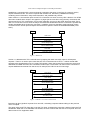
The ability to resume a sessions is very useful, the time consuming negotiation of security parameters can be
omitted. A resumed session starts with the “abbreviated handshake”. See figure below (messages marked
with ** belongs to the change cipher spec protocol).
Client
1. ClientHello
Server
2. ServerHello
3. ChangeCipherSpec**
4. Finished
5. ChangeCipherSpec**
6. Finished
Figure 3. Message flow for an abbreviated handshake
1
Hypertext Transfer Protocol (HTTP)
HTTP is a stateless application-level protocol. HTTP operates over TCP, the default port is 80. There are
two versions defined: 1.0 [2] and 1.1[3]. The protocol is based on a request/response paradigm. A client