1
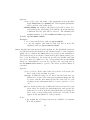
0 The excitation manifold is not truncated.
<any positive integer> The excitation manifold is truncated at
n-fold excitations, see above.
Default: maxex=0
Example: to truncate the excitation manifold at triple excitations set
maxex=3
mem Specifies the core memory used.
Options:
<any positive integer>MB The amount of memory to allocate is
specified in megabytes
<any positive integer>GB The amount of memory to allocate is
specified in gigabytes
Default: mem=256MB
Example: to allocate 8 GB core memory the user should set mem=8GB
molden Specifies whether input file for the Molden program and an xyz-file
containing the Cartesian coordinates are written (see also Sect. 14).
Options:
on Cartesian coordinates, basis set information, and MO coefficients are saved to file MOLDEN. This file can be opened by
Molden and used to visualize the structure of the molecule
and the MOs. In addition, Cartesian coordinates are also
written to file COORD.xyz in xyz (XMol) format, which can
be processed by many molecular visualization programs.
off The construction of the MOLDEN input and the COORD.xyz file
is turned off.
Default: molden=on
Example: if you do not need Molden input and the COORD.xyz file,
add molden=off
mult Spin multiplicity (2S + 1) of the Hartree–Fock or Kohn–Sham wave
function. If a CI or CC calculation is also performed, the same multiplicity is supposed for the ground-state wave function. For excited
states the multiplicity will be arbitrary, only MS is conserved. For
closed-shell reference determinants the multiplicity (strictly speaking
the parity of S) can be controlled by keywords nsing and ntrip, see
below.
69