1
Component List
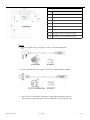
The following components are included with your new C450/ C625 lift system:
•
•
•
•
•
C450/ C625 lift (Manual or Motorized traverse)
Pneumatic Hand Control
Lift Charger (mounted on the wall or ceiling at the end of the track)
Owner’s Manual
Warranty Card
SLINGS: If a sling has been supplied with the lift refer to the instructions included with the sling.
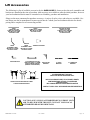
ACCESSORIES: If additional accessories such as a turntable, or gate system have been supplied with the lift
refer to the instructions included with those items.
IMPORTANT: Before initial use, the lift unit must be charged for 4 hours. Refer to section titled
"Charging Instructions". The hand control airline tube must also be connected to the lift. If it is not
connected refer to the section titled “Connecting airline to the lift”.
Specifications of C450/ C625 lift
Lift Motor:
Traverse Motor:
“H” Frame Traverse Motor:
Charger Input:
Charger Output:
Batteries:
Lift Case:
Hand Control:
Lifting Range:
Lift Weight:
Maximum Load:
available in 625 lbs.
Duty Cycle:
Rated Performance:
C450/ C625 - User Guide
Shipping/Storage Conditions:
Temperature:
-40 to +70 ºC
Relative Humidity:
10 to 100% RH
Atmospheric Pressure: 500 to 1060 hPa
24 VDC
24 VDC (Optional at time of Purchase)
24 VDC (Optional at time of Purchase)
120 VAC, 1.0 Amps
24 VDC, 1.5 Amps
24 VDC (2 x 12 VDC) 5.0 AH, Sealed Lead Acid
Flame Retardant ABS
Pneumatic
Maximum load of the installed lift is
Up to 96” (2438mm)
determined by referring to the product
21—23.5 lbs
label located on side of lift.
Standard maximum load 450lbs. Also
10% use, 90% rest
30-40 lifts at 625 lbs, 50-60 lifts at 450 lbs, 10% duty cycle, each lift being 24 inches at
the middle of the lifting range (from 54” strap out to 30” strap out) per full battery.
Please note: the lift has a break in period; breaking in of the lift will need to be done
before these numbers will be achieved. The breaking in period will vary from lift to lift
and is dependent on the frequency of use and the types of load being applied, the higher
the load and a greater frequency of use will break in the lift faster.
Rev: 9/04/09
Page: 4