1
2. Safety
2.1 LIFTING THE WHEELCHAIR
2.3 SPECIFIC RISKS
Listed below are several points which affect your own
safety. Read this carefully. Invacare is only responsible
for product changes carried out by authorised personnel. We reserve the right to make any changes to
equipment and specifications without prior notice.
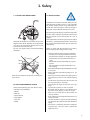
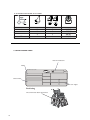
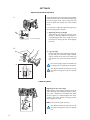
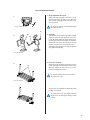
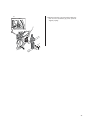
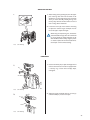
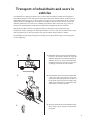
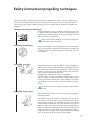
Always lift the wheelchair at the points shown in the
diagram. Never lift the wheelchair by the detachable
arm rests or leg rests. Ensure that the back rest and
push handles are secured in place.
See also the chapter Safety instructions/Propelling
techniques.
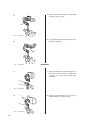
Note that the wheelchair should not be lifted by the
back rest bar.
2.2 DAILY PERFORMANCE CHECK
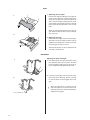
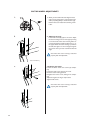
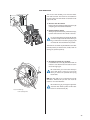
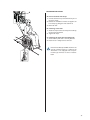
Check that the following parts have been correctly
assembled on the wheelchair:
;
<
"
=
*
<.
By respecting the CE marking, combinations with other
products with combination agreements with Invacare
Rea are allowed. Contact Invacare Rea for a list of
suppliers.
Other adjustments carried out by the customer shall be
deemed as a ”specially adjusted product” which means
this must be documented and the customer takes over
responsibility.
Failure to comply with the instructions may result in
personal injury and/or damage to the product.
- that all parts are securely fastened to the frame
- that all wheels and knobs are properly tightened
- that all brakes and anti-tip devices function cor
rectly
- that the back rest and push handles are properly
secured
- that the wheelchair is stable and that there is no
risk of tipping.
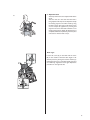
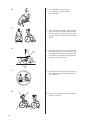
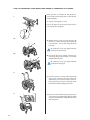
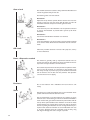
or foot rests.
of the chair.
out of the chair as there is a risk of the chair tipping
over.
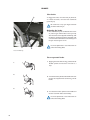
this may cause injury to the hands.
ping.
"#
$
the surface is wet, slippery or when on a slope.
% securely attached.
&
sitting in the chair.
'
are slackened, the greater the risk of the wheelchair
tipping.
*+
long periods at a time can reach a temperature
higher than 41°C.
5