1
For our project we wanted to create a system that would be
efficient and easy to use for users, as well as an environmentally
friendly system that would reduce the energy consumption levels. The
system we created would be denominated as a "Climate Control System"
(CCS), which would make use of two different sensors to control the
functionality and performance of the whole system. The system will
have an automatic on/off function that will allow less energy
consumption. This will be controlled by the light sensor, which
whenever light is sensed, then the whole system will turn ON, whereas
when the sensor doesn't detect any light, the system will be OFF,
assuming that a dark room will represent an empty room and a lit room
will represent that there is people in the room. The temperature
sensor will be the device that will control the actual fan speed. The
speed of the fan will be directly proportional to the temperature
reading. The way it will work is that the higher the temperature
reading (warmer climate), the faster the speed of the fan, thus
cooling down the environment. If the temperature is a lower reading,
the fan will not move as quickly or turn on. This climate control
system's main goal is to control the energy consumption levels of the
user. By controlling the system powering on and off in order to
achieve the most suitable climate, the whole idea of saving energy is
totally achieved. Some commercial and even industrial fans nowadays
have a feature of either warming up or cooling down a climate
controlled area, and they are often not designed to be energy
efficient. Our system's commercial and/or industrial application and
goal is this, control and reduce at a minimum the energy consumption
levels. Some possible applications for a climate control product such
as this can include being used in classrooms, offices, and public
transportation systems to save energy. Similar systems are already
used to control the temperature of electronic systems. Take a laptop
fan that keeps the computer cool for example. Without, the CPU would
get too hot and fail to function properly or not work at all.
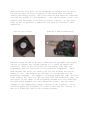
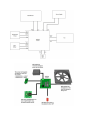
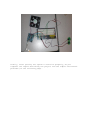
As mentioned above, our Climate Control System consists of two
sensors – a light sensor and a temperature sensor. Other hardware
included in this system includes an arduino board, wires, solder less
breadboard, a power source (USB cord in the computer USB port in the
photos), and lastly the processing code. The first step we had to do
was research. What kind of sensors would work best for our idea? How
would we have to change our idea around in order for us to maximize
the efficiency of the final product? How much knowledge of arduino
coding do we need? In the beginning when we were still processing
project ideas, we had to take these things into consideration. After
much iteration, we finally came up with the idea to design something