1
Usability and Presence in
Virtual Reality Exposure Therapy for Fear of Flying
Usability and Presence in
Virtual Reality Exposure Therapy for Fear of Flying
Lucy Trianawaty Gunawan (1113097)
Master programme Media & Knowledge Engineering
Delft University of Technology
Delft, August 2003
Supervisor:
Dr.ir. C.A.P.G. van der Mast
Graduation Committee:
Prof. dr. M. A. Neerincx, Delft University of Technology
Dr.ir. C.A.P.G. van der Mast, Delft University of Technology, Supervisor
Prof. dr. P.M.G. Emmelkamp, University of Amsterdam
Drs. L.J. van Gerwen, VALK Foundation
Drs. dr. L.J.M. Rothkrantz, Delft University of Technology
Dr. J.M. Schuemie, Erasmus University Rotterdam.
Contents
CONTENTS...........................................................................................................................V
ACKNOWLEDGEMENTS...............................................................................................VII
1 INTRODUCTION...............................................................................................................1
1.1 Virtual Reality ....................................................................................................................1
1.2 Fear of Flying ....................................................................................................................2
1.2.1 Definition...................................................................................................................2
1.2.2 Causes of “Fear of Flying” ........................................................................................2
1.2.3 Symptoms..................................................................................................................3
1.2.4 Treatment for “Fear of Flying”..................................................................................3
1.3 Virtual Reality Exposure Therapy......................................................................................3
1.3.1 The advantages and disadvantages using VRET .......................................................4
1.4 Usability .............................................................................................................................4
1.5 Presence .............................................................................................................................5
1.6 Research goal.....................................................................................................................6
1.7 Thesis outline .....................................................................................................................6
2 METHODOLOGY..............................................................................................................7
2.1 Analysis & Design..............................................................................................................8
2.2 Construction/Implementation.............................................................................................8
2.3 Evaluation ..........................................................................................................................8
2.3.1 Usability Evaluation ..................................................................................................9
2.3.2 Presence Evaluation...................................................................................................9
2.4 Conclusion .......................................................................................................................11
3 ANALYSIS AND DESIGN...............................................................................................13
3.1 Analysis ............................................................................................................................13
3.1.1 New Requirements ..................................................................................................13
3.1.2 Current System Evaluation......................................................................................14
3.1.3 Current System Task Analysis ................................................................................14
3.1.4 Suggestions..............................................................................................................15
3.1.5 Challenges ...............................................................................................................16
3.2 The System........................................................................................................................16
3.3 Design ..............................................................................................................................19
3.3.1 Therapist’s User Interface .......................................................................................20
3.3.2 Patient’s User Interface ...........................................................................................28
3.4 Conclusion .......................................................................................................................29
4 EVALUATION..................................................................................................................31
4.1 Patient’s User Interface ...................................................................................................31
4.1.1 Experiment 1: Presence in Patient’s UI ...................................................................31
4.2 Therapist's User Interface................................................................................................37
4.2.1 Experiment 2: Usability Overview ..........................................................................37
5 CONCLUSIONS ...............................................................................................................45
v
5.1 Statement of the Result .....................................................................................................45
5.2 Statement of the Problem Unsolved .................................................................................46
5.3 General conclusion ..........................................................................................................46
REFERENCES.....................................................................................................................47
ABBREVIATIONS ..............................................................................................................49
APPENDIX A: TASK ANALYSIS .....................................................................................51
A.1 Task Decomposition ........................................................................................................51
A.2 Information needs ............................................................................................................55
APPENDIX B: DESIGN DOCUMENTS ...........................................................................59
B.1 Patient’s User Interface...................................................................................................59
B.1.1 Structure..................................................................................................................59
B.1.2 Avatar’s Positions ...................................................................................................60
B.1.3 Scripts .....................................................................................................................61
B.1.4 Environments State .................................................................................................62
B.1.5 Flying Sequences ....................................................................................................64
B.1.6 Cloud Transition .....................................................................................................66
B.1.7. Cloud Condition.....................................................................................................67
B.1.8 Sounds ....................................................................................................................68
B.2 Therapist’s User Interface ...............................................................................................69
B.2.1 Output .....................................................................................................................69
B.2.2 Miscellaneous .........................................................................................................71
B.3 Database..........................................................................................................................72
B.3.1 Structure Table Sessions .........................................................................................72
B.3.2 Structure Table SUDs .............................................................................................72
B.3.3 Query Report ..........................................................................................................73
APPENDIX C: QUESTIONNAIRES.................................................................................75
C.1 Evaluation Protocol.........................................................................................................75
C.2 Experiment 1....................................................................................................................76
C.3 Experiment 2....................................................................................................................80
vi
Acknowledgements
Finishing the master thesis was the main goal, but the process made it all worthwhile. I wish
to express my gratitude to special people who were with me during my study in the
Netherlands, gave guidance, help, assistance, moral and emotional support to inspire the
completion of this study.
First, to God Almighty, who has walked along my footsteps to overcome every obstacle in
this journey, and make me stronger everyday.
To my father who is in hospital at this moment, if it was not because of him, I will never take
this opportunity to study here.
To my supervisor Dr. ir. Charles van der Mast, who always give me time and supports.
To my special friend Steve, who encourage me all along the way with his love,
understanding, and time.
To Martijn Schuemie, who give me guidance, help, suggestion and evaluation more than I
expected. I really thank you.
To my thesis committee, Prof. dr. M. A. Neerincx, Dr.ir. C.A.P.G. van der Mast, Prof. dr.
P.M.G. Emmelkamp, Drs. L.J. van Gerwen, Drs. dr. L.J.M. Rothkrantz, and Dr. J.M.
Schuemie.
To my beloved sister Ivonne and her husband, who always asked me when I can finish this
thing and go back to Indonesia soon.
Special thanks to Merel Krijn, for her help, assistance, comments, ideas and patience.
To all the therapists and pilots from VALK Foundation and University of Amsterdam (UvA),
who gave their suggestions, contributions and evaluations.
To my special colleague, Marlouke, Hendra and Dian, who always share every story
together.
To Herman, Yoana, and Anton, thanks for the revisions.
To NEC, Monique Soesman, Siska Aprilianti, and Desi A.Dimas, who facilitated me to get a
scholarship in the Netherlands.
To all of those who gives me encouragement and support.
vii
1 Introduction
As a relatively new technology, virtual reality is intensively being improved over the years.
A vast number of applications have been developed based on this particular technology in
many different fields of life. Most of its early applications have been for entertainment
purposes only, such as those implemented in creating Virtual Reality games. Recent
researches, though, have proved that virtual reality technology can be implemented in more
useful applications to improve quality of life. One of them is in clinical therapy. The
implementation of virtual reality in clinical therapy has brought many advantages that
traditional way of clinical therapy could not offer. Thus, understanding how this immersed
virtual reality can support clinical therapy is very challenging.
One of the virtual reality projects in Delft University of Technology is virtual reality
exposure therapy for treating fear of flying (Schuemie, 2003). This project is collaboration
between two different disciplines, Psychology and Human Computer Interaction (HCI), by
Delft University of Technology, University of Amsterdam, and VALK (Vlieg
Angstbestrijding Leidse universiteit KLM) foundation in Leiden. Being a technical
university, the department of HCI of Delft University of Technology is in charge in the
technical part for this project, makes the VR system for exposure therapy possible to be
implemented. University of Amsterdam (UvA) and VALK give information and techniques
from therapist’s and psychological point of view as input to the system. This system was
implemented successfully during therapy sessions in Delft and Amsterdam. Several years
after its implementation, feedbacks were collected and improvements to the system are urged
to be undertaken. This thesis is based on this particular issue.
In the following sub-chapters, some terms will be introduced to give an overview of our
project.
1.1 Virtual Reality
Ivan Sutherland defines virtual world as, “The ultimate display would be a room within
computer can control the existence of matter. A chair displayed in such a room would be
good enough to sit in. Handcuffs displayed in such a room would be confining, and a bullet
displayed in such a room would be fatal. With appropriate programming such a display could
literally be the wonderland in which Alice walked” (Harrison, et. al., 1996)
The term virtual reality (VR) was first coined by Jaron Lanier in 1989 (Bryson, 2003), to
give a response to another term “Virtual World” by Ivan Sutherland, the father of computer
graphics or even the father of this new technology.
Bryson (1993) defines virtual reality as the use of computer technology to create the effect
of an interactive three-dimensional world in which the objects have a sense of spatial
presence. According to Bryson, the word “computer technology” is required to distinguish
VR from telepresence and other remote sensing approaches. This requirement is driven by
the desire to use computer programs to create interesting and novel tailor-made
environments. “Effect” is used rather than “illusion” because it is a cognitive effect that is
achieved rather than illusion, this also undercuts the presumption of fooling the user. “Threedimensional world” is used to exclude text-based environments and to turn discussion away
from 1D and 2D programs. “Objects have a sense of spatial presence” means that the objects
seem to have a spatial location independent of both the user and the display technology.
1
Chapter 1
According to Lanier, the difference between virtual reality and virtual world was that in
virtual reality there could be a number of people involved at the same time instead of the just
you and the world. There would be a shared world.
Merriam-Webster Dictionary (2003) defines virtual as “being such in essence or effect
though not formally recognized or admitted”, reality as “the quality or state of being real”,
and real as “the property of having concrete existence”. Putting those together, virtual reality
means to have the effect of having concrete existence without actually having concrete
existence.
Merriam-Webster Dictionary (2003) defines virtual reality as an artificial environment
which is experienced through sensory stimuli (as sights and sounds) provided by a computer
and in which one’s actions partially determine what happens in the environment.
Harrison et. al. (1996) defines a useful definition for virtual reality. Virtual reality is the
delivery to human of the most convincing illusion possible that he is in another reality.
However, this is the “ideal dream”, the limitation of hardware and software makes the
definition lower in implementation phase.
Sherman et. al. (2003) defines virtual reality as a medium composed of interactive computer
simulations that sees the participant’s position and actions and replaces or augments the
feedback to one or more senses, giving the feeling of being mentally immersed or present in
the simulation (a virtual world).
Schuemie (2003) defines virtual environment as the use of computers, displays and sensors
to create the illusion that the user is in another environment than the real one.
From these definitions can be concluded that they overlap each other. The main points of
these definitions are “being real”, “using computer”, “another world”, and “sensory stimuli”.
As a summary, virtual reality can be defined as the use of computer technologies to create an
imitation of three-dimensional environments from the real world, which give the feeling that
the user is in another world.
1.2 Fear of Flying
Flying is considered to be one of the safest public ways of transportation in the world
because of its relatively small number of accidents occurring in aviation. Anyone flying
realizes that there will be a chance of accident whenever they use manmade “flying
machine”. It is because humans were not designed like birds to fly. Some people have to
confront the deepest fear of this human vulnerability.
1.2.1 Definition
The “fear of flying”, aerophobia (also known as aviophobia) is a specific phobia, a kind of
anxiety disorders. It is also one of the hardest phobias to cure. As anxiety, the fear of flying
is more concerned with what might happen, than with what actually is happening. It triggers
a reaction in the body that causes the person to feel threatened.
1.2.2 Causes of “Fear of Flying”
Richmond (2003) describes fear of flying to have many causes and components, such as
anxieties about heights, enclosed spaces, crowded conditions, sitting in hot – stale air, being
required to wait passively, not understanding the reason behind all the strange actions,
sounds, and sensations that are occurring around, being worried of the danger of turbulence,
2
Introduction
being safety dependent on unknown mechanical things, being dependent on an unknown
pilot’s judgment, not feeling in “control”, and the possibility of terrorism.
The experience of a past trauma or accident or an unpleasant flight experiences are also
considered as major causes of fear of flying (Wilhelm and Roth, 1997). Listening to other
people stories and problems can affect the mind, and ones can start imagining the same
experience will happen (vicarious learning) to them. If the mind is repeatedly imagining a
traumatic event, the body will react, and anxiety feeling will appear. In most cases, people
develop such an intense feeling of fear and distress. This feeling become overwhelming so
that they want to avoid the situation completely.
The fear of flying is not really about the risk in aviation. It is based on the uncomfortable
awareness that life is fragile and vulnerable, and that none of us has any real control over it,
whether in the air or on the ground.
1.2.3 Symptoms
In general, people who have fear of flying show two basic kinds of symptoms (Richmond,
2003), physiological reactions and psychological symptoms. Some of psychological
reactions that trigger fear and stress are muscle tension, tremors, heavy, labored breathing,
heart palpitations, chest pain, abdominal and intestinal discomfort, sweating, weakness,
dizziness, prickly sensations, dry mouth and flushed pale face. Psychological symptoms can
be in forms of impaired memory, narrowed perceptions, poor or clouded judgment, negative
life expectancy and preservative thinking.
1.2.4 Treatment for “Fear of Flying”
There are several forms of treatments for the fear of flying (Richmond, 2003). One might
simply need factual information about flight and flight safety principles, such as turbulence.
If simple information is not enough, one might treat the fear of flying by eliminating all
negative thinking or by learning a relaxation technique. If a basic symptomatic treatment is
not sufficient, then one should try to explore the psychodynamic aspects of the anxiety. A
clinical approach, self-help treatment, consulting with a psychologist for phobia treatment or
spiritual healing can be considered for treatments of this phobia.
There are also group programs (run in conjunction with airlines), individual treatment,
clinics that offer therapy and hypnosis, and courses by mail. Most of these programs have
similar theory and treatment processes. These include explanations of airplane mechanics,
stress management, deep breathing exercises, and other relaxation techniques.
One example of this clinical therapy is performed in VALK foundation, Leiden, the
Netherlands in collaboration with University of Leiden and KLM. The therapy includes
several stages; diagnostic stage, training program that includes training in Leiden (inside the
clinic), training in Schiphol (in the airport) and a follow up program (VALK, 2003). What
makes it difficult for fear of flying treatment is there might be some fears which appears on
the same time and confronting each other. Repeated practices will be needed but costly.
1.3 Virtual Reality Exposure Therapy
Decreasing the level of anxiety can treat phobias. Traditionally by presenting the patient with
actual physical situation (In Vivo) or by letting the patient imagine the stimulus (In Vitro).
As a third option (Schuemie, 2003), there is Virtual Reality Exposure Therapy (VRET). In
VRET, the virtual environment is displayed in such a fearful situation using Head-Mounted
3
Chapter 1
Display (HMD). The patient can see computer simulation inside the aircraft; they can look
outside through the window. The therapist collaborates with the patient to experience and to
be familiar with the synthetic environment during therapy, in which more and more fearful
situation will be experienced. The patient travels through flying sequences such as taking off,
flying with bad weather and landing. This system provides two user interfaces (UI): one for
the patient and one for the therapist. The UI for the patient is the VE immersed to the patient,
therefore it is necessary for the patient to have the feeling of being immersed and a sense of
presence, to experience the similar emotional response as In Vivo therapy. The therapist
controls the VE exposed to the patient using therapist’s UI.
This technique has also proved as an effective tool to combat fear of flying (Rothbaum, et.
al, 2000). Some researches have been done to support this new technology in therapy world.
They are mainly to make this technique works better and more efficient, to produce a
cheaper and an easier system to make and to maintain.
1.3.1 The advantages and disadvantages using VRET
There may be advantages using VRET than Standard Exposure (SE) In Vivo. SE is more
costly because it usually requires leaving the therapist’s office, to go to the exposure place,
for example, airport, high building, etc and back to the therapist’s office. VRET can do the
same exposure without leaving the therapist’s office and in less time than that required when
doing SE. SE is also more expensive because the therapist needs to arrange a real condition
that involves real airplane at the airport, flying it up, etc. This kind of arrangement has its
limitation like only one take-off and landing per flight. VRET, on the other hand, allows the
therapist to control situations according to the patient’s need (for example: good or bad
weather can be arranged, how many flights per session are also possible). Logs of patient’s
progress are neatly stored in databases. Therapist can then review these logs as needed and
replay them according to patient’s need. This shows how VRET is an effective means of
saving both therapist’s and patient’s time, and keeping everything in the privacy of only
concerned parties. VRET also helps a patient having problem to re-experience the traumatic
memories. Another advantage from VRET is the possibility to standardize therapy methods,
techniques and skills. In the near future will be possible for a remote therapy by using good
internet connection.
VRET is not perfect and it does come with its own disadvantages. Visually, VE is still far
from looking like a real world. VE visualizations are still in cartoon shapes and are not
realistic. Complexity of VE creation is also one of the technical difficulties (Huang, 1998).
Objects and shapes need to be defined in three dimensions using 3D modeling software
before orientation and mapping can be constructed. Heavy programming is needed to make
these models to interact appropriately. Equipments used in VE creation have limited
capabilities and equipment failures, especially HDM device, it is not unusual. But all of these
technical difficulties soon will be solved with rapidly growing technological development.
Visual stress and motion sickness are reported as side effects of using immersed VR.
1.4 Usability
According to Rosson and Carroll (2002), the emergence of usability is the quality of a
system with respect to ease of learning, ease of use, and user satisfaction. The three distinct
perspectives: human performance, learning and cognition, and collaborative activity, have
contributed to modern views of usability. These three perspectives emerge at different points
4
Introduction
in time, they are not independent, and their relation is not one of succession. Rather they are
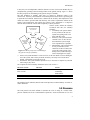
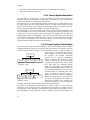
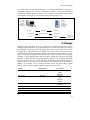
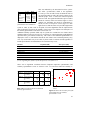
complementary, pointing to the increasing richness of the general concept. Figure 1.1 shows
the three perspectives contributing to the general concept of usability.
The ISO definition of usability (ISO 9241) as quoted by Schuemie (2003) is the
effectiveness, efficiency and satisfaction with which specified users achieve specified goals
in particular environments. Effectiveness is defined as the accuracy and completeness with
which users achieve specified task and efficiency, the resource expended in relation to the
accuracy and completeness with which users achieve goals. Satisfaction is a subjective
measure and concerns the comfort and acceptability of use by end users.
Nielsen (1993) defines the usability
associated with this five usability
Human performance,
attributes:
time, and errors
• Learnability: The system should
be easy to learn so the user can
rapidly start getting some work
done with the system.
Usability
• Efficiency: The system should be
efficient to use, so once the user
Collaboration,
Human cognition,
group
has learned the system, a high
mental models
dynamics, and
of plans
workplace
level of productivity is possible.
and actions
context
• Memorability: The system should
be easy to remember, so the
casual user is able to return to the
system after some period of not
Figure 1.1: Three perspectives contributing to
having used it, without having to
the general concept of usability
learn everything all over again.
• Errors: The system should have a low error rate, so the user makes few errors during the
use of the system, and so if they do make errors they can easily recover from them.
Further, catastrophic errors must not occur.
• Satisfaction: The system should be pleasant to use, so the users are subjectively satisfied
when using it; they like it.
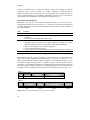
The comparison of these usability definitions can be seen in table 1.1.
Rosson & Carroll
Ease of Use
Ease of Learn
ISO 9241
Efficiency
Nielsen
Efficiency
Learnability
Memorability
Effectiveness
Errors/Safety
User satisfaction
Satisfaction
Satisfaction
Table 1.1: Usability as in (Rosson & Carrol,2002), (ISO 9241) and (Nielsen, 1993)
The usability aspect defined by Rosson and Carroll provides a modern usability view that we
used in this thesis.
1.5 Presence
The term presence has been defined to describes the sense of being in a virtual world,
presence indicates the level to which human respond to a virtual environment as if it were
5
Chapter 1
real (Schuemie, 2003). Schuemie also described that presence gives the illusion of being in a
different place than the real world; of simulating another environment that is possibly similar
to real environments but has the advantages of not being similar in certain respects such as
the danger, costs or scale of the environment that is simulated.
According to Laurel (1991) in presence we can see things in virtual scenes as if these were
real and the computer system no longer only supplies the user with information; but it also
gives the user an experience.
1.6 Research goal
As the foundation research about VRET for clinical psychology, the system designed by
Schuemie (2003) has its simple and basic characteristic. In other words, we can say that the
system is good enough to run and to work with, but there are several aspects, which needed
to be improved to support therapy more easily and efficiently. Thus, we formulate this
research thesis goal as follows:
Improve and evaluate the usability and presence of Virtual Reality Exposure Therapy
system for fear of flying treatment at Delft University of Technology.
In this research we will focus more to the usability problem of the therapist than on the
presence of the patient, the preliminary study during our research assignment (Gunawan,
2003) proved that improving the hardware and software that we have right now as overall
can solve the inside quality of the world for the patient.
1.7 Thesis outline
In this chapter, we have introduced important terms used in this thesis, the defining purpose
is to make definitions of the terms clear and not overlapping each other. The research goal is
also formulated and described. Thus, this goal will outline this thesis.
The second chapter introduces our research approaches, both design and evaluation methods.
In the third chapter, the analysis and design of the system are described. The background
analysis that was conducted before, and the new requirement and design overview of the new
system are presented.
In the forth chapter, we will discuss the detail evaluation for the Patient’s and Therapist’s UI.
The conducted experiments detail, the result of experiments and the evaluation analysis will
be reported in sequentially.
At last, Conclusion is drawn in chapter five.
6
2 Methodology
System development is an iterative process that might never end; a system can be improved
continuously until it meets its satisfaction level. As we intend to improve our current VR
system, at first we have to evaluate it to find out what kinds of improvements are needed. We
adapt the usability evaluation model proposed by Scriven (1967) quoted by (Rosson &
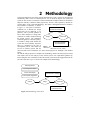
Carroll, 2002), as our research methodology. The model is distinguished between formative
and summative evaluations, as shown
Formative evaluation:
in figure 2.1. The goals of formative
What and how to redesign?
evaluation are to identify the design
aspects that can be improved, to set
priorities, and to provide guidance in
how to make changes to a design. This
evaluation is usually conducted during
Design
Construction
the design process. The summative
evaluation goals are to measure quality;
to evaluate a design result whether the
Summative evaluation:
system has met its usability objectives
How well did we do?
and it is conducted at the end of
Figure 2.1: Formative and summative
development process. This model can
evaluation. (Rosson & Carroll, 2002)
be seen as iterative process that the
current system can be evaluated as if it still in the design process, although it was finished
before.
We add the analysis process to complete our methodology model. The analysis process had
some inputs such as task analysis of the current system, new requirements gathered by
interviewing the users, evaluation result of the current system and some suggestions from the
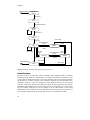
previous researcher. Figure 2.2 shows our complete thesis methodology.
New Requirements
Current System Evaluation
Current Task Analysis
Formative evaluation:
What and how to redesign?
Current System Suggestions
Analysis
Design
Construction
Summative evaluation:
How well did we do?
Figure 2.2: Methodology in this thesis
7
Chapter 2
The development process of our project is divided into two parts, the patient’s UI and the
therapist’s UI. The approach, design, construction and evaluation for these UI are different.
The patient’s UI, the patient is immersed to the VE, thus the sense of presence or the sense of
being in another world is needed. In the contrary, the therapist’s UI does not need the
immersion and sense of presence. The therapist’s UI is designed to control the VE
experienced by the patient and provide information of the therapy session. We then applied
improvements to the system and re-evaluate the system again to verify that changes made
really reflect on what are expected.
2.1 Analysis & Design
Based on the new requirements gathered through the current user of the system, we started to
do the analysis phase. Other inputs for this analysis phase were the old system task analysis,
the suggestions given from the author of the system, and the evaluation conducted by us. We
also conducted research in software and hardware used to find out the capability and
limitation of our resources. Based on our analysis, a new design was proposed to enhance the
richness of the VRET system.
In order to design the patient’s UI, we took into account the guidelines for VRET design
proposed by Schuemie (2003) and general step in VE design by Kaur (1998) as interpreted
by Schuemie (2003). For re-designing the patient’s UI, most of the time was spent to
enhance the environment with texture, lighting, sound, interactivity within our system's
limitations. User interface for the therapist was created from scratch, and we took into
account Human and Computer Interaction principals to ensure the usability of the system.
The history of the intermediate designs can be seen in Appendix B: Design Documents.
2.2 Construction/Implementation
The patient’s UI is constructed using VR WorldUp 4 from Sense8, an object-oriented
software development tools for building VR applications. Visual Basic syntax is provided in
this software as a tool for scripting. We used WorldUp Modeler to modify and render the VE
objects. Textures were designed and modified by Photoshop 7, sound effects editing by Cool
Edit 2000 and avatars was created using Poser 4.
The therapist’s UI is implemented using Delphi 5, an event-driven software development
from Borland. We used Microsoft Access Database to support the therapist’s UI and Crystal
Report 8.5 to design the report feature.
2.3 Evaluation
The basic evaluation criterion of our system is to test whether the new system completely
works, the VE for the patient, the therapist’s UI and the communication between them.
Formative evaluation was done whenever an intermediate design was achieved by asking the
user’s opinion or asking the user to think aloud about the new intermediate design. At the
end of the development process, we conducted summative evaluation to check whether all
improvements done met its requirements. The summative evaluation was made by
conducting therapy session experiments. We conducted sixteen experiments with sixteen
pairs of patient and therapist (32 participants). In each experiment, we conducted two
therapy sessions, using the old system and the new system with randomly order. During the
therapy session, the therapist controlled the VE using therapist’s UI and exposed the patient
8
Research Approach
gradually to the flying sequences in VE. Two groups of questionnaire were designed for
evaluating the usability of therapist’s UI and the presence in patient’s UI. Microsoft Excel
and SPSS 10 supported analyses of evaluation results.
2.3.1 Usability Evaluation
The evaluation of the therapist’s UI is measured in the term of usability. A usability
evaluation is an analysis or empirical study of the usability of a system and the goal is to give
some feedback in software development, supporting and iterative development process
(Rosson & Carroll 1985).
Scriven (1967) as quoted by (Rosson & Carroll, 2002) described two classes or evaluation
methods, analytical and empirical. Empirical methods involve study of actual users, can be
observing people while they explore the system, study of performance times and error rate or
survey of users. The analytical method identifies significant features in a design and
generates hypothesis about the consequences. Usability inspection using guidelines is one of
the examples of this method. The proposed method is a mix between analytical and empirical
method, called mediated evaluation: where analytic evaluation is done early and during the
design process, the result of this analyzes is used to motivate and develop materials for
empirical evaluations.
Analytical method: Guidelines and principles
The goal of usability inspection using guidelines is to find the usability potential problem in
a user interface design during the design process. Nielsen (1993) described heuristic
evaluation as an inspection method, ten general guidelines are listed as follow: simple and
natural dialogue, speak the user’s language, minimize user memory load, consistency,
feedback, clearly marked exits, shortcuts, good error messages, prevent errors, help and
documentation. Heuristic evaluation is conducted by inspecting interface and trying to
evaluate which one is bad and which one is good. This analytical method with inspecting
guidelines is done during the design of the therapist’s UI. The user evaluates the intermediate
design and gives some feedbacks to improve it again.
Empirical method: User evaluation
By user evaluation, the users tested the system directly. Some tasks were given to the users
to complete. Information was gathered, such as observation note, performance time, errors
and subjective evaluation. Subjective information was acquired by using usability
questionnaires and interviews. We chose to use empirical method of user evaluation by
conducting experiments
The analysis for usability analytical and empirical evaluation results used ANOVA repeated
measure with Cronbach’s alpha for its reliability consistency measure.
2.3.2 Presence Evaluation
To see evidence of improvements to our system, we evaluate patient’s UI by means of term
of presence whether it is an improvement. We chose subjective measures by questionnaires,
as the most common method, to evaluate our recent system. Questionnaires were given to the
patient after or/and before the each session.
9
Chapter 2
Igroup Presence Questionnaire
To measure presence in this research, we used the Igroup Presence Questionnaire (IPQ)
developed by Schubert (Schubert et al., 1997). According to Schubert, the sense of presence
is the subjective sense of being in a virtual environment; it is a user’s experience, so the
measurement will be obtained from subjective rating scales.
The IPQ project is an ongoing project that started in 1997. It was constructed using a large
pool of items and two survey waves with approximately five hundred participants.
The IPQ version we used in this research has three subscales and one additional general item
not belonging to a subscale. The three subscales can be regarded as fairly independent
factors. They are:
1. Spatial Presence (SP) – the sense of being physically present in the VE;
2. Involvement (INV) – measuring the attention devoted to the VE and the involvement
experienced;
3. Experienced Realism (REAL) – measuring the subjective experience of realism in the
VE.
The additional general item assesses the general “sense of being there”, and has high
loadings on all three factors, with an especially strong loading on Spatial Presence.
There are fourteen items in this questionnaire, comprising:
• SP (SP1, SP2, SP3, SP4, SP5) – five items
• INV (INV1, INV2, INV3, INV4) - four items
• REAL (REAL1, REAL2, REAL3, REAL4) – four items
• G (G1) – one item
All items have a range from zero to six. The left end point of the scale is always zero, and the
right endpoint is always six. There are three items that need to be reversed, because these
three items use reversed wordings, they are SP2, INV3 and REAL1.
To compare the results between systems, the old system and new improved system, the
results from this questionnaire were analyzed using Analysis of Variance (ANOVA)
repeated measure. The ANOVA repeated measure was chosen because the same participant
took part in each condition. In our case, the participant tried both the old and new systems
we wanted to compare. The ANOVA repeated measure allows comparison of the variance
caused by the independent variable to more accurate error terms by removing the variance
caused by differences in individuals. It increases the power of the analysis, thus fewer
participants were needed to have adequate power. The Reliability analysis was conducted in
the term of Cronbach’s alpha. Cronbach alpha is one of the most commonly reported
reliability estimates in the language testing literature. The purpose of a reliability analysis is
to determine how consistently the variables measure some construct. It range from 00.0 (if
no variance is consistent) to 1.00 (if all variance is consistent). For example, if the Cronbach
alpha for a set of scores turns out to be 0.90, we can interpret that as meaning that the test is
90% reliable, and by extension that it is 10% unreliable.
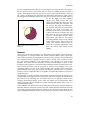
SAM Questionnaire
The sense of presence can be measured by emotional changes after some stimuli are
exposed. The measurement of emotion in our research was conducted by using SAM
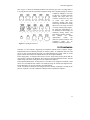
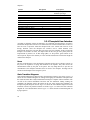
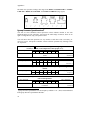
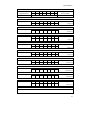
Questionnaire. SAM stands for the Self-Assessment Manikin, a picture based scale, which is
used to measure a person’s feeling or emotional response. This subjective measurement was
developed by Lang (Bradley & Lang, 1994). It is designed to represent the Pleasure (P),
Arousal (A) and Dominance (D) with a graphic character arranged on a linear nine-point
10
Research Approach
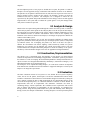
scale. Figure 2.3 shows the SAM questionnaire. The first line goes from a very Big Smile to
a very Big Frown. This line represents feelings that range from completely happy or elated to
completely unhappy or sad. The
second line of SAM represents
feelings that range from very
excited or involved to very calm
or bored. The third line
represents feelings that range
from being controlled to be being
taken care of or being in-control
or on top of things (large figure).
By using this questionnaire, we
are interested in find changes of
emotional feeling before and
after therapy sessions (stimuli).
The
analysis
for
SAM
questionnaire
results
use
ANOVA repeated measure with
Cronbach’s
alpha
for
its
reliability consistency measure.
Figure 2.3: SAM Questionnaire
2.4 Conclusion
Generally, we used software engineering development methods such as analysis, design,
implementation and evaluation principals. In analysis phase, we conducted interviews and
survey in order to find features that need to be implemented in the system. Then we would
ignore features that could not be implemented on our development machine.
In the design phase, we designed two kinds of UI, the virtual world for the patient and the
user interface control for the therapist. We took into account the guidelines in HCI, VR and
VRET design. The detail of this phase will be explained in chapter 3.
In the implementation phase, for the patient’s UI, textures were designed or modified, sound
effects were recorded and new features were added by using our software development tools.
For the therapist’s UI new user interface was implemented.
At last, two kinds of evaluations were designed, for the usability of therapist’s UI and for the
presence of patient’s UI. The conducted evaluation will be explained in chapter 4.
11
3 Analysis and Design
3.1 Analysis
New Requirements
Current System Evaluation
Current Task Analysis
Current System Suggestions
Analysis
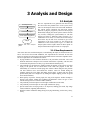
Figure 3.1: The analysis
phase
The new requirements were gathered from interviewing
the current and the potential users of the system, these
users are the therapists from UvA and VALK foundation.
The current system evaluation was done from reading
materials, trying the program by ourselves and trying to
think-aloud, studying the current system structure and the
way it works, readings the system manual, etc. The task
analysis was done by Schuemie (2003), because it is a
continuation of his work, we referred to his task analysis
done before. By the end of his research, he gave some
suggestions to the next research, he also showed the
weaknesses of the current system. Figure 3.1 shows the
analysis phase with its inputs. Based on these inputs we
analyzed what kind of improvement we can propose.
3.1.1 New Requirements
After some interviews with the therapists, P. Emmelkamp, M. Krijn, R. Olafsson from UvA
and L. van Gerwen from VALK foundation, new requirements are collected. At least four
interview sessions have taken place both in Amsterdam and in Leiden since September 2001.
The new requirements are summarized as follow:
• Flying schedules to some different locations is not just Milan, with other voices and
different instructions. Therapies need variation. When done repeatedly, with the same
environment, the patients were likely to get bored and not afraid anymore;
• The possibility for the therapist to slightly turning the airplane to the right or left when
flying so the patient can see better down to the earth. The purpose of this new
functionality is to make the virtual flying more realistic. When doing the turn, patients
can have different views from outside the window. Turns are needed during the
climbing, during the level flight and during decent flight. A patient who has flying
phobia usually has fear of height too. By rolling the airplane slightly, patients are given
more fearful condition;
• Better quality of pictures: clouds, people, the wing of the airplane. Another example is
during a bad weather, adding more lightning and turbulence effects can give a more
realistic feeling and view of a bad weather condition;
• The possibility for the therapist to turn the lights off/dim them in the cabin;
• The possibility for the therapist to create night condition for flying;
• Special sound effect for flying needs to be improved, landing gear sound, flap wings
sound, turbulence, lightning and turbulence;
• Different weather conditions during taking off, flying and landing, such as rainy, sunny,
snowy;
13
Chapter 3
•
•
Possibility to land with different conditions, cross during and before landing;
Easier and friendlier therapist’s UI.
3.1.2 Current System Evaluation
By trying often to use the system, we know the ability and features of the system. We
evaluated the ability and limitations of the hardware and software used. We researched and
compared the abilities of current hardware and software.
For the patient’s UI, we tried to know the structure of the VEs, how it worked and how to do
the improvements, but not all improvements could be seen and decided directly from this
phase, sometimes we had to try to implement it first than we knew it is possible or not. The
analysis, design and implementation phase could work simultaneously.
For the therapist’s UI, we tried to think aloud which parts can be improved and how to do
that. The therapist’s UI was not used efficiently, in one part, there were a big blank gap, and
in other part, we found very dense controls and widgets. This might because the UI is used
standardized across all VEs. Inappropriate object size used, for example the big text box used
as note and tiny SUDs chart visualization. Note was not often used, while the SUDs chart
were used by the therapist all the time during therapy. We will discuss the complete
evaluation with its design requirements later in chapter 3.3.
3.1.3 Current System Task Analysis
We refer to the previous task analysis (Schuemie, 2003). He formed task model for phobia
treatment based on the current In Vivo therapy. In this sub-chapter, we summarize the model
as described by Schuemie in section 3.7 of his dissertation. Figure 3.2 shows the high-level
goals or tasks of the therapist. The holy goal
of each therapy is to cure the patient. During
Cure
Cure patient
patient
the exposure, the therapist determines
patient’s fear by exposing manipulating
stimuli to patients, and changing it when
Determine
Determinefear
fear Change
Changeexposure
exposure Solve
Solveambiguity
ambiguity
needed to adjust patient’s fear. The therapist
responds to each question the patients might
Figure 3.2: Therapist's goals
have. This solves any ambiguity patients
(Schuemie, 2003)
might have. Responding or answering the
patient’s question might not have contribution
to cure the patient directly, but at least it will
Get
Getrid
rid of
of fear
fear
facilitate patients in performing their tasks.
Figure 3.3 shows the high-level goals of
patient. Patients believe that by following the
Follow
therapist
Avoid
fearful
Avoid fearful
Follow therapist
Solve
Solveambiguity
ambiguity
instructions
situations
therapist’s instruction, they can get rid of their
situations
instructions
fear. People with phobias have tendency to
Figure 3.3: Goals of the patient
avoid fearful situations. This conflicts with
(Schuemie, 2003)
therapist’s instruction. To resolve ambiguity
in therapy, the patient sometimes need to inquire about certain matters.
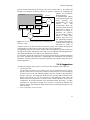
The media for communication implemented are as shown in figure 3.4. The patient can
change his or her viewpoint in VE by changing their body posture, for example: turn the
head to the left or right. Therapist can control the VE using therapist’s UI (therapist’s screen)
and manipulating it using keyboard or joystick. Both the system and the therapist can
14
Analysis and Design
generate sound needed during the therapy that can be heard easily by the patient and
therapist. The therapist can directly observe the patient’s experience by monitoring the
patient’s view and posture
Computer system
during the therapy.
patient posture
Tracker
To understand the relation
of the high-level goals with
media
provided,
task
HMD
HMD screens
patient
decomposition was being
formed.
The
task
sound
Keyboard /
Therapist's
Speakers /
decomposition
shows
the
Joystick
screen
Headphones
sub-goals, action taken and
media used to achieve its
Therapist
Therapist
sub-goals. For example, to
controls
controls
sound
determine the patient’s
sound
fear, the therapist asked a
therapist
patient by using media
sound to report his or her
fear. The therapist monitors
any responses that made by
Figure 3.4: Overview of the media used for communication
a patient such as sound and
(Schuemie, 2003)
movement by media of
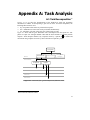
computer screen or by direct observation to patient’s posture. The complete decomposition
of these high-level goals to its lower sub-goals can be seen in Appendix A.
By supporting each goal with at least one procedure and supporting each task with at least
one high level goal, the functionality of the used system for a phobia treatment application is
made sufficient although several tasks are not supported by computer.
It is required to answer the question ‘Does the system provide the users with the information
they need?’ Informational requirement is distinguished state information from procedural
information. Complete information requirements gathered from Schuemie (2003) and can be
found in appendix A.
3.1.4 Suggestions
According to Schuemie (2003), there are several areas where usability can be improved.
• Fear determination
To determine the patient’s fear, therapist uses several information sources such as
patient’s posture and view that can be monitored using therapist’s screen and changing
of SUDs score. In most time, therapist depends on the use of SUDs to gain insight into
patient’s experience. The changing in SUDs has more meaning than its absolute value,
because each patient uses his own reference in determining this scale. Thus, the
historical SUDs of each patient in a therapy session is needed. With the current system
configuration, the therapist memorizes this information during the therapy. A simple
opportunity for improving the design of the system is to provide the therapist with
cognitive artifacts representing the historical SUD scores, allowing the therapist to work
more efficiently.
• Lack of affordances for the therapist
15
Chapter 3
Currently, the therapist needs to memorize most procedures for operating the system.
Perceivable affordances should be introduced to increase the learnability and
memorability of the system.
3.1.5 Challenges
Initially, our formulated goal was to improve the virtual environment for fear of flying. But
from our early research, observation and implementation, we discovered that the first
formulated goal to wholly improve the VE for fear of flying was difficult because of
hardware and software limitations. Our system was rather old while recent hardware and
software should be able to overcome our problems partly and easily. With faster and more
reliable hardware, we can produce improvements that are more significant. With upgraded
software, it will be possible to make VE easier and much more realistic. However, there is no
budget for new hardware and software right now. We also had limited time to do this project,
even became worse when we changed our goal in the middle of this project. Due to this
limitation, we changed our goal to researching and improving the usability of therapist’s UI
instead. Our system also has minimal system documentation. This leads to time consuming
when understanding the technical part of the system. Some survey to Schiphol airport and
inside the airplane was needed, to see and experience the real situation, and also to get some
pictures and videos. Getting permission for survey of our scale is difficult. We could not get
as much information as needed. Most of information that we used was obtained from the
Internet. The tools needed to support the projects are minimal in quality and their availability
was also an issue. (Digital camera, video recorder and audio recorder)
3.2 The System
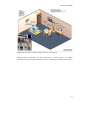
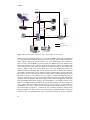
Figure 3.5 shows the overview of VR environment in our laboratory. The patient is seated in
a real airplane seat equipped with bass amplifier to simulate vibration in the airplane. By
wearing the HMD, the patient is immersed in virtual world, enters the computer-generated
cabin of virtual airplane and experiences various aspects of flying. The patient is exposed to
flying situations such as: sitting in standing still airplane, taxiing on the runaway, taking off,
flying in good weather, flying in bad weather and landing. During therapy, therapist can see
and hear patient’s experience during the virtual flight.
The therapist works most of the time using the therapist’s computer where he/she can control
the VR world, monitor the patient regularly and check the level of fear experienced by the
patient.
16
Analysis and Design
Figure 3.5: The VR Environment in Delft University of Technology
Detail hardware specifications and their connections are shown in figure 3.6. Martijn
Schuemie as his research project in Delft University of Technology built the system in 1999.
17
Chapter 3
HMD
Flight Chair
HMD
Control
Box
Transmitter
VGA Out
MMC
VGA Right
Left Monitor
VGA Left
Monitor 1
Monitor 2
VGA
Splitter
Bass Amplifier
Right Monitor
Computer
VGA 1
Sensor
Audio out
VGA 2
COM 1
RS-232
Transmitter
Speakers
Network
Flock of Birds
contol unit
Intergraph PC
VGA Cable
Network
Other type of cable
Keyboard, Mouse,
Joystic, (trackman)
2nd PC
Figure 3.6: Overview of the components of the system and their connections
Follows are brief explanations of figure 3.11. The type of HMD is Visette Pro, manufactured
by Cybermind. It has a remarkably high Field of View (FoV) of about 70 degrees diagonally.
It also supports stereoscopy, but the weight is one of its disadvantages. The resolution is
quite low, 640 * 480 and RGB as its color element. This HMD requires two standard VGA
inputs with resolution of 640 * 480 each using 60 Hz refresh rate. The Flock of Birds (FoB)
is the tracking tool for this system. It consists of a transmitter (the large, heavy block) that
creates a magnetic field, and a sensor (build in the rear of the HMD) that measures the
magnetic field and a control unit that uses the data from the sensor to calculate the translation
and rotation, communicated to the computer by using a standard RS-232 serial connection.
The airplane seat is a real passenger seat from KLM airplane, custom-build amplifier is put
behind the passenger’s seat, filtering out low frequency sounds and amplifying these to
create the vibrations effect. We used 2 personal computers (PC) in our system, the therapist
computer where the therapist controls the therapy session and the Intergraph PC which gets
input from HMD and therapist computer. The Intergraph PC is an ordinary Pentium 2 450
MHz PC, 256 Mbyte memory and 3DLabs Oxygen GVX420 graphic card. This card has two
VGA outputs and ‘GenLocked’, meaning that the vertical retrace of both outputs is
synchronized, a necessary requirement for most stereoscopic HMDs, including the Visette
Pro. The therapist’s computer is a Pentium II with 196 Mbyte memories running under
Microsoft Windows 98. These two PCs are communicated by standard ethernet network with
TCP/IP protocol. The WorldUp R4 is used as VR software package by Sense8, it supports
18
Analysis and Design
for a wide variety of input and output devices. For extended functionality, such as twodimensional graphical UI, network communication, database access and complicated
computations, Borland Delphi 5 is used to create Dynamic Link Libraries (DLLs) called
from WorldUp. An overview of the software used is presented in figure 3.7.
Intergraph PC
Therapist's PC (2nd PC)
Win98
World Up Player
Phobia.ini
Phobiaserver.dll
Databases
WinNT
World Up
Phobia.ini
Phobiaclient.dll
Listener.exe
Worlds flles
Phobia.ini
Phobiaserver.dll
parameters
network communication
Run a world
Phobia.ini
Phobiaclient.dll
Load the
corresponding
world
Listener.exe
Figure 3.7: Software specification diagram
3.3 Design
Though all new requirements urged to be added, some consideration was taken, and we
could not implement them all. As we described earlier, our focus is to improve the usability
and functionality of therapist’s UI. Some improvements to the VE itself have also been done
to support the overall functionality and usability of the system. Most of the time was spent
on improving the virtual environment, making a new therapist’s UI and enhanced it. A new
UI for the therapist was designed, some features to the world were added such as: lightning,
possibility of flying during different time of the day (morning, day, afternoon, and night),
possibility to change the cabin’s passenger density, possibility to fly to another destination,
possibility to choose the voice of pilot and purser, possibility to roll the airplane during the
flight, possibility to dim the cabin’s light and the most important one is the feature of
database, the possibility to save and print historical data of the patient with its SUDs
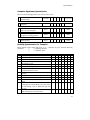
artifacts. Table 3.1 shows comparison features of the old and new system.
Feature
Destination
Old System
Milan
Flying time
Daylight
Bad weather control
Turbulence
Landing gear control
Flap wings control
Rolling control
Cabin density control
Few passenger
New System
Paris
Milan
Barcelona
Morning
Day
Afternoon
Night
Turbulence
Lightning
No passenger
19
Chapter 3
Feature
Old System
Pilot & Purser voice control
(max 2 voices)
Cabin’s light control
Fasten seatbelt control
Flight view
Window’s control
SUDs recording
Report
Reminding timer for stages
Alarm
Notes
Free view monitor
Patient’s view monitor
Table 3.1 Feature comparison the old and new system
New System
Few passenger
Moderate passenger
(can be added more as needed)
3.3.1 Therapist’s User Interface
According to Schuemie (2003), the therapist’s UI is different from the patient’s UI. This is
because the therapist does not have to be immersed in the virtual world and does not have to
have the sense of presence. What the therapist need is the control and overview of the
therapy situation. Since the therapist user interface can be called minimal, some
improvement emerged to overcome this issue in the term of its usability. In this research the
therapist’s UI become our focus, the improvement in this area get more priority than the
improvement of patient’s UI. In this design phase, we keep all the good features in the
current system, improve the usability of some controls and add more features that might be
useful for the therapist.
Users
The user of the therapist’s UI is the therapist. Therapists used to In Vivo therapy sessions, so
they know the sequences of flying and condition of the airplane. They also used to the
announcements made by the pilot or the purser. The only thing that has to put into our
consideration is the therapist sometimes does not used to use computer. Trainings will be
needed for the therapist before using the system.
State Transition Diagrams
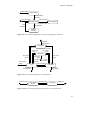
Some transition diagram was drawn to show the transition of states in our system. Figure 3.8
shows the state transition diagram for starting and stopping the simulation. Therapist loads
the world and waits until it fully loaded both for therapist’s computer and for VRstation. The
can fill in the session information and then start the simulation. During running the
simulation, the therapist exposes the patient to the VE. After stopped the simulation, the
therapist can print the report session. Figure 3.9 shows the state transition diagram for cloud
transition. It shows all possible transition of clouds. Figure 3.10 shows the state transition
diagram for voice announcement control. Figure 3.11 shows the state transition diagram for
flying sequences.
20
Analysis and Design
Load the world
World Loaded
Fill in the session
information
Close the program
Click print report
Simulation Ready
Report Displayed
Close the report
Stop
simulation
Start simulation
Simulation
Running
Figure 3.8: State transition diagram for starting and stopping the simulation
Change the
flying sequence
Cloud Upper
click "fair"
click "cloud
lower"
click "in
the cloud"
click "cloud
lower"
Cloud Lower
click "cloud
upper"
Change the
flying
sequence
click "fair"
Click "Flying"
Stage
click "cloud
upper"
click "in
the cloud"
click "in the cloud"
Fair
Change the
flying sequence
In the cloud
click "fair"
Change the
flying sequence
Figure 3.9: State transition diagram for cloud transition
choose the voice
Voice Variable
Chosen
Click play button
Stop/Expire
Voice Playing
Click stop button
Figure 3.10: State transition diagram for playing the voice announcement
21
Chapter 3
Start the simulation
Engine on at
terminal
Click Taxiing
Taxiing
Click Additional Taxiing
Additional
Taxiing
Click Taking Off
Taking off
Click Landing
Click Flying
Click Bad Weather
Control
Flying
Uncheck Bad Weather
Control
Click Landing
Click Roll
Control
Flying in bad
weather
Click Bad Weather
Control
Roll Flying
Unroll /
Expire
Uncheck Bad Weather
Control
Click Roll
Control
Unroll /
Expire
Roll Flying in Bad
Weather
Click Landing
End the simulation
Click Landing
Landing
Figure 3.11: State transition diagram for flying sequences
Usable Features
The prior research by Schuemie (2003) formulated some guidelines that an extended
therapist UI in the shape of a combined 2D – 3D console will increase the usability of the
system. These extended UI provides a tool to keep track the patient’s fear (SUDs recording)
and provides an ‘external’ viewpoint of the VE with a projection of real world object (Free
viewpoint). Therefore, in our new design these three important features are reserved and
used. The session time, alarm clock reminder was also kept. We also kept the system status
information with modification of its content. Because the new therapist’s UI is designed for
only the airplane world and we do not redesign it for all other worlds, so the world
identification is not needed. We only need the information of network status with amount of
received and sent data. We do not need the pad control so we eliminated this feature.
22
Analysis and Design
User Interface Guidelines
The old therapist’s UI is a standard UI for all VEs. It is consistent across all the VEs that
have been created, makes it becomes poor in design. For example, the map of the airplane
seat is much more smaller than the place given to it, so there is a big blank space beside this
map. In contrary, the widgets for controlling the VEs are squeezed into small container. The
old therapist’s UI is also not taking into consideration size of frequent used and useful
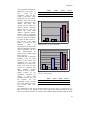
controls. The therapist rarely uses the note feature, but SUDs recording is used often. The
size of the note text box is very big whereas the SUDs chart is small. These kinds of
weakness in the old therapist’s are improved. Figure 3.12 shows the size comparison of the
note and SUDs recording features
Figure 3.12: The comparison of SUDs recording and Note features
Cognitive artifacts
It has already proved that providing the SUD recording and reviewing tools is really needed
for the therapist, but the historic data have not yet provided. The emergence of this historic
SUDs data is to track the history of patient’s treatment. The report printed after each session
will be put in the patient’s file, so the therapist can easily look the history of the patient’s
treatment progress.
23
Chapter 3
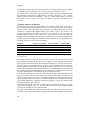
Figure 3.13: Overview of the printing and report feature.
Therefore, this allows the therapist work more efficiently rather than memorizes and writes a
note of the SUD scores during therapy. This feature made possible by the enhance of
database system enriched with report feature. Figure 3.13 shows the overview of the print
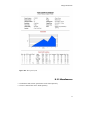
and report feature supported by database system. This report gives information about the
therapy session such as patient’s
number, therapist’s number,
session’s
number,
which
destination, which time of day,
which cabin density, which pilot
and purser, starting time, ending
time, session time, notes, SUDs
chart, and detail SUDs table
Affordances
therapist
Figure 3.14: Limitation in therapist user interface,
widgets in greys means disabled
24
for
the
One of the eight golden rules of
interface design by Shneiderman
is offer error prevention.
Meaning we have to prevent the
possible error as much as
possible. By using this guidance,
we tried to emend the voice
announcements control in the old
therapist’s UI, where the voice
Analysis and Design
announcements can be played anywhere
and anytime in the simulation. The
widgets in grays, means that the user
cannot use that widgets, the control are
disabled for the current stage. For
example, in figure 3.14, we are in flying
stage, and the voice control that possible
in flying stage is the height information,
bad weather and tax-free stuff
announcements. Thus, limitation control
in every stage of therapy by enabling
and disabling widgets will guide the
Figure 3.15: Flight View
user to do more successful task and
decreasing the error rate, so it will improve the usability of the system. Right after the radio
button for voice announcements there is order (suggestion) guidance to play sequentially.
The length of voice announcements is given after its name. This is an informative purpose
that the therapist can plan the therapy session effectively.
Figure 3.15 shows the graphical view of stages in flying. The therapist has to memorize in
which stage he/she is at that moment, and by this feature the therapist instead of memorizing,
he/she can concentrate to other important matter during therapy. Thus, this issue expected
will lead to the increasing of the usability for the therapist.
As also shown in figure 3.15, in taxiing, taking off and landing stages there are guided timers
that show the remaining time when the stage will be over. In figure 3.14, there is also time
information for each voice announcements. The therapist sometimes has difficulties in
planning a session, because he/she does not know the exact time every stage will be over.
Thus with this feature expected the planning for therapy session will be easier, and therapy
session more effective because of the right information given and will increase the usability
of the system.
Database
The Microsoft Access database was chosen to support our new therapist’s UI. This decision
mainly because we need to replace the old database provided by Delphi 5. An informal
consultation with the author of the system gave information that this database is easy to
corrupt beyond repairs. Therefore, we chose Microsoft Access because we have already the
license of this program, it is easy to use and it is easy to integrate with Borland Delphi 5. The
database itself has two tables (Session, SUDs) and one query (Report). The session table
saves the session information of the therapy, such as patient’s number, therapist’s number,
session’s number, etc. Table SUDs saves the information of patient’s SUDs. The query is
used by the report to display the historical data and SUD chart in the report. The database
structure and the report layout can be found in Appendix B.
Other features
A new therapist’s UI was designed and implemented; some changes could be seen easily, it
was clearly visible to the therapist.
We changed the language used in the system from Dutch to English. Complete pictures of
the old and new therapist UI could be found in Appendix B. The first change made was the
patient and session information entry, the old system used separated forms while the new
25
Chapter 3
Figure 3.16 Session Information
Figure 3.17: Flight plan control
Figure 3.18: The time controls,
system status and print control.
26
system presented complete user interface in one form,
the reason behind this change was to simplify the UI.
Figure 3.16 shows comparisons of the patient and
session information entry for both systems.
The flight plan is a new feature added to the therapist’s
UI. Using this control, therapist can plan the session
with certain destination, choose the flying time, choose
the cabin density and choose the pilot and purser
voices for announcement. Figure 3.17 shows the flight
plan control.
Figure 3.18 shows the session time and alarm feature,
session time is the indicator how long the therapy
session has begun. It will start after start button is
pressed. The alarm feature is used to give reminder to
the therapist when he needs to ask the patient’s fear
level. The blue gauge shows the remaining time before
the alarm fired. System status shows the network
connection; in this example, the connection is active.
Print button is used to print the report.
Cabin density can be controlled by selecting the
variable given in the cabin density combo box.
Changing in the cabin density control will affect the
map control as shown in figure 3.19. In the map
control there are some symbols which represented the
location of the patient (red square), the possible
location for the patient (yellow square) and the
locations of the other passengers (pink square). This
illustration is expected to help therapist to choose the
patient’s location in the therapy session by taking into
account the distribution of other passengers (crowded
or less crowded passengers near patient). There are six
different locations, at the front, at the middle or at the
back seat in the cabin, and the window seat or aisle
seat. Placing the patient by the window seat will allow
him to see the sequence of flying through the
passenger’s window.
In the new therapist’s UI, the start and stop of the
simulation is introduced, to give the exact time to start
and to end the therapy session after the therapist fills in
the flight plan. The simulation button control can be
seen in figure 3.20. After starting the simulation, the
therapist has the full control to expose the patient to the
virtual world. The main control of this action is laid in
the flight control, voice control, cabin control, flying
control and flight view.
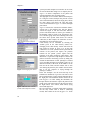
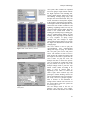
The old system has a centered world control, meaning
one can only control what is inside it (Besturing
wereld). This control can be seen in figure 3.21. In the
Analysis and Design
Figure 3.19: Cabin density control
Figure 3.20: Simulation Control
Figure 3.21: Centered virtual world control in
old system
new system, these controls are separated
into some groups. Flight control controls
the flight sequences from standing still,
taxiing, further taxiing, taking off, flying
and landing. During flying stage, the
therapist can control the clouds. They can
be fair, clouds above the airplane, airplane
in the clouds or clouds below the airplane.
In the flight control, the therapist also can
control the bad weather (turbulence and
lightning). Lightning feature can only be
carried out when flying at night. The other
feature is the sound effect control of
landing gear and flap wings. Landing gear
will be enabled during taking off and
landing, while flap wings will be enabled
in every sequence of flying except
standing still. The changes in flight
control will affect the flight view, because
the flight view illustrates the current state
of flying stage.
The voice control is used to play the
correspondences voice announcement
during each stage of flying. It is divided
into two parts, pilot voices and purser
voices. The number in front of voice’s
name means the suggested sequence and
the length of each voice is given after the
voice’s name. To play the voice, the
therapist first has to choose the specific
voice by clicking the control then clicks
the play button. To stop the voice, the
therapist simply needs to press the stop
button. Cabin control, according to its
name, is used to control what is
happening in the cabin: to control the
cabin’s light, fasten seatbelt sign and
passengers window. Rolling control can
only be used during flying. The location is
not really correct or grouped together.
This is because of the difficulties to
arrange all the controls. The overview of
the world control in the new system can
be seen in figure 3.22.
The last change made is the size of
patient’s view and free view control.
Because controls and features were added
27
Chapter 3
to the therapist’s UI, the patient’s view and free view could not be designed as big as the
original.
Figure 3.22: The overview of the new world controls
3.3.2 Patient’s User Interface
The users of the patient’s UI are the patient having fear of flying. Our users right now limited
only to those who are treated in VALK or UvA.
The possibility to change the flying time is made by changing its panorama, to different time
of the day, morning, day, afternoon and night. Figure 3.23 shows sixteen possible panorama
images.
More avatars were added from fourteen to thirty avatars in the cabin. These avatars were
static and could not move. We tried to add the number of passengers to make a fully booked
cabin (sixty passengers inside the virtual airplane) but the hardware limitation made it
impossible to do so. The cabin density could be control through therapist’s UI with no
passenger, few passengers (fourteen people) and moderate (thirty people). Pilot and purser’s
voice were recorded from a real pilot and purser, which made the voice announcements be
heard really professional. The possibility to fly to other destinations instead of just Milan
was also made by pilot and purser voice announcements. The destination airport was actually
the same, only the announcements were different. Some sound effects also changed, e.g. the
landing gear sound and flap wings sound.
Cabin’s light can be turned on and off by changing all textures inside the airplane into
shaded textures, but textures for objects that loaded during run time had to be loaded again in
every change of the cabin’s light, for example avatar’s textures.
We changed some of the textures in the airplane. However, these changes are not very
significant, resulting in not so visible results. Changes included the wing’s texture, window’s
texture, and no smoking sign beside the fasten seatbelt sign. By changing the wing’s texture
eliminated big grey area outside the window, made it easier for patients to see down to the
earth.
28
Analysis and Design
Skymorning.tga
Skycovermorning.tga
Cloudskymorning.tga
Skyday.tga
Skycoverday.tga
Cloudskyday.tga
Skyafternoon.tga
Skycoverafternoon.tga
Cloudskyafternoon.tga
Skynight.tga
Skycover.tga
Cloudskynight.tga
Morning
Day
After
noon
Night
Figure 3.23 Panorama images
The bad weather condition was created by adding one more feature, lightning. During the
lightning, a flashing light could be seen by the patient. This feature was made possible by
adding one light object and manipulating the ambient of the system.
3.4 Conclusion
Our analysis was based on the new requirements gathered with referencing to the task
analysis and evaluation of the current system. The limitations of the current resources were
also taken into account. Some improvements were made and not all of the new requirements
could be implemented. The most significant improvement was the new therapist’s UI with
new features in it, such as flight planner, display overview, rolling control, light control,
lightning, timer tools and report feature. The VE for the patients was also modified and
added by adjusting with improvements done in therapist’s UI. However, the changes in the
VE were not seen significantly although a lot of effort was put to improve this VE.
29
4 Evaluation
The evaluation phase took place in the end of system development. Summative Evaluation
was carried out for both patient’s UI and therapist’s UI. There were some differences in
evaluating these two kinds of UI. The patient’s UI evaluation was carried out in the term of
presence and the therapist’s UI was carried out in the term of usability. The experiments for
both UIs were done in the same time. We did sixteen experiments with sixteen pair of patient
and therapist (32 participants), five of them are real therapists, and the rest were students.
There were two-therapy sessions for each therapist and patient pair, one using the old system
(System A) and one using the new improved system (System B). The order of the sessions
was randomly chosen, and actors are randomly assigned to be a therapist or a patient. During
the therapy session, some tasks were assigned to the therapist and the patient. The therapist
controlled the VE using therapist’s UI and exposed the patient gradually to the flying
sequences in VE. Two groups of questionnaires were designed for evaluating the usability of
therapist’s UI and the presence in patient’s UI. These questionnaires were given before and/
after each sessions.
4.1 Patient’s User Interface
Requirements gathered for patient’s UI initially depended on our new requirements, Since
we changed our goal in the middle of our thesis project, it resulted in changing the
requirements for patient’s UI to get the kind improvement expected from therapist’s UI.
Although our direct goal is not to improve the sense of presence in the VE, it is also
interesting to evaluate whether the added new features in the VE also increase the sense of
presence of the VE. Therefore, we formulate our hypothesis:
Hypothesis 1: The new added features to the VE will increase the sense of presence for the
patient.
4.1.1 Experiment 1: Presence in Patient’s UI
The experiment goal is to evaluate the sense of presence of VE in the two systems, system A
and system B
Method & Design
Design
Sixteen students were participated during this experiment, seven are female and nine are
male. They were asked to be patients who has fear of flying and exposed to the VE. During
the exposure, they experienced virtual flying in the virtual airplane controlled by the
therapist. Two VEs are tested: the old system (System A) and the new system (System B), so
there are two sessions for each patient. For balance consideration, some patients experienced
system A first then B and the other will experience the system in inverse order. Short
briefing was given before the session, on information about the background of the
experiment, the goal and the task of the patient. They are asked to fill in the computer
31
Chapter 4
experience questionnaire and SAM questionnaire before the first session conducted. The
patient was exposed to the flight sequence experiences such as standing still, taxiing, taking
off, flying and landing. During the flying stage, the patient was being exposed to more
fearful situations, such as turbulence and thunderstorm. Every three minutes, the patient is
asked to report his/her level of fear in the scale from zero to ten, from not being afraid at all
to very afraid. After each session, the patient has to fill in the IPQ to measure the presence
experienced in the session and SAM questionnaire again to measure his/her feeling after the
session.
Measures
Presence was measured using the IPQ by (Schubert et al., 1999). The IPQ is divided into
three subscales: Involvement, Spatial Presence and Realness, and was discussed in more
detail in chapter 2. SAM Questionnaires were also given before and after each session to
measure the emotional feeling of the patient.
Result
Igroup Presence Questionnaire (IPQ)
The reliability analysis is done in the term of Cronbach’s alpha=0.7901(N of cases=32, N of
items=14), showing that responses had internal consistency.
Tests of Within-Subjects Effects
Measure: MEASURE_1
Source
SISTEM
SISTEM * ORDER
Error(SISTEM)
Sphericity Assumed
Greenhouse-Geisser
Huynh-Feldt
Lower-bound
Sphericity Assumed
Greenhouse-Geisser
Huynh-Feldt
Lower-bound
Sphericity Assumed
Greenhouse-Geisser
Huynh-Feldt
Lower-bound
Type III Sum
of Squares
82.167
82.167
82.167
82.167
87.917
87.917
87.917
87.917
397.302
397.302
397.302
397.302
df
1
1.000
1.000
1.000
1
1.000
1.000
1.000
14
14.000
14.000
14.000
Mean Square
82.167
82.167
82.167
82.167
87.917
87.917
87.917
87.917
28.379
28.379
28.379
28.379
F
2.895
2.895
2.895
2.895
3.098
3.098
3.098
3.098
Sig.
.111
.111
.111
.111
.100
.100
.100
.100
Table 4.1: The ANOVA Test within-subjects effect of presence questionnaire
The total score of the presence questionnaire for each system was used as within subject
variables for the ANOVA repeated measure with two number of level. Order (first means the
system A was conducted first and second the system B was conducted first) was introduced
as the between-subjects factors. This ANOVA did not show a significant differences
between two system in the scores of the presence questionnaire (F=2.895, p=0.111) as also
shows in Table 4.1. Session order was also did not have significant influences on this result.
Figure 4.1 shows a box plot of presence of the two systems.
32
Evaluation
60
50
40
30
4
8
20
N=
16
16
ATOTAL
BTOTAL
Figure 4.1: Boxplot of the presence score
in the two systems.
F
p
SP
3.151
0.098
INV
1.158
0.300
REAL
0.161
0.695
G
2.547
0.133
Table 4.2: Summary of ANOVA presence
questionnaire results per sub group.
For each sub total of Spatial Presence,
Involvement, Experienced Realism, and
Sense of being there, ANOVA repeated
measure was also conducted, over all result
showed that the sense of presence for each
category also showed there are no
significant differences. The complete
summary of this result is shown in table
4.2.
By calculating the means of the presence
per sub group, we can also plot diagrams of
a “presence profile”. The following
diagram shows a comparison of the
presence between system A and system B,
with n=16. The diagram plots SP, INV and
REAL on three axis (range 0 – 7), and
additionally the general item as a bow on
the left.
A
B
SP
3.2250
3.500
INV
2.0938
2.2656
REAL
2.8594
2.9375
G1
3.6250
4.0625
Table 4.3: Means of subscale in
presence questionnaire
SP
3.5
G
3
2.5
2
1.5
1
0.5
0
REAL
INV
System A
System B
Figure 4.2: Presence profile, the comparison of system A and B
We did not find any significant correlation between the scores of Computer Experience
Questionnaire (CEQ) and IPQ scores (System A and B). The Pearson correlation between
CEQ and IPQ system A was 0.325 (p=0.220), and between CEQ and IPQ System B was
0.339 (p=0.199). We did however find a significant positive correlation between IPQ score
of System A and B. (Pearson correlation=0.661, p=0.05). It means that in general, higher
33
Chapter 4
score on IPQ System A
tend to be paired with
higher score on IPQ
System
B.
The
complete
correlation
results can be seen in
table 4.4. Figure 4.3
shows the bivariate
plot of the relationship
between IPQ scores.
Correlations
IPQ System A
Pearson Correlation
Sig. (2-tailed)
N
Pearson Correlation
Sig. (2-tailed)
N
Pearson Correlation
Sig. (2-tailed)
N
IPQ System B
CEQ
IPQ System A IPQ System B
1.000
.661**
.
.005
16
16
.661**
1.000
.005
.
16
16
.325
.339
.220
.199
16
16
CEQ
.325
.220
16
.339
.199
16
1.000
.
16
**. Correlation is significant at the 0.01 level (2-tailed).
Tabel 4.4: Correlations between CEM and IPQ score
SAM Questionnaire
60
A reliability analysis has been performed for
this questionnaire using Cronbach’s alpha. The
alpha = 0.8500 (N of cases = 16, N of items=3),
this shows the internal consistency of the data.
Using ANOVA repeated measure F=0.156,
p=0.699, there are no significant differences of
SAM scores before and after session of system
A. The order also did not give significant
differences with F=0.373, p=0.551. The
boxplot of the SAM score before and after the
IPQ System B
session of system A is illustrated in figure 4.4.
Figure 4.3: the bivariate plot of the
The SAM score for system B was also not
relationship between IPQ scores
significant before and after the session
F=0.771, p=0.247. The boxplot of the SAM score before and after the session is illustrated in
figure 4.5. Therefore, from these results we can conclude that there are no significant
changes of emotional feeling after each session.
50
IPQ System A
40
30
20
20
30
40
50
60
30
30
13
12
3
13
15
20
20
10
10
8
4
4
0
N=
0
16
16
A Bef ore
A Af ter
Figure 4.4: The boxplot of SAM score
before and after the session of system A
34
N=
16
16
B Before
B Af ter
Figure 4.5: The boxplot of SAM score
before and after the session of system B
Evaluation
SUDs
The SUD recording most of the time during the experiments most of the time is zero,
because almost none of the participants actually have fear of flying. An interesting incident
is we really have a student who has a real fear of flying. He gripped his hand tightly and he
was not breathing regularly. Fortunately, this student was exposed to the VE by the real
therapist, so she could really understand what happened to him. During this therapy, the
SUD of the patient was very high.
Another observation in SUD recording, if the patient’s SUD increased, it was due to
lightning and thunder or also during turbulence. Therefore, the bad weather control actually
is an effective tool to expose the patient to the fearful condition.
Discussion
Some remarks were collected after sessions. In general, patients like the system and had
good impression. They gave comments such as ‘Quite good’, ‘good’, ‘nice idea’, ‘Certainly
a good idea’. Our biggest problem was the HMD, it is very heavy and distracted the comfort
of the patients. It was also difficult for the patient to move it. From observation during the
therapy sessions, patients were likely to hold the HMD with their hands, and their gesture
told us that wearing the HMD was uncomfortable and tiring for their eyes. Some people with
glasses also have difficulties to use focused HMD, because the left eye focusing control of
HMD was broken, they report that the pictures look blurry. There was also a large gap, a
black room between the eyes and the monitor in HMD. Despite those disadvantages, the 3D
impression by the HMD (stereoscopy) was very good and captured clearly by the patient.
Some suggestions were made to overcome this HMD issue. It was suggested to find a lighter
or a wireless HMD. Some patients could hear the differences of the pilot and purser voices
between two VEs, and they mentioned that the voices in system B was nice and sounded
professional. The only problem about voice and sound is when two kinds of sound were
played at the same time. The output voice flickered and it sounded less realistic.
More avatars in the VE in system B is also identified by the patients. They liked this feature,
especially when a nice girl or boy is near them, ‘There’s a cute girl near me’. These avatars
are static avatars. They sit still and do
not move. When lightning and thunder
System Preferences by the patients
occurred, these avatars did not give
emotional feedback and still in their
chair, no panic situation appears, no
A
panicky sound is heard and no
19%
movement happens. What happens in
Abstain
the VE becomes inconsistent with the
38%
real world. Lightning and thunder were
A
indeed fun and frightening, but the only
B
Abstain
lightning effect without environment
consequences was not enough.
There were also no avatars beside the
B
patient, and there was no avatar model
43%
for the patient himself. When a patient
tried to look down to her/his seat, he/she
saw the empty seat and can not see
Figure 4.6: System preferences by the patient
her/his own body, ‘Now I’m starting to
35
Chapter 4
feel afraid, where is my body?’ This inconsistency was shown clearly during the therapy
session.
Although there were still lots of shortcomings in our VE, the sense of real world could still
be felt by the patient. The possibility to see down the earth and the effect of turbulence and
lightning represent realism. Turbulence and lightning were their favorite. Most of the
patients did not have real fear of flying, they saw this feature as creative, challenging and
entertainment objects.
The pie chart of system preferences chosen by the patient can be seen in figure 4.6. System B
gains more preferences than system A. From our observation during therapy sessions, these
preferences were formed due to the lightning effect, and the differences in avatar’s quantity.
The lightning and thunder effect are only enabled during the night flight. This was a
disadvantage as being dark during the night flight, patients could not see clearly to the
outside world. Therefore, when a patient was exposed to use the system B with a night flight,
he/she could experience a ‘nice’ thunderstorm, but could not see clearly the scenery through
the window. In contrast with system A, where
patient could see more clearly the ‘height’
feeling of flying during daylight flight. In our
experiments, the patient did not know that the
system B also could do the daylight flying they
assumed that each system could only do what
they perceived. This assumption led to
preferences to system A. It can be concluded
also that our experiment was not maximal,
Figure 4.7: HMD problem
because it could not reveal all the improvement
of the VE. The passenger seat for our simulation right now have the vibration from the bass
amplifier attached to it, but this effect is not enough to simulate real movement during taking
off and turbulence. We were thinking about the suspension chair for our simulation, but once
again, we were confronted with the financial limitation. As we know, people’s height differs
from one to other. This led to a problem when a short patient wore the HMD and sat in the
simulation chair. This condition is explained in figure 4.7. Patient B felt more uncomfortable
wearing HMD.
The last suggestion we received was about the detail texture of the outside environment of
the airplane that needed to be improved.
Conclusion of Patient’s UI
Based on our analysis, we can conclude that our first hyphotesis was incorrect, thus we
rejected it.
Hypothesis 1: The new added features to the VE will increase the sense of presence for the
patient.
The new added features to the VE for supporting the therapist’s UI did not increase or add
the sense of presence for the patient.
36
Evaluation
4.2 Therapist's User Interface
Some therapists participated during re-design and evaluation. We use most of the subjective
evaluation by the therapist, and since it is difficult to therapists who are willing and able to
participate in our experiments, the evaluation is also given by students trained as therapists.
Although some students also participated during the evaluation, the sample amount could not
represent the whole population. We need at least thirty real practicing therapists to do
reliable experiment according to the statistical rule, but that amount was unachievable with
our given condition that at time. Therefore, the results of our research in this area might be
not being entirely reliable, but still we can see the result as indicators.
Our goal is to improve the usability of the therapist’s UI. Thus, we want to evaluate whether
our goal is fulfilled and we formulate our hypothesis:
Hypothesis 2: The improvements in Therapist UI are increasing the usability of the system.
4.2.1 Experiment 2: Usability Overview
The experiment goal was to evaluate the usability of the therapist UI whether the entire
feature added and changed showed significant improvement.
Method
Eleven students trained as therapist (most of them never try our system before) and five real
therapists were asked to do therapy sessions. The demographic table of the participant is
shown in table 4.5. Every therapist conducted two sessions; using the old system and new
system. The old system named as System A and the new system named as System B. To give
more objective judgment of the two systems, none of them was informed which the old
system was and which the new improved system was. Each session took about twenty
minutes and there were a small
N
Female Male
break between the sessions. To
Student trained as therapist
11
4
7
balance the experiment results,
around half of the therapists will
Real Therapist
5
4
1
use the System A first than
Total
16
8
8
System B, and the other half in
Table 4.5 Participan’st demographic table
contrary order. Detailed therapy
session tasks (Appendix C) was given to the therapist. It included instructions to load the
correspondence world, fill patient and session information, gradually expose the patient to
the virtual world and end the simulation. Time elapsed was recorded during each task and
what the therapist done was monitored and noted such as mistakes done by therapist,
questions, and assistance needed. Each therapist had to fill in the computer experience
questionnaire before starting the therapy sessions, and the usability questionnaire was given
after each sessions. After finishing the therapy sessions, the therapist were asked about
general remarks, comments, suggestion and general comparison about two systems. Another
extended subjective evaluation with real therapist also was done for gathering information
that is more authentic.
37
Chapter 4
Results and Discussions
Usability Questionnaire
The reliability analysis for
the usability questionnaire
TOTAL
was performed and the
Sum of
result
surprised
us.
Squares
df
Mean Square
F
Sig.
Cronbach alpha
was
Between Groups
2397.781
1
2397.781
4.767
.037
Within Groups
15090.938
30
503.031
0.9254 (N of cases = 32,
Total
17488.719
31
N of items = 27), showed
that responses have a
Table 4.6: The One-way ANOVA result table
really
good
internal
consistency. The One-way ANOVA result of the usability questionnaire showed significant
differences in the total score between two systems: F=4.767, p=0.037 (n=32).
ANOVA
Tests of Within-Subjects Effects
Measure: MEASURE_1
Source
SYSTEM
Sphericity Assumed
Greenhouse-Geisser
Huynh-Feldt
Lower-bound
SYSTEM * ORDER Sphericity Assumed
Greenhouse-Geisser
Huynh-Feldt
Lower-bound
Error(SYSTEM)
Sphericity Assumed
Greenhouse-Geisser
Huynh-Feldt
Lower-bound
Type III Sum
of Squares
2189.584
2189.584
2189.584
2189.584
205.084
205.084
205.084
205.084
1993.635
1993.635
1993.635
1993.635
df
1
1.000
1.000
1.000
1
1.000
1.000
1.000
14
14.000
14.000
14.000
Mean Square
2189.584
2189.584
2189.584
2189.584
205.084
205.084
205.084
205.084
142.402
142.402
142.402
142.402
F
15.376
15.376
15.376
15.376
1.440
1.440
1.440
1.440
Sig.
.002
.002
.002
.002
.250
.250
.250
.250
Table 4.7: The ANOVA for repeated measure result
Because in our experiment the same patient took part in two sessions (system A & B), we
could analyze our data using ANOVA for repeated measure. The repeated measure allows us
to compare the variance caused by the
160
independent variable to a more accurate error
term by removing the variance caused by
140
differences in individuals. This increases the
120
power of the analysis and means that fewer
participants are needed to have adequate
100
power. The ANOVA for repeated measure
shows much better result. There was a
80
significant difference in the total score
60
between two systems: F=15.376, p=0.002.
There were no significant differences
40
between the groups who tried the systems in
System A QT
System B QT
different order, system A for first session
Picture 4.8: The boxplot of the usability
followed by system B, or system B for first
Questionnaire for system A and B
session followed by system A.
N=
38
16
16
Evaluation
This was indicated by the interaction between ‘system’
and ‘order’ (system*order) which is not significant:
AQT
BQT
N
16
16
F=1.440, p=0.250. In other words, the different order in
Sum
1687.00
1964.00
our experiment did not affect the relative ratings of the
Mean
105.4375
122.7500
different people. Table 4.7 shows the ANOVA repeated
Std. Deviation
24.8193
19.7501
measure result. The significant differences proved earlier
Minimum
48.00
84.00
Maximum
138.00
147.00
should be verified; which one had the higher or lower
usability. By calculating the means of questionnaire A
Tabel 4.8: Usability
and B, we drew a box plot as seen in figure 4.8 This
questionnaire case summaries
figure shows us that the means of system B is higher than
system A. Thus, by this result we accepted our second hypothesis that the improvements
made in therapist UI increase the usability of the system. The complete case descriptive of
the usability questionnaire result can be seen in table 4.8.
Additional usability questions filled only for system B to evaluate the new features had a
reliability alpha of 0.8216 (N of cases=16, N of items=8). It means that these eight additional
questions had a good internal consistency. The results of the additional questionnaire are
displayed in table 4.9, which shows that all the new features were evaluated positively; they
were very useful and/or easy to use. Thus, by these results we add our second hypothesis to
include proof that the new added features are useful and easy to use.
Case Summaries
Element
Usefulness(SD)
Ease of use (SD)
Flight Plan Control
4.9375(1.3401)
Cabin Control
4.8750(1.0247)
Roll Control
4.8125(1.1087)
Flight View
5.3125(1.0145)
Print Function
5.1250(1.2583)
4.8750(1.5000)
Timer feature
4.5000(1.3166)
Simulation Control
4.9375(1.5262)
Table 4.9: Average scores (and standard deviation) of the additional usability questions
(n=16) regarding new features of the therapist UI, scale from 1 to 7.
There was no significant correlation between Computer Experience Questionnaire and
Usability Questionnaire scores as shown in table 4.10. Between CEM and Usability A
140
Correlations
Usability B
CEM
Pearson Correlation
Sig. (2-tailed)
N
Pearson Correlation
Sig. (2-tailed)
N
Pearson Correlation
Sig. (2-tailed)
N
Usability A Usability B
1.000
.727**
.
.001
16
16
.727**
1.000
.001
.
16
16
.066
-.028
.808
.919
16
16
**. Correlation is significant at the 0.01 level (2-tailed).
Table 4.10: Correlations between CEM and
Usability Questionnaires
CEM
.066
.808
16
-.028
.919
16
1.000
.
16
120
100
80
Usability A
Usability A
60
40
80
90
100
110
120
130
140
Usability B
Figure 4.9 shows the bivariate plot of the
relationship between usability
questionnaire scores
39
150
Chapter 4
(Pearson Correlations=0.66, p=0.808) and between CEM and Usability B (Pearson
Correlations=-0.28, p=0.919). However, we found a significant correlations between
usability A and B (Pearson Correlations=0.727, p=0.01), Higher score in usability System A
tend to paired with higher score in usability questionnaire System B. Figure 4.9 shows the
bivariate plot of the relationship between usability questionnaire scores
Performance time and Error
Performance time and error were measured during experiment, in every task given, the
complete task measured can be seen in table 4.11. At the start of each task, the therapist will
say aloud “Beginning Task” followed by the number of the task, and say “Task Complete” at
the end of each task.
Task
Task 1
Task 2
Activities
• Loading the correspondence world
• Filling in the therapy session information (Patient, Therapist and Session
Number)
• Put the patient to the right chair (window seat)
Task 3 • Set the alarm to remind every 3 minutes
• Gradually expose the patient to the flying sequences, standing still, taxiing,
additional taxiing, taking off, flying, flying in bad weather, and landing.
• Play the correspondences voices of pilot and purser.
• Try to use all features in the system.
• Ask the patient’s level of fear when the alarm fired, and put it to the SUD entry.
Task 4 • (Only for system B) Print the session report.
Table 4.11: Tasks defined for the session therapy
The fourth task only for system B, because in system A there was no report that can be
printed. The average comparison of the results can be seen in table 4.12 and figure 4.11. It
shows that the first task took longer time to complete in system B than in system A. The
second task, though, took longer time to complete in system A than in system B, this is
because the system loading in both tasks are in different time. System A had a separate form
for patient and session entry, in contrast to system B that had same form for both. This led to
the difference time in loading time of the VE. This can be illustrated as show in figure 4.10.
System A
Loading Entry patient
the forms information
Task 1
Loading the VE
Task 2
Exposed patient toVE
Task 3
System B
Loading
the forms
Loading the VE
Task 1
Entry patient
information
Exposed patient toVE
Print the
report
Task 2
Task 3
Task 4
Figure 4.10: Task with loading differences for system A and B
40
Evaluation
We can therefore calculate the
Task 1
Task 2
Task 3
Task 4
added Task 1 and Task 2, to
System
A
00:49.2
01:55.0
14:02.9
give a better way of
01:08.2
System B
02:21.3
01:15.2
17:15.4
comparison. After all this,
Table 4.12: Comparison of average task completion time
system A still had a faster
loading time of two minutes
and thirty forty four seconds
20:09.6
(02:44.2) compared to three
minutes and thirty four
17:16.8
seconds. (03:34.2). There was
14:24.0
almost a minute difference
between the two. We also
11:31.2
A
analyze this result using
B
08:38.4
ANOVA repeated measure
and the result is significant:
05:45.6
(F=10.731,p=0.005). The third
02:52.8
task took longer to complete
in system B than system A.
00:00.0
Task 1
Task 2
Task 3
This was due to the added
features in system B. The
Figure 4.11: Bar chart comparison of average task
additional
types
of
completion time for system A and B
announcements by purser and
pilot also affected the outcome
0.80
of the experiments. The new
0.70
voice
announcements
in
system B were actually longer
0.60
than in system A.
0.50
In the third task, we asked the
A
therapist to try the entire
0.40
B
feature in the system. This
0.30
comparison was no longer
0.20
suitable for us to analyze any
further. This result was also
0.10
proved very significant time
0.00
Task1
Task2
Task3
using
ANOVA
repeated
measure: F=74.262, p=0.000.
Figure 4.12: Bar chart comparison of average error
During sessions in our
rate for system A and B
experiment, sometimes we
needed
to
restart
both
computers because they did
Task1
Task2
Task3
Task 4
not response. The ‘not
System
A
0.19
0.44
0.69
responding’ system occurred
System B
0.13
0.06
0.63
0.06
four times during all thirtyTable 4.13: Comparison of average error rate
two sessions that were
conducted.
The comparison of error rate for both systems can be seen in table 4.13 and figure 4.12.
Error in our system was defined as errors which made by the therapist during the therapy
sessions, and when assistance were needed. The ANOVA repeated measure analysis shows
41
Chapter 4
insignificantly results between the sum of error rate for A and B, although from the graphics
and ordinary means calculation, the error rate for system B is better than system A.
There were also no significant correlation between computer experience questionnaire with
the performance time and error. CEM and Time A (Pearson Correlations = 0.153, p=0.570),
CEM and Time B (Pearson Correlations = 0.324, p = 0.220), CEM and Error A (Pearson
Correlations=-0.192, p=0.476) and CEM with Error B (Pearson Correlations=0.097,
p=0.720).
Therapist Subjective Evaluation
Five therapists were given more questionnaires after conducting two sessions. The results of
the first nine questions are summarized as in table 4.14. The roll control was not used often,
and it was not too easy to use either. The roll control is used during flying stage. It rolls the
airplane so the horizon will slightly leaning in the patient’s view. It was unclear in the
therapist’s UI when the roll control can be used. To be able to use the roll control, the
therapist simply needs to press the control once to roll to the left or to roll to the right. The
airplane will then gradually roll to the angle of fifteen degrees, and roll back again to the
original position in the length of one minute and sixteen seconds (1:16). Unfortunately, the
therapists were not very clear on these instructions.
Element
Frequency of use(SD) Ease of use (SD)
Usefulness(SD)
Roll Control
2.2000(1.3038)
3.6000(1.9494)
Bad Weather Control
3.6000(1.6733)
4.8000(0.4472)
Flight View
4.0000(1.7321)
4.8000(0.4472)
Timer feature
4.8000(0.4472)
Print Function
4.4000(0.8944)
Table 4.14: Average scores (and standard deviation) of the therapist subjective evaluation,
scale from 1 to 5.
The therapist did not too often use the bad weather control but the easiness of this control
was evaluated very positively. The new feature of flight view was evaluated positively both
for the frequent use and usefulness, this allowed the therapist to see overview of the sessions.
The timer feature was also found to be very useful. It gave information when one stage was
about to finish so the therapist can plan the next action to be carried out in the therapy
session. The print function was also discovered to be very useful. Most therapists supported
their answer by stating that the report will be used in the future, to know the overview what
the patient did during the sessions and also to give feedback to the client.
Four therapists stated their preferences to fill in the patient and session information in the
same user interface with the world control. One therapist stated that it actually does not
matter, as long as this feature exists. Five therapists agreed that the same form for patient and
session information entry was easier to use than the separated ones. Therapists also liked the
flight control subjectively. It helped the therapist in planning a session. One said that in the
flight plan all options were combined.
Three therapists liked the idea of given restrictions in controlling the VE, but two of them
stated these limitations were very annoying and did not give them enough freedom,
especially in controlling the voice announcements.
In general, all therapists agreed that the system B, the new improved system was easier to
use than the old system. One therapist said that system B was more difficult to learn due to
42
Evaluation
the more complicated features. However, system B had a more logic and more convenient in
the user interface and it is believed that after few times of training a therapist will learn it
quickly. Three therapists stated the system B is easier to learn and one therapist said it did
not a matter. All therapists also agreed that they liked all the added features. Most of them
like the lightning and thunder, because they were fun to operate. The most useful feature of
all was the flight view that combined
System Preferences
options from flight control and voice
control. The therapists also liked real voice
announcements from pilot and purser, and
A
6%
the sound of flap wings and landing gear.
One therapist stated that the report feature
Abstain
31%
would be very useful in the future. All
therapists preferred to use system B to treat
a patient who has fear of flying. They said
that system B was more organized than
system A. One therapist who gave initial
requirements states that we had almost
B
63%
everything fulfilled, except for the amount
of the avatars and the unreal look of the
clouds. One therapist suggested that we
should have separated approaching, touch
Figure 4.13: System preferences by
down and taxiing stages during aircraft
therapist
landing.
Remarks
At the end of each session, therapists were asked about general remark, system preferences
and suggestions. As a general remark, they opinion were that VRET is really a good idea.
Some of them said that it was fun and nice to operate. The user interface for system B looked
more complicated at the beginning, but after a while, it became easier to master. Overall,
they gave positive feedbacks to the improvement of the therapist’s UI. From sixteen
therapists, ten of them state their preferences in using system B instead of system A. One
therapist preferred system A to system B, and five therapists did not given their preferences.
Most of them preferred system B to system A because of the language used, more
controllable features, its ease of use, easily learnable, and it provides clearer instructions.
Almost nothing can go wrong with system B. One therapist preferred system A to system B
because it was less complicated due to less number of buttons that needed to be pressed to
operate the system.
The possibility to compose scenarios and to simply run them afterwards was coined by one
of the therapist as his suggestion. We referred to this function as autopilot. We thought about
this function in the beginning, but from initial interviews, the therapist wanted to have
complete control during therapy session. Thus, this feature was not implemented. Other
useful suggestions were the introduction of cabin sound (people talking, baby crying, etc.)
and alert sound for alarm.
Some feedbacks also gathered when all the participants were asked to list three things they
liked most and least in using the system. The results of these questions varied from one to the
other. Most participants listed all the new features as the ones that they like about the new
system. Lightning and thunder became favorite features in system B, followed by feature of
43
Chapter 4
information overview during therapy sessions with linked option and limitation. The
possibility to see what the patient’s sees in VE by the therapist also evaluated very well. The
system gave therapists a feeling of full control during the therapy session. It was also fun to
operate. The overall sound effects in system A was louder than system B. It can clearly be
heard during landing stage. We think it would be nicer if system B could use the same
quality of sound as in system A. System A was also evaluated as being simple because there
were not many controls and buttons to be pressed. Most of the therapist did not like the alarm
reminder that was not functioning very well in system B. It did not produce a reminder alert.
The note feature was also not too useful either.
Conclusion of Therapist’s UI
By analyzing our result experiment, we can conclude that our formulated hypothesis for
usability is accepted. It was significantly different from the old system, and it is
improvement, thus it increases the usability for the therapist.
Hypothesis 2: The improvements in Therapist UI are increasing the usability of the system.
Thus, the usability of therapist’s UI increase by improvements made.
44
5 Conclusions
The goal of this thesis mainly is to improve the usability of the therapist’s UI. To achieve
this goal, we also have to evaluate the improvements made. During our journey in this
project, we discovered that the patient’s UI and therapist’s UI are dependent each other. We
cannot improve only patient’s UI or only therapist’s UI to make the system useful. Thus, we
made the improvements for both UIs, and evaluated them to see the result overview of our
improvements.
5.1 Statement of the Result
The evaluation for the patient’s UI is to evaluate whether the improvements added the sense
of presence for the patient. The results of IPQ show that there is no significant differences
between the IPQ score for both old and new system. The results SAM questionnaires even
cannot to be used to evaluate the presence in our case. It did not show the emotional feeling
differences before and after using both systems. The SUDs recordings were not effective due
to zero majority scores that we got. Hence, based on this analysis, we can conclude that our
first hypothesis was incorrect. We reject our first hypothesis and conclude as follow.
Conclusion 1: The new added features to the VE did not increase or add the sense of
presence for the patient.
The causes of this unsuccessful experiment might caused by: (a) unrepresentative
participants, since most of the participants are student who does not have fear of flying, or
(b) the improvements of the VE is not relevant to the sense of presence, or (c) the conducted
experiments could not reveal the improvements made.
On the other hand, our formulated hypothesis for the usability was strongly supported by the
analyzed results from experiments done under the term of usability of the therapist’s UI. We
can conclude that our formulated hypothesis can be accepted. It was significantly different
from the old system, and it has shown significant improvements. Therefore, it increased the
usability for the therapist.
Conclusion 2: The improvements in Therapist UI are increasing the usability of the system.
Although the result of this usability evaluation was very good and promising, we have to
take into account the sample population that was not represented properly. Students trained
as therapist sometimes regarded the system as an entertainment media instead of media to
cure the patient.
Our evaluation was based more on interview with the real therapist and feedback from them,
because they will be the real user of the system. Thus, we cannot prove formulated
hypothesis in full confidence. All we can do is to conclude that the results of our evaluation
give positive indicators leading to the acceptance of the hypothesis.
45
5.2 Statement of the Problem Unsolved
Some requirements could not be fulfilled; because of the limited resources we had. Most of
the unsolved technical requirements were related to the objects in VE for the patient, such as
clouds, avatars, grounds, etc. This is because we are very short on time, hardware, and
software resources. It is very challenging to do our project with our technical limitation. We
could not enhance more features in the therapist’s UI without adding features in VE. Limited
resources prevented us to improve the VE that could result in improvements in therapist’s
UI. We could always do something to temporarily improve the VE. However, the big
question is whether it is wise to invest time and efforts to temporarily bring those
improvements while ones that are more permanent can be achieved in less time by investing
a reasonable amount of money in hardware and software.
5.3 General conclusion
In the term of presence, the improvements made were not significant enough to be called
improvement. In contrary, the new system was improved significantly under the term of
usability. Thus, we hope through this research, we enable therapists to conduct therapy
sessions more efficiently and effectively. Although it has not been proven that the efficient
therapist and therapy would lead to the efficiency to cure the patient, we nevertheless hope
that it forms better communication between the therapist and its media.
46
References
AdSam. "AdSam Webpage." Web page, [accessed 30 July 2003]. Available at
http://www.adsam.com.
Bradley, M, and P Lang. 1994. Measuring emotion: The Self Assessment Manikin and the
Smantic Differential. Journal of Behavioral Therapy & Experimental Psychiatry
25: 49-59.
Bryson, Steve. "Virtual Reality: A Definition History, Lexicon Definition Supplement." Web
page, [accessed 4 February 2003]. Available at
http://www.fourthwavegroup.com/fwg/lexicon/1725w1.htm.
Gunawan, Lucy Trianawaty. 2003. Research Assignment Virtual Reality Exposure Therapy
'Fear of Flying'. Charles. A. P. G van der Delft University of Technology Mast.
Harrison, David, and Mark Jaques. 1996. Experiments in virtual reality. Oxford:
Butterworth/Heinemann.
Huang, Milton P, and Norman E Alessi. 1998. Current Limitations into the Application of
Virtual Reality to Mental Health Research. Virtual Environments in Clinical
Psycology and Neuroscience .
Laurel, Brenda. 1991. Computers as theatre. Reading, Mass: Addison-Wesley Pub.
Nielsen, Jakob. 1993. Usability engineering. Boston: AP Professional.
Richmond, Raymond Lloyd. "A guide to Psycology and its Practice: Consumer information."
Web page, [accessed 4 February 2003]. Available at
htpp://www.guidetopsychology.com/fearfly.htm.
Rosson, Mary Beth, and John M Carroll. 2002. Usability engineering scenario-based
development of human-computer interaction. 1st ed ed. Morgan Kaufmann Series in
Interactive Technologies. San Fancisco: Academic Press.
Rothbaum, Barbara Olasov, Larry Hodges, Samanta Smith, Hwan Lee Jeong, and Larry
Price. 2000. A Controlled Study of Virtual Reality Exposure Therapy for Fear of
Flying. Journal of Consulting and Clinical Psychology 68(6): 1020-1026.
Schubert, T, F Friedmann, and H Regenbrecht. The experience of presence: Factor analytic
insights. Presence: Teleoperatos and Virtual Environments .
Schubert, T, Friedmann, F, and Regenbrecht, H. "Igroup Presence Questionnaire (IPQ)."
47
Web page, [accessed July 1918h]. Available at http://www.igroup.org/pq/ipq/.
Schuemie, Martijn. 2003. "Human-Computer Interaction and Presence in Virtual Reality
Exposure Therapy." Dissertation, Delft University of Technology.
Sherman, William R, and Alan B Craig. 2003. Understanding virtual reality interface,
application, and design. Morgan Kaufmann Series in Computer Graphics and
Geometric Modeling. Amsterdam, Boston: Morgan Kaufmann Publishers.
Shneiderman, Ben. 1998. Designing the user interface strategies for effective humancomputer interaction. 3rd ed ed. Reading, Mass: Addison-Wesley.
Trochim, William M. 2000. "The Research Methods Knowledge Base." Web page, [accessed
30 July 2003]. Available at http://trochim.human.cornell.edu/kb/index.htm.
VALK Foundation. "VALK Foundation Website." Web page, [accessed 29 July 2003].
Available at http://www.valk.org.
Wilhelm, Frank H, and Walton T Roth. 1997. Clinical Characteristics of Flight Phobia.
Journal of Anxiety Disorders 11(3): 241-61.
48
References
Abbreviations
1D
2D
3D
Alt.
ANOVA
CEQ
DLL
DoF
FoB
FoV
G
GUI
HCI
HMD
INV
IPQ
PC
REAL
SAM
SD
SE
Seq.
Sim.
SP
SUD
TA
UI
UVA
VE
VR
VRET
One Dimensional
Two Dimensional
Three Dimensional
Alternative
Analysis of Variance
Computer Experience Questionnaire
Dynamic Link Libraries
Degree of Freedom
Flock of Birds
Field of View
Sense of being there
Graphical User Interface
Human-Computer Interaction
Head-Mounted Display
Involvement
Igroup Presence Questionnaire
Personal Computer
Experienced Realism
Self Assessment Manikin
Standard Deviation
Standard Exposure
Sequential
Simultaneous
Spatial Presence
Subjective Unit of Discomfort
Task Analysis
User Interface
University van Amsterdam
Virtual Environment
Virtual Reality
Virtual Reality Exposure Therapy
49
Appendix A: Task Analysis
A.1 Task Decomposition 1
Figures A.1 to A.6 show the decomposition of the higher-level goals into procedures
encountered in VRET. In decomposing a goal into its lower level task components, the
following abbreviation is used:
• Seq.: Sequential. These tasks are performed in sequence.
• Sim..: Simultaneous. These tasks can be performed simultaneously
• Alt.: Alternative. The user selects only one of these tasks at a time.
Figure A.1 shows that the goal ‘Determine fear’is decomposed into the speech act ‘Ask
patient to report fear’ through medium sound and the observational act ‘Monitor patients
response’ while therapist monitors any responses made by a patient such as sound and
movements using computer screen or by direct observation to patient’s posture.
Cure
Cure patient
patient
Goals
Procedures
Determine
Determinefear
fear
Change exposure
Solve patient
ambiguity
sim.
Ask
Ask patient
patientto
to
to
to report
report fear
fear
Monitor
Monitor patient
patient
response
response
Sound
T.Controls
T.Screen
P.Posture
Figure A.1: ‘Determine fear’ goal decomposition (Schuemie, 2003)
1
Retrieved from Schuemie (2003)
51
Appendix A
52
Curepatient
patient
Cure
Determine fear
Goals
Change exposure
exposure
Change
Solve ambiguity
alt.
Procedures
Instructpatient
patient
Instruct
Instructcomputer
computer
Instruct
sim.
seq.
Instructcomputer
computer
Instruct
to move
movepatient
patient
to
Giveinstruction
instruction
Give
alt.
alt.
Instructpatient
patient
Instruct
tolook
look
to
Instruct patient
patient
Instruct
tochange
changeposture
posture
to
Instructpatient
patient
Instruct
tomove
move
to
Monitorpatient
patient
Monitor
Informpatient
patient
Inform
about VE
VE change
change
about
Push joystick
joystick
Push
Sound
T.Controls
T.Screen
P.Posture
Figure A.2: ‘Change exposure’ goal decomposition (Schuemie, 2003)’
Pressbutton
button
Press
Monitor patient
patient
Monitor
position
position
Task Analysis
Figure A.2 shows the ‘Change exposure’ goal decomposition. The therapist has two choices,
to instruct the patient or the computer. An instruction to a patient can be an instruction to
look at something, change the posture or move. This instructions given is monitored by the
therapist whether it was executed correctly by the patient. The therapist will inform every
changes made when he or she intends to change the VE. Instruction to move patient will use
either the joystick or keyboard. Once again the therapist will monitor the effect of these
actions.
Figure A.3 shows the ‘Answer patient questions’ goal decomposition. When a patient asks
something, the therapist will give a response and answer right away. However, some
explanations of certain aspects of the therapy or VE will be given without being asked.
Cure
Cure patient
patient
Goals Determine fear
Procedures
Change exposure
Solve
Solve patient
patient
ambiguity
ambiguity
seq.
Give
Give answer
answer
alt.
Monitor
Monitorfor
for
patient
patientrequests
requests
Inform
Informpatient
patient
about
about VE
VE
Inform
Inform patient
patient
of
ofrationale
rationale
Sound
T.Controls
T.Screen
P.Posture
Figure A.3: ‘Solve ambiguity’ therapist goal decomposition (Schuemie, 2003)
Figure A.4 shows ‘Follow therapist instructions’ goal decomposition. To follow the therapist
instruction, the patient must be aware of the instruction given and executes it immediately.
This instruction can change the VE experience by the change of the patient’s posture or
report the patient’s fear level. When the patient asks to change his or her experience, the
therapist will monitor the effect of every change.
Figure A.5 shows the ‘Avoid fearful situations’ goal decomposition. It is a tendency of
phobic people to avoid some fearful situations by looking to other direction or step back
from the fearful stimuli and situation. This action will be visible in the VE.
53
Appendix A
Get
Getrid
ridof
offear
fear
Follow
Follow therapist
therapist
instructions
instructions
Goals
Procedures
Avoid fearful
situations
Solve ambiguity
seq.
Execute
Executetherapist
therapist
instructions
instructions
alt.
Change
Change
experience
experience
sim.
Listen
Listenfor
fortheratherapist
pistinstructions
instructions
Change
Change posture
posture
Report
Report fear
fear
level
level
Monitor
Monitor VE
VE
Sound
HMD screens
P.Posture
Figure A.4: ‘Follow therapist instructions’ goal decomposition (Schuemie, 2003)
Figure A.6 shows ‘Solve ambiguity’ goal decomposition. The patient asks a question when
he/she finds an ambiguity about something in VE and waits for therapist’s response.
Get
Getrid
ridof
offear
fear
Goals
Follow therapist
instructions
Procedures
Avoid
Avoid fearful
fearful
situations
situations
Solve ambiguity
sim.
Change
Change posture
posture
Monitor
MonitorVE
VE
Sound
HMD screens
P.Posture
Figure A.5: ‘Avoid fearful situations’ goal decomposition (Schuemie, 2003)
54
Task Analysis
Get
Getrid
rid of
offear
fear
Goals
Follow therapist
instructions
Procedures
Avoid fearful
situations
Solve
Solve ambiguity
ambiguity
seq.
Ask
Askquestion
question
Listen
Listenfor
for
response
response
Sound
HMD screens
P.Posture
Figure A.6: ‘Solve ambiguity’ goal decomposition (Schuemie, 2003)
A.2 Information needs2
Element: Ask patient to report fear
Description:
Verbal question by the therapist to the patient to report what level of fear he or she
is currently experiencing.
Procedural information needs:
Sources:
State information needs:
Sources:
Element: Monitor patient response
Description:
Monitoring the reactions of the patients that might indicate his or her fear level
Procedural information needs:
Sources:
State information needs:
Sources:
Patient’s fear responses
Sound
T.Screen
P.Posture
Element: Instruct patient to look
Description:
Verbally instructing the patient to look into a certain direction
Procedural information needs:
Sources:
State information needs:
Sources:
2
Retrieved from (Schuemie, 2003)
55
Appendix A
Element:Instruct patient to change posture
Description:
Verbally instructing the patient to change his or her posture in a certain way
Procedural information needs:
Sources:
State information needs:
Sources:
Element: Monitor patient
Description:
Monitoring whether the patient is following instructions
Procedural information needs:
Sources:
Sources:
State information needs:
Sound
Current patient looking direction
T.Screen
Current patient posture
P.Posture
Current patient location in VE
Potential patient movement
Element: Inform patient about VE changes
Description:
Verbally informing the patient about any changes that the therapist will make to the
VE
Procedural information needs:
Sources:
State information needs:
Sources:
Element: Push joystick
Description:
Operation of the joystick in order to move the patient
Procedural information needs:
Sources:
Operation of the joystick
Training
Manual
State information needs:
Sources:
Element: Press button
Description:
Pressing one of the buttons to start or stop the autopilot
Procedural information needs:
Sources:
Relationship between buttons and Training
locations
Manual
Operation of the autopilot
State information needs:
Sources:
Element: Monitor patient position
Description:
Monitoring the effect that the therapist’s controls have on the VE
Procedural information needs:
Sources:
State information needs:
Sources:
Position of the patient in the VE
T.Screen
56
Task Analysis
Effect of interactions by patient
Element: Monitor for patient request
Description:
Listening to the patient to determine if the patient has a question
Procedural information needs:
Sources:
State information needs:
Sources:
Does the patient have a question
Sound
Element: Inform patient about VE
Description:
Informing the patient about the VE
Procedural information needs:
State information needs:
Sources:
Sources:
Element: Inform patient of rationale
Description:
Informing the patient about the rationale of the therapy
Procedural information needs:
Sources:
State information needs:
Sources:
Element: Listen for therapist instructions
Description:
Listening for any instructions that the therapist might give
Procedural information needs:
Sources:
State information needs:
Sources:
Therapist instructions
Sound
Element: Change posture (Change experience)
Description:
Changing one’s posture in accordance with therapist’s instructions
Sources:
Procedural information needs:
Effect of posture change on the view in Training
the HMD
State information needs:
Sources:
Element: Monitor VE (Change experience)
Description:
Monitoring the effect that one’s actions have on the VE as seen in the HMD
Procedural information needs:
Sources:
State information needs:
Sources:
Effect of own actions on VE
Sound
Effect of therapist actions
HMD screens
57
Appendix A
Element: Report fear level
Description:
Reporting of the fear level to the therapist
Procedural information needs:
Sources:
State information needs:
Sources:
Element: Change posture (Avoid fearful situations)
Description:
Changing one’s posture to avoid a situation that is fearful to the patient
Procedural information needs:
Sources:
Effect of posture change on the view in Training
the HMD
State information needs:
Sources:
Element: Monitor VE (Avoid fearful situations)
Description:
Monitoring the VE to determine whether avoidance behavior is successful
Procedural information needs:
Sources:
State information needs:
Sources:
Effect of avoidance behavior
Sound
HMD screens
Element: Ask question
Description:
Asking a question to the therapist to resolve an ambiguity
Procedural information needs:
Sources:
State information needs:
Sources:
Element: Listen for response
Description:
Listening to any answer the therapist might give in reply to a question
Procedural information needs:
Sources:
State information needs:
Sources:
Therapists answer
Sound
58
Appendix B: Design
Documents
B.1 Patient’s User Interface
B.1.1 Structure
Figure B.1: Fear of Flying World Stucture
59
Appendix B
B.1.2 Avatar’s Positions
No.
Name
ImageName
1.
Avatar-1
Woman05
2.
Avatar-2
Man01
3.
Avatar-3
Woman05
4.
Avatar-4
Man01
5.
Avatar-5
Man06
6.
Avatar-6
Man04
7.
Avatar-7
Man01
8.
Avatar-8
Woman01
9.
Avatar-9
Man04
10.
Avatar-10
Woman01
11.
Avatar-11
Woman05
12.
Avatar-12
Woman01
13.
Avatar-13
Man04
14.
Avatar-14
Woman01
15.
Avatar-153
Man06
16.
Avatar-16
Woman05
17.
Avatar-17
Man04
18.
Avatar-18
Woman05
19.
Avatar-19
Man01
20.
Avatar-20
Woman05
21.
Avatar-21
Man04
22.
Avatar-22
Man06
23.
Avatar-23
Woman01
24.
Avatar-24
Man01
25.
Avatar-25
Man01
26.
Avatar-26
Man06
27.
Avatar-27
Woman01
28.
Avatar-28
Woman05
29.
Avatar-29
Woman01
30.
Avatar-30
Man01
Table B.1: Avatars position in the airplane
Avatars Rotation:
Pitch (x) = 0
Yaw (y) = -180
Roll (z) = 0
3
Avatars in cursief are new
60
x
45
150
-54
-146
-135
146
88
55
145
145
-145
-55
-95
40
55
-95
-145
45
88
145
88
45
-50
-105
55
100
55
-45
-105
145
y
38
38
38
38
38
38
38
38
38
38
38
38
38
35
38
38
38
38
38
38
38
38
38
38
38
38
38
38
38
38
z
-25
230
390
-330
150
-349
135
300
130
-100
-100
-330
65
-257
-430
-400
-400
-335
-225
-190
-190
-190
-180
-155
-90
60
66
140
150
390
Design Documents
B.1.3 Scripts
Script
AVAirplane
Object
HumanClient
AVCabinLight4
AVCloud
Cabin
Clouds
AVEnvirontment
Environment
AVFlightControl
HumanClient
AVGround
Ground
AVLastClientControl
AVLastEnvControl
HumanClient,
HumanServer
HumanServer
Universe Shutdown Script
Universe StartUp Script
procedure
Panorama
AVLastServerControl
AVLastShutdown
AVLastStartup
AVLoadAvatarsMan
AVPanorama
AVPing
AVServerFlightControl
The Active Child action
from object: SignSwitch
HumanServer
AVShow_avatas
Avatar 1 – 30
4
Function
This script calculates the behavior of the
airplane based on the thrust, roll and
angle of attack
To handle the Cabin Light (On/Off)
This scipt deletes clouds behind the
airplane and places new ones in front of
the plane
This script handles the content of the
background panorama and transmitions
from clouded to fair etc.
This script triggers the events in sequence
in the virtual world. Based on the flight
status, it triggers sounds and sets the
thrust, angle of attack and roll of the
airplane
This script handles the display of the
ground by showing only n by n gridelements at a time. The textures for the
elements are loaded in runtime from the
grid directory
To control client
To control the environment
To Control Server
Shutdown script
Startup script
Procedure to load avatars
To show the background sky and ground,
a polygon is placed in front of the user's
viewpoint at a large distance and the
texture on this polygon is changed to
show the part of the background the user
is looking at. This script both positions
this object and changes it's texture
To play the sound 'ping' when fasten
seatbelt sign on/off
This script synchronises the behavior of
the airplance on the client computer with
that on the server computer
Modified or new scripts are the scripts in cursief
61
Appendix B
Script
AVTimeofDay
Object
Environment
Function
To change the panorama depends on the
time of the day
AVWindowpanelGroup
WindowpanelGroup
AVWindowpanel
Windowpanel-1 sd 24
Table B.2: Scripts used in Airplane World.
B.1.4 Environments State
Name
E1
E1
E2
E2
E2
E2
E3
E3
E3
E3
E3
E3
E35
E3
E4
E4
E5
E5
E6
E6
E6
Value
0
1
1
2
3
4
0
1
2
3
4
5
6
7
0
1
0
1
0
11106
1111
Key
S
S
Q
W
E
R
E6
1112
X
E6
1113
C
E6
1114
V
E6
E6
E6
E6
1115
1116
1117
1118
B
N
M
,
5
6
1
2
3
4
5
6
7
[
]
0
Z
State
Fasten sealbelt sign : Off
Fasten sealbelt sign : On
Cloud Condition : Fair
Cloud Condition : Cover Above
Cloud Condition : Cover In
Cloud Condition : Cover Under
Flight status : Standing still
Flight status : Taxiing
Flight status : Further Taxiing
Flight status : Take Off
Flight status : Flying
Flight status : Landing
Flight status : Roll Left
Flight status : Roll Right
Patient’s window : Close
Patient’s window : Open
Other window panel : Close
Other window panel : Open
Voice: None/Stop
Pilot Douma Barcelona Welcome
Pilot Douma Barcelona Technical
Delay
Pilot Douma Barcelona End Technical
Delay
Pilot Douma Barcelona Crew Doors
Automatic
Pilot Douma Barcelona Crew Take
Seat
Pilot Douma Barcelona Height Info
Pilot Douma Barcelona Turbulence
Pilot Douma Barcelona Lightning
Pilot Douma Barcelona Crew Prepare
Landing
Modified or new en/vironments are in cursief
The complete announcements variable is in Appendix B.1.8: Sounds
62
Attached to script
AVLastEnvControl
AVLastEnvControl
AVLastEnvControl
AVLastEnvControl
AVLastEnvControl
AVLastEnvControl
AVFlightControl
AVFlightControl
AVFlightControl
AVFlightControl
AVFlightControl
AVFlightControl
AVFlightControl
AVFlightControl
AVLastEnvControl
AVLastEnvControl
AVLastEnvControl
AVLastEnvControl
AVLastEnvControl
AVLastEnvControl
AVLastEnvControl
AVLastEnvControl
AVLastEnvControl
AVLastEnvControl
AVLastEnvControl
AVLastEnvControl
AVLastEnvControl
AVLastEnvControl
Design Documents
Name
E6
E6
Value
1119
11110
Key
.
/
State
Pilot Douma Barcelona Goodbye
Pilot Douma Barcelona Crew Doors
Manual
E6
2110
K
Purser Douma Barcelona Welcome
E6
2111
L
Purser Douma FSI
E6
2112
Purser Douma Free Tax Stuff
E6
2113
Purser Douma Barcelona
Approaching
E6
2114
Purser Douma Barcelona Goodbye
E7
0
Seat : None
E7
1
Seat : 10, Side : Right
E7
2
Seat : 10, Side : Left
E7
3
Seat : 6, Side : Right
E7
4
Seat : 6, Side : Left
E7
5
Seat : 3, Side : Right
E7
6
Seat : 3, Side : Right
E7
7
Seat : 3, Side : Left
E8
0
Turbulence (Off)
E8
1
Turbulence (On)
E10
777
Alone without data from console
E11
0
9
Cabin’s Light : Off
E11
1
9
Cabin’s Light : On
E12
0
8
Lightning & Thunder : Off
E12
1
8
Lightning & Thunder : On
E13
1
Y
Flying Time : Morning
E13
2
U
Flying Time : Day
E13
3
I
Flying Time : Afternoon
E13
4
O
Flying Time : Night
E14
0
D
Passengers : None
E14
1
F
Passengers : Few
E14
2
G
Passengers : Moderate
E15
0
H
FlapWings : Off
E15
1
H
FlapWings: On
E16
0
J
Landing Gear : Off
E16
1
J
Landing Gear : On
Table B.3: Environment states
Attached to script
AVLastEnvControl
AVLastEnvControl
AVLastEnvControl
AVLastEnvControl
AVLastEnvControl
AVLastEnvControl
AVLastEnvControl
AVLastEnvControl
AVLastEnvControl
AVLastEnvControl
AVLastEnvControl
AVLastEnvControl
AVLastEnvControl
AVLastEnvControl
AVLastEnvControl
AVLastEnvControl
AVLastEnvControl
AVLastEnvControl
AVLastEnvControl
AVLastEnvControl
AVLastEnvControl
AVLastEnvControl
AVLastEnvControl
AVLastEnvControl
AVLastEnvControl
AVLastEnvControl
AVLastEnvControl
AVLastEnvControl
AVLastEnvControl
AVLastEnvControl
AVLastEnvControl
AVLastEnvControl
AVLastEnvControl
63
Appendix B
B.1.5 Flying Sequences
"Cover Under"
"Cover In"
Clouds
(Optional)
"Cover Above"
Landing
Flying
Take Off
Further Taxiing
Taxiing
Standstill
Figure B.2: Flying Sequences Diagram
Sequence
Sts
Standing
Still
Taxiing
0
~
EngineTaxi
Sound
Length
0:02
1
5:17
EngineTaxi
0:02
EngineTaxi.wav
Add.
Taxiing
2
4:57
EngineTaxi
0:02
EngineTaxi.wav
Taking
Off
3
0:10
0:40
0:46
~
~
TakeOff
TakeOff
EngineCruise
EngineCruise
EngineCruise
EngineCruise
EngineCruise
Turbulence
Lightning
EngineLanding
1:25
EngineTakeOffNoGear.wav
EngineCruise.wav
EngineCruise.wav
EngineCruise.wav
EngineCruise.wav
EngineCruise.wav
Turbulence.wav
Lightning.wav
EngineLanding.wav
Flying
4
Landing
5
Sub
Sequence
Run.Taxiing
Take Off
Rolling
Flying
Flying
Left Rolling
Right Rolling
Turbulence
Lightning
Approaching
Touch Down
Hard Taxiing
Taxiing
Time
3:22
at 3:22
0:10
Sound Name
Note:
Flapwings : Flapwings.wav (0:05.499)
Gear up : Gear.wav (0:05.332)
Table B.4: Sequences and airplane’s sound
64
0:04.222
0:04.222
0:04.222
0:04.222
0:04.222
0:16.796
0:16.514
4:33.175
Sound File
Path
EngineTaxi.wav
Taxi-1
(7318
elements)
Taxi-2
(6827
elements)
-
-
Landing1 (6290
elements)
Design Documents
Sequence
Standing
Still
Additional
Taxiing
Voice : Pilot
• Welcome (1:09)
• Technical Delay
(0:53)
• End of Technical
Delay (0:30)
• Crew: Yellow
door selection
(0:02)
•
Taxiing
•
Taking
Off
Flying
• Crew: Take Seat
(0:01)
• Height
Information
(0:38)
• Bad Weather
Turbulence
(0:40)
• Bad Weather
Lightning (0:43)
• Crew: Prepare
Landing (0:01)
• Goodbye (0:19)
• Crew: Doors
manual open
(0:05)
Landing
Voice : Purser
Turbu
-lence
Lightning
Left
Roll
Right
Roll
Cabin
Light
Seat
Sign
Window
• Welcome
(0:39)
• Flight Safety
Instruction
(2:36)
• Flight Safety
Instruction
(2:36)
•
• Tax Free
Stuff (0:15)
• Approaching
airport (0:42)
• Goodbye
(1:08)
Table B.5: Sequences and voice announcements
65
Appendix B
B.1.6 Cloud Transition
Old
Weather
CoverIn
Cover
Under
CoverIn
Cover
Above
Cover
Above
Fair
Fair
Cover
Under
66
Condition
Old State
Ti
me
10
sec
Early Progress
Late Progress
New State
Panorama = True
Planefog = True
Panfog = True
(transition)
Progress > 1
Progress = 1
Planefog = False
Panfog = False
(End of transition)
Weather
=
”coverunder”
Panorama = True
ImageName
=
“cloudsky”
BigCloudD
=
False
Ground = False
Planefog = False
Clouds = False
Schiphol = False
Panorama = False
ImageName = BigCloudD
=
False
Ground = False
Planefog = True
Clouds = False
Schiphol = False
10
sec
Panfog = True
Planefog = True
Progress > 1
Progress = 1
Weather
=
“coverin”
Panorama = False
Panfog = False
Panorama = True
ImageName
=
“cloudsky”
BigCloudD
=
False
Ground = False
Planefog = False
Clouds = False
Schiphol = False
Panorama = False
ImageName = BigCloudD
=
False
Ground = False
Planefog = True
Clouds = False
Schiphol = False
5
sec
Groundfog = False
Panorama = True
Panfog = True
Ground = True
Clouds = True
Schiphol = True
Planefog = True
Progress > 1
Progress = 1
Weather
=
“coverabove”
Panfog = False
Planefog = False
Groundfog = True
Panorama = True
ImageName
=
“skycover”
BigCloudD
=
False
Ground = True
Planefog = False
Clouds = True
Schiphol = True
Panorama = True
ImageName
=
“skycover”
BigCloudD
=
False
Ground = True
Planefog = False
Clouds = True
Schiphol = True
Panorama = True
ImageName
=
“sky”
BigCloudD
=
False
Ground = True
Planefog = False
Clouds = True
Schiphol = True
Panorama = True
ImageName
=
“sky”
BigCloudD
=
False
Ground = True
Planefog = False
Clouds = True
Schiphol = True
Panorama = True
ImageName
=
“cloudsky”
BigCloudD
=
False
Ground = False
Planefog = False
Clouds = False
5
sec
Groundfog = False
Panfog = True
Ground = True
Clouds = True
Schiphol = True
Planefog = True
Progress > 1
Progress = 1
Weather
=
“coverin”
Panorama = False
Panfog = False
Groundfog = True
20
sec
GetTranslation
GetRotation
BigCloudU = True
SetTranslation
(BigCloudU)
Progress > 1
Progress = 1
Weather = “fair”
BigCloudU
=
False
20
sec
GetTranslation
GetRotation
BigCloudU = True
SetTranslation
(BigCloudU)
Progress > 1
Progress = 1
Weather
“coverabove”
ImageName
“skycover”
BigCloudU
False
Panorama = False
ImageName = BigCloudD
=
False
Ground = False
Planefog = True
Clouds = False
Schiphol = False
20
sec
GetTranslation
GetRotation
BigCloudD = True
SetTranslation
(BigCloudD)
20
sec
GetTranslation
GetRotation
Ground = True
Clouds = True
Schiphol = True
BigCloudD = True
SetTranslation
(BigCloudD)
Middle
Progress
Progress > 0.9
ImageName =
“cloudsky”
=
=
=
Progress > 1
Progress = 1
Weather
=
“coverunder”
BigCloudD
=
False
Ground = False
Clouds = False
Schiphol = False
Progress > 1
Progress = 1
Weather = “fair”
BigCloudD
=
False
New
Weather
Cover
Under
CoverIn
Panorama = True
ImageName
=
“skycover”
BigCloudD
=
False
Ground = True
Planefog = False
Clouds = True
Schiphol = True
Panorama = False
ImageName = BigCloudD
=
False
Ground = False
Planefog = True
Clouds = False
Schiphol = False
Cover
Above
Panorama = True
ImageName
=
“sky”
BigCloudD
=
False
Ground = True
Planefog = False
Clouds = True
Schiphol = True
Panorama = True
ImageName
=
“skycover”
BigCloudD
=
False
Ground = True
Planefog = False
Clouds = True
Schiphol = True
Panorama = True
ImageName
=
“cloudsky”
BigCloudD
=
False
Ground = False
Planefog = False
Clouds = False
Schiphol = False
Panorama = True
ImageName
=
“sky”
BigCloudD
=
False
Ground = True
Planefog = False
Clouds = True
Fair
CoverIn
Cover
Above
Cover
Under
Fair
Design Documents
Old
Weather
Fair
CoverIn
Condition
Old State
Ti
me
Schiphol = False
Panorama = True
ImageName
=
“sky”
BigCloudD
=
False
Ground = True
Planefog = False
Clouds = True
Schiphol = True
Panorama = False
ImageName = BigCloudD
=
False
Ground = False
Planefog = True
Clouds = False
Schiphol = False
Early Progress
Middle
Progress
Late Progress
20
sec
GetTranslation
GetRotation
BigCloudD = True
BigCloudU = True
SetTranslation
(BigCloudD)
SetTranslation
(BigCloudU)
Progress > 0.7
Groundfog
=
False
Panfog = True
Ground = True
Clouds = True
Schiphol
=
True
Planefog
=
True
20
sec
Panorama = True
Ground = True
Clouds = True
Schiphol = True
GetTranslation
GetRotation
BigCloudD = True
SetTranslation
(BigCloudD)
BigCloudU = True
SetTranslation
(BigCloudU)
Progress < 0.3
Groundfog
=
False
Panfog = True
Planefog
=
True
Progress > 1
Progress = 1
Weather
=
“coverin”
Panorama = False
Panfog = False
Groundfog = True
BigCloudU
=
False
BigCloudD
=
False
Progress > 1
Progress = 1
Weather = “fair”
Panfog = False
Groundfog = True
BigCloudU
=
False
BigCloudD
=
False
New State
New
Weather
Schiphol = True
Panorama = False
ImageName = BigCloudD
=
False
Ground = False
Planefog = True
Clouds = False
Schiphol = False
CoverIn
Panorama = True
ImageName
=
“sky”
BigCloudD
=
False
Ground = True
Planefog = False
Clouds = True
Schiphol = True
Fair
Table B.6: Clouds possible transitions
B.1.7. Cloud Condition
Panorama.Enabled
Panorama.ImageName
BigCloudD.Enabled
Ground.Enabled
Planefog.Enabled
Clouds.Enabled
Schiphol.Enabled
Table B.7: Clouds conditions
Fair
True
“sky”
False
True
False
True
True
CoverAbove
True
“skycover”
False
True
False
True
True
CoverUnder
True
“cloudsky”
False
False
False
False
False
CoverIn
False
False
False
True
False
False
COVER UNDER
FAIR
COVER IN
COVER ABOVE
Figure B.3: Cloud Condition Diagram
67
Appendix B
B.1.8 Sounds
The E6 variable is contained:
First Digit
1
1 = Pilot
2 = Purser
Second Digit
1
Pilot ID /
Purser ID
Tags for Pilot
Tag
Announcements
0
Welcome
1
Technical Delay
2
End of Technical Delay
3
Crew: Yellow doors from Automatic
4
Crew: Take your seat
5
Height Info
6
Bad Weather (Turbulence)
7
Bad Weather (Lightning)
8
Crew: Prepare for Landing
9
Goodbye
10
Crew: Door Manually
Crew: Door may be opened
Table B.8: Tags for pilot
Tags for Purser
Tag
Announcements
0
Welcome
1
Flight Safety Information
2
Free Tax Stuff
3
Approaching
4
Goodbye
Table B.9: Tags for purser
Third Digit
1
Fourth Digit (Tag)
0-10 (Pilot)
0-4 (Purser)
Destination Airport
Tag Name
Welcome
TechDelay
TechDelayEnd
CrewDoorsAutomatic
CrewTakeSeat
HeightInfo
BadWeatherTurbulence
BadWeatherLightning
CrewPrepareLanding
Goodbye
CreyDoorsManual
Tag Name
Welcome
FSI
FreeTaxStuff
Approaching
Goodbye
File Name: “Pilot”/”Purser” + LastName + Destination + TagName . wav
Example: PilotDoumaBarcelonaWelcome.wav, PurserDoumaMilanApproaching.wav
Pilot ID : Mame Douma = 1
Purser ID : Milly Douma = 1
Destination ID:
1 = Barcelona
2 = Paris
3 = Milan
68
Design Documents
B.2 Therapist’s User Interface
Figure B.4: The old therapist’s user interface
B.2.1 Output
69
Figure B.5: The new therapist’s user interface
Appendix B
70
Design Documents
Figure B.6: The report layout
B.2.2 Miscellaneous
• The hardware and software spesification can be found separately.
• The user’s manual also can be found separately.
71
Appendix B
B.3 Database
Database
File Name
Tables
=
=
=
Queries
=
Microsoft Access Database
Airplane.mdb
• Sessions
• SUDs
Report
B.3.1 Structure Table Sessions
Key
*
*
Field Name
PatientNumber
SessionNumber
TherapistNumber
DestinationID
TimeofDayID
CabinDensityID
Values
1 = Barcelona
2 = Paris
3 = Milan
1 = Morning
2 = Day
3 = Afternoon
4 = Night
0 = None
1 = Few Passengers
2 = Moderate Passengers
1 = Mame Douma
1 = Milly Douma
PilotID
PurserID
Location
StartingTime
EndingTime
Notes
Table B.10: Structure of Session Table
Field Type
Text
Text
Text
Number
Length
7
2
7
Byte
Number
Byte
Number
Byte
Number
Number
Number
Date/Time
Date/Time
Memo
Byte
Byte
Byte
B.3.2 Structure Table SUDs
Key
*
*
*
*
72
Field Name
PatientNumber
SessionNumber
Minutes
Seconds
SUD
E1
E2
E3
E4
E5
Values
Fasten Seatbelt Sign
Cloud Condition
Flight Status
Patient’s Window
Other windows
Field Type
Text
Text
Number
Number
Number
Number
Number
Number
Number
Number
Length
7
2
Byte
Byte
Byte
Single
Single
Single
Single
Single
Design Documents
Key
Field Name
Values
E6
Voice Announcements
E7
Seat
E8
Turbulence
E11
Cabin Light
E12
Lightning
E13
Flying Time
E14
Cabin Density
E15
Flap Wings
E16
Landing Gear
Table B.11: Structure of SUDs Table
Field Type
Number
Number
Number
Number
Number
Number
Number
Number
Number
Length
Single
Single
Single
Single
Single
Single
Single
Single
Single
B.3.3 Query Report
SELECT Sessions.PatientNumber, Sessions.SessionNumber,
Sessions.TherapistNumber, Sessions.DestinationID,
Sessions.TimeofDayID, Sessions.CabinDensityID, Sessions.PilotID,
Sessions.PurserID, Sessions.Location, Sessions.StartingTime,
Sessions.EndingTime, Sessions.Notes, SUDs.Minutes, SUDs.Seconds,
SUDs.SUD, SUDs.E1, SUDs.E2, SUDs.E3, SUDs.E4, SUDs.E5, SUDs.E6,
SUDs.E7, SUDs.E8, SUDs.E11, SUDs.E12, SUDs.E13, SUDs.E14, SUDs.E15,
SUDs.E16
FROM Sessions LEFT JOIN SUDs ON (Sessions.SessionNumber = SUDs.SessionNumber)
AND (Sessions.PatientNumber = SUDs.PatientNumber);
73
Appendix C: Questionnaires
C.1 Evaluation Protocol
Evaluation Protocol for therapist and patient
Introduction
State name, institution and the name of the project (VRET for fear of flying using airplane
world), as well as our partner, the University of Amsterdam and VALK Foundation.
Informed consent
‘Any information you will provide during the experiment will be treated confidentially and
will not be linked to your name but to a number. The sole purpose of the experiment is for
system evaluation by researcher.’
Explain how to do the experiment
The purpose of this experiment is to evaluate 2 systems, A and B, two sessions will be
conducted. The length of the experiment more or less will be 1 hour and there will be a small
break, 15 minutes break, between sessions.
One participant become a therapist, the other become a patient. Decide amongst them, who
will become a therapist or a patient by randomly assigned or flipped the coin. Questionnaires
will be given to all participants, depending of what kind of actor they are, therapist or
patient. Computer experience questionnaire will be given to all participants regardless as
therapist or patient.
For Therapist
• Explain the therapist goal in curing the patient.
• The goal is to evaluate the usability of the therapist user interface for both systems,
A and B.
• Filling Computer experience questionnaire
• Explain the detail of experiment will be conducted. (In separate sheet: Task for
Therapist)
• Explain generally how the therapist’s user interface works, using the printed version
of therapist user interface for both systems, A and B. Let the therapist get used to
with the user interface for a while (± 5 minutes).
• The therapist will evaluate using usability questionnaires, right away after each
session.
• Measure the time for every task given
• Give assistance when needed; count this as error or difficulties.
For Patient
• Explain the condition of the patient that has fear of flying.
• The goal is to evaluate the sense of presence of the old and new system.
75
Appendix C
•
•
•
•
•
•
•
The patient will experience the flight sequence from standing still, taxiing, taking
off, flying and landing, with all the correspondences voices from pilot and purser.
Also during the flight, patient will experience bad weather flying, turbulence or
lightning.
Filling Computer experience questionnaire
Explain the detail of experiment will be conducted (In separate sheet: Task for
Patient)
The patient will evaluate the system using two kinds of questionnaires, IPQ
questionnaires and SAM (Self-Assessment Manikin).
The SAM questionnaires will be given 4 times, before and after the first session,
also before and after the second session.
The IPQ Questionnaires will be given 2 times, after each session.
Complains, comments and wishes
Ask for their free opinion about the system,
• General Remarks
• What need to be improved?
• Is there any obstacle to do something?
• How is the overall comparison of system?
Finishing
Thank you very much for your cooperation. Offer if the therapist wants to try the patient’s
seat and using the system.
C.2 Experiment 1
Task Instruction for Patient
Background
Imagine that you are a patient who has flying phobia. You want to be cured, and try a new
virtual reality exposure therapy. You will be exposed to experience flying in virtual world.
Task
Sitting in the airplane, look around, to get used to with the environment. You will be asked
every 3 minutes how big is your fear scale from 0 to 10.
Computer Experience Questionnaire7
Please rate the following question on a scale from one to five.
7
1.
How do you rate your overall
computer skill
Very Bad
1
2
3
4
5
Very good
2.
How often do you use a
computer
Never
1
2
3
4
5
Daily
This questionnaire was designed by Schuemie (2003)
76
Questionnaires
3.
How often do you play 3D
games on your computer
Never
1
2
3
4
5
Daily
4.
How often do you use 3D
programs (excluding games)?
Never
1
2
3
4
5
Daily
5.
Have you ever used a VRhelmet before?
Never
1
2
3
4
5
Often
SAM Questionnaires8
SAM stands for the Self-Assessment Manikin, a picture based scale, is
used to measure a person’s feeling or emotional response. It designed to
represent the Pleasure (P), Arousal (A) and Dominance (D) with a
graphic character arranged on a linear nine-point scale.
SAM will be used today to indicate your emotional response before and
after each session. We want you to tell us how you feel before and after
each session. Don’t rate the system, but rate your feelings.
The first line goes from a very Big Smile to a very Big Frown (see picture below). This line
represents feelings that range from completely HAPPY or ELATED to completely
UNHAPPY or SAD.
The second line of SAM represents feelings that range from very EXCITED or
INVOLVED to very CALM or BORED.
8
retrieved from AdSAM (2003)
77
Appendix C
The third line represents feelings that range from BEING CONTROLLED to TAKEN
CARE OF or BEING IN-CONTROL or ON TOP OF THINGS (large figure).
Igroup Presence Questionnaires9
You will see some statements about experiences. Please indicate whether or not each
statement applies to your experience. You can use the whole range of answers. There are no
right or wrong answers, only your opinion counts.
You will notice that some questions are very similar to each other. This is necessary for
statistical reasons. And please remember: Answer all these questions only referring to this
one experience.
How aware were you of the real world surrounding while navigating in the virtual
world? (i.e. sounds, room temperature, other people, etc.)?
Extremely aware
Not aware at all
-3
-2
-1
0
1
2
3
Moderately
Aware
64/inv1/0
How real did the virtual world seem to you?
Completely real
Not real at all
-3
-2
-1
0
1
2
3
48/real1/1
I had a sense of acting in the virtual space, rather than operating something from
outside.
Fully disagree
Fully agree
-3
-2
-1
0
1
2
3
31/sp4/2
How much did your experience in the virtual environment seem consistent with your
real world experience?
Not consistent
Very consistent
-3
-2
-1
0
1
2
3
Moderately
Consistent
7/real2/3
9
Igroup Presence Questionnaire was developed by Schubert et. al. (1997) and downloaded
from Igroup Presence Questionnaire Website.
78
Questionnaires
About as real as an
imagined world
How real did the virtual world seem to you?
Indistinguishable from
the real world
-3
-2
-1
0
1
2
3
59/real3/4
I did not feel present in the virtual space
Did not feel
Felt present
-3
-2
-1
0
1
2
3
28/sp3/5
I was not aware of my real environment.
Fully disagree
Fully agree
-3
-2
-1
0
1
2
3
37/inv2/6
In the computer generated world I had a sense of "being there"
Not at all
Very much
-3
-2
-1
0
1
2
3
62/g1/7
Somehow I felt that the virtual world surrounded me.
Fully disagree
Fully agree
-3
-2
-1
0
1
2
3
44/sp1/8
I felt present in the virtual space.
Fully disagree
Fully agree
-3
-2
-1
0
1
2
3
33/sp5/9
I still paid attention to the real environment.
Fully disagree
Fully agree
-3
-2
-1
0
1
2
3
48/inv3/10
The virtual world seemed more realistic than the real world.
Fully disagree
Fully agree
-3
-2
-1
0
1
2
3
47/real4/11
I felt like I was just perceiving pictures.
Fully disagree
Fully agree
-3
-2
-1
0
1
2
3
30/sp2/12
I was completely captivated by the virtual world.
Fully disagree
Fully agree
-3
-2
-1
0
1
2
3
38/inv4/13
Do you have additional comments?
79
Appendix C
C.3 Experiment 2
Task Instruction for Therapist
General Instruction
In the next 20 minutes or so, you will be carrying out 3 or 4 tasks within the system. Note
that we intentionally leave out some of the detailed task steps so that we can determine how
well the system can guide your interactions with it. If you are confused at any point, first,
please make your best guess about how to proceed, using the information that you have been
given. We will intervene if necessary to help you make progress.
At the start of each task, please say out loud: “Beginning Task” followed by the number of
the task. When you are done, please say: “Task Complete”
Background
Imagine that you are a therapist, who wants to cure the flying phobia patient. Instead of in
vivo therapy, you are using new virtual reality exposure therapy. Basically you will expose
the patient to sequence in flying in virtual world.
Task 1:
Loading the correspondence world (The A system is opvliegtuig08, the B system is
opvliegtuignew01)
Task 2:
Start the simulation after fill in all the information needed.
Patient Number
= 00000XX
Therapist Number
= XX
The session number is 01 or 02 depending which one you conduct first.
Put the patient in window seat.
Task 3:
Set the alarm to remind every 3 minutes
Gradually expose the patient to flying sequences, standing still, taxiing, additional taxiing,
taking off, flying, flying in bad weather, and landing. Also play the correspondences voices
of pilot and purser.
Try to use every feature in the system (Bad weather, Cloud, Seatbelt sign, Window control,
etc)
When the alarm fired, ask the patient to measure his/her fear (scale 0 - 10) and put this
information to the SUD Chart.
Task 4 (Only for the B system):
Stop the simulation
Print the Session Report.
80
Questionnaires
Computer Experience Questionnaire
Please rate the following question on a scale from one to five.
1.
How do you rate your overall
computer skill
Very Bad
1
2
3
4
5
Very good
2.
How often do you use a
computer
Never
1
2
3
4
5
Daily
3.
How often do you play 3D
games on your computer
Never
1
2
3
4
5
Daily
4.
How often do you use 3D
programs (excluding games)?
Never
1
2
3
4
5
Daily
5.
Have you ever used a VRhelmet before?
Never
1
2
3
4
5
Often
Usability Questionnaire for Therapist
Please indicate with a check mark from -3 to + 3 whether you agree with the following
statements.
-3
= Completely Disagree
+3
= Completely Agree
Nr.
1.
2.
3.
4.
5.
6.
7.
8.
9.
10.
11.
12.
13.
Question
I had quickly learned how to use the system
I found the system to be easy to use.
I (subjectively) like to use the system
I found it easy to control the virtual world using
the interface given.
It was easy to control what I wanted to do
I could do all things that I wanted to do
It was immediately clear what I could and what
I couldn’t do in the system
I felt like I was in complete control during the
session
I like using the controls of the system
I found the error message is easy to understand
I found it was easy to correct the mistake I have
made
Sometimes I feel I lost my orientation in
controlling the Virtual World, like often forget
‘In which stage I am’ or ‘When this stage will
be over’
I could estimate how long the session will last
and could plan the session precisely
-3
-2
-1
0
1
2
3
81
Appendix C
Nr.
14.
15.
16.
17.
18.
19.
20.
21.
22.
23.
24.
25.
26.
27.
Question
Language used is easy to understand and to
memorized
I found it easy to fill the session and patient
Information
I found the map to be clear and unambiguous
I found the flight control to be easy to use
I could see what I wanted to see on the patient’s
viewpoint
I could see what I wanted to see on the free
viewpoint
I found the controls of the free viewpoint easy
to use
I found it easy to use the cloud control
I found the SUDs recording is easy to use
I found the size of SUD chart size is big enough
I found that alarm clock easy to use
It was easy to control the voice of pilot and
purser
I found the Notes size is reasonable
I found the user interface is used efficiently.
-3
-2
-1
0
1
2
3
-3
-2
-1
0
1
2
3
Only for system B
Nr.
28.
29.
30.
31.
32.
33.
34.
35.
Question
I found it easy to control the Flight plan
I found the Cabin Control is easy to use
I found the Roll Control is easy to use
I found the Flight View is very helpful
I found the Print Function is very useful
I found the report is easy to understand
The timer provided help so much
I found it easy to start and end the session
What three things did you like most about the system? Why?
What three things did you like least about the system? Why?
What do you suggest?
82
Questionnaires
Protocol Interview therapist
Questions
‘I would like to read to you some statements regarding the system. I would like you to rate
for each statement, whether you agree with it on a scale 1 (completely disagree) to 5
(completely agree). I also would like you to motivate your answer.’
Use a display of the UI to indicate which part you’re talking about. If subjects asks what you
mean by ‘often’, respond with: ‘often means more than five times per session.’
(Roll controls)
1. 'I often used the roll controls.'
2. 'I found the roll controls to be easy to use.'
(Bad Weather Control)
3. 'I often used the bad weather control.'
4. ' I found the bad weather control to be easy to use.'
(Flight view)
5. ‘I often see to the flight view’
6. ‘The flight view give me overview of the sessions’
7. ‘The timer given is very helpful’
8. ' In the therapist control condition, I have overview over the whole situation.'
(Report)
9. ‘The report feature is very useful’, why?
'Finally, I have some questions about the system in general:'
10. Which type of input you preferably choose to work with? (Session information in
separate form, or the same user interface)
11. Which session information input system is easier to use?
12. Do you like the flight plan control?
13. Is this help you with planning a session?
14. Giving the limitation to you to control the system, is this a very good idea, or it makes
you feel didn’t free to do something?
15. For overall, in which system is easier to use?
16. In which system is easier to learn?
17. Do you like the new added features?
18. Which new feature is the most you (subjectively) like? Sort them!
19. Which new feature is the most helpful? Sort them!
20. How do you like the composition of therapist user interface? Is it well organize? Or too
complicated? Which one is your preference?
21. 'Suppose you had to treat someone in VR again tomorrow. Which system would you
choose to use?' (System A or System B)
22. Is the improved world is like you expected when you give some requirements? Define it
in percentages. (Give the documents when they give some requirements and suggestion)
83