1
Floor Plans And Specifications
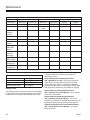
The Unit Base Weight (UBW) and Net Carrying
Capacity (NCC) weights listed in the Specification
Chart are for the base unit with no options and fluids.
Gross Vehicular Weight Rating (GVWR) is the
maximum permissible weight of this trailer when fully
loaded. It includes all weight at the trailer axle(s) and
tongue or pin.
UBW is the dry weight of the base unit without options.
NCC is equal to GVWR minus UBW Gross Axle Weight
Rating (GAWR) is the value specified as the load
carrying capacity of a single axle system, as measured
at the tire-ground interfaces.
Specification Tags
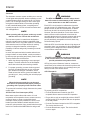
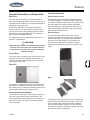
For precise cargo capacity, refer to the Cargo-Carrying
Capacity tag on the inside of the screen door. The
WEIGHT OF CARGO SHOULD NEVER EXCEED
numbers shown on the tag, which is the maximum
weight of cargo you can load and carry in your specific
trailer as built with its options.
Measuring Hitch Ball Height
The proper height will vary according to the weight you
carry and the tires you use. However, checking the
height on your trailer is relatively easy:
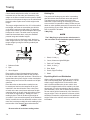
1. With trailer parked on fairly level ground, measure
from ground to bottom of frame, front and rear.
2. Adjust front jack until measurements are equal.
3. Now, measure from ground to the inside top of ball
coupler. This figure is the hitch height. The hitch
ball is then usually set 1/2 to 1 in. higher, according
to the spring rate of your tow vehicle, to allow for it
to settle when the trailer is hitched up.
Tire Size with Maximum Inflation Pressure
Cold
4
• LT 225-75 R16 LRE - 80 psi
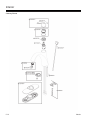
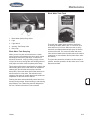
Located on the front roadside of your trailer are the Tire
and Loading, and Vehicle Manufacturing tags.
The Tire and Loading information tag lists the Size and
Cold Inflation Pressure of the tires on your vehicle, the
weight of your trailer as manufactured, and the GVWR.
The Vehicle Manufacturing tag lists the Size of tires
and wheel rims, Maximum Cold Inflation pressures, the
Vehicle Identification Number (VIN), and GAWR.
Classic
4-3