1
any constant thermoelectric offsets, so the results reflect the true value of
the voltage being measured. The improved delta mode for the Model 2182A
and the Model 622X current sources uses the same basic technique, but the
way in which it’s implemented has been simplified dramatically. The new
technique can cancel thermoelectric offsets that drift over time (not just
static offsets), produces results in half the time of the original technique,
and allows the current source to control and configure the Model 2182A.
Two key presses are all that’s required to set up the measurement. The
improved cancellation and higher reading rates reduce measurement noise
to as little as 1nV.
Model 2182A
2182A NANOVOLTMETER
6220 DC AND AC CURRENT SOURCE
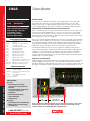
Figure 3. It’s simple to connect the Model 2182A to the Model
6220 or 6221 to make a variety of measurements. The instrument
control example start-up software available for the Model 622X
current sources includes a step-by-step guide to setting up the
instrumentation and making proper connections.
Competition
100μs
Trigger Link
GPIB or
Ethernet
DUT
Differential Conductance Measurements
Characterizing non-linear tunneling devices and low temperature devices
often requires measuring differential conductance (the derivative of a
device’s I-V curve). When used with a Model 622X current source, the
Model 2182A is the industry’s fastest, most complete solution for differential conductance measurements, providing 10X the speed and significantly
lower noise than other instrumentation options. There’s no need to
average the results of multiple sweeps, because data can be obtained in a
single measurement pass, reducing test time and minimizing the potential
for measurement error.
Pulsed Testing with the Model 6221
When measuring small devices, introducing
even tiny amounts of heat to the DUT can raise
its temperature, skewing test results or even
destroying the device. When used with the
Model 2182A, the Model 6221’s pulse capability
minimizes the amount of power dissipated into
a DUT. The Model 2182A/6221 combination
synchronizes the pulse and measurement. A
measurement can begin as soon as 16µs after
the Model 6221 applies the pulse. The entire
pulse, including a complete nanovolt measurement, can be as short as 50µs.
Model 622X
RS-232
2182A
2182A in delta mode
0.5μA
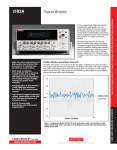
Figure 4. The Model 2182A produces the lowest transient currents of any nanovoltmeter available.
In the delta, differential conductance, and pulse
modes, The Model 2182A produces virtually no transient currents, so it’s
ideal for characterizing devices that can be easily disrupted by current spikes
(see Figure 4).
Research Applications
The Model 2182A’s 1nV sensitivity, thermoelectric EMF cancellation, direct
display of “true” voltage, ability to perform calculations, and high measurement speed makes it ideal for determining the characteristics of materials
such as metals, low resistance filled plastics, and high and low temperature
superconductors.
Metrology Applications
The Model 2182A combines the accuracy of a digital multimeter with
low noise at high speeds for high-precision metrology applications. Its
low noise, high signal observation time, fast measurement rates, and
2ppm accuracy provide the most cost-effective meter available today for
applications such as intercomparison of voltage standards and direct
measurements of resistance standards.
Nanotechnology Applications
The Model 2182A combined with the Model 622X current source or Series
2400 SourceMeter® instrument is a highly accurate and repeatable solution
for measuring resistances on carbon nanotube based materials and silicon
nanowires.
1.888.KEITHLEY (U.S. only)
w w w.keithley.com
A
G R E A T E R
M E A S U R E
O F
C O N F I D E N C E
Low noise measurements for research, metrology,
Side Textand other low voltage testing applications
Nanovoltmeter
LOW LEVEL MEASURE & SOURCE
2182A