1
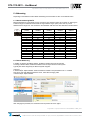
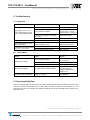
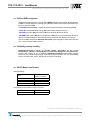
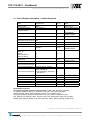
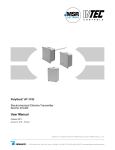
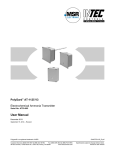
DT5-1112-2B11 – UserManual Page 03 Specifications subject to change without notice. | USA 150929 | Page 3 of 19 Electrochemical Carbon Monoxide Transmitter 1 General Overview The PolyGard CO BACnet gas transmitter DT5-1112-2B11 with digital processing of the measuring values and temperature compensation is used for the continuous monitoring of the ambient air to detect the presence of carbon monoxide gas. Applications include underground / enclosed parking garages, tunnels, engine test stations, shelters, loading areas etc. The DT5-series transmitter is equipped with a serial interface including BACnet protocol and with an analog output where the signal can be selected as current signal (0)4-20 mA or as voltage signal (0)2-10 V. In the 4-20 mA mode the transmitter also works in the 2-wire technique. Addressing and calibration is done manually via push-buttons / potentiometers and address switches. The intended installations are all areas being directly connected to the public low voltage supply, e.g. residential, commercial and industrial ranges as well as small enterprises (according to EN50 082). The PolyGard® CO BACnet transmitter must NOT be used in potentially explosive atmospheres. 2 Functional Description 2.1 Control Mode The transmitter can be connected via RS 485 Interface / BACnet protocol to a vide variety of monitoring and control devices such as, Direct Digital Controllers, Single/Multi-point controllers, Building Management Systems, Personal Computers etc. In this mode there is an analog input for the connection of an additional 420 mA transmitter. The two measuring values are transmitted via the RS-485 interface / BACnet protocol. The cable topology for the RS-485 bus can be taken from the “Guidelines for wiring and commissioning of the DGC-05 hardware”. 2.2 Sensor The sensor portion of the transmitter is a sealed electro-chemical cell with two electrodes, sensing and reference. The ambient air to be monitored diffuses through a membrane filter into the liquid electrolyte of the sensor. The chemical process of the measurement is one of oxidation where one molecule of the target gas is exchanged for one molecule of oxygen. The reaction drives the oxygen molecule to the counter electrode, generating a DC microampere signal between the sensing and reference electrodes. This signal is linear to the volume concentration of the sensed gas. The signal is evaluated by the connected amplifier and transformed into a linear output signal. Electrochemical processes always lead by-and-by to a loss of sensitivity. Therefore calibration of zero-point and gain via BACnet or with the potentiometer “Gain” is necessary at regular intervals. Caution: There is a small quantity of corrosive liquid in the sensor element. If in case of damage persons or objects touch the liquid, you have to clean the affected areas as fast and carefully as possible with tap water. Out of use sensors must be disposed in the same way as batteries. Polygard® is a registered trademark of MSR | GAADT031110BAC_0412 12700 Stowe Drive, Suite 100, Poway, CA 92064 | Ph: (858) 578.7887 & (888) GO.INTEC | relevantsolutions.com/inteccontrols Printed in USA 140916