1
SMCP Documentation, Release 0.3.1
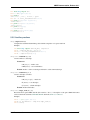
>>> from smcp import SDP
>>> P = SDP(’qpG11.dat-s’)
>>> print P
<SDP: n=1600, m=800, nnz=3200> qpG11
>>> sol = P.solve_feas(kktsolver=’chol’)
>>> print sol[’primal objective’]
-2448.6588977
>>> print sol[’dual objective’]
-2448.65913565
>>> print sol[’gap’]
0.00023794772363
>>> print sol[’relative gap’]
9.71747121876e-08
5.3.5 Auxiliary routines
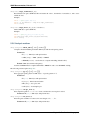
smcp.completion(X)
Computes the maximum determinant positive definite completion of a sparse matrix X.
Example:
>>>
>>>
>>>
>>>
from smcp import mtxnorm_SDP, completion
P = mtxnorm_SDP(p=10,q=2,r=10)
sol = P.solve_feas(kktsolver=’chol’)
X = completion(sol[’x’])
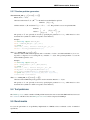
smcp.misc.ind2sub(siz, ind)
Converts indices to subscripts.
Parameters
• siz (integer) – matrix order
• ind (matrix) – vector with indices
Returns matrix I with row subscripts and matrix J with column subscripts
smcp.misc.sub2ind(siz, I, J)
Converts subscripts to indices.
Parameters
• siz (integer tuple) – matrix size
• I (matrix) – row subscripts
• J (matrix) – column subscripts
Returns matrix with indices
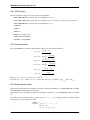
smcp.misc.sdpa_read(file_obj)
Reads data from sparse SDPA data file (file extension: ‘dat-s’). A description of the sparse SDPA file format
can be found in the document SDPLIB/FORMAT and in the SDPA User’s Manual.
Example:
>>> f = open(’qpG11.dat-s’)
>>> A, b, blockstruct = smcp.misc.sdpa_read(f)
>>> f.close()
5.3. Documentation
17