1
AutoSOME Command Line Version
>Usage:
java -jar autosome_vXXXXXX.jar [Input] [Options]
>maximum JVM memory recommended, e.g.
java -Xmx1600m -Xms1600m -jar autosome_vXXXXXX.jar [Input] [Options]
where XXXXXX=release date of AutoSOME (e.g. 040110)
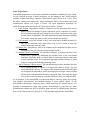
To display all input parameters, run AutoSOME with the parameter –o (letter ‘o’ for
options).
As indicated below, the command line version of AutoSOME has many options not
available in the GUI, including the option to use alternative clustering algorithms (i.e. KMeans, Hierarchical Clustering with four linkage types) and alternative dimensional
reduction techniques (i.e. density-equalized SOM, normal SOM, and Sammon’s Mapping).
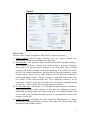
For alternative clustering methods, the number of input clusters needs to be specified using
the –k parameter (see below). In addition, all of these clustering methods, including
AutoSOME, can be benchmarked with the –b option as long as the data item labels in the
input file correspond to numerical cluster labels starting with 1 (1,2,…,No. clusters n).
Examples using fictitious gene expression data set ‘yeast.txt’
1) Perform co-expression clustering using log2 scaling, unit variance and mediancentering of rows normalization, 100 ensemble runs, p-value threshold of 0.05, launch
GUI to display results, and write files to “C:\output”.
java -Xmx1600m -Xms1600m -jar autosome_v120109.jar yeast.txt –N –j1 –e100 –p.05 –v –DC:\output
2) Perform transcriptome clustering using unit variance, Uncentered correlation, 100
ensemble runs, launch GUI to display results, and write files to “C:\output”.
java -Xmx1600m -Xms1600m -jar autosome_v120109.jar yeast.txt –n1 –Q3 –e100 –v –DC:\output
3) Perform transcriptome clustering using unit variance, Pearson’s correlation to build the
distance matrix, K-means with 5 clusters, 20 ensemble iterations, and launch GUI to
display results.
java -Xmx1600m -Xms1600m -jar autosome_v120109.jar yeast.txt –n1 –Q2 –K –k5 –e20 –v
16