1
device addresses Device access is memory mapped. Like physical memory, Pages containing device
addresses are mapped once to the first requester.
interrupts Each interrupt can have at most one interrupt handler. A thread installs itself as this
handler by following a set protocol (see Section 4.5.2). The first thread to do so for a particular
interrupt becomes the handler while all subsequent attempts by other threads will fail.
tasks Upon system initialisation, the full set of tasks (2048 on R4k) is created but in an inactive state.
Tasks are acquired using L4’s task_new system call. Once all available tasks have been given
out, no more tasks can be asked for (see Section 3.1).
4.3
- The Root Pager
An initial address space, called automatically exists after the system is booted. maps physical
memory (except for some kernel reserved regions) and is idempotent (all virtual addresses are the
same as the corresponding physical address). also acts as its own pager1 by mapping any frame
(writable) to the first task requesting it. Any further requests to for an already mapped frame is
ignored (a null reply is sent).
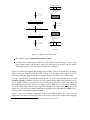
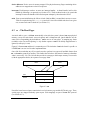
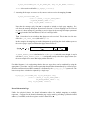
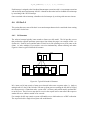
Figure 4.2 illustrates and how it is commonly used. The inclusion of in the kernel is specific to
L4/MIPS, is at user level in other implementations.
One of the first tasks that any OS personality needs to perform is to request all available frames from
so that has spent all its memory. This enables the OS to have full control of memory (other than
what is reserved by L4). The OS can then provide its own pager which maps memory to user tasks
(with the appropriate checks) in response to user page faults.
client
client
"initial server" (pager)
user
kernel
σ0
Figure 4.2: Part of the kernel reserved space contains the kernel information page and the DIT header page. These
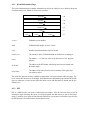
special pages are mapped read-only upon request. Such mappings are part of the RPC protocol
(see Section 4.3.3).
1
Note that this is somewhat MIPS specific.