1
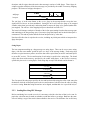
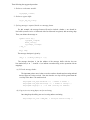
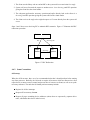
Effective RPC
client
fault
message
interrupt
pager
fault
mapping
L4
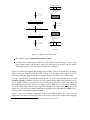
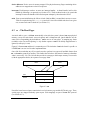
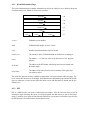
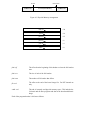
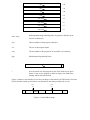
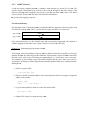
Figure 4.5: Page Fault RPC
A pager may send more than one page at a time, this allows implementing pre-paging.
The -kernel will ignore any attempts to map a page over an already existing mapping, any existing
mapping must first be removed (e.g. by using an le_fpage_unmap system call). An exception is
an attempt to replace an existing mapping by a mapping to the same frame. In this case, the writeprotection attribute of the mapping is taken from the present IPC operation (the -bit in the send fpage,
see Section 2.2.2). This allows the pager to change the mapping between read-only and writable.
Example 4.4 - A Simple Pager
This example presents the basic tasks that a simple user level pager needs to perform.
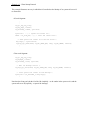
1. Assume the following declarations.
int r;
l4_ipc_reg_msg_t msg;
l4_threadid_t thrdid;
l4_msgdope_t result;
dword_t fault_addr;
l4_snd_fpage_t *fp;
2. First, the pager needs to wait for a page fault message from any client.
r = l4_mips_ipc_wait(&thrdid, L4_IPC_SHORT_MSG, &msg,
L4_IPC_NEVER, &result);
The faulter is recorded as the sender of the message (in thrdid) and the faulting address in the
first word of the register buffer.
3. The pager now needs to obtain a mapping of the faulting address for itself (if it does not already
have it) before it can pass the mapping on to the faulter. For this example, assume the pager
gets its mappings from .
fault_addr = (msg.reg[0] & (˜(dword_t) 3)); /* mask out lower bits */
msg.reg[0] = fault_addr | 2; /* request write mapping */