1
Data Sheet
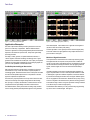
Figure 1: 5 Gb/s Pre/De-emphasized signal.
Application Examples
The need for performance arbitrary waveform generation is broad and
spans over a wide array of applications. With the AWG7000 Series,
Tektronix’ 3rd generation of industry-leading Arbitrary Waveform Generators
represent a new benchmark in performance, sample rate, signal fidelity,
and timing resolution.
The ability to create, generate, or replicate either ideal, distorted, or
“real-life” signals is essential in the design and testing process. Signal
generation with controllable rise and fall times, noise or jitter; pre-emphasis,
multilevel, and mixed signals; wideband RF, and fast-changing signals are
just some of the capabilities of the AWG7000 Series.
Pre/De-Emphasized Signal Generation
With increasing transmission speeds and to compensate for frequency
characteristics of “lossy” media, the technique of pre/de-emphasis is
increasingly applied. Serial data standards such as PCI Express and others
have also included pre/de-emphasis tests as a requirement to meet the
respective compliance test specification.
The basic theory of pre-emphasis is that for any series of bits of the same
value, the first bit always has a higher voltage level than the following
bits. By doing so, frequency characteristics of transmission lines can be
compensated thus the signal fidelity at the receiver side increased.
The AWG7000 Series, with its performance and analog output, enables
users to directly generate pre/de-emphasized signals for next-generation
2
www.tektronix.com
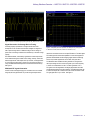
Figure 2: 20 Gb/s 4PAM signal (5 GS/s; AWG7101).
serial data standards. It also enables users to generate 3-level signals as
required for SATA Out-of-Band (OOB) testing.
The direct generation of such signals provides an increased signal quality
and avoids cumbersome signal generation using multiple channels and a
power combiner. See Figure 1.
Multilevel Signal Generation
The requirements for serial interfaces are continuously increasing. Higher
and higher data rates are required, and the performance of cables and
circuits is moving closer to their theoretical limits. One technique to increase
the data rate without increasing the transition rate is by applying multilevel
signals, wherein a signal can assume more than the standard binary 2
levels.
In multilevel signaling one can think of multilevel discrete amplitudes of a
signal. This phenomenon is known as Pulse Amplitude Modulation or PAM.
A 4PAM signal, a signal with 4 different amplitudes, increases the data rate
by four without increasing the transition rate of the signal. Multilevel signals
are not only applied for data transmission. Multilevel memory chips, storing
more than a single bit in an individual memory element, are being produced
and multilevel coding of data for storage on optical disks is being considered
as an efficient way to increase storage capacity.
The AWG7000 Series enables you to test your latest design by generating
any kind of mixed or multilevel signal. See Figure 2.