1
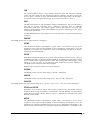
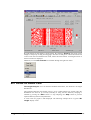
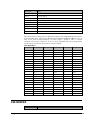
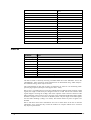
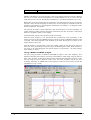
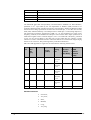
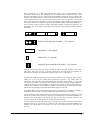
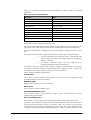
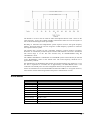
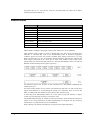
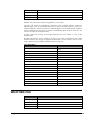
MFSK modes have narrow frequency spacing between adjacent tones. Though the distance
between the tones in the early 32 tone Piccolo versions was only 10 Hz, the recent versions use
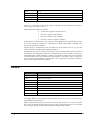
20 Hz spacing. For PICCOLO-MK6 this means a total necessary bandwidth of 180 Hz, and for
PICCOLO-MK12 300 Hz. The tone spacing necessary to avoid inter-symbol interference is
calculated as the inverse of the tone duration.
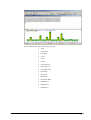
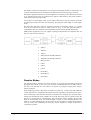
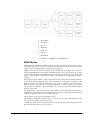
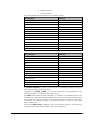
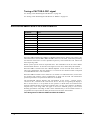
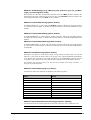
MFSK systems as COQUELET-80 also employ forward error correction or are full duplexARQ or simplex systems as is ALIS-2 8FSK
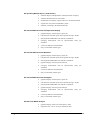
•
COQUELET-8
•
COQUELET-13
•
COQUELET-80
•
MIL-STD-188-A
•
MFSK-8 and MFSK-16
•
PICCOLO-MK6 and PICCOLO-MK12
•
CIS-36
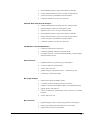
VHF-UHF Modes
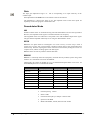
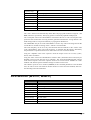
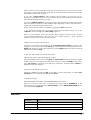
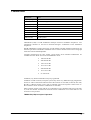
Contrary to what is the case on short-wave many different types of transmissions may be
encountered in the VHF-UHF bands. Pure data transmission systems, as known from the HF
bands, are quite rare with satellite transmissions as an exception.
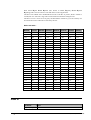
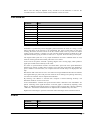
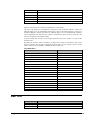
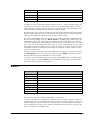
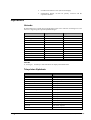
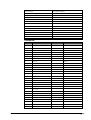
Compared to the baudrates used in the HF bands the rates in the VHF-UHF bands are high.
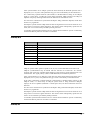
Most indirect modes uses 1200 bps, ACARS 2400 bps. Direct modes like POCSAG employs
512, 1200 and 2400 Baud, adaptive GOLAY 300 or 600 Baud and ERMES 6250 bps. New
commercial modes employ speeds up to 9600 Baud, while radio amateurs with special
transmission and reception equipment already work with 9600 Baud GFSK (Gaussian FSK).
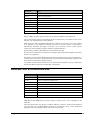
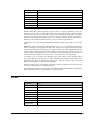
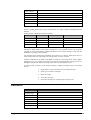
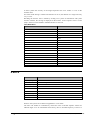
The most common modulation methods used on VHF/UHF are 2FSK, FFSK, 4FSK and
GFSK. FFSK is a special implementation of the commonly used FSK modulation; the
frequency shift is achieved with well-defined phase states. Modern systems like ERMES and
MODACOM use an extended 4-PAM/FM modulation (Gaussian) scheme. At present phase
modulation is an exception in the VHF-UHF bands.
POCSAG, ERMES and GOLAY are pure FEC systems with extensive error detection and
correction capabilities. The digital signaling systems FMS-BOS, MPT-1327, ACARS and
ATIS are ARQ simplex systems. If a call has not been acknowledged within a certain time the
call is repeated.
PACKET-1200 and PACKET-9600 are originally based on the X.25 protocol. In these modes
the data blocks are repeated until the receiver acknowledges error free reception.
The analog selective call systems ATIS and GMDSS/DSC are one-way systems without an
acknowledgment, if this is not explicitly requested.
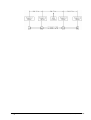
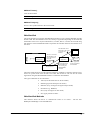
All indirect modes – sub-carrier modulation – are compatible with commonly found voice
equipment. The digital information is carried over the voice channel as FSK. Thus the device
may be used for voice and data transmission. An exception is ACARS because air radio per
tradition utilizes AM which does not exhibit a capture effect as does FM.
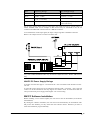
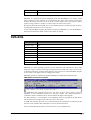
Decoding indirect modes can only take place using the receiver AF output. The receiver serves
as demodulator of the FM or AM carrier, while the decoder demodulator processes the subcarrier modulation.
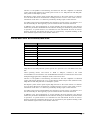
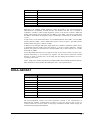
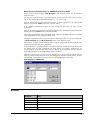
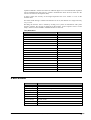
A characteristic of the VHF-UHF transmission modes is the way in which the carrier is
modulated. Some modes like POCSAG, ERMES or PACKET-9600 use DIRECT (carrier)
modulation. However, decoding may only take place from the receiver IF output.
WAVECOM Professional Decoders v6.15 W40PC, W41PC, W51PC Prof.
Transmission Modes • 115