1
Unclassified
3.1.
PR-TN 2009/00597
Photochemical Damage
Photochemical interaction of light with tissue is of great interest for cosmetic
treatments like skin aging process, tissue repairing, rejuvenation, hair removal
treatment. Photochemical damage is the use of light to produce a targeted
photochemical reaction and therapeutic effect. This chemical reaction damages
cell membranes and the protein. This reaction and effect depends on the type of
the targeted chromophore [1].
3.2.
Photomechanical Damage
When light travels into the skin, it is getting absorbed and generates heat. This
heat increases the temperature of the tissue and results in reversible or irreversible alterations in the tissue. Multiple short pulses cause extremely rapid
heating of the target. A temperature greater than 100°C is causing photomechanical destruction of tissue. Due to the high temperature, pressure is generated in the tissue which can stimulate shock wave formation and mechanical
damage of the tissue [1]. Photomechanical destruction of hair has been attempted with very short nanosecond pulses by Q-switched 1064-nm Nd:YAG
lasers, both with or without carbon suspension as an additional chromophore
[2]. Hair follicles targeted with very short pulses cause extremely rapid heating
of the chromophore. This generates photo acoustic shock wave which leads to
photomechanical destruction.
3.3.
Photothermal Damage
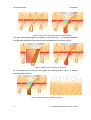
Photothermal damage is related to the method of use of light as used in photomechanical damage, the major difference is that instead of shockwave generation this works by thermal transfer. In photothermal damage, the tissue temperature does not rise above 100°C [1]. Photothermal damage is based on the
principal of selective photothermolysis [2].
We consider devices using the
photothermal damage method.
©
Koninklijke Philips Electronics N.V. 2009
17