1
4.0
ADVISORS
Each team needs advisors (mentors) to ensure that the educational goals of senior projects are
accomplished. Not only are advisors usually needed to ensure project completion; they are to be used to
improve the communication skills between students and engineers. Use of outside advisors also improves
relations between local industry and Weber State University.
The following criteria should be used concerning advisors:
1. Each team needs to find its own off-campus advisor*. The advisor should be an engineer in the field of
the team’s project or should at least be employed with a company in an engineering capacity. The advisor
must agree to provide assistance to the team in an advisory capacity only. The advisor must not get so
involved that the student learning objectives are compromised.
2. The advisor must be willing to attend the team’s senior project presentations (at the end of each
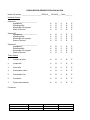
semester). The advisor will also become part of the evaluation team that grades the students.
3. Some teams may have more than one advisor. Each team (including advisors) must have a minimum of
three people, so if a student is doing a senior project without a classmate, a second advisor will be required.
For example, a lone employed student might have his or her immediate supervisor and another engineer
from the same company as the two advisors. Alternatively, larger teams may need to have two or more
advisors if their project is so diverse that one advisor is not enough.
4. Advisors should be treated as supervisors who only have a limited amount of time to devote to team
concerns. Advisors should generally be utilized for no more than 30 minutes each week. The students
should have the appropriate questions written down in advance before the advisor is contacted. The
students should be very careful not to abuse the advisor’s willingness to help.
5. EE Faculty members cannot be used as official advisors except in certain circumstances*, but they may
be available to help at their convenience. You should attempt to get help from your advisor(s) before turning
to the faculty.
*If the project is a cooperative effort with the Community Involvement Center, a faculty member may serve
as the advisor.
4