1
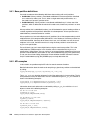
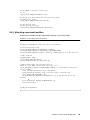
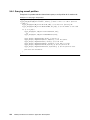
In addition, the optimal basic blocks remove dependencies between computations, so that the compiler sees each statement as entirely independent. You can construct a basic block as a series of independent statements or as a loop that repeatedly computes the same basic block with different arguments. If you specify the -qhot=simd compilation option, along with a minimum optimization level of -O2, the compiler can then vectorize these loops by applying various transformations, such as unrolling and software pipelining. See 5.9, “Removing possibilities for aliasing (C/C++)” on page 48, for additional strategies for removing data dependencies. 5.8 Using inline functions An inline function is expanded in any context in which it is called. This expansion avoids the normal performance overhead associated with the branching for a function call, and it allows functions to be included in basic blocks. The XL C/C++ and Fortran compilers provide several options for inlining. The following options instruct the compiler to automatically inline all functions it deems appropriate: XL C/C++ – -O through -O5 – -qipa XL Fortran – -O4 or -O5 – -qipa The following options allow you to select or name functions to be inlined: XL C/C++ – -qinline – -Q XL Fortran – -Q In C/C++, you can also use the standard inline function specifier or the __attribute__(always_inline) extension in your code to mark a function for inlining. Important: Do not overuse inlining, because there are limits on how much inlining will be done. Mark the most important functions. For more information about the various compiler options for controlling function inlining, see the following publications. XL Fortran User Guide http://www-306.ibm.com/software/awdtools/fortran/xlfortran/library/ XL C/C++ Compiler Reference http://www-306.ibm.com/software/awdtools/xlcpp/library/ Also available from this Web address, refer to the XL C/C++ Language Reference for information about the different variations of the inline keyword supported by XL C and C++, as well as the inlining function attribute extensions. Chapter 5. Developing applications with IBM XL compilers 47