1
7.2 The products, TB4000 and GA4000 (up to 90 mm) have a Class 1 rating surface spread of flame when tested
to BS 476-7 : 1997. FR4000 achieves Class 0 in accordance with BS 476 Parts 6 and 7.
7.3 Cavity barriers must be provided to comply with:
England and Wales — Approved Document B, Section 6
Scotland — Mandatory Standard 2.4, clauses 2.4.1(1)(2), 2.4.2(1)(2), 2.4.7(1) and 2.4.9(2).
(1) Technical Handbook (Domestic).
(2) Technical Handbook (Non-Domestic).
Northern Ireland — Technical Booklet E, paragraphs 3.35 to 3.38.
8 Proximity of flues and appliances
When installing the products in close proximity to certain flue pipes and/or heat-producing appliances, the following
provisions to the national Building Regulations are acceptable:
England and Wales — Approved Document J
Scotland — Mandatory Standard 3.19, clauses 3.19.1(1)(2) to 3.19.9(1)(2).
(1) Technical Handbook (Domestic).
(2) Technical Handbook (Non-Domestic).
Northern Ireland — Technical Booklet L
9 Weathertightness
9.1 Constructions incorporating the products and built in accordance with section 3.3 will resist the transfer of
precipitation to the inner leaf and satisfy the national Building Regulations:
England and Wales — Requirement C2(a)(b)(c)
Scotland — Mandatory Standard 3.10, clause 3.10.5(1)(2)
(1) Technical Handbook (Domestic).
(2) Technical Handbook (Non-Domestic).
Northern Ireland — Regulation C4.
9.2 In all situations it is particularly important to ensure during installation that:
• wall ties and fixings are installed correctly and are thoroughly clean
• excess mortar is cleaned from the cavity face of the brick leaf and any debris removed from the cavity
• installation is carried out to the highest level on each wall or the top edge of the insulation is protected by a cavity tray
• at lintel level, a cavity tray, stop ends and weepholes, must be provided.
10 De-rating of electrical cables
As with other insulation products, it may be necessary in some cases to de-rate electrical cables buried in insulation. In
BS 7671 : 2008 it is suggested that where wiring is completely surrounded by insulation, it may need to be de-rated
to as low as half its free air current carrying capacity. Guidance should be sought from a qualified electrician.
11 Infestation
Use of the products does not in itself promote infestation. The creation of voids within the structure, ie gaps between the
wall lining and the boards may provide habitation for insects or vermin in areas already infested. Care should be taken
to ensure, wherever possible, that all voids are sealed, as any infestation may be difficult to eradicate. There is no food
value in the materials used.
12 Maintenance
As the insulation component of the products are confined behind the wall lining and they have suitable durability (see
section 13), maintenance is not required.
13 Durability
The boards are rot proof, stable and durable and will have a life equivalent to that of the wall structure in which
they are incorporated.
Installation
14 General
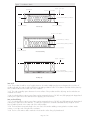
14.1 Installation of the Celotex Range of PIR Insulation Boards for Timber-Frame Dwellings must be in accordance with
the relevant clauses of BS EN 1996-1-1 : 2005 and the Certificate holder’s instructions. Installation details of the three
constructions are given in Figure 1.
14.2 The boards are light to handle, and cut easily but care must be taken to prevent damage, particularly at edges.
14.3 Damaged boards should not be used; small areas of damaged faces may be repaired with self-adhesive
aluminium foil tape.
Page 7 of 12