1
3.2.2 Stopping the chainsaw
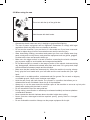
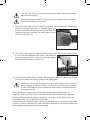
• Release the Trigger On / Off to stop the machine.
• The chain stops completely after a few seconds.
• Disconnect the plug source for safety.
• Replace the front hand guard/chain brake level in place.
3.2.3 Tips for cutting
•
•
•
•
•
•
•
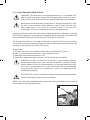
Use only for sawing wood (tree trunks, branches, planks and beams). Never use the
saw for cutting other materials.
Take care that the chain does not come into contact with the ground or foreign materials
other than wood.
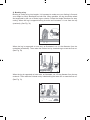
When sawing, do not put pressure on the chain, but allow the chain to bite through the
wood while applying leverage on the area near the bar spikes.
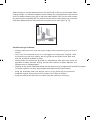
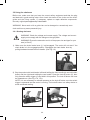
When cutting thick branches or trunks, reposition the bar spikes at a lower point to
avoid strain and kickback during operation. To do this, pull the saw toward you
slightly to loosen the clutches of the bar spikes and reposition lower in the material. It
is not necessary to completely remove all of the chainsaw bar from the wood.
The best results are obtained when the cutting speed of the chain is maintained
at its top speed.
Attention should be paid when coming to the end of the cutting stroke, sometimes
the weight changes unexpectedly. There is a risk of an accident to your legs and feet.
Do not remove the chainsaw from the wood when the chain is rotating.
Always wear a hard-hat with visor to protect your head from falling branches. The chain
saw can only be used to fell trees smaller in diameter than the length of the guide bar.
- Secure work area. ensure no persons or animals are in the vicinity of the falling tree.
Never attempt to free a jammed saw with the motor running. Use tree wedges to free
chain and guide bar.
a. The tree felling
When cutting and felling operations are being performed by two or more persons, at the
same time, the felling operations should be separated from the cutting operation by a
distance of at least twice the height of the tree being felled. Trees should not be felled in
a manner that would endanger any person, strike any utility line or cause any property
damage. If the tree does make contact with any utility line, the company should be
notifed immediately.
The chain saw operator should keep on the uphill side of the terrain as the tree is
likely to roll or slide downhill after it is felled.
- An escape path should be planned and cleared as necessary before cuts are started.
The escape path should extend back and ideally diagonally to the rear of the expected
line of fall.
- Before felling is started, consider the natural lean of the tree, the location of larger
branches and the wind direction to judge which way the tree will fall. Remove dirt,
stones, loose bark, nails staples, and wire from the tree.
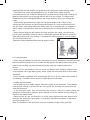
- Notching undercut: Make the notch (x-w)1/3 the diameter of the tree, perpendicular to
the direction of falls as make the lower horizontal notching cut first. This will help to
avoid