1
Jul. 5, 2001
US 2001/0007140 A1
OPERATING SYSTEM-INDEPENDENT
COMPUTING SYSTEM USER FEEDBACK
MECHANISM
detecting When a computer system is in fact connected to the
Internet. In the case of a user Who frequently moves his or
her desktop computer, such a user may be forced to check
one or more cable connections if the computer does not
CROSS-REFERENCE TO RELATED
APPLICATIONS
[0001] This application is a continuation-in-part of US.
patent application Ser. No. 09/478,153, entitled “DIGITAL
FEEDBACK DISPLAY PANEL AND SUPPORTING
SOFTWARE FOR A COMPUTER USER,” ?led Jan. 5,
2000, Which is incorporated herein by reference in its
entirety for all purposes.
BACKGROUND OF THE INVENTION
[0002]
1. Field of the Invention
[0003] The present invention generally relates to operating
condition user feedback for computing systems, and more
particularly to an operating system-independent user feed
back mechanism of a computing system.
poWer-up after the computer is relocated. Users thus are
typically not Well informed of the operating conditions or
events of computer systems, if at all, and must resort to
contacting the computer manufacturer, contacting the Inter
net service provider, examining the user’s manual or exam
ining the computer itself When a perceived problem devel
ops.
SUMMARY OF THE INVENTION
[0008] Brie?y, a computing system employs a user feed
back mechanism to monitor a plurality of operating condi
tions of the computing system and to alert a user to the
plurality of operating conditions independently of an oper
ating system of the computing system. The user feedback
mechanism includes a display panel to display a plurality of
operating condition messages to the user and includes a
[0004] 2. Description of the Related Art
controller to monitor a plurality of operating condition
signals. Further, the user feedback mechanism is indepen
[0005]
dently poWered and further includes a safety button to signal
User feedback With respect to operating conditions
or states of a computer system has typically been provided
a poWer supply to poWer off the computing system inde
by a monitor, audio alerts, light emitting diodes (LEDs) or
directly by an operating system of the computer system.
pendently of the operating system. Examples of operating
Each of these forms of user feedback in effect depends upon
conditions include a connection state of the computing
system to the Internet and a connection state of a peripheral
operating system control. Where an operating condition
device to the computing system. Other examples of operat
relates to an error With the operating system itself, the
operating system cannot detect such an error. A lock-up of
ing conditions that the user feedback mechanism displays to
the user independently of the operating system include a
the operating system is therefore particularly dif?cult for a
user to detect. One draWback of relying upon the operating
system and the monitor to provide user feedback is that
neither the operating system nor the monitor are available at
neW e-mail noti?cation message, a neW Internet message or
atomic time from a netWork server coupled to the computing
system. An operating condition message is cleared from the
display panel When the operating condition is cured.
all times. Acomputer system is typically con?gured to enter
a loW poWer or sleep mode after a certain period of idle time
Where neither the monitor nor the operating system are
BRIEF DESCRIPTION OF THE DRAWINGS
available. Because of the unavailability of the monitor and
the operating system in a loW poWer mode, certain operating
[0009] Abetter understanding of the present invention can
be obtained When the folloWing detailed description of the
preferred embodiment is considered in conjunction With the
conditions are not communicated to a user. For example, a
user cannot determine When a neW e-mail is available during
a loW poWer mode. Even a feature such as a digital clock has
depended upon the monitor being fully aWake and upon the
operating system.
[0006]
Many computer users tend to be frustrated With
user feedback in the form of audio alerts and LEDs. Audio
alerts are perceived by users as annoying. Many users
therefore loWer the volume of their computer systems,
defeating the purpose of the audio alerts. LEDs (including
the hard disk drive LED of a computer system) are perceived
by users as confusing, particularly Where ?ashing patterns of
the LEDs signify different operating conditions of the com
puter system. Even When users someWhat understand an
operating condition conveyed by the monitor, audio alerts or
LEDs, most users are fearful of touching and inadvertently
“crashing” or depoWering their computer systems, thereby
risking a loss of data.
[0007] The operating system, monitor, audio alerts and
LEDs alike have provided little, if any, feedback to users
during critical times for a computer system such as system
initialiZation or poWer-up, for example. Users tend to ignore
or overlook any system information Which is quickly ?ashed
on the monitor during poWer-up. Users also have dif?culty
folloWing draWings, in Which:
[0010]
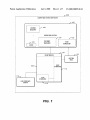
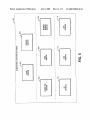
FIG. 1 is a block diagram of an exemplary soft
Ware architecture of a computing system With an operating
system-independent user feedback module;
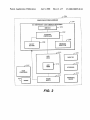
[0011] FIG. 2 is a block diagram of an exemplary hard
Ware architecture of the computing system With an operating
system-independent user feedback mechanism;
[0012]
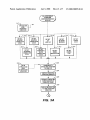
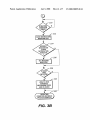
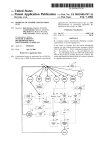
FIGS. 3A and 3B shoW a ?oW chart illustrating
exemplary operation of the operating system-independent
user feedback module of FIG. 1 and the operating system
independent user feedback mechanism of FIG. 2;
[0013]
FIG. 4 is a ?oW chart illustrating exemplary pro
cessing of the safety button of the operating system-inde
pendent user feedback mechanism of FIG. 2;
[0014] FIG. 5 is a block diagram of an exemplary archi
tecture of the operating system-independent user feedback
module of FIG. 1; and
[0015] FIG. 6 is a block diagram illustrating exemplary
application-level interfacing and system-level interfacing
for the operating system-independent user feedback mecha
nism of FIG. 2.