1
6 TALLY INPUT FORMAT
126
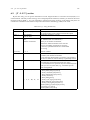
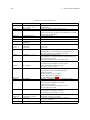
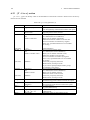
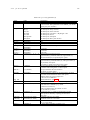
6.2 [ T - C r o s s ] section
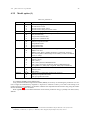
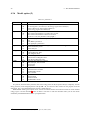
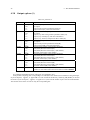
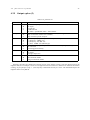
Using the [T-Cross] tally, you can obtain the current or flux (actually fluence) on any specified surface. In
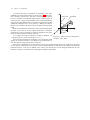
this tally, whenever a particle crosses the surface, current is simply added by 1, while flux is added by 1/ cos θ,
where θ is the angle between the direction of the particle trajectory and the normal vector to the surface. In PH I TS
, the current and flux each other are similar but different physical quantity. The difference is due to the surface
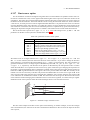
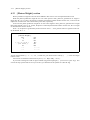
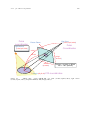
element, which is used to calculate the number of the crossing particle per unit area. The current is evaluated with
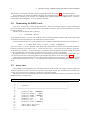
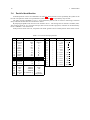
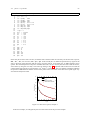
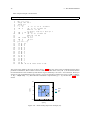
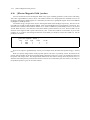
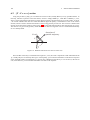
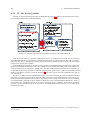
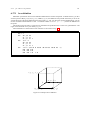
division by the area of the surface S shown in Fig. 6.2. On the other hand, the flux is done with division by S cos θ.
The value of S is given in the geometry mesh subsection as area for reg mesh. The S is calculated automatically
for r-z and xyz mesh.
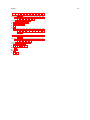
derection of
particle trajectory
Scosθ
S
θ
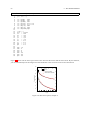
Figure 6.2: Relation between the two areas S and S cos θ.
Since the flux in this tally is evaluated with weight of 1/ cos θ, the result is equivalent to that obtained from the
[t-track] tally for an extremely thin region. Consequently, you can obtain information on the detector response
in the specified surface by utilizing the [t-cross] tally. Multiplying the flux by a cross section (in the unit of
cm2 ) of the detector, you can estimate the number of counts in the response.