1
Project Meeting 4
Leader’s Guide
Most 2-cycle, and many 4-cycle, engine manufacturers recommend a single viscosity
grade oil - usually SAE 30.
4-Stroke Lubrication:
We all know what happens to a door hinge that is not oiled. It becomes squeaky and
stiff from lack of lubrication. If your small engine did not have oil in it, the same thing
would happen, except worse. The engine would probably seize up, or stick, from the
lack of oil. This is why lubrication of all moving parts is so important.
There are two common types of lubrication: Splash and Oil-Pump. In Splash
Lubrication, there are two styles: the oil dipper, and the oil slinger.
1. Connecting Rod Dipper
All four-stroke engines contain an oil reservoir in the bottom of the crankcase.
One design has a dipper at the base of the connecting rod that dips into the oil
reservoir with each stroke. As the connecting rod moves up, oil clinging to the
dipper is thrown up and out toward the crankcase walls. The direction of the oil
throw is controlled by the shape of the dipper. The oil is vaporized in the upper
part of the crankcase and is carried in vaporous form into the engine parts. Both
vapor and the oil flow along the crankcase walls carry oil into the crankshaft and
camshaft bearing holders. The piston rings seal the crankcase so that oily vapor
does not get into the combustion chamber.
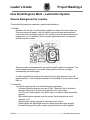
The Oil Dipper: This
little “paddle” splashes
the oil around the
crankcase.
Rebuilding Small Engines ------------------------------------------------------------------------------------------------- Page 23