1
6.3.2
Pressure
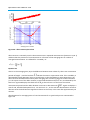
To determine pressure cross sensitivity, vary the sample cell pressure with a sample gas from a target
tank of constant composition (such as a S.C.U.B.A. tank). This can be static or pressure and flow
controlled. Ensure that the target tank pressure regulator is set to higher than the highest pressure
needing to be tested, but no higher than the instrument limits. Create a cycle list where each cycle
samples from the target tank at different pressures and the same flow or static. A sample cycle of
this nature is provided with the instrument and is called dXdP.
6.3.3
Temperature
Temperature dependence of retrieved concentrations is due to both the error in measuring the
sample temperature and changes in optical alignment of the FTIR interferometer and optics.
Temperature dependence is thus very difficult to quantify because retrieved concentrations depend
not only on temperature but on the rate of change and recent history of temperature changes. For
these reasons the best approach is to maintain close temperature control with the supplied
thermostat system, typically near 30°C.
Note: It can be difficult to vary one parameter while keeping others constant. For example, changing
pressure can change water vapour due to changing wall interactions.
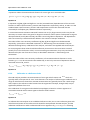
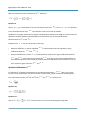
In cases when more than one parameter (i.e. Q, P, T, C) varies during an experiment, one parameter
can be pre-corrected (if its cross-sensitivity coefficients are known) before determining the cross
sensitivity to the others. Alternatively, two or more can be determined simultaneously from a multilinear regression with more than one independent variable, provided the variations in the
parameters are not correlated during the measurements.
6.3.4
Typical Cross Sensitivity Coefficients
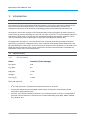
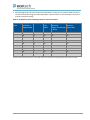
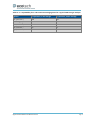
Most cross sensitivity coefficients are small or negligible. To give an idea of scale, [Citation: 8.7],
Table 4 gives typical values for one analyser.
Table 4 – Typical cross-sensitivities for target gases to water vapour and pressure
13
CO2
-1
μmol mol
δ C - CO2
‰
CH4
-1
nmol mol
CO
-1
nmol mol
N2O
-1
nmol mol
Pressure
hPa
0.0085
0.005
0.031
0.006
0.007
Equil. Temp.
°C
<0.8
0.6
<1.6
<1
0.6
Disequil. Temp.
°C
2.07
4.1
-4.6
10.2
3.2
Flow
LPM
0.15
-0.9
<4
<2
< -0.8
Residual H2O
-1
µmol mol
.04
-
<0.2
<0.2
-
CO2
-1
µmol mol
-
0.006*
-
0.006
0.008
Calibration
Page 69