1
S E T U P
M O D E
•
•
•
•
•
•
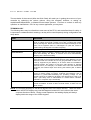
NORMAL Mode – NORMAL mode allows manual control, point-andshoot and computer control via one of the rear panel communication
ports.
M/S – Master/Slave Mode, where multiple RT-21 controllers are linked
together.
o
Usage and Examples:
Master/Slave mode allows one RT-21 to control other RT-21
controllers via the EIA-232 port. This allows movement of multiple
Rotators and antennas to the same heading without having to set
each one individually.
The M/S MODE is intended for use in controlling stacks of HF
monobanders or tribanders that are on different Rotators (or even
different Rotator types). It allows the operator to turn the entire stack
together or quickly separate them for individual rotation.
When you set the MODE to M/S, you may quickly disable or enable
the M/S mode by pressing the CANCEL button.
o
Functionality
If you only have a stack of two antennas, each with its own Rotator,
either controller may be used to turn the pair.
If you have three or more antennas on different Rotators, then one of
the controllers must be designated as the Master. The controller
designated as the Master is the only one that will turn all of the
antennas. The other controllers will only turn the antennas they are
directly connected to.
Refer to Section 5—Advanced Features—for more detail on M/S
operation and EIA-232 connections.
M/C – “Master/Counter-Rotate” Mode
o
Usage and Examples
Master/Counter-Rotate Mode is used for the bottom Rotator (or
tower) in a system where two Rotators are used in series along the
same “mast”. Examples of this are a Rotator at the top of a rotating
tower, or two rotating joints on the same structure (or rotating rings
mounted on a rotating tower).
o
Functionality
M/C mode sends the heading data to other
RT-21s that control the upper Rotator(s) so that it may calculate the
heading for the antennas above.
S/C – “Slave/Counter-Rotate” Mode
o
Usage and Examples
S/C mode is used for the slave Rotator(s) as described in M/C. It
reads the data from the M/C unit and maintains the heading for the
upper antennas while the bottom is moving. The S/C controller in a
properly implemented system allows complete independent
operation of the slave antennas from the ones fixed to the rotating
tower.
OFFSET – Alternate OFFSET Mode. (See Section 4.9 for details
DEBUG – Debug Mode (see section 4.6 for details)
14