1
C O M P U T E R S Y S T E M S NEWSLETTER
However, for each HP-IB compatible instrument being used
with an HP controller, there are many, many more HP-IB
compatible instruments being corltrolled manually. Frequently, they are used in production testing situations in
which the test engineer manually sets up a specified input
stimulus (for example, voltage anld frequency) and then
measures and writes down the output signal(s) of the unit
under test.
The HP 3070A's controlled by a remote computer may be
used to automate at low cost measurements that were
previously controlled manually.
The advantages of this capability are as follows:
a
Human errors in the setting of range and values of
stimulus instruments are eliminated.
Human errors in the setting of the ranges of measurement instruments are eliminated.
a
a
Test records can be reliably recorded in the central
computer data base without the need for keypunch
operations.
No Problems selling HP-IB
You will not be faced with tricky questions about performance when discussing this capability with your prospects.
You can assure them that HP 3070A's can be used to control
up to 56 remote instrument clusters, each as fast as anyone
can do it manually. How do we know? We tested and
achieved a continuous average HP-IB transfer rate of one
transfer per second at all stations. A lot of disc swapping
with many independent programs would slow this down, but
it will almost inevitably be as fast as anyone could achieve
manually. In another article, we describe a typical test
station and how the 3070A could be used. By telling your
friends in the Instrument sales force about this, they will have
a new feature to mention when promoting instruments and
every now and again will come back to you with a lead for an
easy sale.
Human errors in the writing down of the readings are
eliminated.
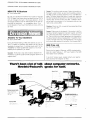
Up to 1.24 miles (2Km)
b
---
Up to 56
Test Stations
Centralized store
of test procedures
Centralized Test Records.
Test Bench 1
Eliminate Monotony in Product Testing
and Drastically Cut Human Errors
By: Peter StuartiHPG
I
b
Imagine a production test situation in which the performance
of a voltage-to-frequency converter must be measured and
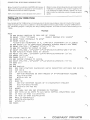
the results written down for the QA records. A typical configuration would be as shown in drawing 1. If a measurement of
frequency was required at 10 different input voltages, this
would require the test technician to take a number of repetitive actions. First, he would have to set up the three instruments to their required ranges. Then he would have to adjust
the voltage source to the nominal settings (e.g., 1 volt, 2
volts, 3 volts, etc.) and record at each step the measured
voltage and frequency. A total of 30 extremely repetitive
(error prone) actions. In addition, it is more than likely that
the hand-written records created would eventually be
keypunched for entry into a compLlter data base (another
chance for errors such as transpos,ition of digits).
Volume 2, Number 9, March 15, 19177
Test Bench 2
You have the solution
In the past, people have purchased automatic measurement
systems to enable them to make measurements that would
be too complex or impractical any other way. Testing stations have been centralized in a few key locations in order to
gain maximum utilization of expensive equipment. The HP
3070A's and SERIAL LINK permit you to distribute the power
(and cost) of acomputer system throughout a factory getting
low speed automatic testing back to the bench where it
belongs.
In drawing 2, we show you how a 3070A would hook up to
such instruments. The 3070 would be used by the test engineer to tell the computer system the serial number of the
unit under test and to indicate that he has connected the
input and output probes ready for measurements. Within
minutes the entire test will be completed and the results
stored in the computer data base. All this being done at least
as fast as any manual operator could work while eliminating
many monotonous and error-prone operations.