1
Evaluation
86
get better results. In CRM mode missing line segments are reconstructed only
once and exclusively for the track with the highest probability to be the chorus
track. In FRM mode the reconstruction process is executed for all tracks. There
exist six versions of the FRM mode. The only difference between these six
FRM modes is the number of iterations. See chapters 4.2.5 and 5.2.5 for more
details.
Of course the first experiment will lead to worse results than the second one.
But it simulates the conditions for real automatic alignment, where the user
does not need to interact with the program and its settings (e.g. when using the
algorithms for batch processing a whole song collection). The second experiment shows the achievable results with fine tuning done by the user.
6.1 Experiment 1 - Using Normal Merge Mode
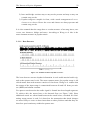
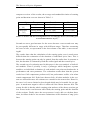
In this first experiment (see Table 6-1), the correct chorus track was selected in
36 songs. It can be seen that in these cases, at least half of the chorus sections
were detected. Furthermore the correct chorus track was selected for 21 of 25
songs in which 100% of the chorus sections were detected correctly. This shows
the importance of finding the right chorus track. In spite of this it is also possible that 100% of the chorus sections are detected although the chorus track was
not selected correctly. The reason for this is that there sometimes exist two possible chorus tracks which cover all “real” chorus sections in a song. Nevertheless the length of the line segments on them is not the same. Consequently the
timing errors could be minimized by selecting the other possible chorus track.
That is why in some cases the table contains a “No” for “Right Chorus Track
Selected” although 100% of the chorus sections were detected (also see chapter
6.4 example song 1).
Serious problems emerged in those 10 cases in which the wrong chorus track
was selected. In three of them not even one of the chorus sections was covered
by the chorus detector. Although in the remaining seven cases often 66% or
even 100% were reached, the average timing errors are mostly very high (as
already mentioned above).