1
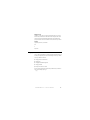
Performing Sensitivity Analysis
In Performing Sensitivity Analysis on page 51, there is a discussion of how to perform
sensitivity analysis in the Interactive Optimizer. As with most interactive features of
ILOG CPLEX, there is a direct approach to this task from the Callable Library. This section
modifies the example lpex1.c in Building and Solving a Small LP Model in C on page 119
to show how to perform sensitivity analysis with routines from the Callable Library.
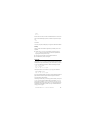
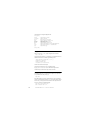
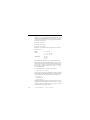
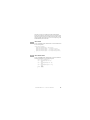
To begin, make a copy of lpex1.c, and edit this new source file. Among the declarations
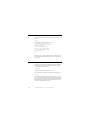
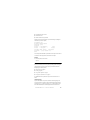
(for example, immediately after the declaration for dj) insert these additional declarations:
double *lowerc = NULL, *upperc = NULL;
double *lowerr = NULL, *upperr = NULL;
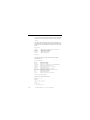
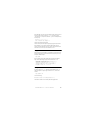
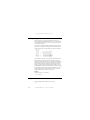
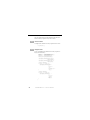
At some point after the call to CPXlpopt, (for example, just before the call to
CPXwriteprob), perform sensitivity analysis on the objective function and on the righthand
side coefficients by inserting this fragment of code:
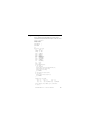
upperc = (double *) malloc (cur_numcols * sizeof(double));
lowerc = (double *) malloc (cur_numcols * sizeof(double));
status = CPXobjsa (env, lp, 0, cur_numcols-1, lowerc, upperc);
if ( status ) {
fprintf (stderr, “Failed to obtain objective sensitivity.\n”);
goto TERMINATE;
}
printf (“\nObjective coefficient sensitivity:\n”);
for (j = 0; j < cur_numcols; j++) {
printf (“Column %d: Lower = %10g Upper = %10g\n”,
j, lowerc[j], upperc[j]);
}
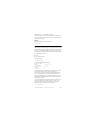
upperr = (double *) malloc (cur_numrows * sizeof(double));
lowerr = (double *) malloc (cur_numrows * sizeof(double));
status = CPXrhssa (env, lp, 0, cur_numrows-1, lowerr, upperr);
if ( status ) {
fprintf (stderr, “Failed to obtain RHS sensitivity.\n”);
goto TERMINATE;
}
printf (“\nRight-hand side coefficient sensitivity:\n”);
for (i = 0; i < cur_numrows; i++) {
printf (“Row %d: Lower = %10g Upper = %10g\n”,
i, lowerr[i], upperr[i]);
}
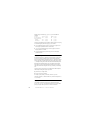
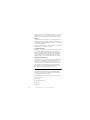
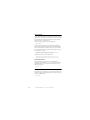
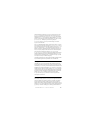
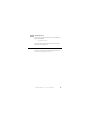
This sample is familiarly known as “throw away” code. For production purposes, you
probably want to observe good programming practices such as freeing these allocated arrays
at the TERMINATE label in the application.
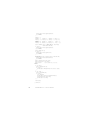
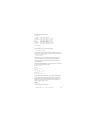
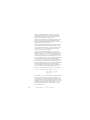
A bound value of 1e+20 (CPX_INFBOUND) is treated as infinity within ILOG CPLEX, so this
is the value printed by our sample code in cases where the upper or lower sensitivity range
on a row or column is infinite; a more sophisticated program might print a string, such as inf or +inf, when negative or positive CPX_INFBOUND is encountered as a value.
ILOG CPLEX 10.0
— GETTING STARTED
125