1
N
-
______
~— ,—
274 ~4~U
27 4—1253 1
tlc~F
PUBLIC HEALTH
ENGINEERING
in emergency situation
A handbook for implementing health programmes
in deprived environments,
in particular in camps of displaced persons
1994— 1st EDITION
LIBRARY, INTERNATIONAL REFERENCE
CENTRE FOR COMMUNITY WATER SUPPLY
AND SANITAiI~N(IRO)
P.O. Box 93190, 2509 AD The Hagu.
Tel. (070) 814911 ext 141/142
~
RN:~L~V\
LO: ~
© Médecms Sans Frontières - Paris - Octobre 1994
All rights reserved for all countries. No reproduction, translation and adaption may
be done without the prior permission of the Copyright owner
PUBLIC HEALTH
ENGINEERING
in emergency situation
COORDINATION:
GiIles DELMAS (MSF)
Michel COURVALIE~(MSF)
CONTRIBUTIONS
(in alphabetical order):
Yves Chartier (MSF), Guy Jacquier (MSF), Eric Laurent (Solstice), Gerald
Massis (MSF), Stéphane Quinton (MSF), Pierre de Rancourt (MSF) and
Brigitte Renchon (MSF)
(MSF) MEdecins Sans Fmntièies
FRENCH-ENGLISH TRANSLA11ON:
JOHN ADAMS
EDITING AND LAYOUT:
ANNIE ARBELOT
Preface
Public health engmeering, long considered a specialist held by medical organizations
is not an end m itself. It has a direct influence on several major diseases. It is
important to consider water supply, sanitation and hygiene, not simply in terms of
technical programmes, but as an integral part of preventive health work, in the same
way as vaccination, mother and child clinics, home visiting, etc
The techniques described in this guide were chosen for their simplicity of
implementation and maintenance. They should obviously be adapted to each
situation according to local conditions and resources available (manpower, materials,
money)
It should always be bone in mind that, however good the techniques in theory, it is
only when they are correctly used that they can have any impact on health. However
important it is to produce appropriate technical solutions, the necessity for
complementary activities such as health education, training of local technicians, etc.,
can never be too highly stressed.
In addition to technical knowledge (which can be found in many technical reference
books), the work of the “sanitanan” demands a good knowledge of the population
bemg worked with, and local hygiene practices. Openess, a few teaching skills and a
sense of humour are a gieat help.
To conclude with, a sanitation structure or programme should follow the rule of the
three A’s:
— acceptable, socially,
— appropriate, technically,
- affordable, financially.
A few facts
The object here Is not to produce a medical text, but it is useful to give some scale to
the problems linked to water supply, sanitation and hygiene.
Diarrhoeal diseases are mostly caused by poor hygiene (dirty water, contaminated
environment, etc), and are among the most deadly: each year in the world, an
estimated 5 million children below 5 years old die as a result of the diseases.
About a quarter of the world’s population is infested with roundworms and/or
hookworms. Lackof hygiene is directly responsible
Itis estimated that about 300 million people in the world suffer from Schistosomiasis.
The hst continues. Although these diseases do not kill directly, they are responsible for a deterioration
in the physical condition, a loss of strength and, in the long term, a reduction of the
socioeconomic condition of the people affected.
Using this guide
The guide starts with an introduction defining needs in terms of site planning, then is
divided into three main chapters, covering thefollowing subjects:
—
—
—
Water in camps of displaced people : supply, assessment of quality and treatment
methods;
Sanitation in emergency situations : disposal, of excreta, refuse, wastwater and
mn-off;
Vector control : basic control strategies, plus technical bnefs on the most common
products and application equipment.
At the end of each chapter there are technical briefs describing different techniques
commonly used in the field, chosen for their simplicity of implementation.
There is an English/French/Spanish glossary at the end of the guide to give a
definition as clear as possible of the technical terms used in the guide, or those
which are used every day in this field.
Criticisms and comments are invited from users of this guide. They are important to
ensure that it is developed to be as appropriate as possible to the realities and needs
of the held.
Please send your comments to:
Mddecins Sans Frontières — Service medical
8 rue Saint-Sabin - 75544 Paris Ceder11 - France
Tel: (33) 1.40.21.29.29 - Tlx.214360F - Fax (33) 1.48.06.68.68
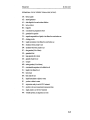
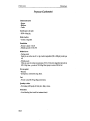
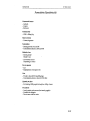
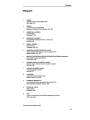
Contents
Introduction : Site Planning
U
•
page
9
page Ipage 1-
3
5
Water In camps of displaced people
Needs
Water-related health risks
Water supply
Assessments of water quality
Should the water be treated?
Simple water treatment technique
Technical briefs
page 1- 9
page 1-13
page 1-16
page 1-18
page 1-23
Sanitation
Excreta disposal
Removal and treatment of wastewater
Collection and disposal of refuse
Technical briefs
page II- 3
page II- 8
page 11-12
page 11-15
Vector control
Introduction
The principal vectors : biology and control measures
Precautions for use and storage ofpesticides
Spraying equipment
Technical briefs
U
III- 3
page 111- 4
page 111-16
page 111-19
page 111-21
English/French/Spanish glossary, conversion tables and
estimations
English/French/Spanish glossary
Conversion tables
Materials and labour estimations
U
page
Bibliography
page P1- 3
page IV-1O
page P1-il
page V- 3
Site Planning
Site Planning
A large influx of people to a site demands the rapid installation of infrastructures
which meet the priority needs of the population. The health status of refugees
depends directly on the organizational capacity of those responsible for their
protection and assistance.
Site planning may be done either for an existing camp, where refugees nearly always
arrive before aid teams, or for a permanent planned site, where the initial settlement
takes place in a transit camp.
It is essential to plan the site with a long term view; there have been Palestinian
refugee camps iii the Middle East since 1947.
Choice of site
Available sites are rarely occupied for no reason, and the “ideal site” often remains a
dream. However, certain criteria must still be considered.
—
WATER
On-site water souices, available all the year round and in sufficient quantity for the
projected population. Flood areas must be avoided.
—
ACCESS
Access should be possible at all times of the year, particularly for lorries.
—
TERRAIN
The land should be gently sloping for natural drainage. Soil should preferably be
sandy; avoid “black cotton soil” which turns to sticky mud after the lightest of
rains.
Silt creates dust problems when dry.
The soil type determines which sanitation and construction techniques may be used.
—
ENVIRONMENTAL HEALTH RISKS
Avoid areas with risks of malaria, bilharzia (shistosomiasis), sleeping sickness
(trypanosomiasis), etc
—
LAND RIGHTS
Pay attention to legal and traditional rights.
Other points to consider are security the land area available, the eventual possibility
of self-sufficiency for the population and the ease of supply of food and materials.
9
Site Planning
Basic principles
Having chosen the site, prepare a map to see how much land is available, the
surface drainage patterns and the areas for protection ofwater sources.
— Give pnority to water and sanitation (note drainage).
— Determine needs for services and infrastructure.
— Defme the size of the camp and its sub-divisions for camp management (ideally
20,000 people in sub-divisions of 5,000).
— Define responsibilities.
— List the resources needed (budgetary, logistic, human).
—
Needs
Water and sanitation
Roads
— Stores, flour-mills, distribution points
— Shelters (type and number)
— Administrative structures (screening, registration, etc.)
— Medical and nutrition structures
— Personnel accommodation
— Community facthties (market, cultural centre, workshops, schools, recreation
grounds, cemetery. etc).
—
-
Prepare a master plan of the camp
All the structures should be marked on the initial map, and the way that shelters are
to be grouped should be decided. This decision will affect the correct use of latrines
and water points. Security for the population is important as well as some reestablishment of its social fabric.
Several blueprints for shelter layout exist, but the cultural habits of the population or
populations concerned should be the principle guide.
Avoid layouts in lines and rows : they increase distances to latrines and water points,
isolate famifies by depriving them of personal space and use more land than the
models proposed here. On the other hand, this method can be implemented quickly
and it is better than no planning at all.
Plan by community unit: the bask unit is formed by grouping from 8 to 16 shelters
in a square or rectangle around a communal space; latrines, water points and
washing areas may be placed m the centre or round the outside.
Plan by squares: the basic uret is formed by groups of 4 shelters m a square with a
latrine in the middle.
By grouping these basic units in lines and rows, the blocks of houses and the sections
are established.
10
Site Planning
in both cases, spaces for activity areas and services are created by leaving out a
number of basic units according to the space required.
• Some quantified norms.
Area available I person
Dwelling space / person
: 3Omi
: 3.5m2
—
Number of people / water point
Number of people / latrine
: 250
: 20
-
Firebreaks
: 75m every 3COm
—
Distance between two tents
:
—
—
—
—Distance between two rows
2m minimum
: tOm
Type of dwelling
Tents are often used during the initial phase. Apart from the fact thattents do not last
long, they are expensive to buy and to transport. It is often more economical,
therefore, to use locally available construction materials (planks, corrugated iron
sheets, etc.).
While more durable dwellings are being built, plastic sheeting may be used,
stretched over ropes for temporary shelters.
Roads and direction signs
The road system within the camp should be organized bearing in mind the drainage
system, so as to preserve the condition of the roads (the drainage system can also be
installed along the sides of the roads).
Direction signs are also important: they should enable the easy identification of
zones of different activities and of each residential area, for visitors as well as
residents. This will be particularly helpful for home visiting by medical teams and
for easylocation of any family.
Direction signs should be understandable for everybody; use drawings (not
everybody knows how to read), and the local and international languages.
For large camps, a detailed plan placed at the entrance may be necessary.
Enetp,y
Energy is needed essentially for cooking food. Wood is the most common energy
source used, but it may be logistically difficult to supply and involves politicoecological problems because of deforestation.
It is thus important to promote energy saving by the choice of fireplace type and
possibly by the use of collective kitchens, without forgetting the sodal and hygiene
disadvantages of this option.
11
Site Planning
Lighting
Electricity is indispensable in health centres open at night (isolation ward, cholera
camp, etc.).
It is also desirable in the camp as a whole, as it reduces insecunty and allows better
access to defecation areas. But the installation of an electricity supply system may
cause problems with the local population if it has no access to electricity itself (which
is often the case).
Conclusion
More often than not, site planning has to be done for a camp which is aheady
established and it is therefore a job of reorganization, which is much more difficult to
achieve : there are the difficulties in doing a topographical survey because of
congestion, in measuring distances, in overcoming reluctance to change on the part
of both the refugees and the aid teams, etc.
To avoid later becoming overtaken by events, it is important to establish short and
medium-term plans from the beginning, allowing for the probable increase in the
population.
12
I Water in camps
of
Displaced people
-
The objective of this section is to suggest some concrete responses to water supply
problemsfaced in camps of displaced people. However, most of the points considered,
concern water problems in general, and apply to any deprived situation.
A. Needs
B. Water-related health risks
C. Water supply
D. Assessment of water quality
E. Should the water be treated?
F. Simple water treatment techniques
Water related heilth risks
I. Water m ozinps
Needs
Like any population, displaced people need access to good quality water in sufficient
quantity.
This need is that much greater in camps where the population concentration
increases the risks of pollution and of epidemics of water-bone diseases.
Quantity
The notion of sufficient quantity is very subjective and depends strongly on the
climate and on the habits of the population.
Nevertheless, it may be assumed that ten htres per person per day is a minimum
need, while aiming to reach the following targets as soon as possible (UNHCR 1982):
— For domestic consumption: 15-20 lltres per person per day (drinking, cooking,
hygiene).
— For collective feeding centres : 20-30 lltres per person per day.
For hospitals :40-60 hires per person per day.
In case of severe shortage, a daily ration of 4 to 5 litres may suffice very provisionally.
Unless there is a shortage, it Is better not to put any limit on consumption as the
health status of the population is influenced by the quantity of water used.
it is not enough to supply 10-15 lltres of water per person per day to a camp; people
should actually be able to use this quantity. Therefore water should be reasonably
accessible (in terms of distance and of waiting time at the water point), and the
means to transport and store it should be available (if the supply is via taps, allow at
least one tap per 200-250 people and arrange these taps in groups of 6 or 8
maximum). It is important to ensure that the population has enough containers
(jerrycans, buckets, etc.) for the collection and storage of water; otherwise a
distribution will be necessary.
If a sufficient quantity of water is not available near the site, moving the camp should
be considered.
—
Quail(v
The water should be harmless to health and have an appearance and taste acceptable
to the population.
Ideally the water supplied should meet the water quality standards of the WHO.
Howevet in practice it is often necessary to supply water which does not conform to
these standards, simply because there is no alternative.
1-3
I Water in camps
Needs
COMMENTS
—
—
1-4
The quantity of water available has relatively more importance than its quahty.
It is preferable to havea lot of water of erverage quality than little water of very
good quality.
The lack of water to ensure a minimum of hygiene entails even more problems
than does the consumption of relatively poor quality water.
Water quality is important for drinking water but is of less importance for other
uses (except where there is a risk of schistosomlasis). It is sometimes possible to
supply water of two different qualities, but this generally entails more
disadvantages than advantages.
-
Water related health risks
L Water an camps
Water related health risks
Problems due to a
lack
of water
in extreme cases of lack of water, life is simply not possible (dehydration and death).
Less extreme shortages also have an impact on the health status of a population.
They provoke an increase in the incidence of numerous diseases due to a lack of
hygiene. Good personal hygiene requires a sufficient quantity of water.
The diseases linked to a lack of water for personal hygiene, called “water-washed
diseases”, are:
DERMATOLOGICAL AND OPHThALMIC DISEASES
Dermatological and ophthalmic diseases directly due to a lack of hygiene such as
scabies, trachoma, conjunctivitis, etc.
DISEASES TRANSMITTED BY LICE
Lack of personal hygiene and washing of dothes encouragesthe proliferation of llce
which, in addition to the problems caused by their presence (itching and scratching,
skin sores), are disease vectors. They transmit louse-bone typhus and recunent
fevet
E&eco-0RALLY TRANSMITTED DISEASES
A lack of hygiene, particularly of hands and food, allows the transmission of these
diseases from infected individuals (sick people or carriers) to uninfectedindividuals.
These so-called “dirty hands diseases” are : diarrhoeas and dysenteries (bacterial,
protozoan, or viral), cholera, typhoid and paratyphoid fevers, hepatitis A,
poliomyelltis and various helmlnth diseases.
Most of these diseases can spread epidemically in concentrated populations
Problems
due topoor chemical water quality
Water may contain numerous dissolved chemical substances which come either ftom
pollution (fertilizers, insecticides, industrial waste, etc.), or from the composition of
the rocks themselves (fluorine, arsenic, iron, etc.).
1-5
I Water in camps
Water related health risks
These substances may give the water such a bad taste that it is undrinkable (for
example, if it contains too many salts or too much iron), but it may also, in the long
term, cause severe health problems, for example:
— methaemoglobinaemia in babies, due to high mtrate levels,
—
arsemc poisoning, etc
The possible presence of toxic substances in water is something which must be borne in
mind, but in the situations conssdered here, the microbiological quality of the water is a
much more important and preoccvpying pro blem.
Problems due to poor biological water quality
Water may contain numerous pathogenic organismsand thereby become a means of
transmission for many diseases:
1~rpholdand paratyphoid fevers
Hepatitis A
— Cholera
— Poliomyelitis
— Diarrhoeas (caused by Escherischia Coli,
salmonellas and Yersinia Enterocolitica)
- Viral gastroenteritis
— Bacillary dysentery (caused by various species of shigellas)
— Campylobacter dysentery
— Amoebic dysentery
— Giardia (lambliasis
— Balantidiasis
— Helminthiasis caused byAscaris and Tnchuris
—
—
..
(bacteria)
(virus)
(bacteria)
(virus)
(bacteria)
(virus)
(bacteria)
(bacteria)
(protozoa)
(protozoa)
(protozoa)
(helminths)
It should be noted that these so-called “water-borne” diseases formpart of the group
of “water-washed” diseases as well. They may also be transmitted by any of the
fmco-oral routes : dirty hands, dirty food, dirtywater, etc
Besides these diseases, water Is also involved in the transmission of “water-based”
diseases (in other words, those diseases of which the causative agent passes part of
its life-cycle in an aquatic plant or animal):
—
—
1-6
The different schistosomiases or bilharzias : diseases caused by helminths (worms)
which are usually contracted by contact with infested water (washing clothes,
bathing, etc.), but sometimes also via the oral route.
Dracunculiasis (Guinea worm), transmitted only by drinking infested water.
Water related health risks
Water in camps
Lastly, water may also transmit:
— Leptospirosis
a bacterial disease which is contracted primarily by contact with
water contaminated with the infected urine of various animals (principally the rat),
but also by drinking such water.
All the infectious diseases transmitted by water -with the exception of Guinea worm- are
linked to the pollution of water by the excreta of humans or other animals (from the sick or
from healthy carriers).
Problems due to water-based insect vectors
One last category of water-related diseases is those with an insect vector with
develops in or hves near to water, for example malaria, dengue and yellow fevers
and onchocerciasis.
The solution to these problems lies among other things with the choice of site for a
settlement and with environmental hygiene measures (drainage, elimination of
stagnant water, covering reservoirs, etc.). They will not be considered in more detail
here.
In terms of health
It is of primary importance that the population should be able to use a
sufficient quantity of water to allow a minimum of hygiene, In addition to
use for cooking. This means thatthe water should be available In sufficient
quantity and easily accessible, and that people should have enough water
containers.
In terms ofwater quality
The major danger Is pollution of water by fmcal matter. Everything
possible should be done to prevent such pollution. Nevertheless, it is
preferable to have a lot of water of average quality than a little water of
very good quality.
‘-7
Water related health problems
I Waterznmmps
Water related health problems
DISEASI~S
Skin diseases (scabies, mycosis,
etc.) and ophthalmic diseases
(conjunctivitis, trachoma, etc.)
Louse-borne typhus
Lice
Recurring fever
Faeco-oral diseases
(diarrhoeas, typhoid, cholera,
polio, hepatitis A, certain
heiminthiases)
Schistosomiases*
Leptospiroses
Dracunculiasis (Guinea worm)
Problems rare in
POOR CHEMICAL
QUALITY
vEcroRs
BREEDING
INWATER
*
1-8
the situations
Poisoning
consideredhere
Malaria, yellow fever, dengue,
onchocerciasis, etc
In sclustosomiasis caused by Schzstosoma haematobium, transmission occurs via
urine and not via faeces.
Water supply
L Wster in camps
Water supply
Different types of water
Potentially, three types of water may be available:
SURFACE WATERS : STREAMS, RIVERS, LAKES, PONDS, RESERVOIRS (DAMS)
It is generally heavily polluted particularly during the rainy season.
Its quantity vaneswith the season.
— It generally needs complex treatment before use. Nevertheless, certain catchment
methods allow a significant improvement of water quality: shallow wells dug
dose to river banks, river bed filters, infiltration galleries.
—
—
GROUNDWATERS : WELLS, BOREHOLES, SPRINGS
Deep groundwater (boreholes, deep wells, certainsprings):
• Generally dear and of good bacteriological quality (filtered by percolation through
rocks).
• Sometimes containing substances rendering it undrinkable because of its taste or
because of toxicity.
• Not generally subject to much seasonal variation in quality or quantity.
— Shallow groundwater (wells a few metres deep, certain springs, groundwater near
water courses):
• The higher the water table, the lower the bacteriological quality tends to be (water
from less than 3 metres deep should be treated like surface water).
• Subject to seasonal variation in quantity.
—
RAI NWATER
—
In non-industrialised regions, rainwater is relatively pure and may be consumed
without treatment as long as it Is collected with certain precautions, le on a clean
—
surface (tin roof, tent, plastic sheeting) and the first flow of water Is rejected.
Although rainwater rarely provides a regular supply, it may sometimes be a useful
temporary or complementary supply (it may be a good alternative to heavily
polluted surface water during the rainy season).
Warning I!!
The exclusive consumption of rainwater without a complementary intake of
essentialminerals (such as iodine) causes problems in the long term.
— Rainwater dissolves the metal in which it is stored. Do not use containers or pipes
made of copper, zinc or lead : clay, cement or plastic containers are suitable.
—
1-9
IWaterthaimps
Water sup-ply
In practice there is rarely a choice between these different sources of water,
particularly in einelgency situations.
When settlement begins, surface water (the most polluted or the most easily
polluted) is often the only supply available. It is therefore imperative to concentrate
on the problem of water as top priority
Sometimes, at first, supply by water tanker is the only solution. Other solutions
should quickly be planned : drillin& digging wells, moving the camp, etc. (specialist
advice will usually be needed).
Sometimes a piped supply from au urban area may be possible.
Priorities
What are the priorities in terms of water supply, when dealing with a
concentrated population?
Before anything else:
— Find out where and how the people go to collect water and where they
defecate.
Then:
— Designate defecation areas far away from water points.
— Distribute water containers if necessary (very important).
— Take specific steps to protect waterpoints.
— Determine the amount of water available.
— If necessary set up a water rationing system.
Finally:
— If necessary increase the output of the wjter points or look for additional
sources ofsupply.
— Create a reserve water stock.
— Improve measures to protect water points.
— If possible, set up a system whereby water is pumped into reservoirs before
being distributed.
- Check water quality if necessary.
— Possibly, install a treatment system.
WATER POINT PROTECTION MEASURES
All the protection measures aim at preventing the introduction of f~ca1germs into
the water (either directly, or indirectly by mn-off or dirty soil falling into the watex,
etc.).
—
1-10
Protectionofwater courses
Organize the use of the water course according to environmental health
considerations. The point used for collecting water should be upstream of all other
uses.
Note. surface water is always difficult to protect (there may be a vifiage upstream).
As soon as possible, use other sources (wells, springs, boreholes), or at least, pump
the water so that people and animals do not have direct access to the watercourse.
Water supply
I Waterincanips
Well protection
Immediately (and this does not require any particular materials or skills):
• Employ a watchman to monitor access to the well.
• Surround the well with a fence against animals. If it is used to wateranimals, make
a channel to take water to a trough situated outside the protective fence.
• Forbid the use of personal water containers : one rope with a single container
should be provided for this use.
• Install a winch or similar system so that the bucket and rope are not laid on the
ground and so that people do not lean over the well.
• Keep sources of pollution such as latrines at least 30 metres away from the well and
downhill from it if there is a slope (caution : in certain hard and fissured rocks, 30
metres is not enough).
—
As soon as possible:
• Make the improvements needed to prevent infiltration of mn-off (make the upper
part water tight to at least 3 metres depth, install an apron, a concrete slab on the
head wall, and drainage of the surroundings, etc.).
• Cover the well and install a handpump or a self-priming motorpump (plan for
maintenance and the supply of spare parts).
Spring pmtection
Immediately:
• Install a system which prevents water from standing at the spring (collect the
running water with a split bamboo, for instance).
• Erect a protective barrier around the spring (10 metres above it).
• Dig a drainage channel 10 metres above the spring to avoid it being polluted by
run-off.
As soon as possible:
• Build a spring box.
-
Certain measures for the protection of water points can, and should, be taken
dunng the very first days. Others require particular matenals, equipment and
skills, and should only be envisaged at a later stage, though as quickly as
possible
Do not wait to be able to solve the whole problem before starting work; every
step taken is an improvement.
I-il
I Waterincrnnps
.Water supply
Note:
Faical pollution of water may occur at any stage between its origin and its
consumption. For example, for water from a well there maybe:
— pollution of the water table,
— pollution of the water inside the well (from soil, mn-off, etc.)
— pollution during transport (from dirty containers, dirty fingers, etc.),
— pollution during storage in the home (from insects, dust, people taking water with
dirty recipients, etc.).
Consumption of clean water can only be achieved by action at all levels, with a
global programme of water point protection, excreta control and health education
(which is a long term programme).
Pollution at the source or during collective transport is nevertheless more dangerous
than pollution in the home, because it affects the whole population at once and
consequently encourages large scale epidemics.
CONTAINERS FOR TRANSPORT AND STORAGE
if the displaced people have notbeen able tobring enough containers with them they
cannot use the water which is provided for them.
Each family should have containers with a total capacity of40 litres as aminimum.
If the people do not have enough containers, it is vital to distribute them as a top
priority.
Containers with small openings (llke jerrycans) with a cap are the most suitable
because they are used by pouring the water and not by dipping into it (which risks
contaminating it each time).
Cooking oil is often distributedin such cans, and they can be re-used.
Traditional clay containers may be suitable as long as they are covered to prevent
contamination by dust and insects.
1-12
Assessmentofwater quality
Water ñi camps
Assessment of water quality
Is the water potable or not?
The only cnteria really of importance to health are the presence or the absence of
pathogemc organismsand of toxic concentrations of certain chemicals.
Unfortunately these two criteria cannot be assessed by simple tests. For example,
there is no direct relation between the appearance of a sample of water and its
potability. (A cloudy sample may be safe, whereas a dear sample may be both
chemicallyand biologically dangerous.)
In non-industriajised areas the presence of pathogenic organisms is an infinitely
more frequent problem than the presence of chemical substances at toxic
concentrations.
Inpractice, which analysis should be done and when?
TURBIDITY (CLOUDY APPEARANCE)
The presence of suspended solids is always a problem (the water is unpleasant to
drink, there is a sediment, etc.), even if it does not necessarily mean that the water is
polluted. But it is particularly important to take the turbidity into account if the
water needs treatment.
The measurement of turbidity may be done with special equipment (graduated
plastic tubes), but generally simply looking through the water in a transparent
container gives enough information.
CHEMICAL ANALYSIS
In emergency situations a blind eye is usually turned to the acceptabthty of the taste
and smell of water.
However, a laboratory chemical analysis may be requested:
— if a long term water supply is being planned,
— if there are particular reasons to suspect chemical pollution.
BIOLOGICAL ANALYSIS
In other words, how to tell if water contains pathogens.
Principle
The pathogenic organisms which may be present in water are too numerous and too
various to be identified individually in practice (bacteria, protozoa, helminths, etc.).
As their presence is always linked to fatal pollution (except for Guinea worm), it is
preferable to look for organisms which are “indicators” of this pollution. The
indicator organisms generally looked for are the facal coliforms, principally
Escherichia colt (E Colt).
-
1-13
I Waterincamps
Assessment oftv4er quality
These germs are always present in large numbers m the faces of man and other
warm blooded animals.
The presence of facal coliforms an water indicates the possible presence of
pathogenic organisms.
The absence of fatal cohforms in water indicates the probable absence of pathogens,
but is no proof of this (certain pathogens are more resistant than facal cohforms).
The count of faecal coliforms (or E. Coli) per 100 ml gives an indication of the
degree of fatal pollution.
Note:
Other bacteria very similar to facal coliforms live more or less everywhere in the
environment They also belong to the coliform group.
Coliform group
(total coliforms)
=
—
—
Fatal coliforms (prindpally E. Colt)
Other coliforms
In raw water (untreated), only the presence of facal coliforms is significant for
health, because they are the only coliforms which prove fatal contamination.
Although in certain cases total coliforms are identified, only facal coliforms are used
as indicators in the field.
Method ofbacteriological analysis
The membrane filtration method is generally used. This consists of ifitering the water
through a membrane which retains bacteria.
The membrane is then incubated at 44°Cfor 14-18 hours on a specific culture
medium.
The count of those colonies which develop with a characteristic appearance gives the
number of fatal coliforms in the sample of water which was ifitered.
—
Note
When incubatingat 37°Call the coliforms develop, so the count is of total cohforms.
There are kits available for field analysis (for example the Del Agua/Oxfam kit orthe
Milliflex kit from Millipore), composed of portable filtration and incubation systems
However, these kits are expensive and require good training in their operation and in
the reading and interpretation of results.
How to express the results ofanalyses?
• Number of cohforms/ lOOmI if it concerns totalcoliforms.
• Number of facal coliforms/lOOml or sometimes number of E. ColiflOOml (the two
may be mtemhanged, as in human faces E. Colt represents more than 90% of fatal
cohforms)
—
1-14
Assessment af waterquality
Water in asnsps
When to do a bacteriological analysis?
A bacteriological analysis is rarely necessary. It is generally much more important
and useful to do a sanitary inspection (the origin of the water, protection of the
water point, its siting in relation to defecation areas, protection of the water during
storage and transport, etc.). Such an inspection will often make it possible to see
that the water is polluted or has strong chances of being polluted at some time or
other.
Analysis only gives an indication of pollution at the precise moment of sampling,
and not of the potential risk of pollution.
Moreover, a sanitary inspection may be done by anyone, whereas bacteriological
analysis needs equipment and proper training in its use and in the interpretation
of results.
A bacteriological analysis should only be considered when:
° Deciding whether or not to treat surface water (see the next section).
• Using properly protected groundwater which, despite everything, is suspected of
being the cause of a high incidence of diarrhoeal disease, or of being the origin of
an epidemic of diarrhoea, cholera or typhoid.
Caution : in no case is the detection of faical coliforms in water proof that the water is
the origin of an epidemic. Detection of heavy pollution indicates that it may be the
source of the epidemic, but is no proof of this. However, in this case, action must be
taken anyway.
The analysis is done:
° Either by a competent local laboratory within 6 hours of sampling (after this time
the samples are no longer representative of the water to be analysed).
• Or in the field by someone trained in the use of field testing kits.
As long as the water is chlorinated and the free residual chlorine level is satisfactory
(see brief Chlorination), bacteriological analysis is not necessary nor appropriate
1-15
I Waterin camps
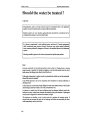
Shauld the waterbe treated?
Should the water be treated?
In general:
Groundwater, when correctly protected, may be considered not to be poliuted
(unless it is proved otherwise), and usedwithout treatment.
Surface water (or very shallow groundwater) should be considered to be
contaminated (unless it is proved otherwise).
It is always complicated to talce polluted water and treat it. It needs equipment
shills, monitoring and constant control. Moreover, even when treated, polluted
water remains potentially dangerous if there is the smallest failure in the treatment
system.
Priority should be given to the choice and pmtection of the water points.
Note:
Certain methods of extracting surface water allow in themselves a strong
improvement in quality (for instance, digging a well several metres from the river
bank instead of taking water directly from the river).
If the only alternative is surface water or groundwater which can not be protected,
should the water be tiieated?
If the WHO directives are to be respected, there should be no faecal coliforms in
drinking water.
In the field, this would mean being obliged to treat most natural waters, with all the
disadvantages that this entails (it is costly, complicated, etc.).
In practice, a certain level of faecal pollution may be tolerated without much risk,
because for many water-borne diseases the infective dose (the number of pathogens
which must be ingested to contract the disease) is high.
The decision on whether or not to treat water is a question of common sense. It
should take into account the risks of not treating, and what can reasonablybe done,
both immediately and in the future.
1-16
Should the water be treated’
1 Waterincainps
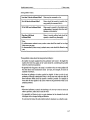
Someguideline values:
Lessthan 10 faical coliforms/100m1*
Water may be consumed as it is.
10 to 100 fatcal coliforms/lOOrnl*
Water should be treated if possible, but
may possibly be consumed as it is.
100 to 1,000 fiecal coliforms/lOOmI
Water must be treated by flocculation and
sedimentation if necessary, then slow sand
ifitration orchlorination.
Morethan 1,000 faical
collhonns/lOOml
Water is heavily polluted and should be
rejected, or treated very thoroughly.
In schistosomiasis endemic zones, surface water should be stored for two days
before use in any case.
- In dracunculiasis (Guinea worm) endemic zones, water should be filtered in any
case.
-
These guideline values should be interpreted according to:
— the number of people supplied from the particular water source : the higher the
number, the better the quality of the water should be, considering the possible
extent of a water-borne epidemic;
— the general level ofhygiene in the camp. It is useless to focus on water quality if all
the other faeco-oral transmission routes are open, for example, if excreta is
scattered everywhere;
— the threat of epidemics of cholera, typhoid or shigella : if there is a risk of such
epidemics, all faecally contaminated water, or in any case water with more than 10
faecal coliforms/ lOOmI should be rejected or treated if possible. if no analysis is
done, then the same applies to all surface water and to groundwater which is not
properly protected.
Notes
When faical pollution is noticed, the first thing to do Is to try to trace its source in
order to prevent it, rather than to treat the water.
— It is generally an illusion to rely on water treatment at the domestic level with
techniques such as storage, boiling and filtration
if water must be treated, the only reliable method is treatmenton a collective scale.
—
1-17
I Watermcamps
Simple water treatment
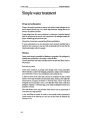
Simple water treatment
Storage and sedimentation
Storage is the simplest procedure to improve water quality (certain pathogens do not
survive beyond several days), but it needs large reservoirs. Storage alone is not
always a very effective procedure.
During storage there also occurs purification by sedimentation. Suspended material
settles to the bottom of the reservoir with a proportion of the pathogens (mainlythe
largest : helininth eggs and protozoan cysts).
Sedimentation of turbid water is essential beforefiltration and disinfrct ion.
if natural sedimentation is too slow, flocculation may be necessary (specialist help is
needed for this). In practice, if water in a bottle is still muddy after an hour, then the
natural sedimentation will not be enough.
Filtration
Passing water through a permeable bed eliminatesa proportion of the pathogens by
retaining them mechanically on the surface or within the filter.
Ceramic candle filters and certain sand filters (known as rapid sand filters) work on
this principle.
SLOW SAND FILTRATION
Under certain conditions, in passing water through a bed of sand, particularly
effective filtration is achieved by biological purification in addition to the mechanical
action of the filter. For this to occui the filtration must be relatively slow.
A deposit is formed at the surface and in the top few centimetres of sand, in which
breeds a whole range of bacteria and microscopic plants, forming a skin (called the
Schmutzdecke, biological membrane or bacterial film), which works both
biologically and mechanically. It acts as a very fine filter which retains or kills most
pathogenic organisms : it eliminateseggs, cysts, nearly all pathogenic bacteria and a
proportion of viruses.
Slow sand filtration is the only procedure which achieves such an improvement of
water quality in a single operation.
A slow sand filter can operate for weeks or even months without maintenance
(which consists of the removing of a thin layer of sand when the filtration rate
becomes too low).
1-18
Simple water treatment
I. Water in camps
In practice
At the collective scale, the construction of this type of filter needs the input of a
specialist, and then the maintenance is relatively simple.
At a smaller scale, for example in a feeding centre, a small filter may be made with
local materials.
Whatever the size of the filter, the operating principle remains the same.
Important
The bacterial layer is fragile and certain precautions should be taken to preserve it:
never let it dry out, and never pass chlorinated water through it
Disinfection with chlorine
Chlorine is a suitable disinfectant for water because it is very powerful without being
toxic. It allows the destruction of all viral and bacterial pathogens in water.
Chlorine can also be used to disinfect surfaces in contact with water: the insides of
wells, pumps, pipes, spring boxes, reservoirs, etc., (when putting into service, after
repairs or after accidental pollution).
For this purpose it is used at much higher concentrations than for the disinfection of
drinking water because the pollution may be much greater (see technical bnefs
Chlorine-generating products and Chlorination)
In the situations considered here, gas chlorination is not recommended because it can
be dangerous and is not practical on a small scale. Chlorine-generating products are
preferred : calcium hypochiorite, chlonde of lime, sodium hypochlorite solution (see
technical brief Chlorine-generating products).
All these chemicals release chlorine when they are dissolved in water.
Chlorine reacts immediately with all the oxidizable substances which may be present
in the water (organic matter and certain mineral substances as well as pathogens and
other organisms).
These substances consume chlorine. For the chlorination to be effective, sufficient
chlorine must be added to meet this initial chlorine demand. This is confirmed by
checking that an excess of unconsumed chlorine remains in the water (residual free
chlorine: see technical briefMonitoring chlorination).
EFFECTIVENESS
At the doses normally used, chlorine destroys all pathogenic viruses and bacteria in
water, but it is ineffective against:
— protozoan cysts and helminth eggs orlarvae,
— pathogens within suspended particles (as they are thus not in contact with the
chlorine),
so it is advisable to filter water prior to chlorination, to remove eggs, cysts, larvae
and suspended particles.
1-19
I
Water in camps
Simple water treatment
PRACTICAL USE
Chlorination is a very suitable treatment method for emergency situations (e.g.
typhoid or cholera epidemics), because it is very effective, but it is relatively tricky to
set up and needs constant attention.
If water has to be treate4 which method should be used?
The choice of treatment method will depend on the appearance of the water, the
supposed degree of pollution, or that measured by bacteriological analysis, and the
technical options. See the following table.
In an emergency, chlorination is often the best technique, but in the long term, slow
sand filtration is generally the most appropriate solution. Howeve; it is always
better to use water which does not need treatment.
1-20
Treatment
Effectiveness
Resources needed
Operation
Applications
Remarks
and
Cysts
Eggs
Storage
Sedimentation
÷
Bacteria
÷
Viruses
0 to +
Simple sand
filtration (MpId)
(mechanical
purification)
+++
0 to +
0
Slow sand
ifitration
(microbio
purification)
÷+-i-
+÷
+
Chlorination
at the doses
generally used
0
Maintenance
Reservoirs with
outlet to drain
sediment
- Pump
+
1. Treatment of very
slightly polluted water
2. Pre-treatment of turbid
water before chlorination
For small filters:
- sand
- gravel
— emp ty oil drums
-I-
Pre-treatmentof turbid
water before chlorination
Sand
Gravel
- Reservoirs:
• pre-fabricated or
masonry for large
filters
• empty oil drums
for small ifiters
i-+
1. Treatment of slightly
polluted water
2. Pre-treatnientof very
polluted water before
chlorination
Not suitablefor:
— very turbid
water
— chlorinated
water
+i-+
1. Treatmentof dear
water
2. Complementary to
sedimentation and filtration
for slightly turbidor very
polluted water
Should be
preceded
by sedimentation
and/or filtration
if water is turbid
-
—
-
-i-+÷
+
—
-
.;-~
NJ
Chlorine (generating product)
Reservoirs
If chlorination is
continuous : a
chlorine doser
I
Technical briefs
I. Watermeamps
Technical briefs
Diggingawell
1-24
Protectinga well
1-26
Protectinga spnng
I -28
Washingarea
1-30
Ferrocement tanic
I - 32
Fabricating conaete rings
1-34
Choosing a motorpump
1-36
Ceramic candle ifiters
1-38
Slow sandfilter
I -40
Chlorine-generating products
I -42
Monitoring chlorination
1-44
Watersarnpling
1-46
Water storage kit: 2,0001
I -48
Water storage kit: 15,0001
I -50
Distribution tapstand kit
I -52
Motorpump kit
I -54
1-23
I Water In camps
Technical brzefr
DIGGING A WELLI
1
1-24
I. w2fr~thc4imp5
Tecjmrcal bn4s
I
DlggingaweJi
I
Method
The ann offhw brief is notto lockatall the types of wells thereare, but to cxplain atechnique which should be useful in
theabsence ofother techniml skills
Numerous teclonqun enstforflnthng water. Goodfield obserration, particularlyofthe oegetahon at theend ofthe dry
season, andabore all, the advice of local well dirsera willhelp to decide whereand how to &g.
Construction
— Identify a suitablesite (vegetation, etc)
- Mark out a curieabout i.2m diameter.
— Dig to about im deep.
— Erect a tripod with a pulleyover the hole (the legs of the tripodmust be firmly anchored)
- Continue digging. talong out all the soil as the work proceeds, using a bucketand thetripod.
- At regular intervals as the hole deepens, linethe sides with wire mesh and plaster it with cement mortar
— When the water table Is reached, lower porous or perforated concrete rings, using the tripod, and
continue to dig Inside the rings these will descend Into the wateras digging proceeds The waterwhich
acaumulates In the rings should be taken out as the work continues. Place a layer ofgravel between the
aides ofthe well and the rings.
- The capacity of the well should be considered sufficient when there Is always water remaining at the
bottom ot the well after drawing waterby bucket over a period of 4toO hours continuously
- Place a layer ofgravel at the bottom of the well (see technical bnet Thofertinga well)
- Cement theJoint betweenthe top edge of the highest ring and the cement-plastered section ofthe well.
- Installa system to drawwater front thewell, and the protection (see technical brief Profectrnga well)
— Before use, thewell shouldbe disinfected using chlorinesolution (see technical brief Prof oct nga well).
J
(1.
2
3
Key
Tnpod
Pulley
Rope
4-
5. 5ections of wire mesh with censent coaling
6
7. Bucket
8 Bottom section ofreinforced cement lining
Qust above the waterlevel)
9 FIrst concrete ring
10 Joint between reinforcedcement lining
and concrete rings
li Gravel
(
(
Inputs
I shovel, lplck, 1 miner’sbar
— 3 beams(about 2m long) and I pulley
— 3builder’sbuckets
— Mason’s tools
— Rope (diam over 10mm),about 6Cm
— Cement (about I bag per 3m of well depth)
— Wiremesh (chIdcen mesh” type)
— sand (0 15mB per3m ofwell depth)
— Perforated or porous concreteringic 3 or4
— Material and tools for well protection (see
technical brief)
— Mechanical pumping system (if the flow of
water is too great to keep the well empty by
bucket during the work).
—
Important
~lldlggIngshouldonlybedoneattheendofthedryseason(exceptmanemergency),whenthewater
table is at its lowest, toavoid the nasty expenence of finding the well dry afterJust a fewmonths of use
— Hand-digging a well without supporting the sides should only be considered in soils which are stable
enough to be safe for the diggers
— If other wells in the area show the watertable to be more than 3Cm deep, or If there are good reasons to
suspect the presence of a rocky formation between the surface and the water level, then another
technique (e.g drilling) should be considered.
- It Is important to use local skills and knowledge when deciding where to site a well and which technique
to use. Skilled well diggers may often be found locally
— The technique described here (based broadly on the GP.ET technical briefs) is one ofthe simplest.
Howevei It Is not ssiltable for all soil types (e.g. sands)
— Take care when sitinga well to avoid possiblesources ofpollution (see technical brief Protecting a well)
—
1-25
I Water in crimps
Tedmiail briefs
I PROTECTING A WELL
I- UNPROTECTED
II- WITh APRON AND LINING
‘8
IV- DISTANCE AND LAYOUT FOR
Ill- PROTECTED WiTh
HANOPOMPE
SAFETY
14
Hous~~%
LatrIn~____.____.~~
0~
of run-off
1-26
I
Technicsl briefS
1
Waterincamps
Protecting a weU
Method
A well should te protected as soon as it is dug This protection consists of preventmg anything from getting info the
well, and preventing the infiltration of run-off and wastewater which could oirnj contaminating material Lastly,
protectionstrengthensthe structure of the well
What to do
I Line the whole well with concrete rings (bought locally or fabricated -see technical brief Fabricating
concrete rings); the lowest ring should be porous or perforated. The uppermost ring should extend above
grousid leveL Pack gravel between the rings and the sides of the well.
2. Place a layer of gravel about 10cm deep at the bottom of the well (in order to avoid the resuspensson of
settled particles)
3. Excavate the earth around the well head to a depth of about 30cr, to a radius of about Znt Dispose of all
the material removed and cast a concrete apron, surrounded by a drainage dianriel confined by alow wall
about Scm high,at a radius of at least 1.5m around the well head
4 The slope of the apron (1%) should fall to a drainage channel leading to a soakaway pit, an Irrigated
garden or acattle dnnlong lrough (see corresponding bnefr).
5 Install a pumping system (follow pump manufacturer’s lnsfructtons)
6 FIx a cover (either removable or fitted with an Inspection hole), onwhidi to mount the pump body. (The
pump makes work easier for users, but Is also useful because it prevents potentially contaminated objects
like buckets from falling Into the well)
(
I
Key
1/
I
Ill
tII
I
I 111/
I
I
I
I
I
I
I
2.
3.
4.
s.
678
~.
10.
ii
a
13
14
15
16
Possible entry of pollution
Thewell
Water aurface
Thewell
1
Coannel to
Concrete
rings
apron
eoakawaypit
Drainage
channel
Soakaway pit
Pump
Cover
imp~eablecon~enngs
Aischonngcollaronconcreterlng~
Apron
Permeable concrete ring
Gravel layer (about 10cm)
J
C
I
I
I
I
I
I
I
Inputs
Sand
Cement
about
about4
400kg
bags of 50kg
Gravel about800kg
— Reinforcing steel: about 20m, or steel mesh, to
reinforce theapron (optional)
—Brtcksorlargestonesforthebaseoftheapron.
enough to fill underneath the apron
- Concrete rings, Inside diameter about liii, height
aboutlOcm-allowlllnngafor7mofwelldeptit
-
—-Coverwhichfltsonthelopnng
Porous or perforated concrete nngs 1 or 2
-Handpumpndthumandflth~
I
Construction materials for the drainage system
I¼jsee
technical brief Scuiiaiuny pif)
Important
Respect safe minimum distances nolatrines closer than 30m from awelL
— Latnnes shouldabsolutely be downhill from the well.
Maintenance should be done carefully, the pump, the apron (repair possible cracks), the dramage
system (dean out the channel regularly).
- Before the first use, or after acddental pollution, disinfect the well with a chlorine solution as described
-
—
below.
(For
1% chlorine solution, see technicalbrief Chlonn6Tgeneraiing products)
lfittsposslbletoemptythewell:
Empty
well, brush
chlorine per hire (2Oml
— thethepreparation of the sides above the water level with asolution of 200mg of
1% solution/I), leave for half an hoer and letthe well refill.
—1. ofIfitlsnotposslbleloemptylhewell’
Brush the walls above the water levelwith asolution of 200mg of chlorineper hire.
2. Determine the volume of water in the well (vol = as ri oh [a 3.14, r = radius of well, h depth ofwater
or height of water column])
3. Add lOllhres of 1% chlomie solution (see technical brief Chlorine-generating products) per in’ of waten mix
and leave the well dosed for12 hours
4 After this time, pump out the water until there remains justa faint smell of chlorine.
(-27
I
CD
U)
CD
Cl)
0
2
a.
0
CD
CD
C)
0
-o
0
H
m
C-)
H
z
~G)
C’)
-o
z
0
Technical briefs
I Wafer in camps
Protecting a spring
Method
(C
A spring should be captured and protected in such a wayas to maximise the quantityand quality efseater supplied
- If the spring serves few essple. the spring box acts as a storage racervoirbefore distribution
-If the spring serves manypeale, the spring box is connected faa larger reservoir
-
If the spring boxis usedfar storage, its capacity should beat least equivalent to a 12 hours’ period demand
- Dig
Conatructlon
out and clean the area around thespring to uncoverall sesurgenres and so obtain the mssomunsyield.
Calculate the quantities of materials needed (concrete, stone, bncks etc), accordsng to the size of the spring
-
box and the local meansof construction.
Construct the springbox according to the plan Its baseshould be on theimpermeable layer (1).
Build the back wall (4) of stone without mortae, and fill the space between the wall and the earth with
gravel (3) Cover with a layer ofcompacted clay (10), to prevent infiltration from the surface
Backfill the upper partwith soil and dig a drainage ditch about lOin above the spring box to divert run-off
— Erect a fence or hedge around the site at a radius of lOm to keep out animals which could damage or
pollute the spring, and to until erosion ofthe dxasnage ditch.
Fix an overflow pipe at the height of the top of the spring’s flow
— Lay a surface of stone or concrete under the overflow and a drainage channel to avoid erosion and mud
around the spring box.
Install the delivery pipe connected to the distribution system about 10cm above the bottom of the spring
box,
—
—
—
-
-7
I
2
3
4
5
6
7
g
9
10
11
12
13
(
Key
impermeable layer
Emergence of spring
Gravel backfill
Stone wall with open joints
Drainage dsannel
Desludging pipe
Delivery pipe to distribution system
overflow
Cover with lock
Layer of day
Soil
Inputs
Detailed plan of spring box
-2 masons, 2 labourers
- Mason’s tools
-
—
Construction materials, according to local
availability, quantities calculated from the ss.ze of
the spring box
Concrete (I ‘2-3 cement - sand gravel)
— Calculate the volume of concrete needed and
multiply by 1.5 to obtain the volume of dry mix
(The volume ofa 50kg bogofcementtaO 033ev)
—
Protective fence or hedge
Run-off drainage ditch
Important
The aim of protecting a spring Is to increase Its useful yield and rellablllty and to protect it from surface
pollution.
- It is important at the outset tocany out a sanitary InspectIon so as to identify the risks of pollution and to
do yield tests to be sure that the supply an meet users’ needs
— Never by to make the water rise above the hIghest point of resurgence as this could produce a backpreasure which would make the flow emerge elsewhere The water should be captured on the
impermeable layer.
— Be careful not to divert the springin another direction or into another fissure when digging around it.
Terracing should start at the point where the water comes out of the earth. Continue todig, workingback
up the water-bearing layer, whileensuring that the waterflows away.
- A good spring should have a constant temperatura If this Is not the case, check above the spring to see if
the water comes from a surface water source which runs underground. The yield ol a spring with such a
surface source will riseImmediately it it rains
—Itmaybeconssderedthatforarellablesprlngtheyieldintherainyseason — 3to5maximum
the yieldirs the dry season
— The distribution and overflow pipes shouldbe fitted with a screen (e g metal mosquito netting) in order to
avoid the passage ofInsects and/or large particles
-
1-29
I Waterincamps
Technical briefs
WASHING AREA
I
Section .AA
Slope : 3-4%
I
1-30
I
TedsnIml briefs
Wafer in ozmps
Washing area
Method
As its name suggests, a soaslung area should provide a hygiene fonIsty for a population man anergency situation,
unthest creating environmental health risks (stagnantseater efc)
It Is built close to a waterpoint and its design should be adapted to the habits ef the population (particularlycancer-sung
the position generally used by srornen to ssssh clothes).
The saashingarea described herenabautthenrnptest it is pcesibleto build It can be niade oflocal bricksand mortar,or
ofstone nsasonry
Construction
— Choose a space down the slope from the apron of the water point, lay out the area using a string line. Its
size will depend on the number ofpeople likely to useIt at one time
- gxcavate about30cm ot soil from this area to ante a slopeofat least 1% along isa length, with a 9/ profile
across its width (see section AA~),spread a 5cm layer ofsand and gravel on thebottom and compact It well,
-Dig a channel to take water from the water point to the washing area. Thischannel should haves slope of
at least 1% and should join the highest end ofthe washing area.
- Lay bricks on the washing area, using a suing tine and aspirit level, cementing the joints (be careful to keep
to the same slope and the same cross-section)
— When the cement has set, plaster the surface with a strong cement mortar (5 part cement to 2 parts sand),
and smooth it welL
- Powder the surface of the plaster with cement when It Is still wet and smooth It again to waterproof the
surface
Cover the slab with plastic sheeting or thick saddng which Is regularly wetted, and let it cure for 5 to 6
-
days before using,
Dispose of wastewater In a soalraway pit, an evapotranspiratlon area or an irrigated garden (see relevent
techrucal briefs)
— Pence off the area to protectIt from animals
—
Kap
I-
2
3I
4
5
6
j
DraInage channel
Washing slab (sloping towards drainage
channel
Well
head
to dIsposal)
DraInage channel
Drainage towards disposal
Stenes
I
-
II
I
I
String line and rape measure
— Spirit level
1Shovel
and pick
Inputs
- Sand and gravel
- Consent (about 50kg)
-
I
Bricks or stones
Trowel, float, cement-mixingtrough
(
5jilastsc sheeting, jute sadong leavea, etc
ti—_______________
I
Important
—
In all cases the dimensions ofthe washing area should be adapted to the habits and the average height of
its users The model illustrated here Is suitable for people used to washing clothes in a crouching position.
If people prefer to wash clothes standing up, a raised washing slab (table height), or as emptyable. raised
connate washtub is better.
—
Dunng the earlydays of a ramp, it Is possible to make washing areas using only plastic sheeting (of the
sort used for temporary shelters) The ground surface must be carefully prepared, removing all sharp
objects (stones, roots, etc) Drainage channels may be dug and lined with a double ttuckrsess of plastic
sheeting, following the above guidelines for the slope- The edges of the plasticshould be anchored to the
groundwith stones covered with well compacted earth ThIs technique only lasts a fewdays because
1) the plastic sheeting gets damaged veryqulddy,
2) and it will probably be stolen
1-31
Technical br-left
I Wafer in camps
FERROCEMENT TANK
Step
1
Steps 2, 3, 4
a
Step
1-32
5
Steps 6, 7, 8
I.Waterinrmnps
TediniorI br-soft
Ferrocement tank
I
Method
The construct ion of a frrrocernent water fenk may be considered when planning to collect rainwater etc Its
waterfighfness and strength are drrecfly related to the qualify ofmaterials sired andthe care taken in its carisfruction
A shape in ferracrrnent is crested using a rernorssble mould to which usre mesh is atIalrhed and to which a cement
coating is apphed.
it is equally possible to build a framework ofreinforcing steel which asoids hosing Is use a mould The steel is thus
embedded inthe cement coilingand reinforces fhe structure
Technique using wooden staltea (for a tank of 1,5001)
I. Drive stakes into the ground, leaving at least 13m above groend level, with centres spaced at 20cm, to
form a circle l2m in diameter
2 WInd three thleknessess of wire mesh around the circle of stakes stretch and flatten the layers of mesh
well against each otherand fix them to thestakes and toeach other with fine wire
3 Reinforce the structure by winding round it three turns of thick wire at the top, in the middle and at the
bottom.
4. Push a length of pipe with a valve attached through the mesh near the bottom (for emptying), and another
one several centimetres higher with a tap for the outlet A third pipefor the overflow Is fixed near the top
of thetank.
5 Apply a 15mm Eras coat ofcement plaster to the outside One person should be onthe inside toretain the
mortar with a floatas it isapplied Leave it to harden for 12 to 24 hours, keeping it damp.
6. Pull out tire stakes and cut off the wires which stick out
7 Apply a coat ofcement plaster to the inside so an tocover the mesh completely Leave if to harden for 12 to
24 hours
8. Apply finishing coat to the inude and the outside and smooth well
9 Cover the bottom of the tank with wire meals and curve it up at the corners where the walls meet the
bottom Plasterthe base, forming aslope towards the emptying pipe
Key
1.
2
3.
4S
6
7
g
Wooden stakes
Wire mesh
Overflowpipe
Emptying pipe
1”
Tap
Galvanlaed steel wIre,2-2.5mm
Interior coat
Exterior
coat ofcement
ofcement mortar
mortar
___________________
—I
—20 shaspened wooden stakes ~0 x 50 xl 750mm~
15m of fine wire mesh
Inpots(12mm mesh, 1 5mm
I wire)
I —2-Sbagsofcement
I —500kg ofbuilding sand
ssitha
I tap and one with a valve
-i roll of fine wire (05mm)
I —3xlocmlengths
of methlpipe, one fitted
I
~,,roll
- Mason’s
of thick
tools wlre(2inm)
—2 people for 3 days
S sledgehammer
-___________________I
Important
—
—
—
Preparallon of cementmortar - I part cement to 2or 3 parts clean, sieved sand.
Final thickness of tankwalls: 30 to 40mm
A metal cross piece Is welded on the pipes to anchor them inthe mesh before plastering
—
To make a cover on the tank it Is possible to extend the mesh with its shuttering or reinforcing steel
framework. Aninspection hole with a covershould then be made at the top ofthe tank.
-
Otherwise, the lank should be fitted with a cover to protect the stored water.
Once the coats have been applied It Is Important to cover the tank with damp jute sacking or plastic
sheeting for at least one week for good curing of the cement This allows the cement to develop its full
strength and avoids the risk of cracks appearing
—
1-33
I Waterincanrps
Technical briefs
FABRICATING CONCRETE RINGS
Outside dlameter= 1.15 m.
Inside diameter =
1 m.
-.
or
(or
1
+
1-34
Water in canips
Technrcol briefs
Fabricating concrete rings
Method
Concrete rings are needed to line and protect hand-dug wells. They may have other uses, such as nsslonga spring bee, a
r,anrzaster collect ion tank etc
Concrete rings for infiltration at the bottom cia well may be perforated dunngfabrication, or made of porous concrete.
Porous concrete nngs are preferred for use in decomposed rock sand or gravel
Concrete nngs used for the main port ofa well or for waterstorage should obinousty not ha porous or perforated
— The Internal diameter ot the rIngs should be at least O.8m so that a person con
work mside the ring If
necessary
- The mould is of steel plate, at least 3mm thick, reinforced with angle steel It is composed of two parts: the
Internal and external rings Each ot these parts Is madeof three sections whIch bob together
-
The mould is generally imhigh (less if necessary)
-
The bottoms and tops of the rings axe stepped so that they fIt together well. The groove may be formed
usIng a template or a plastic tubing against the Internal face at the bottom of the mould, and against the
external face at the top when the mould Is almost full of concrete
—
The mould sectionsare removed about 24 hours altercasting The rings should be cured m the shade for at
least I week, during which they should be kept damp (wettedjute sacking or plasticsheeting).
-
For perforated rings, the moulds are made with holes every 15cm. Greased pegs are Inserted when the
concrete is cast; they are withdrawn before the concrete sets completely.
-
After each use the mould sections should be scraped and bnished and the contact surfaces coated with
used engIne oll or diesel to prevent concrete sticking to them.
Key
1.
2
3
45.
6.
~
Intemal moult ~eter
lm
Concrete
ring dm~er1 ISm
tud~ moW~
Bolts
Woodenormetalpegs(forperforatedrlngs
Reinforcingangle steel
j
Cement,
sand and gravel (about 0 25~ of
concrete perring)
-Zwockem
-1
ring mould
j -2 shovels, 2buckets, 2 ftowels
—
-lwirebnush
Used engineoil
—l spannm Ilump hammer
-
c~astic sheeting orjute sadung
7
I
Important
—
Concrete mix for ordinary or perforated ring Is 1: 2 4 cement : sand, gravel. Compact the concrete well
during casting to drive outair bubbles
Concrete mix forporous rings Is 11:4 cement sand, gravel The concrete should not be too wet Instead
ofcompacting, vlbcate It by hitting the mould with a wooden stick, Porous rings should cure foe longer
thanordinary ones They are more fragile and should be handled withcare.
— When the rings axe produced m series for a programme of well protection, it is recommended to use a
shelteredarea for curing and storing the rings
-
-
A tripod and pulley should be used to lower therings safely into the well.
U
1-35
I. Water zn a~7npS
Tedinical brwft
cHOOSING AMOTORPUMP
I-
14
2
7
11
12
1
13
Altitude in metres
0
500
1000
1500
2000
2500
3000
3500
1-36
Loss of suction head in metres
0
0,60
1,20
1,70
2,20
2,70
3,20
3,60
Technioil briefs
I Wirtersn camps
Choosing a motorpwnp
Method
A motorpump is composed of a pumping mechanism and a dnmng mechanism (electric metor or rombustwn engine)
Thechoice of a metorpump depends on the type of sifter source and the work to be done
The water aource
A study of the type ot water sousce (nvei. lake, well, deep or shallow borehole) and its situation allows the
choice of asurface pump or a submersible pump
For a suctionheight of up to 7 metres, any type of surface pump may be used. (The pump body is at the
surface It sucks and delivers)
For greater lifting heights (deep wells and boreholes), a submersible pump is suitable (an electric pump,
completely immersed, delivery only)
The work tobe done:
The followinginformation Is needed when specifying a pump for a specific use
- The discharge, 0, expressed In litres per second or cubIc metres perhoui or the demand In cubic metres per
day
— The vertical distance In metres between the lowest water level and the highest level to winds water must be
pumped (suction height and delivery height), or the total geometnr head.
— The variation of the water level inmetres
— Physical information on the site
depth of water, diameter and depth of well or borehole, sketch with
dimensions of river bank, lake or channeL
— The height of thesite above sea level.
- The energy souxce for pumping• human, animal, wind,electric motor, combustion engine, solaz etc.
-The avenge weight which an be easily transported and handled onsite.
I i~
Key
Suctionhead
Delivery head
Levelof pump sins
Lowest water level
Highest water level
Internal diameter of suctionpipe
Internal diameter of delivery pipe
Inpula
EMeasuring equipment (rope, tape measure, I
lets)
Length
ofsuction
delivery
pipe
pipe
Non-returnvalve
Atmospheric
Motorpump
Suction
strainerwIth
unit
pressure
foot valve
Storage of
reservoir
and deaopbonof site
Important
The fsllowing fscf on must also be consfdered
— The possible presence oflarge quantities of sand us the water which may damage the moving parts of the
pump
— Thepresence of salty or bndush water whIch could produce rapid pump corrosion,
— The ease of maintenance and robustness of the pump, the availability of fuel (what type of fuel) or
electncsty, the availability of toobi spare parts and maintenance skills
- The pumping schedule a few hours per thy, or 24 hours perthy 7
-
Calculabon and comparison of the costs of different ophons.
Nit
The suction ability of asurface pump Ia limited to 7m head at sea level, whatever its power It diminishes as
the altitude Increases (see table opposite) On the other hand, its discharge rapacity is directly related to its
power
The discharge of a pump can be regulated by means ofa valve at thedischarge outlet.
—
1-37
I Waterinasmps
Technical briefs
CERAMIC CANDLE FILTERS
SIPHON FILTER
(type “EcIair~)
GRAVITY RLTER
.7
(Type “Esser~10 or 201, or4 candles)
PUMP FILTER
(Type Katadyn)
TAP FILTER
a
1-38
(Type iCathatom~)
I Wofermaimps
Tedinicol briefs
Ceramic candle filters
Method
Ceramic candlefilfers can remove practically all bacteria, ueme mmses and all suspended material from sifter
Important this technfque is riot eff ecf irnefor disoolredsubstances (salts, them icel pollutants, efr)
Water is passed throughmlcropomus r.eramtcwalls with a pore diameter ofabout 0 45~r
SIphon filter
thewaler to be fil ere us a container, Immerse the candle, place anothercontainer underneath and let
the filtered water sipbon through, drop by drop (the siphon is pnmedautomatically)
Gravity filter
— The same pnnciple as above, but one container stacks on top of the other This method produces a greater
flow than the siphon as It uses several candles (providedthey are not clogged).
Pump filter (also called “Katadyn)
Here, the sister uforred through the filter under pressure using a small integralharidpson p. thus Improving the flcno.
— Put theend of the plastic pipe into the water to be filtered, and pump
- Inside the candle there Is activated carbon which adsorbsdissolved substances and takesaway any possible
taste from thewater
Tap filter
- In this unit the candle is mounted Inside a cylinder (It Is like the siphon filter candle, but filled with
activated carbon) A plastic hose Is connected to the tap
- When the tap is turned on, water fills the transparent filter body, passes through the candle and comes out
ofthe spout
- Important this filter can only be used when there ts enough pressure In the pipedwater supply.
— Place
Inputs
I
2
3
4.
5
6
7
8.
9
10.
11
12
13
14.
IS.
Waterto be filtered
Ceramic candles
Siphon tube
Collecting filtered water
Container of water to be flitered
Ceramic candle fastening and rubber washer
Tap
Cover
Transparentfilter body
Outlet for filtered water
l-Iandpump
Fastening collars
Flexible tube (raw water)
Strainer (to prefilier raw water)
Universal tap fitting
SIphon filter
- Ceramiccandle with flexible siphon tube
GravIty filter
—2 containers (metalor plastic)
- Ceramic candles (2 or 4) with rubber washers
and wing nuts
— Tap
Katadyn
viCit containing
— Ipunip fiter with flexible tube attstched
- I bnssh to dean ceramic candle
— 1 gauge to measure thIckness of candle
Tap filter
— Pilter body with flexible hose and universal
nsbber tap adaptor
- Ceramic candle (delivered together)
I
(
Important
Siphon filter ensure that the flexible tube Is flrnsly attatched to the ceramic candle so that no water is
siphoned directly without filtration
- Gravity filter - assemble the candles correctly with their rubber washers to ensure that no water passes
without filtration.
— Icatadyn filter - change the candle as soon as the measuring gauge passes freely around it (see maker’s
instructions)
- Teams in the field should always drink filteredwater because they can never be sure of the quality oflocal
water supplies
— Never let the candles come into contact with boiling water as there is arisk of cracks forming
— Maintenance of ceramic candles - when the flow becomes too weak, brush the candles (e g with a
toothbrush) under dean running water, rinse and reassemble The candles axe fragile, handle them with
cart
— The tap filter is Ideal for washing hands etc in an operating theatre, if the hospital has running water Be
careful not to loose the little rubber migs on the tap adaptor
—
1-39
1.
Water in camps
Technical briefs
I
SLOW SAND FILTER
ieni I~fl
1-40
-
AP.IriPRFF1LT~
I Waterinconips
Technical briefs
Slow sandfilter
Method
Slow sandfiltration allows a highly effective microhelogical purification if usiter inaddition to mechanical punficat ion
bythe sand.
This nucrslnological trealment is due to the action of a hological layer (called the Schnistzdecke), which develops at the
surface of the Jilter This layer actirely retains and destroys helniinth r,gs, bacteria and some viruses.
Construction
LPaint the insides of two 2001 drums Fix an inlet pipe about Sass from the bottom of one drum which will
be used for the prefilter (as shown in the sketch).
2.Place a layer oflarge stones on the bottom of thIsdrum (4), malung sure there Is a plug-hole at the bofroot
If then Is not then make one.
3.Place aperforated plate (e g. the tap cutoff the drum) ontop of the stones (2), to act as asupport fur a layer
of coarse sand.
4Ylace a30cm layerof coarse washed sand (1-2mm dla) on top of the metal plate
S Fix a pipe connectingthe two dnsms nearthe top, to take water from the preffiterto the fillet
6 Make surethe second drum has a plug-hale In the bottom Make a hole about Scot from the bottom and
Insert a perforated pipe(9). A length of PVC pipewith many slots cut with asaw is suitable.
7Sury the perforated pipe in a bed of gravel (8), whldi coven it by at leastSan.
8Then add a layer of at least 70cm of washed, sIeved, fine sand (7).The Ideal diameter Is 02 to 03mm, or In
any case, less than 15mm The Schmutzdecke will developat the surface of this sand.
9Place a flat stone (10) where the water flows onto the filter so It will not to disturb the Schmutzdecke by its
turbulence
I
10 Insert and fix the pipework (outlet and overflow). Important - the outlet pipe must rise above the level of
the tap of thesand, so that the filter surface Is alway, under water, even if the water supplyis cit
?~
I
~
12 Raw
Perforated
water inlet
plate
valve
moles about 2mm dla every
I
3. Co
sand (1-2mm din)
4 Largestone(eg cobbles)
I
—
i
II
and PVC
glue (for galvanised pipe) or solvent
—-Oullandbits
Pipe
threader
- Teflon tape or mastic and tow (for malung joints)
— Elbows and nipples (for fixing pipes)
—- Anticorroston
and householdpaints
and thsnnen
— Paintbrush
Cobbles (stones)
6 Plug-holeswith
Prefilter overflow
~)
(towards filter)
S
plugs
7 FIne sand (02-05mm ili~~
8 Gravel
9 Perforated pipe (forcollecting filtered water)
10 FIat stone
11 Outlet valve
12 Outlet pipeto distribution
13. Overflow
A Minimum water level in filter
B Maximum water level ~ filler
____________________
I
I
Two 2001 dnsms
- Metalsaw, hammer, cold chIsel, tape measure
Round and half-mund files
—Pipe(PVCorgalvanised),1/2”orl/V
II
— Coarse
sand
(about 1mm
: about
0 l2mi
Fine sand
(02-05mm
dia)dla)
about
(t.3m~
~Grave1: about 0 OImi
___________________I
Important
— The filter
sand should be of uniform size Sieve It, using mosqutto netting for instance
-Before the first use, fill the prefllter and the filter with a solution of 100mg/I chlorine (lOmI of 1% solution
perlitre) ; leave It for 12 hours and empty it through the plug-holes Never chlorinate after this:
it would destroy the biologIcal layer Cover the dnsms toprevent the growth of algae
— It is vital that the Schmutzdecke at the surface of the sand Is always covered with water; again, make sure
that the outlet pipe nan above the level of the Sdimutzdecke.
— flow setting dose the outlet valve Open the Inlet valve (not too much, to avoid putting the prefilter sand
into suspension); when the filter Is full, open the outlet valve so as to have an outflow ofabout IIJmIit
- The Schmutrdecke Is onlyeffective after about 2 weeks, so for the first 2 weeks of service the water is not
safe.
— Such a filter can treat
1,000 to 1,400 l/24h. If the needs are greater, several filten may be built In parallel
(this also avoids having to cut the supply during maintenance)
- Maintenance - when the yield dmpe significantly, cut the Inflow and undo the plugs of the two drums. Let
the water empty completely from the prefilter Let the water level in the filter fall to 15-20cm below the
filler surface, rake the lop 1-2cm of sand from the Schmutzdecke. Replace the plugs and put back into
service Afterthis has been done several times, remove about 10cm of sand and put it to one side. Place a
layer of clean sand andthen replacethe 10cm, tobring the total thiclmess of fine sand back to 70cm
- If the water Is not very turbid (40 Nfl)), the prefilter will not be necessary
141
I
Tneitntcal briefs
Wotertn camps
I
chloiine-generating products
CHLORinE
Chlorine is a chemical whose strong oxsdising properties are used for disinfection and deconlaminotiot Other them its
gaseous form (which is mentioned herejust for information, because it is canplicated to use). ditorine is found in the
form of chtonne-generating products’. Each product is described by nachlonne content
The chlorine content shouldbe labelled on the product’s packagingand Is mipressed
-eitherln % of chlonne
— orin chlorometnc degrees (chl)
— orIn parts per million (ppm) or mg of active chlorine/litre.
(lctsL = about 03% activechlorine, ippin 1mg/I = 00001% active chlorine)
Do’rsnpcr r~opucrs
Product
Chlorine content
Sodiumhypochlonte solution, lTchl .
- -.
... ......
._
.about 4% active chlorine
Sodium hypochlorite solution, 15’chL, .
.
_.about 5% activechlorine
Sodium hypochlonte concanwate~48ch1
....~._ .about 15% active chlonne
Calctuns hypochlonte (11TH) . .. .....
_...about 70% active chlorine
Chlonnated lime (bleaching powder)..
.....~..
....about
30% active chlorine
SodiumDtchloro-lsocyanurate or NaDCC 5).
- powder
.. ......_.50-65% activechlorine
- tablets ...
_~15g active chlorine/tab
____________
iii
The U1( Department of the Enrnronment awthorises the use of NaDCCfor duinf acting drinking waterin emergency
or temporary sit uotwns as long as doses do not exceed 10mg ofproduct perlitre, and it is not used for more than 90
days peryear.
Storage:
- store chlorineproducts In airtight, non-metallic containers sheltered from heat, light and humidity
- chlorinated limeand all forms of sodium hypochlonte axe unstable and do not store welL
- calaum hypochlonte stores better (loss of active chlorine is about 2% per year), but NaDCC Is by far the
moststable chlorine-generating product
PREPARATION OF A 1% soLsrriott
For chlorinating drinking water a stock solution of 1% chlorine Is used, whlclsever clslorine-generating
product Is used,
Product at n% chlorIne —>1% solutIon —>uae
Starting with a productat n% active dulonne — a 1% solutIon of chlorine contains lOg of chlorine per hue,so it needs lOx (100/ri) gxammes of product per
litre ofsolution. Example calcium hypochlorite at 70% activechlorine: lOx (100/70) = lSg/l ofsolution.
Starting with:
Dllutlon
Remarka
Caloumhypochloriteat7o%
active chlorine
15g/l — I level
soupspoon/litre
Let the deposit and settle and use
onlythe supematant
Chlorinated ltme at 30%
active chlorine
33g/l
2 level
soupspoons/litit
Sodium hypochiorite at
suitable 5% active dslorlne
ZOOoil/hise
Sodium hypochtorite concentrate at 15% active
chlorine
75m1/htre
Sodium dschloro-isocyanurate(NaDCC) at l.5g actIve
chlorineper tablet
7 tablets/litre
Onlyltmanufacturedveryrecently
(<3 months) arid only if stored
away from heat
Ensure that the excipients in the
tablets are non-to,uc.
The 1% stock solution should be kept Iii an aiitight, opaque, non-metallic contamei away from light
and heat and should be replaced every 1 to 2 weeks
Caloum hypochlonte and NaDCC axe recommended for general disinfection (greater stability and high
chlorine content) NaDCC Is completely soluble, Is less corroelve and is not affected by LkTA rules on
the air transportofcorrosive substances.
1-42
Technical briefs
1 Waterrncoinps
Chlorination
Method
Chlorination is one of the best methods of treating drinking water (relatively simple, effective and easy to measure) In
spite of thu relative simplicuty~it should not beforgotten that In an emergencysifuafien it is alssiys preferable to usea
groundwater source which can be protected and monitored in terms of environmental hygiene (see technical brief
Protecting a well)
Chlorination deniands staff trained In the technique and In its monitonng as well as good logistics (supply of chlorine
product. storage, etc )
In practice
Only the chlorination of a known volume of water in a reservoIr Is discussed here.
— The pnnople is to add enough chlorine-generating product to destroy all the organIc matter contained m
the water and to leave a small fraction ofchlorine available fordealing with any possible reintioduction of
organic matter To determine how much chlorine product to add, the chlorine demand Is measured
I Prepare a 1% chlorine solution (see technical brief Clslorine-goneralung products)
a Take 3 or 4 non-metallIc containers of known volame (e g 201 buckets).
3 Fill the contamers with some of the water to be treated,
4. Add to each bucket a progressively greater dose of 1% solution with a syringe.
lot container’ ImI
2nd contaIner l,Sml
3rd container 2m1
4th contaIner - 25ml
5 Wait 30 minutes (essential this Is the minimum contact time for the chlorine toreact)
6 Measure the free chlorine residual in each bucket (see technIcal brief Monitoring chlorination).
7 Choose the sample which shows a freeresidual chlorine level between 0.2 and 0.5mg/I
8 Extrapolate the 1% dose to the volume of water to be treated,
92ourthe solution into the reservoir, mix well (during filling) and wait30 minutes before distributing
Example
of water in a
—Chlorination
Foliow steps 5-5 above.
tnputa
1Several
containers of the ~e
1% solutIon
2,0001reservoir
- The
the buckets,
free residual
measi~
chlorine
hofflevels
an hour
of the
afterwater
addin~
in
1, 1 5, 2 and 2 Sm! of 1% chlorine solution
respectively are as foliowr
I 0mg/i
2 ‘0 1mg/I
3
04m
I
~
~
known volume
etC)
5m1syringe
— Measuring equipment (comparator and DPDI
/1
— The dosing rate4.ImgPl
chosen thamfore will be that for
bucket number 3 (result between 0.2 arid
05mg/i)
— If it needs 2m1 of 1% solution to chlorinate 201 of
water at the correct dosage, then it needs ~
times an much to chlorinate 2,0001, e.g.
100 x 2m1 = 200 ml of 1% chlorine solution
r
tabl~)
=
-
=
The MSF chiennat on lot available through MSF
stirs, cantains all tSe material needed for
chlorination anddosing.
Important
Never chlorinate turbid water because the suspended particles can protect miao-organisms. The
measurement of free residual chlorine may Indicate a satisfactory result (between 0,2 and 0,Smg/l), but
there Is noway of knowing if the chlorine actually comes into contact with all the pathogens. Water to be
chlorinated must contain as bttie visIble suspended material as possible If it Is turbid, apretreatment such
as sedimentation and/orfiltration shouldbe done before chlorination
— Chlorination is effective against practically all pathogenic nuao-organlsnus in water The only way to be
sure of this effectIveness Is to dose the free residual chlorine Jiuuportant even if the dosage rate is
correctly deternuned, the chlorinedemand may vary over time with unexpected changes irsthe amount of
organic material us the water. It Is thus Important to measure the free residual chlorine frequently in order
to be able to adlust the dosage rate to the situation
— Metal consumes chlorine, so never prepare strong solutions Inmetal containers (unless they are enamelled
orpainted)
— Concentrated chlorine products should be kept In a dry, shaded place, and guarded (Chlorine is
dangerous, particularly for cluldren) When in contact with are chlorine produces a corrosive and toxic gas
heavier than air The ventilation of chlorine stores should therefore be by means of vents at the bottom of
the walls
— The doses of 1% dulorine solution Øvenhere for the example of calculating chlorine demand are only an
indication, It maybe that the chlorine demand of water to be treated in the field is very different from this
—
example
— The taste of chlorine in water Is no
proof of the presence of free residual chlorine (it could be combined
residual chlorine)
-I
1-43
I Wate~-incamp~
TecJgnuoJ brieft
~
11 DECOMPOSITION OF
CHLORINE IN WATER
2/ TESTER (“POOLTESTER”)
144
I
COMBINED CHLORINE ~
RESIDUAL
••>
FREE
CHLOR~~j~
RESIDUAL
Technical briefs
I. Water in cimps
Monitoring chiorinatloni
(
Method
The simplest and surest way of monitcsing the effectiveness ofchlorination ofdnnlsng water is to measure Free
ResidualChlorine (FRC)
The presence of FRC in sailer tus
(aftera
contact
time oJ30
mins) availableto
primes that deal
enough
teen added Ia arid
ise all
leaving
an areas
ofchlorine
withchlorine
possiblehas
recantaminatwn
(in the
organic
matter
in theduring
eate,~
p
distribution
system,
handling
etc)
The objective of chlorination (see technicalbr4 ChlorinatIon) is thss to add enough chlorine to leave between 02 and
O5mg/l of FRC aJter the contact time
The measurement Ia most eaeily done usinga “Poottester”
1.Rsnse the Pooltester 3 times with the water to be testei
2.Fill the 3 compartments completely with water
3 Put 1 phenol red tablet in the left hand compartment (measurement of pt-I)
tPut 1 DM11 tablet m the nght hand compartment (measurement of Free ResIdual Chlorine).
5.Replace the covet
6 Shake until thetablets are completelydissolved (about 20 secs).
7 Read the resultsin the tight, comparing the colours In the outside mmpartments (samples) with those in the
central compartment (reference)
Inputs
Key
I
2
3
Cover
Central compartment
pH cothpartment (phenol red tablet)
4.
5
6.
FRC
7
S
FRC reading scale
compartment (D~)1tablet)
p1-I reading sale
pH reference scale
(for I measurement)
—1 pooltester withcover
j
—1 phenol red tablet
- I DPDI tablet (~DPDl Is marked m green on
the packet)
—
Water to be tested
FRC reference scale
Important
- Never touch the tablets with the fingers - thiscould affect the results
- The printing TPD1” must be in CR5! N on the packaging Thereaxe other DPD1 tablets with
the printing
in black They shouldnot be usedin this pooltester.
- Read the results within 60 seconds of the tablets dissolvIng lobe sure of a reliable measurement
- Read the results In good light (daylight Is best)
— The pH need not be measured every nine It Is used for determining the amount of chlorine product to add
to the water.
— Comments onthe pH ofwater:
pFl= 7: neutral
pH<7 acidic
pHs7 alkaline(or—baslc)
• Important chlorination Is less effective if the pH Is above S. In this case, the FRC level after the contact
time should be double the normal (between 04 and 1 0mg/I instead of Ol-O5mg/l) for chlorination to be
considered effective.
• Important, ifchlorine Is overdosed, the measurement of FRC may give a false negative result
~1
‘-45
I Water in camps
Tmluucal briefs
[
WATER SAMPLING
2
47~\
4
6f~
5
8~
Ball of
string
9
Current
4
1-46
Weight
Technical briefs
Wafer in camps
Water sampling
Method
Important the sampling technique differs according to whether if ufsr tnictenolagical or chemical analysis
The results arediscussed in the section Mssessmenl ijwater quality” (p1-LI)
ChemIcal analysIs
— Collect at least 2 x 11 In plasticbottles(eg. mineral water bottles), which must beclean and aIrtight
— Rinse the bottles 3 times with the water to be analysed, fill them right to the top, label them and send them
to the analytical laboratory
Bacteriological analysis
- Collect at least loOm! In a sterile bottle
— To sterilIze bottles, place the cap loosely on each one so that steam can circulate inside
— Wrap each bottle in tissue papes newspaperor wrapping paper
—Sterilize man autoclace forIS mInutes at 521C (a small autoclavelike the Prestoclav is quite suItable)
- If there Is no autoclave, the bottles may be sterilized by boiling - place each bottle and cap in the water and
let it boil for 20 minutes
— After 20 nuns boiling, take outof the wale; and let it cool, protecting the opening with flamedaluminium
foil ora sterilized compress
— Use as soon an possible
— For the bacteriological analysis of water that has been chlorinated, add OJ5oil of 1% sodium tluosulphate
solution per lOOml of sample to each bottle before sterilizing, In order to neutralize the chlorine which
would otherwise affect the cesulis
r
Key
(1-8 wafer sam pbng froma tap for bacferiolagscal
1.
2.
3
analysis)
Clean the tap (alcohol or soap)
Let the tap run fully for about 30 seconds
Flamestwithapadsoakedmalcohol
‘1- Let it run fully again for ~ ~
5
Take off the cap and its protection fromthe
bottle
Inputs
I
I
I
Chesucal
— Glass or plasticbottles, 1 or 13L 2 per sample
- Marker pen for labelling
-Thermometer
~,acierssIogicai
-2 sterile lOOm!bottles
- string and weIghting stone (for sampling from a
well or other Inaccessible place
6. Take the sample
-
7
Replace the cap
—
5.
Labelthesampleandrecorditma
notebook
9
10
Samplingfromawatercourse
—
I
I
Cloth
Alcohol and lighter
-Cottonwoolandfocceps(egAiasrtweezecs)
—
Thermometer
Samplingfromawell
J
Important
The 5 steps described here for sampling from a tap are not necessary for chemical analysis, but are
absolutely necessary for bacteriological analysis They are the only way to be sure that the results of the
analysis reflect the quality of the water and are not affected by possible contamination on the tap, during
handling.
- Always work with clean hands (washed with soap) Any contamination by dirty hands will distort the
results
— Never touch the inside of the sterilized bottle or its cap When sampling, hold the cap by the oulsid~never
put It down unless ills upside down It Is better~for secunly andreliability, to double each sample
— Mark the following on each sample (and keep a copy)
— an identification number, the place and the type of watersampled, as accuratelyas possible,
— the date and time of sampling and dispatch,
— the substance(s) or organism(s) to be identified, techniques
- treatment, ifany, of the water(product and dose),
—
watertemperature at the time ofsampling (Ifpossible)
- Certain chemical teatsrequire special sampling Enquire about these
— For bacteriological analysis, it Is often simpler to use field testing kits (e g DelAgua or Mrlispore), In fact,
samples should reach the analytical laboratory within an hour of sampling if they are kept at ambient
temperature, or withIn 6 hours if they are kept atbetween 4 and 6•C (but not frozen)
I
‘-47
I Water in ci inpa
Technical briejS
2,000L WATER STORAGE MT
CONTENTS OF KIT
5
5
*4-2
=
nfl
El
I
e
INSTALLATION STEPS
J~anor~ThJijE5m
Clean the surface of
the platform
Lay out the ground Street
- Lay out the tank
- Connect outlets
-
-
Arrange the
drainage and lorry eccess
Raised Access for lorry
IJTIJJJJTSt
1-48
vi
Technical briefs
I Waterincainpe
2,000 litres water storage kit
(
Method
This lot nfar the supply ofiaiter tea healthstructure (dispensary, sinai! hospital, feedingrzntre, etc.)
Oncethe base has been prepared (a raised earth platform), the bladder tank ran be in operation iii afew minutes
Installation
- Choose the site for inssalling thetank, close tothe centre tobe served.
Important make ant that the site Isaccessible atall times for filling the tank (e g by tony tanker).
- Prepare a flat platform, about 1.Sm high so that the water may be distributed by gravity The higher the
platform the better the diabibutloit
- The surface of the platform should be clearedof all objects (stones, sticks, eta) which could puncture the
tank. Ifposslbls, cover the surface with a layer of sand.
lnsportant the area of the platforms should be larger than that of the tank (3m xl 7m). Note also that this
platform shouldbe strong enough to support39OkgImi
The platform may be made of compacted earth, or oil drums filledwith stones or earth with earth packed
between then,, or a flat roof may be used, etc.
- Spread the groundaheet on theplatform.
- lay the tank out onthe groundaheet
- lighten the outlet valve, it Is notcompletely screwed on by the manufacturer
- Attatch the pipe to the outlet
- Orgasuse the distribotlon system In the health centre (or rIght next to it), using esther the 114 turn valve
supplied with the kit, or a distnbutlon tapstand (there are 2 stands, each with 6 taps in the MSF
tistrlbutlon tspstand” kit)
— Install a drainage system around the platform and around the distribution point to avoid rapid
deterioration of the site.
I
2
3
4
5
6.
7.
8
9
ill
11
Key
Reservoir (bladdertank)
Fillingopening with cap
Outlet valve
One half of aDNSO connection, Guillemin
system
Croundslseet
6m of 2 reinforced hose, DN5O, suitable
for canyusg drlnlungwater
Harness for transport by caror tony
Serflex collars for grip and watertiglstnesa
Spanner for loosening and tightening the
hose connections
1/4 turn dishibutton valve
Corner protecton plate
Inputs
—2 people per kit forinstallation
—
Means of filling motorpump, lorry tankez etc.
-Diahibution points, e g.14SF tapstandkitswith 6
taps
tmportant
Site the distribution point as far away as possible from the tank.
- Do not lose the connection spanner if it does get lost, there are some in the MSF water supply tool kit
(white bucket)
- After use, it Ii essential toclean and dry the inside of the tank beforerepaclung, toextend its lsfr
- open thevalve and the filling cap,
- unscrew theplastic cornerreinioningplates on one side of the tank, push apiece ofstring or wtin,
- between the plates and reilghten them,
- hangup the tank by the string or wlaz
- slip a piece of wood (forexample) between the filling opening and the tank bottom to keep the
Inner surfaces apartand let airosculate Inside
— Do not fold up the tank until the Inside Is completely thy (2-3 days at least).
— To repair the tank, use the repair kit supplied and follow themstructions carefully
—
‘-49
I.
Watermcrnnps
Technwal bi*fs
15,000L WATER STORAGE KIT
(
ELi
Ia
f~3
I12~0
INSTALLATION STEPS
~
-
Clean the surface
the platform
of
Lay out the ground Street
- Lay outthe tank
- Connect outlets
-
-
Raised
Arrange the drainage and lorry access
Access for lorry
To distribution
//
1-50
I. Wafcrrncanips
Techn ical
I l5,000lltres
water storagei~ii~
Method
This lot is designed tosupply water in a camp Once the base has been prepned (a raised earth platform), the bladder
tank ran beoperational in afew minutes.
Installation
- Choose the site for Installing the tank, ensuring that it Is accessible at all times for filling the tank (e g by
lorrytanker).
Prepare a flat platform, about 13m high so that the water may be distributed by gravity The higher the
platform the better the distribution
- The surface of the platform should be cleared of all objects (stones, sticks, etc.) which could puncture the
tank. If possible, cover the surface with a layer of sand.
Important the area ofthe platform should be largerthan that of the tank (6Am x 3.2m) Note also that this
platform shouldbe thong enough to support 730kg/mi.
The platform may be made of compacted earth, or oil drums filled with stones or earth wsth earth packed
between them, or a flat roof may be used, etc.
— Spread the geoundaheet on the platform.
— Lay the tank outon the groundsheee.
— Tighten the outlet valves; they are not completelyscrewed on by the manufacturer
— Atlatcls one of the three lengths ofpipe to one of the outlets, fit the tee and the two other lengths of pipe to
the other outlet
— Organlse the distribution points, usIng either the 1/4 turn valves supplied with the kit, or distribution
tapstands (there are 2 stands, each with 6 taps in the MSF “Distribution tapstand kit)
— Install a drainage system around the platform and around the distribution point(s) to avoid rapid
deterioration of the site.
-
17
lRes~ow ~laddertank)
Key
FillIngopening with cap
I
I
I
I
I
~
4
L~
J
C
— Unpadc
p~nsthe
per kit
shovels
for installation
and picks first of all to
~.
Outletvalves(2)
HaM
of aDN5O connedtio~Crollemin rystam
Groundsheet
6.
7.
6m
for
S~amilan
use
of 2”
with
reinforced
drinkingwater
for ~phoses,
andwatemighiness
DNSO (3), suItable
9
I~ 10
8.
I 11
12
I
( 13.
hose connectIons
l/4tumdistribubonvalves(3)
2” tee connectiort
Spanner
forloosening
DNSO
and tightening the
2 shovels, 2picks
Handlesforshovelsandplcks
Rollof rope
inputs
prepare the platfn U mechanical equsp~~
(e.g abulldozer)canbeuseditlsmuchqulcker I
I
—
Means
offilling motoopump, lo~tanker, etc
and easier
Thslrthutlon points, e.g. MSF tapstand kits ~ithJ
Important
— Site the distribution point as far away as possiblefrom the tank. Use the rope in thekit for fencing
— Do not lose the connection spanner it it does get lost, there are some in the MSF water supply tool kit
(white bucket)
When rationingwateu the gate valves on the outlets may be closed and the knobs taken off Be careful not
to lose the knobs.
- After use, it is essential toclean and dry the inside of the tank before repacking to extend its life:
- openthe valve and the fillingcap,
• unsaew theplastic corner reinforcing plates on oneside of the tank, push a piece ofstring or wire
between the plates and rettghlen them,
• hangup the tankby the string or wire,
• slip a piece of wood (for example) between the filling opening and the tank bettom to keep the
inner surfaces apart, and let aircirculate inside
— Do not fold up the tank until the inside Iscompletely dry (2-3 days at least)
— To repairthe tanic, use the repairkit suppliedand follow the instructions carefully.
I-51
Technicalbriefs
I Water in camps
-
DISTRIBUTIONTAPSTANI) KIT
11
-I
1-52
Technical briefs
I Waterincmnps
Distribution tapsiand kit
Method
The distribution tapstands are pit-assembled and quiets to install, alloonngrapid provisionof waterdistn’lnihon points
in emergency situations The lot is composed of2 tapstands, each with 6 self-closing taps The tapstands are dosignedto
lie used with the waterstorage lots (or any othersystnn fitted with DN5O connections)
Installation
- Unpack the two tapstanda front the box arid identity the various parts (frame taps, nuts and bolts. etc)
- Unfold the legs and assemble the frame with the 4 steel braces Use the bolts and the Nylostop Mb nuts
with the l0mmspannerln the kit.
- Secure the reducing tee with its vertical pipe for incoming water Use teflon tape (PTFE) on the thread
before savwtng on the elbow to ensure awaterttghtjolnt lighten the nuts fixing the pipe to the framewith
the 13mm spannersupplied.
—
WInd teflon tape onto the threaded ends ot the pipes on the tapstand
Attatch the 6 ‘lbflo taps, tighten them well (use a wrench supplied in the water supply tool kit). Make sure
a116 taps are vertically aligned,
Choose the site to install the taposand(s) the site should be well drained (tor rainwater and wastewater)
-
and accessible for users
Position the tapstand(s) Fix them to the ground using the short stakes In hard earth and the long stakes m
-
tofr earth
Connect the tapstand(s) to the tank using 2” Helsflec pipe TIghten the DNSO connections well using the
apanner Buoy the pipe It possible
- lb connect 2 Iapstanda In series, undo the stopper from the reducing tee on the first tapssand and attatch
one end ofa 2” Hehulex pipe Connect theother end to the redudng tee of thesecond tapstand
— Pave the area with stones and dig a drain for wastewater
— Put into service
—
1
2
3.
4
5
6
7.
8
9.
10
11
12
13
14.
15
Key
Frame and bolted legs (angle steel)
Galvanised steel pipe, 3/V
1 tee, 2 ceosses, I elbow for connections
Inpula
—2 people for assembly and Installation
— Bladder tankfor supply
—2” Heliflexpipe
—1 pipewrench
—1 connection spanner
— I large hammer or mallet for driving us the
staies
— Enough stones to complete the drainage works
6Taflo(Talbot)taps
Steet braces
4shortstakesor4longstehesforanchorage
2” to 3/4” redudng tee for connecting the
tapstand
Stopper and drain, DN5O connection fitting
lSmior2mibladdertank
2” outlet valve and tee
2” Heliflexpipe
Fence (posts and ropes)
Paved and drained area
DIstribution tapstands
Drain for wastewater
-7
—
Important
It isimportant to arrange the area around the taptatandswell (access
5 drainage), to avoid mud and stagnant
water.
— If several tspstands are to be Installed at the same place, separate them enough to avoid pushing and
shoving at busy limes.
The iSm’ tank has 2 outlet valves, so it Is possible to install a tapstand at each end to have two distinct
distribution poInts
- The Taflo self-closingtaps are designed to work at very low pressures.A flow of about 101per mm at ends
tap may be obtained with a fall ofbetween 1 and l.5m between the tank and the taps. In any case this
differencein heIghtIs recommended as a minimum
—To have a good flow toall taps, do not place more than 2 tapstandsm series
- Check from timeto time that the taps dose properly Solid particles in the water or objects inserted by users
may obstruct orprevent dosure.
1-53
Technical briefs
I Water maimps
MOTORPUMP KIT
7
Hr
Ha
-
1
2
3
i
~
~
—
-
/.‘
-- - -
~
-T
______
‘T!~~
—-
-
PERFORMANCE CURVES
30
2520-
I::
5-
0
5
810
15
20
25
Debit (m’/h)
Petrolo
‘-54
* DIesel
30
40
Technical briefs
I Water in camps
Motorpump kit
Method
The diesel and petrol motorpsmp ins are packages desf piedfor providing waterin emergency situations They permit
water to hr puni ped from a outer source (wel4 rivet etc.), a watertankeror a reservoir
Choose the pumping site
Installation
should be easily accessible
in all seasons and not liable to flooding,
particularly where the pump is to be used for filling water tankers
— Prepare the site so as to install the pump as close tothe source as possible, to reduce the suction head.
— Lay the auction pipe on a rtstngslope (avoid dips), maldng sure the connections are well tightened. An air
leak through the connections could mean losing the priming of thepump. The total suction head should be
limited to 7nt
— Fit the strainer and ibotealve at the lower end of the suction pipe Aftach a float so as to hold the strainer
30cm below the waler surface (to avoid creating eddies and suclung air) and at least 50cm above the
bonom (to avoid suckIng in mud)
— Lay the delivery pipe(s) up the slope towards the reservoiror tassker filling point
— Fm the pump enginewith oil New motor pumps are delivered without engine oilin the engine
- Check the general condition of the molorpump Fill up with fuel The air filter of the diesel motorpunip Is
an oil bathtype, fill it according to the instructions provided
—Fillthepuinpbodywithwater Thensotorpumpstnthekitsareself-prtmingsothereisnoneedtoflllthe
suction pipe to encourage priming
— Start up the pump, following the user’s manuaL
— Record pumping times in the maintenance book to keep a count of pumping hours and plan the engine
maintenance schedule.
—
it
Inputs
I
Float
2
5
6.
StraIner with non-return foot valve (to exclude
large impurities and keep the suction pipe full
of water whenpumping stops)
Waler source (rsvei well, etc)
Hehtiex suction pipe, 2” (do not use ordinary
flexible hose for the suction pipe)
Petrol or diesel motorpump
Non-return valve (protects against water
7
hammer from backilow)
Heliflex delivery pipe, 2”
3
4
—2 people to install the kit
—1 operator for operation and maintenance
— Shovels and picks for preparing the site
— Fuel (petrol or diesel) and motor oil
— Reservoirs or water tankers for filling
Hs suction head / Hd dellveiyhead
J
Important
— The petrol motorpump kIt Is light, and swtable for mobile use for llmited pumping times (e g on a pickup or a water tanker) Maximum delivesy 30m3/hour Total pumping head (suction + delivery) - 28m
Fuel capacity 231, giving 3 hours running. The motorpump is mounted on a frame and weighs 28kg. The
4-strokeengine in fitted with a low-oil security system.
- The diesel motorpump kit Is suitable for fixed installations and for long pumping hours The maximum
dellvery is 4Omi/hour The total pumping head Is 28m The fuel rapacity is 4 3L which gives 4 hours
running The mororpump is mounted on a trolley and weighs 58kg
Warning the diesel engine does not have an oil level security system, check the oil level every day before
starting up
— Every motorpump kit in supplied with 4 lengths of 2” 1-leliflex pipe. I strainer, I non-return valve, 1 float
for the strainer, 1 201 )errycan for fuel, I can ofengine oil, 1 funnel, I tool kit with spare parts for nonnal
survives, auser’s manual and amaintenance logbook.
— The recommended conditions of use and the maintenance practices should be followed (pumping hours,
frequency of oil changes, etc), so as to avoid breakdowns which might inierrupt an emergency waler
supply
— Where the motorpump in tobe used for long penods in a fixed position, shelterit from the weather
— The kit in a complete unit. Its component parts should not be separated The whole kit should be repacked
in its onginal case if it is tobe stored again or sent elsewhere.
1-55
I - Water in camps
Technical briefs
‘‘1
1-56
LWater in crimps
Technical briefs
Method
Key
~
Inputs
Important
-J
1-57
II- Sanitation
This chapter describes the health risks created by inadequate sanitation It suggests some
simple techniquesfor disposal ofercreta, waste water and refuse, which improve
environmental sanitation and thus create “sanitary barriers”
A. Excreta disposal
B. Removal and treatment of wastewater
C. Collection and treatment of refuse
D. Technical briefs
Exereta disposal
Ii. Sanitation
Excreta disposal
Introduction
The term “excreta” includes urine and faeces.
The main objective of excreta disposal is to reduce the transmission of diseases due
to environmental contamination by faecal matter or the proliferation of vectors.
In an emergency situation, steps must be taken immediately, particularly where there
is a large concentration of displaced people.
The methods of excreta disposal which apply to refugee camps as weil as rural
situations are generally simple and cheap. The choice of method will be decided
more by local practices and soon-cultural factors than by techmcal considerations.
Excreta-related health risks
Many infectious diseases are transmitted by human excreta. The pathogens leave the
body of the infected person in the excreta and contaminate one or more healthy
individuals.
Urine is less dangerous than faces, except in the case of one type of schistosomiasls
(Schistosoma haematobium), typhoid, paratyphoid and leptospirosis (e.g. where water
is contaminated by rat urine).
Five types of excreta-related diseases or transmission routes may be identified:
1.Faeco-oral transmission
Pathogens are transmitted by direct and domestic contamination (hands, water,
food and objects contaminated by exaeta).
The pathogens may be viruses, bactena, protozoa and certain helminths. The list of
faco-orally transmitted diseases is long and Includes diarrhoeas, typhoid fever,
cholera, amoebic dysentery giardia, hepatitis A, etc.
Control measures:
— providing toilets,
— improvement of water supply,
— improvement of shelter conditions,
— improvement of hygiene practices.
2.Helminths (wonns) transmitted by soil
Helminth eggs have a latent period, or period between the moment they are
excreted and the moment they become potentially infecting. The transmission of
these “geohelminths” takes place through the contamination of soil or crops. It
mainly concerns ascaris, trichuns, ankylostoma and strongyloides. Infection by
these helntinths is very frequent and prevalences may be greater than 90% in
certain populations.
Control measures:
— general excreta control,
— and/or treatment of excreta before use for fertilizing crops.
11-3
Ii
Sanitation
Excreta disposal
3.Beefandporlc tapewonns (tania)
Cattle and pigs are mtermediate hosts of tania. The transmission cycle involves the
contamination of soil and forage by human excreta, then the ingestion of
undercooked meat by humans.
Control measures:
— excreta disposal,
— and/or treatment before use as a fertilizer,
— inspection and thorough cooking of meat.
4.Water-based hehninths
The excreted eggs of this category of helnunths pass part of their life-cycle in one
or several intermediate aquatic hosts (snails, crustacea, fish), before becoming
infectious to man. Examples are schistosomiasls and flukes.
Control measures:
- excreta disposal,
— treatment before disposal in the aquatic environment,
— control of intermediate hosts (ag. snails in irngation canals),
— reduction of contact with potentially contaminated water,
— correct cooking of fish and aquatic plants.
5.Excreta-related diseases transmitted by insect vectors
This includes all the diseases in the previous category which can be transmitted by
insects (flies, cockroaches, etc.), and diseases transmitted by mosquitoes breeding
in polluted water (Culer quinquefasciatus which transmits bancroftian ifiariasis).
Control measures:
— exaeta disposal coupled with control of certain vectors.
The impact of an excreta disposal programme on health is difficult to evaluate. It is
generally agreed that a health impact will only be achieved if such a programme is
linked to improving water supplies and individual and collective hygiene.
Choice of disposal technique
There are many excreta disposal techniques. In each situation the technique chosen
should be adapted to the site conditions and the population concerned If this rule is
ignored, the system may quickly become unused and damaged and may even create
a health nskm itselt
In general the choice of an excreta disposal technique depends on:
— cultural factors, particularly local attitudes and practices concerning defecation;
— the physical nature of the site (soil type, natural drainage, rainfall patterns, water
resources);
— the space available and locally available materials and skills
11-4
Excreta disposal
II. Sanitation
A distinction may be made between emergency situations, where immediate action
should be taken, and chronic or long term situations, where other factors dictating
the choice of technique should be given more consideration.
EMERGENCY SITUATIONS
When there is a large collection of people (e.g. a refugee camp), or where the normal
sanitation structures are destroyed in a disaster, it is essential to provide defecation
facilities immediately. These facilities are usually provisional and are progressively
improvedor replaced by more suitable structures as the situation develops.
A defecation field or area may provide an emergency solution, particularly in hot
dry climates and where there is enough space available. Defecation fields should be
clearly marked, fenced if possible, and protected against flooding. They should be
located downwind and away from living areas, avoiding water courses and at a
reasonable distance from water points (minimum 50m).
If a bulldozer is available locally it is recommended that the ground is cleaned
regularly and the fmcal material is buried in a trench so that the area maybe reused.
The use of collective trench latrines may also be an adequate solution for
emergency situations (see brief Trench latnnes).
If a high water table, rock or sandy soil prevent the digging and use of trenches,
elevated platforms may be built. It is also possible to use 200 litres drums, partially
buried in the ground with an opening at the top, or to use concrete slabs which can
be set on the top of opened drums.
If augers or drilling equipment are available, drilled latrines covered with simple
slabs may be installed rapidly.
Whatever the emergency solution chosen, it is important to take steps to ensure that
the facilities work well, are maintained properly and are used.
CHRONIC SITUATIONS
Different disposal techniques may be used in refugee camps and in emergency
situations (simple pit latrines, VIP latrines, pour-flush latrines) There is no formula
to suit all circumstances. For each situation some basic questions must be asked; the
answers should help in the choice of technique:
— What are the traditional methods and habits concerning defecation?
—
What method of anal deansmg is used?
What position is used (sitting or squatting)?
What are the cultural, social or religious habits which affect the technique of excreta
disposal (separation of the sexes, of groups or of individuals, particular orientation
of latrines, taboo places, the need to be alone, the acceptability of emptying a
latrine pit, etc.)?
— What Is the level of the water table ? What seasonal variations are there ? What is
the rainfall pattern ? What is the soil type?
—
—
11-5
II Sanitation
—
Excieta disposal
What other physical characteristics of the site may influence the choice of system
(density of settlement, proximity of water sources, availabdity and type of building
materials)?
The system should be chosen with the answers to these questions in mind, whilst
remaining simple, cheap and above all easy to install and maintain.
As a general rule, individual family latrines are prefered. In most cases, individual
family latrines are socially more acceptable and pose fewer problems maintenance
than collective systems. If individual latrines are not possible because of population
density, centralisedunits may be built at the edge of a living quarter or camp section
where each family has access to its own latrine.
The area allowed for latrines should be big enough to dig new pits when the first
ones are fulL
Collective latrines usually pose maintenance problems. When this system is adopted
for a population or for a central service (e.g. a hospital), it is indispensable to appoint
someone to be responsible and possibly to pay them to ensure good maintenance.
An excre’ta disposal programme
Eight successive phases may be considered:
l.Identify the problem: site survey, questions, medical data, etc.
2.Initiate andorganise participation of the population: consult local leaders, etc.
3.Collect information: geographic, climatic, demographic, sodo-cultural technical
and material.
4 Propose alternatives : analysis of data and technical options.
5.Choose a method : needs, social suitability, resources (financial, material and
human), geography (soils, water, climate), space (family or collective systems).
6 Implement the system chosen : involve the population, control the costs, plan the
construction.
7.Use and maintain the system : inform, educate. Take special care with collective
systems.
8.Evaluate the system: sanitary inspection and monitoring system.
Calculation of the effective volume of a latrine pit
The pit latrine is the most common system of excreta control in the world.
To calculate the effective volume of a pit; proceed as follows:
V=NxSxY
where
V = effective volume in mi,
N = number of users,
S = solids accumulation rate in mi/person/yeax.
Y = lifetime of latrine in years.
11-6
II Sinitalion
Excreta disposal
For dry pits, use a solids accumulation rate of 0.04nV per person per year. For wet
3 per person per year.
pits, use 0.02m
When calculating the total pit volume a free space of 0.Sm at the top of the pit is
added to the effective pit vohune.
The volume may also be increased by 30 to 50% if bulky anal cleansing material is
used (e.g. stones, maize cobs, etc.).
The suggested design life of a non-emptyable simple pit latrine is 5 to 10 years. That
of an emptyable latrine (simple or alternating twin pit) is at least two years.
Conclusion
The designs shown in the technical briefs which follow represent the most simple
and common techniques of excreta disposal:
— trench latrines, suitable for emergency situations;
— simple pit latrines, ventilated or not, the most frequently used;
— twin pit emptyable latrines, sustable for public facilities;
— pour-flush latrines, more sophisticated, suitable where there is plenty of water and
where the population is familiar with this technology;
— flushing toilets with septic tanks, sometimes seen in hospitals, but which need
constant running water.
This is just a quick review of disposal techniques. There are variations which allow
adaptation to local conditions.
In general terms, an excreta disposal technique maybe considered acceptable when:
—
it contains the excreta in one place;
it does not create an attraction for insects;
—
it is not a source of pollution of water points;
—
it Is accessible
—
—
to users;
it gives a minimum of privacy;
—
it is adapted to local
habits.
11-7
II. Sanitation
Removal and treatment of wastewater
Removal and treatment of
wastewater
Introduction
“Nothing is lost, nothing is created, everything is transformed ..“
This principal applies equally to water : it is the source of life, much effort is spent to
get it; but it also isa source of death, and it is essential for health that the same effort
is made to remove it after use.
Health risks and nuisance
These risks are due to organic and biological pollution carried by wastewater as well
as the presence of stagnant water:
— breeding of insect vectors (anoplieles, culex);
— spread and multiplication of pathogenic agents such as cholera vibrios and
schistosomonas, etc.;
— chemical contamination of water (nitrates, detergents) and ecological disturbance
of aquatic environments;
— production of noxious and corrosive gases.
Definition of wastewater
The risks associated with wastewater depends on its origin, and it is useful to
classIfy the important sources:
— Domestic wastewater
• Sewage : water carrying excreta in suspension, thus containing bacteria, viruses
and faical parasites and also nitrogen.
• Sullage : water from the bathroom, the kitchen, laundry etc., containing
detergents and fats as well as micro-organismsof fmoal origin.
— Agricultural wastewater
• Stockraising effluent. slurry and manure
• Crop growing activities: fertilizers and pesticides.
It is usual to measure the degree ofpollution by thefollowing paronieters:
Doily volume ofeffluent.
Chemical Oxygen Demand (COD) . a measure of the totol organic content
— Five day Biological Oxygen Demand (8005)
the organic content biodegradable within 5
days
— Total Suspended Solids (TSS).
— Nitrogen content (ammonia ond orgonic nitrogen).
— Phosphorous content..
—
-
11-8
Removaland treatmentofwaitewater
ll. Sanitation
General princip les
For every place supplied with water there should be a removal system which
prevents stagnant water and local pollution.
Treatment methods aim to fix the chemical and biological pollution (by
sedimentation, filtration, etc.), and/or to destroy it by biological, chemical or
physical processes and then to dispose of the treated water by infiltration into the
ground, or into surface water (riveç lake sea, etc.).
This field may become very technical and involves special expertise winch is beyond
our capabilities.
In practice, the problems faced in the field are few and generally simple to solve; for
instance:
— stagnant water around a water point : well, tap, etc.,
— washing areas : bathing, cooking, laundry, etc.,
— laboratory and health centre wastes, etc
More rarely:
flushing toilets,
— house or hospital sewers.
—
Removal
A removal system should be able to remove wastewater, so as to avoid stagnant
water, and to channel it to the disposal or treatment site without contaminating the
local environment.
The collection surface should be gently sloped (1%) and cemented. Before removal, it
may be necessary to pretreat the water to remove solid or dissolved matter which
could hamper the removal and final treatment (see technical briefs):
Grease-trap to eliminate fatty material which might block channeis.
Screen to remove floatingobjects.
— Sedimenter or sand trap to separate sand, soil, etc.
-
—
slope to be self-cleansing.
11-9
II Sanitation
Removal and treatmentofwaotewater
Gravel drain
The open channel may be improved by lining it with plastic sheeting, filling it with
coarse gravel, covering it with more plastic sheeting and then with earth.
The wastewater should never contain suspended material capable of blocking this
type of drain winch is impossible to unblock. This technique may be used in an
emergency, for example at a dispensary or a laboratory.
—
Pipe drain
This is the most effective way of removing wastewater but also the most costly.
Various types of pipe may be used (PVC, polythene, cement, flbrocement, etc.), with
a minimum diameter of 100mm.
—
The slope and the pipe diameter should be adequate for the flow, and the pipes
should be buried correctly so as not to be destroyed by the passage of heavy vehicles
(20cmof compacted earth minimum).
Check regularly in order to spot and deal with blockages.
Treatment
Wastewater treatment techniques mostly need specialised skills and technologies.
For this reason, these sophisticated techniques will not be studied in this guide.
Information will be limited to infiltration systems and the basic principles of waste
stabilization ponds.
INFILTRATION
Infiltration uses the natural capacity of the soil to fix particles present in water by
filtration, and top~ the water by a process of biological decomposition capable of
destroying micro-organismsand chemical pollution.
This natural capacity is always extremely variable, depending on the soil type:
— A mature organic-rich soil is host to intense biological activity favouring
purification, but it blocks rapidly and so has a reduced mifitration potential;
— Conversely, a sandysoil may have an infiltration rate which is too rapid and which
does not allow sufficient time for purification if the water table is too dose to the
surface;
— For the same reasons, a fissured rock would have only a small punfying capacity.
in practice, the two following parameters should be studied:
The slope of the ground.
a slope too steep mayencourage water to reappear and so contaminate the ground.
— The infiltration rate:
determined by percolation tests with clean water (see technical brief Soil
—
penneability).
11-10
Removal and treatmentof wastewater
II. Sanitation
The principle of infiltration is used in the following techniques:
• soakaway pit,
• infiltration trench,
• evapotranspiration area,
• Irrigated garden.
WASTE STABILIZATION PONDS
Waste stabilization is a biological process which takes place in ponds arranged in
series.
It is an effective technique for the elimination of pathogens and is relatively easy to
maintain, but the design and implementation should be left to specialists, or the
resultmay be an almost insoluble problem.
It may be assumed that with a series of three ponds and a retention tune in the ponds
of 11 days, a reduction of 99.9% in the number of faical germs may be achieved.
The reuse of wastewater for irrigation after treatment In ponds may be useful,
prowded that the following rules are followed:
— ensure that irrigation is not likely to create areas of stagnant water;
— Irrigate crops which are not in contact with the soil (e.g. fruit tree), or which are
cooked before eating
11-11
ii Saniiation
Collection and disposal of refuse
Collection and disposal of refuse
Introduction
The accumulation of household waste creates a public health refuse as well as a
pollution problem.
The health risks are essentially to do with the encouragementof insect vectors and
rodents:
— the breeding of flies which play a major part in the transmission of faico-oral
diseases;
- mosquitoes of the Aedes genus which lay eggs in water lying in empty tins, drums,
tyres, etc., and which are responsible for the transmission of dengue, yellow fevers
and other arbovlruses;
— mosquitoes of the Culex genus which breed in stagnant water heavily loaded with
organic mattet and which are liable to transmit microfilariases;
- rodents which are directly or indirectly responsible for the transmission of various
diseases such as plague, leptospirosis and salmonella, and whose presence attracts
snakes.
In addition to these health risks, poor management of the collection and disposal of
refuse may involve the pollution of surface water or groundwater and increase the
risk of fire. Lastly, the aesthetic aspects (sight and smell) are far from negligible.
These risks and nuisances are all the more serious at high population densities.
Certain types of refuse (from medical activities) represent a particular risk and so
need special attention.
Type and quantity of refuse
The type and quantity of refuse produced by a community are extremely variable.
The main factors affecting the composition of refuse are:
— geographic region;
— sociocultural, cultural and material leveis, which may produce great variations
even within the same community;
— seasonal variations;
— the importance and diversity of refuse-generating activities (workshops,
dispensaries, etc.);
— packaging of food ration.
The density of refuse is in the order of 100 to 200 kg/person/day and the volume
varies between 05 and 10 1/person/day; an average value of 0.5litre/person/day
may be taken
11-12
11. .Sanitahon
Collection anddispossal ofrefuse
The percentage of putrescible matter may range from 20 to 70%.
These few figures simply present orders of magnitude, and in practice the quantity
and density (or volume) of refuse should be determined for each situation. Its
composition is only really important when disposal is by means of incineration or
composting.
In general terms it may be assumed that the volume of refuse will be small when
dealing with a population of rural origin and where the basic ration is in the form of
dry foodstuffs (as is often the case during the Initial phases of an emergency
operation).
Refuse containers
-
The objectives are:
to gather the refuse to facilitate the collection;
— to avoid dispersion by wind and animals.
Metal drums are generally used. The bottoms should be pierced so that they do not
retain liquids from decomposition (and to avoid the drums being used for other
purposes), and they should be provided with covers and with handles for easy
lifting. in the first instance one drum per ten families may be provided, placed at a
reasonable distance from the dwellings.
—
Certain structures need particular storage systems, either because of the specific
nature of the refuse produced (hospitals), or because of the large volumes produced
(market, slautghterhouse, various workshops). In these cases, solid, covered and
easily cleaned bins may be built. In health centres, refuse is collected in separate
contalners : some dustbins are available for ordinary refuse and others, clearly
marked, are used only formedical waste.
collection
Collection should be done at least once per week to avoid the hatching of ifies and
odour problems. in practise the use of a whole chain of different resources need to be
optimlsed, but a daily collection is the ideaL
The collection of the contents of dustbins (without forgetting the surroundings) may
be done with vehicles. But it may be more reliable logistically to use hand carts or
animal carts. Moreover, it is difficult in emergency situations to commit a vehicle
exclusively to this task
The collection should be organised:
— establishment of circuits,
— constitution of teams,
— allocation ofa circuit to each team.
After its introduction the collection system should be supervised and evaluated
periodically. (Is the circuit appropriate ? Are the resources enough?)
11-13
11.
Sanitation
Collection and disposalof refuse
These two steps of storage and collection require the co-operation of the population,
which should be involved regularly (once or twice per month) in a general clean-up
of the camp.
¶~posal
Three techniques are used:
- burying,
— incineration,
— composting.
BURIAL
Burial is done in trenches. Controlled tipping (see brief Controlled tip) is only used
where there is sufficient space and access to mechanical equipment.
Access to the site should be restricted (a fence).
n.
‘-‘
\
If good drainage is not ensured, there is a great risk of the trenches turning into
sickening quagmires.
The siting of the trenches should follow the same rules as for siting latrines, as the
risk of polluting the water table is the same.
INCINERATION
Medical waste should be incineratedas it is potentially contaminated.
This method is not generally sultable for household wastes as it is costly and may be
dangerous when it is done on a large scale (atmospheric pollution).
C0MP05TING
Composting is biological decomposition in the presence of alr, as opposed to
anaerobic decomposition which takes place in septic tanks for instance.
It is a technIque which needs special care and which may cause major healthrisks if
not mastered correctly For this reason it should notbe used in emergency situations.)
11-14
Techn ic& briefs
11 Ssnitsfion
Technical briefs
Trench latrine
11 - 16
Simple pit latrine
II - 18
Ventilated improved pit latrine
11-20
Twin pit latrine
11-22
Latrine slab
11-24
Pour-flush latrine
11-26
Septictank
11-28
Refuse pit
II -30
Controlled tip
11-32
Dustbin
11-34
Temporary incinerator
11-36
Permanent incinerator
11-38
Soakaway pit
-
11-40
Infiltration trench
11-42
Soil permeabifity
11-44
Greasetrap
11-46
Irrigated garden
II- 48
Evapotranspiration area
11-50
Sterilization by autoclave
11-52
Sterilization by hot the
11-54
Sanitary surveillance
11-56
II Sanitation
T~hn
iael briefs
TRENCH LATRINE
7
I
11-16
i(. Sanitation
Technical briefs
Trench latrine
Method
Trench latrines represent a method ofacreta disposalwhich is simple and rapid tounpienient. but temporany They me
only just ifledin emergency situations, untilmore permanent solutions are impleniented
Installation
-
-
Choose asite away from water points (>=30m), and downhill from them
Dig trenches about lOon wide and 90 to 150cm deep Allow about 3.5mper 100 users Place the excavated
soil near the side of each french so that the userscan cover their exaeta with soil after each use, to reduce
the attraction of thea.
Lay planks down the two sides Inorder to ensurea good footholdand to Omit erosion of the frenchedges
(When the exaeta reaches about 30cm from the surface, fill in the french with compacted earth. Mark the
spotanddlganothertrench)
Fence the area (for example with plastic sheeting), and put up azigzag entrance In order to Onus therisk of
straying of asumals and to keep as much pnvacy as possible for users
—
I
—Putawatacontalnerwithathpandsoapinanobvlousplsce(nearthee’dt)toallowthewashlngofhsnds
after defecation
Inputs
Key
I
Fence (plastic sheeting)
—
Shovels, picks
2.
Watercontainer with tsp and soap
—
Planks (or wooden poles)
—
Stakes (for the fence)
—
Plastic sheeting (or local material)
3
4.
5.
6
7.
L
Stones for drainage
ZIgzag entrance
Flanks
-
Emptycans (to handle soil for busying excrets)
lIenches(width.3ocns;depth.9OtolSOan)
—
Water container (e g 2001 d.nsm) with tap
Soil for busying exceeta
—
Soap
2
-
The planks may be replacedby wooden poles (which should be busied several centimetres).
-
Ensure that livingareas are not downwind of the trench latrines.
-
It Is usually necessary to build separate trench latrine areas for men and women Simply separating the
male and female sections with plastic sheeting and providing two separate entrances may not be enough
from thepoint ofview of acceptability to thepopulation.
-
The objective should be to replace the trench latrines as quickly as possible with a more hygienic system
(e g ventilated pit latrines; see the other Latrines technicalbriefs).
2
11-17
II Sanitation
-~
Technical briefs
j
PIT] ATRI
I
11
=
=
=
=
=
=
=
C
11-18
C
II. Sanitsfisn
Tm/in rail briefs
Simple pit latrine
Method
The simple pit latrine is one of thesimplest and cheapest means ofdisposingofbunion wastes
If well designed and built, correctly sited and welt maintained, it contributes significantly to the prevention of fliecoorally Insnsin itted diseases
Construction
l.Choose a site downhill from groundwater abstraction poInts and at least SUm away, the latnne (or group
oflatrines) should be not lessthan Sm and not more than SUm from the dwellings
2mg a pit, assuming that the solids accumulation rate will be about 0 04m’ per person per year Thus, for a
group of25 people (the maximum number per latrine recommended by WHO), it needs a pit of at least
004 x 25 = tin’ per yearof use
3.If acement slab Is to be used, It should extend at least Than beyond each side of the pit to ensure a secure
seating
4 Make a slab (see technical brIef Latrine slab), and place it over the pit If the soil is unstable it may be
necessary to build a foundationto strengthen the pit wails before plaangthe slab
SConstnsct the superstructure It may be built with bricks, earth, wood, plastic sheetin& etc, but preferably
local materials. The superstructure should have a door if local habits dictate Otheiwtse a spiral form may
be used.
6$lx aroof with the slopetowards theback of the structure.
7Dlg a drainage channel aroundthe latrine to prevent nm-off entering andto protectthe walls of the pit
I,
-~
ThI (I
Effective volume ofpit
Defecation hole
Slab
4. Cover
5. Superstructure
6 Roof
7 Slabseating
8. Drainage channel
9 Water table
10. Example of aconcrete slab (see brleO
II Possible altemative : slab oflogs (covered with
soil to make maintenance easier, quality of
wood is important: aging + termites danger)
I
2
3
I I
I I
I I
I I
Inputs
Shovel, pick, miner’s bar
—Slab(ueetechnlcalbnef)
—
Cover (wood, metal or concrete)
-Materlalforsuperstructureanddoor
-
J
Important
‘i
- Try to ensure that the cover is always replaced to avoid breeding of flies and bad ameils around and inside
the latrine
- The slab and surroundings should be deanedevery day
— if possible, provide hghting foruse at night
- Never put disinfectants (chlorine products, lysol, etc) in the pit this only serves to inhibit the natural
decomposition of fnical matmial The only situation in which it is recommended to pour dlsinfectants into
alatrine pit is during a choleraepidemic
— On the other hand it is recommended that fire ashes are put into the pit after each use This gives a
perceptible reduction of odouis and accelerates decomposition
— When the pit Is nearly full (50cm from the surface), demolish it, or move the superstructure and slab to a
neighbouring place and fill the pit with soil Do not dig this place again forat least two years
— Important- allow for the ipare 50cm of depth In the calculation of pit size It Is not part of the effective pit
volume
- Alternative method, if the subsoil Is very rocky or the water table is vesy high and it is not possible to leave
15m between the bottom of the pit and the groundwater level, the pit may be partially dug In a very well
compacted earth mound In thiscase the above-ground part shouldbe lined with bricks or atones
— Improvements - ventilated improved pit (VIP) latrine, twin pit latrine (tee corresponding technical briefs)
11-19
II. Saintatson
Technical brla’fs
V.I.P. LATRINE
—
-
..-
.-~
-
i
5
a4.,a
________
I
—
—‘e’-’-—~————•
11-20
I
Teciinioslbriefè
II Sanitation
Ventilated improved pit latrine (VJP)
Method
The VIP uses the moriesnent q’air across the top of a ventilation pipe to draw odours up the ptpe and outofthe latrine.
Flies entering the pit are attracted to the light at the tap of the pipe and die hying la escape through the mosquito
netting
Constriction
I Choose a site downhill and at least SUm distant bum groundwater points, the latrme (or group of lamnes)
thould be not lees thanSm andnot more than SUm from the dwellings
2 Dig a pit, assuming that the solids accumulation rate will be about 0 04m~per personper year Thus, for a
group a25 people (maxImum number per latrine recommended by WHO), it needs apit of at least 004 x 25
=lin~peryearIfposslblemakethepitblgenoughtolastsyeasa
3 If it is planned to uses concrete slab, it may be necessary to build a foundation on the upperpart of the pit
to support it
4 Cast a slab (see technical brief Concreteslab) and place it over the pit The slab should have a second bole
behind thedefecation hole witha diameter of about 150mm to fix the ventilat)on pipe
5 Constrisct a superstructure of brick, stone, wood, plastic sheeting etc but preferably using local matenals
A spIral form may be suitable, If it la acceptable to the populaflon this saves having to fit a door The
superstructure should provides minimum of darkness so that when tiles leave the pit they are attracted to
the light coming bum the ventilation pipe and not that coinIng bum inside the superstructure.
6 Fbcthevestilationplpeatthebockofthelatrine Itmayberoundorsquare,rnadeotPVC,metsl,bricks,
reads with earth plastei etc. It should be vertical, with an Internal diameter of about ISOma A screen of
mosquito netting us fixed at the top of the pipe to prevent the entry and exit of flies Fit a roof to the
superstructurewith the slope carrying rainwater towards the badc Important the ventilation pipe should
extend SOonabove the highestpart of the roof
7 Dig a drainage channel aroundthe latrine to prevent erosIonof the pit wails
Inputa
Kry
1.
2
3-
Defecation or squatting hole
Slab
4. Absence
Effective ofcover
pit volume
5
6
Superstructure
Roof
7
Ventilationnetting
Mosquito
pipe (internal diameter :150mm
9 Drainage channel
10 Water table
8
K
J
-
1~hoveI,pick, miner’s bar
— Mosquito nethng (preferably nylon)
Pipe of PVC or buIldingmatenal
[
5Matenal for superstriscture anddoor
-‘F
Important
- The slab and surroundingsshould be deaned every day.
- Ifpossible, provide lighting for night use.
- Never put disusfectants (dilorine products, lysol, eec) In the pit - this only serves to inhibit the natural
decompositIon of faicai materIal The only situation us which it la recommended to pour disinfectants lii a
latrine Is during acholeraepidemic.
— On the other hand, it is recommended that fire ashes are put into the pit after each use This gives a
perceptible reductionof odousrs and accelerates decomposition.
— When the put is nearly full (SOon bum the top), demolish it or move the superstructure and the slab to a
neighbouring placeand fill thepit with soil Do not dig this place again feral least twoyears
-Altastivemethod ifthesubsollisveryrodcyorifthewatertablelsveryhlgtuanditisnotposslbleto
leave ISmbetween the bottom of the pit and the groundwater level, it us possi’ble to dig the pit partially in
a very well compacted earth mound. In this case the above-ground part should be lined with bricks or
stones
-Do nut use a cover on the defecation hole. this prevents the drculation of air
-Donotforgeithemosqultoneetingwhichtrapoffiesatthetopotthepipewheretheydie Useasyntheticor
painted metal mesh because the gases which escape via the pipe are corrosive to metal
— The VIP latrine should be built in a dear space, sway bum trees wluch Impede airmovement. Pay attention
to the wind directIon so as not tocause an odour nuisance.
2
11-21
II
Technical briefs
Sanitation
TWIN PIT LATRINE
Section AA
Plan view
AT
7-Tr
8
11-22
II
Technical briefs
Sanilakion
Twin pitlatrine
Method
Twin pit latrines may be used in places where toilets have tolastfora long lim4 so as to econamise space (public places,
hrelth strnctures, dc) and, as a bonus, toproduce good quality organic manure
The latrine is built on a lined pit thvlded in two by a wwtertighl partition wall Both pets are used alternately and are
emptyable As they are reusable the system is thus permanent. For collect irefacilities, several pits may be constructEd
in series
Construction
1 Choose thesite (see teduucal brief Simple pit latrine).
2Dlg the double pit large enough so that each half’pit has a 2 year accumulationcapacity (see the chapter
Calculation ofthe effective volume ofa latrine pit)
3 Line the pit (brick, stone, etc), leaving regular gaps in the construction to allow liquids to Infiltrate, and
build up the watertight partition wall between the two equal parts
4,Place slabs with a defecation hole over each twin-pit
These slabs should nos cover the pits completely one or morn removable slabs should cover the back ot
each pit so that It can be emptied.
5 Construct the superstructure which should Include bothdefecation holes in thesame cubicle Only one hole
is used ata time, while the other Is blocked,
6 After aperiod of Ito 3 years the first pit Is tuB
— block the first hole and unblock the second.
After a further Ito 3 years the secondpit is full in turn.
— take out the contents of the first pit, which has formed compost, and reuse thepit,
— inthis way the alternation between pits may be repeated indefinitely
The materialtaken out Is inoffensive and does notresemble exaeta atalL It is an eccellentfertiliser
[
(~
Key
1
2
3
4
Defecation hole us service
Defecation hole on standby (blocked)
Slabs
Superstructure (spiral, or with a door)
S Removable slabs (for emptying pits)
6 Ventilation pipe
7-8 Twin-pIts
9 Mosquito netting
10. Gaps for the passage ofliquids
L
J
-
j
-&~
~
—
—
j
~
‘
Cement
Sand, gravel
Material for superstructure and door
Ventilation pipe and mosquito netting itlatrine is
to be VIP type
(~
1ierienced builders and i or2 labourers
3 I
~)3
inputs
Shovel, pick, miner’s bar
Mason’s tools
—
I
—
—
Important
The correct tire of each pit Is essential each one should permit the storageof faecal material for about 2
years, during which period possible pathogens contained in It are destroyed (biodegradation). Certain
authors recommend one year only, although it is known that Ascans worm eggs need more than one year
to be destroyerk
- As this technique demands the handling of faecal material during pit emptying (even if the material is so
decomposed that It Is neither offensive nor dangerous), it Is important to know before choosing such a
system if it can be acceptable to the population to do this work. Sodal, religious and/or cultural factors
may forbid it and demand the use ofanother method.
- The compost taken out may be used to fertilize cropsor If not, should be buried.
— It Is perfectly possible to bsuld ventilated latrines on twin pitt Important
each pit must have its own
ventilation pipe
— Remember to provide workers emptying the pits with protective clothing, at least boots and gloves
(householdglove type)
-
3
11-23
II Sanitation
Technical briefs
LATRINE SLAB
All dlmentions In cm
Section AA
L-j.
8
11-24
15
J
1
rr~. J
15
18
Section BB
IL Sanitation
Technical briefs
Latrine slab
j
Method
A latrine slab may bemade ef lace! material (eg. lags coveredwith earth), butfor mare durable latrines a reinforced
concrete slab u easy and relativelycheap
Conatruction
Make a mouldof metalor wood with intemal dimensIons the same as the slab. Coat the inside with an oily
product such as used engine oil, to avoid the concrete sticldng to it
— Place the mould on aflat surface which is covered bya layer ofsand, plastic sheeting, papes~
etc.
— Cut the steel bars to lmigth and join them together with wire
— Make awooden ormetal template for the defecation hole, oil its surface and place it m the moult
— Mix the concrete. 1 volume of cement to 2 volumes ofsand and 4 volumes of graveL
— Casta thicknessof about 25mm ofconcrete in the mouldand level the surface wIthout smoothing
- Place the reinforcing steel on the surface
Cast the rest ofthe concrete and smooth thesurface, malung a curve round the defecation hole (useful when
cleaning the slab)
- Position the foolrests (eg, brIcks OptIonal)
- if possible,attach handles of bent steel bar to several parts of the slab to aid carrying
- Cover the slab with jute sacking or plasdc sheeting and sprinkle regularly with water to keep it damp
during curing.
— After 24 hours, remove the template from thedefecation hole and recover
- Take out of the mould and install after 4to 6 days curing Inthe shade
—
Key
1
23
4
5
Defecation hole
l’ootrests (optional)
VentilatIon pipe hole (only for Vu’s)
5mmreinfordng steel bars
Template forforming defecation hole
Inpula
—Cement 1/3ofabag
- Sand
- Gravel
— Shuttenng llmbei 711mm: about Sm
- Nails
- ReinforcingsteeL 8mm, Sm
- Measure
-Shovel
—Bucket
— Trough or board for modng concrete
-Itowel, float
— Saw
— l-lammez pincers
—Steel barcutters
- Wire for joining reinforcing bars
Important
if possible. make a gentle slope towards the defecation hole, this will ease cleaning
-Don’t forget thehandles It is verydifficult tomove the slab without then
-
—
—
-
If the slab Is fora VIP latrine, don’tforget thehole for the ventilation pipe (150mm dla)
Take rare over the curing (4 to 6days In the shade) : it greatly affects the strength of the slab
The template for the defecation hole should be tapered toeaseits withdrawal from the concrete
if embarldng on a programme of latrine constnsction, It is well worth the trouble to build a workshop for
continuous production. This workshop should have a water point, storage for tools and a covered area for
casting and curingslabs
-J
11-25
11 Sanitation
Tedinical briefs
POUR-FLUSH LATRINE
I-
7
10
B-With scptic tank
H-26
Technical hrkfr
II $anitatwn
Pour-flush latrine
Method
Pour-flush latrines are relativelysimple in design, but should only beconsidered where there is abundantwater for
flushing
Thelatrine is fitted witha pan and a watertrap which stops ado urn from coining out and preventsflies from reaching
the aorta
ConstructIon
—
The siting and construction steps axe the same as her the simple pit latrine (see the corresponding technical
—
The simple pit latrine slab Is replaced by one fitted with apes and water trap hi mady places such slabs can
be found ready made Otherwise ills possible to make a trap out of 75mm Pvc pipe, and fit it to an
brief)
ordinary slab
Connection
If the pour-flush latrine is not connected to a sewer or on-site treatment system (e g septic tank), the pit
should be masonry lined as the heavy water flow would erode the walls of an unlined pit The lower half of
the pit should be lined with openbrlckwoi* to let the water infiltrate into the soil-
—
-
It Is possible to construct this type of latrine with an emptyable twin pit if the infiltration rate is too low or if
there Is a nsk of polluting groundwater points (In thIs case the pit should be airtight see technical brief
—
To calculate the effethve pit volume, use a solids accumulationsate ofO.O2mi/ person/year
Preferably, conned the pour-flush latrine to a septic tank (see technicalbrief Septic tank).
Twin pit latrine)
-
Key
Slab
2. Pan
3 Watertrap
4. 75mm drainage pipe
5. Simple pit oralternatingtwin pit
6 Opes)ointsmloweepltbnin~toaIlowpasaage
ofliquids
7
Removable slab
B Foundation
9. Backfill and sand
10. Superstructure
11 Septic tank
12. InspectIon/emptying hole with cover
13. Outlet pipe towards an undergroundsoakaway
~em
I-
Inputs
1
—
Matenals for superstructure
-
Excavation tools (shovels, picks, etcj
—
Slab with pan and water trap, or simple slab
fitted with a 75mm~vc water trap
—
Building matenals and tools (for pit or septic
tank)
—
75mm pipe for connections
Important
—
As a general rule, the pour-flush latrine is suitable for regions where water is habitually used for anal
cleansing In other casesit Is preferable touse dry pit latrines
—
his essential to have a water point close by so that the toilet may be flushed after each defecation, If the
water supply fails, closure of these latrines and temporary replacement by a system not using water should
beconsidered,
—
Maintenance should be frequent if these toilets block they should be unblocked quickly, or material will
solidify and plug the watertrap.
—4
11-27
ii Sonif at ion
Technicsl briefs
SEPTIC
TANK
Section AA
Longitudinal section
IP
Al
Example ofdesign calculation for a septic tank
—
Design calculation for a septic tank for a health centre of 20 beds and a water consumption of 50
litres/bed/day The effluent from theseptic tank is to be disposed of in an infiltration trench
Is estimated that 80% of the water consumed enters the septic tank.
Assuming a3 days retention time, the volume of the tankwill be
(0.O4mi/bed/day) a (20 beds) a (3days retention time)
or 2.4nslong 3m wide and 3m deep.
- It
•
2.4nsi
—The frequency of emptying accumulated solids If one assumes that the accumulation rate is
0 O3mi/bed/year
(1/3 (2.4m9]
= 1 4year
(0 03m’/bed/year a (20beds)
______________________
-
11-28
For designing an underground infiltrationsystem, see technical brief lnflllrafion trench
Technicol briefs
I! Sanitofion
Septic tank
Method
A septic tank recesses and fresits uaisteosifer before disposal (underground dispersal byinfiltration trenches) The septic
tank receives all domesticwasteusiter (aeuaige and sullage), and u suitableforreastewaterfrom schools, hospitals,efc
Operating Principles
septic tank Is a container, usually rectangular in shape, bwlt just underground, in which wastewater is
retainedforl to3days
During this period, solid material settles and Is decomposed by bacteriological action Although this
bIodegradation is reasonably active, the accumulation of solids means that the tank needs emptying at
regular Intervals, generally every 1 to 5years
The effluent from a septic tank needs secondary treatment before final disposal in the environment It Is
purified and disposed of byunderground dispersal via infiltration trenches positioned after the septic tank
(see technical brief Infiltration Wench).
DesIgn prlnmplea
— In order to reduce the concentration of suspended material in the effluent, the tank has a partition
separating It into 2 compartments, thefirst having double the volume ofthe second. The depth of the liquid
zone is ito lot The length of the tankIs usually 2 to 3 times its width.
— The volume of the tank is calculated on the basIs of a 3day retention time of the quantity of water entering
the tankeach day (see example on opposite page). The effective depth of water should not be less than lot
Frequencyofemptying
— The tank should be emptied when it is 1/3 hillof solids The frequency of emptying is given by
I1/3(volomeoflanklnm’)]
—
((solids accumulation, os’/pen/year) a (numberof pen)]
- ‘i y~
The solids accumulation sate depends on temperature. A figure of 0.Ollmi/pers/year is considered a
reasonable average Afteremptying, it Is advisable to fill the tankwith clean water
A
r
1
2.
3
4
5
6
7
Key
Floatingmaterial (oils, fats)
clarified liquid
Settled solids
Inlet tee
Outlettee
Partition toretain solidsand floating material
Accessholes with covers
Inputs
Shovels, picks, etc
Builder’s tools
— Sand for sub-base
— Shuuerlng timber
-
II
-
8
depth ofdepth
water (minimum
20%
of
cb:- effective
effectivedepth
eaVentilation
d
atleast75an
40% of
ofeffective
effective
depth
__________________
pipe
according
to tank
II~enWation
elements
Pipes
volume),
and(quantity
Inlet
concrete
andcalculated
blockstees
outlet
or
prefabricated
(muumum
des
I conaete
100mm)
_________________-I
—
-
Important
septic tank may be built in situ, in conmete or concrete blocks, or alternatively, with prefabricated panels
m concrete, fibre or plastic
I — Wbatever the construction method, the tank must be water-tight and strong enough to resist soil and
possible groundwater pressures It should rest on a sub-base ofsand several centimetres thick
- The minimum diameter ofthe inlet and outlet pipes should be 100mmand their minimum slope 2%
- The siting of a septic tank Is dictated partly by the placing of the dispersal area (Infiltration trench) The
tank should be away from velilciilar passage, accessible for maintenance, and as near as possible to the
building seived.
— Make sure that there Is enough land available for the underground dispersal system and that the soil
allows a sufficient rate of infiltration
- The gases resulting from anaerobic digestion in the septic tank shouldbe evacuated without nuisance This
Is done by means of a ventilation pipe wtucls extends above roof height, taking inrilo account the wind
direction,
I — The quantities of clslonne and detergent products used in normal household and hospital activities should
riot affect the tank’s functionIng
- It is nut necessary to use special additives in the tank to activate it The materials collected in the tank are
rich enough in micro-organisms to start biodegradation.
t-ff~I~care
if the water table Isnot deep
-
A
11-29
ii San ilat ion
Tedm~ca1hr~eft
REFUSE PIT
1
—
-
Minimum
1,5
11-30
m
—1
Technical briefs
-
IJ~Sanitafion
-
Refuse pit
Method
In an emergenc,j situation, the best may to dispose ofhouseholdrefuse (not medical saute) is burial in a controlled tip if
pooosble (see technical brief Controlled tip), or in collective or family refuse pita if there is not enough land or the
trans port for contoslled tipping
The high uniter content of this type ofrefisoe does not allow it to be burned in the pits. apart from usinga lot offuel, the
incomplete combustion obtained by this gives a false sense ofoecunty
It is important to respect mlsumum distances to avoid the danger ofcontaminating water points
—
*
Distance hum water points - >lSrn if the pit serves fewer than 10 families, a 3Gm if it Is a collective pit.
Distance from dwellings: slOm if the pit sea-yes fewer than 10 families,s 30m if it isacoliective pit.
—Diga hole, leaving the earth to one side (to be used fordaily covering ot refuse)
-Checkthatthebottomtsmorethanl.smfromthewatertable (ltispoooibietodrivemametalbarsuchasa
reinforcing rod to a depth of15m andsee if it is wet when pulled out)
— Surround the hole with a fence to avoid accidents and prevent the enisy of animals etc
coveringS)
-Disposeof refuse in the pit each day, covering It with a layer of earth to avoid attracting flies and rodents
(Ashes or a mixture ofashes and earth may be used for this
- Refill the hole completely and compact the earth when the level ofrefuse reachesfrom the surface.
Key
1.
2
Pit
7.
S.
Refuse, dayl
Earth,dayl
Refuse,day2
Earth,day2
Fence
Excavated earth
Watertable
A
Dwellings
3.
t
5
6
Inputs
-1
pick, I shovel
—2buckets (to lift out the earth)
—1 miner’s bar
—
2m length of reinforcing rod
—
Stalcesand fencing material
—2 people for 1 day (dependingon size of pit)
B Refuse pit
C. Latrine
D. Well
J
Impoetant
—
—
-
Only throw household refuse In the pit Do not throw in medical waste (potentially contaminated) before
incineration
If the soil is too unstable it may be useful to support the walls with uncemented bricks
It is not efficient (it is expensive) to burn household refuse This technIque (described
Tern porary fncineralor and Permanent incinerator) should be reserved for medical wastes
in
technIcal briefs
It Is essential that refuse is covered with earth or ashes immediately after disposal to avoid
attracting flies
and rodents and to accelerate decompositioit
certain cases (hospital, feeding centre), when the quantities ofnon-medical waste to be disposed of need
a verydeep pit, It maybe covered bya slab (for safety) with a covered opening The cover should be heavy
and fifted tightly tothe opening to prevent the entry of flies Make sure that the coveris replaced after each
usa
— In
11-31
II~Sanitation
Tedinkal briefs
L
CONTROLLED TIP
Direction of run-off
rrench In Iongditudlvai section
9
11
10
TT~TITi~
11-32
If
Techniaul hriçfs
Sanitation
Controlled tip
Method
This technique is used to eliminate a commsnily’a imiste Eta feaslUlity is essentially dependent on the land suiface
am datie and the anii’labllity of collection and transport eqsqrinent (angina! carts, lorries, etc)
Calculate the length of trenches needed using the followingformula
for a width ofISm and adepth of2ni, dig 1 linear metre of trench per 200 peopleper week.
— Choose an area at least BOOm from dwellings; livingareas should not bedownwind from the tip
- Take care about the distance from waler poInts, which should never be less than 50m away and which
should be uphill from the tip
— Fence the areawelL
— Dig a surface water drainage ditch around the whole area The lowest corner ofthis ditchshould lead to a
soakaway pit.
- Dig the trenches with a mechanical shovel if possible, placing the earth beside the trenches, this earth is
used as tipping proceeds
OperatIon
— The refuse is collectedand taken to the tip, then dumped at one end of thetrench and covered immediately
with earth, The following load is dumped next to the Orals and so on until thetrench is full
—After 6 months the trenches may safely be redug to make a new tip, or to use thecontents as a fertilizer.
-
Inputs
Key
I
2
3
Fence
Ihench wasting for use
Part oftrench already full
4 Alley (wide enough for the passage ofthe
refuse collection vehicle)
5 DraInage ditch
6
Crossing point of ditch
7
Lowest corner towards soakaway pit
8. Lore)’ bringing refuse
9 Excavated earth used progeessively for
covering
10 Refuse
Ii Layer of backfllled earth
(construction)
Land
Mechanical shovel or numinous workeis
— Stakes and fendng material
— Poles or tree trunks to build the bndge cossing
the drainage ditch
—
—
(operation)
Lorryor cart for transporting refuse
— Trained personnel, permanently at the up
— Shovels for covenng refuse
- Boots and gloves for personnel
— Broom and 005% chlorine solution (or lysol) for
daily cleaning of thecart or lorry
-
Important
—
—
This technique needs a lot of land and sophssucated equipment for its implementation, which can entail
heavycosts.
Important the bottom ofthe trenches must be more than l,5m from the water table to avoid pollution by
leachates
—
The compulsory distance from dwellings demands the use of alony or cart.
—
The staff should be trained fortheir task and should wear protective clothes, washing facilities (water and
—
—
soap at least) should beavailable at the site
If the tip is designed to have a lifespan of more than 6 months, it is possible, when the end is reached, to
redig the start of the first trench filled, to reopen the tip Otherwise it is necessary to open a second tip
during the ume it takes for the first one to stabslize
The fence is essential to avoid scavenging and accidents at the tip
11-33
II Sanitation
Technicalbrzefr
DUSTBIN
8
3
\~
11-34
11
Tezlisteal (‘reefs
Sanitation
Dustbin
Method
The dust bins maybe used alongpaths and wads ina refugee onnp or in the courtyard of a hospital
-
Cut a200 litres oil drum in two
—
Hammer the cut edges to avoid injuries
—
Fix acover on theopen endwith hinges.
—
Pierce about 20 holes in the bottom with a large nail tolet decomposition liquids drain out
-
Fix ahandle on the cover for openln~and two on the sides tor canysng~
—
Paintthe instde of the dustbin with anti-corrosion paint
-
Paint the oulside in abright and ath-aclive colour to make it clearly visible
-
Make asupport,m metal or wood, for atcample, to raIse the bottom otthe dustbin from the (loot
Dig a hole where the dustbin will be placed, 50cm deep, the same diameter as the dustbin, and fill it with
stones to dram leachates.
Place the support onthe stones and the dustbin on thesupport
-
-
Inputs
Key
Cover
2.
Handles
I~ Hinge
4
1/2nsetaldrum
5
PIerced bottom
6
Support
Stones (drainage)
[niered
edges
7.
f
-ldrun~20ffl
—1 cold dilsetor metal saw
— Wire, nuts and bolts, or pop rivets for fixing
handles
— I hinge (or piece of rubber or leather) for
attactung cover
- Wood or metal andstones forsupport
— Ants-corrosion and coloured paints
Important
-
Attach the cover in suds a way that sr falls shut every time it Is let go. This Is the only way to be sure that
thedustbin is always covered.
Allow one dustbin for every 10-15 houses, and others along roads and in public places (schools, markets,
—
Organlse refuse collection and diposaL
—
Organise regular desnsng and disinfection ofthe dussbins
—
Hammer thecut edges toavoid injuries.
-
etc.)
11-35
Technical briej~
II Sanitation
TEMPORARYINCINERATOR
FIg.1 Cut-out oftop of drum
A
5
3~J
-
1~
r
33
H
,J
33 33333
1333331
6
7
N
3
“
I
~
3
-r
\~—
11-36
3
3~
1
IL
Techntcal briefs
Sanitation
Temporaxyindneratorl
Method
This incinerator serves a teinparary purpose in a dispensary or health centre If the health structure becomes
permanent, it shautd bereplaced by a permanent inctneralar
Cut the top cleanly off a 2001 metal dnsm, around 2/3 ofits perimeter (tee fig 1) Cut a hole the dsameter of
the chimney in theremaining part of the cover
- Perforate a metal plate (length = internal height of drwn, width • diameter of drum at the place the cover
was cut), all over its surface with holes about 1-2cm diameter Slide it into the drum and fix it so as to
divide theinside into two chambersofunequal volume.
-Fixthecutpartofthecovertothetopedgeoftheplatewithhsnges Atlatchahandlesothatthiscovermay
beopened and dosed.
- Cut some rigid metal grating, or make some with the same avis section as the large chamber of the drum
(m front ofthe metal plate), and fix it horizontally about 20cm from the bottomof the drum
— Cut out a panel 40 x 40cm at the bottom of the drumand remount it as a door using hinges.
— Fit a chimney (about 2m high) on the hole made In the fixed part of the cover.
—
Operation
Fill with refuse from the top.
— Fifi thebottom with firewood through the door (6)
— Light the fire and give It time to take well.
- Monitor the combustion, turning over the refuse frequentljc
- Once sndnerabon Is complete, empty the ashes and dispose of them like domestic refuse (refuse pit or
controlled tip)
-
Key
Top of drum (part not cut)
Hole cut for chimney
large chamber (for refuse)
Cut-out ofcover
Metal
Pedoralious
drum,metal
in theplate
2001
metal plate be
Perforated
Movable cover
aumney
~ chamber door(used to regrslaw the ~u~j
Metal
refusegrating
from the
(orfire
heavy
chamber
mesh) to separate the
Inputs
-
1~~d
chisel
and&Ifuel
hammer
I dnsm,
2001 (e
drum)
—lmetalsaw
I —Ipalrofpincersandwire
II
I
I
—
-.
—
—
Large
Isteeland
heIght;
metal
nail
width
plate
nutsand
orpunch
(same
about
boils)
(for2/3
thickness
making
drum
perforations)
asdiameter)
drum,
same
System
to
fix the
plate
inofthe
drum
(eg angle
Tm chimney ptpe
Heavy mesh or grating
binges (4)
~Metal
I
Important
Never over-fill with refuse. as the draught comes from the fire, the pile of refuse shouid not be too
compact
—Donot empty the incinerator from the top, only take out theashes whsch fall.
- Clean out the fire chamber frequently
—Donot try toeconomlse on firewood always keep a good fire going to guarantee complete combustion.
— Turn overthe refuse frequentlyduring combustion tomake the ashes fall and to expose all therefuse to the
flames
- Never put exploalve objects (e g. aerosol cans) in themclneratoi or matenals which give off toxic fumes on
combustion (certain medsones for example) Always seekadvice before in case of doubt.
— Situate the mdnerator where the smoke will not bother people, and place it under a shelter if possible to
avoidcorrosion being worsened by rain.
- The door (6) may be adjustedto regulate the draught However if the draught Is enough, indneratlon with
the door dosed Is the most economicalon firewood.
- If it Is used frequently, such an incinerator will not last more than a few months (less than a year because of
corrosion due tothe great heat generated).
—
I(-37
Technical briefs
IL Sanitation
PERMANENT INCINERATOR
11-38
Tedinwal briefs
II. Sanitation
Permanent incinerator
Method
This cnnnerator is u4zd for a dtspensanj, a hospztd or a II&th centre, for disposing of refuse generated by medical
adzmtLcs. Domestic refuse should not be inn neruted, but buried (see technicalbrief Coithulled bp)
iDraw a detailed plan of the s~uctuxr
2.Build brick foundations 100 x 70 x 2Oan (overall dimensions).
3 Shutter and castthe base slab, fire chamber slab, upper slab and chimney-top slab.
4.Lay the base slab on the foundabons
Build the refractory brickwalls up to the hei~ttof the firebars. Lay the fire dianib~slab and cement the
firebars in place
6Continue the waUs up to the thimney If possible, plaster the insideof the fire thamber with a heat-resistant
5
muthit
flay the upper slab which acts as a base fi,r the dumney
S Build the chimney at least 15m high (be sure to use a plumb line, the chimney should be perfectly
verlical).
9 Fit the fin thaniber arid refuse-loadingdoom
10 Let the structure cuie for2 to 3weeks, covted inwet jutesadungorplastic sheetingbefore usmg at.
Inputs
Key
1
2
3
4
5.
6
7.
8
-Detailedplans
Bñckwalls(7xl4x2Scm)
Fire bars (Son spacings)
Doorof firechamber
Doorforloadingrefuse
-
About 300refractonj bricks (7 x 14 x 2Son)
—4 bags ofcement
— Sand (270 hUes)
— Gnvel (125litres)
- Refractory plaster mix (eaith, lime orcemait)
at~y
Base (reinforced conaete 130 x 70 xBan)
Fire chamber slab (reinforeced concrete
70 x60 x 3cm)
Top slab (reinforced conaete 100 x 70 x 7cm)
Pay attention to the opening left for the
chimney (25 x 45~t)
—2 metaldoors
—15 metalbars (8mm dla, 65Omni long)
- Reinforcing steel,6mm 18m
— Shuttering hate for the slabs
- Builder’s tools
— About 3 days work for one expenenced builder
and one Labourer
Important
— The combustion capacly of such an zndnerator is about 1®kg ofrefuse pe hour.
— The indnerator should function with the loading door shut to encourage the draught.
— The same reniarlcs on operation apply as those for the temporary Incinentor (see corresponding technical
bnef)
-
Is importhnt that one or two people are responsible for the operation and maintenance cf this type of
equipment
It
11-39
~T.
Te~hnica1briefs
iat~on
SOAKAWAYPrF
Section
2
I
1140
11
Technical briefs
Sanitation
Soakaway pit
Method
A soikarsay pit allows the disposal ofrrastewater from a water point, lot chen, shower etc by infiltration intopermeable
soft
Construction
1 Chooae the site : at least 6in from dwellings, 3m from trees or hedges, 30m from groundwater points It It is
a domestic soakaway piL
2 Determine the dimensions of the soakaway pit according to the quantity of wastewater to be infiltrated
and the permeability of the soiL
3 DIg the trench for the inlet pipe (drainater 50 to 100mm), with a slope of 1%, 300mm wide and 300mm
deep
4.Dlg the pit to the required dimensions- Measure the depth from the bottom of the incoming trench if the
pit is deep and/or the soil is unstable, suppott the sides during digging.
5 PIll the soakaway pit with stones up to the level of the trench bofront The stones should be dean, with a
diameter of 5 to l5cnt
6Lay the incoming pIpe (1% slope). Clear the stones around its end to ante an empty space to aid dispersal
of the flow
7 Place a large flat stone over the pipe and adds 10cm layer ofstones
8.Cover the stones with straw or a plastic sheet and fillin the hole with earth
Key
It2
Pipe (diameter 50-100mm)
3
Compacted earth
Cleared
space at the mid ofthe pipe
Permeablesoil
Straw or plastic sheet
Stones
Flat stone
‘L
I
5
6
7
— s~o~e~s,
picks
II ~ w~weniarrow
pipe, mearore
tape
so-Ioomm diameter,
Inputs in PVC or cement
-
— Stones : enough to fill the soakaway pit
LiStraw or plastic sheet
(
Linpodant
—
To determine the
dimensions of the pit~it is Important to evaluate the Infiltration capadty of the soll and
to allow fore possible increasein the amount of wastewater tobe disposed of.
— tnstall a grease trap before the soakaway pit if It is meant to take wastewater from kitchens, m order to
avoid clogging by fats (see technical bnef Grease trap)
-
The straw or plastic sheet over the stones prevents soil from getting between the stones and blocking the
system
— The bottom of the soakaway pit should be at least tm above the water table during the wettest penod, and
im above any impermeable layers. if this is not possible, opt for a system of infiltration trenches (we
technical brief Infiltration trench)
—Plant the area of the soakaway pfr wIth grass if water orwind erosion are severe
H41
IL Sanitation
Technical
INFILTRATION TRENCH
Longdltudlnal section
3’.~
2—~
I
-~-=--=-
_____
_____
Longueur maxaium~3Um
1— -~
Multiple trench system
Cross section
mini 1 5m
E
0
E
0
80.6-1 m
1I—42
briefs
Techn iou briefs
II Sanitation
r
Infiltration trench
]
Method
Infiltration trescha may be ssed for the underground dipeisal of westewain- from btchenx health centres, etc They
may equally well beusedfor dispming ofwaterfrom septic tanks.
Construction
1.Choose a site at least 3Dm from groundwater points, 6m from dwellings and 3m from trees or hedges and
3m from possible property boundaries
2Determlne the dimensions of the trench or trenches according to the permeability of the soil and the
quantity of wastewater to be Infiltrated (see technical bnef Soil permeability).
3Dig the trench forthe inmming pipe (300mm wlde~1% slope).
4Lay the pipe (100mm), and cover with earth
5Dlg the infiltration trench to the required dimensions (with a slope of 0.5 to 1%).
6Rakethesldesandbottomofthetrench Donotwalkinthetrenchafterthtsstep.
7F111 the trench withgravel up to the level of the inlet pipe(minimum thickness 100-150mm),
8Extend the Inlet pipe about 05m into the Infiltration trench
9 Lay the drain (perforated pipe, or pipe sections with loose Joints) Plug the far end.
107il1 the infiltrationtrench with gravel to a thickness of 50mm over the draim
Is Cover the gravel with straw or aplastic sheet
I2Yill the trench to the top with earth and compact it llghily
13.Aiter one or two weeks, plant grasson the top to limit erosion.
n
Inputs
I
Penneable soil
2
3.
Gravel
Incomingchannel
4
Drain(perforated pipe)
—ltspe measure
—Shovels, picks
—1 wheelbarrow
-1 pipe, 100mm din inPVC, cement or clay
5.
Straw orplastic sheet
— 1 drain (perforated pipe or pipe sections with
6
Earth
7.
Plugattheendofdram
8
Dirirtbubon box
looseJoints)
-Gravel
— Straw orplastic sheeting
J
C
I
Important
— Dispersal systems using simple or multiple trenches arean alternalive to soakaway pits forless permeable
soils, where shore are large quantities of effluent, iii the case of a high water table or where there are rocky
layers nearthe surface
— To estimate the dimensions of the trench, evaluate the infiltration capacity of the soil and allow for a
possible increasein the amount of waslewater lobe disposed of
— Poe a system with wveral trenches a distribution box Is installed at the beginning of the drains to ensure
that the effluent flow Is well divided. The box should have anInspection cover and may be designed like a
grease trap (see technical brief Grease trap)
— The straw or plastic sheet over thegravel bed prevents the entry ofsoil which would block the system
—The bottom of the infiltration trench should be at least lou above the level of the water table during its
highest period and Im aboveany impermeable layer
11-43
ii Sanitation
Teclinioil briefs
I
SOILPERMEABILITY
I,
Percolation test
Cross seclion
o
—
150mm
APPROXIMATIVE ESTIMATION OF INFILTRATION RATE ACCORDINGTO SOIL NATURE
Soil nature
Sand
2/day)
Infiltrationrate (litre/rn
50
Sandysoil, earth soil
30
Porouslimestone soil
Porousclayey limestone soil
Compact limestone soil
Compact dayey limestone soil
20
10
Example of dimensions determinatIon of adispersal system
The effluent of the septic tank of a healthcentre must be eliminated with Infiltrationbenches,
- The effluent volume to infiltrate Is 500 litres per day
—Theinfiltration rate ofthe soil Is estimated at 10 litrea/m2/dsy.
—The trenches wlllbe 0 7m depth
The effective infiltration surface Is calculated the following way
Volume of the effluent (litre/day) 500
Infiltration rate (litre/mEl day)
—
10
• A trenchIs made oftwo vertical walls; thetotal lenght of the trench Is obtained by
Infiltration surface (m2)
50
2 x trench’sdepth (metre)
2,c07
36 metres
* NotIce that only the vertical surfaces of the trench are taken Into account when
calculating the infiltration surface
7
11-44
11 Sanitation
Techniosl briefs
I
Soft permeal’ffity
Technique
The measurement ofsoil permeability by means of peicolslion testsallows
I ludgemesf ofIke infiltration capacity q’e soil to be usedfor the dispersal ofeffluents,
2. Detennination, using the resulIs, of the dimensions ofa dispersal system
Method
-Dig atleast 3 test holes, each one 130mm wide and 500mm deep on the proposed site
— Fill the holes wIth clean water and leave ovemlght or at least for several hours to bring the soil to a
saturated state
- The nest day, fill the testholes wIth 300mm of water
- After30 minutes and then 90 minutes, measure the waler levels In theholes
— Calculate the difference
In
level mn’esponding to this perIod of60 mInutes.
The soil may be consIdered anhaving an Infiltration rate sufficIent for a dispersal system if the level in each
hole failsby at leant 150mm during this 60 minute period.
Inputs
Key
Percolation test
I
Permeable soil, proposed for a dtsperial
system
2
Test holes diameter = lSOnm depth
3
Test hole filled with 300mm of water to
=
300mm
—1
operator
—
hand auger or I pick and shovel
I
—1
watch or stopwatch
-s lapemeasure
measure the infiltrationrate
./
Important
—
—
The percolation test is done with dean water so does not allow for the dogging effect of the discharge of
effluents canyingsoUth.
It has been found that the Infiltration rate for different soil types is more or less the same once the soil
surface Is partially dogged The infiltration rate Is thus usually foundto be between 10 and 301/nv/day
Forsafety, it Is betterto work on the basIs of 101/mi/day for the infiltration of effluents and 201/mi/day for
clean water (e g flom a water p0mm)
— The following formula Is used to calculatethe length of trench needed (see also the example opposite)
—
Effective infiltration surface (square metres)
LLen~of
=
Volume of effluent tobe infiltrated (litre per day)
tnflltration rate of soil (litre per square metre per day)
Effective infiltration surface (square metres)
2 x depth of trench (metres)
trench in mebes
11-45
ii. Sanitation
Technical britft
GREASE TRAP
A: Grease trap
B: Grease trap
with 900 elbow and tee
3 compartiments
In
Section
A
Plan view
I
E
\~—
11-46
~(
II Sanitation
Technicat briefs
Grease hap
Method
A grease trap is usedfor separating solid inateriato, oils and fats contained in roastewater before its disposal in the
ground ifotto andfats are left in the effluent they very qurcktyclog an infiltration system
a)
Two simple types ofgrease trap may be distinguished (the choice ot one or anothertype will be decided by
the resources and skillsavailable)
With an elbow at the inletand a “T at the outlet
b) With separating partitions
Principle
at
In both cases the hap operates with three zones
I Inlet zone which slows down and distributes the effluent in the trap,
2 MIddle zone where fatty material floats and sccunsulates
the surface and where heavier solids settle to
the bottom,
3 Outlet zone where grease-free water flows out towards the underground dipeosal system.
—
—
—
ConstructIon
Choose a place with easyaccess, above the dispersal system (soakaway piI~infiltration trench)
Design the grease trap and draw a detailedplan (see effective volume)
Excavate the chosen place, to dimensIons greater than the trap to bebuilt.
StaId the grease trap using locally available means and materials, a g cast conaete, bricks or concrete
blocks, with an Internal cement plaster
Position the inlet and outlet pipes carefully to facilitate the flow and the operation of the trap The
removable cover should fit well on the trap and be sufficiently heavy avoid unauthorised opening
(duldren)
at
to
Key
1.
2
3
Watertight casing
Removable cover
Inlet elbow, 9ff
4
S
6
Outlettee
Inlet
Outlet
7
SeparatIng partitions
8.
Middle zone (separation ot tats)
9
Settledsollds
Resources
—Detailed construction plans
- Casing in bricks or cement
-
Cement, sand, gravel
-
Shuttenng timber
- 6mm reinforcing steel
— Shovel and pith
- 8ricklayer’s tools
- 10mm PVC pipe, elbow and tee
Important
Effective volume
—The effective volume of the grease trap should be enough to allow a retention time of the wastewater
sufficient for the separation of oils and fats and the settlement of solids
—
As a general rule, it may be considered that the effective volume should be double the hourly flow entering
the trap
-
Good maintenance is the key tothe efficiency of the grease trap Weekly cleaning is recommended to limit
Maintenance
odours Material removed by the trap should be buriect
1147
It Sanitation
Technical briefs
IRRIGATED GARDEN
Section
View from above
11-48
IL Sanitation
Technical briefs
Irrigated garden
Method
Waif crueler from water points may be used to irrigate vegetablegardens. The most common method is flood or lassos
&rigstion
The basins are periodically flooded and thewater stays unbl it infiltrates into the soil.
of
Furrow orchannel Irrigation Is also practised. The water is distributed in a system channels between
rows of plants and infiltrates vertically and horIzontally (0 for potatoes, beans, bananas, paw paws,
etc.)
g
Construction
Choose a site for the garden about ISm from the
—
water
poInt.
-Dig a channel or drain to collect the wastewater
—
Prepare the garden in basins or furrows, depending on the aopa grown and the space available.
-
The passage ofwater from the channels into the basins may be regulated using sluices or earth
—
Continue the main channel to the end of the garden to dispose of excess water us a soakaway pit or
infiltration trench.
—
Erect afence
to
keep animals out.
Key
Inputs
(
Gardening tools
Bamais
-
2
Ridges
—
3
Sluices
4
Channel
—
5
Flooding
— Sluices
Tools and materials for construction of final
disposal system (see technical briefs Sookoway
put and inflttration trench)
Fence (local matenals)
(e.g shoreplanks)
-Seeds
Fence
)
~
Important
-
— Water containing detergents may be toxic
—
revenue
In refugee camps, where space is limited, an Irngaied garden Is preferable to Infiltration disposal systems
It provides a nuthhonal supplement for the refugees and a source of achvsty and possIble
to some
plants
Install a grease trap (tee corresponding bnef) if the
watercomes
from the washing area
— Take local advice on the choice of irrigation method and thewatering frequency
- Wash vegetables (even root vegetables) before cooking and eating
[-49
11 Sanitation
Technical briefs
EVAPOTRANSPIRATION AREA
Section
View from above, partially in section
11-50
11
Technical briefs
Sanitation
Evapotranspiratiort area
Method
This is useful where a soakarisaypit or infiltration trench cannot be used because ofimpermeable soils (eg clayor rock)
Evapotro nopiration cambines evaporation ~ waterfrom the soil and transpiration byvegetation.
Siting at least 30m from groundwater points, 5mfrom dwellings, property boadanes, trees and bushes
Evapotransprration isa complex phenomenon which vanes with latitude, season and boseof day.
An acceptable approximation is given by
Evapotranapiration rate (man waler per day) = 0.8 xEvaporation rate
—The dimensions of an evapcitransplratron area may be calculated on this basis, in the absence of other data.
It the evaporation rate is not known, it may be roughly measured using square basin of water placed on
the ground Take measuiements over several days and take an average
of
a
Construction
on
— Prepare and mark out the area
the ground
— Dig the trench for the wastewater inlet pipeand the trenches of the evapotranspnatlon area.
Spread 5cm of sand the bottomof the trenches
— Install the dspersal drains (100mm perforated pipe) on abed of gravel
— Fill the trenches with a 50cm layer sand and gravel mixture
on
of
of
(for
- Cover evesythsngwith 10cm soil.
— Plant a quick-growing local grass
high water consumption)
- Build an embankment around the area to protect it from run’off.
Key
Impmmeabic soil
Sand and gravel
Drains (10mm perforated pipe)
Soil
Quick-growing vegetauon
Run-off protection embankment
(t~
I
I
—
2inlet
shovela,
wheelbarrows
pipe 2picks
(100mm PVC)
— Dispersal
i
drains (perforated
Inputs 100mm PVC)
-Teeforusletpipetodrasns
—
Sand and gravel
Soil
~Quick~~rowin~
grass sown or planted out
-‘I
Important
for
The evapotranspsrauon area Is most suitable
hot, arid orsemi-arid climates
— Choose a short-rooted grass which needs a lot of water forgrowth.
—Cut the grass regularly
— Use a grease trap (see corresponding brief) when the wastewater onglnates from a kstchen or washing area
—
—
DesIgn calculation example
A dispensary in a hot, dry tropical rone generates 3001 of wastewater per day The rocky soil will not allow
underground dispersal. The evapotranspiration rate is 10mm/day.
Effective area
Evapotranspiration rate = lOx 0.8-8mm or 0 008m of water/day
volume of wastewater(mi/ day)
OSmi/d
=
evapotranspiration rate (mm/day)
——
0 008m/d
s37.Sms
U
11-51
II Sanitation
Technical hi4~
STERELISATION BY AUTOCLAVE
8
9
10
11
12
1
2
13
14
15
-
16
17
18
19
Material to be sterebzed
Thmperature in
‘C
‘F
Duralion**
Pressure’ in
Atm,Baror
PSI
~/~2
or
Instruments, plastic
glass syringes, rubber
121
250
1
15
30’
Bandages (compresses),
operatsve linen and clothes
134
275
30
20’
121
250
2
OR
1
15
40’
Overpressure in comparison with the atmospheric pressure
“AddS minutes for
1,000 metres of altitude
*
}
11-52
If. Sanitation
Tec,hniail briefs
Sterilization by autoclave
( There are many types ofautoclave en the market They work
Method
on the same principle (water vapour snder pressure, like a
presosre cooker), butareoperated in different ways
The mired energy autoclave described here (Daguerre type) isparticularly suitable far emergency situations, as it can
be heatedby electricity, kerosenestove, gas or charcoal
Procedure
for use
1. Put water in the autoclave (8 litres Ifheating bykerosene, gas orcharcoal, 16 litres it heating by electiiaty)
2 Load the boxes (with covers open) into the autoclave
3 Close the autoclave, tightening dianietrically oppositeclamps
4 Choose the pressure required by moving the weights lut notch = I bar (121C). 2nd notch = 2 bars
(l3f C)
5 Close the Yellow, Red and Blue valves, leaving the Green bleed valve open.
6 Put on foil heal As soon as a continuous jet of steam comes out of the Green valve, close it until the
pressure reaches 1 bar, then open it and let the pressure fail to 0.2 bar. Repeat this operation at least once
in order
to eliminate aB air pockets
7 Let the pressure else until the desired pressure/temperature is readied (121t or 134t)
8 As soon as that pressure is reached the regulating valve releases steam. Count the stenllzation time from
this moment and start the timer
9 Reduce the heat (position I or 2 on the electric heater, or reduce the kerosene or gas flame) to keep just a
light Jet of steamcoming out
When the sterilization time is finIshed, cut the heat and open the Yellow valve. (Be careful ofthe )et
otboding steam use a flexible tube to vent the steam into cold water) Close the valve again when the
pressure drops toO 1 bar
11 Fill the outertank with cold water (161).
12 Open the Blue valve (the pressure reading falls because a vacuum Is created inside)
13 Wait for 10 coins and close the Blue valve Open the Red valve
14. Open the autoclave Wait for 15 to 30 mine with the cover half open to allow the material to dry
completely
15 Take out the boxes and close the covers tnimedlately
10
I-
Key
Inputs
Chimney
2
3
4
5
6
Graduated water tank (81 and 161)
7
Red valve
1
Blue valve
Condensation coil
Removable collection tank
Air filter (filled with conon wool)
8
Electricheater Indicator (optional)
Electric control(1,500/3,000/4,500W)
Tuner
11
Pressure gauge
12. Isolation valve, not used
13
Safety valve
14
Wmghts (left 1 bai nght 2bars)
15 Green valve (bleeding)
16 Yellow valve (for emptying at the end of
sterilization)
17 Electric overheating safety cut-out (optional)
18 Electric elements
19 Door for kerosene/gas/charcoal stove
autoclave and
detailed uistructtons
—
Boxes with covers
—
—
Water 8 or 161 for sterilization plus i61 for
diying
Flexible pipe and container of cold water (for
—
Indicator tape (ifavailable)
9
venting steam atthe end ofthe cycle)
10
}
I
I — For more complete instructions, refer to the user’sImportant
guide for each model.
—The timer acts only ass reminder It does not control the electndty supply
— Air bleeding (step 6) must absolutely be done at least twice, orsterilization is not complete
— The heating tune is longer when not using electricity The stenlszation time is the same, whatever heating
method is used
-
Only start counting the sterilization
time
from the moment the temperature (pressure) Is reached, after air
bleeding
indicator tape is available (do not confuse this with the tape used for hot arc stenllzation), stick
small pieces to the outside of the boxes, the indicator tape tums brown it the stenllzation time and
temperature have been achieved
— Nrvrsoperate the autoclave without water(the heating elements will be destroyed)
—
If adhesIve
—
Nrvrtt try to open the autoclave before the end of the cycle
11-53
H. San :tatwn
Technca~tbrLefs
STERELISATION BY HOT AIR
11-54
II
Technical briefs
Sanitation
Sterilization by hot air
I-
Method
The Waupfnet’ oaen
u usedfar sierflmng medical and surgicalequipment with
hot air
Place the hermetically sealed boxes of instruments In the Poupmel, loosely packed and not stacked, so that
air can circulate between them.
- Set the thermostat (3)at the desired temperature (see below)
-
—
Set the timer(S) at the desired time (seebelow)
Close the door
— Monitor the temperature (4) Timing etarti only when the thermometer shows the sterilization temperature
Is reached. Adjust the setting otthe timer at that moment
—
llmememperatmrea
—
-
There is; choice of 2 sterilIzation protocols, depending
urgenc}r
- Either 160t for 120 mInutes;
on the type of equipment and the
degree
of
-0r170’C for60 minutes.
Avoid exceeding 170CC becauseyou rIsk to damage the instruments
I
/
1
2
Oven
Door
3.—
4.
Temperature conbol
Key
Thermometer
5
6
7
8
Circulating fan
Shelf
Electricity
supply
Heating timecontrol
I
!I
-Electricity
I
( —
Poupinel
Inputs
Metal instrument boxes
—Indicator tape (if available)
J
Important
-
—
Ensure that timing starts only once the sterilization temperature (160t
or
l7If C)
has been reached.
If Poupmel’ adhesive utenlization indicator tape Is available (do not confuse It with the tape used for
autoclave sterilization wiuch Is very similar), stick small pieces on the outside ofthe boxes, the indicator
tape turnsbrown if thecorrect temperature and timehave been achieved
-
Only stenlize metal instrumenta (without any plastic or rubber parts), heat-proof glass (‘Pyrex’ type) or
vaseline In thepoupinel Any other type ofmaterial will burn
-
Anything which inn not be sterilized In the Poupinel may be sterilized us an autoclave (see Sterelisahon by
autoclave).
-
This method
of
sterilization consumes a lot of eledtitdty Although there are charcoal or kemusene-heated
Pouplnelu available, onlythe electric models are considered reliable
J
11-55
II Sanftafion
Technical brfeJb
I
“~“ surveillance
rjT.4NDAROiflO FORM
SANITARY SURVEILLANCE FORM
camp
— .
a) Population
b)Numberof families
secuon
-- -
-
-
-
... -- — -- - ........
—.
—
- —
Number of shelters’
— —d)Numberofpersons/shelter:
-
‘
ware
-—
c)
.
..
-
-
—
WATER 5LJFFLY’
a)Type
c) Condition of waler point
...
e) Distance between latrine /water point
f)Pumptng
yes/no
g)Reservotr’
yes/no
h)Tapusandi
yes/no
i) Drainage
yes / no
(iWashingarea.
yes/no
k) Chloraton
yes / no
I) Bacteriological analysis :yes / no
m)Turbidsty
yes/no
RemaTks
I
ExcitirrA:
I Family latrines
- —
metres
Maintenance
Malntenancr
Maintenance -.
Maintenance . .
Maintenance.. -
—
...~......
-,_
.
.
...
‘.
—
if yes:free residual chlorine’ .
If yes faical colifnrmu
tfyes.turbsdity
..~.
-‘ . fl...
- . .. - --
-
-
-‘
mg/litre
cf/lOOml
-
-
Total
I
b) Litres/person/day
d) Surrounding condition.
..
I Used I
51
n-n,,,noi.-et,,n
I
Pers/latrmne
I
Collective latrines
Eneede
-.--
REFusE (rubish)
a)Isrefuseapmblemmtheomp?
b)Isretusecoilected?
c) Are the shelters and surroundings well up kept?
d) Are the public places (dlspensar~market, etc) well upkept?
e) Methods of refuse disposal’
— family refuse pit?
— collective refuse pit?
—publicnibishdump?
f)lsthemedicalrefiiuemdnerated?
Remarks
—
yes/no
yes/no
yes / no
yes / no
yes / no
yes / no
yes/no
yes/no
WAsTE wAnlvRAir4WATER
a) Are there poolu of stagisant water in the camp?
yes / no
b)tsralnwatercorrectlydrairsed?
Remarks
yes/no
Vrcroas
a)Aretheremanytliestnthecamp?
b) Are theremany mosquitoes In the camps?
c) Does the population complam of rodents, lure, fleas,
Remarks
11-56
~
...,.,.,.~
,,,.
..?
yes/no
yes/ no
yes / no
,
Tediniail briefs
-
Sa
tary surveillance
II. Sariifaflon
]
Method
-
The ann ofsanitary surveillance is topesform a regular and continuous evaluation of the peifaniance afa matersupply
and sanitation programme. The analysis of its results shoutd reveal both technicat and operational problems in such a
may as te highlight trends and promote immediate action and, if neressar
5ç a re-orientatfan of the programme by a
revision oft/ia olyectivesand resources deployed
Sanitary surveillance is done above all through field obseruifion (or sanitary inspecfion), and by establishing indicators
which allow speriflcobjectnses setfor the programme to bequantified (e.g quantity of uuiter per person per day)
-
—
The frequency of surveillance activities depends firstly on the situation and the results obtained. Monthly
Inspections should be considered a minimum When there areparticular problems (e g a sudden influx of
people, the rainy season, epidemics1 evaluation of a programme’s Impact),this frequency is Increased
To carry out the sanitary surveillance correctly, a standardized form Is used to collect essential mfonnation
(see opposite page). This form should be adapted to each situation and should always be designed for use
and interpretationby local staff, who should eventually be able to carryout this surveillance themselves
Sanitary inspections develop field knowledge, an understanding of how well the water and sanitation
installations function and are maintained, and of the habits and practices of the population and general
hygiene conditions It Is preferable to cany out inspections accompanied by local staff responsible for the
area, and by one or more representatives of the populstlon and anyone else who Is influentialand who han
a good knowledge of the place and the people.
— The indicators to be moriltored are most commonly chosen according to upemfir objectives and standards
set by the programme These indicators may be
- water quantity thenumber of people /water point, hoes/person/day, number of containers/family,
- walerquality free chlorineresidual, bacteriological quality, turbidit~çtaste and odour;
- disposal of exaeta and refuse - numberof people/latrine, refuse pits/family or section, etc.
—
—I
Key
Exampleof a uanitasy uurveillance form
~~“\
Inputs
~
—
I sanitary surveillance form, adapted to the
I
I
I
-
I bucket,
~
-
I
I
JI
r
—
______________________
particular situation
II or 201, and a watch for measuring
waterfiow
1 Pooltester (if chlorination Is done, to measure
free chlorine readual, see brief Mon ftering
dilonnal ion)
I portable bacteriological analysis kit (if the
demanch, see brief Watersampling)
programme
______________________I
Important
-
The analysis of epidemiological data collected in curative health structures (morbidity due to diasrhoeal,
dernsatologlcal and opthalnuc diseases, and diseases transmitted by insect vectors) is complementary to
the sanitary uusveillance corned out on the ground. It allows a relationship to be established between the
health statusof the population and its general living conditions and hygiene It also allows beEertargetting
ofaction to take and ofthe health messages to spread
—
The Information gathered during a sanitary survey should be interpreted and communicated to everybody
involved us the programme, without forgetting the local staff who work directly with the population
concerned.
important to maintain the frequency of surveillance In order to sustain interest and to follow the
evolution and impact of sanitation and water supply activities over time
- It is
L
11-57
11 Sanitation
Tedvuical briefs
I
11-58
I
ii.
Technical briçft
Sanitation
Method
Inputs
K~
lmpo!t2nt
I
11-59
III Vector control
-
Thts chapter is an introductton to vectorcontrol. It presents some methods ofchemical
control of the principle disease vectors. If should always he horn in mmd that a large-scale
control programme necessarily demands specialist skills
A. Introduction
B The principal vectors: biology and control methods
C. Precautions for use and storage of thsecticides
1).
Spraying material
E. Technical briefs
Introduction
III.
Vectorcontrol
Introduction
Since the introduction of DDT forty years ago, numerous chemical products have
been mvented for the destruction of disease vectors andagncultural msect pests.
Two major problems have appeared:
— Many insects vectors have developed a resistance to these products.
- Their human toxicity has, at times, caused serious public health problems.
In the context of the work of Medecins Sans Frontieres we are confronted by these
problems in several ways:
— in the course of medical treatment after poisoning
— as users during a specific vector control programme,
—as trainers in public health.
This chapter should, within the limited context of our actions, allow us to choose and
to use suitably some selected insecticides, to know the precautions for their use and
finally to be able to take emergency medical action in the case of poisoning.
But it is also intended as a warning against the apparent ease of use and effectiveness
of these products.
The use of pesticides is costly, is never without risk and is not always effective. In the
context of a medical programme it may be conceived:
— either in an emergency phase (an epidemic due to a vector),
— or when the control of vector breeding sites is a problem (difficult to locate, far
away, etc.).
Chemical control should always be planned alongside a programme of improvement
of the site and/or of general living conditions and hygiene (the removal of stagnant
water and refuse, scrub clearance, reduction of living density, water and samtation
services, etc.).
If no action is taken in this direction even the most active and powerful insecticide
would have little impact in the long term.
The pesticides are frequently used in agriculture; often, however, the users are not
informed of the precautions to take during the transport and use of these products.
The health problems which result may go unnoticed because the poisoning is
chronic.
Here again, the remedy is prevention : informationand education.
m-3
ill Vector control
The pthicipal vectors biology and control methods
The principal vectors:
biology and control methods
Mosquitoes
p.ffl- 5
Lice
p.llI- 7
Flies
p.ffl- 9
Fleas
p.ffl-ll
111-12
p.
Rodents
General introduction
Knowledge, however small, of the biology of each vector is a sine quae non of
effective control measures.
it is useless to try to combat body lice by treating the haii or to try to control Culex
larvae by treating dean standing water it is vital to know how, where and when to
act.
Nevertheless, it is possible to identify some principles common to all vector control
programmes:
The aim should be to make the local environment unfavourable for the
devdopment and survival of the vector (environmentalhygiene).
—
—
—
Combat is generally more effective if it is focusedon immature forms of the vector.
Complete eradication is frequently unattainable; the objective should be to keep the
vector population below a level atwhich it poses a too great risk of an epidemic.
111-4
The proicipalvectors biology and control methods
ilL Vector control
Mosquitoes
Mosquitoes form the largest group of vectors of medical importance, with more than
3,000 species. Their life cyde is dosely linked with water.
Life cycle
There are fourstages of development. The first three are aquatic (egg, larva, nymph),
and generally last for two weeks.
The adult (or imago) feeds on plant sap. Its lifespan varies from one to several
months. The maturation of eggs in the female needs ablood meal (except for the first
laying in Culex species).
Larvae may thrive in any water body except for deep water such as large river, lake
or sea.
Certain genera (Aedes) use sites where the water level is variable (dependent on
rainfall), such as tree trunks or leaves. Others are more specific to stagnant and
heavily polluted water (Culex).
The activity of the adult varies with species : the sphere of action, hours and places of
activity, type and specificity of food, etc.
Thus, in order to carry out effective control it is important to find out what species is
concerned and what are its specific features.
Control methods
ENVIRONMENTAL HYGIENE
The main aim is to alter the environment so as to make
reproduction of the species concerned.
it
unfavorable for the
-Aedes aegypt
This species is often associated with human dwellings where it breeds in any open
container of water. Control measures aim at getting rid of these types of sites, or at
protecting them (with a cover, or mosquito netting with mesh <0.7mm).
Large water containers shouldbe frequently emptied (at least once per week).
Culex
Control measures aim to eliminate bodies of stagnant water loaded with organic
matter (e.g. in latrines), or if not, then to eliminate surface vegetation m stagnant
water and ensure that these waterbodies are at least 1.2 m deep.
-Anopheles
Control measures are identical to those for Culex, although Anopheles have a
wider distribution. Land drainage and filling also has an impact but this is rarely
possible.
-
rn-S
Ill Vector control
Theprincipal vectors biology and control methods
However, it may be necessary to couple these environmental hygiene and
improvement measures with chemical control of larvae and adults.
in this case the relevant government department should be called m, as the misuse of
insecticides, particularly in the aquatic environment may cause ineparable ecological
disturbance and favour the development of resistance, etc.
In the case of a viral epidemic (encephalitis, yellow fever, etc.), individual protection
should be done by using:
— mosquito nets (mesh diameter less than 0-7mm) on openings of houses and over
beds;
—
repellent aeams and lotions (see page
rn-32)
CHEMICAL CONTROL
—
Larvicides
• fuel oil. spread over the whole water surface (little used)
• paraffin : 301/ha, 1 glass/latrine/week.
• malathion 224 to 692g active product/ha.
• temephos: 56 to 112g active product/ha.
• deltamethnn :25 to log active product/ha.
Chemicals formulated in granules or in emulsifiable concentrate.
-Adulticides
• Persistent treatment
— deltamethrin :0.OSg active product/m2
— malathion: 1 to 2g active product/mi
— pennethrin : O.5g active product/m2
— propoxur : 1 to 2g active product/m2
— pirinuphos-methyl. 1 to 2g active product/m~
• Aenal application
Confined to specialists.
rn-a
Thepnncipal vectors biology and con trol methods
ill Vectorcontrol
Lice
Only the body louse is a potential vector. It is found almost exclusively between the
skin and clothes. Transmission of possible pathogens through the louse’s excretions
(e.g. typhus) or by the louse being crushed (e.g. recunent fever).
The louse population may grow when personal hygiene is poor (lack of water, soap
or clothes), where there is overcrowding and when it is cold. A situation of a risk of
epidemic may be reached, demanding emergency measures, including the use of an
insecticide.
Before any action is taken, a study of the resistance of the lice to insecticides should
be done by a competent laboratory or by an experienced person in the field. In the
absence of resistance (which is rare), DDT or malathion may be used. If in doubt,
propoxur (or permethrm) is almost always a good choice.
Powder is used, as treatment of the body. The concentration depends on the product,
but 30g of powder per person is the standard dose.
Powder is applied to the fully clothed subject at the neck, half at the front and half at
the back, then spread by rubbing. Pay special attention to belts and socks if these are
worn. Bedding, blankets and clothes may also be treated, in a plastic bag for
example.
Every bout offever or large drop in temperature (e.g. on death) promotes the movement of
lice to a new host. Patients should therefore be disinfected before being admitted to a
hospital structure
Control measures include:
—
—
—
—
Improvement of hygiene and reduction of overcrowding.
Preventivetreatment of clothes, blankets etc distributed (by immersion, spraying or
powdering).
Active treatment of every body by powdering (treatments, 1 week apart).
Treatment of clothes by damp heat (1 hour at 7(Y) and by dry heat (ironing). Only
this method ensures the elimanation of lice, ticlcs, and bacteria (but it uses a lot of
energy).
must not be forgotten when treating that dust from clothing, etc. is contaminating
(excreta of lice).
It
—
If possible, inform people of the danger of crushing lice between finger nails or
teeth (risk of spread of borrelia).
rn-7
Ill Vectorcontrol
The principal vectors biology and control methods
Equipment
Powder blower (hand or knapsack)
Soupspoon : still the cheapest and most practical (1 soupspoon =
the front and one at the back)
— Powdering tin or pierced bag.
— Bath, tub orsimple knapsack sprayer for liquid application.
—
—
15
g: use one at
Informing the population and tralning operators are two essential parts of a
control programme.
Precautions:
— Powders
dust masks and gloves for teams of operators doing treatment.
— Liquids : see Precautions for use.
When treating head llce, malathion is, the usual choice of insecticide (except if
there is resistance).
Prepare an aqueous solution of 4% active product, add a gentle detergent if
possible (e.g. fabnc detergent or shampoo, to ald the penetration into ticks) and
apply about 15m1 to the head of each person. Leave to act for 24 hours before
nnsing. Do not use on children of less than three years.
Deltamethrin may also be used, as a solution of 0.03% active product (2.5m1 of
concentrated solution/litre or one sachet of 33g/litre of water), or a 005% solution
of persnethrin This treatment should be avoided if at all possible.
rn-s
The prbwiptil vectors, biology and control methods
HI
Vector control
Flies
Generalpoints
This order is composed of a wide range of species which differin their ecology, their
behavior and their medical importance.
fly
The domestic has a life cycle of 10 to 30 days, depending on temperature.
The larvae develop in mammal and bird excreta, in waste waters, and in
decomposing organic matter (medical and domestic refuse).
The adult which lives for 2 to 8 weeks has a radius of activity of about three
kilometers. It feeds on moist or liquid substancesrich in sugars and proteins.
This species is closely linked to the human environment and frequently moves
between contaminated areas (excreta, medical wastes, etc.), food and drink, thus
playing a disease-carryingrole.
Other species are of particular medical importance due to their specific biology: those
attracted by lacrymal or nasal secretions, open wounds, domestic refuse, dead
bodies, etc. They are important in the spread of conjunctivitis, pian (yaws), trachoma,
dysentery etc.
Gloss inia (Tsetse fly, vector of trypanosomiasis) and glossinnia (black fly, vector of
onchocerciasis) demand the implementation of a speciñc programme because of their
medical importance and their biology; the complexity of such a programme is
beyond the scope of this guide.
Control methods
Larval sites, ie the places where eggs are lald and where the larvae develop, are very
often a product of human activity.
The basic principle of all control measures should be to reduce or remove these
sites,or to prevent access by flies. Without these environmental hygiene measures, all
control efforts are in vain.
In practical terms, these measures focus on:
Animal excreta : cleaning of stoclcraising areas.
— Refuse : organize collection and ensure disposal by burning or burial under at least
30cm of soil.
Make covered refuse containers available (in particular in kitchens, laboratories
and health centres).
— Spilled food: make smooth floors in feeding centres (smoothed cement or plastic
sheeting) to aid cleaning.
— Wastewater: ensure good removal and disposal, particularly at washing areas for
clothes and cooking ustensils.
—
ffl-9
lit Vector control
The principal vectors:
biology and control
methods
Recourse to chemical products should be avoided as much as possible, because of the
rapidity of appearance of resistant strains which render this option costly and
ineffective.
In practice:
—
In the case of massive infestation by larvae of a defecation trench or latrines, used
engine oil, diesel or kerosene is used to spread an Impermeable layer which
asphyxiates the larvae (but take care of the risks of polluting the water table).
Ashes or earth may be added to latrines pits (after each defecation, or atleast every
morning and night), to reduce the contact between flies and excreta.
In the case of an epidemic; when the presence of ifies creates a risk of increased
spread of the pathogen, and when an operating theatre or treatment room must be
protected, the use of larvicides and alduticides may be considered, but always in
tandem with environmental hygienemeasures.
• Destruction of larvae
Spraying of larval sites with an emulsionor a suspension until the surface is
completely wetted.
• Destruction of adults
Treatment with a residual effect should be done on the surfaces where thes land at
night, as it is here that there is the longest contact time. These places may differ
according to the species and the climate. In general they are external surfaces of
building (in hot countries), trees, fences, dustbins, animal shelters, etc.
The insecticide is applied in an emuision or a suspension.
Malathion (5% solution, 1 to 2g of active product/m2) or deltamethrin (see tecnical
brief) are the most suitable.
To give a permanent protection to certain places (e.g. operating theatre, dispensary,
kitchen), strips of gauze or cotton impregnated with insecticide may be used (im
length/mi of ground surface area). Renew the impregnation every two months.
Where there is a concentration of flies in a limited area (e.g. in a feeding centre),
poisoned baits may be used (though there is a risk of poisoning of children and
poultry). These baits should always be placed outside (on the windowsffl, doo;
etc). They maybe:
— Dried food mixed with a toxic product (1 to 2%). The bait is then spread at a rate of
6g/ 10m2.
or
— A 10% aqueous sugar solution mixed with the toxic product (0.1 to 0.2%), which is
spread with a watering can or sprayer.
—fly traps.
—
rn-b
The pnncipa1 vectors
-
biology and control methods
HI
Vectorcontrol
Fleas
fleas are blood-feeding (haematophagic) insects with a close relationship with their
host. Their developmental stages all occur on land.
The flea is usually a specific parasite but it is capable of changing its host (wild or
domestic rodent, man, etc.) in certain arcumstances.
Biology
The development cycle lasts about one month. The eggs are laid in dusty places in
houses or in rodents nests.
The larvae are found in darkplaces (negative photo-trohism).
In the adult stages both sexes are blood feeders.
Contairunation of the host may take place through a bite (plague) or excreta (typhus),
so dust may be highly contaminating.
Control methods
Control is essentially by chemical methods, even if cleaning dwellings and burning
dust gets rid of eggs and larvae.
It is essential to deternth-ie the sensitivity to any given insecticide because of the
many problems of resistance.
Bedding and clothes are treated with an insecticide powder.
Disinfectant products (chlorine solution, 4% cresyl, etc.) are effective against eggs
and larvae.
In the case of a risk of epidemic (plague) it is essential to destroy the population of
fleas without harming the host species (e.g. rat) because of the risk of human
infestation would be increased.
Control is done by putting insecticide powder on the rodent’s trails or in their nests.
Permethrin (0.5%), propoxur (1%) or any other effective insecticide is used.
(Organochiorines are generally ineffective.). The powder is laid down in lines 50cm
long and 3mm wide near to a non-poisonous bait, to attract the maximum number of
rodents.
rn-u
Ill Vector control
Thepnnctpal vectors biology and control methods
Rodents
General points
Rodents make up about half the mammal population and thus play an important
role as reservoirs of pathogens in the transmission of diseases to other mammals.
Domestic rodents (and those of medical importance) are composed essentially of
three species of the inuride family: the black rat, the brown rat and the mouse.
Methods of transmission
Pathogenic agents are transmitted by:
an ectoparasite of the rodent which thus plays only a secondary role (e g. plague);
— rodent excreta (e.g. salmonella, leptospirosis);
—a bite.
—
Biology
The black rat
The adult measures about 40cm from head to tail and weighs 250g.
—
The muzzle is pointed, the ears round and protruding from the fur, and the eyes
protuberant The animal maybe dark grey or brown.
The nest is built generally on the ground, in vegetation or in trees (and exceptionally
in a burrow or sewer).
In houses the nests are generally built under the roof and the territory is more
“aerial” than terrestrial with a radius of about sIxty meters.
Its diet is very varied (vegetable and animals). Sexual maturity is reached at two
months (5 litters of? to 8 rats per month).
The brown rat (or sewer rat)
The colour is generally brown it is bigger than the black rat and may exceed 400g. Its
muzzle is rounded and the eyes and ears are smaller than those of the black rat.
—
This species is not well adapted to hot countries. Nests are built in burrows (entrance
diameter about 8cm).
The thetis less varied than that of the black rat. The brown rat prefers refuse and
human wastes. Its biology is identical to thatof the black rat.
llI-b2
The pnnci pal vectors, biology and control methods
Ill Vector control
The domestic mouse
This is a well known umversal species. Its biology is similar to that of the rats. It can
survive with the water enclosed in food (flour, etc.) whereas the rat needs “free”
water (e.g. infusion liqulds).
-
Its maximum weight is 20g. and its length 20cm. For two arurnals of the same size,
the head and feet are larger in the youngrat.
Nests are built in any place where there is an accumulation of matenal for makIng
the small shelter which the mouse needs, making control difficult, specially as the
adult’s sphere of activity is never more than a few meters.
Control methods
ENVIRONMENTAL HYGIENE
As for any other vectors, this means making the environment unsuitable for rodents,
working on two fronts:
— Food
• packaging of stored food
• disposal of refuse
— Reproduction: eliminatation of likely sites (refuse tips, waste packaging, scrub).
PROTECTION AGAINST RODENTS
The aim is to prevent access by rodents to important or vuinerable areas (food stores,
infusion liquids, etc.).
— Block or protect all openings greater than 6mm with cement or metal netting (1mm
wire, mesh less than 6mm dia).
— Fit discs on cablesjoining roofs.
— Paint a smooth band on walls at im from the ground to prevent passage on rough
vertical surfaces.
- Fix galvanized sheet (1mm) at the bottom of doors andon the skirtings.
Stores are always places where people come in and out and where doors are often
left open. It is therefore useful, in addition to the above mentioned measures, to
organise stores according to the fullowing points:
— Repair all broken packages;
— Leave a passage(lm) between walls or pillars and stacks, to allow inspection;
- Stack bags with care, leaving a sufficient space between the top of the stack and the
roof;
— Clean the store daily and never let a stack remain intact for more than a month.
— Inspect the store at least once per week, looking for:
• insects,
• signs of damage on the bags (watez mould, fermentation, etc.),
• the presence of rodents,
• empty bags and refuse not thrown away.
111-13
HI Vectorcontrol
The pnncipal vectors.biology
and
control methods
TRAPPING
This method never achieves complete eradication by itself. It may be used to get rid
of the last few survivors of a chemical control campaign or individuals of an isolated
and small infestation.
Sprmg traps are the ouly efficient models. The key points to follow are:
Many traps should be used.
— The traps should be placed perpendicular to the rodents’ trails.
— Rat traps should be left unset fur several days so that the rats become used to them
(except for mouse traps). A well placed trap does not need balt.
—
POISONING (POISoNED BAIT)
Two classes of product are used:
- Single dose poisons
These are only effective if the animal ingests a lethal dose at the first feed, otherwise
it will not go back to the bait.
These substances are extremely toxic and in addition they need special skills and
experience in rodent control if their use is to be at all effective. For information, they
are:
• Zinc phosphate (1 to 5%),
• fluorocetamide (2%),
• sodium fluoroacetate (0.25%),
• certain anticoagulants.
—
Multiple-dose poisons
These are anticoagulants with a cumulative effect used at low doses, which have two
advantages:
• The slowness of their effect allows the animal to absorb a lethal dose before the
first effects are felt.
• Their mode of action makes them less dangerous to man and other domestic
animals, and there is an effective antidote.
Products in use
See the table on the follo~vingpage.
The bait is bought ready to use, or made with broken cereal grains which are soaked
over night to moisten them to make a thick paste. Sugar may be added (5%) to make
it more attractive, as it is important to persuade the animal away from its usual food
and get it to stick to this new diet.
The poison is then mixed in, and the balt is lald on the rodents’ trails in plles of 25g
(mice) or 200g or more (rats).
These baits should be out of reach of other animals. They can be laid in particular
ways (e.g. a slightly open plastic bag, a short piece of pipe, a small wooden box, etc.).
111-14
The principal vectors
biology and control methods
lii Vector control
Effects should be seen in 3 weeks for the brown rat, 4 to 5 weeks fur the black rat and
the mouse.
The baits are always renewed, andleft in excess. The dead bodies should be disposed
of quickly and well : pickthem up twice per day and put them in a plastic bag (with
their fleas).
Chemical control will only be effective if it is complemented by environmental
hygiene and if both efforts cover the whole area concerned.
Periodic inspection should allow renewed control measures before being faced with a
new massive infestation.
MULTIPLE-DOSE PRINCIPAL RODENTICIDES USED IN BAITS
Active product
Poisining level
Against
Dose in baits
Chiorophacinone
‘Poison” or
Brown rat,
domestic
mouse,
field mouse
0,005%
60cc of commercial product
0,25%
0,0075%
‘Dangerous”
depending on
concentration :
Couniachlore
1%
‘Poison” or
‘Dangerous”
depending on
Brown rat,
black rat,
domestic mouse
0,025%
Brown rat,
black rat,
domestic mouse
0,025%
Domestic rodents
resisting to
classical
0,025%
concentration :
Coumafène
Depending on
(Warfarine)
concentration: al%
Calciferol
anticoagulsnts
NB:
all these products may be used in poison traIls (1% powder in a line 50 cm
long and 2mm wide).
111-15
HI Vector control
Precautionsfor use and storage of insecticzdes
Precautions for use and storage
of insecticides
Precautions to be taken by the operator
Before use, the operator must be sure of the nature of the product and faniillar with
the manufacturer’s specifications. In case of any doubt about the origin of this
product, its storage conditions, or if the label is missing, a concentrated insecticide
should never be used.
Check the spraying equipment. Pressured equipment should always be operated first
with water to trace any leaks (often a cause of poisoning).
For engine-driven sprayers, protect the insecticide feed pipe from the exhaust pipe
The preparation stage (dilution, filling the tank) is the most dangerous, as
concentrated products are handied.
During preparation and treatment the following rules should be respected and
enforced:
— Do not smoke, drink or eat.
— Do not keep cigarettes on you.
—Do not put anything to your mouth (to unscrew, blow, unblock, etc.).
— Wear protective equipment corresponding to the toxicity of the product being used:
• Powder: dust-mask and gloves.
• Liquid : canvas overalls, wide-brimmed hat, boots and gloves resistant to
hydrocarbons, side protection glasses and mask. For the mask, the cartridge
should correspond to the product being used and should be changed regularly
(every 60 hours, in the open air). Check that it is airtight before starting work(take
care of beards, haii, etc.).
— Make sure that these safety precautions are feasible (heat, etc.).
— Do not spray if itis windy.
Establish a rotation of the team to avoid too long exposure for each individual.
Empty and clean the equipment at the place of treatment. Do not throw remaining
products in ditches, ponds, water courses or any place which may involve
pollution of the aquatic environment.
— Ensure that the staff are well trained in taking the above measures.
— Ensure that the medical services have been warned and that they have the means to
take the necessary action in case of poisoning.
—Always have a shower system available (bucket of water and soap).
—
—
ffl-16
Prec.sutzons for use and storage ofijuecticides
HI
Vectorcontra!
Criteria for selecting staff
Avoid people with the following risk conditions when selecting staff to make up a
treatment team:
—
Pregnancy,
Alcoholism, chronic or otherwise,
—
History of liver or nerve disorders,
—
Heavy smoking,
Allergies or skin diseases
-
—
More subjective criteria are also important:
professional integrity,
— meticulous work,
-
—
neatness and tidiness.
Before starting to make up and train a team, find out if suitable people are already
available in the region (although a mosquito control team is not trained to manage a
programme to control lice, or do aerial spraying).
Precautions to take during transport and storage
TRANSPORT
One of the most frequent risks of poisoning by insecticides is from leakages of
concentrated toxic products during transport. International legislation furbids the
transport of concentrated products with foodstuffs. Serious accidents have already
occurred through not respecting this basic rule
For land transport, always repack drums with leaks or with worn corners at the base.
Put straw (or other absorbant material) in the bottom of the vehicle. This should be
burned on arrival. Load with care, pack the drums closely together and tie them
down to avoid them jumping up and down.
The packaging of certain powdered products needs special protection against rain
(craft paper bags).
Direct contact between the driver and the load should be avoided (separate cab),
specially fur powdered and granulated products.
STORAGE
Insecticides should be stored under lock and key. They should be out of reach of
children, animals and thieves. The store should be separate and at a distance from
food stores. The building should be cool, well ventilated and dry. Ideally, the store
should not be deep, so that drums of concentrated products may be handied without
having to go right into the store. Raise the containers off the ground if there is any
risk of flooding.
111-17
HI Vector control
Precautionsfor use and storage ofinsecticides
Long-term storage should be m metal drums coated on the inside with a flexible
varnish. Use anti-rust paint if there is any trace of oxidisation. The drums should be
stored on their sides with the plugs (of the drain holes) towards the botta’n, and
recovered with llquid, in other to avoid the entry of air and humidity which would
oxidise and denature the product.
Never store more insecticides than necessary as disposal of the excess requires very
special techniques.
Empty containers
There are several important precautions which must be taken when reusing metal
containers:
— Empty the container well.
— Rinse several times with a detergent solution.
Rinse a final time with a mixture of water, detergent + 10% sodium bicarbonate.
Leave in the container for several hours, stirring from time to time, then rinse with
clear water.
All the waterused in this process shouldbe disposed in a hole m the ground.
—
It is preferable to avoid reusing the drums forfood or water If, fur a good reason,
this rule cannot be respected, make sure that the abovemeasures have been taken.
ffl-18
Spraying equipment
HI Vector control
Spraying equipment
The type of equipment depends on the product being used and on the type of
treatment (surface, spatial, etc.).
Powders
—
—
—
Soup spoon: treatment of individuals.
Powder blower (hand or knapsack) : treatment of the ground, bedding, people.
Pierced tin, or jute sack: treatment of floors, of vegetation.
Liquids
-Aerial application
just for information
—Atomisers
This equlpment gives an immediate and temporary treatment by creating a fug
(condensation of the solvent in the air into very fine droplets).
It is an engine-driven machine portable or mounted on a vehicle.
—
Sprayers
This equipment gives a persistent treatment by spreading the insecticide in visible
drops on walls, floors, stretches of water, etc.
Four techniques are used:
• The liquid is pumped in a tank.
• The liquid is expulsed in a watertight receptacle by the compression of
surface air.
• The llquid is camed away by a gaseous current.
• The llquid is expulsed by centrifugation
its
ffl-l9
Ill Vector control
Teo¼nical
briefs
Technical briefs
Classification of insecticides
111-22
Chemical methods fur insect control
111-23
Formulations
ffl-24
Propoxur
111-26
Permethrin
111-27
Deltamethnn
111-28
Malathion
111-29
Pyrimiphos-methyl
ffl-30
Temephos
ffl-31
Repellents
111-32
Impregnation of mosquito nets
111-33
HI Vector control
Technioil briefs
Classification of insecticides
A classification enables the grouping of chemically related compounds, to deduce
their toxicity and precautions for use
MINERAL COMPOUNDS
—
Mineral oils: spreading on the water surface asphyxiates and poisons larvae which
are there. (mosquitoes, etc.).
ORGANOCNLORINE cOMPOuNDs (NEuRonoPIc POISON)
DDT (Dichloro-diphenyl-trichloroethane) : a compound of low toxicity to
—
vertebrates. Effective against mosquitoes, ectoparasites (lice, fleas, etc.).
Contact insecticide Large problems of resistance and bio-accumulation, not very
biodegradable.
— Methoxychlorine : same as for DDT. Partially biodegradable.
— HCH (Hexachioroocyclohexane) (“Lindane”, “Ganiurexane”) : more toxic, less
persistant than DDT, but less resistance andmore biodegradable.
— Chiordane : used only for controlling cockroaches and grasshoppers.
— Dieldnn : very toxic, problems of resistance. To be avoided.
ORGANOpI-tospi-tonous
—
COMPOUNDS (ACETYLCHOLLNESTEAASE INHIBITOR)
Malathion low toxicity, used against ectoparasites and mosquitoes.
Femtrottuon : low toxicity, used against mosquitoes (eggs and larvae).
Fenthion used against mosquito larvae in urban areas and in stock raising areas.
— Temephos
almost no toxicity, used against larvae in drinking water. Problems of
resistance.
— Chlopynpos: urban larvicide.
— Dichlorvos : against domestic arthropods (high toxicity and vapour pressure).
— Chlophoxim mosquito larvicide.
— Pyrimiphos-methyl
skin contact dangerous, used by spraying (aqueous dilution),
widely used in public health work.
—
—
CARBAMATES
(ANTICHOLINESTERASICS)
Propoxur: domestic insecticide, low toxicity.
— Carbaryl . problems of resistance.
—
PYRETHRIN-PYRETHRINOIDS
—
-
Decamethrin (Deltamethrin) (“K-Othrine”): low toxicity, irritant to mucosa.
Effective alduticide, almost universally used but expensive.
Permethrm ditto.
ffl-22
1N5SCIIUDES
Action
Action go through the
by the insect ;
external linings of the
insects body
must be ingested
are
absorbed by the digestive
system
CARBAMAT~S
Action
neuro-muscular
toxins, most acting
simultaneously as
digestive
and
contact poisons,
E
some also
ftm~igants
as
L
coNrACr POISONS
D!GESI1 VSPOISONS
Action
bk~ve
traxsenLs~o11l~
Inhibiting cholineMmssepmductest
Action
penetrate the
insect’s body and are
carried to the target organ
by the xespiiatoiy system.
but are not necessarily
respiratory toidus
I
I
Action
Action
analogous b that
ofOPrompounds
neuro-muscular
toxins
Petrollum products
Action both toxic and
suffocating
p-n
Action neuro-muscular
toxin
Alkaloids
Action ‘neuro-muscular
toxin
a
111 Vector control
Technical briefs
Formulations
-
Technical product
Active ingredient in its purest commercial form. Used almost exclusively for ultra
low volume (ULV) application.
—
—
Powder and granules
Active ingredient (0.5 to 10%) with inert camer (talc, gypsum, etc.). Powder is used
for the control of lice and fleas. Granules allow better penetration of dense
vegetation.
Wettablepowder
Active ingredient (20 to 80%) + wetting agent + inert can-ier. Used for preparation
of aqueous solutions.
-
Concentrated suspension
Active ingredient in a fine powder (10 to 50%) + wetting agent + water. Used for
prepanng aqueous suspensions.
-
Solution
Active ingredient dissolved in a solvent. As most insecticides are insoluble in
water, the solvent is most commonly gas oil, kerosene or even acetone or xylene.
-
-
—
Emulsifiable concentrate
Active ingredient (25% or more) + solvent + emulsifying agent (oil). This
formulation allows dilution m water later.
Emulsion
Emulsifiable concentrate + water.
Slow-releasefonnulations
Slow-dissolving capsules, granules, briquettes, etc., which aliow continuous
release of larvicide in water.
The concentration may be expressed as weight per volume (for liquid formulations)
or as weight per weight (dry fonnulations).
ffl-24
Tedinical briefs
ilL
Vector o,ntrd
INTERNATIONAL CODE OF DIFFERENT FORMULATIONS (EXTRACT)
AB:
baitasagrain
AE:
AL:
aerosol generator
BB:
other liquids to be used without dilution
baitasablock
BR:
briquette
concentrate for preparation of balt
CG: granulated in capsules
CB:
CS:
capsules suspended m a liquid, to be diluted in waterbefore use
DP: dusting powder
EC:
EO:
liquid concentrate, to be diluted in water before use
emulsion with oil, ready to use
EW: emulsion with water, ready to use
FG: fine granules (0.3 to 2.5mm)
GB: granulated balt
GG: large granules (2 to 6mm)
GR: granules ready for use
LA: Lacquer
MG: micro-granules (0.1 to 0.6mm)
OF: concentrated suspension to be diluted in oil
OL:
liquidtobedilutedinoil
PB:
baltmbars
RB:
SL:
liquid formulationto dilute in water
SP:
SU
powder todilute in water
suspension, ready to use for ULV treatment
TC:
product mits most concentrated commeitial form
liquid, ready to use for ULV treatment
WP: wettable powder, for dispersion in water
LJL:
ffl-25
Ill Vectorcontrol
Technical briefs
Prop oxur (Carbamate)
Commerdal names
Baygon
—
-
Blattanex
—Unden
Toxicity (per os for rats)
—
LD5O = 95mg/kg
Mode of action
— Contact or ingestion
Fonnulation
— Powder to dilute: 1%, 2%
— Wettable powder :50 %, 70%
Method of use
—
Dusting powder
Ready to use at the rate of 1 to 2g of active ingredient (100 or 200g of powder per
m2)
-
Wettable powder
Dilute in water for a final concentration of 0.5 to 1% of active ingredient (powder at
50% 0 20g/litre, - powder at 70% 01kg/litre), spray at a rate of 100 ml/mL
For use agalnst
— Body lice
— (mosquitoes, cockroaches, bugs, fleas).
Cost
Powder: about $3 US/kg (25kg metal drum).
—
Quantity to allow
—
For treating 1,000 people for body lice: 40kg + losses.
Precautions
Avoid mhaling (dust masks for treatment team).
—
111-26
Technical bnefs
Ill Vectorcontrol
Pennethrin (Pyrethrinoid)
Commercial names
—
—
Ambush
Coopex
Stomoxm
Toxicity (rats)
—LD5O =430mg/kg
Mode ofaction
Contact, ingestion
—
Formulation
—Dusting powder: 05 and 1%
—
Concentrated solution : 25% and 10%
Method of use
Dusting powder
Ready to use
- Concentrated solution
Depending on vector
—
For use against
Lice
— Impregnation of mosquito nets
—
Cost
—Powder: about $2 US/kg (25kg bag)
— Concentrated solution : about 16 US $/litre
Quantity to allow
— For treating 1,000 people for body lice : 40kg + losses.
Precautions
— Avoid contact with mucosa (dust mask, goggles).
— Possible skin allergies.
— Do not rinse with hot water
111-27
ill Vectorcontrol
Technical briefs
Deltamethrin (Pyrethrinoid)
Commercial names
- K-Othrine
— Decamethrin
—NIRDC 161
- Cistin
-Decis
Toxicity (rats)
— LD5O = 135mg/kg
Mode of action
— Contact and ingestion
Formulation
Wettable powder : 25%
— Concentrated liquid : 25g/litre
—
Method of use
Wettable powder
One sachet of 33g/6litres of water
—
Concentrated liquid
1 litre/200 litres of water
— Spray at the rate of llitre/10m2
—
For use against
— Flies,
—
cockroaches (bait)
(fleas, ants, mosquitoes, etc.).
Cost
—Wettable powder: about $3 US per 33gsachet
Quantity to allow
2
— 1 sachet per 60m
Precautions
— No specific precautions
ffl-28
Technical briefs
Ill Vector control
Malathion (organophosphate)
Commercial name
- Malathion
Toxicity (rats)
— LD5O = 2.100mg/kg
Mode of action
— Contact
Formulation
Concentrated liquid; concentration varies with manufacturer.
-
Method of use
Prepare a 1% Malathion shampoo with a detergent solution Apply 15 to 20m1 per
person. Do not rinse for 24 hours.
—
For use against
— Headlice
Cost
- About $6 US/litre
Quantity to allow
—
Depends on concentration of initial solution
Precautions
See page ffl-16
— Use a deodorised product.
ffl-29
III Vector control
Technical bri~
Pyrimiphos-methyl (organophosphate)
Commercial name
— Actellic
Toxicity (rats)
— LD5O = 2.018mg/kg
Mode of action
- Contact
Formulation
Emulsifiable concentrate
— Wettable powder
— Dusting powder
—
Method of use
Flies
• Actellic 50 EC. 1 litre in 40 litres of water
• Actellic 25 PM: 1kg in 20 litres of water
• Powder at 2% : ready for use
—
—
Bait
lg/m2 of powder at 2%, mixed with sugar (half and half)
For use agalnst
Adultidde with immediate or residual effect on ifies, mosquitoes, lice, fleas, etc.
—
Cost
Concentrate at 50% : about $14 US/litre
— Powder, 1% : about $4 US/kg; powder,2% : about $5 US/kg
—
Quantity to allow
— Depends on formulation used
Precautions
See page ffl-15.
ffl-30
Ill Vector control
Technical briefs
Temephos (organophosphate)
Commercial name
Abate
—
Toxicity (rats)
LD5O = 8.600mg/kg
—
Mode ofaction
- Contact
Formulation
—2% solution
—
Emulsifiable concentrate
-
Granules
-
Briquettes
Method of use
Reservoir of drinking water: 56 to 112g of active ingredient/hectare for 2 to 4 weeks
— River: lg/ms of flowing water for 10 minutes
—
For use against
— Mosquito larvae in drinking water
— Simulium (blackfly) larvae
Cost
—2 % solution: about $7 US/kg
Quantity to allow
—Depends on the formulation and the area to be treated.
Example: 2% solutioit 3m1/3m~of drinking water
Precautions
No specific precautions
—
ffl-31
III Vector control
Techn icol briefs
Repellents
Repellents are chemical products used on cloth or on the skin for protection against
insects.
Products used
DEET or diethyltoluarmde
— Dibutyl phtalate
— Diniethyl phtalate
—
Fonnulations
-
Lotwn
The active ingredient is dissolved in an organic solvent. This formulation may be
used on the skin or on doth. Only natural fibres or nylon have no risk of reaction
with the solvent.
— Cream
The active ingredient is incorporated in a cream.
An attractive effect has sometimes been noted during the first minutes. For this
reason, creams are not effective until after 30 minutes.
Dose
The normal dose is:
2 (doth, mosquito net, etc.).
— 20g of active ingredient per m
— 7g of active ingredient per person.
Effectiveness
This varies according to the spedes concerned.
It may be assumed that 100% protectionlasts not more than two hours, whatever the
product, and that it is about 80% after 5 hours.
Precautions
These products conform to the standards of the cosmetics industry and do not pose
any particular risks for the skin.
—
—
Only benzyl benzoate and dibutyl phtalate have a repelient action in a very humid
atmosphere.
Other repellants should be applied on a dry surface; this application should be
renewed if the surface has got wet (rain, excessive sweating, etc.).
111-32
III. Valor control
Tecloiical briefs
Impregnation of mosquito nets
The use of mosquito nets impregnated with insectidde gives indwidual protection
against nocturnal insects in houses (carriers of malaria), which is much more
effective than using an untreated net.
Choice ofinsecticide
Deltamethrin 25% EC or WP
Or, if not, permethrin, 20 or 10% EC
Dose
2 of doth (minimum lSmg/m2)
-Deltamethrin
:25 mg of active ingredient per m
— Permethrin : 200 to SOOmg/m2
Impregnationmethod
LDetennine the total area of the cioth
2.Detennine the volume of water absorbable by the cioth : dip several identical
mosquito nets in a known volume of water, then wring lightly; measure the
reduction In the volume of water and divide this volume by the number of
mosquito nets (the averageis about lSml per m2).
3.Dilution
Determine the quantity of active ingredient per mosquito net : multiply the dosage
of active ingredient per in2 by the area of the net; then determine the corresponding
volume of concentrated solution and thus the factor of dilution(volume of water +
volume of concentrated solution).
Example:
— area: 18.7m2
— dose of active ingredient : 25mg/m2
— product : delthmethnn 2Smg/m2
— volume of concentrated solution : 4675 x 100
2500 = 18.7m1
— volume for impregnation of mosquito net : 280m1
— dilution = 280 + 18.7, or 1/15
4lmpregnation
— One net:
Put the mosquito net in a water-tightplastic bag. Add the pre-determmed volumes
of water and insectidde for that mosquito net.
Close the bag and knead well to ensure good impregnation, then take out the
mosquito net and leave it to dry, preferably flat, to avoid dripping and the
movement of the insectidde to the bottom ofthe doth.
Replace the mosquito net in the bag for storage and distribution.
m-33
Ill Vector control
—
Technical briefs
Several nets:
After having determined the dilution factor, prepare a volume of insecticide
solution sufficient for the number of mosquito nets to be treated.
Dip the nets, then wring lightly and proceed as above.
These operations should be performed by staff trained in the use of insecticides.
Take care when disposing of excess solution to avoid damaging aquatic life and
affecting water quality.
Choose a coloured cloth which dirties less easily and which is therefore washed less
often.
Persistence depends on the product and the climate but mostly on washing; a
persistence of six months is realistic in most cases if the net is not washed.
ffl-34
IV G1ossary~conversion tables
and estimations
-
/
A. English French / Spanish glossary
B. Conversion tables
C. Materials and workestimations
W Glossary
Glossary
_______
English
A
French
5panish
Absorption
Absorpciiln
__________
Absorption
Accumulation rate
Taux d’accumulatton
Definition
Incorporation of one substance by
another Ce& of a gas by a liquid, of a
liquid by the soil)
Tm de acumulacidn Rate at which decomposed faecai matter
builds
up in a peryeai
latrine pit,
in
3 perperson
andexpressed
used for the
in
calculation of effective pit volume
Acuvated carbon
Charbon acttf
Adsorbent
Adsorbent
Alternating twin
pit
Latrine I fosse double
latrine
Tablier
Apron
Available chlorine
Chlore actii
Carbon activo
specially prepared powdered or
granulated carbon, used in final
treatment of drinking water by
absorption, particularly for the removal
of dissolved organic pollutants which
Impart taste and odours to water
Adsorbente
Solid particle (eg - acuvated carbon) of
very large surface with the property of
fixing dissolved solids and colloids in
water
Lefrmna sobre
dos fosas
Banqueta
Latrine with two pits used alternately
Concrete surface surrounding the head
ofa well for protectionand drainage.
Chloro activo
Pure chlorine content of a chlorinegenerating product, expressed as a
percentage, or in chlorometric degrees
(eg 7f% for calduin hypochlonte)
Aquifer (water table)
Nappe phreatique
Capa freAbca
Saturated, permeable, undergroundrock
formation
Autoclave
Autodave
Autoclave
Equipment for genliratson by saturated
waler vapour (humid heat) during 20
mini at l3sC (2 bars) or 30 mins at
l2it (I bar).
Bact&ies
Bactenas
Microscopic unicellular organisms.
certain of which are disease-causing
agents.
Bactedolo~cal
Analyse
analysis
bactfrlotogique
Anahsis
bacterlold~co
Identification of bacteria of the coliform
group and/or other micro-organisms
B
Bacteria
indicating contamination of water by
incal materiaL
lV-3
TV Glossary
English
Biodegradation
(decomposition)
French
Biodegradation
Spanish
Biodegradation
Definition
Natural process of destruction of
organic material by microbiological
activity
Busying
Enfouissement
Enterramiento
ActIon of covering with earth (e g
refuse - see conlroBed tippIng)
Calcium hypochionte
Hypochlonte
Hipoclonto
de calcto
Chlorine-generating product in a form
containing 65 to 70% available dilormne,
made by reacting chlorine with calcium
de calcium
hydroxide
Candle filter
Bougle
Catchment
Captage
Catchrnent ring
Buse de captage
Chemical analysis
Analysectumsque
Filtro de porcelana
Captactdn
Ceramic filterelement (pore sire - 04~s)
Part ofa well below the static level of
the water table which allows water to
flow into the well, or the emergence
zone of a spring where water may be
coBected,
Tuba de captactOo
Perforated or porous concrete cylinder
sunk Into the water table, through
wiuch water passes
Análssis quirnlco Identification of undesirable or toxic
chemical substances whose maximum
permIssible concentrations determine
the potability ofwater
Chlorinatedlime
Cloruredechaux
Clorurodecaloo Chlorine generating product (CaO
2CaOCl
3) in powder form, containing
30% chlorine. Less stable than calcium
hypochlonte
Chlorine
Chlore
Cloro
Reactive element (Cl) with strong
oxidising powers, used for the
disinfection of water (destrurttoo of
organic material and biocidal action)
Chlorine compound
Produit ginfrateur
dechlore
Derlvado
deldoro
Product used for dislnfectsng water,
containing a proportion of available
chlorine which Is released or dissolving
Inwater
Clilonne demand
Demands
en chloce
Demands
dedoro
Difference between amount of chlorine
Combined residual
chlore rfsiduel
Cloro residual
ctilonne
combine
combinado
Fraction of chlorine added to water
which is not consumed, but combined
with certain substances (with some
disinfectant power, but less than free
added to water and total resIdual
dilortne level after 30 nuns (= chlorine
consumed).
residual chlorine).
IV-4
TVGlossary
English
French
Concrete ring
Buss
Contact time
Tempa de contact
Contamination
(pollution)
Contamination
Spanish
Defluiition
Tuba de concreto
Short concrete cylinder for supporting
and lining the sides of a well to make
them impermeable
Ilempo de contacto
Period necessary for the reactson of
chlorine with organic matter contained
In water(more or less 30 minutes)
Contaminaddn
introduction of potentially pathogemc
nuao—organlsms or chemical substances
presenting health risks Into the
environment
Controlled tipping
Decharge controlS
Relleno ssnstarlo Method of disposal of solid wastes by
banal in successive layers in ground
exclusively reserved for this purpose
Dm1
Dl’I)l
(sanitarylandfill)
Dmi
Diethyl-p-phenyline dsanune Used us
tablet form with a colorimetric
comparator to measure free residual
chlorine.
Defecation
Defecation
Defecacidn
Passage of waste matter from the
bowels.
Detergent
Detergent
Detergente
Compound used in cleaning (e.g.
washing clothes), often found in
polluting waslewater
Disinfect
Désirsfecter
Desinfectar
To kill a large proportion of microorganisms present in water or on a
surface.
Distribution box
Bolte de dsstrthution
Cajs dsstrlbwdoca
Construction for collecting effluent from
a septic tank and distributing it equally
among drains in a multiple trench
infiltrationsystem.
Domesticrefuse
Dfchetsmenagers
Basuras
/waste
Putrescsble or non-putrescihle solid
waste material
activities.
Dram
Drain
from
household
Tubode desague Underground pipe with piercedholes or
slots to a allow the passage and
infiltrationof water
Drainage
Drainage
Drena)e
Removal ofwater bydssdses orpipes.
Cranutomftilca
Range and average of sire of grains of
sand or other material used an a filter
E
Effective grain sire
Effluent
Granulométne
Effluent
Effluenle
material
Partially or totally treated waste water
conung from a treatment unit and going
to secondary treatment or disposal in
IV-5
TV Glossary
English
French
Spanish
Emergence/eye
Resurgence
Resurgtmlento
Evapotransplration
Evapotranspiration
___________ F
Definition
Place where spring water appears at the
surface
Evapotransprraddn Removal of water into the air by a
combination of direct evaporation and
transpirationby plants
Faeco-oral
transmIssion
Transmission
fdco-orale
lksnsmlcidn
oro-fecal
Transmission of patliogens from faical
matter to the digestive system via the
mouth (incal contamination of water
food, hands, etc.)
Fenocement
Ferrociment
Fermsicemento
Technique of constructing walls by
applying layers of cement mortar to a
framework of wire/mesh
Filtration
Filtration
Filtiacidn
Passage of water through a porous layer
(filter) which traps suspended solid
Free residual
chlorine
Chlore rfstduel
Corn residual
llbre
llbre
Fraction of available chlorine added to
water which remains in excess and
which still has disinfectant power after
30 minutes contact time (03 to 05mg/I).
Grease trap
Bar dfgraisseur
Trampa pars grass Construction for separating fatty
material from wastewater before
disposal in a soakaway pit or Infiltration
field,
Groundwater
Eau souterrsine
Agua subterrAnes
Infiltrated
water
contained
in
underground layers, forming a body of
water
H
Helnunths
Helminthes
Helmintos
Parasitic worms of man and other
animals (e g. ascaris)
Hot air sterilizer
Poupinel
Pupinel
Equipment for sterilization by hot air
(dry heat) during 120 mInutes at l60’C
or 90 minutes at I7IFC.
Humanwastes
Dfchets humalns
Hygiene
Hygiene
Higiene
Practices related to keeping clean and
healthy.
Incineration
incineration
lncineraddn
Action of redudng refuse to ashes (e&
incineration of medical refuse)
Infiltration
lkanchfe
trench
d’inflltration
Zanja de
absorcsfln
Structure for disposing of wastewater
by underground drainage, using
trenches and drains
P1-6
Desechos humanos
Faicesand urine (excreta)
TV Glossary
English
Pumeh
Spanlah
Definition
Irrigated garden
)ardin irriguf
Jardin ajg~di,
Vegetable garden watered with
wastewater recovered from water
points (an alternative technique to
Infiltration systems)
Liquldede
fermentation
Lfqindoresidual
de fermentacifin
Liquid
resulting
from
the
decomposition of organic matter in a
L
Leachate
refuse tip.
Lysol
Lysol
Lysol
Solution of ciesol and soap (powerful
disinfectant used for floors and other
surfeces)
M
Medical waste
Déchets mfdlcaux
Desechos medicos Refuse from the activities of a health
centre. Medical waste is potentially
contaminated (see Cenisininasisis)
Micro-organisms
Micro-organismes
MJci~o-cegaa’~smosMicroscopic animal or vegetable
organisms
Motorpump
Motopompe
Motobomba
Pump powered by an electric motor or
combustion engine.
Clapetanb-retour
VIlvulade
retencldn
Valve allowing waler to flow in one
Oxldar
To transform into the oiddised state by
______ NNon-return valve
direction only, installed at the start of a
delivery pipe from a motorpump to
stop backflow when pumping stops.
0
Oiddcre
Oxyd~
combination with oxygem
Organic matter
Matièies organiques
Materias orgAnicaa Residues and extracts of living
or
F
Permeability
Pennéabillté
Pernueabilidad
Ability
of soil to aliow water to
Infiltrate
Pitlatrine
latrine a fosse simple
Letnna simple
Latrine with a single pit dug in the
ground.
pH
pH
pH
ExpressIon of the degree ofacidity or
alkalinity of a substance. The value of
~ is neutral, values above this are
alkaline, values below are acidic.
Phenol Red
Rouge de phenol
Rojo de fenol
Chemical compound used to measure
pH by colorimetimccomparison May be
In tablet forot
Pour-flush
Latrine I siphon
latrine
d’eaude
Letrlna con
ssfdn de ~
Latrine in which the slab has a pan and
water trap which is flushed manually
P1-7
IV. Glossanj
English
French
Spanish
Protozoa
Protozoaires
Prosozoares
Definition
Group of unicellular microscopic
animals, certain of which cause disease
(e.g. amoeba)
R
Rainwater
Eaux pluviales
Aguas pluviales Water from atmosphenc precipitation
which may form a watersource.
Resurgence
Rfourgence
Resur&mlento See Eesegence
Retention time
Retention
Retencidn
rime during which wastewater Is held
in a tank to undergo treatment (e g 1 to
3 days fora septic tank)
Run-off
Eaux de ruissellement
Agssas de escurnmlento Water flowing naturally on the ground
surface.
S.
Sarutary inspection
Inspection sanitaire
Schmutzdecke
Schnnutrde&e
Sedimentation/
setthng
Sedimentation
Septic tank
Fosse septlque
inspeccifln narutana Field observation, using criteria to
evaluate the environmental hygiene
status ofa settlement (e.g. refugee camp)
Schmutzdedse
Biological layer playing a punfying rote,
at the surface of s slow sand filter
Sedimentacidn Process of deposition of suspended
solids In waterby gravity
Foss séptica
Tank for collection and partial treatment
of household wastewater before
disposal by sub-surface drainage.
Sewage
Eaux vannes
Aguas negras Wastewater from sanitation installations
(containing excreta)
Slow sand filtration
Filtration tense
Filtracidn
Water treatment technique which
lenta en arena combines mechanical filtration (sand)
with biological purification (see
ScJimsfzderke)
Soakaway put
Pints perdu
Pow de
absorcidn
P1-8
Hole filled with stones, used for
infiltration ofwastewater
Sodium
hypochlonte
Hypochtorite
de calcium
Hupoclonto
decaldo
Chlorine-generating product (NaOCl)
with 5 to 15 % available chlorine, much
less stable than solid products
Sodium
thtosulphate
Thiosulfase
de calcium
llosulfato
de soduo
Crystalline chemical substance used for
dedmiorinating drtnldngwater
Spring
Source
Manantial
Ground waler which flowsnaturally to
the surface.
Standing/stagnant
water
Eaux saignantes
Aguas
estanradas
Water from rain or human activities
which stays on the ground surface
11< Glossary
Technfcarf
English
French
Spanish
Definition
Sterile
St&lle
Estfril
That which contains no germs or any
other form oflife.
Sterilization
St&lllsation
Eslenllzacifln
Elimination of all microorganisms from
water or from a surface. virus, bacteria
andmicroscopic fungi
Stormwaier
(rain nin-ofO
Eaux pluviales
Aguas pluesales
Rainwater running on the ground
surface (collected and disposed of
separately from wastewater).
Stock soiution
Solution mire
Sotucifln madre
Concentrated chlorine solution,
generally 1%, used for chlorinating a
tmown volume of water
Plchancha
Filter at the bottom of a motorpump
suction pipe to keep back large
impurities. Often used with a nonreturn foot valve.
Strainer
Crépine
Submemlble pump
Pompe inunergée
Subsurface
drainage
Epandage
eouteaasn
Sullage/grey water
Eain ménagires
Surface pump
Pompe de surface
Surface water
Eau de surface
Agua superfidal
Water from precIpitation, making
streams, river,, lakes, ponds, etc
Suspended
solids
Matures en
suspension
Matersas en
suspenddn
Organic and mineral
suspended In water
Trenchlatrines
Feullifes
Letrmnas
atrmncheradas
Shallow trenches usedfor defecation in
certain emergency situations
TUrbidwater
Eaulurbtde
Aguatilibida
Water containing fine particles to
suspension which gives it a cloudy
appearance (turbidity Is expressed in
NW units)
Ventilatedimproved
pit (VIP)latrine
Latrine ventilée
amelioree
Letrina ventilada Pit latrine equipped with a ventilation
mejorada
pipe to reduce flies and odous with a fly
screen at the top
Virus
Virus
Virus
T
Bombs submergida Pump with the pumping part under the
water (delivery only)
Esparclmlento
subterrãneo
Aguias usadas
Treatment and elimination
of
wastewater by Infiltration into the
subsoil
Wastewater
bathrooms
from
kitchens
and
Bombs de suiperflcie Handpump or motorpump with the
pumping part at the surface (suctIon
head limited to 7m)
V
particles
Extiemely small living organisms,
which can only multiply inside living
cellswhich they paxssitise.
P1-9
IV Glossary/ Conversion inbles
English
___________
Spanish
French
W
______
Washing area
Aure de tavage
Wastewater
Well
Definition
Lavsdero
Area or structure designed for washing
clothes and for personal hygiene
(washing slab, wash tub etc)
Rains usées
Aguas servidas
Sewage and suBage.
Pidsa
Pozo
I-tote in the ground which enters an
underground body of water (water
table) to allow Us abstraction.
Conversion tables
Surface
Distances
1km
Im
=
1cm
=
t62l4miles
LO93dyards
0.394inches
lion’
0.386miles’=
2471 scres=
1196yd =
lOOha
10000Gm’
10000cm’
lmile
=
1609km
—
1076m’
259km’
=
24Oacres
=
=
259hs
0405hs
0.836mi
lyard
Ifoot
=
0914ns
lane
=
=
OiOSm
lydi
-
4840yd’
9ft2
30.48cm
ift’
inch
=
=
009m’
=
930cirsi
lIe
ins
imule’
154cm
Volume
ins
=
lcmi
=
lyd’
=
18’
in’
=
=
iU
HiS ton
=
=
lUKton=
ilb
=
=
br
Capadty
I litre
-
27 fti
-
1728 in’
lad
3UKGaL=
=
O9S4long(UK) tons
1 102 short(US) tons
2204 pounds (Ib)
2.2051b
3S.27or
OO3or
=
1016kg
907.1kg
ilUSton
-
04kg
4536g
=
28.35g
0.22UK GaL
i76UiCPints
0.26U5 GaL
2ilUSPinls
0067511usd ounces (fLoz.)
4Sslltres=
8UKPinls
-
1.2OUSGaL
IUSGaL-
3i9llitress
0.8313K Gal.
OS68lltre0.473lltre284lml
-
=
lg t,(ton
28.32 litres
i000lilres
=
Weight
1 tonne
1kg
1.307yd’=
3532fti
0061in’
0765mi
lUICPint-
lUSPintlfLoL
8USPints
2Otoz.
l6toL
Water weIght (at36 7, so 62fl
ilitre
1kg
1UIC GaLbIb
ILlS GaL=
8.331b
i6or
Temperatures
From Centigrade to Farenheit multiply by 1 8 (9/5)
and subtract31
From Farentseit to Centigrade. add 32 and multiply by
0555 (5/9)
O’F
-l7rC
O’C
50’F
t8’F
t04’F
P1-10
i44mch’
6S4cmi
I mchi
=
b0’C
20’C
—
369’C
40’C
IV Materials and work estrsrrefea
Materials and work estimate
(Free, A Handbook ofGravity-Flow Water Systems f18))
r-U.AvaJ,uJIw
~
Per in’
mas-days (m-d)
~
Ordinasysoil
Graveliysoul
Boutdermux
_________~055
.
077m-d
liOm-d
~
~
Medium rockcutting
Hardrockcutting
—
~___._..
Wooo woarassc
_.._._._______.__~___.___
Skilled labour - ... -. -. ._.~._...
Unskilled labour = .... . ..~~
STONE AGGESOATE n000crioN
Unskilled labour
Per in’ of finished
—
=._._._==~.=__.
Prearra
Cement
Sand ....
Mason labour .~._.
__..
Unsk,lledtabour
‘F.ach out q’plasfer -3 cmfhick
Perm’:i-4mlx
0.0025mi ~.. -.
0.Olm’
0.b4m-d -. .__.
022m-d ._.. -
._________
__.
—
________
1.l:3mix
033m’
DSOsw
3 OOzn’
1 1 man-days
4.0 man-days
1~3mlx
1-Zmix
0030m’
0iiOSOm’
0
—
0.b4un-d
0.22m-d
.
0.14m-d
._...
.._
0.22m-d
Per m’
0063m’
0.25m’
_________—
3.4 m.d
28 m-d
~
Per m’
.... ..._~_
~__..___
_.
0069ns
O-35m’
Sand .=___...
Masontabour _...
Unskllled labour ..~
—-
—
=._
. 4
mortar)
_=___......._.._=_—_.__
—
~.
______
-=.__=.~._--._.__..--._~_
-—
____=_~
___
~_.__=~_.
Perm’
ft3oin’
28m-d
5.0 m-d
kg/mi
1440
_____-
-. .. -.
Seasonedwood
Water. . . .=.=_= _______,.
Thy-stone masonry ..~. .~_
L4m-d
12 m-d
0.075m’
——
_-____
Sescunc wtiosers _~.._= . ..__.._Portland cement -. .. .._._._—
Brtthmasoniy~
-. ==___.Stone masonsy —
Concrete
-..-..
75%
RuaaLE-sToNE saAsosswt (1 ~4 mortar)
Daassso-sroNE p,taaorgay (1
Cement
~
Sand
Masontabour - Unskilled labour - -
14 men-day
....._....__....
_____________
._. ... -
-
men-day
18 men-day
Per m’ofcrushed rock
...=
~_.
Coetaizrs =__..~
Perm’:1:24adx
Cement - .~ ___~
0.25m’ .~Sand...__..OSOsn’-___......
Aggregate
.._..___
l.OOm’ ........... ~
Mason labour.
._
i.lsnan-days -.
Unskilled labour ._.~. .. .. 4.0 man-days -. -
Cement
18
-
__
garcic ssAaoNfl (1:4 mortar) _~.
Bricks ~
Cement
.
Sand _... Mason labour
Unskllied labour
. _..._..
1 60m-d
250m-d
______
2.120
2,450
2,409
650
1,000
2,000
P1-il
V Bibliography
-
V Bibliography
Bibliographie
I
ASSARM.
Guide d’asannissementencas decatastrophe naturelle
OMS-Genève-197l
2.
BUIZCEAP
La construction des puuts enAfruque tmplcale
Munisthre de Ia Cooperation et du Ddveloppement - Paris -1981
3=
CAIRNCROSS S., FEACIIEM It
SssaIl wafersupplies
Ross Btultetn 10-1978
4•
CAIItNCROSS S., FEACHEM It
Eursovnunenlal health engineeringin the tropics an intrsdsct,es text
John WutIey- 1983
S•
ct8LEQJ.L., DUPRIEZ a
Eauetfenrseusfiatc
L’Harmattan - Ends
-
1984
6
COMITE FRANCAtSD’EDUCATION POUR LA SANTE
Prom ofion deli ssunti document technique n’i ‘Las eanx usia jbdiles a feaster
Minlst&e de Ia SanIf - Paris - 1987
7
DIRECCION DE ENGENTERIA SANITARIA, SECRETARIA DE SALUBRIDAD
Manualgte sanm miensa, agua, vumends y desechos
Lumusa-M6xIco- 1984
8.
FEACHEM R., BRADLEY D GARELICK a, MARA D
San ,tat,es and dueese. health aspects ofexcreta and usssfersetermanagement
John Wiltry - 1983
9
FEACHEM It, MC GARRY M., MARA
Waist wastes and health inhotclimates
John Wiley -
10
GARANCI8ERJ.
L ‘assainsssenient autsnonie indursduel et collectif
Editions du monsteur - Pans - 1986
ii
GAULENE IILC,PERRAULTAM
Lutfe anttrmectorielle contre to fryponosomuase humauneen Haute-Volta
These de doctomt en mededrse - Toulouse - 1982
12
GENTILINI M, DUFLO B.
Mddecune fropucole
Flammarson - 1986
33.
GRET
I.e point sur to construction do cuternes, Recueil et stockages des eaux do plures
GRET-Paris-1984
‘Practical books recommended in thefield
V-3
V
Bibliography
It
GRUNDFOS
La pomnpe en agriculture
Agsi - Nathan -1984
15.’
HCR
Manuel des situalions d’urgence Premu/re partie Opéralions sur to terrain
HCR-Genbve-l982
16
HELVETAS, COOPERATION SUISSE AU DEVELOPPEMENT
Manuel technique pour l’approvnswnnemnent en mu des rones rurales
SKAT, ATOL - 1981
17.
HOWARD J.
Safe drinking water An Oxfam Technicalguide
Oxiam - Oxford - 197B
18 =
JORDAN ‘ED. Jr.
A handbook ofgnnnty-flauo watersysteuns
Intermediate Tethnologe Fubticstlon- 1984
19
LANOYJ.N,ROYML
Manuel du technreuen sanrlarre
OMS - GenCve -1976
20
MARA D.
Seusuge trestmnent in hot climates
John Wiley - 1976
21
MARAD.
Thedesign of pour. lush late,nes TAG - Technical note n’lS
UNDP - World Bank - 1984
22.
MARAD.
The design ofpour-flush latrines TAG - Technical note n15
UNDP - WorldBank -1985
23.
MINISTERE DE LA COOPERATION
Menuesmto do lad joint technique des travaux ruraux
Mmiutkre de Ia Cooperation - Paris - 1977
24.
OMS
Normnas infensationalespour l’eau debvisson
OMS- Genhve - 1972
25
26
3lnue edition
OMS
Directives de quahtt pour l’eau do boisson, Volumes I es 3
OMS - Genkve -1985
OMS
Techniques do base pour is laboralmre medical
OMS - Genbve - 1980
PractIcal booksrecommended In the field
V-4
-
V Bibliography
27.
Guide peatuque pour l’eau potable et l’assa,nlssement rural et suburbamn
OMS - Copenhague - 1984
28.
OMS
La lershmnanioses
OMS-Geneve- 1984
29’
OMS
Lulte a,,tivectrrielle en sante,nternalionate
OMS - Genkve - 1973
30
OMS
La trypuinosomuase afnsouine 0prdhnuologue el lutte
DM5 - Genbve - t986
31
RAJAGOPALAN S., SHIFFMAN 84.
Mesures armpies contre las n,aladies inteslinales
OMS - Genkve - 1975
32,
RODRAIN F, PEREZ C
Précis d’entonnceogue medrate vi véte’nnaire
Malome Sa, Edsteur - Parts - 1985
33
ROSS INSTITUTE
Control ofdomestic flies
Ross Institute Bulletin - n’S
St
ROSS INSTITUTE
-
1982
lnsechndes
Ross Institute Bulletin - n’I -1981
S., VAUGHAN P., GUNN S.W
Refugee camnnunity health are
Oxford Unsvasity Press -1983
36
SOGREAH
La pampas dIes prisMsstations depompoge
Mlnsstbre ste Ia Cooperation - Pans - 1978
37’
STERNP,etal,
Field engineering an rniroduction to development work and consfraction In rural aress
Intermediate Tethnologies - London- 1983
38.
mm
Food storage manual
TDRI, 2nd edItion - England- 1983
39.
THEUNYNCKS., HALTER A.
RIMe a aable etad,arbon debars
Piche n’683 - GRET - Pans
Practical books recommended In the field
v-s
V Bibliography
40
TROPICAL HEALTH TECHNOLOGY
Medical laboratory nranualfor tropical countries, Volume II
Monica Cheeubrough - 1984
41’
US,AI.D.
Waterfor the world- Technicalnotes
Agency for inlemattonal development - Washington
42?
UNICEF
Aide aux situations durgence
UNICEF- Geneve, New York -1984
43
WHO
Chemicalnrethalsfor the control ofarthroped vectoraand pats of public health unportance
WHO - Gonève- 1984
44.
WHO
Equipnsent for order control
WHO - Second Edition . Gerskve -1974
45’
WINELAD U, IULAMA W.
Sanitation without water
MACMILLAN - London - 1985
‘Practical books recommended us the field
IV-6
Notes
Notes
Notes
Notes
Notes
Notes
Notes
Notes
France
MéLIeClns Sans Frortheres
8 rue Saint-Sabin — 75544 Paris Cedex 11
Tél: (33) 1—40.21.29.29 — Fax: (33) 1—48.06.68.68
Telex. (042) 214360 MSF F
Belgmm
Medecins Sans Fronhères
24 rue Descharnpheleer - 1080 Bruxelles
Tél: (32)2— 414.03.00 — Fax: (32)2— 411.82.60
Telex: (046) 63607 MSF B
Holland
Arisen Zonder Grenzen
Postadres - Postbus 10014—1001 LA Amsterdam
Tél : (31) 20— 520.87.00 — Fax : (31) 20— 620.51.70
Telex: (044) 10773 MSF NL
Switzerland
Médecins Sans Frontieres
3 Cbs de Ia Fondene —1227 Carouge / GenèVe
Tél: (41)22—300.4445—Fax: (41) 22— 300,44.14
Telex: (045) 421927 MSF CH
SpaIn
Medicos Sm Fronteras
Avenida Portal del Angel, n°1,1—08002 Barcelona
Tél: (34) 3—412.52.52 — Fax: (34) 3—302.28.89
Telex: (052) 97309 MSF B
Luxemburg
Mededns Sans Frontieres
70 Route de Luxembourg — L7240 Bereldange
Tél: (352) 33.25.15 — Fax~(352) 33.51.33
Greece
Giatri I-Ions Syrtora
11 A. Paiomou - 10440 Athenes
Tél: (30) 1—88.35.334 — Fax: (30) 1—88.29.988
flit Iltaitfi tngint.nzi
UITEV
erfne generaflTfltling or neaiui an
kin of a number of dis ses Ii ked k? the lack of hygiene, the quality and
of water, waste and insect and rodent vectors. These diseases may not ned
ut they are always responsible for a deterioration in the physical
ividuals.
nsidercd as a “specialist’s fieId~,public health engineerin~
egral part of preventive measures on a par with vaccin~
-
iild care and so forth.
health engineering handbook includes daLi sheets that may toms as well as to the logistical and financial means available in tl
de emphasizes the “three A’s.. for all sanitation installation
cceptahle (a good knowledge of the population concerned is importa’
y well adapted) and Affordable (moderate costs).
~
‘F
giti
4
.
-