1
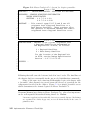
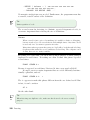
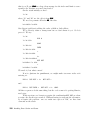
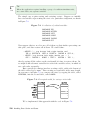
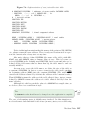
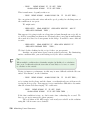
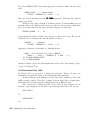
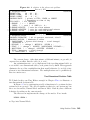
The approach we took with [BOX] certainly beats spending half an hour
juggling items on the stack, but it is by no means the best solution. What’s
nasty about it is the expense of creating four named variables, headers and all,
solely for use within this one routine.
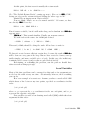
(If you’re target compiling an application that will not require headers
in the dictionary, the only loss will be the 8 bytes in RAM for the variables.
In Forth systems of the future, headers may be separated into other pages of
memory anyway; again the loss will be only 8 bytes.) Let me repeat: This
example represents a worst-case situation, and occurs rarely in most Forth
applications. If words are well-factored, then each word is designed to do very
little. Words that do little generally require few arguments.
In this case, though, we are dealing with two points each represented by
two coordinates.
Can we change the design? First, LINE may be too primitive a primitive.
It requires four arguments because it can draw lines between any two points,
diagonally, if necessary.
In drawing our box, we may only need perfectly vertical and horizontal
lines. In this case we can write the more powerful, but less specific, words
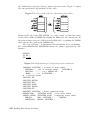
VERTICAL and HORIZONTAL to draw these lines. Each requires only three arguments: the starting position’s x and y and the length. This factoring of
function simplifies the definition of [BOX].
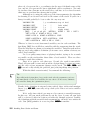
Or we might discover that this syntax feels more natural to the user:
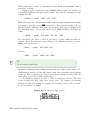
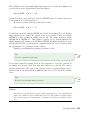
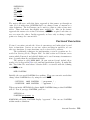
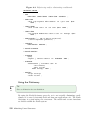
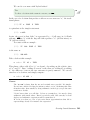
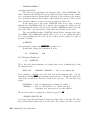
10 10 ORIGIN! 30 30 BOX
where ORIGIN! sets a two-element pointer to the “origin,” the place where the
box will start (the upper left-hand corner). Then “30 30 BOX” draws a box 30
units high and 30 units wide, relative to the origin.
This approach reduces the number of stack arguments to BOX as part of
the design.
Tip
When determining which arguments to handle via data structures rather than
via the stack, choose the arguments that are the more permanent or that represent a current state.
7.3
On PICK and ROLL
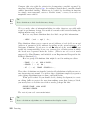
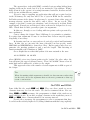
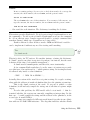
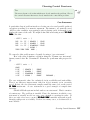
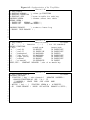
Some folks like the words PICK and ROLL
ROLL. They use these words to access
elements from any level on the stack. We don’t recommend them. For one
thing, PICK and ROLL encourage the programmer to think of the stack as an
array, which it is not. If you have so many elements on the stack that you need
ROLL, those elements should be in an array instead.
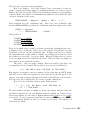
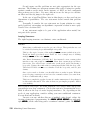
PICK and ROLL
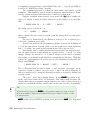
Second, they encourage the programmer to refer to arguments that have
been left on the stack by higher-level, calling definitions without being explicitly
On PICK and ROLL 203