1
AA30470C
COVER
A SHORT COURSE BOOK
CURTIN’S G UIDE TO
DIGITAL CAMERAS
A ND O THER P HOTOGRAPHIC E QUIPMENT
2006 E D I T I O N
DENNIS P. CURTIN
SHORTCOURSES.COM
HTTP
://WWW.SHORTCOURSES.COM
FOR MORE ON DIGITAL PHOTOGRAPHY, VISIT HTTP://WWW.SHORTCOURSES.COM
1
SHORT COURSES PUBLISHING COMPANY
SHORT COURSES PUBLISHING PROGRAM
S
hort Courses is the leading publisher of digital photography books,
textbooks, and guides to specific cameras from Canon, Sony, Nikon,
Olympus and others. All of these books are available on-line from the
Short Courses bookstore at:
http://www.shortcourses.com/bookstore/book.htm
All recent books are available in both black & white printed and full-color
eBook (PDF) editions and the latest books also contain links to animations and
other resources in digital photography. The list of books we’ve published is
rapidly expanding so be sure to visit the store to see if there is a book on your
camera or other topics that interest you.
If you find any errors in this book, would like to make suggestions for improvements, or just want to let me know what you think—I welcome your feedback.
ShortCourses.com
16 Preston Beach Road
Marblehead, Massachusetts 01945
E-mail: [email protected]
Web site: http://www.shortcourses.com
To learn more about digital photography visit our two Web sites:
■ http://www.shortcourses.com is our consumer site.
■ http://www.photocourse.com is our instructor/student site.
http://www.photocourse.com/itext/copyright/circ01.pdf
© Copyright 2006 by Dennis P. Curtin. All rights reserved. Printed in the
Click to view a PDF
United States of America. Except as permitted under the United States Copydocument on how
right Act of 1976, no part of this publication may be reproduced or distributed
copyright law protects
in any form or by any means, or stored in a database or retrieval system,
photographers and
without the prior written permission of the publisher.
other artists.
COPYRIGHT
Although a low-resolution edition of this book is distributed free, it and all
other editions are still copyrighted and the Author retains all rights. You are
welcome to share copies of the free edition with friends, but you ARE NOT
permitted to post it or any other edition on a Web site, charge for copies of it,
or include it in any “package” to enhance its value without the expressed
written permission of the Publisher. Please respect these minor limitations
so we can extend this experiment to other books.
ISBN 1-928873-71-5
2
FOR MORE ON TEXTBOOKS IN DIGITAL PHOTOGRAPHY, VISIT HTTP://WWW.PHOTOCOURSE.COM
ABOUT THIS BOOK AND ITS VARIOUS EDITIONS
ABOUT
THIS
BOOK
AND
ITS VARIOUS EDITIONS
O
ne edition of this book is being distributed free so it gets the widest
possible circulation. However, as if proving the adage that “there is no
such thing as a free lunch,” the free edition has some limitations:
■ You can’t print the free edition because we have dramatically compressed
the file so it’s small enough for you to quickly download from our site and email to friends. A printout of this highly compressed version would fall far
below the standards of our other eBooks and we don’t want it to reflect badly
on those other works.
■ Only some of the animations are active so you can get a feeling for what the
animations are like in other Short Courses eBooks. We’ve limited the number of
active animations in the free edition to reduce the load on our servers. All of
The print edition.
the animations are listed on page 16 with those that are active in the free
http://www.shortcourses.com/bookstore/guide/book_guide.htm
edition of this book boldfaced.
Many people, including myself, prefer to read printed material because we can
read it anywhere, underline important concepts, and make notes. If you would
like a printable version of the eBook with all of the animations active, or want a
spiral bound printed edition, you can order either or both. These editions are
ideal for self-study or classroom use and as gifts for friends and customers.
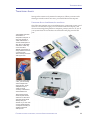
You can order the following editions just by clicking the illustrations or More
Info buttons. (Special pricing is available for five or more copies. Click here to email us for a quotation.)
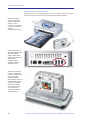
The CD edition.
■ The high-resolution version of the book for downloading gives you quality
http://www.shortcourses.com/bookstore/guide/book_guide.htm
printouts although it is 16 Megabytes so it may take some time to transfer it to
your system.
■ The high resolution copy on a CD gives you a permanent copy you can run
on any computer.
■ You can order a printed black & white copy with a well-liked fold-back
spiral binding.
■ You can save money and have the best of both worlds by ordering the Book/
CD package.
The print and CD
package edition.
http://www.shortcourses.com/bookstore/guide/book_guide.htm
The download edition.
http://www.shortcourses.com/bookstore/guide/book_guide.htm
FOR MORE ON DIGITAL PHOTOGRAPHY, VISIT HTTP://WWW.SHORTCOURSES.COM
3
VISIT OUR PUBLISHING PROGRAM
VISIT OUR PUBLISHING PROGRAM
M
uch of the material in this book is adapted from other ShortCourses
http://www.photocourse.com/itext/pdf/PDFguide.pdf
http://www.photocourse.com/itext/boxcamera/
books that I have written. If you find it clearly written and helpful,
Click to view a PDF
document describing
how to use this and
other ShortCourses
eBooks and animations.
you may want to check out my other books on the ShortCourses
publishing site (www.shortcourses.com) where you’ll find the following:
■ Print on demand black and white guides to your camera.
■ eBook editions of our books are in full color and fully searchable. You can
print out just the pages that interest you at the moment.
■ Animations have been developed to help you understand the basic concepts
of digital photography so it’s easier for you to master your camera and its
controls. The eBook editions of many of our latest books, including this one,
contain clickable animation links. Clicking one of them displays an animation
or other resource stored on the PhotoCourse.com Web site so you do need an
Internet connection. If you have the eBook version of this book, just click any
button that looks like the one to the left. The animation that is played is related
to the digital photography concept discussed on that page.
If you like this book and want to learn more about digital photography you
may want to check out the companion volume to this book; “Using Your
Digital Camera,” or one of our guides to specific camera models.
Almost all ShortCourses books and textbooks are available in print as well as PDF
http://www.shortcourses.com/bookstore/book.htm
eBooks on CD discs. All eBooks display tabs on the left side of the page. Clicking
the “Bookmarks” tab displays a table of contents and clicking the “Pages” tab
displays thumbnails of each page.
4
FOR MORE ON TEXTBOOKS IN DIGITAL PHOTOGRAPHY, VISIT HTTP://WWW.PHOTOCOURSE.COM
VISIT OUR PUBLISHING PROGRAM
We’re best know for our
camera guides and
digital photography
textbooks.To see if we
have a book for your
camera, please visit our
bookstore.
http://www.shortcourses.com/bookstore/book.htm
GOOD COMPANY
■ It’s interesting
that three of the
major camera
companies use
ShortCourses book
to train their sales
and support
people.
If we don’t have a guide
to your camera, you
might want to check out
the generic edition
“Using Your Digital
Camera..”
http://www.shortcourses.com/bookstore/book.htm
We are now the leader
in digital photography
education with our
innovative textbooks
and animations. If you
want to learn from the
same textbooks used in
hundreds of schools,
check them out by
clicking the link below.
http://www.shortcourses.com/bookstore/book.htm
FOR MORE ON DIGITAL PHOTOGRAPHY, VISIT HTTP://WWW.SHORTCOURSES.COM
5
VISIT OUR TABLETOP STUDIO PARTNER
VISIT OUR TABLETOP STUDIO PARTNER
T
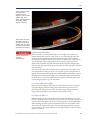
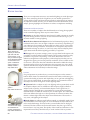
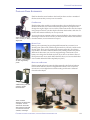
An EZcube® makes
product photography
super easy. Simply
place the object to be
photographed in the
EZcube light tent and
light the tent from two
sides. There's no need
for flashes or strobes.
Perfect for anyone that
needs to shoot images
for the web or for print.
ableTop Studio (www.tabletopstudio.com) is devoted to supplying you
with the information and tools you need to capture the best possible
images of products and other small objects using a small tabletop
studio. Our Web site not only has a store, but also features a comprehensive
library of useful information designed to help you improve the quality of your
product images. This information is valuable whether you are just beginning,
or are an experienced professional looking for information and ideas about
high-quality product photography.
We assume that most folks are operating on a budget and have a limited space
to work in. (Of course, the information will also benefit those with big budgets
and lots of space to devote to their product photography).
Visitors and customers are always telling us that our site offers the best
collection of product photography information on the Internet—and it‘s all
free. Check out the next few pages for an idea of what our on-line content
covers and click and of the “More Info” buttons to visit our site for more
information. The information is always expanding and we are interested in
your feedback on how we can further improve the site. Any comments you
have can be sent to us at: [email protected]
http://www.tabletopstudio.com/guide.htm
If you find the information helpful, you’re sure to feel the same way about our
products. Everything we sell is covered by a 30 day Money Back Guarantee
and a one-year Replacement Warranty.
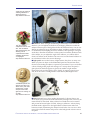
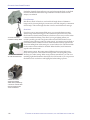
Custom made
professional VINYL
background fits perfectly
inside our EZcubes.
Simply lay this on top of
the EZcubes white
sweep and you’re ready
to go.
A riser creates very soft,
subtle, silver reflections
for a sophisticated look.
http://www.tabletopstudio.com/guide.htm
6
FOR MORE ON TEXTBOOKS IN DIGITAL PHOTOGRAPHY, VISIT HTTP://WWW.PHOTOCOURSE.COM
VISIT OUR TABLETOP STUDIO PARTNER
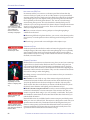
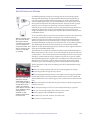
Our professional-quality
lights are designed for
digital tabletop
photography. They are
easily adjustable and
stay locked in position
making them very easy
to work with. Light sets
include a sturdy
adjustable stand, a
reflector with socket,
and our 30 Watt
Trumpet Top daylight
balanced compact
fluorescent bulb.
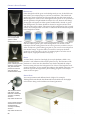
An illuminated flat panel
lets you capture images
without backgrounds
and when used with
highly translucent
objects, the
underlighting gives
dramatic results,
revealing inner glass
details that would
otherwise go unnoticed.
We developed the
Diamond Dazzler bulb
especially to bring out
the fire (dispersion) of
well cut diamonds. The
bulb fits in a standard
light bulb socket like the
one found in our
Sparkler Light.
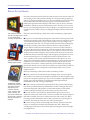
Coin Photography
information on our site
includes ■ Focus and
diffuse lighting ■ Eliminating
shadows ■ Daylight color
bulbs ■ Exposure for a white
background ■ Example
gallery of images ■ Coin
photography tools
http://www.tabletopstudio.com/
Gem Photography
information on our site
includes ■ Focus and
lighting ■ Position the gem
correctly to reflect light ■
Ideal gem lighting ... circle of
LED's ■ Gallery of gem
images ■ Gem Photography
tools
http://www.tabletopstudio.com/g
Bead Photography
information on our site
includes ■ Focus and
diffuse lighting ■ Under
lighting transparent beads ■
Exposure for a white
background ■ Creating a
dramatic black reflection ■
Propping up tall focal beads
with wax ■ Trick to capture
the shine of your beads ■
Bead photography tools ■
Advanced glass bead photo
techniques
http://www.tabletopstudio.com/g
http://www.tabletopstudio.com/guide.htm
FOR MORE ON DIGITAL PHOTOGRAPHY, VISIT HTTP://WWW.SHORTCOURSES.COM
7
VISIT OUR TABLETOP STUDIO PARTNER
Watch Photography
information on our site
includes ■ Macro focus and
lighting ■ Proper exposure
■ Daylight color LEDs for
use with diamonds ■
Keeping the watch bands
shape ■ Creating a soft
reflection ■ Photoshop tricks
for special web placement ■
Watch photography tools
TIP
■ When using
multiple light
sources it is
important that all
have the same color
temperature. It is
possible to correct
for some color
distortions with a
camera’s white
balance or with a
photo-editing
program. However,
it is nearly impossible to correct for
color problems
caused by mixed
lighting from light
sources with
different color
temperatures. All of
our lighting
products are
daylight balanced,
and work beautifully together.
http://www.tabletopstudio.com/guide.htm
Silver Photography
information on our site
includes ■ Controlling
reflections and glare ■
Making silver appear shiny
■ Avoid adding your own
reflection ■ Group items to
reflect each other ■ Gallery
of images ■ Silver
photography
http://www.tabletopstudio.com/guide.htm
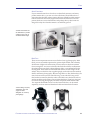
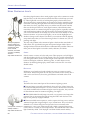
Our high-output daylight
balanced compact
fluorescent bulbs are
ideally suited for digital
photography. The
daylight color eliminates
the need for color
correction. They also
stay cool and will last for
years. Our popular 30
Watt Trumpet Top Bulbs
are included with all of
our Tabletop Studio
Light Sets.
Glass Photography
information on our site
includes ■ Diffuse lighting ■
Clear glass made easy ■
Shooting on light & dark
colored fields ■ Special
under lighting technique ■
Glowing effect ■ Gallery of
glass images ■ Glass
photography tools
http://www.tabletopstudio.com/guide.htm
http://www.tabletopstudio.com/guide.htm
8
FOR MORE ON TEXTBOOKS IN DIGITAL PHOTOGRAPHY, VISIT HTTP://WWW.PHOTOCOURSE.COM
VISIT OUR TABLETOP STUDIO PARTNER
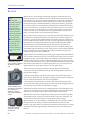
Flower photography
information on our site
includes:
■ Focus and soft
lighting ■ Exposure for
a white background ■
Camera position & floral
arrangement ■ Using
the sun for lighting ■
Gallery of floral images
■ Flower photography
tools
http://www.tabletopstudio.com/guide.htm
Jewelry Photography
information on our site
includes:
■ Focus and diffuse
lighting ■ Creating the
sparkle ■ Daylight color
LEDs for use with
diamonds ■ Propping
up small charms or
pendants ■ Creating a
dramatic black reflection
■ Photographing Pearls
■ Jewelry photography
tools
http://www.tabletopstudio.com/guide.htm
FOR MORE ON DIGITAL PHOTOGRAPHY, VISIT HTTP://WWW.SHORTCOURSES.COM
9
PREFACE
PREFACE
D
igital cameras have triumphed over traditional film cameras in less
than a decade, causing the greatest shift in photographic technology
in 150 years. In a few short years film will be a specialty item carried
only by a few Internet companies that cater to photographers exploring
historic processes such as platinum and albumen prints. The only downside
to this dramatic change is that since digital cameras are less expensive to make
and use software instead of moving parts, models tend to proliferate at a much
faster rate than traditional 35 mm cameras did. To differentiate their offerings,
camera companies initially added new features at an almost unbelievable rate,
but as the field has matured, they now mainly just combine existing features in
an endless series of variations. As a result it has gotten harder to rationally
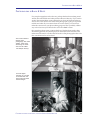
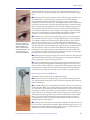
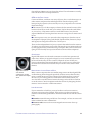
When not writing I’m
choose the camera you want to buy. One reason for this is that it’s hard to
usually out in the woods understand the descriptions and specifications these companies supply for
or at the shore taking
their cameras, or the reviews written about them, because few terms are ever
photographs. This is
defined and camera companies invent their own names for common features to
Emily and me on the
make them sound unique. One of the primary goals of this book is to help you
bird watching tower at
understand the terminology used in digital photography so you can get more
the Ipswich Audubon
out of what you read. Although camera models differ from one another, they
Sanctuary.
all draw on the same common features discussed in this book.
What I hope to bring to this book is my experience accumulated over years of
observing, practicing and writing about digital photography. In 1999 I started
using a Nikon Coolpix 950 and my transition to digital was so abrupt that I
left 20 rolls of unused slide film in the refrigerator—even though I had prepaid
Over the past decade
for processing. Only recently did I gave the film to a friend who was still
I’ve used as many as
100 digital cameras and laboring with the old technology. What attracted me so strongly was the
have found a number of immediacy of digital photography. Not just the immediacy of seeing a capthem that I really like.
tured photo, but also sharing it with others. Since using that first digital
You will find some of
camera I have written books on 30 or so digital cameras and three textbooks
those cameras in this
widely used in schools around the world. My hope is that this experience will
book and I have
help me guide you as you consider what it is you are looking for in your next
indicated them with a
camera purchase—or help you figure out why and when you use the many
gold star. This star
features in your current camera. I apologize for the book’s length, but there is a
indicates that I
lot to consider. I hope I can make wading through all of these features as
personally recommend
interesting as possible.
the camera for your
consideration.
PHOTOGRAPHY
ON-LINE
■ The topics
discussed in this
book are constantly
updated, enhanced,
and expanded online. To learn more
about digital
photography, visit
our ShortCourses
Web site at www.
shortcourses.com.
10
Here are just some of the questions we’ll try to answer for you:
■ Why go digital?
■ What is a digital photograph?
■ How does a digital camera work?
■ What is digital photography?
■ What do all of the camera features do?
■ What resolution do I need?
■ What’s the best way to buy new equipment?
■ What are the most important accessories?
■ What do all of the buzz words mean?
Hopefully the best thing about this book is that it doesn’t just describe most
camera features, it shows you why they are important to you as a photographer and how they affect your photographs. This makes the book a valuable
reference after you have purchased a camera because it explains things camera
company manuals assume you know. I also try to match features with the kind
of photography you do. Although all of us do general photography, many of
FOR MORE ON TEXTBOOKS IN DIGITAL PHOTOGRAPHY, VISIT HTTP://WWW.PHOTOCOURSE.COM
PREFACE
us tend to concentrate in areas such as landscape, close-up, studio, street or
sports photography. It’s in these specific areas where some camera features
become much more important than others. For example, I spend much of my
free time hiking and taking nature photographs, especially landscapes,
wildlife, and wildflowers. My needs are much different than someone who is
photographing products for sale on eBay, taking wedding photographs,
photographing sporting events or doing travel photography.
This book discusses features, not specific cameras. You won’t find a single
camera that includes all of the features discussed here, and different cameras
combine the features they do have in different ways. Cameras come and go
very quickly, but entirely new features are introduced only rarely. This book
lays a foundation for you, but to take what you learn here and zero in on a
specific camera you have more work to do—Internet research. You need to visit
on-line discussion forums and camera review sites to see what others are
thinking. Some of these sites, and Amazon, list their best sellers if you want to
base your decisions on what others are doing and run with the crowd. To get
you started, we list some of the Internet sites we like on page 30.
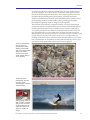
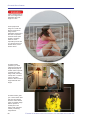
Close-up photography,
like this photo of a
horned toad in Santa
Barbara, works better
with some cameras than
others. You need a
macro lens or macro
mode and the ability to
focus precisely.
Action and sports
photography require a
long lens, good
focusing ability, and fast
shutter speeds.
Photographing items for
eBay requires a camera
that you can accurately
focus and that lets you
adjust the exposure to
lighten or darken the
image.
FOR MORE ON DIGITAL PHOTOGRAPHY, VISIT HTTP://WWW.SHORTCOURSES.COM
11
CONTENTS
CONTENTS
Cover ............................................... 1
Short Courses Publishing Program .......... 2
CHAPTER 2. DIGITAL CAMERAS ................. 32
About this Book and Its Various Editions . 3
Types of Digital Cameras ..................... 33
Visit Our Publishing Program .................. 4
Camera Controls ................................ 36
Visit our Tabletop Studio Partner ........... 6
Composing Images ............................. 37
Preface ............................................ 10
Continuous Photography ..................... 40
Contents .......................................... 12
Shooting Movies ................................ 41
Contents, Con’t. ................................ 13
Panorama Mode ................................. 42
List of Animations and Other Resources . 15
Photographing in Black & White ............ 43
Image Sensors—Types ........................ 44
CHAPTER 1. INTRODUCTION ...................... 17
Image Sensors—Sizes and Aspect Ratios 45
Image Sensors—Resolution .................. 46
What is a Digital Photograph? .............. 18
Image Sensors—Sensitivity and Noise ... 48
Why Go Digital? ................................. 19
Free Photography, Photographic Freedom19
The Three Steps of Digital Photography 20
A Jump Start in Digital Photography ...... 22
Step 1. Get a Photo-editing Program
22
Step 2. Get an Image
22
Step 3. E-mail an Image
22
Step 4. Share Images on the Internet
23
How a Digital Camera Works ................ 24
It’s All Black and White After All
25
There’s a Computer in Your Camera
27
Where We Seem to be Headed
27
The Steps in Buying a New Camera and
Other Equipment ......................... 28
Think About Your Interests
28
Decide About Size
28
Decide About Lens
28
Download the Manual
28
Check New Model Plans
29
Check Camera Sites
29
Check Discussion Forums
30
Check Camera News & Review Sites
30
Explore On-line Auctions
30
Visit Trustworthy Stores
30
Watch out for Unbundling
30
Avoid Gray Market Products
31
Check Postage Rates and Sales Taxes 31
Avoid Extended Warranties
31
Check Return Policies, Restocking Fees 31
Buy No Extras
31
Camera Responsiveness ...................... 49
12
Image Formats .................................. 50
In-Camera Image Storage ................... 52
Playback Mode .................................. 54
Transferring Images ............................ 55
Lenses ............................................. 58
Lens Information
58
Choosing Focal Lengths
59
Zoom Lenses
61
Normal Lenses
61
Short Focal Lengths
61
Long Focal Lengths
62
Depth of Field Preview
62
Depth of Field Scales
62
Minimum Focus Distance
62
OEM and 3rd Party Lenses
63
Older Lenses
63
Newer Lenses—Looking Down the Road 63
Lens Accessories
63
Macro Mode and Macro Lenses ............ 64
Lens Accessories ............................... 65
Image Stabilization ............................. 66
Exposure Modes ................................ 67
Metering ........................................... 68
Shutters ........................................... 69
FOR MORE ON TEXTBOOKS IN DIGITAL PHOTOGRAPHY, VISIT HTTP://WWW.PHOTOCOURSE.COM
CONTENTS
CONTENTS, CON’T.
Exposure Controls .............................. 70
Exposure Compensation
70
Autoexposure Lock (AE Lock)
71
Autoexposure Bracketing (AEB)
71
Gray Cards
71
Exposure Increments
71
Histograms & Highlight Warnings ........... 72
Evaluating Histograms
72
Highlight Warning
72
Focus .............................................. 73
Focus Settings
73
Focus Zones
74
Servo Focus
75
Predictive Focus
75
Focus Assist
75
Focus Lock
75
Focus bracketing
75
Landscape Mode
75
Depth-of-field Mode
75
White Balance ................................... 76
White Balance Bracketing
77
Color Spaces
77
Flash ............................................... 78
Flash Power and Range
78
Flash Sync and Shutter Speeds
79
Flash Modes
79
Flash Exposure Compensation
81
Flash Exposure Bracketing (FEB)
81
Flash Exposure (FE) Lock
81
High-speed sync (FP) Flash
82
Stroboscopic Flash
82
External Flash Units
82
Slave Flash Units
83
Ring Flash
83
Batteries .......................................... 84
Other Features .................................. 85
Look and Feel
85
Size and Weight
85
Control Panel Illumination
85
Mirror Lockup
85
Custom Functions
85
Time-Lapse (Intervalometer Mode) Photography
85
Multiple Exposures
86
Animations
86
Tripod mount
86
Water and Shock Proofing
86
Self-timer/Remote Control
86
Date/time Indicators
86
Written Annotation
Sound Recording
Power Management
Special Effects
GPS
MP3 Player
Folders
Software
Firmware Update
Image Verification
EXIF Information
87
87
87
87
87
87
87
88
88
88
88
CHAPTER 3. STUDIO EQUIPMENT ................ 89
Studio Lighting .................................. 90
Candidates for Studio Lighting
90
Lighting
90
Backgrounds
92
Risers
92
Special Bulbs
92
Portrait and Product Photography ......... 93
Using Continuous Lights ...................... 94
Stands
94
Reflectors
94
Bulbs
94
Using Strobes .................................... 96
Connecting the Camera and Lights ....... 97
Hot shoes
97
PC Terminal
97
Wireless Remote Flash
97
CHAPTER 4. OTHER CAMERA EQUIPMENT ....... 98
Tripods & Monopods ........................... 99
Tripods
99
Monopods
101
Accessories
102
Tripod Heads ................................... 103
3-Way Pan/Tilt Heads
103
Ball Heads
103
Other Heads
105
Quick Release Systems ..................... 106
The Bogen/Manfrotto System
106
The Arca-Swiss system
106
Other Camera Supports .................... 108
Gimbaled Mounts
108
FOR MORE ON DIGITAL PHOTOGRAPHY, VISIT HTTP://WWW.SHORTCOURSES.COM
13
CONTENTS
Beanbags
Window Mounts
Suction Mounts
Clamps
Focusing Rails
Other
Subject Stabilizers
Flash and Flash Accessories ..............
Flash Brackets
Battery Packs
Reflectors and Diffusers
Flash Extenders
Slave Units
Image Storage and Viewing ...............
108
108
109
109
109
109
110
111
111
111
111
112
112
113
Digital Picture Frames ....................... 114
Camera Straps and Bags ...................
Neck Straps
Chest straps or Harnesses
Vests
Lens Pouches
Shoulder and Hip Bags
Camera Backpacks
Rigid Cases
Camera Pouches and Cases
Camera Bags
Tripod Cases
Waterproofing while Shooting
116
116
116
117
117
117
117
118
118
118
119
119
CHAPTER 5. APPENDIX .......................... 120
Glossary ......................................... 121
Caring for Your Camera ..................... 125
Cleaning the Image Sensor
125
Cleaning the Camera and Lens
125
Protecting your Camera from the Elements
126
Protecting when Traveling
126
Storing a Camera
126
Caring for Yourself
126
14
FOR MORE ON TEXTBOOKS IN DIGITAL PHOTOGRAPHY, VISIT HTTP://WWW.PHOTOCOURSE.COM
LIST OF ANIMATIONS AND OTHER RESOURCES
LIST
OF
ANIMATIONS
AND
OTHER RESOURCES
Copyright Office Booklet (PDF) .......... 2
Various Exposure Modes ...................... 67
Adobe Acrobat Quick Reference (PDF) 4
Exposure Equivalents .......................... 67
Dots Form Images .............................. 18
Various Shutters ................................ 69
Cameras as Dark Boxes ................... 24
Shutter Speed’s Effect on Exposure ...... 69
The Meaning of "Charge-Coupled" ......... 24
Shutter Speed’s Effect on Motion ......... 69
Understanding Exposure .................. 24
Exposure Compensation ...................... 70
RGB Color ........................................ 25
Exposure Lock ................................... 71
CMYK Colors ..................................... 26
Autoexposure Bracketing ..................... 71
Camera Icons (PDF) ......................... 36
Understanding Histograms ................... 72
The Light Path Through an SLR .......... 38
Highlight Warnings .............................. 72
Parallax in an Optical Viewfinder ........... 39
The Plane of Critical Focus .................. 73
Continuous Mode ............................. 40
Focus Zones ..................................... 74
Movie Mode ...................................... 41
Servo AF Focus ................................. 75
360-Degree VR Panorama ................ 42
Focus Lock ....................................... 75
*The Meaning of "Charge-Coupled" ....... 44
Depth of Field ................................... 75
Image Sensor Sizes ............................ 45
Adjusting White Balance .................. 76
Pixelization ...................................... 46
Changing Color Spaces ....................... 77
Pixels and Aspect Ratios ..................... 46
The Inverse Square Law ..................... 78
Pixels and Print Sizes .......................... 46
Calculating Guide Numbers (Excel) ........ 78
Resolution—The True Meaning .............. 46
Flash Sync ....................................... 79
Pixels and Curves ............................... 47
Red-eye ........................................... 79
Output Device Determines Image Size ... 47
Fill Flash ........................................... 80
Converting Pixels to Print Sizes ............ 47
First and Second Curtain Sync ............. 80
The Big Lie ....................................... 47
Flash Exposure Compensation .............. 81
ISO and Noise ................................... 48
Stroboscopic Flash ............................. 82
Noise, Example from Cadillac Ranch ....... 48
Hi-speed Sync Flash .......................... 82
The Effects of Compression ................. 50
External Flash ................................... 82
RAW vs JPEG Image Quality ................. 50
The Main Light .................................. 93
Canon Lenses .................................... 58
The Fill Light ..................................... 93
Apertures and Exposures ..................... 58
The Background Light ......................... 93
Focal Length and Angle of View ........ 59
The Rim Light .................................... 93
*Image Sensor Sizes .......................... 59
Hard and Soft Light ............................ 93
Focal Length Factors .......................... 60
Dust on Your Image Sensor ............... 125
Optical and Digital Zoom ..................... 61
Wide-angle Lens Distortion .................. 62
*360-Degree VR Panorama .............. 62
Macro Magnifications .......................... 63
*Parallax in an Optical Viewfinder ......... 64
Image Stabilization .......................... 66
Boldfacing indicates an animation or
other resource such as a PDF file
or Excel work sheet that’s active
in the free edition of this book.
Asterisks (*) indicate a repeated
animation.
FOR MORE ON DIGITAL PHOTOGRAPHY, VISIT HTTP://WWW.SHORTCOURSES.COM
15
16
FOR MORE ON TEXTBOOKS IN DIGITAL PHOTOGRAPHY, VISIT HTTP://WWW.PHOTOCOURSE.COM
Chapter 1. Introduction
G
etting started in digital photography is exciting. In this opening
chapter we introduce you first to digital images and then to how they
are captured with these new devices. We also discuss the question
“Why go digital?” If you are still using a film camera, this section is meant to
convince you of the error of your ways. Film photographers are standing on
the deck of the photographic equivalent of the Titanic, and it’s already taken
on a great deal of water.
FOR MORE ON DIGITAL PHOTOGRAPHY, VISIT HTTP://WWW.SHORTCOURSES.COM
17
CHAPTER 1. INTRODUCTION
WHAT
IS A
DIGITAL PHOTOGRAPH?
This book is about digital cameras and the photographs they capture. Underhttp://www.photocourse.com/itext/dots/
standing the end product, the digital photograph, is a good place to begin
Click to see how pixels
understanding the whole digital photography process.
are printed using dots of
colored ink.
Digital photographs are actually mosaics of millions of tiny squares called
picture elements—or just pixels. Like the impressionist painters who painted
wonderful scenes with small dabs of paint, your computer and printer use
these tiny pixels to display or print photographs. To do so, the computer
divides the screen or printed page into a grid of pixels. It then uses the values
stored in the digital photograph to specify the brightness and color of each
pixel in this grid—a form of painting by number.
This reproduction of the
famous painting “The
Spirit of ‘76" is done in
jelly beans. Think of
each jelly bean as a
pixel and it’s easy to
see how dots or pixels
can form images. Jelly
Bean Spirit of ’76
courtesy of Herman
Goelitz Candy
Company, Inc. Makers
of Jelly Belly jelly
beans.
18
FOR MORE ON TEXTBOOKS IN DIGITAL PHOTOGRAPHY, VISIT HTTP://WWW.PHOTOCOURSE.COM
WHY GO DIGITAL?
WHY GO DIGITAL?
Most of this book assumes you are already a digital photographer or have
decided to become one. If you are still on the fence, this section is just for you.
To begin, put aside any concerns about image quality. Digital images are equal
to, and often better than film images. The real reason to switch lies elsewhere,
in the fact that once captured, digital photographs are already in a format that
makes them incredibly easy to share and use. For example, you can insert
digital photographs into word processing documents, print them at a kiosk,
send them by e-mail to friends, or post them on a Web site where anyone in the
world can see them. With most cameras you can immediately see your images
on a small LCD monitor on the back of the camera, or you can connect the
camera to a TV and show them as a slide show. Some cameras can even be
connected to a telescope or microscope to display dramatically enlarged
images on a large-screen TV. It’s this ability to instantly share photos with
anyone, anywhere that makes digital photography so attractive.
If you’re considering going digital, here are a few more reasons to get even
more serious.
Signs for developing
film may be
disappearing but you
can now drop off a
memory card and pick
up your prints and the
card in an hour or so.
■ Going digital saves you money in the long run since you don’t have to buy
rolls of film and pay for their development and printing.
■ It saves you time because you don’t have to make two trips to the store to
drop off and then pick up your pictures (although you can do this with the
memory card).
■ Digital cameras instantly show you how your pictures look so you’ll no
longer have those disappointments a day or two later when your film is
developed.
■ You can view images before they are printed and if you don’t like what you
see, edit them to perfection or save money by deleting or not printing them.
■ Digital photography doesn’t use the toxic chemicals that often end up
flowing down the drain and into our streams, rivers, and lakes.
■ No more waiting to finish a roll before having it processed. (Or wasting
unexposed film when you can’t wait.)
■ Many digital cameras are able to capture not only still photographs, but also
sound and even video—they are as much multimedia recorders as they are
cameras.
■ You can use a photo-editing program to improve or alter digital images. For
example, you can crop them, remove red-eye, change colors or contrast, and
even add and delete elements. It’s like having a darkroom with the lights on
and without the chemicals.
Kiosks in many stores
let you print photos on
the spot.
FREE PHOTOGRAPHY, PHOTOGRAPHIC FREEDOM
Although it’s both the immediacy and flexibility of digital photography that
has made it so popular, there is one aspect that is rarely mentioned. This is the
new freedom it gives you to explore creative photography. In the 1870’s when
William Henry Jackson was carrying 20 x 24 glass plate negatives around the
West on a mule, you can bet he hesitated before he took a photograph. We may
not be carrying window-sized glass plates, but you and I also hesitate before
taking a picture. We’re always doing a mental calculation “is it worth it?”
Subconsciously we’re running down a checklist of costs, times, effort, and so
FOR MORE ON DIGITAL PHOTOGRAPHY, VISIT HTTP://WWW.SHORTCOURSES.COM
19
CHAPTER 1. INTRODUCTION
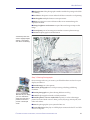
William Henry Jackson
and his mule.
on. During that “decisive moment,” the image is often lost or we fail to try new
things. We lose the opportunity for creative growth and choose to stay with the
familiar that has delivered for us in the past. Jackson did have one big advantage we’ve lost over the last century. If an image didn’t turn out, or if he was
out of glass plates, he could just scrape the emulsion off a previously exposed
negative, recoat the plate with a photosensitive emulsion, and try again.
Digital photography not only eliminates that nagging “is it worth it?” question, it also returns us to that era of endlessly reusable film (and we don’t need
a mule to carry it). Hand the camera to the kids, take weird and unusual
angles, shoot without looking through the viewfinder, and ignore all previously held conceptions about how to take photographs. You may be surprised
at the photos you get if you exploit this new era of uninhibited shooting.
THE THREE STEPS OF DIGITAL PHOTOGRAPHY
Digital cameras are just one link in a long chain leading from the original
scene through to the final image that you display or distribute—a sequence
photographers refer to as workflow. In fact, a digital camera isn’t even an
absolutely necessary link in the chain. The key element in digital photography
is an image in a digital format made up of pixels. Although a digital camera
captures photos in this format, you can also convert slides, negatives, or prints
by scanning them.
To understand how the camera fits in with other parts of the digital workflow,
it helps to understand the three basic steps involved in creating and using
digital photographs—capturing, editing, and sharing.
The three steps of
digital photography.
Step 1. Capturing Photographs
The first step in digital photography is to get a digital image and there is more
than one way to do this.
■ Digital still cameras capture photographs in a digital format.
A digital camera is by
far the best and most
common way of getting
a digital image.
■ Film cameras capture photographs on slides, negatives, or prints which you
can then scan to convert them to digital photographs.
■ Video cameras capture images in a video format. You can then use a frame
grabber to isolate out individual frames and save them as still images.
■ Digital video cameras sometimes are able to capture still images just like a
digital still camera. You can also use a video-editing program to extract
individual frames from the digital video.
Step 2. Editing Photographs
Once a photograph is in digital form, you can store it on your system and then
edit or manipulate it with a photo-editing program such as Photoshop. The
things you can do to a digital image are almost endless. In some cases you
improve an image by eliminating or reducing its flaws. In other cases, you
adjust an image for other purposes, perhaps to make it smaller for e-mailing or
posting on a Web site. Finally, you might take an image to a new place, making
it something it never was. Here are some ways you can process images:
■ Crop the photograph to emphasize the key part.
20
FOR MORE ON TEXTBOOKS IN DIGITAL PHOTOGRAPHY, VISIT HTTP://WWW.PHOTOCOURSE.COM
WHY GO DIGITAL?
■ Reduce the size of the photograph to make it smaller for posting on the Web
or e-mailing.
■ Use filters to sharpen it or even make it look like a watercolor or oil painting.
■ Stitch together multiple frames to create panoramas.
■ Merge two images to create a 3D stereo effect or an animated image for
display on the Web.
■ Change brightness and contrast or expand the tonal range to improve the
image.
■ Cut and paste parts of one image into another to create a photo montage.
■ Convert the photograph to another format.
A Photoshop filter was
used to highlight edges,
making a photograph
look like a line drawing.
Step 3. Sharing Photographs
Once an image is the way you want it, you’ll find that there are lots of ways to
display and share it.
■ Print the image on a color printer.
■ Insert the photograph into a word processing or desktop publishing
document.
Sony’s ImageStation
Web site lets you design
your own AlbumPrint
photo book and have it
printed and bound in
portrait or landscape
mode.
■ Post the photograph on a photo sharing Web site or a blog.
■ E-mail the photograph to friends or family members.
■ Send the photo to a service on the Web for prints, or to have the images
printed as a bound book or onto T-shirts, posters, key rings, mouse pads, even
cakes and cookies.
■ Store the photograph on your system for later use.
■ Create slide shows that play on a DVD player connected to the TV or a DVD
drive in a computer.
FOR MORE ON DIGITAL PHOTOGRAPHY, VISIT HTTP://WWW.SHORTCOURSES.COM
21
CHAPTER 1. INTRODUCTION
A JUMP START
IN
DIGITAL PHOTOGRAPHY
Learning a new field such as digital photography can be a little intimidating.
But, for most of us the learning process becomes easy, fun, and even exciting
once we gain a toehold; a place to begin. The purpose of this short Jump Start
section is to get you going almost immediately. Just follow the steps below to
begin exploring digital photography right now, even before you buy a camera.
STEP 1. GET A PHOTO-EDITING PROGRAM
At the heart of a digital photography system is a photo-editing program. The
leading such program is Photoshop, but there are many other very good ones
available, most of which are easier to learn. Below are some links to trial
Microsoft’s Digital
versions of leading programs. Just be aware that all are limited in some
Image software is a very respect—usually by limiting features or allowing use for a short time—and the
popular photo editing
file sizes that you have to download can be quite large.
program you can try for
free.
■ Photoshop, the leading photo-editing program, is available in a free trial
version as is its sibling Photoshop Elements. These programs are complicated
but if you want to try the real thing, go for it.
Photoshop—www.adobe.com
Photoshop Elements—www.adobe.com
Here, a program was
used to cut the moon
out of one digital photo
and paste it into
another.
■ Digital Imaging 2006 Suite from Microsoft is rich in features and one of the
most popular programs on the market.
www.microsoft.com/products/imaging/starteredition.mspx
STEP 2. GET AN IMAGE
If you don’t yet have a digital camera, you can have your slides, negatives, or
prints scanned into a digital format. Just ask your local photofinisher if they
can scan images onto a CD, or even post them on the Web for you. They can
usually do this when the film is developed or later, after you have had time to
select out just the best images.
Photoshop is the
overwhelming choice of
professionals.
It’s always more interesting to work with your own images, but if you don’t
have any, you can use one of the images on the ShortCourses Web site (for your
personal use only). To use one of these images, you have to first transfer it from
the Web page to your own computer’s disk drive. Here’s how:
■ To locate an image you like, use your browser to go to the link below and
look through the images:
www.shortcourses.com/photos/
■ To download one of the images to your own computer, click the thumbnail
to enlarge it, then right-click it with your mouse (Control+click on a Mac) and
select the Save Image or similar command to download the displayed version. If
the image is linked to a larger image, select the Save Target As command.
Photoshop Elements
hasn’t fallen far from the
Photoshop tree and is a
lot less expensive.
22
STEP 3. E-MAIL AN IMAGE
One of the most popular things to do with digital photos is to e-mail them to
friends or family. To do this, just create an e-mail message the way you normally do and then use your e-mail program’s Attach or Insert command to
browse for the image file you want to send.
FOR MORE ON TEXTBOOKS IN DIGITAL PHOTOGRAPHY, VISIT HTTP://WWW.PHOTOCOURSE.COM
A JUMP START IN DIGITAL PHOTOGRAPHY
When an e-mail with a photo attached arrives at the recipient’s end, it’s
attached or inserted into the body of the message.
■ If inserted you can view it directly when the message is selected or open. On
a PC right-click the image and click the Save Picture As command to save it to
your own system.
■ If attached, you can highlight the message or open it, then on a PC use the
File>Save Attachments command to save the image to your system. You can then
use your photo-editing program to open the image to view it.
The Insert menu in
Outlook Express.
Once you’ve saved the photograph, you can then use it just like any other
digital image on your system.
When practicing e-mailing photos, you might want to address the first e-mail
to yourself so you can see what your image looks like when it arrives back on
your system. This will also give you a better idea of how long it takes to receive
an e-mail message with a photo attached.
STEP 4. SHARE IMAGES ON THE INTERNET
There’s nothing quite like having your images up on a Web site where anyone
in the world can see them. Surprisingly, you can do this without spending a
dime because there are a number of Web sites that offer you free hosting for
your photos. All you have to do is register at the site and then upload images
to your personal album, usually by dragging and dropping them in your
browser. Once your images are up on the site, send friends or family members
your photo’s URL (Web address) and they can view your images, order prints,
or transfer the images to their own computer. Here are some sites that offer free
Web space.
■ Smugmug (www.smugmug.com).
■ Flickr (www.flickr.com)
■ MySpace (www.myspace.com).
The small images you
can download from
ShortCourses.com are
about 800 x 600 in size.
This is about the largest
file size you should
send by e-mail or post
on a Web page.
FOR MORE ON DIGITAL PHOTOGRAPHY, VISIT HTTP://WWW.SHORTCOURSES.COM
23
CHAPTER 1. INTRODUCTION
HOW
A
DIGITAL CAMERA WORKS
Digital cameras are very much like all earlier cameras. Beginning with the very
http://www.photocourse.com/itext/boxcamera/
first camera all have been basically black boxes with a lens to focus the image,
Click to see how all
an aperture that determines how bright the light is, and a shutter that detercameras are just dark
mines how long the light enters. The big difference between traditional film
boxes.
cameras and digital cameras is how they capture the image. Instead of film,
digital cameras use a solid-state device called an image sensor. In some digital
cameras the image sensor is a charge-coupled device (CCD), while in others it’s a
CMOS sensor (page 44). Both types can give very good results. On the surface of
these fingernail-sized silicon chips are millions of photosensitive diodes, each
of which captures a single pixel in the photograph to be.
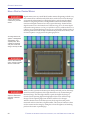
An image sensor sits
against a background
enlargement of its
square pixels, each
capable of capturing
one pixel in the final
image. Courtesy of IBM.
http://www.photocourse.com/itext/CCD/
Click to see where the
name “charge-coupled
device” comes from.
When you take a picture the shutter opens briefly and each pixel on the image
http://www.photocourse.com/itext/exposure/
sensor records the brightness of the light that falls on it by accumulating an
Click to explore how
electrical charge. The more light that hits a pixel, the higher the charge it
exposure determines
records. Pixels capturing light from highlights in the scene will have high
how light or dark an
charges. Those capturing light from shadows will have low charges.
image is.
After the shutter closes to end the exposure, the charge from each pixel is
measured and converted into a digital number. This series of numbers is then
used to reconstruct the image by setting the color and brightness of matching
pixels on the screen or printed page.
24
FOR MORE ON TEXTBOOKS IN DIGITAL PHOTOGRAPHY, VISIT HTTP://WWW.PHOTOCOURSE.COM
HOW A DIGITAL CAMERA WORKS
IT’S ALL BLACK AND WHITE AFTER ALL
It may be surprising, but pixels on an image sensor only capture brightness,
not color. They record the gray scale—a series of tones ranging from pure white
to pure black. How the camera creates a color image from the brightness
recorded by each pixel is an interesting story with its roots in the distant past.
The gray scale, seen
best in black and white
photos, contains a
range of tones from
pure black to pure
white.
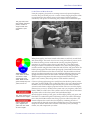
RGB uses additive
colors. When all three
are mixed in equal
amounts they form
white. When red and
green overlap they form
yellow, and so on.
When photography was first invented in the 1840s, it could only record black
and white images. The search for color was a long and arduous process, and a
lot of hand coloring went on in the interim (causing one photographer to
comment “so you have to know how to paint after all!”). One major breakthrough was James Clerk Maxwell’s 1860 discovery that color photographs
could be created using black and white film and red, blue, and green filters. He
had the photographer Thomas Sutton photograph a tartan ribbon three times,
each time with a different color filter over the lens. The three black and white
images were then projected onto a screen with three different projectors, each
equipped with the same color filter used to take the image being projected.
When brought into alignment, the three images formed a full-color photograph. Over a century later, image sensors work much the same way.
Colors in a photographic image are usually based on the three primary colors
red, green, and blue (RGB). This is called the additive color system because when
the three colors are combined in equal amounts, they form white. This RGB
system is used whenever light is projected to form colors as it is on the display
monitor (or in your eye). Another color system uses cyan, magenta, yellow and
black (CMYK) to create colors. This system is used in a few sensors and almost
http://www.photocourse.com/itext/RGB/
all printers since it’s the color system used with reflected light.
Click to explore how
red, green and blue can
create full color images.
Since daylight is made up of red, green, and blue light; placing red, green, and
blue filters over individual pixels on the image sensor can create color images
just as they did for Maxwell in 1860. Using a process called interpolation, the
http://www.photocourse.com/itext/CMYK/
camera computes the actual color of each pixel by combining the color it
Click to explore how
captured directly through its own filter with the other two colors captured by
cyan, magenta and
the pixels around it. How well it does this is affected in part by the image
yellow can also create
format, size, and compression you select.
full color images.
FOR MORE ON DIGITAL PHOTOGRAPHY, VISIT HTTP://WWW.SHORTCOURSES.COM
25
CHAPTER 1. INTRODUCTION
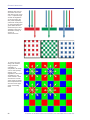
Because each pixel on
the sensor has a color
filter that only lets in one
color, a captured image
records the brightness
of the red, green, and
blue pixels separately.
(There are usually twice
as many photosites with
green filters because
the human eye is more
sensitive to that color.)
Illustration courtesy of
Foveon at
www.foveon.com.
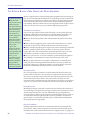
To create a full color
image, the camera’s
image processor
calculates, or
interpolates, the actual
color of each pixel by
looking at the
brightness of the colors
recorded by it and
others around it. Here
the full-color of some
green pixels are about
to be interpolated from
the colors of the eight
pixels surrounding
them.
26
FOR MORE ON TEXTBOOKS IN DIGITAL PHOTOGRAPHY, VISIT HTTP://WWW.PHOTOCOURSE.COM
HOW A DIGITAL CAMERA WORKS
THERE’S A COMPUTER IN YOUR CAMERA
Each time you take a picture millions of calculations have to be made in just a
few seconds. It’s these calculations that make it possible for the camera to
interpolate, preview, capture, compress, filter, store, transfer, and display the
image. All of these calculations are performed in the camera by an image
processor that’s similar to the one in your desktop computer, but dedicated to
this single task. How well your processor performs its functions is critical to
the quality of your images but it’s hard to evaluate advertising claims about
these devices. To most of us these processors are mysterious black boxes about
which advertisers can say anything they want. The proof is in the pictures.
Cameras with the latest programmable digital media processors can perform
functions that camera companies program them for. Currently these functions
include in-camera photo editing and special effects such as red-eye removal,
image enhancement, picture borders, stitching together panoramas, removing
blur caused by camera shake, and much more.
THE ESSENTIALS
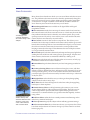
■ When considering features, keep in
mind that most of
the great images in
the history of
photography were
taken using
cameras that only
let you control
focus, the aperture,
and the shutter
speed.
WHERE WE SEEM TO BE HEADED
As camera resolutions have improved, most people are satisfied with the
quality and sharpness of their prints. For this reason, the marketing battle,
especially in the point-and-shoot or pocket camera categories is now all about
features. Since digital cameras are basically computers, companies can
program them to do all sorts of things that older, mechanical cameras could
never do. They can identify faces in a scene to focus on, detect and eliminate
red-eye, and let you adjust colors and tones in your images. There is a tipping
point somewhere in this endless checklist of possible features where
complexity begins to increase rather than decrease and the usefulness of
features begins to decline. We are probably already at that tipping point and
perhaps beyond it. When you read about features ask yourself how often you
would really use them and how much control you want to turn over to your
camera.
FOR MORE ON DIGITAL PHOTOGRAPHY, VISIT HTTP://WWW.SHORTCOURSES.COM
27
CHAPTER 1. INTRODUCTION
THE STEPS
IN
BUYING
CHANGING TIMES
■ My first SLR
camera was one my
brother brought
back from Vietnam.
You set exposure by
manually setting
the shutter speed
and aperture so
needles aligned in
the viewfinder.
When the needles
stopped responding to my changes I
took it in for
repairs. The
technician matterof-factly said, “it’s
no big problem, just
a broken rubber
band.” I was
crestfallen to find
that my “quality”
camera worked by
using a rubber
band to move the
viewfinder needles.
A
NEW CAMERA
AND
OTHER EQUIPMENT
Buying a digital camera or other photographic equipment can be confusing at
best. As you read through this book here are some things to keep in mind, both
about cameras and the process of buying one. Before you begin, here are some
of the rules of the game places where you can do more homework right from
your desktop. Why drive from store to store or fight the crowds at photo shows
when you can just click your way around the digital-imaging world?
THINK ABOUT YOUR INTERESTS
If you’re buying a digital camera for the first time, you can quickly get lost in
the details—there are lots of them. However, before looking at specifics, you
should think through how you want to use the camera and its photos.
■ Will you be shooting indoors? This will determine the quality of the flash
you need.
■ Will you be photographing static scenes such as home interiors, or action
shots such as sports? This will determine the best viewfinder and lens.
■ Will you be photographing wide angle scenes such as landscapes and home
interiors, telephoto scenes such as portraits, or close-ups such as flowers,
stamps and coins? This will determine the focal length of the lens you need
and whether you need a zoom lens, auxiliary lenses, or macro mode.
■ Are you a casual user, or a serious amateur or professional photographer?
This will help you determine how many manual controls you’ll want.
■ Will you print the photos as snapshots, enlargements, or embed them in
word processed or desktop published documents? Or will you publish the
images on a Web page, e-mail them to others, or include them in a presentation? This will determine the best resolution for your situation.
DECIDE ABOUT SIZE
One way to think about cameras is to divide them into those that fit in your
pocket and those that don’t. This is really a key decision because those that
don’t fit in your pocket hang around your neck. The larger cameras may offer
more features but will you want to carry them with you? There are a few
cameras that fall somewhere between the extremes and will fit in a coat pocket
or purse, so you may want to consider one of those if you remain undecided.
DECIDE ABOUT LENS
Most digital cameras come with a zoom lens that is built into the camera and
can’t be changed. The optical zoom ranges on these lenses are between 3x and
12x but ranges will increase over time. (Remember to ignore digital zoom
except for movies.) If these zoom ranges are great enough for what you plan to
do, a fixed lens camera might be perfect for you. If you think you may have
special needs or want the best possible optics, an SLR with interchangeable
lenses might be more appropriate.
DOWNLOAD THE MANUAL
Nothing explains the features of a camera better than the user manual that
comes with it. Many camera companies also post these on their Web sites in
the PDF format. Look for the manual in the site’s Support section or google it. If
28
FOR MORE ON TEXTBOOKS IN DIGITAL PHOTOGRAPHY, VISIT HTTP://WWW.PHOTOCOURSE.COM
THE STEPS IN BUYING A NEW CAMERA AND OTHER EQUIPMENT
FEATURE CREEP
■ Features are
being added to new
cameras at an
amazing rate. In
fact anything that
can be done, is
being done. Only
time will tell what
features really work
and which migrate
from a few models
to many of them. In
the meantime, don’t
put too much
emphasis on many
of these features.
Your buying
decision should be
based on the
features you are
sure to use and on
the image quality
the camera delivers.
you can’t understand the manual, go to www.shortcourses.com to see if they
have a guide to the camera. They are much clearer.
CHECK NEW MODEL PLANS
Digital cameras generally go through model changes or upgrades every 18
months or so, being renamed something like 10D, 20D, 30D and so on. It helps
in two ways to know when the next upgrade is expected. First, prices on the
current model usually drop just before a new models comes out as stores clear
out inventory. This is an opportunity to save some money, especially since the
industry is maturing and changes from model to model are not as great as they
once were. Second, some dealers sell old models at full price right up to and
past the date new models are introduced. It’s helpful if you know the true facts
when negotiating a purchase. You can find information about new models on
camera company Web sites in their News and Press sections and on Web sites
devoted to digital camera news and reviews.
CHECK CAMERA SITES
Because digital cameras draw on two worlds—photography and computing,
the old distinguished names in photography have been joined by a host of new
competitors such as Sony and Hewlett-Packard. The result is a very crowded
market. The field of digital photography is now maturing and a shake out has
started. Some of the existing companies will leave the field, unable to compete
in such a fast-paced market. Until then, we will all benefit from the battle
between these companies because it will quickly lead to better and cheaper
cameras. It’s also an enjoyable spectator sport once you have an understanding of what’s going on. However, you may not want to buy a brand new
camera from a company that is then bought by another company or just quits
the business.
Check camera company Web site news sections. That’s where you will find
press releases for new cameras that are not yet listed on their Web site.
■ Agfa (www.agfahome.com)
■ Canon (www.powershot.com)
■ Casio (www.casio-usa.com)
■ Epson (www.epson.com)
■ Fuji (home.fujifilm.com)
■ Hewlett-Packard (www.hp.com)
■ Kodak (www.kodak.com)
■ Leica (www.leica-camera.com)
■ Minox (www.minox.com)
■ Nikon (www.nikon.com)
■ Olympus (www.olympus.com)
■ Panasonic (www.panasonic.com)
■ Pentax (www.pentax.com)
■ Ricoh (www.ricoh.co.jp/r_dc)
■ Rollei (www.rollei.de)
■ Samsung (www.simplyamazing.com)
■ Sharp (www.sharp-usa.com)
■ Sony (www.mavica.com)
■ Vivitar (www.vivitar.com)
■ Kyocera Imaging/Contax (www.kyoceraimaging.com)
FOR MORE ON DIGITAL PHOTOGRAPHY, VISIT HTTP://WWW.SHORTCOURSES.COM
29
CHAPTER 1. INTRODUCTION
CHECK DISCUSSION FORUMS
Discussion forums are where people like you and I post messages and responses to other people’s messages.
■ Photo.net (www.photo.net) has been around for years and has gracefully
made the transition from film to digital.
■ Digital Photography Review (www.dpreview.com) is a popular site with
forums on a wide variety of topics.
CHECK CAMERA NEWS & REVIEW SITES
There are a number of very good news and reviews sites on the Internet. Two
that have been around as long as I have include the following.
■ Steve’s DigiCams (www.steves-digicams.com), run by Steve Sanders, is an
outstanding news and reviews site
■ Digital Review (www.digitalreview.ca/) is a Web site we have worked with
for a long time.
EXPLORE ON-LINE AUCTIONS
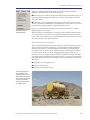
There are people who swear by Web auctions, specifically eBay, as a way to get
the lowest possible price. The problem is that sellers put together packages that
benefit themselves more than you. They toss in cheap bags, lenses, filters.,
tripods and what all to drive up the price. If you can isolate out a private party
you might get a good deal on a used camera but for new cameras stick with
established dealers. If you do buy always check the seller’s rating.
VISIT TRUSTWORTHY STORES
When buying camera equipment, it’s usually a big mistake to go for the lowest
price. This is where the scam artists operate. They achieve exceptionally low
prices only through deceptive or consumer unfriendly practices, some of
which are described in this section. All reputable dealers are grouped in a very
narrow price range, perhaps within $10 of each others on a $400 camera. This
is because the margins are so low most are selling at just above cost to be
competitive. The two stores where I do 90% of my buying are:
■ Amazon (www.amazon.com) isn’t the best, but I love the way they give user
reviews and rank sales of all camera equipment. I also love one-click buying
because I don’t have to find my wallet.
■ B&H Photo and Video (www.bhphotovideo.com) is the store for professionals and they take their reputation very seriously. In the small circle of professionals, bad business practices will kill a company very quickly as word gets
around. It is in this discriminating market where B&H thrives. The B&H
business is run by people whose religion dictates that they not do business on
the Sabbath, so the store won’t even take orders from sundown Friday to
Sundown Saturday. You have to respect this way of doing business and in
some cases delay your order by a day. They frequently make up for it by getting
things to me long before I expect them and it’s not just me, it’s everyone.
WATCH OUT FOR UNBUNDLING
When you buy a digital camera, the basic package almost always includes
extras such as a battery charger, lens cap, batteries, and software. One of the
more disreputable practices a dealer can engage in is called unbundling. These
30
FOR MORE ON TEXTBOOKS IN DIGITAL PHOTOGRAPHY, VISIT HTTP://WWW.PHOTOCOURSE.COM
THE STEPS IN BUYING A NEW CAMERA
dealers remove items from the package and sell them separately. To find out
what should be included in the package, visit the camera manufacturer’s Web
site and check their specifications page. The included items are almost always
listed. The user’s guide that comes with the camera will also list the items that
should be included as part of the camera’s price.
AVOID GRAY MARKET PRODUCTS
When camera companies introduce new cameras, they frequently use different
product numbers, names, and prices in different markets around the world.
Some dealers buy cameras in countries with the lowest prices and then sell
them in another country. Since these cameras are bought and sold outside of
the manufacturer’s normal distribution channels, prices may be lower but you
almost always lose warranty coverage and technical support.
SHOP LOCALLY
■ There’s no
question that you
can save a little
money by shopping
by mail order or
over the Internet.
However, keep in
mind that the
dealers in your
local community
also deserve your
support. Their
prices aren’t
always higher
because they are
more profitable.
More likely, they
are higher because
their costs are
higher. As often as
possible, it makes
sense to support
your local merchants. They are
part of the community you live in and
your dollars
circulate locally,
not in a distant
place you care
nothing about.
CHECK POSTAGE RATES AND SALES TAXES
When purchasing a camera you have three components of the price to consider—the camera price, postage and handling, and taxes. When you purchase
over the Web or by mail order from an out-of-state-company, you and not the
dealer are responsible for paying state and local sales taxes. Most people aren’t
aware of this responsibility, or choose to ignore it. When it comes to the price
and postage and handling, however, the dealer is in control. Many dealers
lower the price to make the camera more attractive, then increase the postage
and handling to boost their profits. With the popularity of Internet sites and
low margins, the temptation to do this is even stronger. Be sure you check and
compare these additional costs and take them into account when comparing
prices. Most companies have deals with firms such as Federal Express so their
costs are $10–15 or so for second day shipments. Anything over and above
that is pure profit to the dealer.
AVOID EXTENDED WARRANTIES
Hesitate before accepting extended warranties. Every knowledgeable consumer expert I’ve ever read says it’s better to gamble. Most of a company’s
profit is in the sale of these warranties so they press, and press hard. Your job
is to resist, and resist hard. The only thing to keep in mind is that digital
cameras can be horribly expensive to repair. The cost of a repair can equal or
exceed the original purchase price. If you want peace of mind, you may want
the warranty, even though it’s probably overpriced.
CHECK RETURN POLICIES, RESTOCKING FEES
When you buy a camera from a reputable dealer, you expect to be able to return
it if you aren’t satisfied. Some dealers try to discourage this by requiring a
restocking fee for returned merchandise. This is always explained as a way to
recover their costs of checking the merchandise and restoring the packaging
you may have opened. If a dealer requires a restocking fee, my advice is to find
another dealer.
BUY NO EXTRAS
Buy no extras without doing research. A few dealers low-ball camera prices
and make their profit on the other, higher margin things they include in the
“package”. I can assure you that the lens cleaner, cheap camera bag, and
poorly made tripod won’t be worth what you are asked to pay for them.
FOR MORE ON DIGITAL PHOTOGRAPHY, VISIT HTTP://WWW.SHORTCOURSES.COM
31
CHAPTER 2. DIGITAL CAMERAS
Chapter 2. Digital Cameras
T
here is an adage that “the devil is in the details” and if you want proof,
start listing the features available in a state-of the art digital camera. By
the time you are done you’ll find a list of hundreds of features, big and
small. Some affect the way you interact with the camera, some determine what
kinds of things you can do with it, and a few determine the quality of the
images you capture. In this chapter we go through the possibilities item by
item so you better understand the features of the camera you have or select
those you for the next camera you intend to buy.
32
FOR MORE ON TEXTBOOKS IN DIGITAL PHOTOGRAPHY, VISIT HTTP://WWW.PHOTOCOURSE.COM
TYPES OF DIGITAL CAMERAS
TYPES
OF
DIGITAL CAMERAS
When it comes time to choose a new digital camera, there is quite a range of
types to choose from. You are often trading off size versus features. Pocket
sized cameras usually don’t have as many features as larger cameras, but they
are much more convenient. The best news is that despite their great differences,
most cameras will capture very high-quality images, especially when used to
create snapshot-sized prints.
This old Kodak ad
slogan now applies to
the entire field of digital
photography. With
kiosks everywhere, it’s
easy to shoot and then
just print the images you
want.
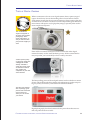
Point and shoot cameras usually have fewer controls than other digital
cameras but many are also small, bordering on tiny. With a camera that fits
into your pocket, you’re more likely to have it when you need it.
Camera phone quality
is improving rapidly with
8 Megapixel models
already available in
some parts of the world.
In time these cameras
may present real
competition to point and
shoot cameras.
The fastest selling point and shoot digital cameras are those built into camera
phones. The problem with these cameras is that their image quality is improving very slowly and doesn’t yet match that of dedicated cameras.
One-time-use cameras
take surprisingly good
pictures and some even
have a monitor on
which you can review
your results.
Digital photography has already matured to the point where there are onetime-use point and shoot versions.
FOR MORE ON DIGITAL PHOTOGRAPHY, VISIT HTTP://WWW.SHORTCOURSES.COM
33
CHAPTER 2. DIGITAL CAMERAS
Fixed lens cameras like
Canon’s S3 IS often
have great zoom lenses
and capture large
images.
Pentax makes
underwater cameras
including the Optio WPi.
High-end fixed lens cameras usually have a zoom lens and many of the
exposure and focus controls found on SLR cameras.
Single-lens reflex
cameras (SLRs) like this
Canon 30D are the
most flexible and often
the most expensive
cameras.
SLR cameras from
major companies have
more lenses than you’ll
ever need.
DIRTY SECRET
■ Removing the
lens from an SLR
lets dust enter the
camera and settle
on the sensor. This
dust creates dark
spots in your
images. You can
remove the dust
yourself but it’s
risky (page 125).
34
One of the most popular camera types among professionals and serious
amateurs is the single-lens reflex, better known as a digital SLR. These cameras
are expensive but have certain advantages over other camera types:
■ You can change lenses.
■ You see the scene through the lens so what you see is what you get. (Fixed
lens cameras with electronic viewfinders differ from SLRs in that they don’t
use a movable mirror to bounce light into the viewfinder.)
■ You can select from a large variety of accessories, including powerful flash
units.
FOR MORE ON TEXTBOOKS IN DIGITAL PHOTOGRAPHY, VISIT HTTP://WWW.PHOTOCOURSE.COM
TYPES OF DIGITAL CAMERAS
Minox makes a Leica
M3 miniature camera
with a 3.2 Megapixel
image sensor. Courtesy
of Minox at
www.minox.com.
Rangefinder cameras such as the Leica dominated photojournalism and fine
arts photography for decades. They were quiet, small, and their large, bright
viewfinders made it easy to focus and compose images. At the time this is
being written the only digital rangefinder is Epson’s 6.1 Megapixel R-D1.
However, Leica is developing one that is tentatively called the Leica Digital
M8.
You’ll rarely be without
a camera if it’s on your
key ring.
CAMERA SIZE
■ When it comes to
digital cameras,
size doesn’t matter
as much as you
think. Small pocket
cameras can take
images that are as
good as those taken
by larger cameras.
The only difference
is they usually have
fewer features and
lower resolution.
Video cameras often have the ability to capture still images. The images are
smaller than those captured by many digital still cameras, but it’s nice to have
this option when you are videoing an event. As you’ll see, most digital cameras also have a movie mode that lets you capture short video clips. The more I
use these movie modes, the more I like them. The secret to interesting movies
for most of us is to keep them short. A video camera may be able to capture
hours of footage, but who wants to watch it. Short, one minute or so videos can
capture highlights and be shared by e-mail or by posting them on popular sites
such as YouTube.com.
FOR MORE ON DIGITAL PHOTOGRAPHY, VISIT HTTP://WWW.SHORTCOURSES.COM
35
CHAPTER 2. DIGITAL CAMERAS
CAMERA CONTROLS
There are two ways to change settings on a camera—using menu commands
or a combination of buttons and dials. Menu commands are usually slower
and harder, especially in bright light when you can’t read the monitor on
which they are displayed. Buttons and dials are easier because you can get
familiar enough with them to use them without looking, but at first their
functions are harder to remember.
The Kodak EasyShare
has a touch-sensitive
screen where you can
make menu selections
using a stylus.
Most camera use both approaches, putting the most frequently used functions
on buttons and dials and less frequently used ones on menus. One recent
addition to the button/dial family is a compass point-like button. Pressing any
of the four points moves the menu highlight up, down or sideways or lets you
scroll through images in playback mode. A button or joystick-like lever in the
middle of this “button” acts like the Enter key on a computer by completing
commands.
To operate the camera, you perform the most common procedures with conhttp://www.photocourse.com/itext/icons/iconography.pdf
trols on the top, back, and side of the camera. Icons indicating the current
Click to see a PDF
settings are often displayed on the monitor or a separate LCD panel.
poster of typical digital
camera icons.
As you change settings, it is sometimes easy to forget what you’ve done or it’s
time consuming to reset them to their original values one at a time. In these
situations some cameras have a button or menu command that lets you quickly
reset the camera to its original factory default settings.
The buttons and dials vary from camera to camera but here are some that are
fairly common on all but the simplest point and shoot models. In some cases
the same button will perform different functions in shooting and playback
modes.
■ Zoom lever or buttons zoom the lens.
■ Shutter button locks exposure and focus when pressed halfway down, and
takes the picture when pressed all the way.
■ Continuous/self-timer button sets the camera to shoot sequences of photos
one after another or turns on the self-timer.
■ Mode dial selects various shooting modes such as auto. The same or a
different lever or button switches between shooting and playback modes.
■ ON/OFF button or lever turns the camera on and off.
■ Flash button selects flash modes.
■ Macro button turns macro mode on and off.
Press down the shutter
button very smoothly—
never jab at it. Pause
halfway down until
focus locks.
36
■ MENU button displays or hides the menu.
■ Print/Share button lets you print or download images when connected to a
printer or computer.
■ Erase or delete button deletes the selected image in review or playback
mode.
FOR MORE ON TEXTBOOKS IN DIGITAL PHOTOGRAPHY, VISIT HTTP://WWW.PHOTOCOURSE.COM
COMPOSING IMAGES
COMPOSING IMAGES
When choosing a digital camera, one of the first things to decide is whether
you want one with both a monitor and viewfinder. Many of the latest small
cameras have dropped viewfinders, partly to make more room for a larger
monitor. This isn’t an unmixed blessing because the primary roles of these two
features are quite different, although there is some overlap. If your camera has
no viewfinder, you are forced to compose all of your images using the monitor.
Monitors show you what This means you have to deal with glare on sunny days and find a way to get
the view looks like
sharp images while holding the camera out at arm’s length.
through the lens.
The best monitors are
those that swivel and tilt
to any angle.
With a swiveling
monitor, you can shoot
up at things close to the
ground such as this
newt.
MONITORS
Monitors are small LCD color screens built into most cameras. Their size is
specified using the diagonal measurement, in inches. Most have brightness
adjustments that you can change manually, or which the camera will adjust
automatically. These screens range between 1.5 and 4 inches and serve a
number of useful functions:
■ Menus are displayed so you can change camera settings.
■ Image composition. On many, but not all cameras, you can compose the
image on the monitor before you take it. Most digital SLR cameras don’t let you
do this because they use a mirror to bounce the image formed by the lens into
the viewfinder. The image sensor only creates the image when the shutter is
open. One company (Olympus) has introduced cameras that use a second
sensor in the viewfinder to feed an image to a tilting LCD monitor like those
on many high-end fixed lens cameras. This lets you use different viewing
angles for low, waist-level, and high shots. The image from this second sensor
can also be used to capture movies, something other SLRs can’t do. Only time
will tell if this feature catches on and spreads.
■ Image review keeps an image on the screen for a few seconds after you’ve
taken it so you can check it. Some cameras let you keep the image on the screen
longer so you can perform some or all of the image management functions
described below.
■ Playback mode lets you scroll through your images manually, as a selfrunning slide show, or in index view that shows 9 or so small thumbnails at a
time.
Landscape mode
shows the image
horizontally.
■ Image management in playback mode let’s you scroll through the images
you’ve taken and delete, rotate, rename, print, protect, copy or otherwise
manage them. Many cameras also display thumbnails of a group of images in
index view so you can quickly locate and select the images you’re looking for.
Most also let you enlarge the image on the monitor to zoom in on details in
your photo—a great way to check sharpness. A few cameras now have touchsensitive monitors so you can manage your images with a stylus instead of
dials and buttons.
■ Histograms are graphs showing the distribution of brightnesses in your
image (page 72) so you can check that the exposure is correct. Most cameras
that offer this feature let you view the histogram after capturing a photo but a
few let you see the histogram as you compose the image.
Portrait mode shows the
image vertically.
■ Direct printing lets you use the monitor to select images for printing when
you bypass the computer to print directly from the camera.
FOR MORE ON DIGITAL PHOTOGRAPHY, VISIT HTTP://WWW.SHORTCOURSES.COM
37
CHAPTER 2. DIGITAL CAMERAS
■ On-screen editing can be performed on some cameras although editing on a
tiny screen using buttons and menus isn’t usually the most enjoyable way to
do it. However, it’s useful when printing or sharing directly from the camera.
On cameras that let you compose the image on the monitor, the displayed
image is taken directly from the image sensor, so it is a true TTL (through-thelens) view. Although you can use the monitor to compose photos, there are
times when you may not want to for the following reasons.
■ Battery drain. Large monitors drain batteries quickly, so it’s best to keep
them turned off as much as possible and use the optical viewfinder for taking
pictures.
■ Glare makes the image on the monitor hard to see in bright sunlight.
Because an optical
viewfinder is offset from
the lens, what you see
through the viewfinder
(top) is different from the
image you actually
capture (bottom).
■ Steadiness is diminished when you hold the camera at arm’s length. This
tends to introduce blur into your images through camera shake.
Although you may want to keep the monitor turned off to conserve battery
power, there are a few situations in which it becomes indispensable.
■ Close-ups. When using a camera that isn’t an SLR for close-ups, the monitor
is a great way to compose and focus the image since it shows the scene exactly
the way it will be in the image you’ll capture. The optical viewfinder doesn’t
show the same view because it is offset from the lens.
■ Odd angles. When photographing over a crowd, at ground level, or around
a corner, a camera with a tilting and swiveling monitor lets you compose the
image without holding the camera up to your eye.
Electronic viewfinders
are small flat-panel
displays inside the
viewfinder. Courtesy of
Zight.
When considering a monitor, here are some things to keep in mind:
■ The monitor gets its image directly from the image sensor so it shows the
view seen through the lens (TTL). Most show the entire image.
■ The monitor often shows how light or dark the captured will be. This lets
you use the flash or adjust the exposure to make it the way you want it.
■ Tilt and swivel monitors let you shoot from different angles.
■ Screen size and resolution is important not only to evaluate images but to
share them with others.
■ A wide viewing angle lets a small group see the photos together.
■ Transparent monitor covers keep monitors from being scratched. They are
cheap and easy to replace.
■ Many cameras have connectors and cables for displaying your photos on a
TV set or a computer with a TV tuner. You can also connect the camera when
taking photos so it displays everything on a much larger screen.
http://www.photocourse.com/itext/SLR/
A common monitor icon.
Click to see the light
path through an SLR.
■ A glare-proof surface and brightness adjustment help you see the menu and
images in bright sunlight where many monitors just become mirrors.
VIEWFINDERS
Viewfinders are ideal for following fast action as it unfolds—waiting for the
decisive moment. One of the advantages of some, but not all, of them is that
they don’t draw battery power so your batteries last longer. Also, most viewfinders are coupled to the zoom lens and show the same area that will be
captured in the photo. There are three kinds of viewfinders and most photographers would consider the SLR viewfinder the best.
38
FOR MORE ON TEXTBOOKS IN DIGITAL PHOTOGRAPHY, VISIT HTTP://WWW.PHOTOCOURSE.COM
COMPOSING IMAGES
SLR viewfinders display
focus areas and camera
settings.
■ Optical viewfinders on digital SLR cameras show the scene through the
lens (TTL) just as 35mm SLRs do. A mirror bounces light coming through the
lens into a prism that directs it out of the viewfinder. When you take a picture,
the mirror swings up and the shutter opens to let light hit the image sensor
and create the image. These are true “what you see is what you get” viewfinders because you see exactly what the lens sees. Some cameras have interchangeable focus screens so you can adapt the camera for your preferences.
For example, if you do architectural or product photography you may want
grid lines in the viewfinder so it’s easier to keep things aligned. Some cameras
let you add the grid lines digitally by changing a camera setting.
http://www.photocourse.com/itext/parallax/
■ Optical viewfinders on point-and-shoot cameras show the scene through a
separate window that is slightly offset from the view seen by the lens. The
Click to explore how
offset view isn’t a problem except in close-up photography where parallax
parallax affects your
causes you to see a view that is slightly offset from the one the lens sees so a
view of a subject.
subject centered in the viewfinder won’t be centered in the image.
■ Electronic viewfinders use a small LCD monitor built into the viewfinder to
display the same through-the-lens image seen by the image sensor. Many of
these cameras let you switch between the monitor and viewfinder and both
show exactly the same scene and same information. Because these displays are
electronic, menus can be displayed so you can change settings without
lowering the camera from your eye. This is especially useful on bright days
when a monitor is hard to read because of glare. It’s also advantageous for
people who need reading glasses because the menu can be read without
glasses if the viewfinder has a diopter adjustment control. The two biggest
shortcomings of these viewfinders is their refresh rate and resolution. A slow
refresh rate means that as you move the camera, the image on the screen lags
behind the scene you are pointing at. When panning, the screen seems to jump
between frames. On some cameras the refresh stops when you press the shutter
button halfway down to lock focus so the image you capture may be different
from the one you see. The low resolution of these viewfinders makes it hard to
tell exactly what you are photographing. You don’t see fine details, colors, or
tones the way they actually are.
When considering a viewfinder, here are a few things to think about:
In this cutaway view of a
Canon SLR you can
see the mirror that
bounces light up into a
prism for the viewfinder.
The mirror swings up
out of the way when you
take a picture. Courtesy
of Canon.
■ Most viewfinders don’t show the entire area that will be captured. Usually
they show about 95%.
■ Diopter adjustment dials or sliders let you adjust the viewfinder so you can
see the image without reading glasses.
■ Eyepiece covers are needed on SLRs to keep light from leaking through the
viewfinder when using a self-timer or remote control and you are not blocking
the light with your head.
■ When taking close-ups on a point and shoot camera without an electronic
viewfinder the viewfinder is offset from the lens so the area seen in the viewfinder will differ from the area included in the image.
■ Optical viewfinders on point and shoot cameras don’t display important
shooting information such as focus and exposure settings.
FOR MORE ON DIGITAL PHOTOGRAPHY, VISIT HTTP://WWW.SHORTCOURSES.COM
39
CHAPTER 2. DIGITAL CAMERAS
CONTINUOUS PHOTOGRAPHY
The speed at which you
can capture images in
continuous mode is
specified in frames per
second (fps). This is
usually between 3–5
fps.
With digital cameras, you normally take one photo at a time, but you’re not
limited to that way of shooting. You can also capture sequences of photos. In
this continuous mode, you just hold down the shutter button and images are
captured one after another until you release it. You can then choose the best
image from the sequence or use all of them to create animations on your
computer. Some people are even piecing together long movies from these short
sequences. The number of images you can capture in a single burst is usually
limited by the size of the camera’s buffer—a form of memory capable of rapidly
storing images as they are captured one after another. In some cases, the
camera uses a smaller image size to capture sequences. This reduces the
processing and storage time so you can take images at a faster rate.
Photo-editing programs often let you convert a series of images into an animated GIF. When posted on the Web, the images are quickly displayed one
after the other like frames in a movie.
Continuous mode can
capture a series of
images much like
movie frames. You can
select the best one for
printing, use them all to
created an animation,
or use the series to
analyze an action such
as the swing of a golf
club or baseball bat.
http://www.photocourse.com/itext/G-continuous/
Click to see how
continuous mode can
be used creatively.
Single and continuous
mode icons.
The camera can store
images in the buffer
faster than it can
transfer them to the
memory card. A large
buffer lets you shoot
more images
continuously.
40
FOR MORE ON TEXTBOOKS IN DIGITAL PHOTOGRAPHY, VISIT HTTP://WWW.PHOTOCOURSE.COM
SHOOTING MOVIES
SHOOTING MOVIES
Many digital cameras can capture short video clips that you can easily share
with others by e-mail or using one of the many Web sites devoted to hosting
short video clips. Although most SLR cameras can’t capture movies, there are
exceptions. The problem is that SLR cameras don’t create an image on the
sensor until the shutter is open so there is no stream of images created from
which to make frames in a movie. To overcome this problem, one company
(Olympus) uses a second sensor in the viewfinder to feed images to the
monitor or to capture movies.
Movies can be played
back on a computer
equipped with the right
software.
The almost universally
recognized movie mode
icon.
In most cases, image sizes are reduced from those used to capture still images
so the camera can process the video as it’s being captured and so file sizes are
as small as possible. Sizes normally range from a very small 160 x 120 to a
current maximum TV quality 640 x 480 (VGA).
Most digital cameras use AVI, MOV, or MPEG video formats so you can view
or share them in a number of ways. (If your video isn’t in the “right” format,
you can find programs that convert it by Googling for “video conversion”.)
■ Your computer can play back movies as long as it’s equipped with the
appropriate software. This software comes with your camera, usually on a CD,
but most new computer systems already have it installed.
■ TV movies have to be in the MPEG format and on a Video CD or DVD disc.
However, you can play back any format when you use a cable to connect your
camera to the TV or VCR and use the camera as the playback device.
■ E-mail is a great way to distribute short video clips but anything longer
http://www.photocourse.com/itext/video/
than a few seconds may be too large to send. The recipient also has to have
the necessary playback software installed to view the video.
Click to see a movie
captured with a still
camera’s movie mode.
■ Web sites, such as YouTube.com, that let you share movies with friends are
popping up all over. You just upload your clip and send friends its address.
When they visit the site that hosts your video, they can download or play it.
■ iPods and other portable devices play video clips in the formats they
support.
■ Printing individual frames from a video clip is possible on some cameras
when printing directly from the camera to an attached printer.
Professional quality
video is 30 fps but many
cameras capture fewer
than that.
TIP
■ A wind filter will
digitally reduce the
noise caused by
wind blowing
across the microphone.
Just playing back a video isn’t all you can do with it. There are programs you
can use to edit it or you can incorporate it into other, larger projects. For
example, you can insert movies into slide shows or even play them as wallpaper on your desktop. It’s amazing how stringing together a series of very short
clips can tell an interesting story.
One camera has a special button that when pressed will begin recording
movies no matter what else you are doing. This ensures you never miss a
movie opportunity while fumbling with menus or buttons. The same camera
lets you take still photos while recording a movie. This is a perfect integration
of features that are quite separate on most cameras.
Some camera let you do basic editing in the camera. For example, you can
remove beginning and ending sections to isolate the most important section.
Although digital zoom is a useless feature in most cases, it does add something to movies which can’t be zoomed past the limits of optical zoom after
they have been shot. The same can be said for special effects such as sepia
tones and black and white modes.
FOR MORE ON DIGITAL PHOTOGRAPHY, VISIT HTTP://WWW.SHORTCOURSES.COM
41
CHAPTER 2. DIGITAL CAMERAS
PANORAMA MODE
Panoramic photos are much longer in one direction than in the other and can
http://www.photocourse.com/itext/panorama/
convey a sweeping image of a scene up to 360-degrees around. Using a digital
Click to see how
camera there are three ways to achieve this.
dramatic 360-degree
panoramas can be.
Stitch Assist icon.
■ Some inexpensive cameras just capture a band across the middle of the
image sensor, leaving unexposed bands at the top and bottom of the image
area. You can achieve the same effect with any image you’ve taken by using a
photo-editing program to crop it.
■ You can use any camera to take a series of overlapping images as you pan
the camera, and then use panoramic stitching software to assemble the frames
into a seamless panoramic image. Since alignment is so important some
cameras have a panoramic mode that displays guide lines or part of the
previous image in the series so you can accurately align and overlap the next
photo.
■ A few cameras make it possible to stitch the images together in the camera
and automatically ensure that exposure is the same from frame to frame so the
images blend perfectly. These cameras may reduce image sizes to keep the file
small enough to manipulate it in the camera.
These photos show how
an HP camera guides
you when aligning
photos for your
panorama that is then
stitched together in the
camera. Courtesy of HP
at www.
hpshopping.com.
Generally there are three panoramic sequences from which to choose.
■ Horizontal sequence left to right, or right to left, are used to capture panoramic landscapes.
■ Vertical sequence bottom to top, or top to bottom, are like horizontal but
capture a panoramic view of a vertical subject such as a tower or waterfall.
■ Clockwise or counterclockwise sequence is used for documents or other
square shapes.
The three images above
have been stitched
together into a single
panorama (right).
42
FOR MORE ON TEXTBOOKS IN DIGITAL PHOTOGRAPHY, VISIT HTTP://WWW.PHOTOCOURSE.COM
PHOTOGRAPHING IN BLACK & WHITE
PHOTOGRAPHING IN BLACK & WHITE
For years photographers in the fine arts, perhaps the best known being Ansel
Adams, have taken black and white pictures almost exclusively. If you want to
work in the same medium, some cameras let you shoot in black and white as
well as color. This mode is also useful if the photograph is going to be printed
in black and white. If your camera doesn’t have this mode, you can always
make the conversion in your photo-editing program. This is probably a better
way to do it because you’ll have both a color and a B&W version.
One great thing about using a camera that has a black & white mode is that
when taking pictures, they are displayed on the monitor in that format. This
makes it much easier to visualize the end result. A film photographer has to do
this visualization in his or her head.
One of the masters of
black & white
photography was Ansel
Adams, shown here
discussing his books
with Tim Hill of New
York Graphic Society.
On some digital
cameras you can add
an infrared filter and
shoot black and white
infrared images.
FOR MORE ON DIGITAL PHOTOGRAPHY, VISIT HTTP://WWW.SHORTCOURSES.COM
43
CHAPTER 2. DIGITAL CAMERAS
IMAGE SENSORS—TYPES
When using a film camera you can insert any kind of film you want. It’s the
film you choose that gives photographs distinctive colors, tones, and grain. If
you think one film gives images that are too blue or red, you can change to
another film. With digital cameras, the “film” is permanently part of the
camera so buying a digital camera is in part like selecting a film to use. Like
film, different image sensors render colors differently, have different amounts
of “grain,” different sensitivities to light, and so on. The only ways to
evaluate these aspects are to examine some sample photographs from the
camera or read reviews written by people you trust.
This photo shows the
pixels on an image
sensor greatly enlarged.
Courtesy of IBM.
A silicon wafer used to
make image sensors.
Courtesy of IBM.
Initially, charge-coupled devices (CCDs) were the only image sensors used in
digital cameras. They have been well developed through their use in astronomical telescopes, scanners, and video camcorders. However, there is now
a well-established alternative, the CMOS image sensor. Both CCD and CMOS
image sensors capture light using a grid of small photosites on their surfaces. It’s how they process the image and how they are manufactured where
they differ from one another.
■ CCD image sensors. A charge-coupled device (CCD) gets its name from
the way the charges on its pixels are read after an exposure. The charges on
the first row are transferred to a place on the sensor called the read out
register. From there, the signals are fed to an amplifier and then on to an
analog-to-digital converter. Once the row has been read, its charges on the
readout register row are deleted, the next row enters, and all of the rows
above march down one row. Each row is “coupled” to the row above so
when it moves down, the one above moves down to fill its old space. In this
way, each row of pixels can be read—one row at a time.
■ CMOS image sensors. Image sensors are manufactured in factories called
wafer foundries or fabs where the tiny circuits and devices are etched onto
silicon chips. The biggest problem with CCDs is that they are created in
http://www.photocourse.com/itext/CCD/
foundries using specialized and expensive processes that can only be used
Click to see where the
to make other CCDs. Meanwhile, larger foundries use a different process
name “charge-coupled
called Complementary Metal Oxide Semiconductor (CMOS) to make millions
device” comes from.
of chips for computer processors and memory. CMOS is by far the most
common and highest yielding chip-making process in the world. Using this
same process and the same equipment to manufacturer CMOS image sensors
cuts costs dramatically because the fixed costs of the plant are spread over a
much larger number of devices. As a result of these economies of scale, the
cost of fabricating a CMOS wafer is significantly less than the cost of fabricating a similar wafer using a specialized CCD process. Costs are lowered
even farther because CMOS image sensors can have processing circuits
created on the same chip. When CCDs are used, these processing circuits
must be on separate chips.
Despite their differences, both types of sensors are capable of giving very
good results and both types are used by major camera companies. Canon
even uses CMOS sensors in their high-end digital SLRs.
44
FOR MORE ON TEXTBOOKS IN DIGITAL PHOTOGRAPHY, VISIT HTTP://WWW.PHOTOCOURSE.COM
IMAGE SENSORS—SIZES AND ASPECT RATIOS
IMAGE SENSORS—SIZES
AND
ASPECT RATIOS
The image sensor in a camera has two important and related physical characteristics—it’s size and aspect ratio.
Image sensor sizes
range from the tiny up to
ones as large as a
frame of 35mm film—
called a full frame
sensor.
SENSOR SIZE
Image sensors come in a variety of sizes with the smallest ones used in point
and shoot cameras and the largest in professional SLRs. Consumer SLRs often
use sensors having the same size as a frame of APS film. Professional cameras
occasionally use sensors the same size as a frame of 35mm film—called fullframe sensors.
Larger image sensors have larger photosites that capture more light with less
noise. The result is pictures that are clearer, brighter, and sharper. Because the
size of photosites is so important, a large 6 Megapixel sensor will often take
better pictures than a smaller 8 Megapixel sensor. Not only is noise a problem
but smaller sensors also require better, more expensive lenses, especially for
wide-angle coverage. Here are some typical sensor sizes:
http://www.photocourse.com/itext/sensor/
Click to explore the
sizes of image sensors.
The aspect ratio of an
image sensor
determines the shape of
your prints.
Size
1/4
1/3
1/2
2/3
1
APS-C
Full Frame
■ A 16:9 widescreen mode
captures images
and film clips that
are perfect for your
widescreen TV or
computer monitor.
Height
(mm)
2.4
3.6
6.4
8.8
12.8
14.8
24
ASPECT RATIOS
Image sensors come in a variety of aspect ratios—the ratio of image height to
width. The ratio of a square is 1:1 (equal width and height) and that of 35mm
film is 1.5:1 (1½ times wider than it is high). Most image sensors fall in between these extremes. The aspect ratio of a sensor is important because it
determines the shape and proportions of the photographs you create. When an
image has a different aspect ratio that the device it’s displayed or printed on, it
has to be cropped or resized to fit. Your choice is to loose part of the image or
waste part of the paper. To imagine this better, try fitting a square image on a
rectangular piece of paper.
Image
HDTV ASPECT
RATIO
Width
(mm)
3.2
4.8
8
11
16
22.2
36
35 mm film
Computer display
Canon 5D
Canon S3 IS
Photo paper
Printing paper
HDTV
Width x height
Aspect Ratio
36 x 24 mm
1024 x 768
4368 x 2912
2816 x 2112
4 x 6 inches
8.5 x 11
16 x 9
1.50
1.33
1.50
1.33
1.50
1.29
1.80
To calculate the aspect ratio of any camera, divide the largest number in its
resolution by the smallest number. For example, if a sensor has a resolution of
2816 x 2112, divide 2816 by 2112. In this case the aspect ratio is 1.33, slightly
squarer than 35mm film but the same as computer displays.
FOR MORE ON DIGITAL PHOTOGRAPHY, VISIT HTTP://WWW.SHORTCOURSES.COM
45
CHAPTER 2. DIGITAL CAMERAS
IMAGE SENSORS—RESOLUTION
The quality of a digital image depends in part on the number of pixels it
http://www.photocourse.com/itext/pixelzoom/
contains (sometimes referred to as resolution). At a given size, more pixels add
Click to see the effects
detail and sharpen edges. However, there are always size limits. When you
of pixelization as an
enlarge any digital image enough, the pixels begin to show—an effect called
image is enlarged.
pixelization. This is not unlike traditional silver-based prints where grain
begins to show when prints are enlarged past a certain point.
When a digital image is
displayed or printed at
the correct size for the
number of pixels it
contains, it looks like a
normal photograph.
When enlarged too
much (as is the eye
here), its square pixels
begin to show.
http://www.photocourse.com/itext/excel/math-imagesize.xls
Click to explore pixels
and aspect ratios.
http://www.photocourse.com/itext/excel/printing.xls
Good prints can be
made using 200 pixels
per inch. Using this as a
guide you can calculate
that a 2000 x 1600 pixel
image (just over 3
Megapixels) will make a
good 10 x 8 inch print.
The term “resolution” has two meanings in photography. Originally it referred
to the ability of a camera system to resolve pairs of fine lines such as those on a
test chart. In this usage it’s an indicator of sharpness, not image size. With the
introduction of digital cameras the term began being used to indicate the
number of pixels a camera could capture.
The pixel size of a digital photograph is specified in one of two ways—by its
dimensions in pixels or by the total number of pixels it contains. For example,
the same image can be said to have 4368 × 2912 pixels (where “×” is pronounced “by” as in “4368 by 2912”), or to contain 12.7 million pixels or
Megapixels (4368 multiplied by 2912).
As you might expect, all other things being equal, costs rise with a camera’s
resolution. Greater resolution also creates other problems. For example, more
pixels means larger image files. Not only do larger files take more storage
space, they put greater demands on systems and networks when you edit, email, and post them on a Web site.
http://www.photocourse.com/itext/resolution/
Click here to explore the
original meaning of
“resolution.”
46
■ Lower resolutions such as 640 x 480 are perfect for Web publishing, e-mail
attachments, small prints, or images in documents and presentations. For
these uses, higher resolutions just increase file sizes without significantly
FOR MORE ON TEXTBOOKS IN DIGITAL PHOTOGRAPHY, VISIT HTTP://WWW.PHOTOCOURSE.COM
IMAGE SENSORS—RESOLUTION
Many cameras give you
a choice of image sizes
from small to large.
http://www.photocourse.com/itext/pixelresolution/
Click to explore how
more pixels give
sharper images.
improving the images.
http://www.photocourse.com/itext/imagesize/
Click to see how it’s the
output device, not the
camera, that determines
image sizes.
■ Higher resolutions, 6 million pixels or so, are best for printing photo-realistic
enlargements larger than 5" x 7". Good prints can be made using 200 pixels per
inch. Using this as a guide you can calculate that a 2000 x 1600 pixel image
(just over 3 Megapixels) will make a good 10 x 8 inch print.
Beware of claims about resolution for cameras because there are two kinds of
resolution; optical and interpolated. The optical resolution of a camera or
scanner is an absolute number because an image sensor’s pixels or photosites
are physical devices that can be counted. To improve resolution in certain
limited respects, the optical resolution can be increased using software. This
process, called interpolated resolution, adds pixels to the image to increase the
total number of pixels. To do so, software evaluates those pixels surrounding
each new pixel to determine what its color should be. For example, if all of the
pixels around a newly inserted pixel are red, the new pixel will be red. What’s
important to keep in mind is that interpolated resolution doesn’t add any new
information to the image—it just adds pixels and makes the file larger. This
http://www.photocourse.com/itext/excel/printing.xls
same thing can be done in a photo-editing program such as Photoshop by
Click for an Excel work
resizing the image. Beware of companies that promote or emphasize their
sheet that converts
device’s interpolated (or enhanced) resolution. You’re getting less than you
pixels into print sizes.
think you are. Always check for the device’s optical resolution. If this isn’t
provided, flee the product—you’re dealing with marketing people who don’t
have your best interests at heart.
http://www.photocourse.com/itext/biglie/
Click to see how some
cameras inflate their
pixel counts.
TIP
■ A few camera companies, even some that are otherwise respectable, try to
deceive you into thinking their cameras have higher resolution than they
really do. They use software to inflate the size of a captured image and then
use this inflated size in advertising claims about the camera. This way each
captured pixel can suddenly become four, and voila’ a 2 Megapixel image
suddenly and magically becomes 8 Megapixels.
FOR MORE ON DIGITAL PHOTOGRAPHY, VISIT HTTP://WWW.SHORTCOURSES.COM
47
CHAPTER 2. DIGITAL CAMERAS
IMAGE SENSORS—SENSITIVITY AND NOISE
In dim light, you or the camera can only get a good exposure by leaving the
shutter open longer or increasing the camera’s sensitivity to light—called its
ISO.
SENSITIVITY
One way to improve sharpness in dim light is to increase the camera’s sensitivity. This works in places such as theaters and gyms where subjects are too
far away for flash to work and where you need a faster shutter speed to
eliminate blur. It also is a good way to get pictures without using flash in
places such as concerts and museums where flash is prohibited.
Dim light requires a fast
lens and a high ISO or
you have to resort to
flash.
Digital camera sensitivity is usually specified as an ISO setting just as the
speed of film is. Increasing the camera’s sensitivity or ISO means less light is
needed for a picture so you can use a faster shutter speed to freeze action or
reduce blur caused by camera movement. Sensitivity on some cameras can be
adjusted between 50 and 6400, a range of 8 stops, but most offer a smaller
range of settings. The price you pay for using the higher settings is noise—
randomly spaced bright pixels concentrated in dark areas of the image.
NOISE REDUCTION
Using slow shutter speeds, especially those over one second, or higher ISO
settings creates noise in an image. The slower the shutter speed or higher the
ISO, the more noise you get. This is partly because long shutter speeds let noise
build up and partly because digital cameras increase sensitivity by amplifying
Noise appears in
images as random color the signals captured by the photosites on the sensor—similar to turning up the
pixels especially when
volume on the radio. Dim light can be made brighter this way but unfortuyou use long shutter
nately, amplifying the image also amplifies noise. Many cameras have a noise
speeds or high ISO
reduction mode designed to reduce or eliminate noise caused by long exposettings.
sures or high ISO settings. Some allow you to turn this mode on and off, or set
it to auto so it’s used only when necessary.
At slow shutter speeds
(left) noise has a
chance to build up in
the image. At faster
speeds, (middle and
right), the noise is
overwhelmed by the
signal
http://www.photocourse.com/itext/ISO/
Click to see the effects
of increasing ISO.
Click to see the effect of
noise in an image.
48
FOR MORE ON TEXTBOOKS IN DIGITAL PHOTOGRAPHY, VISIT HTTP://WWW.PHOTOCOURSE.COM
CAMERA RESPONSIVENESS
CAMERA RESPONSIVENESS
VIEWFINDER
BLACKOUT
■ When you take a
picture with a
digital SLR, its
mirror must swing
up so the light can
strike the shutter
and image sensor.
While up, you can’t
see through the
viewfinder. This
viewfinder blackout
should be as short
as possible.
Henri Cartier-Bresson is famous for his photographs that capture that “decisive moment” when random actions intersect in a single instant that makes an
arresting photograph. His eye-hand coordination was unrivaled, and he was
able to get the results he did because he was always ready. There was never
any fumbling with controls or lost opportunities. Most digital cameras have an
automatic exposure system that frees you from the worry about controls.
However, these cameras have other problems that make decisive moments
hard to capture. One of the things that has driven many photographers to
distraction is the delay between their pressing the shutter button and the
camera actually taking the picture. This and other delays built into digital
cameras affect your ability to respond to fast action when taking pictures.
■ The startup time is how long it takes for you to take a photos after turning
on the camera. Cameras used to take a long time to do this, but now many start
up almost instantly.
■ The shutter-lag time is the delay you experience between pressing the
shutter button and actually capturing the image. This delay occurs because of
the time it takes the camera to clear the image sensor, set white balance to
correct for color, set the exposure, and focus the image before it fires the flash (if
it’s needed) and takes the picture. The best cameras have almost no lag.
■ The processing delay occurs as the image is processed and stored. This
delay has been dramatically reduced by the addition of internal memory,
called a “buffer.” Images are temporarily stored in the buffer while awaiting
processing because they can be stored there much more quickly then they can
be stored on the memory card. You can continue shooting until the buffer fills
and resume when some images have been transferred from it to the memory
card.
All of these delays affect how quickly you can get off the first shot or capture a
series of photos one after another (often referred to as shot-to-shot time). If the
delays are too long, you may miss a picture.
Responsiveness is most
important when
photographing moving
subjects.
FOR MORE ON DIGITAL PHOTOGRAPHY, VISIT HTTP://WWW.SHORTCOURSES.COM
49
CHAPTER 2. DIGITAL CAMERAS
IMAGE FORMATS
On many cameras, one of the many important choices you’ll make is what
format and image quality to use when shooting photos.
■ JPEG is the default format used by almost every digital camera ever made.
Named after its developer, the Joint Photographic Experts Group (and pronounced “jay-peg”) this format lets you specify both image size and compression. The smallest size is best for the Web and e-mail (although it will usually
have to be reduced) and the largest for prints.
The JPEG format compresses images to make their files smaller, but many
cameras let you specify how much they are compressed. This is a useful
feature because there is a trade-off between compression and image quality.
Less compression gives you better images so you can make larger prints, but
you can’t store as many images. Because you can’t add pixels as well or
http://www.photocourse.com/itext/compression/
remove the effects of compression after the fact, it’s usually best to use the
Click to see the effects
largest size and least compression. If you have to reduce either, you can do so
of compression.
later in a photo-editing program.
■ RAW format is available on many cameras. One of Ansel Adam’s better
know expressions, drawn from his early experiences as a concert pianist, was
“The negative is the score, the print is the performance.” In digital photography, the image file is your score and your photo-editing program is where you
http://www.photocourse.com/itext/RAW/
perform. The printer then just does what you’ve told it to do as you edited the
image. To get the highest possible quality, you want to start with the best
Click to explore the
differences between
possible score—a RAW image file. These files contain all of the image data
JPEG and RAW formats. captured by the camera’s image sensor without it being processed or adjusted.
You can interpret this data any way you want instead of having the camera do
it for you. If you want total control over exposure, white balance, and other
settings, this is a format you will learn to love. Only four camera settings
permanently affect a RAW image—the aperture, shutter speed, ISO, and focus.
Other settings may affect the appearance of the thumbnail or preview but not
the image itself. Since each camera company has defined its own proprietary
RAW format, many operating systems and even photo-editing programs are
unable to recognize some or all of these files. If the camera supports the RAW
format the camera manufacturer always supplies a program along with the
camera.
With many cameras you can capture RAW images by themselves or with a
companion JPEG image that gives you an identical high quality RAW file and
a smaller, more easily distributable image file. Both the RAW and JPEG files
have the same names but different extensions.
STORAGE
CAPACITY
■ The number of
new images you
can store at the
current settings is
usually displayed
on the camera’s
monitor or control
panel.
50
ADVANTAGES OF USING THE RAW FORMAT
There are a number of advantages to using the RAW format:
■ RAW lets you decide on most settings after you’ve taken the picture, not
before. For example, when you shoot a JPEG image under fluorescent lights,
the camera adjusts the image to remove the yellow-green tint. Any changes you
make later are on top of this initial change. If you shoot the image in RAW
format, the camera just captures the images as is and you decide what white
balance setting to use later. You can even create different versions of an image,
each with its own white balance.
■ RAW images aren’t compressed using a lossy compression scheme that
throws out data to make image files smaller. Although some cameras have a
FOR MORE ON TEXTBOOKS IN DIGITAL PHOTOGRAPHY, VISIT HTTP://WWW.PHOTOCOURSE.COM
IMAGE FORMATS
compressed RAW format, these images are compressed using lossless compression. When you open these images, they contain all of the original image
data.
■ RAW images aren’t processed in the camera as JPEG images are. When you
take JPEG photos, a processing chip with the power of a small computer
manipulates them based on the camera settings you have used and then
compresses them to reduce their size. The changes made to your images cannot
be undone later because it’s the final, altered image that is saved in the image
file. Some of the original image data is lost for good. With RAW images, all of
the original data captured by the camera is saved in the RAW image files so
you can process them later on your computer. The settings used to take RAW
images are saved, but they are not permanently applied to your images until
you save a version of them in another format such as JPEG or TIFF.
Here, two versions of
the same image have
been enlarged. The
image on the left is an
uncompressed file. The
one on the right is a
compressed JPEG file.
■ RAW images have greater color depth and that gives you smoother gradations of tones and more colors. For example, JPEG images use only 8 bits per
color (RGB) or 24 bits total. This means that JPEG images can have only 256
tones (28) and 16,777,216 colors (224). Meanwhile many RAW images are
initially captured by the sensor in 48 or 36 bit RGB (16 or 12 bits per channel)
and only reduced to 24 bit RGB (8 bits per channel) when converted into JPEG
files. The full 48 or 36 bits are retained in the RAW file after the images are
processed on your computer because the original file isn’t overwritten with
your changes. You can even retain all 16 or 12 bits per color by saving images
in a format such as TIFF or Photoshop’s PSD format.
■ RAW images can be processed again at a later date when new and improved
applications become available. Your final image isn’t permanently altered by
today’s generation of photo-editing applications.
■ You can use a RAW image to generate alternate versions of the same image.
For example, many photographers will adjust highlight and shadow areas
and save these versions separately. Using a photo-editing program, they then
combine the two images and by selectively erasing parts of the top image let
areas of the lower image show through so all areas have a perfect exposure.
DISADVANTAGES OF USING THE RAW FORMAT
Admittedly, there are drawbacks to using RAW images.
■ RAW files in the camera are quite large. If you use this format a great deal
you will need more storage space in the camera and computer and processing
times will be longer.
■ Since RAW images aren’t processed in the camera, you have to process them
on the computer. When you are done shooting for the day, there is still work to
do. You need to convert them to another format when you want to e-mail them,
post them on a Web site, print them, or import them into another program to
create a slide show or publication. Many cameras help you get around this by
simultaneously capturing JPEG versions at the same time they capture RAW
images. You can use these more universally supported images for many of
your applications and reserve the high quality RAW versions for when you
need the highest possible quality.
■ RAW images are not always noticeably better. Where they shine is when you
have exposure or white balance problems. Because RAW images have 16 or 12
bits per color instead of the 8 bits used by JPEG’s you have dramatically more
information to work with when making adjustments.
FOR MORE ON DIGITAL PHOTOGRAPHY, VISIT HTTP://WWW.SHORTCOURSES.COM
51
CHAPTER 2. DIGITAL CAMERAS
IN-CAMERA IMAGE STORAGE
With traditional cameras, the film both records and stores the image. With
digital cameras, separate devices perform these two functions. The image is
captured by the image sensor, then transferred to a storage device of some
kind. These devices are only designed for temporary storage. At some point
you transfer the images from them to a computer, erase the device, and reuse it.
The Kodak EasyShare
has 256 Megabytes of
internal storage that can
hold up to 1500 of your
favorite pictures so they
are easy to share. This
keeps them separated
from those you have
taken and not yet
transferred. You can
organize the pictures
into albums with a stylus
and touch screen
menus.
Older and less expensive cameras have built-in fixed storage that can’t be
removed or increased. This greatly reduces the number of photos you can take
before having to erase them to make room for new ones.
Almost all newer digital cameras use some form of removable storage media,
usually flash memory cards, but occasionally small hard disks. Whatever its
form, removable media let’s you remove one storage device when it’s full and
insert another. The number of images that you can store in a camera depends
on a variety of factors including:
■ The number of storage devices you have and the capacity of each (expressed
in Megabytes or Gigabytes).
■ The resolution or image format used to capture images.
■ The amount of compression used.
The number you can store is important because once you reach the limit you
have no choice but to quit taking pictures or erase some existing ones to make
room for new ones. How much storage capacity you need depends partly on
what you use the camera for. If you’re used to shooting 5 or 6 rolls of standard
film on vacation, your camera should be able to store the same number of
images or you’ll be out of luck.
There is an old set up line for a joke that begins “I have good news and bad
news.” The good news is that we have these memory cards at all. The bad
news is that they come in a variety of formats that are not interchangeable.
Once you have a sizable investment in memory cards, you are locked into
using only those cameras that support your format or buy a new set of cards.
Over the past few years a variety of memory cards have come and gone. At the
moment there are two types in widespread use—Compact Flash and Secure
Digital (SD). These flash memory cards store your image files on memory chips
that are similar to the RAM chips used inside your computer but there is one
important difference. They require no batteries and don’t loose images when
the power is turned off. Your photographs are retained indefinitely without
any power to the memory card. These chips are packaged inside a case
equipped with electrical connectors and the sealed unit is called a card. Flash
memory cards consume little power, take up little space, and are very rugged.
They are also very convenient; you can carry a number of them and change
them as needed.
A variety of flash cards.
Courtesy of Kodak.
52
FOR MORE ON TEXTBOOKS IN DIGITAL PHOTOGRAPHY, VISIT HTTP://WWW.PHOTOCOURSE.COM
IN-CAMERA IMAGE STORAGE
■ CompactFlash (CF) was developed by SanDisk Corp and these cards are
about the size of a matchbook.
■ Secure Digital (SD) cards are smaller than CompactFlash cards and are
used in many smaller cameras.
■ MultiMedia (MMC) cards are also small cards used in a few pocket cameras.
■ Memory Stick™, a proprietary format from Sony Corporation, is shaped
something like a stick of gum. These cards are used only in Sony products.
■ Hard drives like Hitachi’s Microdrive and Sony’s Compactvault are high
speed, high capacity hard disk drives. These drives are so small they can be
plugged into a Type II CompactFlash slot on a digital camera or flash card
reader. (Type I CompactFlash slots are thinner.)
■ One-time use flash cards were introduced with the idea that flash memory
was so inexpensive and users so clueless that they’d rather leave their photos
on a card then copy them to a computer. If you are as careless as I am, in a few
years you’ll have a very large investment in a pile of unlabeled cards and
images you can’t find and can’t share.
Hitachi makes the
Microdrive, a tiny high
capacity hard drive.
One thing to consider is the “speed” of a card. Many companies sell regular
and high-speed versions. The high-speed versions, with their high profit
margins, usually benefit the manufacturer more than the user. Unless you are a
Sports Illustrated photographer shooting large images in continuous mode at
the Super Bowl you may be better off investing elsewhere in your system.
When you first buy a memory card or use it in a different camera you should
format it. Every camera that accepts these cards has a Format command listed
somewhere in it’s menus. Formatting prepares the card for use in a camera and
reformatting it when you change cameras just ensures the card will be accurately written to and read in that specific camera. You may also find that
formatting a card that has developed problems will also fix it. Just be aware
that the Format command will erase all of the images from the card. Should
you ever do this by mistake, there is digital image recovery software available
(page 54).
Some cameras come with software that lets you connect the camera to the
computer (called tethering it) and operate it from there. Captured images can
be stored on the computer’s hard drive instead of on the camera’s memory
card. Although this approach is frequently used in the studio, it’s also occasionally used by landscape photographers when they want to immediately
evaluate images on the computer’s much larger screen.
When you have more
than one card, a case
protects your spares.
Courtesy of In Any Case
at aww.inanycase.com.
FOR MORE ON DIGITAL PHOTOGRAPHY, VISIT HTTP://WWW.SHORTCOURSES.COM
53
CHAPTER 2. DIGITAL CAMERAS
PLAYBACK MODE
All but the cheapest digital cameras have an LCD monitor that you use to
display and scroll through the images you have taken. Although very useful,
it’s difficult to make “keep or delete decisions” about images because the size
and resolution of these monitors is nowhere near those on high-quality
computers.
The Kodak EasyShare
lets you drag and drop
photos into albums
using a stylus.
TIP
■ If you ever delete
photos or format a
card by mistake, the
chances are you
can recover the
images with
software. Some
camera companies
supply this software with the
camera, but in most
cases you have to
Google “digital
image recovery” to
locate it on-line.
■ In-camera editing is a relatively new feature and will only grow in importance as cameras are enabled to send photos directly to photo sharing sites,
printers and e-mail addresses. With some cameras you are able to remove redeye, adjust tones and colors, add borders and use special effects.
■ Slide shows display your images one after another on the camera’s monitor
or a connected TV. Many digital cameras have an analog video output terminal (NTSC or PAL) so they can be connected to a TV using standard input or
video-in terminals. Some cameras use special effects such as dissolve to
transition from one image to the next and some even let you accompany the
show with music. However, unless the camera software also allows you to
download images back into the camera, this is only a transient benefit. Once
you have erased the images to make room for new ones, you can no longer
display them from the camera. However, you can use software on your computer to create slide shows and save them on DVDs.
■ Image management lets you delete, rotate, protect and add audio annotation to images or zoom them to carefully examine details, sharpness, colors
and tones.
■ Direct printing without using a computer is possible when both the camera
and the printer support the PictBridge standard.
■ An orientation sensor in many cameras detects when you turn the camera
vertically to take a picture and even knows which end is up. When you then
replay the image, it is rotated on the screen so you don’t have to rotate the
camera to view it or turn your head sideways to see it on a TV set. (Auto
rotation doesn’t work well when shooting straight up or down, so you may
want to turn it off.) The images may or may not be rotated when transferred to
your computer because it depends on the software you are using. You can also
use a separate Rotate command on many playback menus to rotate just specific
images that you’ve already taken.
■ The Format command formats a memory card for use with the camera. It
might also help you fix a card that’s not working as it should. BE CAREFUL
with this command because it will erase your image files—including any you
have protected.
■ Image review displays the image you just took for a few seconds so you can
check it. Some cameras let you keep it displayed longer and most let you delete
it. A few cameras seamlessly integrate image review and playback mode so
after reviewing the current photo you can scroll through others and use all of
the playback commands.
■ Information about the image can be displayed on many cameras. This
information, called EXIF information, is stored in the image file. It may include
the date and time the picture was taken, shutter speed and aperture used, and
a small thumbnail image. Many cameras will also display a histogram and
highlight (overexposure) warning. Some cameras let you select how much
information is displayed so you can display it all when reviewing images and
turn it all off when giving a slide show.
54
FOR MORE ON TEXTBOOKS IN DIGITAL PHOTOGRAPHY, VISIT HTTP://WWW.PHOTOCOURSE.COM
TRANSFERRING IMAGES
TRANSFERRING IMAGES
Storage in the camera is only meant to be temporary. When you want to edit
the images or make room for new ones, you transfer them to the computer.
TRANSFERRING PHOTOS–CARD READERS, SLOTS AND DOCKS
One of the most common ways to transfer images to a computer is using a card
reader or card slot that accepts your card with or without an adapter. Card
slots are increasingly being built into computers, printers, and even TV sets. If
your system doesn’t have one there are readers that will plug into the USB
port.
Card readers are often
connected to a
computer’s USB port, or
may even be built in.
Cards inserted into a
slot are treated just as if
they were a removable
hard drive. Cards vary
in size and have
different connections so
many readers now have
a variety of slots.
Photo courtesy of PQI at
www.pqi1st.com.
If a card is smaller than
a slot, you can usually
find an adapter that
mates the two. Some
adapters accept a
variety of cards
Courtesy of SanDisk at
www.sandisk.com.
Some home printers,
kiosks at photo stores,
and even TV sets have
slots that accept cards
directly from your
camera so you can view
or print images without
a computer. Courtesy of
Hewlett Packard at
www.hp.com.
FOR MORE ON DIGITAL PHOTOGRAPHY, VISIT HTTP://WWW.SHORTCOURSES.COM
55
CHAPTER 2. DIGITAL CAMERAS
TRANSFERRING PHOTOS–CABLE CONNECTIONS
Another popular way to transfer photos is by way of cables. The most popular
connections at the moment are USB 2.0 and Firewire 800 (IEE 1394b).
Almost all cameras
come with a USB or
Firewire (IEEE 1394)
cable you use to
connect it to a computer
or printer. Courtesy of
Canon at
www.powershot.com.
Cable connections on
the back of Apple’s Mac
Mini with USB and
Firewire (IEEE 1394)
logos and connectors to
the left of the
headphone plug.
Courtesy of Apple at
www.apple.com.
A dock lets you easily
connect a camera to a
printer or computer and
even charge the
camera’s batteries.
Unfortunately, docks are
camera-model specific
so if you buy another
camera you’ll need
another way to make
your connections.
Courtesy of Kodak at
www.kodak.com.
56
FOR MORE ON TEXTBOOKS IN DIGITAL PHOTOGRAPHY, VISIT HTTP://WWW.PHOTOCOURSE.COM
TRANSFERRING IMAGES
USB cables have a
standard plug at the
computer end but those
on the camera end
aren’t standardized—a
source of endless
frustration for those with
more than one camera.
Photo courtesy of
Shokai Far East Ltd at
www.shokaifareast.com.
TRANSFERRING PHOTOS–WIRELESS CONNECTIONS
Sandisk makes an SD
card that folds to reveal
a USB connector so it
can be plugged in
without using a slot or
card or card reader.
One of the latest trends is to eliminate cable clutter using wireless connections
between devices such as cameras and printers and between the camera and
networks where you can immediately share your photos using e-mail,
photosharing sites, or photo blogs. There are three basic approaches:
■ Infrared connects line-of-sight devices where the infrared beam isn’t
blocked.
■ WiFi connects to wireless printers, kiosks and WiFi networks like those in
home networks and public hot spots. It is built into some cameras and can be
purchased separately for others. Camera phones send photos over the
operator’s network but you are at their mercy when it comes to pricing. Some
phones also let you connect to WiFi networks so you can cut your transfer
costs.
■ Bluetooth connects to nearby devices such as printers and kiosks. Many
camera phones come equipped with Bluetooth so it’s easy to print images at
kiosks.
The Kodak EasyShare
One’s WiFi compatibility
lets you post images on
a Web site or e-mail
them using a home
network or public hot
spot. Photo courtesy of
Kodak at
www.kodak.com.
A Nikon camera with
WiFi connectability.
FOR MORE ON DIGITAL PHOTOGRAPHY, VISIT HTTP://WWW.SHORTCOURSES.COM
57
CHAPTER 2. DIGITAL CAMERAS
LENSES
Most digital cameras have a fixed zoom lens that can’t be removed or replaced.
One big advantage is that the camera is sealed so no dust can get on the image
sensor. Digital SLR cameras have removable lenses so you can change them
when circumstances dictate.
Point and shoot
cameras often have 3x
zoom lenses but they
can range much higher.
This S3 IS from Canon
is equipped with a 12x
zoom.
SLR cameras from
major camera
companies let you
choose from a wide
array of lenses. Here
are those offered by
Canon.
LENS INFORMATION
Many lenses display information that is useful in your photography. Be sure to
consider this information when choosing a lens and take the time to read any
printed information that comes with a lens.
Information around the lens may include:
■ The focal length of the lens or the zoom range in mm. Here the range of a
http://www.photocourse.com/itext/canonlenses/canoneflenses.pdf
zoom lens is 6.0–72.0mm. On fixed lens cameras the zoom range is often given
Click for a PDF of
as a multiplier. For example, 6.0–72.0mm is 12x (72 divided by 6).
Canon lenses.
■ The maximum aperture determines how wide the lens will open. It’s listed
on the lens as a ratio such as 1:2.4 or 1:2.8–3.7. On most zoom lenses, two
maximum apertures are given because the aperture changes as you zoom the
lens in and out. However, some lenses don’t change the aperture as you zoom
them. This lets you set exposure and zoom all the way through the lens’s
zoom range without the aperture or shutter speed varying. A larger maximum
aperture is better because it lets you use shallower depth of field, a faster
shutter speed to freeze action, and increases the range of your flash. A lens
with a maximum aperture of f/1.4 is three stops faster than a lens with a
maximum aperture of f/5.6. This means that instead of using a shutter speed
Lenses with larger
maximum apertures let
of 1/15 you can use one of 1/125. The problem with lenses having large
you use faster shutter
maximum apertures is that they are expensive, large, and heavy. A lens’
speeds and are often
maximum aperture is determined by dividing the actual diameter of the
called “faster” lenses.
aperture opening into the focal length of the lens. That’s why the aperture on
most (but not all) zoom lenses changes as the lens is zoomed in and out to
http://www.photocourse.com/itext/G-apertures/
change the focal length.
Click to explore
apertures and their role
in exposure.
58
■ The size of filters or other accessories that can be screwed into the threads.
The diameter is often preceded with the symbol φ as in φ85mm.
FOR MORE ON TEXTBOOKS IN DIGITAL PHOTOGRAPHY, VISIT HTTP://WWW.PHOTOCOURSE.COM
LENSES
CHOOSING FOCAL LENGTHS
The focal length of a lens has a huge impact on your images and is one of the
most important tools in your creative tool box. On fixed lens cameras you
change the focal length by zooming the lens. On SLRs you can do the same or
change lenses. The various focal lengths you can use are referred to by synonyms that can be confusing at first.
■ Wide-angle, short focal length, short lens and zoom out refer to the same thing—
lenses that capture a wide expanse of a scene.
■ Telephoto, long focal length, long lens and zoom in refer to the same thing—
lenses that bring distant subjects closer.
The focal length you choose is a creative choice because it has two effects on
your images:
■ Angle of view refers to how much of a scene the lens covers. Fisheye lenses,
the widest available, can capture up to 180-degrees. As you zoom in or change
lenses to increase the focal length, the field of view narrows and you can
isolate small portions of the scene without moving closer to the subject.
The focal length of a
lens determines its
angle of view.
■ Magnification is related to the lens’ angle of view. Since using a short focal
length lens or zooming out includes a wide sweep of the scene, all of the
objects in the scene are reduced to fit into the image. Zooming in or using a
longer focal length lens gives a much narrower angle of view, so objects in a
scene appear larger.
Lens focal lengths are based on the physical characteristics of the lens so they
are absolute values. However, a given focal length may be a wide angle lens on
one camera and a telephoto lens on another. This is because descriptions such
http://www.photocourse.com/itext/focallength/
as “wide-angle” or “telephoto” depend on the size of the film or image sensor
Click to explore how the being used. As these get smaller, a given focal length lens magnifies more.
There are currently a number of differently sized image sensors used in digital
focal length of a lens
determines its angle of
cameras. For that reason, different focal lengths are needed to give the same
view.
image coverage on different cameras. Because of the confusion this causes,
most digital camera companies give the actual focal length of their lenses and
then an equivalent focal length were the lenses to be adapted to a 35mm
http://www.photocourse.com/itext/sensor/
camera. For example, a camera may list its lens as 7.5mm (equivalent to 50mm on
Click to explore the
a 35mm camera). Because digital equivalents vary widely, we often use the more
sizes of image sensors. familiar 35mm focal lengths in this book.
The impact of sensor size on focal length isn’t limited to fixed lens cameras.
Digital SLRs are often adapted from 35mm film cameras and use lenses
designed to project an image circle large enough to cover a frame of 35mm film.
When these lenses are used on a digital camera, the angle of view captured in
the image depends on the size of the sensor placed within this image circle.
■ When the image sensor is the same size as a frame of 35mm film, called a
full-frame sensor, the lens’ angle of view, and hence its focal length, is the same
as it is on a film version of the camera.
Sounds like science
fiction but liquid lenses
that focus by changing
shape are now being
used in some camera
phones. Courtesy of
Varioptics.
■ When the image sensor is smaller than a frame of film, as many are, it
captures a smaller area of the image circle, effectively increasing the lens’ focal
length by a factor of 1.5 x or so compared to the focal length indicated on the
lens. Therefore, a lens that is 100mm on a film camera will be 150mm or
160mm on the digital version of the camera. This multiple works across the
entire family of lenses that work with the camera, making wide-angle lens less
so on a digital SLR, and making telephoto lenses more so.
FOR MORE ON DIGITAL PHOTOGRAPHY, VISIT HTTP://WWW.SHORTCOURSES.COM
59
CHAPTER 2. DIGITAL CAMERAS
http://www.photocourse.com/itext/imagecircle/
Click to explore how the
size of an image sensor
determines the focal
length of a lens.
A lens projects the
image as a circle and
the size of the film or
image sensor
determines what area of
the circle is captured.
Here the frames (from
largest to smallest)
show the areas
captured by 35 mm film
or a full-size sensor, an
APS-H sensor, and a
APS-C sensor.
A smaller sensor
penalizes you when
used with shorter focal
length lenses (left). Its
smaller sensor captures
a smaller part of the
image circle (the white
outline) than a camera
using a full frame
sensor or film so it has a
longer effective focal
length
A smaller sensor gives
you a bonus when used
with long focal length
lenses or macro lenses
(right). Its smaller image
sensor captures a
smaller part of the
image circle (the white
outline), increasing
magnification.
60
FOR MORE ON TEXTBOOKS IN DIGITAL PHOTOGRAPHY, VISIT HTTP://WWW.PHOTOCOURSE.COM
LENSES
Your choice of lens depends in part on what you plan to do with the camera.
Wide-angle lenses are best for photographing buildings, landscapes, interiors,
and street photography. Telephoto lenses are best for portraits and many
nature scenes. Normal lenses are a compromise.
If your camera has a
zoom ring on the lens,
you can turn it during a
slow exposure to streak
lights.
ZOOM LENSES
Most fixed lens cameras have a built-in zoom lens and zooms are also very
popular with SLR users. These lenses are popular because they let you choose
any focal length within the range the lens is designed for.
Zoom comes in three varieties; optical, digital and cropping:
■ An optical zoom actually changes the amount of the scene falling on the
image sensor. Every pixel in the image contains unique data so the final photo
is sharp and clear.
■ A digital zoom, found on many fixed lens cameras, uses sleight of hand by
taking a part of the image falling on the sensor and enlarging it to fill the
sensor. It does this by adding new pixels to the image using interpolation. The
interpolated image doesn’t have as many unique pixels as one taken with an
optical zoom so is inferior. In fact, you don’t even need this zoom feature
because you can get exactly the same effect just by cropping a normal image in
a photo-editing program and then enlarging it. Ignore advertising claims for
digital zoom and total zoom and focus on optical zoom. If they don’t use that
term in their ads or specifications, beware.
■ Cropping zoom, called Smart Zoom by Sony, is just like digital zoom but it
doesn’t inflate the cropped image by adding pixels. It just uses some of the
image sensors pixels to record an image and has exactly the same effect as
cropping a picture in a photo-editing program.
These two photos were
taken with the same
camera. One was taken
using optical zoom (top)
and the other with
digital zoom from farther
away (bottom). The one
taken with optical zoom
is much sharper.
NORMAL LENSES
A “normal lens” for a 35mm camera usually refers to a fixed focal length lens
of 50mm or a zoom lens zoomed in a little from its widest angle. When using a
lens of this focal length, the scene looks about the same as it does to the
unaided eye. With a longer focal length, everything appears closer than it
actually is. With a shorter focal length, everything looks farther away.
A normal-focal-length (50mm) lens isn’t necessarily the one photographers
normally use. Many photographers prefer the wider angle of view and greater
depth of field provided by a slightly shorter focal length.
SHORT FOCAL LENGTHS
Using a short focal length lens or zooming out gives you a wide-angle of view
that lets you capture a wide expanse of a scene. This view is ideal for use in
tight spaces, such as when photographing landscapes and in small rooms
http://www.photocourse.com/itext/G-zoom/
where you can’t position the camera a great distance from the subject.
Click to explore optical
and digital zoom.
A short lens also has great depth of field so it’s good for street or action
photographs. When responding to quickly unfolding scenes this depth of field
lets you respond quickly without worrying about focus.
Short lenses also let you focus very close to your subject, and the effect this can
have on the perspective in your images can be dramatic. Objects very close to
the camera loom much larger than those farther in the background. This
distortion in the apparent size of objects can deliberately give emphasis and
when carried to an extreme, give an unrealistic appearance to a scene.
FOR MORE ON DIGITAL PHOTOGRAPHY, VISIT HTTP://WWW.SHORTCOURSES.COM
61
CHAPTER 2. DIGITAL CAMERAS
LONG FOCAL LENGTHS
http://www.photocourse.com/itext/distortion/
A long focal length lens acts somewhat like a telescope in that it magnifies the
Click to explore how a
image of your subject. This is especially useful when you can’t get close to your
wide-angle lens can
subject—or don’t want to. Long lenses are ideal for wildlife, portrait, and
distort a subject.
candid photography, whenever getting close to a subject might disturb it. The
long focal length lets you keep your distance and still fill the viewfinder frame
with the subject. Keeping at a distance eliminates the exaggerated perspective
http://www.photocourse.com/itext/panorama/
caused by working very close to a subject with a shorter focal length lens. It
Click to see how
also helps relax your subjects if they get uneasy, as many people do, when a
extreme wide-angle
camera comes close.
lenses can be used to
create 360 degree
interactive panoramas.
As the focal length of a lens increases, the depth of field gets shallower so you
must focus more carefully. Also, a long lens visually compresses space,
making objects in the scene appear closer together than they actually are. The
primary drawback of a long lens is that most (but not all) such lenses have a
smaller maximum aperture. This may force you to use a slower shutter speed.
Also, since a long lens magnifies movement, just as it magnifies the subject,
you may also have to use a tripod instead of hand-holding the camera.
One thing birders are doing is called digiscoping. They use an adapter to mount
a digital camera, often a point and shoot model, to their spotting scope. Many
of them already have spotting scopes from which they can get great magnificaIt’s hard to design a lens
tions. For example, by combining a 4x optical zoom camera with a 60x birding
that works great at both
wide-angle and normal/ scope, you get a combined 240x. A 35mm lens with that kind of magnification
would be expensive and extra weight to carry. To get an idea of the effect an
telephoto focal lengths.
extreme lens can have on your images, turn on your digital camera and
To remedy this, Kodak
designed a camera with handhold it up to a binocular or spotting scope eyepiece. You should be able to
two lenses.
see the image on the monitor although you may also experience some vignetting. Take a few pictures to see what you get.
Wide-angle lenses can
distort objects near the
edge of the frame. This
is called “barrel
distortion.”
Long lenses make the
sun and moon look
much larger.
62
DEPTH OF FIELD PREVIEW
To check depth-of-field some cameras have a depth-of-field preview button.
Pressing this button closes the lens aperture down to the f/stop you’ve
selected so the viewfinder gives you an idea of what’s sharp and what isn’t.
However, when using small apertures, the viewfinder image is very dark.
When the maximum aperture is selected, as it often is in dim light, you’ll see
no change at all.
DEPTH OF FIELD SCALES
Some wide-angle lenses have a depth-of-field-scale that lets you use an old
technique of focusing on the hyperfocal distance. When you do so, the depth of
field extends from halfway to the hyperfocal distance all the way out to
infinity. For landscapes, this provides you with the deepest possible depth of
field that you can obtain with the current aperture and lens focal length you
are using. For action photography, you can use a variation of this technique,
called zone focusing, to prefocus and set depth of field so a specific range is
always in focus. If anything happens within that range you can quickly
capture it without focusing.
MINIMUM FOCUS DISTANCE
The minimum focus distance of a lens determines how close you can get to a
subject. If too close, the image will be blurry. Generally shorter focal length
lenses let you get closer. For example, Canon’s 14mm lens will get closer than a
FOR MORE ON TEXTBOOKS IN DIGITAL PHOTOGRAPHY, VISIT HTTP://WWW.PHOTOCOURSE.COM
LENSES
foot and their 600mm can’t get closer than 18 feet. This information is usually
found in the manual or lens specifications.
OEM AND 3RD PARTY LENSES
Canon and Nikon, with their vast arrays of lenses, have a real advantage over
other camera companies that make digital SLRs. Since developing a lens
lineup is hugely expensive, there are only two ways companies can overcome
this disadvantage:
■ The easiest way is for the company to license the lens mount from one of the
leaders so their lenses work with your camera. Fuji has done this with Nikon
so you can buy a Fuji camera and use it with Nikon lenses. Sony has also
acquired Minolta and is using their lens mount in a range of new cameras and
lenses.
■ A more expensive way is to join with other companies to share the costs of
development. Olympus (along with Kodak, Fuji Photo Film, Panasonic, Sanyo
and Sigma) are doing this with the Four Thirds System.
There are also independent third-party companies that make lenses for cameras.
To reduce costs, their lenses can be used with more than one camera make just
by changing the mount, sometimes using an adapter. Many of these lenses are
quite good and usually less expensive than those from camera companies.
OLDER LENSES
Digital SLR cameras use electrical connections to set the lens aperture and
adjust focus. When you upgrade to digital you can’t assume that your older
lenses will work with your new camera. It depends on how old they are.
Lenses with mechanical mounts definitely won’t work, but even some older
lenses that have electrical connections may not work or loose some of their
features.
Digital SLR cameras
use electrical
connections to set the
lens aperture and adjust
focus.
NEWER LENSES—LOOKING DOWN THE ROAD
Many camera companies that use smaller image sensors in their digital SLRs
are introducing lenses designed specifically for these sensors. Because they
create a smaller image circle, these lenses can be lighter and less expensive.
However, if you ever upgrade to a model that has a full-frame sensor you
won’t be able to use these lenses because the image circle will be too small to
cover the sensor. Camera companies make this obvious by designing the lens
mount so it won’t attach to a full-frame camera.
LENS ACCESSORIES
If your camera has a fixed lens, you may be able to use lens converters to
decrease or increase its focal length. There are two popular accessories for
cameras with interchangeable lenses. Both fit between the lens and the camera
body.
■ Extenders extend the range of the lens. For example, a 2x lens converter will
make a 100mm lens into a 200mm lens.
■ Extension tubes are used to increase magnification in macro close-up
photography.
FOR MORE ON DIGITAL PHOTOGRAPHY, VISIT HTTP://WWW.SHORTCOURSES.COM
63
CHAPTER 2. DIGITAL CAMERAS
MACRO MODE
AND
MACRO LENSES
In close-up or tabletop photography, digital cameras have a huge advantage
http://www.photocourse.com/itext/macromag/
over traditional film cameras because you can review your results and make
Click to explore macro
adjustments as you shoot. If a photo doesn’t turn out as you’d hoped, just
lens enlargement
delete it and try something new. Film photographers have to wait to get the
factors.
film back from the lab before they can make adjustments. By then, the moment
has passed, they have probably left the scene, taken apart the setup, or they
have forgotten what it was they did. Take advantage of your instant feedback
to experiment and learn.
The universally
accepted icon for macro
mode.
When photographing small objects, your lens’ focal length and minimum
focusing distance affect how small objects are captured in photos. For example,
if you’re photographing a small coin, you probably don’t want it to appear as
a tiny coin surrounded by a large background. More likely you’d like a photo
showing a large coin surrounded by a small background. For many pictures,
just zooming your lens in on the subject will suffice. However, macro lenses or
lenses with a macro mode allow you to get a lot closer to the subject, making it
much larger in the final image. If you can’t get close enough to an object to fill
the image area, you can always crop out the unwanted areas later. However,
the more you crop, the smaller the image becomes.
http://www.photocourse.com/itext/parallax/
■ Point-and-shoot or other fixed lens cameras usually have a macro mode that
lets you get close to a subject. When using one of these cameras, you should
Click to see the effects
compose the image on the monitor, especially when closer than about 3 feet
of parallax when
(90cm). If you don’t, a subject centered in the scene won’t be centered in the
shooting close to a
subject.
photo unless the camera has an electronic viewfinder so you view the scene
through the lens.
■ SLRs show the scene through the lens and have macro lenses and other
lenses with a macro mode that let you get closer than normal.
The ring flash fires a
circle of light although
the two sides can be
fired independently or
with different intensities.
Macro lenses let you get
very close to subjects
but have very shallow
depth of field. Here I
focused on the eye of
the newt so it was the
sharpest part of the
photo.
64
FOR MORE ON TEXTBOOKS IN DIGITAL PHOTOGRAPHY, VISIT HTTP://WWW.PHOTOCOURSE.COM
LENS ACCESSORIES
LENS ACCESSORIES
Many lenses have threads into which you can screw filters and other accessories. The problem with some accessories is that they permanently change the
image you capture. If you use a photo-editing program to get the same effect,
you can have a “straight” unedited version and any number of edited versions. Here are just some of the accessories you can attach.
■ Interchangeable lenses are available on all digital SLRs and digital
rangefinder cameras.
A wide-angle lens
converter attached to
the camera using a lens
adapter.
■ Lens converters extend the zoom range of cameras with a fixed zoom lens
that cannot be removed. These converters screw in, or slide onto the zoom lens.
One problem with these lenses is that they are camera-specific. They can be
quite expensive and if you buy a new camera, even a new model of the same
camera, the lens converters may not work with it.
■ Lens collars surround a lens and have a tripod foot. This allows you to
mount the lens to the tripod, rather than the camera body and this gives much
better balance with longer lenses. Once attached to the tripod, you can loosen
the collar to rotate the camera into a horizontal or vertical position while
keeping it centered on the tripod. This eliminates the need to flop the camera
over to get vertically-oriented shots.
■ Lens hoods protect the front element from bumps and keep stray light from
striking the front of the lens and causing flare or ghost images. On point and
shoot cameras, this function is sometimes fulfilled by a sliding cover.
■ Caps protect the front and rear of the lens when it’s not in use. A body cap
protects the camera when no lens is attached.
■ Protect filters keep the front element of your lens from getting scratched or
dirty.
■ Circular polarizing filters remove reflections from glass, water, and other
reflective surfaces, darken blue skies, and improve color saturation. If you use
a linear polarizing filter, you can’t use autofocus. Because these filters block
part of the light, exposures are increased by between 2 and 3 stops—referred to
as the filter factor.
■ Skylight filters reduce the blue casts you often get when photographing
subjects in the shade on sunny days.
■ UV filters absorb ultraviolet light and cut the haze when photographing
landscapes or from airplanes.
■ Neutral density filters cut the light entering the camera so you can use
slower shutter speeds or wider apertures in bright light. This helps you get
softer backgrounds in portraits and better capture flowing water. A few
cameras have a command that lets you get this same effect digitally, without
using a filter.
A polarizing filter (top)
darkens the sky and
removes reflections from
foliage so it has more
color. A shot without a
filter is shown below.
■ Soft focus filters soften the focus to make portraits more flattering and to
make hazy, romantic landscapes.
■ Close-up lenses magnify the subject without affecting aperture settings.
■ Color conversion filters let you fine-tune the way you capture colors. These
have been made irrelevant on cameras what give you fine control over white
balance (page 76).
FOR MORE ON DIGITAL PHOTOGRAPHY, VISIT HTTP://WWW.SHORTCOURSES.COM
65
CHAPTER 2. DIGITAL CAMERAS
IMAGE STABILIZATION
When you move the camera during an exposure, especially at slow shutter
http://www.photocourse.com/itext/antishake/
speeds, when shooting close-ups, or using a long focal length lens, it causes
Click to explore how
blur in the image. To reduce this blur, some cameras have image stabilization
image stabilization
systems. These systems use a sensor to recognize camera movement and then
reduces but doesn’t
try to compensate using a variety of techniques. The process goes under a
eliminate blur caused
confusing variety of names including image stabilization, vibration reduction,
by camera movement.
and anti-shake. Manufacturers claim 2 to 3 stop increases before camera
shake blurs an image. This means that if you can shoot safely at 1/60 without
IS, you can shoot at 1/15 or even slower with it.
■ Optical image stabilization works by moving a prism in the camera or an
element in the lens to redirect the light path to compensate for the unintended
movement. The camera moves one way, and the prism or lens element moves
the other. This is the most effective method, but also the most expensive.
■ Digital image stabilization shifts the image on the sensor to compensate for
motion. It’s like watching a baseball infielder moving around to stay under a
windblown pop-up. When this technique is used, not all of the sensor’s pixels
can be used for the image. Some of those on the border have to be reserved for
the shifting image projected by the lens. Another digital technique is to
process the captured image to try to remove the blur.
A tripod is a necessity
for some kinds of
photography.
■ Pseudo image stabilization just increases the ISO so the camera can select a
faster shutter speed.
When the camera has a fixed lens, it doesn’t matter which approach is used.
However, on cameras with interchangeable lenses it does matter. If the system
resides within the camera body it will work with any lens, if it resides within
the lens it only works with special lenses.
When thinking about image stabilization, keep in mind that it’s always been
available in the form of a tripod, monopod, beanbag, or a flat surface on which
to rest the camera. You can increase stability by using the self-timer or remote
and mirror lockup (page 85) to reduce vibrations.
Using a beanbag like
the Pod along with the
camera’s self-timer is a
good form of image
stabilization. Courtesy
of Pop Multimedia
(www.thepod.ca).
Nikon’s image
stabilization, called VR,
for Vibration Reduction,
and Canon’s IS move a
lens group to counteract
camera motion.
66
FOR MORE ON TEXTBOOKS IN DIGITAL PHOTOGRAPHY, VISIT HTTP://WWW.PHOTOCOURSE.COM
EXPOSURE MODES
EXPOSURE MODES
Digital cameras have various ways of controlling the aperture and shutter
http://www.photocourse.com/itext/modedial/
speed. All modes give equally good results in the vast majority of photographic
Click to explore the
situations. However, when you photograph in specific kinds of situations,
various exposure
each of these exposure modes may have certain advantages. Here are modes
modes on many
you may want to look for although it can be complicated by the way camera
cameras.
companies use different names for the same things.
■ Automatic mode sets the shutter speed and aperture without your intervention. This mode allows you to shoot without paying attention to settings so
you can concentrate on composition and focus.
■ Scene modes, which go by a variety of names (Nikon calls them Multi auto
programmed modes), have preselected settings for specific situations such as
landscapes, portraits, night portraits, sports, and close-up photography. On
some cameras the number of these settings has gotten a bit out of hand since
there are so many you have to select them from a menu.
Modes and how they
are designated on the
camera vary from model
to model. Modes that
give you the most
control, available only
on more advanced
cameras, are usually
indicated with letters.
Those that are fully
automatic, often called
scene modes, are
indicated with icons like
those shown here on
this Canon mode dial.
■ Programmed mode is just like full auto in that it sets the aperture and
shutter speed for you so you can concentrate on composition and action. When
in this mode, many cameras have a mode that lets you select from a series of
paired aperture and shutter speed combinations that yield the same exposure
as that recommended by the camera but which give you control over depth of
field and motion.
■ Shutter-priority mode lets you choose the shutter speed you need to freeze
or deliberately blur camera or subject movement and the camera automatically
sets the aperture to give you a good exposure. You select this mode when the
portrayal of motion is most important. For example, when photographing
action scenes, such as those encountered by wildlife photographers, sports
photographers, and photojournalists, shutter-priority mode might be best. It
lets you be sure your shutter speed is fast enough to freeze the action or slow
enough to blur it
■ Aperture-priority mode lets you select the aperture needed to obtain the
http://www.photocourse.com/itext/seesaw/
depth of field you want and the exposure system automatically sets the shutter
Click to explore how
speed to give you a good exposure. You select this mode whenever depth of
apertures and shutter
field is most important. To be sure everything is sharp, as in a landscape, select
speeds relate.
a small aperture. The same holds true for close-up photography where depth
of field is a major concern. To throw the background out of focus so it’s less
distracting in a portrait, select a large aperture.
On some cameras you
select exposure modes
using buttons or a
menu.
■ Manual mode lets you select both the shutter speed and the aperture. You
normally use this mode only when the other modes can’t give you the results
you want. Some cameras have a bulb setting in this mode that lets you capture
time exposures such as light trails at night. In this mode the shutter remains
open as long as you hold down the shutter button. If it's open for more than 1
second, noise in the form of randomly-spaced, brightly-colored pixels may
appear in the photograph. To reduce noise at slow shutter speeds, turn on
noise reduction if the camera has it.
■ Custom settings mode on high-end cameras lets you store personal settings.
If you use the same settings over and over again it may be worthwhile saving
them for future use. Some cameras let you save one or more sets and then
instantly access them at any time just by turning a mode dial. Storing your
own settings is as simple as setting the camera the way you want it and then
selecting the menu’s command that assigns them to the custom setting.
FOR MORE ON DIGITAL PHOTOGRAPHY, VISIT HTTP://WWW.SHORTCOURSES.COM
67
CHAPTER 2. DIGITAL CAMERAS
METERING
One of the most important aspects of photography is getting the exposure right
because it determines how light or dark an image is and what mood it conveys.
The two most important exposure controls are the shutter speed and aperture
because both affect the total amount of light reaching the image sensor.
However, they do more than just control the exposure. They are also the most
creative controls you have.
■ The shutter opens to begin an exposure and closes to end it. The shutter
speed setting determines how long the shutter opens to expose the image
sensor.
■ The aperture is the hole through which light enters the camera. The size of
the hole can be changed to control the brightness of the light that reaches the
image sensor.
How does the camera know what shutter speed or aperture to use? It uses its
exposure system to measure the average light reflecting from the scene and
selects settings that will capture that average as middle gray (page 70).
Metering patterns
include matrix (top),
center-weighted
(middle) and spot
(bottom),
All parts of a scene are usually not equally important when determining the
best exposure to use. In a landscape, for instance, the exposure of the foreground is usually more important than the exposure of the sky. For this reason
some cameras offer more than one metering method. The most common choices
include the following:
■ Matrix, sometimes called evaluative, metering divides the image area into a
grid and compares the measurements made of each individual area against a
library of typical scenes to select the best possible exposure for the scene. The
system then selects the best possible exposure for the entire scene.
■ Center-weighted averaging meters the entire scene but assigns the most
importance to the center of the frame where the most important objects are
usually located. This is a good mode to use when shooting a large main subject
against a very bright or very dark background.
■ Spot, or slightly larger partial metering, evaluates only a small area of the
scene. Some cameras fix the metered spot in the center of the viewfinder while
others let you move it about or link it to the active focus area so you focus on
and meter the same area. Spot metering lets you meter just a specific part of the
scene instead of relying on an average reading and is ideal when photographing a subject against a bright or dark background. On some cameras you can
use this mode with exposure lock.
Meter weighting can cause a few problems. For instance, a dark object located
off center against a very light background may not be exposed properly
because it is not located in the area the meter is emphasizing. Or, in some
cases, holding the camera vertically may give undue emphasis to one side of
the scene. These occasions are uncommon, but when they occur you can use
exposure lock or exposure compensation to get a good exposure.
68
FOR MORE ON TEXTBOOKS IN DIGITAL PHOTOGRAPHY, VISIT HTTP://WWW.PHOTOCOURSE.COM
SHUTTERS
SHUTTERS
There are three different kinds of shutters used in digital cameras—leaf,
electronic, and focal plane. Leaf and focal plane shutters are both mechanical
and have moving parts—leaves or curtains.
■ Leaf shutters, alone or combined with an electronic shutter are used on
some point and shoot cameras. On some inexpensive cameras, the shutter also
acts as the aperture by varying how far it opens.
■ Electronic shutters simply turn the sensor on and off to capture the exposure. It’s like turning a vacuum cleaner on to start accumulating dust and off to
stop. These shutters are found in the cheapest cameras, but ironically also in
the most expensive. When precision designed they can be exceptionally
accurate.
■ Focal plane shutters, found in all digital SLRs open one curtain to begin an
http://www.photocourse.com/itext/G-shutters/
exposure and close another curtain to end it (above, top). At high shutter
Click to explore the
speeds, there is a slit between the two curtains moving across the image sensor
different types of
(above, bottom). On newer cameras the curtains run vertically. This makes
shutters used in digital
them faster than older shutters that ran horizontally because they have less
cameras.
distance to cross. This faster speed makes it possible to have a faster flash sync
shutter speed (page 79).
A leaf shutter.
http://www.photocourse.com/itext/speedseries/
Click to explore the
shutter speed’s effect on
exposure.
http://www.photocourse.com/itext/shutterspeed/
Click to explore the
shutter speed’s effect on
motion.
FOR MORE ON DIGITAL PHOTOGRAPHY, VISIT HTTP://WWW.SHORTCOURSES.COM
69
CHAPTER 2. DIGITAL CAMERAS
EXPOSURE CONTROLS
When a scene is lighter or darker than middle gray you need to change the
exposure to capture it the way it looks or it will be too light or dark. The reason
for this is because your camera’s metering system tries to make every scene
have an average of middle gray in the photo.
1. Here are three cards
that you photograph
with each filling the
viewfinder at the time
you take the picture.
2. The camera’s
exposure system makes
all three cards appear
gray in the photographs.
Only the middle gray
card in the center is
exposed correctly.
3. Increasing the
exposure for the white
card and decreasing it
for the black card
captures them as they
really appear. Only the
middle gray card in the
center doesn’t need the
exposure adjusted
manually.
+2
0
-2
Most digital cameras provide ways to override the automatic exposure system
to get the exposure you want. The choices to look for are exposure compensation, exposure lock, and autoexposure bracketing.
http://www.photocourse.com/itext/expcomp/
EXPOSURE COMPENSATION
Click to explore
Exposure compensation lets you lighten or darken the photograph that the
exposure
camera would produce if operated automatically. To lighten a picture, you
compensation.
increase the exposure; to darken one, you decrease the exposure. The amount
you increase or decrease the exposure is specified in “stops.” For example, to
increase the exposure 1 stop, you specify +1 to open the aperture or slow down
the shutter speed. It’s easy to use exposure compensation because you can
preview your changes on the monitor and reshoot if necessary. Use + exposure
compensation when the subject is bright and - when it’s dark.
The universally
recognized icon for
exposure
compensation.
70
FOR MORE ON TEXTBOOKS IN DIGITAL PHOTOGRAPHY, VISIT HTTP://WWW.PHOTOCOURSE.COM
EXPOSURE CONTROLS
AUTOEXPOSURE LOCK (AE LOCK)
http://www.photocourse.com/itext/explock/
You can adjust exposures with a procedure called autoexposure lock (AE Lock)
that works much like focus lock (page 75). You point the camera so the part of
the scene you want to base the exposure on is metered (spot metering works
best) and press the shutter button halfway down to set and lock both exposure
and focus. While continuing to hold down the shutter button to keep them
locked, you recompose and shoot the picture using the locked in settings. This
is generally called exposure lock. Some cameras also have a separate AE Lock
function that lets you lock exposure independently of focus. The only real
A common icon for AE
difference is that you lock exposure by pressing an AE Lock button instead of
Lock buttons.
the shutter button and it remains locked until you take the picture. Focus is
then determined when you take the picture, even if you have changed your
position. This is an ideal setting when taking a series of photos to be stitched
together into a panorama because all of the photos have the same exposure.
http://www.photocourse.com/itext/AEB/
Click to explore
exposure lock.
Click to explore
autoexposure
bracketing.
The standard icon for
auto exposure
bracketing.
AUTOEXPOSURE BRACKETING (AEB)
When you want to be absolutely certain you have the best exposure,
autoexposure bracketing (AEB) mode takes a series of photos—each at a
slightly different exposure. It’s basically an automated form of exposure
compensation but can also be used in conjunction with exposure compensation to shift the sequence up or down the exposure scale. Some cameras let you
specify both the number of exposures, usually 3 or 5 of them, and the change in
exposure between each shot. Some cameras take all of the pictures with a
single press of the shutter button. With others you have to press it once for
each picture.
GRAY CARDS
Since the exposure system is designed to set the exposure to capture a middle
gray scene, you can get perfect exposures by using a gray card. When you fill
the viewfinder with a gray card and press the shutter button halfway down,
your camera will indicate the best exposure regardless of how light or dark the
scene is.
EXPOSURE INCREMENTS
Many digital cameras let you select 1/3 or 1/2 stop increments for exposure
settings. Setting it to 1/3rd stops gives you finer control over the exposure.
Underexposing by 2
stops kept the
background dark while
correctly exposing the
spotlit subjects.
When you fill the screen
with a gray card and
press the shutter button
halfway down, your
camera will indicate the
best exposure
regardless of how light
or dark the scene is.
FOR MORE ON DIGITAL PHOTOGRAPHY, VISIT HTTP://WWW.SHORTCOURSES.COM
71
CHAPTER 2. DIGITAL CAMERAS
HISTOGRAMS & HIGHLIGHT WARNINGS
Most serious photo-editing programs let you use a histogram as a guide when
editing your images. However, since most image corrections can be diagnosed
by looking at a histogram, it helps to look at it while still in a position to
reshoot the image. It’s for this reason that many cameras let you display
histograms on the monitor in playback mode or while reviewing an image you
have just taken. A few cameras even let you see a histogram as you are composing an image.
EVALUATING HISTOGRAMS
http://www.photocourse.com/itext/histogram/
As you’ve seen, each pixel in an image can be set to any of 256 levels of
Click to explore
brightness from pure black (0) to pure white (255) and a histogram graphs
histograms.
which of those levels of brightness are in the image and how they are distributed. The horizontal axis of a histogram represents the range of brightness
from 0 (shadows) on the left to 255 (highlights) on the right. Think of it as a
TIP
line with 256 spaces on which to stack pixels of the same brightness. Since
■ There are two
these are the only values that can be captured by the camera, the horizontal
kinds of histoline also represents the image’s maximum potential tonal range or contrast.
grams. Most
The vertical axis represents the number of pixels that have each of the 256
cameras show one
brightness values. The higher the line coming up from the horizontal axis, the
of the gray scale
more pixels there are at that level of brightness.
brightness levels. A
few show display
an RGB histogram
showing the
brightness of each
of the three colors,
red, green, and
blue.
To read the histogram, you look at the distribution of pixels. Here are some
things to look for.
■ Many photos look best when there are some pixels at every position because
these images are using the entire tonal range.
■ In many images, pixels are grouped together and occupy only a part of the
available tonal range. These images lack contrast because the difference
between the brightest and darkest areas isn’t as great as it could be. However,
this can be fixed in your photo-editing program by using commands that
spread the pixels so they cover the entire available tonal range. These controls
allow you to adjust the shadow, midtone, and highlight areas independently
without affecting the other areas of the image. This lets you lighten or darken
selected areas of your images without loosing detail. The only pixels that can’t
be fixed in this way are those that have been “clipped” to pure white or black.
http://www.photocourse.com/itext/highlight/
HIGHLIGHT WARNING
Click to explore how
One thing you want to avoid is overexposing highlights so they become so
overexposed highlights bright, or “clipped”, they loose details. To help you avoid this many cameras a
blink.
highlight warning when you review your images. Overexposed areas of the
image that have no detail blink or are outlined in color.
72
FOR MORE ON TEXTBOOKS IN DIGITAL PHOTOGRAPHY, VISIT HTTP://WWW.PHOTOCOURSE.COM
FOCUS
FOCUS
PLANE OF CRITICAL FOCUS
■ The plane of
critical focus in
your image will be
the area that falls
on the active focus
area. As you point
the camera at
various subjects
and press the
shutter button
halfway down,
you’ll see the
subjects pop into
focus in the
viewfinder.
One of the most important things to look for in a new camera is how well it
focuses. This is important because a lens can only bring one part of the scene
into the sharpest possible focus. This part of the scene falls on what is called
the plane of critical focus. Subjects falling on this plane will be the sharpest part
of the picture. You move this plane toward and way from the camera as you
focus.
A
http://www.photocourse.com/itext/criticalfocus/
Click to explore how
focusing shifts the plane
of critical focus.
Imagine the part of the scene on which you focus (A) as a flat plane, much like a
pane of glass, parallel to the back of the camera or the image sensor. Objects falling
exactly on this imaginary plane will be in critical focus and be the sharpest part of
your picture. This plane of critical focus is a very shallow band and includes only
those parts of the scene located at identical distances from the camera. As you point
an autofocus camera at objects nearer or farther away in the scene, the camera
refocuses and the plane of critical focus moves closer to or farther from the camera.
As the plane moves, objects at different distances from the camera come into or go
out of critical focus.
FOCUS SETTINGS
There are three ways cameras focus—fixed focus, autofocus, and manual
focus.
■ Fixed focus is found on the least expensive cameras, almost all camera
phones, and one-time-use cameras. It is sometimes called focus-free for marketing purposes, a euphemism one reviewer suggests they change to unfocusable.
■ Manual focus found on SLRs and some expensive fixed lens cameras lets
you focus by turning a ring on the lens—in many situations this is the best
way by far. On point and shoot cameras you often have to use buttons or dials
to manually focus—a slow and unsatisfying process at best.
Shutter buttons have
two stages. When
pressed halfway down,
the camera sets and
locks focus (and often
exposure).
■ Autofocus is available on all but the very cheapest cameras. In fact, on many
low-end cameras it’s the only kind of focus. When you press the shutter button
halfway down, the camera automatically focuses on the center of the scene or
some other designated focus area. It’s important that the camera do this
quickly and accurately. Autofocus often has trouble focusing on off-center
subjects or on scenes with little contrast, when the object in the focus zone is
brighter than the rest of the scene, when the subject is poorly illuminated,
when both near and distant objects fall within the focus zone, or when the
subject is moving quickly. If the camera can’t focus, some cameras beep or
FOR MORE ON DIGITAL PHOTOGRAPHY, VISIT HTTP://WWW.SHORTCOURSES.COM
73
CHAPTER 2. DIGITAL CAMERAS
blink a lamp. If this happens, it’s best if your camera lets you use focus lock to
focus on a subject at the same distance or switch to manual focus.
FOCUS ZONES
Some cameras have more than one focus zone or area, usually indicated on the
screen or monitor with rectangles or brackets. Others offer a single focus area
It seems the more
expensive the camera,
you can move over any point in the scene. Both approaches make it easy to
the more focusing areas focus on off-center subjects. If the camera displays multiple focus zones, it will
you get to choose from.
usually focus on the center one or on the part of the scene closest to the camera
These are from a Nikon covered by one of the zones. Multiple zones are especially useful if the camera
SLR.
lets you manually select the one to use.
Here three areas are
indicated with the active
one used to set focus
shown in green. The
camera normally
chooses the focus point
that covers the closest
part of the scene but
you can also select the
point manually.
http://www.photocourse.com/itext/focuszone/
Click to explore the way
focus zones work.
Some cameras let you
move the focus area
around the screen. You
may also be able to link
spot metering to the
focus area.
When focusing you
should also be checking
composition. One thing
we often forget is to
check how the main
subject relates to the
background.
74
FOR MORE ON TEXTBOOKS IN DIGITAL PHOTOGRAPHY, VISIT HTTP://WWW.PHOTOCOURSE.COM
FOCUS
SERVO FOCUS
http://www.photocourse.com/itext/servofocus/
Normally focus locks when you press the shutter button halfway down. If the
Click to explore the
subject moves toward or away from the camera, it goes out of critical focus.
effects of servo focus.
However, if your camera has servo focus, focus is adjusted as long as you hold
the shutter button halfway down. This mode is designed to keep a moving
subject in focus and is great for sports and nature photography, or any other
HAVEN’T I SEEN
situations where you are photographing moving subjects. If the subject moves
YOU SOMEafter you have focused on it, it remains in focus as long as it’s covered by one
WHERE?
of the AF points.
■ Nikon has
introduced cameras
with a focus mode
called Face-priority
AF. In this mode the
camera automatically detects
people’s faces in
the scene and
focuses on them.
Only time will tell if
this intelligent
focus works well
enough to catch on.
PREDICTIVE FOCUS
If a subject is moving toward or away from the camera at a constant rate, the
camera can predict where it will be when the shutter opens. This predictive
focus feature is available on some high-end digital SLR cameras. It’s a great
addition when photographing sports events and in other situations where
subjects are moving rapidly as when a child is running toward you.
FOCUS ASSIST
Cameras can have a hard time focusing in dim light. For this reason some
cameras will strobe the flash or fire a separate focus assist light. These lights
briefly illuminate the scene, but work only at a short range. In some settings
these lights are a dead giveaway that you are taking photos because they
project a beam of light unto the subject that everyone in the room can see. If you
want to be less intrusive or distracting, many cameras let you turn off the assist
beam.
FOCUS LOCK
To change the position of the plane of critical focus, you can use a procedure
called focus lock. Most digital cameras have a two-stage shutter button. When
you press it halfway down, it sets and locks focus and exposure. Some cameras beep and illuminate a lamp or frame in the viewfinder when these
readings are locked in. If you don’t release the shutter button you can then
recompose the image and the settings remain unchanged. This procedure
http://www.photocourse.com/itext/focuslock/
normally locks exposure too, but if you first use AE Lock to lock exposure
(page 71), you can then lock focus independently.
Pressing the shutter
button halfway down
locks focus and
pressing it all the way
down takes the picture.
Click to explore focus
lock.
FOCUS BRACKETING
Although rare, some cameras will bracket focus to help you get sharper
images. They take one picture at the calculated focus setting, then two others
with focus set behind and in front of the calculated distance.
The landscape mode
icon.
LANDSCAPE MODE
Many cameras have a scene mode designed for photographing landscapes. It
sets the focus and aperture so the scene is sharp from foreground to background.
DEPTH-OF-FIELD MODE
http://www.photocourse.com/itext/DOF/
Canon SLRs have an A-DEP mode that checks the distance to the nearest and
Click to explore depth of
farthest parts of the scene covered by focus points and selects an aperture so
field.
both are sharp.
FOR MORE ON DIGITAL PHOTOGRAPHY, VISIT HTTP://WWW.SHORTCOURSES.COM
75
CHAPTER 2. DIGITAL CAMERAS
WHITE BALANCE
Although light from the sun or from a light bulb looks white to us, it actually
http://www.photocourse.com/itext/whitebalance/
contains a mixture of all colors, all of which affect the color of a scene it
Click to explore how the illuminates and the photos we take of the scene. We normally don’t see the
white balance setting
subtle differences because our brains compensate automatically. However, we
affects the way images
do notice extremes as when the rising or setting sun casts a warm red glow
are captured.
over everything it illuminates. The color of the light you shoot in is specified by
its color temperature in degrees Kelvin, somewhat like the room temperature is
specified in degrees Centigrade. As color temperature increases, it moves
through the colors red, orange, yellow, white, and blue white in that order.
Daylight contains proportionately more light toward the blue end of the
spectrum. Incandescent light contains more toward the red end.
Fluorescent light has a
variety of color
temperatures
depending on its type.
Some bulbs are daylight
balanced.
If you place a gray card
in a scene, you can use
it later to remove color
casts and apply the
settings to other photos
taken under the same
light.
“White” light actually
contains light of different
colors. The overall color
cast of the light changes
as the proportions of the
colors change.
76
FOR MORE ON TEXTBOOKS IN DIGITAL PHOTOGRAPHY, VISIT HTTP://WWW.PHOTOCOURSE.COM
WHITE BALANCE
You can check white balance by looking at a captured image on the camera’s
monitor to see if white areas in particular have some color cast to them. (You
may want to zoom the image so you can see enlarged details more clearly.) To
remove color casts and capture images with colors that look like they were shot
at midday, you use the camera’s white balance system. This system automatically or manually adjusts the image so colors are captured the way we see
them regardless of the light illuminating them. For example, the fluorescent
setting compensates for the greenish light from fluorescent lamps and the
tungsten setting compensates for the warmer, more reddish color of tungsten
lights.
One way to eliminate
white balance problems
is to use flash since it
has the same color
temperature as daylight.
If your camera lets you use the RAW format (page 50) you don’t have to worry
about white balance settings until later, when you are editing the picture. The
camera will use the current setting for the preview image, but the actual white
balance can be selected during editing. This lets you try different white balance
settings until you find the one you like best.
Many digital cameras offer a number of white balance settings, some for
specific lighting situations.
■ Auto (the default) works in a wide variety of lighting conditions.
■ Daylight is best when photographing outdoors in bright sunlight. When
photographing indoors, if you like the warm glow of incandescent lights, you
can capture them with this setting.
■ Cloudy is best when photographing outdoors in cloudy or overcast conditions.
■ Incandescent or tungsten is best when photographing indoors under
incandescent lights.
■ Fluorescent is best when photographing indoors under fluorescent lights.
■ Flash is best when photographing with flash. In fact, flash is daylight
balanced so it’s an ideal way to remove color casts in some lighting situations.
■ Color temperature lets you select a specific setting from the Kelvin scale. In a
studio, where you know the color temperature of the lights, you can set the
camera to an exact match. In other settings you can use a color meter to
determine the setting you should make.
Typical white balance
icons (clockwise from
top) are auto (AWB),
manual, flash,
fluorescent, tungsten,
cloudy, shade, and
daylight.
■ Manual or custom lets you set white balance manually by aiming the
camera at a piece of white paper or gray card.
WHITE BALANCE BRACKETING
Some cameras let you bracket white balance by processing a single image into
three pictures with different color tones. One image is processed at the set
white balance, the second with a blue or magenta bias and the third an amber
or green bias. You may also be able to specify the amount of bias in each
http://www.photocourse.com/itext/colorspace/
direction.
Click to explore how
sRGB and Adobe RGB
color spaces compare
when it comes to the
number of colors they
can capture.
COLOR SPACES
In addition to controlling white balance, some cameras also let you change the
color space used to capture images from the default sRGB to the wider gamut
Adobe RGB color space. sRGB, which supports fewer colors, is the default
color space in almost all digital cameras. Although suitable for images that
will be displayed on a monitor, when editing images and making high-quality
prints, Adobe RGB is a better choice if your camera offers this option.
FOR MORE ON DIGITAL PHOTOGRAPHY, VISIT HTTP://WWW.SHORTCOURSES.COM
77
CHAPTER 2. DIGITAL CAMERAS
FLASH
Many digital cameras have a built-in flash that is so convenient and easy to
http://www.photocourse.com/itext/inverse/
use that you are usually unaware it even fires. With your camera on automatic,
Click to explore the
it’s always ready when your autoexposure system decides it’s needed. But this
inverse square law.
on-camera flash lighting has certain characteristics that can make a difference
in the way your pictures look. For example, the pictures will have a “flat”
lighting typical of flash-on-camera shooting. Alternative approaches, such as
http://www.photocourse.com/itext/excel/guidenumbers.xls
using an external flash to bounce light off walls or ceilings, or even just
The power of a flash is
turning the flash off may produce more interesting results.
indicated by its guide
number. Click here for
an Excel work sheet you
can use to explore
these numbers.
FLASH POWER AND RANGE
One thing to check is a flash’s maximum range. The intensity of the flash when
it reaches a subject depends on the flash’s power and on how far the light has
to travel. The further the subject is from the flash, the less light will reach it and
so the less light will be reflected from the subject back toward the camera.
When the flash fires, the beam of light expands as it moves father from the
camera so its intensity falls off with distance. As a result, subjects nearer the
flash will be illuminated with a more intense light than subjects farther away.
The rate at which the light falls off is described by the inverse square law. The
law states that if the distance between the flash and subject is doubled, only
one quarter the amount of light will reach the subject because the same amount
of light is spread over a larger area. Conversely, when the distance is halved,
four times as much light falls on a given area.
The light from a flash
falls off with distance.
When you double the
distance, you get onequarter as much light.
This relationship is
called the inverse
square law.
Since flash falls off with
distance, objects near
the flash will be lighter
in a picture than objects
farther away. You can
use this to advantage;
for example, at night
you can isolate a
subject against a dark
background.
78
When subjects in an image are located at different distances from the camera,
the exposure will only be correct for those at one distance—normally those
closest to the camera or in the area metered by the autoexposure system.
Subjects located farther from the flash will be increasingly darker the farther
they are from the flash.
To calculate the maximum range of a flash, you can use its guide number—a
measure of its light output. The higher the guide number, the greater the
intensity and range of the flash. Guide numbers are determined experimentally, usually by the manufacturer, and listed in their specifications. A flash
FOR MORE ON TEXTBOOKS IN DIGITAL PHOTOGRAPHY, VISIT HTTP://WWW.PHOTOCOURSE.COM
FLASH
unit and subject are set up and exposures are made at a variety of f/stops.
When the best exposure is determined, the guide number is calculated from the
distance and the f/stop used as follows:
http://www.photocourse.com/itext/flashsync/
Click to explore the
flash sync speed.
Leaf shutters, common
on point and shoot
cameras, allow faster
flash sync speeds
because they don’t use
curtains.
guide number = f/stop x flash-to-subject distance
More powerful flash units with higher guide numbers have a greater range,
have faster recycle times, and make bounce flash more effective. For example,
one camera’s built-in flash has a guide number of 43 (in feet, with ISO set to
100). Its optional accessory flash has a guide number of 180. When using an
aperture setting of f/3.5, the range of the built in flash is about 12 feet and that
of the external flash is over 50 feet.
FLASH SYNC AND SHUTTER SPEEDS
When you take a picture, the shutter opens and closes to let light strike the
image sensor. When it does so, the shutter is fully open for a very short time. If
the shutter speed is too fast, the burst of light from the flash won’t fully expose
all parts of the image sensor and part of the scene won’t be captured in the
image. The fastest shutter speed that can be used is called the flash synchronization speed and is usually between 1/125–1/500 second. One advantage of a
higher flash sync speed is that you can use fill flash out of doors with a larger
aperture to better freeze action or get shallower depth of field—perhaps to
throw the background out of focus in a portrait. On an SLR the flash sync
speed is determined by the timing of the shutter’s two curtains—a front and
rear curtain, sometimes called first and second curtains.
A focal plane shutter opens a curtain to begin an exposure and closes a second
curtain to end it. At fast shutter speeds (top) the second curtain starts to end the
exposure before the first curtain has fully opened so the two curtains form a slit
traveling across the image sensor. Flash would only expose the area uncovered by
the slit between the two rapidly moving curtains. At the flash sync speed and slower
(bottom) the second curtain doesn’t start to close until the first one is fully open.
A flash hot shoe cord
lets you hold the flash
farther from the lens
axis to reduce red-eye.
FLASH MODES
On fully automatic cameras, the flash fires automatically whenever the light is
too dim to take a photo by natural light. On more sophisticated cameras, there
are various flash modes you can choose from for more creative effects.
■ Auto mode fires the flash whenever there is too little light for a good exposure or when the main subject is backlit.
■ Red-eye reduction mode. You’ll often see photos of people with what’s
called “red eye.” The light from a flash has entered through the subject’s pupil
and reflected off the back of the eye (the retina) and back out to the camera.
http://www.photocourse.com/itext/redeye/
Since the retina is lined with blood vessels, the reflected light takes on a red
Click to explore red-eye. color. To reduce red-eye, the camera has a red-eye reduction mode that fires a
short preflash lamp to close the subject’s iris a moment before the actual flash
fires to take the picture. It doesn’t always work. To eliminate red eye, you need
an external flash that’s positioned farther away from the axis of the camera
FOR MORE ON DIGITAL PHOTOGRAPHY, VISIT HTTP://WWW.SHORTCOURSES.COM
79
CHAPTER 2. DIGITAL CAMERAS
lens. If you have to use only the built-in flash, zoom the lens out to a wider
angle, tell the subject to look directly at the camera, get close, increase the
overall room lighting, or have the subject face a bright window. You can
remove red-eye using software, but it’s a lot easier to avoid it to begin with.
On most cameras you can turn red-eye mode off. In many situations it’s not
needed and it does introduce a very brief delay between pressing the shutter
button and capturing the picture because the red-eye reduction light needs
time to flash.
■ Fill flash (forced) mode, often called Flash On or Forced Flash, fires the flash
http://www.photocourse.com/itext/fillflash/
Click to explore fill flash. fires even if there is enough available light to take the picture without flash. It
is used when you want to fill in shadows when the subject is back or side lit.
In these situations shadow areas can be so dark in the image that they show
little or no detail. When the subject is backlit or against a bright background, it
can be underexposed. Fill flash is also a good way to get accurate color balance
under unusual lighting. Another reason to use fill flash outdoors is to add
catch lights to eyes—hot spots that make the eyes sparkle.
■ Flash off mode is used when the light is low enough to trigger the flash but
you’d rather use a long exposure to capture it in natural light. On some
cameras you can also turn the built-in flash on or off when an external flash is
attached.
■ Night scene mode uses flash to correctly exposes the foreground subject
while using a slow shutter speed to lighten the background.
■ Slow sync fires a short burst of flash during a longer exposure to freeze
objects while still allowing them to blur.
Slow sync flash
outdoors at sunset
captured gulls in mid
flight with interesting
effects.
In very dim light, flash pictures show a well exposed foreground subject
against a black background. The slow synchro mode is designed to minimize
this problem by leaving the shutter open longer than usual to lighten the
background. This way the shutter speed determines the exposure of the
background while the flash determines the exposure of the foreground subject.
In many cases, the slow shutter speed used in this mode allows blur from
rapidly moving objects or camera shake to appear as blur in the images. To
avoid blur, use a tripod and photograph static subjects. Or use this effect
creatively. A short flash burst combined with a long shutter speed gives
interesting effects. The flash freezes nearby objects sharply, and the dim
ambient light blurs moving objects and moving lights appear as streaks. Some
digital SLRs let you choose if the flash fires either when the shutter first fully
opens or just before it’s about to close.
http://www.photocourse.com/itext/G-sync/
■ Front/first curtain sync (the usual mode) means the flash fires when the
shutter’s
front curtain first fully opens to expose the image sensor.
Click here to explore
first and second curtain
sync.
80
■ Rear/second curtain sync means the flash fires just before the shutter’s rear
curtain starts to close to end the exposure.
FOR MORE ON TEXTBOOKS IN DIGITAL PHOTOGRAPHY, VISIT HTTP://WWW.PHOTOCOURSE.COM
FLASH
Front curtain sync fires
the flash at the
beginning of the
exposure, then records
ambient light. As a
result, light streaks from
the moving subject
appear in front of it.
Rear curtain sync fires
the flash at the end of
the exposure, after the
ambient light has been
recorded so the streaks
trail behind the subject.
FLASH EXPOSURE COMPENSATION
http://www.photocourse.com/itext/flashcomp/
Flash can under- or overexpose a subject so you might want to look for a
Click to explore flash
camera that has flash exposure compensation so you can manually adjust the
exposure
flash output, the brightness of the flash illuminating the subject, without
compensation.
changing the aperture or shutter speed. This is an ideal way to balance flash
and natural light when using fill flash and to correctly expose scenes or
subjects that are darker or lighter than normal. The exposure compensation
function often lets you vary flash exposures plus or minus 2 stops in one-third
stop increments.
You can use flash exposure compensation in conjunction with regular exposure compensation. Doing so lets you use regular exposure compensation to
lighten or darken the background that’s illuminated by natural light, and use
flash exposure compensation to lighten or darken the subject illuminated by
the flash. This is a powerful combination of exposure controls that let’s you
capture images just the way you want them.
FLASH EXPOSURE BRACKETING (FEB)
Flash exposure bracketing (FEB) takes a series of three consecutive pictures
exposed at slightly different settings above or below the exposure recommended by the autoexposure system. The flash output changes with each
image while the background exposure level remains the same.
FLASH EXPOSURE (FE) LOCK
Flash exposure lock (FE Lock) works much like AE Lock. When you use this
feature, a preflash is fired and the exposure system reads the flash exposure so
you have time to recompose the scene or make exposure or focus adjustments
without losing your flash exposure information. FE lock is extremely useful
when the main subject is off-center. It can also eliminate potential exposure
errors caused by unwanted reflections from highly reflective surfaces such as
windows or mirrors.
FOR MORE ON DIGITAL PHOTOGRAPHY, VISIT HTTP://WWW.SHORTCOURSES.COM
81
CHAPTER 2. DIGITAL CAMERAS
HIGH-SPEED SYNC (FP) FLASH
A hot shoe or a flash
sync connection allows
you to attach an
external flash unit.
Courtesy of Olympus.
In situations where you want to use a shutter speed that’s faster than the
camera’s flash sync speed you can do so if the camera or your external flash
supports what’s known as high-speed sync flash (also called FP or focal plane
sync). High-speed sync can capture a fully exposed image because the flash
fires repeatedly as the focal plane shutter’s “slit” moves across the image
sensor during the exposure. The only drawback is that the flash power is
reduced so you can’t be positioned as far from a subject. The higher the shutter
speed you use, the closer you have to be. There are at least three situations
where you might find it useful:
■ When you want to freeze a moving subject as when photographing a
wildflower in the wind.
■ When using fill flash to lighten shadows, you can use a fast shutter speed to
freeze action, or a wide aperture to throw the foreground or background out of
focus.
■ When doing a portrait and want catchlights in the subject’s eyes.
STROBOSCOPIC FLASH
http://www.bmumford.com/photo/camctlr.html
Stroboscopic flash fires the flash a number of times at high speed to capture
Click to explore
multiple images of the same subject in the same photograph. You’ve probably
stroboscopic flash.
seen examples of this mode in sports photography where it can be used to
demonstrate or analyze a swing of a bat or club. This feature is usually set on
the flash, not on the camera.
EXTERNAL FLASH UNITS
Built-in flash is convenient to use because every place you and your camera go,
it goes. However, these built-in flash units don’t have much range and you
can’t position the flash away from the camera to eliminate red eye. Pictures
taken with these units also have a characteristic flat shadowless lighting that
minimizes surface textures and volumes. They can’t be rotated to bounce flash
off a wall or ceiling to soften the lighting.
One thing you may want to look for in a new camera is how you can attach a
more powerful flash:
Stroboscopic flash
repeatedly froze the
head of a dipping bird
toy.
■ A hot shoe secures a flash on top of the camera and provides electrical
connections between the flash and camera and also holds the flash in place.
You just slip the flash into the shoe and tighten a wheel to lock it in place.
There are also hot shoe cords that let you mount or hold the flash away from
the lens for more dramatic side lighting and to eliminate red-eye.
■ The PC (Prontor-Compur) terminal is used to connect studio lights and the
connector is threaded for a secure connection. This connector also lets you
connect a separate flash using a sync cord, basically a small cable. This synch
http://www.photocourse.com/itext/fpflash/
cord makes the same electrical connection that the hot shoe does but lets you
Click to explore high
take the flash off camera.
speed sync.
External flash units are available from the camera company and third parties.
What you want is a dedicated flash. This means it is designed to work with your
http://www.photocourse.com/itext/tilthead/
specific camera model. Only a dedicated flash will be integrated into your
Click to explore how a
camera’s autoexposure system and offer additional features to extend your
flash head can pivot up
cameras capabilities. Flash units that are not dedicated usually have to be
and down and rotate for operated on manual mode and not worth the savings.
bounce flash.
82
FOR MORE ON TEXTBOOKS IN DIGITAL PHOTOGRAPHY, VISIT HTTP://WWW.PHOTOCOURSE.COM
FLASH
SLAVE FLASH UNITS
If your camera doesn’t have a hot shoe or other flash connector, and many
pocket cameras don’t, you can use a slave flash unit. These flashes have a
sensor that fires the flash when it senses the burst of flash from the camera’s
built-in flash unit. Since many digital cameras fire the flash twice for each
picture (the first is to set white balance and perhaps focus), these units are
designed so they fire when the camera’s second flash goes off.
A small slave flash can
be attached to a pocket
camera to give you an
increased flash range.
RING FLASH
There are two important reasons to use flash in close-up photography. With
flash, you can use smaller apertures for greater depth of field, and extremely
short bursts of light at close distances prevent camera or subject movement
from causing blur. You can even bounce the flash off a reflector to illuminate
the subject from an angle for a better lighting effect. A special kind of flash is
the ring flash. These units fit around the lens and fire a circle of light on the
subject. They are ideal for close-up photography such as that used in medical,
dental, and nature photography. Because ring flash is so flat (shadowless), the
unit can be set to fire just one side of the ring, or one side of the ring can be
fired with more intensity than the other so the flash casts shadows that show
surface modeling in the subject. Canon makes the Macro Twin Lite, designed
for serious close-up photography and other companies make similar units.
Two separate flash heads can be swiveled around the lens, can be aimed
separately, and even removed from their holder and mounted off-camera.
Canon’s Ring Lite (left)
and Macro Twin Lite
(right) are both
designed for close-up
photography.
FOR MORE ON DIGITAL PHOTOGRAPHY, VISIT HTTP://WWW.SHORTCOURSES.COM
83
CHAPTER 2. DIGITAL CAMERAS
BATTERIES
TIPS
■ In the cold,
batteries run down
faster than usual.
To prevent this,
keep the camera
under your coat so
it stays warmer or
remove the batteries
and carry them in
an inside pocket.
■ When flying, be
sure your batteries
are charged. You
may be asked to
turn the camera on
at a security check
point.
Battery life is a real challenge in digital photography mainly because LCD
displays consume so much battery power and the camera’s flash also makes
heavy draws on it. Progress has been made however, and today’s batteries are
both longer lasting and more expensive than those of a few years ago. Many
cameras will accept AA alkaline batteries, but they don’t last long, especially
on cold days when they may die almost immediately. No matter what battery
type your camera uses, it’s prudent to have more than one set so you can have
a spare with you or can be charging one while using another. You may also
want to consider an AC adapter so you can plug the camera into the wall. It
limits your range but lets you keep shooting or sharing.
Many cameras today require that you use special rechargeable Lithium Ion (Liion) batteries (sometimes called battery packs) but if your camera accepts AA
batteries, you need rechargeable batteries and a battery charger. (In pinch you
can use alkaline batteries should you find your rechargeables dead.) By far the
most popular AA rechargeable batteries are Nickel Metal Hydride (NiMH).
These batteries are environmentally friendly because they are made from
nontoxic metals. If they have any weakness, it’s their overall life; lasting only
about 400 charge and discharge cycles. Their power is rated in mAh (milliamp
hours) and the higher it is the longer life it will have between charges. The
longest lasting are now about 2700mAh.
Digital cameras become nothing more than paper weights when their batteries
run out. Most cameras don’t give you a real-time status report on your remaining battery charge. At best they display icons that tell you when the batteries
are fully charged and when they are almost depleted, but don’t tell you much
A low battery icon on
in between. The exception is Sony, whose infoLithium® batteries communicate
many cameras indicates their status to the camera so it can be displayed for you. You’ll always know
the battery is getting
approximate how much time remains so you can plan ahead.
low.
There are ways to prolong your battery’s charge. Here are some of them.
1. When you first get new batteries charge and discharge them a few times so
they get fully charged.
2. When photographing, turn off the LCD monitor and use the optical viewfinder if your camera has one. It’s better for taking pictures anyway. When you
have to use the LCD monitor, turn down its brightness.
Some SLRs have
optional battery packs
that attach to the bottom
of the camera for
additional shooting
time. Photo courtesy of
Canon.
There are cases for
batteries and other
accessories.
84
3. Occasionally clean the battery contacts in the camera and charger with a
cotton swab and rubbing alcohol (isopropyl alcohol). Most charging problems
are caused by dirty contacts on the battery or charger.
4. When not using the camera for an extended period, remove the battery and
store it in a cool, dry place. (Also remove flash memory cards from the camera
when not in use.) Some cameras draw a small current even when off.
Batteries don’t last forever. Depending on their type, they’ll last between 400700 recharge cycles. For heavy users that’s about 1 to 2 years. Generally, you
can tell they are failing when they no longer hold as long a charge.
Most cameras have a second battery, sometimes called a clock battery, that lets
the camera retain its memory when the main batteries are removed. This
battery is recharged when you replace the main battery but if there is too long a
period between removing the battery and replacing it, the clock battery may
run out.
FOR MORE ON TEXTBOOKS IN DIGITAL PHOTOGRAPHY, VISIT HTTP://WWW.PHOTOCOURSE.COM
OTHER FEATURES
OTHER FEATURES
ANTI DUST
■ One of the newest
trends in digital
SLR’s is the
introduction of
anti-dust technology. When you
change lenses, dust
can enter the
camera and be
attracted to the
surface of the image
sensor where it
then creates dark
spots on your
images. Most
technologies so far
seem to involve add
a nonstick coating
to the sensor and
shaking it like mad
to dislodge dust
when you turn the
camera on or off.
The almost universal
illuminator icon.
In addition to the digital camera features we’ve discussed, there are a number
of other features that might be nice to have or at least be aware of.
LOOK AND FEEL
One of the most important things about a camera and the most subjective is its
look and feel. The only way you can evaluate this aspect is to pick it up, work
the controls, and see how you like it. The camera should feel conformable and
natural in your hands, and the controls should be easy and quick to operate.
Commands you expect to change frequently should be readily available on
buttons or dials. If you have to go through three levels of menu choices to
change a setting, you won’t be changing it often.
SIZE AND WEIGHT
The size and weight of a camera can have a pronounced effect on how much
you like it. You’re much less likely to take a bulky camera with you or walk far
with a heavy camera hanging from your neck. If it fits in your shirt pocket, it
might become your constant companion. The dilemma is that adding features
adds bulk and weight while making the camera too small and light makes it
hard to take pictures free of camera shake. There’s no such thing as a perfect
choice.
CONTROL PANEL ILLUMINATION
On cameras with a control panel, it can be hard to check your settings in dim
light. Check to see that the camera has a button you press to illuminate this
panel.
MIRROR LOCKUP
Mirror lockup on an SLR lets you raise and lock the mirror before taking a
picture so it’s swinging up when you take a photo doesn’t add any imagesoftening vibrations. This is especially useful when taking macro close-ups, or
using very long lenses. After enabling mirror lockup, pressing the shutter
button all the way down raises the mirror, and pressing it again fires the
shutter and lowers the mirror. When using the self-timer, pressing the shutter
button all the way down raises the mirror and then fires the shutter after a
short delay.
CUSTOM FUNCTIONS
Some high-end cameras have custom functions or settings you change to
control camera operations such as turning noise reduction on and off, changing the function of buttons, or changing exposure increments.
Here a melting ice cube
was photographed
every 4 minutes.
TIME-LAPSE (INTERVALOMETER MODE) PHOTOGRAPHY
If you have ever seen a video of a flower blossom suddenly opening, or a
building going up over the course of a few seconds, you’ve seen time-lapse
photography in action. Time lapse photography using intervalometer mode
takes a series of pictures at specified intervals—an extreme example of the
slow-motion effect seen in movies. If you set up the camera facing a bird feeder
or other active spot, and set it to take a photo every few minutes, you can leave
FOR MORE ON DIGITAL PHOTOGRAPHY, VISIT HTTP://WWW.SHORTCOURSES.COM
85
CHAPTER 2. DIGITAL CAMERAS
it there and capture a number of photos automatically. Then you can go
through the photos to see if you caught anything interesting. Other scenes to
try include night scenes with traffic and clouds passing overhead.
A two-image multiple
exposure combining
flowers and a wooden
fence.
MULTIPLE EXPOSURES
Most cameras automatically advance to the next picture when you take a
photo. However, a multiple exposure mode allows you to superimpose two or
more images before you advance. You can also do this with any two images
using a photo-editing program. You just put one image on top of the other and
adjust the transparency of the two (or more) layers.
ANIMATIONS
A few cameras will combine a series of photos into an animation so pictures
are displayed one after another like frames in a movie. The animation can be
played in the camera or on a computer or even posted on a Web site for others
to see. You can also create animations like this using continuous mode and
software on your computer that creates and saves animated gifs.
TRIPOD MOUNT
In low light situations, when using long lenses, or when you want to enlarge
an image as much as possible, you need to mount the camera on a tripod. This
eliminates all camera movement that would otherwise appear in the enlarged
image as softness or blur. If you want to use a tripod, check that the camera has
the necessary threaded tripod mount.
WATER AND SHOCK PROOFING
Some pocket cameras are waterproof so you can use them underwater. The
most expensive digital SLRs are not waterproof but have rubber seals that
make the camera water resistant so you can use it in inclement weather.
SELF-TIMER/REMOTE CONTROL
Self-timers allow you to get in the picture. You just start the timer and run like
hell. Wireless remote controls allow you to retain your dignity. You just get in
the picture area and then click a button on the remote to take your picture. The
problem is keeping the remote from being obvious in the image. Remote control
cables can also be used with some cameras if they have made provisions for
the connection.
Slipping the eyepiece
cover over a viewfinder
blocks light from
entering and affecting
the exposure when
using a self-timer or
remote control.
86
A timer or remote control is also great in low-light situations. You can rest the
camera on a table or use a tripod and then trigger the shutter without touching
the camera. This eliminates the camera shake that causes soft or blurred
images.
DATE/TIME INDICATORS
Date and time indicators give you a permanent record of when a shot was
taken. Some display this information in the image area so they detract somewhat from the image. Others hide it in the image file so you can only see it
when displaying information about images in the camera, or when using
software on the computer.
FOR MORE ON TEXTBOOKS IN DIGITAL PHOTOGRAPHY, VISIT HTTP://WWW.PHOTOCOURSE.COM
OTHER FEATURES
WRITTEN ANNOTATION
LCD monitors are usually used to preview images and display menus. In this
respect they act as output devices. One feature that has been introduced and
may spread is having them also act as touch-sensitive input devices so you
can point to menu choices, or even use a stylus to write on the images.
SOUND RECORDING
Some cameras have built-in microphones so you can record your voice or other
sounds in stand-alone files like a dictating machine or attach the sounds to a
specific photo as an annotation. This is a nice feature when you want to
preserve comments about an image or sounds associated with it—perhaps the
Many digital cameras
roar of the falling water attached to a photo of Niagara Falls. These recordings
have a built in
microphone that records are saved in sound files that can later be played back and edited on the
computer. When played back on the camera it will usually have a volume
sounds in movies or
let’s you attach sounds
control.
to images, perhaps to
annotate them.
POWER MANAGEMENT
Many cameras will reduce power consumption by entering sleep mode if you
don’t use any controls for a specified period of time. Many cameras also turn
off completely if the delay is longer. Many cameras let you specify how much
time must elapse before these things happen. To wake up a sleeping camera
you just press the shutter button halfway down. If the camera has powered
down, you have to turn it back on.
SPECIAL EFFECTS
In addition to color, some cameras let you also shoot images in black and
white or in an antique sepia tone. Some even have modes that mimic the colors
captured by color film. The possibilities are almost endless and camera
companies include those they think their users will like.
GPS
Camera companies have been slow to integrate GPS into their cameras but it’s
available for a few high-end cameras and this feature is sure to spread as it
already is in camera phones. GPS is a great way to record the location of
photos or be able to link them to on-line maps in what’s called a mashup. JPEG
images already have room for latitude and longitude to be embedded in their
EXIF information and there are a number of mapping sites ready for the
linking. To find sites just google mashup.
MP3 PLAYER
Although hardly a camera feature, many companies are creating combination
devices. The ultimate such device also includes a phone, a music player and
perhaps a GPS unit.
FOLDERS
Some cameras let you create your own folders on the flash card. This lets you
store related photos together or give slide shows of just the images in a specified folder.
FOR MORE ON DIGITAL PHOTOGRAPHY, VISIT HTTP://WWW.SHORTCOURSES.COM
87
CHAPTER 2. DIGITAL CAMERAS
SOFTWARE
Almost all cameras come with software included. Many of the tasks performed
by this software are done as well or better by third-party software such as
Adobe’s Photoshop and Photoshop Elements. Although free, many photographers prefer not to get locked into camera company software because it usually
isn’t as good nor updated as frequently as the third-party software that
dominates the market. However, the major reason is that many photographers
have more than one camera, often from different manufacturers, or like the
freedom to change cameras. If you do this while depending on camera company software you may find that you have to learn an entirely different
program (and some of them are quite complex) when you change cameras or
even find that your camera is not supported either because it is too old or too
new. Finally, this software is often written without following the accepted
conventions of the Mac or PC platforms so things rarely work as one expects.
The software provided with a camera often includes the following:
■ Image management software used to transfer images from your camera to
your computer or other device, view the images, and keep them organized.
■ Photo-editing software used to edit your images. In a few cases, this software
is a limited version of the full-featured program available through normal
computer outlets.
■ Panoramic stitching software used to assemble a series of images into a
seamless panorama.
FIRMWARE UPDATE
A digital camera is controlled by software—called firmware because it is
embedded in a piece of hardware. Some cameras let you update the firmware if
the manufacturer fixes bugs or comes up with new features.
IMAGE VERIFICATION
People in the criminal justice field are concerned about the integrity of digital
photos used as evidence because of the ease with which they can be manipulated. One company at least (Canon) has responded to this problem with their
Data Verification Kit DVK-E2. When turned on the camera appends data to the
image file that lets you verify if an image is original or not. When played back a
padlock icon will be displayed.
EXIF INFORMATION
When you take a photo, the digital camera records the date and time and many
of the camera settings used to capture it. This information, called EXIF information, is stored in the image file and goes wherever it goes. Many cameras let
you display this information on the monitor during playback. The information
can also be displayed by photo-editing programs.
88
FOR MORE ON TEXTBOOKS IN DIGITAL PHOTOGRAPHY, VISIT HTTP://WWW.PHOTOCOURSE.COM
Chapter 3. Studio Equipment
T
his chapter is about lighting and photographing small objects and
portraits. It’s for small business people, artists, naturalists, collectors,
writers, and anyone else who wants to take high-quality studio
pictures under controlled conditions. It presents a totally new approach to
studio photography made possible by the two most important ways that
digital cameras are revolutionizing studio photography for the better:
■ Many digital cameras allow you to preview your picture on the LCD
monitor built into your camera, and all allow you to review your results
immediately. This makes studio photography very interactive. You can
explore and experiment to your heart’s content—and there are no film costs.
With the right equipment, some imagination and practice, you’ll get the
image you want.
■ The camera’s white balance setting lets you shoot under almost any light.
You no longer need expensive and complex strobes to get good results. You
can now use simple and inexpensive fluorescent bulbs with reflectors. Not
only are the results as good, but with the lights on all of the time, you can see
the effect they are having as you arrange your setup.
These two things, all by themselves, remove the guesswork from studio
photography. If you have had any fears about trying to do your own studio
photography, you can now lay those fears aside. Another piece of good news
is that you don’t need a special camera. Many popular models give great
results and the digital camera you already own will probably be fine.
FOR MORE ON DIGITAL PHOTOGRAPHY, VISIT HTTP://WWW.SHORTCOURSES.COM
89
CHAPTER 3. STUDIO EQUIPMENT
STUDIO LIGHTING
There are two important reasons to use artificial lighting in studio photography. First, increasing the level of light lets you use smaller apertures for
greater depth of field, and faster shutter speeds to reduce blur from camera
or subject movement. Second, you can better control the illumination of the
subject, placing highlights and shadows to reduce or emphasize modeling.
CANDIDATES FOR STUDIO LIGHTING
There are a number of subjects that lend themselves to being photographed
under controlled lighting. Here are just some of them.
■ Portraits can be either candid or more formal. Candid portraits are usually
captured during the flow of action. It’s the more formal ones that give you
the time needed to arrange lighting.
When lighting flat
objects you want the
light even over the
entire surface. To do
this you need two lights
set at 45 degree angles
so there are no hot
spots or reflections.
Lights courtesy of
tabletop studios—
http://www.ezcube.com.
■ Small three-dimensional objects need to be illuminated properly to bring
out details and colors. You can light a subject in several ways, depending on
your objectives. For example, an object with low relief, such as a coin needs
to be cross-lit to bring out details. A translucent or transparent object needs
to be backlit to bring out colors. As you’ll see, many of these subjects photograph better with the diffuse lighting provided by a light tent.
■ Flat copy such as posters, stamps, prints, or pages from books require soft,
even light over their surface and the camera’s image sensor must be exactly
parallel to it to prevent “keystoning.” Even then, most lenses will curve
otherwise straight lines at the periphery of the image because they are not
designed for copying and are not perfectly rectilinear. (This is called curvilinear distortion.) There are other lens aberrations that make it difficult to keep
the entire image in focus at the same time. One suggestion is to use a small
aperture that increases depth of field and uses the center portion of the lens
where aberrations are least likely to affect the image.
LIGHTING
For good portraits or product shots, you need to improve on the camera’s
built-in flash. Direct on-camera flash creates hard shadows and doesn’t give
a picture the feeling of texture and depth that you can get from side-lighting.
If you use an external flash, an extension cable lets you position the flash so
the subject is lit from an angle for a better lighting effect.
Light tent with red
goblet—
http://www.ezcube.com.
5000k compact
fluorescent bulb highly
recommended for
product photography.—
http://www.ezcube.com.
90
■ Light tents bathe a subject in soft, even lighting and are particularly useful
for complex subjects such as wildflowers and bouquets, highly reflective
subjects such as jewelry, and translucent subjects such as glassware. A
subject placed in the light tent is surrounded by a pure white translucent
material which is lit from the outside by two or more lights. The white fabric
of the tent diffuses the light so it’s the equivalent of surround-sound in the
theater—realistic light strikes the object from all directions. The result is a
very even, soft lighting of the subject.
■ Studio lights are reflectors with bulbs mounted on adjustable stands. Keep
in mind that the color of the light you use to illuminate an object affects the
colors in the final image. For best results you need bulbs that are daylight
balanced. The best of these are fluorescent because they don’t give off any
heat and last a very long time. The quality of the stands and reflectors is also
important because they should be easy to work with and lock in position.
FOR MORE ON DIGITAL PHOTOGRAPHY, VISIT HTTP://WWW.SHORTCOURSES.COM
STUDIO LIGHTING
A light tent can make an
amazing difference in
table-top photos—
http://www.ezcube.com
This very complex
subject was shot in a lite
tent. The soft diffuse
light reached every part
allowing it to be
captured without dark
shadows and burned
out highlights.
http://www.ezcube.com.
■ Reflectors. When the light illuminating a small subject casts hard, dark
shadows, you can lighten the shadows by arranging reflectors around the
subject to bounce part of the light back onto the shadowed area. You can use
almost any relatively large, flat reflective object, including cardboard, cloth,
or aluminum foil (crumpling the foil to wrinkle it, then opening it out again
works best). Position the reflector so that it points toward the shadowed side
of the subject. As you adjust the angle of the reflector, you will be able to
observe its effects on the shadows. Be sure to use a neutral-toned reflector so
its color doesn’t add a color cast to the image.
■ Light panels are an ideal source of light because they have so many uses.
When you place an object on the illuminated panel and shoot from above,
the area surrounding the object is captured as pure white. If you cut a hole in
a sheet of background paper and arrange it as a sweep above the panel, a
glass placed on the hole appears to glow from within as light streams
through the hole and through the glass. Finally, by tipping a panel on its
side, it can be used as a background or used like any other light source.
A medallion placed on a
light box and shot from
above has a pure white
background. A small
lamp is used to side
light the coin to bring out
its relief.
http://www.ezcube.com.
■ Flash definitely has a role in studio photography. It doesn’t hurt to see
what results you get from the built-in flash but you might also want to try an
external flash of some kind. Many of these have heads that can be rotated
and pivoted to bounce lights off walls, ceilings or reflectors. Also try firing
the flash inside a light tent so the light reflects off the interior sides and
bounces around, illuminating the subject from all sides. You can use a cable
to move the flash off camera and point it at the background to burn it out in
the photo.
FOR MORE ON DIGITAL PHOTOGRAPHY, VISIT HTTP://WWW.SHORTCOURSES.COM
91
CHAPTER 3. STUDIO EQUIPMENT
BACKGROUNDS
Some thought should be given to the background you use. It should be one
that makes your subject jump out, and not overwhelm it. The safest background is a white or neutral curved sweep like the one that comes with an
EZcube light tent. It can be lit so it disappears in the photo or so it provides a
smooth gradation of light behind the subject. It’s safe, because most things
photograph well against it. Other options include black, colored or graduated backgrounds, and these should be selected to support and not clash
with the colors in the subject. The texture of the background is also a consideration. For example, black velvet has no reflections at all while black poster
board might show them.
Here a crystal glass was
shot in a light cube
against a black
background to set it off.
There are times when you don’t want a background in a photo. This silhouettes the subject against a pure white background. You’ll often see this
technique used in catalog photos but it’s also a great way to make it easy to
select an object in a photo-editing program so you can cut it out and paste it
into another image. To get this effect you need to overexpose the background. In some cases this is as easy as pointing lights at it. In the case of
small objects, a light panel makes it very easy.
RISERS
A white, black, colored or clear high gloss acrylic platform, called a riser,
provides a soft reflection of the subject placed on top. The elevation of the
A hole was cut in a
piece of black paper and platform on a clear riser also eliminates any shadow beneath the subject
because raising it throws the background out of focus. This helps the backplaced on a light panel.
The glass was then
ground "disappear". If you position the subject in the middle of the riser, you
placed over the hole
can then crop out the edges with a photo-editing program so the subject
and looks like it’s
seems to float in space.
illuminated from within.
SPECIAL BULBS
You can experiment with different kinds of lights. For example,
TabletopStudio introduced their Diamond Dazzler bulb with 18 daylight
color LEDs to bring out the brilliance in faceted gemstones.
The Diamond Dazzler
light brings out the
brilliance of diamonds.
Courtesy of tabletop
studios—
http://www.ezcube.com.
A riser creates attractive
reflections and softens
the background.
Courtesy of tabletop
studios—
http://www.ezcube.com.
92
FOR MORE ON DIGITAL PHOTOGRAPHY, VISIT HTTP://WWW.SHORTCOURSES.COM
PORTRAIT AND PRODUCT PHOTOGRAPHY
PORTRAIT
AND
PRODUCT PHOTOGRAPHY
In the studio, you usually use more than one light to illuminate a portrait or
http://www.photocourse.com/itext/main/
product. The goal is often to create light that looks like that found outdoors.
Click to explore the
The lights can be hot lights, strobes, or slave flash units–or even fill cards.
main light.
Sometimes you can get away with only one or two lights but the use of main,
fill, background and rim lights is a classic studio lighting setup for portraits
and other subjects.
http://www.photocourse.com/itext/fill/
Click to explore the fill
light.
■ The main light is positioned somewhat to one side of the subject and
somewhat above it.
■ A fill light is placed opposite the main light, but more nearly at the
subject’s level. It’s usually farther from the subject than the main light so it
http://www.photocourse.com/itext/background/
doesn’t illuminate the subject with the same intensity.
Click to explore the
background light.
■ A background light is used to control the lighting on the background
behind the main subject.
http://www.photocourse.com/itext/rim/
■ A rim light is placed quite high and behind the subject and pointing
toward the camera so it highlights edges and separates the subject from the
Click to explore the rim
background.
light.
For most purposes you can get by with just the main light and a fill light. In
fact, you can often get along with just the main light by replacing the fill light
with reflectors to bounce light into the shadows. The way you position a
http://www.photocourse.com/itext/lightquality/
light relative to the subject is very important.
Click to explore hard
and soft light.
■ As you move a light farther away from the subject you reduce the light
falling on it. Because there is less light you may have to use a larger aperture
which gives less depth of field.
■ Moving a light back hardens its light, while moving it closer softens it.
This is because the size of the light relative to the subject determines if the
light is hard or soft. Think of using the camera’s built in flash to photograph
a flower. The image will have well exposed areas but also dark detailess
shadows. This is hard light because the flash is so small. Now imagine
photographing the flower in a light tent. The light source is now the entire
tent, huge compared to the subject. The light is much more even and the
shadows dramatically diminished. You can have one light illuminate the
subject with more intensity than another light. The difference between the
two lights is called the lighting ratio.
FOR MORE ON DIGITAL PHOTOGRAPHY, VISIT HTTP://WWW.SHORTCOURSES.COM
93
CHAPTER 3. STUDIO EQUIPMENT
USING CONTINUOUS LIGHTS
One thing digital cameras have made popular again is the continuous studio
light that stays on all of the time, much like the table or desk lamp you read
by. These lights fell out of favor in film photography when strobes came
along because they required filters on the camera or flash to match the light
to the film. Choosing the right filters took more knowledge and experience
than most of us have, especially since you couldn’t see the results until the
film was developed. However, with digital cameras, white balance eliminated this concern so continuous lights are again popular, especially in home
and small business studios. One big advantage of continuous lights is that
you can see their effects on the setup as you view the scene directly or on the
camera’s monitor. As you move the lights, you can see the highlights and
shadows change on the subject. This allows you to interact with the lighting
setup much more than you can when using strobes. It’s almost as if you are
painting with light.
Most photographers
without studios use
continuous lights that
usually have three
parts—stands,
reflectors, and bulbs.
Courtesy of tabletop
studios—
http://www.ezcube.com.
The only real problem with continuous lights is the heat that some kinds of
bulbs throw off—specifically tungsten and quartz-halogen bulbs. Newer
daylight balanced fluorescent bulbs have eliminated this problem. There are
three parts of these lights to consider: stands, reflectors, and bulbs.
STANDS
Stands come in a variety of styles and prices. Their purpose is to hold lights
and other lighting devices in a fixed position. They are usually collapsible for
easy storage and have sections so their height can be adjusted. You can add a
boom to hold lights, reflectors, diffusers, gobos, or other objects out at a
distance. In tabletop photography, stands need not be too tall—6 to 8 feet
should suffice.
REFLECTORS
Reflectors vary from those found in hardware stores to expensive professional units. When using them be sure they are neutral in color so they don’t
add a color cast. However, there are gold reflectors and make colors look
warmer.
BULBS
The bulb is the most critical part of the continuous lighting system.
■ Tungsten lamps, especially photofloods, throw off a lot of heat. Some also
have an unusually short life span—as low as 3 hours. Because these were the
only bulbs available when continuous lights were last popular, they account
for the alternate name for continuous lighting “hot lights.”
■ HMI (Halide Metal Oxide) lamps are small, very expensive arc lamps that
generate four or more times the light of tungsten bulbs with less heat. The
light is also perfectly daylight balanced.
■ Fluorescent bulbs are inexpensive, cooler, require 90% less power, and last
100 times longer than tungsten lights—up to 10,000 hours. They can also be
dimmed to 3% of their full power and provide a more consistent color
A compact fluorescent
temperature. A new type of fluorescent bulb, called a compact fluorescent
(CFLs) bulb. Courtesy of
(CFL) comes in a variety of color temperatures. The 6500°K bulb emits white
tabletop studios—
http://www.ezcube.com. light commonly called "Cool Daylight" and 5000°K bulbs match midday
94
FOR MORE ON DIGITAL PHOTOGRAPHY, VISIT HTTP://WWW.SHORTCOURSES.COM
USING CONTINUOUS LIGHTS
light. Because these bulbs have so many good features, they are the authors’
number one choice for digital desktop photography.
Although a digital camera’s white balance control can capture normal colors
under a wide variety of lighting conditions, you should be aware that
different types of lights cast different colors on a setup. This is why when
shooting in homes, photos often have a warm reddish cast, while those taken
under some florescent lights look greenish. When choosing studio lights,
especially continuous lights, you should investigate two color-related terms
used to describe them—color temperature and color rendering index.
■ Color temperature describes how cool or warm the light source appears.
For example, incandescent lamps have a warmer, more reddish appearance
than colder, bluer HMI lamps. Color Temperature is expressed in degrees
Kelvin (K). Daylight on a clear day is about 6500° Kelvin—a mix of direct
sun at 5500°K and skylight at 9500°K. Lights with lower color temperatures
look red; those with higher color temperatures look blue. To picture this
imagine a blacksmith heating an iron bar. It first gets red hot, then as its
temperature increases, it becomes white hot, and finally, blue white hot. To
measure the color temperature of a light, you can use a color meter. These
are fairly expensive and although crucial with film photography, they are
not as critical in digital photography because of white balance control.
■ The Color Rendering Index (CRI) is a relative measure of how colors shift
when illuminated by a particular lamp as compared to a reference source
such as daylight. Daylight has a CRI of 100, the highest possible CRI. The
closer the CRI of a light source is to 100, the “truer” it renders color.
The power of continuous lights is usually given in watts, but occasionally in
lumens.
■ Watts describe the power consumed, not the light emitted. For example,
there are many different lighting fixtures that use 100 watt lamps, but the
output efficiency of these lamps will vary by 100% or more.
To see if your fuses or
circuit breakers will
handle the lights you
want to use, add up all
of the wattages and
divided by 110 to
calculate the number of
amps the lights will
draw. If the number is
higher than the rating of
your fuses or circuit
breakers, use less
power, or plug the lights
into different circuits.
■ Lumens indicates the lighting intensity of continuous lighting. It's a
measure of the total light output of the lamp. A 27 watt CFL lamp has 1750
lumens, the same as a 100 watt tungsten bulb.
■ Reflector efficiency ensures that the available light will be focused on the
subject to be photographed and not on areas outside the camera's field-ofview.
Generally, the brighter the light, the smaller the aperture you can use or the
farther the lights can be positioned from the subject. However, for tabletop
photography, almost any bright light will work. You can control the light
illuminating the subject by moving lights closer to and farther away. The
only thing to be aware of is that adjusting brightness also affects the light’s
color temperature. Be sure to adjust your camera’s white balance after
adjusting the light’s brightness.
FOR MORE ON DIGITAL PHOTOGRAPHY, VISIT HTTP://WWW.SHORTCOURSES.COM
95
CHAPTER 3. STUDIO EQUIPMENT
USING STROBES
Strobes are the real workhorses in a professional studio, and are basically
larger and more powerful versions of your camera’s built-in flash. They are
cooler than continuous lights mainly because they fire very short bursts of
light. These bursts are of such short duration, they also freeze motion. Since
they are not on all the time, strobes often have low intensity modeling lights
so you can see how the light will fall on the subject. Strobes are great, but
cost hundreds, and usually thousands of dollars. They generally have one or
more lightweight heads containing the flash tubes that connect by highvoltage cables to a separate power pack that powers and controls the light.
However, a version called a monolight has all of the needed circuitry built
into the head.
The power of these units is usually specified in watt-seconds. The higher the
rating, the more powerful the unit. Another important attribute is the unit’s
recycle time. The shorter the time, the faster you can get off the next shot.
The power of a flash is important relative to the size of the subject. If you are
shooting small objects you don’t need anywhere near as much power as you
do when shooting large ones. However, the more power you do have, the
Strobes have heads (the smaller the aperture you can use to gain increased depth of field—especially
important when doing close-ups.
light), stands to hold
them up, and power
packs to provide the
burst of power needed
to fire them. Courtesy of
Bogen Photo Corp.
Many digital cameras with fixed lenses have a fairly large minimum aperture of f/11 or so. The camera can’t stop down far enough to prevent overexposing an image when used with a powerful strobe. This forces you to move
the strobe father from the subject—making the light harder. For this reason,
too many watt seconds aren’t always good.
Some strobes have zoom heads so you can adjust the cone of light. For
consistency, the width of this cone is usually listed in specifications as it
would be when 10 feet from the light.
Monolights are strobes
with all of the needed
circuitry built in so you
don’t need a separate
power pack. Courtesy of
Smith-Victor.
You can’t use your
camera’s exposure
meter to set exposures
with strobes. You can
do it by trial and error or
use a flash meter.
Courtesy of Bogen
Photo Corp.
96
FOR MORE ON DIGITAL PHOTOGRAPHY, VISIT HTTP://WWW.SHORTCOURSES.COM
CONNECTING THE CAMERA AND LIGHTS
CONNECTING
THE
CAMERA
AND
LIGHTS
When you use an external flash or strobes with your camera, you need a way
to connect them so when you press the shutter button down, the flash knows
to fire. (Continuous lights don’t need to be connected to the camera.) There
are a variety of ways to do so.
Some cameras have a
hot shoe into which you
can slip an external
flash unit.
HOT SHOES
Many cameras have a hot shoe into which you can slide and lock an external
flash that’s designed to work with the camera. The electrical connections to
the camera’s shutter release and autoexposure system are made automatically when the flash is locked in place. There are also adapters for the hot
shoe that let you connect strobes or off-camera flash units.
PC TERMINAL
A PC (Prontor-Compur) terminal located on some camera bodies lets you use
cables to connect a flash or strobe. The cable that attaches to the PC terminal
A PC terminal.
is called a sync cord (for synchronization and pronounced “sink”) or PC cord.
When you take a picture, a signal is sent from the camera along the cable to
fire the studio flash. A few cameras have what looks like a hot shoe but
lacking electrical connections. These cold shoes just hold a flash in place and
require a cable and a PC terminal for the electrical connection. If your camera
lacks a PC terminal but has a hot shoe, you can use an adapter in the hot
shoe to connect a sync cord.
A sync cord. Courtesy of
Paramount Cords.
One use of the PC terminal is to move the flash off camera. The flash built
into the camera is very close to the lens and fires along the same axis. For
more interesting lighting effects, and shadows that show texture and relief,
you have to position the flash further from the lens axis using a sync cord.
The flash can then be handheld or mounted on a bracket or tripod.
When connecting an external flash or strobes to the camera you should
consider using a voltage regulator. These devices reduce the sync voltage,
protecting your camera from voltage spikes that could damage it.
WIRELESS REMOTE FLASH
A slave bulb courtesy of
Smith-Victor.
A remote flash trigger
fires the flash to which
it’s connected when the
main flash fires.
Courtesy of Vivitar.
If you have one or more external flash units, you can make them into mini
strobes using remote flash triggers. One of these inexpensive devices (some
flash units have them built in) make any flash into a slave unit by firing it
when it senses a flash firing elsewhere. This allows you to get lighting effects
you couldn’t possibly get with a single unit. More advanced flash units
accomplish the same goal using optical or radio signals. You mount a master
flash or a transmitter on the camera’s hot shoe and it transmits wireless
signals to the slave units telling them what settings to use and when to fire.
The master flash on the camera can be enabled or disabled. When disabled, it
still transmits signals to the remote units.
With expensive units, the output ratio of different slave units can be set to
finely tune exposures. This is ideal for background or accent lighting when
shooting in a studio setting. When using wireless remote flash, you can use a
modeling light that illuminates the subject for a full second so you can
preview flash effects such as shadows and highlights before taking a picture.
FOR MORE ON DIGITAL PHOTOGRAPHY, VISIT HTTP://WWW.SHORTCOURSES.COM
97
CHAPTER 4. OTHER CAMERA EQUIPMENT
Chapter 4. Other Camera Equipment
I
n this chapter we discuss the equipment you need to get the most out of
your digital camera. We start with the second most important element after
your camera and lens, the tripod or other device you use to support your
camera for the sharpest possible pictures. We then explore many of the other
ways you can spend money. If you like gadgets, this is an area where you’ll
have a ball. In this part we focus on the most common approaches to each
category we cover. However, ingenuity is at work all over the place and you
can find all kinds of well-designed and well-made products in each category. I
wish we had space to discuss them all. However, you can spend hours every
night using google to track down related products.
98
FOR MORE ON TEXTBOOKS IN DIGITAL PHOTOGRAPHY, VISIT HTTP://WWW.PHOTOCOURSE.COM
TRIPODS & MONOPODS
TRIPODS & MONOPODS
When you take a photo, there is almost always some camera or subject movement that blurs the image. Even under the best of circumstances, this happens
ever so slightly and will show up in large prints, if not in small ones. To
reduce blur caused by camera movement, especially when photographing in
dim light, using a long lens, photographing close up, or when planning to
make large prints, you have to support the camera so it moves as little as
possible. In some cases, a porch railing or tree branch helps. In other cases, you
need a tripod or monopod.
One thing to be aware of is that the familiar aluminum or magnesium tripod is
now accompanied by carbon fiber models that are both lighter and more
expensive. These tripods are up to 30% lighter than equivalent metal versions
yet have the same strength, stability and durability. The tubes are made of long
carbon fibers impregnated with epoxy resin under high pressure and temperature. The additional cost of carbon fiber is justifiable if you carry the tripod
long distances or photograph in extremely cold temperatures where carbon
fiber won’t feel as cold.
Tripods come in a
variety of sizes and
weights. Courtesy of
Gitzo.
Most professionals use tripods from Gitzo or Bogen/Manfrotto but there are
also other quality manufactures, most with lower prices. There are hundreds of
tripod models and even more accessories so even a fairly large camera store
stocks only a limited selection of what’s available. Smaller stores tend to stock
inexpensive tripods because that’s what most consumers want. For quality
tripods you almost always have to find a large store in a metropolitan area or
shop over the Internet at a site such as B & H. The dilemma is that a tripod is
something you really need to play with to evaluate. Buying on-line based
solely on a photo and description may not be wise.
TRIPODS
When choosing a tripod, there are 3 heights that you should consider; the
maximum and minimum working heights, and the collapsed height or carrying length. Normally the maximum height does not include extending the
center column because doing so is really for fine tuning or desperate times
because it's thought that raising it too high can introduce vibrations. All other
things being equal, the only reason to get a shorter tripod is because it's lighter
and smaller. However, it's easiest to work with a tripod that's tall enough to
put the camera at eye level so you don't have to bend over.
Tripod legs are tubes with a number of telescopic sections that can be extended
or collapsed after unlocking them. The mechanisms used to lock leg sections in
place seem endless and ever changing. Bogen/Manfrotto tripods use flip locks
Legs on some tripods
can be set at a variety of and Gitzo uses threaded collars. The problem with the Gitzo approach is that
angles. Courtesy of
you have to lock and unlock sections in the right order. You can't unlock or
Gitzo.
lock lower sections unless those above them are locked first. With Bogen/
Manfrotto locks, you can lock and unlock sections in any order but the locks
can require quite a bit of finger strength to open. On some tripods, the legs can
only be set at a limited number or range of angles. On others they can be
positioned and locked at almost any angle. This is especially useful when
shooting on uneven surfaces as you might be in the woods. Instead of changing leg lengths to level the camera, you can change the angle of one or more
legs. Some even have a way to lock the legs in any position.
The number of sections in each leg is another consideration. More sections
FOR MORE ON DIGITAL PHOTOGRAPHY, VISIT HTTP://WWW.SHORTCOURSES.COM
99
CHAPTER 4. OTHER CAMERA EQUIPMENT
The spiked feet on a
tripod. Courtesy of
Adorama.
A short center column
lets you spread the legs
to get the camera very
close to the ground.
Courtesy of Gitzo.
make a tripod of a given height shorter when collapsed, making it easier to
pack or store. However, more sections means more locks to undo and redo
when raising or lowering the tripod. Also, it's a common belief that 3 sections
is best because any more reduce stability because of the number of joints. This
may be true when heavy view cameras or extremely long and heavy lenses are
used, or when the tripod is cheaply made, but doubtful when mounting a light
digital camera on a well made tripod. In normal conditions (not high winds), if
the leg and center column locks are tight and the camera is tightly mounted,
it's unlikely there is noticeably more vibration at the top of an extended column
than at the bottom. Even if the tripod isn't quite as stable, the fact that more
sections create a shorter collapsed length may be important if you hike or pack.
Legs usually end in rubber feet, but on some tripods, you can turn the bottom
of the legs to extrude a sharp spike for outdoor use, or add adapters with
spikes, suction cups, or even big foot adapters for soft ground.
Most tripods have a center column ending in a platform on which you mount a
tripod head. Typically you raise or lower a center column by loosening a lock
of some kind and pushing the column up or down, then relocking it. A few
tripods use geared center columns that you raise or lower with a crank. These
add weight, and although popular with filmmakers, I'm not aware of anyone
who uses them in still photography.
Center columns come in
all lengths. Some even
have multiple
telescoping sections so
they are extendable.
Courtesy of Gitzo.
If you want to shoot
down on items without
having to shoot
between the tripod's
legs you need a center
column that swings out
so you can cantilever
the camera out to the
side. Gitzo’s Explorer
line of tripods has this
feature.
100
The standard tripod has some limitations when trying to photograph wildflowers and other subjects close to the ground, or when you want to shoot from
a low perspective. However, solutions have been devised, generally by repositioning the center column. On some tripods you can remove the center column
and invert it to place the camera closer to the ground. Other center columns
pivot or can be removed and inserted into another hole so they are cantilevered
out parallel to the ground, or even pointed down. The later positions are great
when shooting down, as you might be when photographing wildflowers or
using a tabletop setup. A shorter center column lets you get the tripod lower to
the ground. A longer one will hit the ground before you can get the camera low
enough for some shots.
Many center columns are now equipped with a weight hook on which you can
hang your camera bag or other weight to give additional stability to the tripod.
You can even buy bags designed for this purpose that you fill with rocks or
sand on the spot. Some also come with a bubble level built into the platform so
you can level the head when taking panoramas or architectural shots.
FOR MORE ON TEXTBOOKS IN DIGITAL PHOTOGRAPHY, VISIT HTTP://WWW.PHOTOCOURSE.COM
TRIPODS & MONOPODS
Tripods come in all sizes. A handy size to have as a second tripod is a tabletop
model. They fit in a coat pocket and can be set on a railing, counter, or table to
get a shake free shot almost anywhere.
The Benbo Mini Trekker
is a lightweight compact
tripod ideal for
photographing flowers
and other low-level
nature subjects, or
indoors as a tabletop
tripod.
The Leica tabletop
tripod has been around
for decades and is a
classic. It even has a
separate ball head
attachment.
Surveyors always use wooden tripods because of their stability and ability to
dampen vibrations. Many large format photographers prefer them for the same
reason. If nothing else these tripods are heavy. You wouldn't want to carry one
far from the car. They are made by companies such as Brom, Reis, and
Billingham.
MONOPODS
Carrying a tripod long distances can be a hassle and setting one up can be
time consuming. For these reasons the monopod is a popular camera support.
Like a walking stick it has only one leg but that's enough to make a big difference in camera stability. Once the camera is mounted you can compose and
shoot almost as fast as you can when just hand holding the camera. In the 19th
Cullman makes some
century a version of the monopod called the chainpod was popular. It's simply
tripods where you can
a length of chain attached to the camera's tripod mount. You stand on the end
unscrew one of the legs
of the chain that lays on the ground and pull the camera to add tension on the
and join it to the center
chain that dampens small tremors as you take a photo. Not only are these light
column to make a
monopod or reverse it to and easy to pack, you can use them where heavy foot traffic prevents you from
using a more rigid monopod. (Although it doesn’t seem any are commercially
shoot straight down.
These tripods also fold
available you can make one by drilling a hole in a 1/4-20 thumb screw, and
into a small, flat shape
attaching about 8 feet of light chain.)
that's easy to pack.
With a monopod, you can aim the camera just by moving the camera/
monopod unit. However, to switch from horizontal to vertical you need a lens
with a collar or a ball head. There are lots of small ball heads to choose from
and it helps if you also have a quick release system so you can quickly attach
and detach the camera.
Closely related to a monopod is the hiking or trekking pole used by hikers for
stability and safety, especially on steep slopes or slippery surfaces, while
reducing pressure on the knees and other joints. Some of these poles are
collapsible and have a tripod screw where you can mount a head for your
camera. They have an ergonomic grip for hiking and some have an anti-shock
design.
FOR MORE ON DIGITAL PHOTOGRAPHY, VISIT HTTP://WWW.SHORTCOURSES.COM
101
CHAPTER 4. OTHER CAMERA EQUIPMENT
ACCESSORIES
Tripods and monopods almost always have a threaded screw sticking through
the top platform that you use to attach a camera, head, or quick release system.
Cameras, heads, and quick release systems almost always have a threaded
mounts into which the tripod screw threads. The problem is cameras and
tripods occasionally have different connectors; a 1/4–20 or 3/8–16 (the
fraction is the diameter and the whole number is the number of threads per
inch). If the threaded screw or socket is slightly smaller than a normal wooden
pencil, it's 1/4" thread, and if it's slightly larger, it's 3/8".
■ A bushing can be used to reduce a 3/8–16 socket so it accepts a 1/4–20
screw.
Gitzo makes an
assortment of
monopods. Some
models have a
removable ball head,
telescopic height
adjustment, a contoured
rubber hand grip, a
steel spiked foot and an
all weather shoe.
A heavy duty padded
carrying strap for a
tripod from Manfrotto.
■ Carrying a tripod can be a real pain—literally. After awhile it begins to wear
on the shoulder, especially when crossing rough terrain. To make the job
easier, you might consider a strap, tripod case, or padded sleeves for the legs.
Some camera backpacks also come with straps you can use to tie the camera to
the bag. There are also heavy duty bags available if you want to check your
tripod on airline flights.
■ There are many situations where you'd like the camera to be perfectly level.
This is true in landscape, architectural, and panoramic photography. One way
to achieve this is to use a bubble level. Some are built into tripod center column
platforms but others can be attached to a monopod leg or slipped into the
camera's hot she.
■ Even monopods have accessories including ball heads and supports.
Bogen makes a shoulder brace for use with their monopods and a support that turns
a monopod into a low tripod.
Bottlecap tripods for
small cameras screw
into a camera’s tripod
socket then onto a
bottle.
102
FOR MORE ON TEXTBOOKS IN DIGITAL PHOTOGRAPHY, VISIT HTTP://WWW.PHOTOCOURSE.COM
TRIPOD HEADS
TRIPOD HEADS
What we normally think of as a tripod, is actually a combination of parts.
You’ve met the first two already—the three legs called the leg set, and a center
column that you use to raise or lower the camera. This column ends at a flat
platform through which projects a threaded screw. It's on this platform that
you mount the next part—a tripod head. There are two basic kinds of heads—
the traditional 3-way pan tilt head and the ball head.
A Gitzo 3-way tripod
head. Courtesy of
Bogen Photo.
3-WAY PAN/TILT HEADS
The classic tripod head is called a 3-way pan/tilt head. You can rotate (pan) it,
tip it forward and back, and tilt it side to side. Movement on each axis is
separately controlled so it's ideal for architecture and other work where
placement of horizontal and vertical elements is critical. To move and lock it in
each of these three axis, you use a separate twist handle. These protruding
handles cause problems when hiking and packing and take time to set when
photographing.
BALL HEADS
Because of the size, weight, and complexity of 3-way heads, many photographers prefer a ball head. Not only are ball heads lighter and smaller, they are
faster to use. You can compose an image with one motion and lock the camera
with a single control. This makes them ideal for nature photography. It's also
easier to carry and backpack a tripod with a lighter ball head because it
doesn't weigh as much or have the protruding handles that a pan-tilt head
has.
One thing is sure, ball heads are things of beauty. Beautifully machined and
finished, they have the quality of Swiss clocks. They are also expensive—$250400 and then you still have to buy quick release plates which aren’t inexpensive. I hesitated for years because of the price, but finally bought three ball
heads to compare. I have been converted! It's hard to go wrong since any ball
head is better than a 3-way head for most photography. They are so much
faster and easier to use, that they should be considered the head of choice
unless you are doing specialty photography such as panoramas or architec-
The parts of a Markins
ball head. Courtesy of
Markins.
Kaidan's Bubble Level
attaches to a camera’s
hot shoe so you can tell
when the camera is
perfectly level.
FOR MORE ON DIGITAL PHOTOGRAPHY, VISIT HTTP://WWW.SHORTCOURSES.COM
103
CHAPTER 4. OTHER CAMERA EQUIPMENT
ture photos where leveling and locking one axis separately from the others is a
real advantage. One situation in which ball heads really shine is when paired
with a tripod that lets you position the center column at any angle. Here the 3way head can be not only frustrating to use, but its more limited range of
movements prevents some camera angles.
A ball head has a spherical or slightly elliptical ball that moves freely in a
housing until you lock it to keep it from moving. Protruding from the top part
of the ball is a shaft that holds the quick release clamp or platform. The
housing has a slot into which you can drop the shaft when switching the
camera to the vertical position.
The Arca Swiss ball head uses a ball that's slightly elliptical, reducing the
need to continually adjust tension to keep the camera in position as you move
it off-center. For example, if you've adjusted the tension with the camera
horizontal, and then point it down, the tension holding it in place automatically increases so the lens doesn't crash down on the tripod. This prevents the
crushed fingers you sometimes get with a 3-way head when one control isn’t
locked fully. Other ball heads use a friction adjust knob. Ideally you can adjust
tension so you can move the camera to compose images, but when you release
it, it won’t move on its own. You can also lock ball heads so they don't move at
all.
Ball heads come in two basic forms—with or without a panning bed and with
or without a quick release clamp:
A ball head with a quick
release clamp and
panning base with
index marks (left) and A
ball head without a
quick release clamp or
panning base (right).
Courtesy of Markins.
Some long lenses have
with a lens collar with a
tripod mounting foot. To
switch one of these
lenses from horizontal
to vertical, you loosen a
screen on the collar and
rotate the camera. This
keeps the center of
gravity of these heavy
lenses over the tripod.
Courtesy of Canon.
104
■ A panning head allows you to pan the camera in a 360 degree circle as you
would for a panorama or when following a moving subject. This panning bed
or rotational table, located at the base of the head, is separate from the ball and
can even turn when the ball is locked. The one situation where this feature is
essential is when you want to make left or right adjustments when the camera
is turned in the vertical position using the ball head’s drop notch. Without the
panning bed, you have to loosen and rotate the tripod’s center column to
perform left-right adjustments. An index scale lets you rotate the camera in
degrees. This is especially useful when shooting overlapping images to be
stitched together into a panorama.
■ A quick-release (QR) clamp, often built in, lets you quickly attach and
unattach the camera from the tripod. These are discussed in more detail
starting on page 106.
When using a pocket camera, monopod, table top tripod, or car window
mount, a big expensive ball head may be too much. There are lots of small,
even miniature ball heads available to choose from.
FOR MORE ON TEXTBOOKS IN DIGITAL PHOTOGRAPHY, VISIT HTTP://WWW.PHOTOCOURSE.COM
TRIPOD HEADS
ClamperPod makes a
miniature ball head for
small pocket cameras.
Ball heads are manufactured by a number of companies. You’ll find experienced people testifying to the superiority of each brand and model so it’s more
like religion than science.
OTHER HEADS
In some circumstances, you may want to look into non traditional head
designs. Some of them are quite unique.
■ Bogen makes a grip action ball head that makes it possible to compose the
image and lock the ball with one hand. It operates something like a deadman's
brake on a train. When you release the lever, the ball locks. There is no way
that it can get away from you inadvertently.
The Bogen grip action
ball head with quick
release plate (Cat.
No: 3265).
■ Novoflex's MagicBall ball heads have a fixed ball and a moveable housing,
exactly the reverse of traditional ball heads. This design lets you move the
camera to a vertical position at any point on the head since there is no need for
a vertical drop slot. An accessory 360° rotating panorama base with spirit level
can be mounted on the top or the bottom (or both) for rotation without using
the locking control.
The Novoflex MagicBall
has a unique design.
FOR MORE ON DIGITAL PHOTOGRAPHY, VISIT HTTP://WWW.SHORTCOURSES.COM
105
CHAPTER 4. OTHER CAMERA EQUIPMENT
QUICK RELEASE SYSTEMS
If you have ever tried to mount your camera directly to a tripod or tripod head
using the screw, you know how tiresome it can get after just a few times. To
make mounting and unmounting the camera fast and easy, you need a twopart quick release (QR) system. Some tripod heads have clamps built into the
head, and for others you can add one. You then attach plates to your camera
and heavier lenses that have lens collars on them. To mount the camera on the
tripod you just slip the plate into the clamp and lock it in place. To remove the
camera, you just unlock the clamp and pull the camera out. It’s fast and secure.
There are two kinds of tripod heads on which you can mount a QR clamp—the
traditional 3-way pan tilt head or a ball head.
The Bogen quick
release system.
Courtesy of Bogen
Photo.
THE BOGEN/MANFROTTO SYSTEM
The Bogen/Manfrotto quick release system uses a lever operated clamp on the
tripod and hexagonal plates on cameras and lenses. To mount the camera, you
press the lever to open a cam-like lock. You then slide the plate into the clamp's
front flanges and press it down in back to push down a pin that closes the cam
to lock the plate into position. The system is great with only one drawback. It is
a one size fits all solution and some people feel you should be able to use a big
plate for a big item and a small plate for a small item. Lots of people use this
system and like it. I've used it for years. The only thing to be careful of is
correctly inserting the plate into the front flanges that hold it in. It is possible to
not seat the plate correctly and you risk losing your camera/lens combination.
Once locked in, things are very secure.
THE ARCA-SWISS SYSTEM
The Arca-Swiss quick release system uses a tripod channel with "jaws" that
can be closed and tightened with the turn of a screw. The channel accepts
camera or lens mounted plates that slide into the jaws to be locked in place.
A variety of custom
designed plates made
for specific cameras and
lenses. Courtesy of
Acratech.
A ball head with a quick
release clamp and
panning base with
index marks. Courtesy
of Markins.
106
No 3-way head that I'm aware of has an integral quick release system. However, most ball heads do. You can easily add one to any head that doesn't have
one built in, although it adds a connection that can rotate on you. The advantage of mounting your own QR system is that you are not locked in. You can
always use another quick release system without changing the ball head.
Head mounted clamps and camera or lens mounted plates are almost always
Arca-Swiss compatible. There are some generic plates which work well with
point and shoot cameras, but most of those designed for digital SLRs are
designed for specific cameras. The reason is that camera manufacturers have
never responded to a major need of many photographers. No matter how much
you tighten a generic QR plate to a camera body, the weight will cause a
camera with a heavy lens attached to rotate, especially when the camera is in a
vertical position.
To prevent rotation, camera specific QR plates have an anti-twist flange that
prevents the camera from rotating on the plate. The spacing and length of this
flange is unique to each camera. Since these plates are also longer, openings
have to be machined into them so you can change batteries without removing
the clamp. The result is a profusion of designs, the need for multiple plates for
different lenses and cameras, and sky-high prices.
Arca-Swiss style clamps usually have an open channel design. You can slide a
plate in either end of the clamp and out the other (bidirectional). On some
FOR MORE ON TEXTBOOKS IN DIGITAL PHOTOGRAPHY, VISIT HTTP://WWW.PHOTOCOURSE.COM
QUICK RELEASE SYSTEMS
A ball head without a
quick release clamp or
panning base. You can
mount any quick
release system on the
platform. Courtesy of
Markins.
clamps, a plate stopper screw, or other stop device keeps the camera or lens
plate from sliding through (unidirectional). Some plates also have a safety stop
that does the same thing. These unidirectional clamps and plates make the
attachment somewhat more certain, but there are benefits to the bidirectional
clamps and plates. Not only can you mount the camera from either end, you
can also slide a long plate back and forth in the channel to adjust the camerasubject distance in close-up photography. This reduces the need to move the
tripod/camera. Some plates have been designed especially long for this very
purpose. The ability to slide a long plate back and forth is also beneficial when
it’s mounted on a long lens. You can move the camera/lens combo back and
forth to position it over the center of gravity. This makes it less prone to tip
from a too heavy off-center load.
Most ball heads have a 90 degree slot that you use when positioning the
camera in a vertical position. The problem is that this doesn’t keep the weight
of the camera centered over the tripod. For this reason an "L" shaped plate has
been developed. With one of these mounted on the camera, you actually have
two plates—one for horizontal shots and one for verticals. To change orientations, just remove the current plate from the clamp, turn the camera 90 degrees
and insert the other plate. Not only does this keep the camera weight centered,
it also makes it much easier to switch between landscape and portrait orientations.
Kimberly makes a
generic plate, the P-5
that fits any camera.
Gitzo makes a unique
clamp with a lever
operated release.
Courtesy of Gitzo.
Using an “L” plate, a camera mounted using the horizontal plate (left) or the vertical
plate (right).
Really Right Stuff
makes a lever-release
type clamp that can be
used to adapt ball
heads. Courtesy of
Really Right Stuff.
FOR MORE ON DIGITAL PHOTOGRAPHY, VISIT HTTP://WWW.SHORTCOURSES.COM
107
CHAPTER 4. OTHER CAMERA EQUIPMENT
OTHER CAMERA SUPPORTS
There are lots of ways to support a camera ranging from trees and porch
railing to gimbaled mounts. In this section we look at some of the ones that
have found favor, especially with nature photographers.
GIMBALED MOUNTS
A gimbaled head lets you mount a large and heavy camera/lens combination
so it's perfectly balanced on its center of gravity. With the camera suspended in
this position, it feels weightless as you quickly elevate or pan the camera to
compose an image, or smoothly follow a moving subject such as a bird.
The Wimberly Sidekick slides into your ball head’s clamp to convert it into a
gimbaled head. The Sidekick's elevated tilt mechanism and side mounted
quick release allow the lens to rotate around its center of gravity. This provides
the same action and ease of use found in the Wimberley Head but is smaller,
lighter, and less expensive. Remove the Sidekick and your ball head is ready to
use with smaller lenses.
The Wimberly gimbaled
mount (left) suspends
the camera/lens
combination so it feels
weightless. The
Wimberly Sidekick
(right) converts a ball
head into a gimbaled
mount. Courtesy of
Wimberly.
The Kinesis SafariSack
bean bag shown in
"saddlebag" mode (left)
and "flat" mode (right).
Courtesy of Kinesis
Photo Gear.
The Pod is filled with
plastic beads and
screws into a camera’s
tripod socket. Courtesy
of Pop Multimedia
(www.thepod.ca).
108
BEANBAGS
If you don't want the hassle of carrying and setting up a tripod, you can often
get away with just a beanbag. When rested on a car hood or window, a fence
or railing, a tree branch, or even on the ground, they give shake-free support.
There are various models, filled with an odd assortment of things. Kinesis
Photo Gear makes a beanbag called the SafariSack™ bean bag and NPC makes
Steadybags. Some come filled with plastic beads or even buckwheat hulls.
Some are designed to be carried empty and filled with sand, rocks, or water
only when needed. This really lightens the load.
WINDOW MOUNTS
If you are enjoy drive-in style photography, you might want to consider a car
window mount. Many birders use these because the car acts as a blind and
birds approach closer than they will if you stand outside the car where they
can see you. Most clamp onto a partly lowered window and support a ball
head or quick release system. They are made by Kirk, Bogen, Bushnell,
Hakuba, Swift, and others.
FOR MORE ON TEXTBOOKS IN DIGITAL PHOTOGRAPHY, VISIT HTTP://WWW.PHOTOCOURSE.COM
OTHER CAMERA SUPPORTS
Kirk's Multi-Purpose
Window Mount can be
clamped inside your car
window; or used as a
sturdy "lowpod" on a
table, car roof, or flat
rock.
SUCTION MOUNTS
If you ever need to mount a camera on a smooth surface, you can do so with a
suction mount. I'd be careful when using one in a vertical position. If the
sucker ever let go, it might be a long drop to the floor. These are made by Bogen,
Matthews, and Cullman. More expensive models use a pump to increase the
vacuum so the connection is more secure.
CLAMPS
If you don't have a tripod with you, a clamp might be all you need to hold your
camera steady. These come in various sizes and shapes and are made by
ClamperPod, Bogen, Hi Sierra, and Sunpack.
FOCUSING RAILS
A focusing rail lets you move the camera back and forth in macro photography
to make fine adjustments to the camera-subject distance. This is a lot easier and
faster than trying to make the adjustments by moving the tripod. Many of these
devices are geared so turning a knob makes very small movements for precision focusing. Focusing rails are made by a number of companies including
Kirk, Cullman, Bogen, and Really Right Stuff.
The Bogen car window
pod 3293.
OTHER
There are some camera supports that are so unique they are hard to classify.
Here are just some of those that we've run across.
■ The Cullman Touring Set includes a mini-tripod with a removable ball head,
a woodscrew that screws into beams, fence posts, and tree stumps (never into
live trees), a clamp for mounting to round, square, or irregularly shaped
objects, such as tree limbs or fence posts, a ground spike to push into the
ground, and a suction mount for use with any smooth surface such as a car
hood or window.
Cullmann makes a
suction cup with an
integrated ball head.
The Really Right Stuff
geared focusing rail.
FOR MORE ON DIGITAL PHOTOGRAPHY, VISIT HTTP://WWW.SHORTCOURSES.COM
109
CHAPTER 4. OTHER CAMERA EQUIPMENT
The Monsterpod is
claimed to stick to any
surface for 10 minutes.
www.monster-pod.com.
SUBJECT STABILIZERS
It doesn't help to have a rock steady camera when the subject is blowing in the
wind. When photographing wildflowers, even a very light breeze will sway
flowers at the end of long stalks. You can carry thin stakes and twist ties to
secure a plant out of the image area to reduce the movement. The Wimberly
Plamp also holds plants steady in the breeze. One end clamps onto the tripod
leg and the other to the plant stem.
110
FOR MORE ON TEXTBOOKS IN DIGITAL PHOTOGRAPHY, VISIT HTTP://WWW.PHOTOCOURSE.COM
FLASH AND FLASH ACCESSORIES
FLASH AND FLASH ACCESSORIES
Flash has been discussed earlier in this book, but there are also a number of
flash accessories that you may want to consider.
FLASH BRACKETS
Flash brackets, often used by event photographers, elevate the flash to move it
farther from the lens axis. This reduces red-eye in photos of people but also
changes the angle of light so it’s not as flat. These units mount onto the camera
using its tripod socket. You then slip the flash into the bracket’s cold shoe. To
connect the camera and flash you use a sync cord.
You can also use an extension cable to connect the flash to the camera without
Flash brackets raise the mounting it in the hot shoe. This lets you hand hold the camera some distance
flash. Courtesy of Really from the camera, or even mount it on a tripod.
Right Stuff.
Quantum is well known
for their large battery
packs.
BATTERY PACKS
Battery packs containing large rechargeable batteries let you extend your
shooting time. These units, small enough to attach to your belt, connect to the
flash by cable. They not only extend your shooting time, they also shorten
recycle times—the time it takes the flash to fully recharge for the next picture.
With one of these units you won’t be caught missing a shot because your
battery isn’t charged or the flash recycled. (If you have ever taken a series of
flash pictures and one is much darker than the others, it’s because the darker
one was taken before the flash completely recycled.)
REFLECTORS AND DIFFUSERS
Flash mounted reflectors bounce the light emitted by the flash and soften it
because their reflective surface is larger than the flash’s. One version has
cutouts in it so some light bounces off the ceiling and the rest is reflected
forward on the subject.
A Metz battery pack and
powerful handlemounted flash.
Flash mounted
diffusers, like these from
Lumiquest, are like
translucent soft boxes
that spread out the flash
so it bounces off more
surfaces, softening it.
FOR MORE ON DIGITAL PHOTOGRAPHY, VISIT HTTP://WWW.SHORTCOURSES.COM
111
CHAPTER 4. OTHER CAMERA EQUIPMENT
Umbrellas, basically large reflectors, are used to bounce the flash. As the flash
from the small flash unit hits the large umbrella and reflects back onto the
subject, it is softened.
FLASH EXTENDERS
Kirk Photo's Flash X-Tender is used with focal length lenses of 300mm or
longer and, by focusing the light, can increase your flash output by a minimum
of 2 full stops. This unit weighs less than 3 ounces and folds flat for storage.
A camera mounted
umbrella made by BKA.
The Kirk Flash Extender
fits over the flash head.
SLAVE UNITS
If you have one or more external flash units, you can make them into mini
strobes using remote flash triggers. One of these inexpensive devices (some
flash units have them built in) make any flash into a slave unit so it fires when
it senses another flash firing. This allows you to get lighting effects you
couldn’t possibly get with a single unit. More advanced flash units accomplish the same goal using optical or radio signals. You mount a master flash or
a transmitter on the camera’s hot shoe and it transmits wireless signals to the
slave units telling them what settings to use and when to fire. The master flash
on the camera can be enabled or disabled. When disabled, it still transmits
signals to the remote units.
With expensive units, the output ratio of different slave units can be set to
finely tune exposures. This is ideal for background or accent lighting when
shooting in a studio setting. When using wireless remote flash, you can use a
modeling light that illuminates the subject for a full second so you can preview
flash effects such as shadows and highlights before taking a picture.
A Metz slave flash
trigger from Bogen
Photo that's powered by
a solar cell. It works with
both hot shoe and PC
Cord connections.
112
FOR MORE ON TEXTBOOKS IN DIGITAL PHOTOGRAPHY, VISIT HTTP://WWW.PHOTOCOURSE.COM
IMAGE STORAGE AND VIEWING
IMAGE STORAGE AND VIEWING
Portable digital image storage and viewing devices are advancing rapidly
although their beginnings were quite humble. When out photographing, if
your storage device becomes filled with images, you need a place to temporarily store the images until you can transfer them to your main system. One
device used for this task is the notebook computer. Not only do many people
already have one of these, but their large screens and ability to run any
software lets you create a mobile version of your permanent setup. However, a
notebook computer isn’t always the ideal temporary device because of its
weight, short battery life, and long start-up time. Hence the introduction of the
portable hard drive.
To use one of these devices you insert your memory card into a slot, often using
an adapter, and quickly transfer your images. You can then erase your
When a card gets full on
camera’s storage device to make room for new images and resume shooting.
trips there are devices
When you get back to your permanent setup, you copy or move the images
like Apple’s Camera
Connector/iPod that lets from the intermediate storage device to the system you use for editing, printing,
and distributing them. The speed with which you can make this transfer
you save images until
you get back home. This depends on the connections supported by the device. Most support USB 2 and
frees up storage on the
some support FireWire (IEEE 1394).
card so you can keep
on shooting.
The latest trend is to make devices that are multi-purpose multimedia devices.
Many of these devices let you view your stored images on the device itself or on
a connected TV—and even rotate and zoom the images. Some also let you print
directly to a printer without using a computer. The trend is to go even farther
and combine digital photos, digital videos, and MP3 music in the same device.
With a device such as this you’ll be able to create slide shows with special
transitions, pans, and accompanying music and play them back anywhere.
The key questions to ask when considering one of these intermediate storage
devices are:
■ What is its storage capacity? What is the cost per megabyte of storage?
■ Does it support the storage devices you use?
One way to eliminate or
reduce the need for
intermediate storage is
to use a higher-capacity
storage device in the
camera. For example,
some devices now store
many gigabytes of data,
enough to store
hundreds of large
photos and thousands
of smaller ones.
■ Does it support the image formats you use? Many devices support common
formats just as JPEG, but not proprietary formats such as Canon’s RAW and
Nikon’s NEF format. Also, does it support your camera’s movie format if it has
one?
■ What is the transfer rate and how long does it take to transfer images from a
card to the device?
■ Can it display images on a TV set or be connected directly to a printer?
■ Can you view stored images on the device’s own screen?
■ Does it support video and MP3 music playback?
■ Are there ways to rotate, zoom in/out and scroll?
■ Does it have a remote control?
FOR MORE ON DIGITAL PHOTOGRAPHY, VISIT HTTP://WWW.SHORTCOURSES.COM
113
CHAPTER 4. OTHER CAMERA EQUIPMENT
DIGITAL PICTURE FRAMES
One of the futurist forecasts back in the 1950s was that we’d soon have thin TV
sets hanging on the walls just like paintings. For decades nothing happened,
and TVs got bigger and fatter every year. It’s just within the past few years that
the first few hints of the future began to appear. One of these hints is the
tabletop flat-panel frame that displays slide shows, movies, music, and other
information. Thin they may be, but cheap they aren’t. However, if you want to
have an ever changing picture show of your images, you might want to check
into these devices. Some even let you change the images from anywhere in the
world.
The future has arrived
with the new Digi-Frame
17 inch digital frame.
Courtesy of Digi-Frame.
Digi-frame also makes
tabletop digital frames.
Here are some of the things to think about when considering a digital photo
frame:
■ Image source. Some frames are designed to stand alone with images fed to the
screen from a memory card, USB connection to the camera or computer, or even
a CD inserted into the frame. To put a show together, you copy images from
your computer to the card, CD, or frame. Some frames have internal storage for
the images, including some with hard drives that store a large number of
images. Newer frames also have the ability to connect to a home network so
you send it photos from a computer on your home network. Other frames are
designed to be connected to a phone line so you or others you invite can send
images to it from other computers on the Internet. If the device does connect to
the Internet, there are monthly charges and an ongoing subscription service to
use the network. However, you might also be able to use the frame to view
news, weather, traffic, sports and entertainment as well as photos, or even
order prints of the images. Internet connected frames are great, but they are not
effortless. You or someone else has to upload images to an on-line account
before they can be sent to a frame. One frame gets around this by accepting
photos sent directly to it by e-mail. If you assign it an e-mail address and share
that address, people can e-mail photos without the monthly costs of a subscription service.
Here are some things to think about when considering a frame:
VistaFrame™ Digital
Picture Frame lets you
view digital pictures
directly from your
camera’s memory
cards. Create a slide
show or display one
picture with VistaFrame.
No computer, camera or
Internet connection is
required.
■ Memory card formats. If the frame accepts memory cards, does it accept the
ones used by your camera or are adapters available? Even if it accepts the same
card, does it accept the specific type you use. For example CompactFlash cards
come in type I and II, and there is a small but bewildering number of
SmartMedia cards with varying compatibility.
■ Number of Images. Some frames, especially those that connect to the Internet,
have their own internal memory that limits the number of images that can be
stored and displayed. Other frames use removable memory cards and the
number of images is limited only by the storage capacity of the cards.
■ Size and resolution. One of the key determinants of price is the size and
resolution of the screen. Most are 5 x 7 inches or smaller and display images in
640 x 480 or smaller sizes. Don’t confuse frame size with screen size. Many
have large frames and smaller screens. Many screens have surprisingly low
resolution. One 6.8-inch screen has only 384 x 234 resolution.
■ Screen technology. Check out how bright the screen is. The best screen technology is currently Active Matrix thin film transistor (TFT). What is the
viewing angle of the screen? Is it backlit? Will your images be clear and bright
in a bright room?
114
FOR MORE ON TEXTBOOKS IN DIGITAL PHOTOGRAPHY, VISIT HTTP://WWW.PHOTOCOURSE.COM
DIGITAL PICTURE FRAMES
■ Remote control. Does it have a remote you use to make settings or scroll
through images?
■ Orientation. Can the frame be hung or set in either portrait or landscape
orientation?
■ Image and other formats. All frames support JPEG images, but some also
support other still image format, movie, and even MP3 and other audio
formats. Make sure the frame supports the image, video, or audio formats your
want to use.
Frames with USB ports
can be loaded with new
pictures from a key
chain USB drive like this
Cruzer Micro. Courtesy
of SanDisk.
■ Software. Some frames come with software that lets you add captions, sound,
special effects, and transitions, set display times, and rotate images.
■ Software upgrades. Can you download revised software from the
manufacturer’s Web site to upgrade your frame when improvements are
made?
■ User Options. Can you specify the time each image is on the screen? Can you
rotate pictures to display them in portrait or landscape mode? Will the frame
do this for you automatically? Can you specify different transitions such as
fades between images? Can you set a power off and on time so the frame
doesn’t run 24 hours a day. Is there a sleep function so you can turn it off
temporarily? Is there a pan or zoom function? Can you control brightness and
contrast? Can you view all of the stored images as thumbnails?
■ Style. The “look” of these frames vary widely. Be sure you see a photo of
what it looks like to confirm that you can live with it. Some have interchangeable frames (bezels) so you can change the look when you want to.
■ Services. Some of the Internet connected devices let you check such things as
the weather forecast, sports scores, news headlines, or lottery numbers.
Pacific Digital makes a
frame you can send
photos to wirelessly
using a Wi-Fi network.
FOR MORE ON DIGITAL PHOTOGRAPHY, VISIT HTTP://WWW.SHORTCOURSES.COM
115
CHAPTER 4. OTHER CAMERA EQUIPMENT
CAMERA STRAPS
AND
BAGS
The problem with most cameras is that they don't fit in a shirt pocket. That
means they have to be carried, protected, and stored in some manner. There are
all kinds of cases for digital cameras. All are basically bags with padded
compartments and straps. What determines your choice is what you will be
carrying and how far you plan to carry it. For example, a camera bag that
hangs from a shoulder strap is ideal for short distances, but for hiking a fanny
pack or even a backpack would be more comfortable.
The number of camera straps and bags available is mind boggling. In this
section we'll discuss some of the many types, but you should visit a camera
store to see them first hand. Unfortunately, as with tripods, most camera stores
carry a very limited selection.
NECK STRAPS
I once read one of the typical lawyer's warnings in the front of a digital camera
manual. What surprised me was that they warned against using the camera's
neck strap to hang the camera around your neck! I thought it was funny at the
time, but have often thought of how easy it would be to get hung up in the back
country if you slid. I still use one, but I'm more conscious of it now and don't
use it when in a precarious position. If you use one, you know that the one that
comes with your camera seems to have been designed to cut into your neck
after a while on the trail, especially if carrying a heavy lens. One answer is a
wider, more padded strap. Many come with quick release connectors so it's
easy to remove the strap when you want. Some backpacks also have straps to
hang the camera from so its weight shifts from your neck to your shoulders.
CHEST STRAPS OR HARNESSES
They may look funny, but if you've ever jumped off a ledge only to have your
camera swing and smash into a boulder, you'll know the value of a quick
release chest harness. It keeps the camera firmly in place while climbing or
Op/Tech makes straps
for both light and heavy
camera loads.
116
FOR MORE ON TEXTBOOKS IN DIGITAL PHOTOGRAPHY, VISIT HTTP://WWW.PHOTOCOURSE.COM
CAMERA STRAPS AND BAGS
fighting your way through brush. When you see a picture, it just takes a
moment to release the camera. One of these also takes the weight of the camera
off the back of your neck, something that's always welcome.
VESTS
I wouldn't be caught dead in a photographer's vest, but often pay dearly for my
vanity. The point of a vest is to give you lots of pockets to store the things you
need. On a long hike I'm always taking my back pack off to get at the things
that could be much more conveniently carried and accessed in a vest's pockets.
Tenba makes a welldesigned photovest.
Tenba makes cases for
lenses in many sizes
and shapes.
LENS POUCHES
If your camera has interchangeable lenses, they probably cost you hundreds
and maybe thousands of dollars. It pays to spend a few more bucks to make
sure they are protected, especially in storage and while traveling. One way to
do this is in a padded camera case. Another is separate pouches for each lens.
SHOULDER AND HIP BAGS
Many popular camera bags have shoulder straps that shift the weight of the
load from a handgrip to your shoulder. These bags are most useful when
storing your equipment or traveling short distances. Carry one all day can be
tiresome, but they do have one advantage over a backpack type bag, you can
get to your things without having the hassle of taking the pack off. Another
variant lets you use a belt to strap the bag to your hips.
CAMERA BACKPACKS
For heavy loads or long treks, there is no substitute for a backpack. They shift
the entire load to your shoulders and some have waist straps that shift much
of it to your hips. Although it can be a bother to take the pack off, remove some
gear, and then put the pack back on, it need not be that way. Most photographers carry the camera around their neck and only remove the pack when they
need to changes batteries, lenses, or what have you. These packs are usually
not 100% waterproof so you may want to look into a poncho or pack cover if
there is a chance you might get caught in the rain. I always carry a light
poncho that doubles as a ground cloth if I need to kneel or lie down on damp
or tick-infested ground.
Bags are available for
slinging over a shoulder
or wearing as a fanny
pack.
FOR MORE ON DIGITAL PHOTOGRAPHY, VISIT HTTP://WWW.SHORTCOURSES.COM
117
CHAPTER 4. OTHER CAMERA EQUIPMENT
Kata makes bags that have separate rain covers and Lowepro makes waterproof backpack bags called "Dry-Zone." The Dry-Zone bags have a waterproof
lining and zipper and are said to keep your gear dry even during complete
immersion. In less extreme conditions, you can fasten the inner zipper and the
top clip, and leave the waterproof zipper open for faster access to gear.
Some camera bags
and cases, like this one
from Kata, have a
separate compartment
for a notebook
computer.
RIGID CASES
Rigid cases made from aluminum or other materials such as high-impact
plastic are usually used for shipping cameras, as when checking them into
baggage on a flight. You might as well label them "Steal this Case" in big neon
letters. Rigid waterproof cases are perfect for canoe or kayak trips, but be sure
to strap them to a thwart so they don't sink or float away if you capsize. Some
not only have waterproof seals, but also a pressure system. You pump up the
inside pressure so water can't get in even if it can find a way around the seals.
CAMERA POUCHES AND CASES
Camera pouches and cases come in all shapes and size, just as cameras do.
Some have neck straps and others belt loops. I've never tried a belt mounted
camera case but it should work quite well with a small camera.
The Pod from
Roadwired has room
for your camera and all
of its cable and other
accessories.
CAMERA BAGS
Camera bags usually contain a number of adjustable, self adhering padded
dividers so you can customize the interior layout for your digital camera, table
top tripod, notebook computer, lenses, batteries, filters and power pack. There
may also be pockets designed for memory cards, pens/pencils, business cards,
manuals, and CDs.
A Kata backpack with
optional cart (above)
and camera bag (right).
118
FOR MORE ON TEXTBOOKS IN DIGITAL PHOTOGRAPHY, VISIT HTTP://WWW.PHOTOCOURSE.COM
CAMERA STRAPS AND BAGS
TRIPOD CASES
A tripod case comes in handy when you are checking it into baggage. It may
also be easier to carry a tripod if you use a bag that either has a shoulder strap
or hooks to a backpack type case.
Rain covers let you
keep shooting while the
rain is falling. Tenba
makes rain covers for
various sized camera
and lens combinations.
WATERPROOFING WHILE SHOOTING
Just because it starts to rain is no excuse for packing up and going home. What
you need is an umbrella or other way to keep rain off the camera and lens. If
there is wind, you might reconsider, but in light rain and still air, great pictures are waiting.
Lowepro makes
waterproof Dry-Zone
backpacks.
Aquapac makes
waterproof enclosures
that let you shoot under
water or in the rain.
They also protect your
camera on canoe and
other boating trips.
Seahorse makes an
entire family of
watertight cases.
FOR MORE ON DIGITAL PHOTOGRAPHY, VISIT HTTP://WWW.SHORTCOURSES.COM
119
CHAPTER 5. APPENDIX
Chapter 5. Appendix
O
ne of the things that continues to amaze me is in how little effort
camera companies put into really describing their products or defining their terms. You’d think every one of their sites would have a
glossary, not only for widely accepted terms, but also for those proprietary
coinages they love to label their products with. The following glossary goes at
least part way toward filling this gap. Following the glossary is our closing
section on caring for your camera.
120
FOR MORE ON TEXTBOOKS IN DIGITAL PHOTOGRAPHY, VISIT HTTP://WWW.PHOTOCOURSE.COM
GLOSSARY
GLOSSARY
Angle of view. The amount of a scene that can be recorded by a particular lens; determined
by the focal length of the lens.
Adapter. Used to insert a smaller storage device into a larger slot in a computer or other
device.
Additive color system. See RGB.
Aperture, maximum. The largest size of the hole though which light enters the camera.
Aperture. The lens opening formed by the iris diaphragm inside the lens. The size of the hole
can be made larger or smaller by the autofocus system or a manual control.
Aspect ratio. The ratio between the width and height of an image or image sensor.
ATA. A standard for storage devices that lets them be treated as if they were hard drives on
the system. Any ATA compatible media can be read by any ATA device.
Attachment. A file such as a photography sent along with an e-mail message so it can be
viewed or saved at the recipient's end.
Automatic exposure. A mode of camera operation in which the camera automatically adjusts
the aperture, shutter speed, or both for proper exposure.
Automatic flash. An electronic flash unit with a light-sensitive cell that determines the length
of the flash for proper exposure by measuring the light reflected back from
the subject.
Back-lit. The subject is illuminated from behind and will be underexposed unless you use fill
flash or exposure compensation.
Bayer pattern. A pattern of red, green, and blue filters on the image sensor's photosites. There
are twice as many green filters as the other colors because the human eye is
more sensitive to green and therefore green color accuracy is more important.
Bit-mapped. Images formed from pixels with each pixel a shade of gray or color. Using 24bit color, each pixel can be set to any one of 16 million colors.
Burst mode. The ability of a camera to take one picture after another as long as you hold
down the shutter release button.
Card. The sealed package containing storage chips or other devices with electrical connectors
that make contact when inserted into a card slot on a camera, printer,
computer, or other device..
CCD raw format. The uninterpolated data collected directly from the image sensor before
processing.
CCD. See Charge-coupled device.
Charge-coupled device (CCD). An image sensor that reads the charges built up on the sensor's
photosites a row at a time.
CMOS image sensor. An image sensor created using CMOS technology.
CMOS. See CMOS image sensor.
Color balance. The overall accuracy with which the colors in a photograph match or are
capable of matching those in the original scene.
Color depth. The number of bits assigned to each pixel in the image and the number of colors
that can be created from those bits. True Color uses 24 bits per pixel to
render 16 million colors.
CompactFlash. A popular form of flash storage for digital cameras.
Compression, lossless. A file compression scheme that makes a file smaller without degrading
the image.
Compression, lossy. A file compression scheme that reduces the size of a file but degrades it in
the process so it can't be restored to its original quality.
Compression. The process of reducing the size of a file.
Depth of field. The distance between the nearest and farthest points that appear in acceptably
sharp focus in a photograph. Depth of field varies with lens aperture, focal
length, and camera-to-subject distance.
Docking station. A small base connected to the computer by a cable. You insert the camera or
other device into the docking station to transfer images.
Download. Sending a file from another device to your computer.
Exposure. 1. The act of allowing light to strike a light-sensitive surface. 2. The amount of
light reaching the image sensor, controlled by the combination of aperture
and shutter speed.
Exposure compensation. The ability to adjust exposure by one or two stops to lighten or
darken the image.
Exposure/focus lock. The ability to point at one part of the scene and hold the shutter button
halfway down to lock in exposure and focus settings when you point the
camera elsewhere to compose the scene.
Firewire. Apple's name for IEEE 1394.
FOR MORE ON DIGITAL PHOTOGRAPHY, VISIT HTTP://WWW.SHORTCOURSES.COM
121
CHAPTER 5. APPENDIX
Flash card reader. An accessory that attaches to your computer by cable. You insert a flash
memory card into the reader to transfer files.
Flash memory card. A card containing chips that store images.
Flash memory. A form of memory using chips instead of magnetic media. The data in the
device isn't lost when the power is turned off.
Flash, fill. Flash used to fill shadows even when there is enough light to otherwise take the
photograph.
Flash, ring. A special circular flash that fits over a lens to take close-up pictures
Flash, slave. A flash that fires when it senses the light from another flash unit.
Focal length. The distance from the optical center of the lens to the image sensor when the
lens is focused on infinity. The focal length is usually expressed in millimeters (mm) and determines the angle of view (how much of the scene can be
included in the picture) and the size of objects in the image. The longer the
focal length, the narrower the angle of view and the more that objects are
magnified.
Focus lock. See Exposure/focus lock.
Focus. The process of bringing one plane of the scene into sharp focus on the image sensor.
Frame Rate. The number of pictures that can be taken in a given period of time.
f-stop. A numerical designation (f/2, f /2.8, etc.) indicating the size of the aperture (lens
opening).
GIF. An image file format designed for display of line art on the Web.
Gray market. Importing camera equipment outside of the normal manufacturer's distribution
channels to take advantage of lower prices elsewhere in the world.
Gray scale. A series of 256 tones raging from pure white to pure black.
Guide number. A rating of a flash's power.
Hot shoe. A clip on the top of the camera that attaches a flash unit and provides an electrical
link to synchronize the flash with the camera shutter.
IEEE 1394. A new port on the computer capable of transferring large amounts of data.
Currently the fastest available port.
i.Link. Sony's name for IEEE 1394.
Image sensor. A solid-state device containing a photosite for each pixel in the image. Each
photosite records the brightness of the light that strikes it during an
exposure.
Infrared. See IrDA.
International Organization for Standardization. See ISO.
Interpolation. In an image interpolation adds extra pixels. It's done with some zoom lenses.
Inverse square law. The physical law that causes light from a flash to fall off in such a way
that as flash to subject distance doubles, the light falls off by a factor of
four.
IrDA. An agreed upon standard that allows data to be transferred between devices using
infrared light instead of cables..
ISO. A number rating indicating the relative sensitivity to light of an image sensor or
photographic film. Faster film (higher ISO) is more sensitive to light and
requires less exposure than does slower film.
JPEG. A very popular digital camera file format that uses lossy compression to reduce file
sizes. Developed by the Joint Photographic Experts Group.
Landscape mode. Holding the camera in its normal orientation to hake a horizontally oriented
photograph.
Lempel-Ziv-Welch. See LZW.
LiOn. Lithium ion battery.
Long-focal-length lens (telephoto lens). A lens that provides a narrow angle of view of a scene,
including less of a scene than a lens of normal focal length and therefore
magnifying objects in the image.
Lossless. See Compression, lossless.
Lossy. See Compression, lossy.
LZW. A compression scheme used to reduce the size of image files.
Macro mode. A lens mode that allows you to get very close to objects so they appear greatly
enlarged in the picture.
Matrix Metering. An exposure system that breaks the scene up into a grid and evaluates each
section to determine the exposure.
Megapixel. An image or image sensor with over one million pixels.
Memory stick. A flash memory storage device developed by Sony.
Moore's Law. Gordon Moore's law that predicted that the number of transistors on a chip
would double every 18 months.
Motion Pictures Expert Group. See MPEG.
MPEG. A digital video format developed by the Motion Pictures Expert Group.
Multi-megapixel. An image or image sensor with over two million pixels.
Multiple exposure mode. A mode that lets you superimpose one image on top of another.
Multiple exposure. An image made up of two or more images superimposed in the camera.
122
FOR MORE ON TEXTBOOKS IN DIGITAL PHOTOGRAPHY, VISIT HTTP://WWW.PHOTOCOURSE.COM
GLOSSARY
NiCad. Nickel cadmium battery.
NiMH. Nickel metal hydride battery. Ecologically safe and very efficient.
Noise. Pixels on the image sensor that misread the light.
Normal-focal-length lens. A lens that provides about the same angle of view of a scene as the
human eye and that does not seem to magnify or diminish the size of
objects in the image unduly.
NTSC. A US video out standard to display images on a TV screen.
OEM. Original equipment manufacturer, basically the company the made and marketed the
product. See third-party.
Open up. To increase the size of the lens aperture. The opposite of stop down.
Operating system. The program that controls the camera's or computer's hardware.
Optical viewfinder. See Viewfinder.
Orientation sensor. A sensor that knows when you turn the camera to take a vertical shot and
rotates the picture so it won't be displayed on it's side when you view it.
Overexposure. Exposing the image sensor to more light than is needed to render the scene as
the eye sees it. Results in a too light photograph.
PAL. A European video out standard to display images on a TV screen.
Panorama. A photograph with much wider horizontal coverage that a normal photograph,
up to 360-degrees and more.
Panoramic mode. A digital camera mode that uses just the center band on the image sensor to
capture an image that is much wider than it is tall.
Parallax. An effect seen in close-up photography when the viewfinder is offset by some
distance from the lens. The scene through the viewfinder is offset from the
scene through the lens.
Parallel port. A port on the computer that is faster than a serial port but slower than SCSI,
USB, or IEEE 1394 ports. Often used by printers and flash card readers.
PC card. A card, in the case of cameras usually a storage device, that plugs into a slot in a
notebook or hand-held computer. Originally called PCMCIA cards.
PCMCIA card. See PC Card.
Photosite. A small area on the surface of an image sensor that captures the brightness for a
single pixel in the image. There is one photosite for every pixel in the image.
Picture elements. See Pixels.
Pixelization. An effect seen when you enlarge a digital image too much and the pixels
become obvious.
Pixels. The small picture elements that make up a digital photograph.
Port. An electrical connection on the computer into which a cable can be plugged so the
computer can communicate with another device such as a printer or
modem.
Portrait mode. Turning the camera to take a vertically oriented photograph.
Preview screen. A small LCD display screen on the back of the camera used to compose or
look at photographs.
Prosumer. A very serious photographer who can be either an amateur or professional.
Rangefinder. A camera design that has a viewfinder separate from the lens.
RAW. An image file containing all of the data captured by the image sensor but not
processed in the camera. The highest quality image format.
Read out register. The part of a CCD image sensor that reads the charges built up during an
exposure.
Recycle time. The time it takes to process and store a captured image.
Red-eye reduction mode. A mode that fires a preliminary flash to close the iris of the eye before
firing the main flash to take the picture.
Red-eye. An effect that causes peoples eyes to look red in flash exposures.
Refresh rate. The time it takes the camera to capture the image after you press the shutter
release.
Removable media. Storage media that can be removed from the camera.
Resolution, interpolated. A process that enlarges an image by adding extra pixels without
actually capturing light from those pixels in the initial exposure.
Resolution, optical. The true resolution of an image based on the number of photosites on the
surface of the image sensor.
Resolution. An indication of the sharpness of images on a printout or the display screen. It is
based on the number and density of the pixels used. The more pixels used
in an image, the more detail can be seen and the higher the image's resolution.
RGB. The color system used in most digital cameras where red, green, and blue light is
captured separately and then combined to create a full color image.
Scanner. An input device that uses light to read printed information including text, graphics,
and bar codes, and transfers it into the computer in a digital format.
SCSI port. A port that's faster than the serial and parallel ports but slower and harder to
configure than the newer USB port. Also know as the Small Computer
System Interface.
FOR MORE ON DIGITAL PHOTOGRAPHY, VISIT HTTP://WWW.SHORTCOURSES.COM
123
CHAPTER 5. APPENDIX
Serial port. A very slow port on the computer used mainly by modems. Many digital
cameras come equipped with cable to download images through this port
but it's slow! Both parallel and USB ports are faster connections.
Short-focal-length lens (wide angle). A lens that provides a wide angle of view of a scene,
including more of the subject area than does a lens of normal focal length.
Shutter Speed. The length of time the shutter is open and light strikes the image sensor.
Shutter. The device in the camera that opens and closes to let light from the scene strike the
image sensor and expose the image.
Shutter-priority mode. An automatic exposure system in with you set the shutter speed and
the camera selects the aperture (f-stop) for correct exposure.
Single-lens reflex. See SLR.
SLR. A type of camera with one lens which is used both for viewing and taking the picture.
SmartMedia. A popular form of flash memory card.
Spot Metering. Autoexposure is based on a meter reading of a small circle in the center of the
viewfinder.
Stop 1. An aperture setting that indicates the size of the lens opening. 2. A change in
exposure by a factor of two. Changing the aperture from one setting to the
next doubles or halves the amount of light reaching the image sensor.
Changing the shutter speed from one setting to the next does the same
thing. Either changes the exposure one stop.
Stop down. To decrease the size of the lens aperture. The opposite of open up.
Tagged Image File Format. See TIFF.
Telephoto lens. See Long-focal-length lens.
Third-party. A company other than the original equipment manufacturer (OEM) that makes
accessories for a camera or other device.
Thru-the-lens. See TTL.
TIFF. A popular lossless image format used in digital photography.
Time-lapse photography. Taking a series of pictures at preset intervals to show such things as
flower blossoms opening.
TTL. A camera design that let's you compose an image while looking at the scene through
the lens that will take the picture. Also called thru-the-lens.
Unbundling. When a dealer removes normally included items from a camera package and
then sells them to you separately.
Underexposure. Exposing the film to less light than is needed to render the scene as the eye
sees it. Results in a too dark photograph.
Upload. Sending a file from your computer to another device.
URL (Uniform Resource Locator). The address of a Web site.
USB port. A high-speed port that lets you daisy-chain devices (connect one device to
another).
VGA. A resolution of 640 x 480.
Video card. A card the fits into a computer's expansion slot so you can edit digital video.
Viewfinder. A separate window on the camera through which you look to compose images.
White balance. An automatic or manual control that adjusts the brightest part of the scene so
it looks white.
Wide-angle lens. See Short-focal-length lens.
Zoom lens. A lens that lets you change focal lengths on the fly.
124
FOR MORE ON TEXTBOOKS IN DIGITAL PHOTOGRAPHY, VISIT HTTP://WWW.PHOTOCOURSE.COM
CARING FOR YOUR CAMERA
CARING FOR YOUR CAMERA
TIP
■ When cleaning
your camera only
use products
specifically designed for cameras.
Once you have gone digital you’ll find that some of the best opportunities for
interesting photographs occur during bad weather or in hostile environments.
You can take advantage of these opportunities as long as you take a few
precautions to protect your camera.
CLEANING THE IMAGE SENSOR
When you change lenses on an SLR it’s surprisingly easy to get dust on the
image sensor that then shows up as dark spots in your images. One way to
check if this has happened is to take a few photos of a clear sky or white card.
http://www.photocourse.com/itext/dust/
Open the images in your photo-editing program and flip through them. (On a
Click to see the effects
PC running Photoshop, zoom the pictures to the same size then Ctrl-Tab
of dust on your images.
through them quickly and the dust spots jump out at you.) If all of the images
have dark spots in the same place, that’s dust on the sensor. To clean the
sensor yourself you need more than courage. You also need sensor swabs and
cleaning fluid. NEVER used compressed air, or other cleaning products, on
the sensor. Cleaning supplies are available from B&H and Calumet. The most
popular products seem to be those from Photographic Solutions (http://
www.photosol.com). For more information Google “cleaning image sensor”
but proceed at your own risk. One of the best Web sites I’ve found on this
topic is Cleaning Digital Cameras at
http://www.cleaningdigitalcameras.com/howto.html.
To clean a sensor you use the camera’s command that locks the mirror up and
out of the way and holds open the shutter so you can get to the surface of the
image sensor. This is a high-risk procedure and we recommend extreme
caution. It’s more prudent to have it done by you camera company’s service
center.
CLEANING THE CAMERA AND LENS
Clean the outside of the camera with a slightly damp, soft, lint-free cloth. Open
the "flaps" to the memory and battery compartments occasionally and use a
soft brush or blower to remove dust. Clean the LCD monitor by brushing or
blowing off dirt and wiping with a soft cloth, but don’t press hard and be sure
there is no grit on the cloth that can scratch the surface. Cleaning kits are
available at most office supply stores.
Here are the five steps
recommended by
Photographic Solutions
for cleaning your image
sensor with their sensor
swabs and Eclipse
cleaning fluid. http://
www.photosol.com.
The first rule is to clean the lens only when absolutely necessary. A little dust
on the lens won’t affect the image, so don’t be compulsive. Keep the lens
covered when not in use to reduce the amount of cleaning required. When
cleaning is necessary, use a soft brush, such as a sable artist’s brush, and a
blower (an ear syringe makes a good one) to remove dust. Fingerprints can be
very harmful to the lens coating and should be removed as soon as possible.
Use a lens cleaning cloth (or roll up a piece of photographic lens cleaning
tissue and tear the end off to leave a brush like surface). Put a small drop of
lens cleaning fluid on the end of the tissue. (Your condensed breath on the lens
also works well.) Never put cleaning fluid directly on the lens; it might run
between the lens elements. Using a circular motion, clean the lens surface with
the cloth or tissue, then use the cloth or a tissue rolled and torn the same way
to dry. Never reuse tissues and don’t press hard when cleaning because the
front element of the lens is covered with a relatively delicate lens coating.
FOR MORE ON DIGITAL PHOTOGRAPHY, VISIT HTTP://WWW.SHORTCOURSES.COM
125
CHAPTER 5. APPENDIX
Blowing sand is one of
the worst possible
environments.
PROTECTING YOUR CAMERA FROM THE ELEMENTS
Your camera should never be exposed to excessively high temperatures. If at
all possible, don’t leave the camera in a car on a hot day, especially if the sun
is shining on the car (or if it will later in the day). If the camera has to be
exposed to the sun, such as when you are at the beach, cover it with a light
colored and sand free towel or piece of tinfoil to shade it from the sun. Dark
materials will only absorb the heat and possibly make things worse. Indoors,
avoid storage near radiators or in other places likely to get hot or humid.
When it's cold out, keep the camera as warm as possible by keeping it under
your coat. Always carry extra batteries. Those in your camera may weaken at
low temperatures just as your car battery weakens in winter. Prevent condensation when taking the camera from a cold area to a warm one by wrapping
the camera in a plastic bag or newspaper until its temperature climbs to match
that of its environment. If some condensation does occur, do not use the
camera or take it back out in the cold with condensation still on it or it can
freeze up camera operation. Remove any batteries or flash cards and leave the
compartment covers open until everything dries out.
Never place the camera near electric motors or other devices that have strong
magnetic fields. These fields can corrupt the image data stored in the camera.
Always protect equipment from water, especially salt water, and from dust,
dirt, and sand. A camera case helps but at the beach a plastic bag is even
better. When shooting in the mist, fog, or rain, cover the camera with a plastic
bag into which you've cut a hole for the lens to stick out. Use a rubber band to
seal the bag around the lens. You can reach through the normal opening in the
bag to operate the controls. Screwing a protective filter over the lens allows you
to wipe off spray and condensation without damaging the delicate lens
surface.
PROTECTING WHEN TRAVELING
Use lens caps or covers to protect lenses. Store all small items and other
accessories in cases and pack everything carefully so bangs and bumps won’t
cause them to hit each other. Be careful packing photographic equipment in
soft luggage where it can be easily damaged. When flying, carry-on metal
detectors are less damaging than the ones used to examine checked baggage. If
in doubt, ask for hand inspection to reduce the possibility of X-ray induced
damage.
STORING A CAMERA
Store cameras in a cool, dry, well ventilated area, and remove the batteries if
they are to be stored for some time. A camera bag or case makes an excellent
storage container to protect them from dust.
Digital cameras have lots of components including batteries, chargers, cables,
lens cleaners, and what not. It helps if you have some kind of storage container
in which to keep them all together.
Use an umbrella or
plastic bag to protect
your camera from mist
and light rain.
126
CARING FOR YOURSELF
When hiking outdoors, don't wear the camera strap around your neck, it could
strangle you. Don't aim the camera directly at the sun, it can burn the eye.
FOR MORE ON TEXTBOOKS IN DIGITAL PHOTOGRAPHY, VISIT HTTP://WWW.PHOTOCOURSE.COM