1
CHAPTER 1. INTRODUCTION
THE STEPS
IN
BUYING
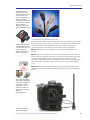
CHANGING TIMES
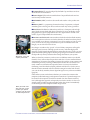
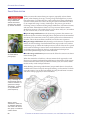
■ My first SLR
camera was one my
brother brought
back from Vietnam.
You set exposure by
manually setting
the shutter speed
and aperture so
needles aligned in
the viewfinder.
When the needles
stopped responding to my changes I
took it in for
repairs. The
technician matterof-factly said, “it’s
no big problem, just
a broken rubber
band.” I was
crestfallen to find
that my “quality”
camera worked by
using a rubber
band to move the
viewfinder needles.
A
NEW CAMERA
AND
OTHER EQUIPMENT
Buying a digital camera or other photographic equipment can be confusing at
best. As you read through this book here are some things to keep in mind, both
about cameras and the process of buying one. Before you begin, here are some
of the rules of the game places where you can do more homework right from
your desktop. Why drive from store to store or fight the crowds at photo shows
when you can just click your way around the digital-imaging world?
THINK ABOUT YOUR INTERESTS
If you’re buying a digital camera for the first time, you can quickly get lost in
the details—there are lots of them. However, before looking at specifics, you
should think through how you want to use the camera and its photos.
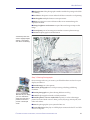
■ Will you be shooting indoors? This will determine the quality of the flash
you need.
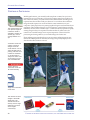
■ Will you be photographing static scenes such as home interiors, or action
shots such as sports? This will determine the best viewfinder and lens.
■ Will you be photographing wide angle scenes such as landscapes and home
interiors, telephoto scenes such as portraits, or close-ups such as flowers,
stamps and coins? This will determine the focal length of the lens you need
and whether you need a zoom lens, auxiliary lenses, or macro mode.
■ Are you a casual user, or a serious amateur or professional photographer?
This will help you determine how many manual controls you’ll want.
■ Will you print the photos as snapshots, enlargements, or embed them in
word processed or desktop published documents? Or will you publish the
images on a Web page, e-mail them to others, or include them in a presentation? This will determine the best resolution for your situation.
DECIDE ABOUT SIZE
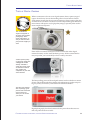
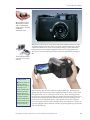
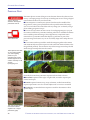
One way to think about cameras is to divide them into those that fit in your
pocket and those that don’t. This is really a key decision because those that
don’t fit in your pocket hang around your neck. The larger cameras may offer
more features but will you want to carry them with you? There are a few
cameras that fall somewhere between the extremes and will fit in a coat pocket
or purse, so you may want to consider one of those if you remain undecided.
DECIDE ABOUT LENS
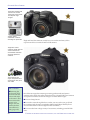
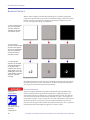
Most digital cameras come with a zoom lens that is built into the camera and
can’t be changed. The optical zoom ranges on these lenses are between 3x and
12x but ranges will increase over time. (Remember to ignore digital zoom
except for movies.) If these zoom ranges are great enough for what you plan to
do, a fixed lens camera might be perfect for you. If you think you may have
special needs or want the best possible optics, an SLR with interchangeable
lenses might be more appropriate.
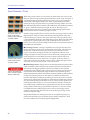
DOWNLOAD THE MANUAL
Nothing explains the features of a camera better than the user manual that
comes with it. Many camera companies also post these on their Web sites in
the PDF format. Look for the manual in the site’s Support section or google it. If
28
FOR MORE ON TEXTBOOKS IN DIGITAL PHOTOGRAPHY, VISIT HTTP://WWW.PHOTOCOURSE.COM