1
the intrusion event, such as port scanning, failed authentication attempts, or file access
failures.
During the pre-intrusion time span, the universe of potential sequences of events that may
lead to the actual intrusion event decreases as the assailant advances towards their goal.
The sequences that emerge contain behavior that may be described as a Markov Chain,
with the set of possible next-steps diminishing as the assailant progresses towards their
goal.
On the other end of the timeline of an intrusion, the potential for damage begins upon the
conclusion of the intrusion event and continues to accumulate until such time that a
response can be mounted to contain and extenuate the incident. Methods to contain this
damage through compartmentalization of process-bound resources exist; however within
the compartment, the intrusion is unfettered, and any trust relationships or
communication channels between compartments represent possible vectors by which the
intrusion may further spread – compromising additional compartments.
After containment, recovery begins where the damage that was caused is assessed and
repaired. It is important to note that an intrusion, in itself, does not cause damage; it is the
means by which damage latter occurs via the loss of integrity, confidentially, or
availability. If it were possible to detect and neutralize an intrusion before the potential
for damage presented itself, then the impact of the intrusion would be the same as if no
intrusion ever occurred.
The following steps will be employed to circumvent the attacker’s attempt to gain root
privilege access, and thereby avoid the intrusion entirely. It is important to note that a
system such as St. Jude can only work if it is entirely autonomous and independent of
external action or information in order to make a decision regarding whether or not a
given process in the protected host is malicious or not. Saint Jude attempts to reduce false
positives and negatives by first working in a “learning” mode, when all root escalations
are allowed, but information is gathered to establish the ruleset that will guide Saint Jude
when in normal operation mode.
Part 1: Installing and Configuring St. Jude
This part of the exercise concentrates in simply installing and configuring the Saint Jude
Linux Kernel Module first in learning mode and then later in normal mode, such that we
may later test the effectiveness of this system. The following steps assume you already
have duplicated (or created a fresh Red Hat 7.2 virtual machine) and downloaded the
required files specified earlier in this document.
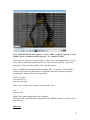
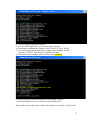
1. Type:
#: ntsysv
2. Make sure the syslog service is enabled
3. Type:
#: service syslog start
69