1
May 2013
California Edition
Total Recall…
Do you remember what you had for dinner last night? How about three
nights ago? How about three Thursday’s ago? If you’re like me, you may
remember you had great meal a few nights back but after that it may be
difficult to remember the details like, what time exactly you had the meal,
or what was the side dish with the your meal. If you asked me about
specific details about a meal three Thursdays ago, forget it. I could
probably just vaguely tell you I had a meal. This is why it is crucial to jot
the details down right when it is fresh in your memory for your facility’s
storm water inspections and observations. If you have not been diligent in
your recordkeeping, you will likely have a difficult time preparing your
upcoming annual report. This may cause your report to be not as accurate when you try to recall
your facility’s monthly or quarterly inspections.
In a previous edition of The Rain Events we
discussed “shark attacks” (third party litigation). One of the
items they seemed to key in on was poor recordkeeping.
We have since seen these groups dispute rainfall times,
dates, and quantities. You can avoid missing details if you
log inspections, observations, and rainfall dates/totals as
they occur. Detailing your details is also important. If you
log it rained on April 15th, you should include as much
detail as possible including: How much did it rain? When
did the rain begin? When the rain stop? Was there runoff? How did you gauge the rain? If you did
not collect a storm event you should log the reasoning behind why you elected not to collect a
sample. This is a good practice, because it will not only generate data that will help you recall why
you didn’t sample if you are ever questioned, but it will also help you to be consistent in your sample
collection reasoning and force you to walk through the logic of whether the storm event is qualifying
or not. In this edition of The Rain Events, we are going to look at rain measurements. What type of
rain measurement does the IGP require? What kinds of rain gauges are out there? We will also
give you an update on the draft Industrial General Permit.
1
The Compliance Corner . . .
Measuring the Rain
How do you determine if your facility is experiencing a qualifying
monitoring event? Do you simply wait until there is water running off
your facility? If it is an early morning event and runoff is occurring
while you arrive at your facility, do you know when runoff began?
There is no specific requirement in the current Industrial General
Permit Order No. 97-03-DWQ (General Permit) for rain
measurement. The General Permit states:
“facility operators shall visually observe storm water discharges from one
storm event per month during the wet season (October 1-May 30). These
visual observations shall occur during the first hour of discharge and at all
discharge locations. Visual observations of stored or contained storm water
shall occur at the time of release.”
The General Permit leaves the determination of the commencement
of a discharge (runoff) in the facility’s hands. We have seen
assumptions made by third party litigators for runoff being achieved
at a facility by simply referencing a regional rain gauge reading. The problem is that the
regional rain gauge could be across the street, or miles away and it
may not be representative of what is happening at your facility. We
have encouraged facilities to, where possible, collect their own rainfall
data by using an on-site rain gauge. The on-site rain gauge is used to
establish whether or not a “qualifying rain event” has occurred. So if
you are unsure of when the rain began or when runoff began at your
facility by utilizing an on-site rain gauge you may end up reducing the
number of sample events by closely tracking your facility’s rainfall. The rain gauge also
provides site-specific data that can be used if an agency or third party environmental group
accuses you of not performing the required sampling. It is hard for them to argue against
good on-site precipitation data. While the on-site rain gauge is not required by the current
General Permit, the most recent draft of the permit renewal requires using an on-site rain
gauge. Whether you are using an on-site rain gauge, a nearby rain gauge, or making your
own determination of runoff, it is important to make sure you accurately log your observation
and maintain them with your facility’s storm water records.
What Kind of Rain Gauge?
Rain gauges come in all sorts of styles, features, and price ranges. You can buy a plastic cone-shaped
model at the dollar store or pay more than $10,000 for a sophisticated weather station; and find almost
anything in-between. But questions you should consider before making your choice include: 1) Do you have
personnel to empty the gauge or do you need a self-emptying model? 2) Will someone read and record the
data daily or do you need the data stored within the unit for a period of time? 3) Do you have power
available for the weather station? 4) What are the chances of theft or vandalism? 5) Should there be a
back-up gauge? The economics of rain measurement includes not only the device, but also labor to read,
record, and maintain the gauge.
2
Draft Industrial Permit Update…
The new Draft Industrial General Storm Water Permit (Draft IGP) was originally going to be released
for review and comment back in April. In an email up date we received this month from the Water
Board the following statement was issued:
“A message sent earlier this year via this email list stated there would be a State Water Board workshop for
the next draft IGP on May 8, 2013. There will not be a workshop on May 8, 2013, for the next draft related to
reissuance of the IGP. When staff releases the next draft there will be a new workshop date announced at
that time. Thank you and apologies for any confusion out there regarding the IGP and workshop date(s).”
We will keep everyone posted as we get more information on the draft permit. Stay tuned!
We Have an April Contest Winner!
Charles Mooklar submitted the winning answers!
The question was…
In the January – February edition of the Rain Events we discussed
“Types of Treatment”. Can you name the three types of treatment
that were discussed?
The answers are…
•
•
•
Infiltration
Drain Insert Devices
End-of-Pipe Treatment
Charles wins $25 to
Great job!
to prepare for his next fishing trip.
“To Do List” for May:
•
Look for illicit discharges and do the 4th Quarter Non-Storm Water
Observations (Forms 2 & 3 by June 30).
•
Perform the final monthly storm water observation (Form 4).
•
Perform the Annual Comprehensive Site Compliance Evaluation
(Form 5).
•
Get the analytical, inspection, BMP maintenance, and training
records ready for the Annual Report preparation. The Annual
Report is due July 1.
3
Your Own Online Weather Station
The Rain Events May Coupon
How would you like to have your project’s rain
gauge online so that you could access current or
past data from the internet at anytime or in any
place? That would be pretty cool … but,
probably very expensive. But it is not as much
as you may think! Weather Underground and
RainWise have come up with an affordable
option. Not only is it a fully automated weather
station with online reporting, but it has other
features such as solar power, wireless data
transmissions up to one mile, data updates
every 3 to 5 seconds, and data stored on a
cloud server. That is awesome! And only costs
about $1,000 (currently it is on sale!). The
RainWise weather station will interface with
Weather Underground, which will allow you to
view not only your own station, but other nearby
weather stations.
Check it out at:
Consulting Discount
Coupon
Sign up by May 27 to have WGR
prepare your Annual Report and pay
only $329.
To redeem this coupon you must sign up
with [email protected]. Reports can be
either completed on SMARTS or using the
State’s MS Word file. Completed reports
will be emailed to the designated contact
person for the facility.
It will be
responsibility of the facility to certify and
submit the report to the State. Offer does
not apply to prepaid compliance programs.
www.wunderground.com/weatherstation/RainWise.asp?MR=1
Also take a look at their tutorial video:
May Storm Water Contest
Try it out! You can win!
By June 7, 2013, submit a response for the following
question by email to [email protected].
Question: Assuming that a business has had permit
coverage for the last 10 years, at minimum, how
many annual reports should the business have in
their files?
All persons submitting the correct answer will be placed in
a drawing. The winner will receive a $25 gift card to Chili’s.
Please contact us if you have any questions …
www.wunderground.com/video?video=1993317020001&npid=1668017856001
Rain Events Newsletter Editor:
The RainWise weather station can be moved to
another location and re-registered with
Underground Weather. So, it is your choice …
walk out to the fence post to read, record, and
empty your plastic rain gauge everyday or surf
the internet inside a dry office. For more
information, check out www.wunderground.com
and look for The Rain Event’s coming soon
weather station.
John Teravskis [email protected]
(209) 334-5363 ext. 110
Technical Questions about Storm Water Compliance?
Call …
Aaron Ortiz, [email protected], (209) 810-5151
Steve Teravskis, [email protected], (209) 642-5020
John Ripley, [email protected], (310) 629-5259
4
May Special
$105.00 Oakton® Waterproof
pHTestr™ 30 Pocket pH Tester
BMP OUTLET’S
Product Spotlight
Silt Sifter® Bag
Versatile, compact design works in a field or laboratory setting
±0.01 pH accuracy along with dual pH and selectable °C or °F temperature
display
A complete meter with key features at an economical price
Replaceable, double-junction electrode sensors save time and money
IP67-rated housing sits flat on the table and floats in water
Meter includes: protective plastic storage case, lanyard, and batteries.
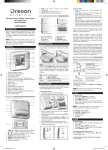
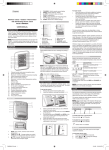
Wireless Rain Gauge with Indoor/Outdoor
Thermometer
$99.95
Special Features:
Automatic self-emptying rain collector.
Measures daily and cumulative rainfall.
Nine day rainfall history.
Long range compatibility allows the canister and sensor to be placed up to 300-ft
from the main unit.
Displays indoor and outdoor temperature
High daily rainfall alarm
Alkaline batteries included: 2 AA (main unit); 2 AA (raincup); 2 AAA(sensor).
Contents:
RGR126 Wireless Rain Gauge
Self-emptying raincup
THN122N temperature sensor
User manual
4 AA batteries
2 AAA batteries
Silt Sifter® is the ultimate solution!
The patented dual-component, bagwithin-a-bag design, Silt Sifter® Bag
is the original cushioned sediment
control device incorporating materials
specifically chosen for both ‘filtration’
and ‘high-flow’ performance. Squared
on one end to better hug the curb, the
Silt Sifter® Bag comes either prefilled with 30 pounds of 1” natural
rock or empty. The sewn-in Heavy
Duty 2” Velcro enclosure makes it a
snap to fill and provides a solid barrier
to prevent any rock from escaping
making for a cleaner and tidier job
site.
Product Specifications:
• Outer Material High density polyethylene
- Poly thread (4) lock stitching
• Filtering Media Pine Wood Excelsior*
• Rock Bag High density polyethylene Poly thread (4) lock stitching
• Stabilization 1” rock (filled)
• UV Rating 85% with 364º flammability
point
• Dimensions 30”L x 16”W x 6”H
• Weight (Dry) Approximately 30 lbs.
(filled)
• Durability 500 lb. burst strength
• Maintenance Clean with power wash or
strong hose
*Pine wood excelsior acts as a filter for
capturing silt, sediment and soils. Also a
cushioning agent to substantially reduce
product damage under normal conditions.
*****This product ships empty (No
rock)******* Available filled for local
pick up only.