1
Microelectrode Array (MEA)
User Manual
Information in this document is subject to change without notice.
No part of this document may be reproduced or transmitted without the express written
permission of Multi Channel Systems MCS GmbH.
While every precaution has been taken in the preparation of this document, the publisher and the
author assume no responsibility for errors or omissions, or for damages resulting from the use of
information contained in this document or from the use of programs and source code that may
accompany it. In no event shall the publisher and the author be liable for any loss of profit or any
other commercial damage caused or alleged to have been caused directly or indirectly by this
document.
© 2004–2005 Multi Channel Systems MCS GmbH. All rights reserved.
Printed: 2005-11-04
Multi Channel Systems
MCS GmbH
Aspenhaustraße 21
72770 Reutlingen
Germany
Fon
+49-71 21-90 92 5 - 0
Fax
+49-71 21-90 92 5 -11
[email protected]
www.multichannelsystems.com
Microsoft and Windows are registered trademarks of Microsoft Corporation. Products that are
referred to in this document may be either trademarks and/or registered trademarks of their
respective holders and should be noted as such. The publisher and the author make no claim to
these trademarks.
Table of Contents
1
Introduction
5
1.1
About this Manual
5
2
Important Information and Instructions
5
2.1
Operator's Obligations
5
2.2
Guaranty and Liability
5
2.3
Important Safety Advice
7
3
Microelectrode Arrays (MEAs) — Overview
8
3.1
Extracellular Recording with Microelectrode Arrays
8
3.2
MEA Design and Production
9
3.3
Electrodes, Tracks, and Insulation
10
4
MEA Types and Layouts
11
4.1
Standard Electrode Numbering
11
4.2
Standard MEAs
12
4.3
HighDenseMEAs
12
4.4
HexaMEAs
13
4.5
ThinMEAs
13
4.6
3-D MEAs
14
4.7
EcoMEAs
15
4.8
FlexMEAs
16
5
MEA Handling
17
5.1
Hydrophilic Surface Treatment
17
5.2
5.1.1
Plasma Cleaning
17
5.1.2
Protein Coating
17
5.1.3
Preculturing
18
Sterilization
18
5.2.1
Sterilization with Ethanol and UV Light
18
5.2.2
Steam Sterilization (Autoclavation)
18
5.2.3
Dry Heat Sterilization
18
5.2.4
Sterilization with Hot Water
18
5.3
MEA Storage
19
5.4
MEA Coating
19
5.4.1
Coating with Nitrocellulose
19
5.4.2
Coating with Polyethyleneimine (PEI) (plus
Laminin)
20
5.4.3
Coating with Polyornithine (plus Laminin)
21
5.4.4
Coating with Poly-D-Lysine (plus Laminin)
22
5.4.5
Coating with Poly-D-Lysine (plus Fibronectin)
22
5.4.6
Coating with Fibronectin
23
5.4.9
Coating with Collagen
24
5.5
Cleaning of Used MEAs
25
5.5.1
General Recommendations for Cleaning MEAs
25
5.5.2
Cleaning of 3-D MEAs
25
5.5.3
Cleaning of EcoMEAs
25
5.5.4
Removing Nitrocellulose Coating
25
5.5.5
MEA Cleaning with EDTA-Collagenase
26
6
Culture Chamber Options
17
6.1
Sealed MEA Culture Dish
26
6.2
MEA Culture Chamber with Lid
27
6.3
Removable Recording Chamber
27
7
Recording with MEAs
29
7.1
Mounting the MEA
29
7.1.1
Cleaning the Contact Pads
29
7.1.2
Positioning the MEA
29
7.1.3
Grounding the Bath
29
7.2
General Performance / Noise Level
30
8
Stimulation
33
8.1
Using MEA Electrodes for Stimulation
33
8.2
Capacitive Behavior of Stimulating Electrodes
34
8.3
Aspects of Electrode Size and Material
34
8.4
Recommended Stimulus Amplitudes and Durations 35
9
Troubleshooting
37
9.1
About Troubleshooting
37
9.2
Technical Support
37
9.3
Noise on Single Electrodes
38
9.4
Overall Noise / Unsteady Baseline
40
9.5
Missing Spikes or Strange Signal Behavior
41
10
Appendix
43
10.1
Contact Information
43
10.2
Ordering Information
44
10.2.1 MEA Systems
44
10.2.2 MEA Amplifiers
44
10.2.3 Accessories
45
10.3
MEA Data Sheet
46
10.4
MEA Layouts
47
10.5
Safe Charge Injection Limits
48
Important Information and Instructions
1
Introduction
1.1
About this Manual
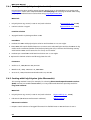
The MEA User Manual comprises all important information about the microelectrode arrays (MEA)
for use with the MEA System from Multi Channel Systems. The MEA User Manual focuses on
general information on the MEA design, use, and handling, and more specific information on
different MEA types. It also includes recommendations on sterilization, coating, and cleaning
procedures, from scientifical papers or from recommendations of other MEA users.
For more details on issues that refer to the amplifier, like grounding or mounting the MEA, please
refer to the user manual for the MEA amplifier you use. You will find more information about the
MEA System and its components in general, especially the data acquisition card, in the MEA
System User Manual. For more details on the data acquisition and analysis program MC_Rack,
please refer to the MC_Rack User Manual.
It is assumed that you have already a basic understanding of technical terms. No special skills are
required to read this manual.
The components and also the user manual are part of an ongoing developmental process. Please
understand that the provided documentation is not always up to date. Please check the MCS Web
site (www.multichannelsystems.com) from time to time for downloading up-to-date manuals.
2
Important Information and Instructions
2.1
Operator's Obligations
The operator is obliged to allow only persons to work on the device, who
•
are familiar with the safety at work and accident prevention regulations and have been instructed
how to use the device;
•
are professionally qualified or have specialist knowledge and training and have received
instruction in the use of the device;
•
have read and understood the chapter on safety and the warning instructions in this manual and
confirmed this with their signature.
It must be monitored at regular intervals that the operating personnel are working safely.
Personnel still undergoing training may only work on the device under the supervision of an
experienced person.
2.2
Guaranty and Liability
The General conditions of sale and delivery of Multi Channel Systems MCS GmbH always apply.
The operator will receive these no later than on conclusion of the contract.
Multi Channel Systems MCS GmbH makes no guaranty as to the accuracy of any and all tests and
data generated by the use of the device or the software. It is up to the user to use good
laboratory practice to establish the validity of his findings.
Guaranty and liability claims in the event of injury or material damage are excluded when they
are the result of one of the following.
•
Improper use of the device
•
Improper installation, commissioning, operation or maintenance of the device
•
Operating the device when the safety and protective devices are defective and/or inoperable
•
Non-observance of the instructions in the manual with regard to transport, storage, installation,
commissioning, operation or maintenance of the device
•
Unauthorized structural alterations to the device
•
Unauthorized modifications to the system settings
•
Inadequate monitoring of device components subject to wear
•
Improperly executed and unauthorized repairs
•
Unauthorized opening of the device or its components
•
Catastrophic events due to the effect of foreign bodies or acts of God
Those parts in this user manual that refers to the applications, and not to the product itself, for
example, coating of MEAs, is only a summary of published information from other sources (see
references) and has the intention of helping users finding the appropriate information for setting
up their experiments. Multi Channel Systems MCS GmbH has not tested or verified this
information. Multi Channel Systems MCS GmbH does not guarantee that the information is
correct. Multi Channel Systems MCS GmbH recommends to refer to the referenced literature for
planning and executing any experiments.
Important Information and Instructions
2.3
Important Safety Advice
Warning: Make sure to read the following advice prior to install or to use the device and the
software. If you do not fulfill all requirements stated below, this may lead to malfunctions or
breakage of connected hardware, or even fatal injuries.
Warning: Obey always the rules of local regulations and laws. Only qualified personnel
should be allowed to perform laboratory work. Work according to good laboratory practice
to obtain best results and to minimize risks.
The product has been built to the state of the art and in accordance with recognized safety
engineering rules. The device may only
•
be used for its intended purpose;
•
be used when in a perfect condition.
•
Improper use could lead to serious, even fatal injuries to the user or third parties and damage to
the device itself or other material damage.
Warning: The device and the software are not intended for medical uses and must not be
used on humans.
•
Malfunctions which could impair safety should be rectified immediately.
•
Regard the technical specifications of the various MEA types, especially the temperature range
and the safe charge injection limits for stimulation.
•
Do not autoclave or expose 3-D MEAs or FlexMEAs to heat.
•
Do not touch the electrode field in any way.
•
Always put the provided yellow plastic plate beneath a 3-D MEA before placing it into the MEA
amplifier. Avoid any mechanic pressure or stress when handling 3-D MEAs.
•
Do not use any liquids or cleaning solutions with a high pH (> 7) for a longer period of time on
MEAs of a silicon nitride insulation type. Basic solutions will damage TiN electrodes.
MEA User Manual
3
Microelectrode Arrays (MEAs) — Overview
3.1
Extracellular Recording with Microelectrode Arrays
A microelectrode array (MEA) is an arrangement of several (typically 60) electrodes allowing the
targeting of several sites in parallel for extracellular recording and stimulation.
Cell lines or primary cell preparations are cultivated directly on the MEA. Freshly prepared slices
can be used for acute recordings, or can be cultivated as organotypic cultures (OTC) on the MEA.
Recorded signals are amplified by a filter amplifier and sent to the data acquisition computer. All
MEAs (except FlexMEAs) are only for use with the MEA System for extracellular recording from
Multi Channel Systems MCS GmbH. FlexMEAs may be used with components of the ME System
from Multi Channel Systems MCS GmbH. FlexMEAs are designed for use in in vitro or in vivo
studies.
Several MEA geometries are provided for a wide variety of applications. Almost all excitable or
electrogenic cells and tissues can be used for extracellular recording in vitro, for example central
or peripheral neurons, cardiac myocytes, whole-heart preparations, or retina.
There are various applications for MEAs and the MEA System in the fields of neurobiology and
cardiac electrophysiology.
Typical neurobiological applications are: Ion channel screening, drug testing, safety pharmacology
studies, current source density analysis, paired-pulse facilitation (PPF), long term potentiation
(LTP) and depression (LTD), I/O relationship of evoked responses, circadian rhythm,
neuroregeneration, developmental biology, microencephalograms (EEG), and microelectroretinograms (ERG).
Typical applications in the cardiac field are: Activation and excitation mapping, measuring of the
conduction velocity, longterm characterizations of cell types (especially stem cells), culture pacing,
drug testing, safety pharmacology studies, monitoring of QT Prolongation and arrhythmias,
cocultures and disease/implantation model.
For more information on published applications or procedures for biological preparations, please
see the application notes on the MCS web site:
http://www.multichannelsystems.com/support/applicationnotes.htm
8
Introduction
3.2
MEA Design and Production
A standard MEA biosensor has a square recording area of 700 µm to 5 mm length. In this area,
60 electrodes are aligned in an 8 x 8 grid with interelectrode distances of 100, 200, or 500 µm.
Planar TiN electrodes are available in sizes of 10, 20, and 30 µm; and three-dimensional Pt
electrodes have a diameter of 40 µm at the base with a very fine tip. Standard MEAs are useful for
a wide variety of applications. Different geometries match the anatomical properties of the
preparation. Most MEAs are available with a substrate-integrated reference electrode replacing
the silver pellet in the bath. All electrodes can either be used for recording or for stimulation.
Several other MEA types and layouts that are dedicated to special applications are also available,
please see MEA Types and Layouts for more details.
The biological sample can be positioned directly on the recording area; the MEA serves as a
culture and perfusion chamber. A temperature controller controls the temperature in the culture
chamber. Various culture chambers are available, for example with leak proof lid or with
semipermeable seal. An incubator is not necessarily required, long-term recordings in the MEA
culture chamber are possible over several weeks or even months.
For cell or slice cultures, MEAs have to be coated with standard procedures before use to improve
the cell attachment and growth, please see MEA Coating on page 19.
Spike activity can be detected at distances of up to 100 µm from a neuron in an acute brain slice.
Typically, signal sources are within a radius of 30 µm around the electrode center. The smaller the
distance, the higher are the extracellular signals. The higher the spatial resolution, the lower the
numbers of units that are picked up by a single electrode, that is, the less effort has to be put into
the spike sorting.
Multi Channel Systems provides MEAs with the highest spatial resolution in the market.
HighDenseMEAs have electrodes with a diameter of only 10 µm arranged in a distance of only
30 µm (center to center). The challenge of manufacturing very small electrodes and at the same
time keeping the impedance and the noise level down has been met by introducing a new
electrode material: titanium nitride (TiN).
The NMI in Reutlingen, Germany (www.nmi.de), produces MEAs from very pure fine quality and
highly biocompatible materials. The NMI is a research institute, with which Multi Channel Systems
has collaborated in many projects and over many years.
3-D MEAs (with platinum electrodes) are produced for Multi Channel Systems by Ayanda
Biosystems in Lausanne, Switzerland (www.ayanda-biosys.com).
Quality controls and production processes have been improved over the last years so that MEAs
are always of a fine consistent quality at very reasonable prices.
9
MEA User Manual
3.3
Electrodes, Tracks, and Insulation
Microfold structures result in a large surface area that allows the formation of electrodes with an
excellent signal to noise ratio without compromizing on the spatial resolution.
TiN is a very stable material that, for example, is also widely used for coating heavy equipment. All
MEAs with TiN electrodes have a long life and can be reused several times if handled with care. If
used for acute slices, MEAs can be used for approximately one year. Long-time experiments with
cell cultures and rigid cleaning methods shorten the MEA lifetime, but you can still reuse an MEA
about 30 times, depending on the coating, cell culture, and cleaning procedure. All MEAs (except
FlexMEAs and 3-D MEAs) show excellent temperature compatibility and are stable from 0 °C to
125 °C, that is, they can be autoclaved.
The impedance of a flat, round titanium nitride electrode ranges between 20 and 400 kilohms,
depending on the diameter. The smaller an electrode, the higher is the impedance. On one hand,
lower impedance seems desirable, but on the other hand, a smaller electrode and interelectrode
distance results in a higher spatial resolution.
Multi Channel Systems provides MEAs with electrode sizes of 10, 20, or 30 µm, which all show an
excellent performance and low noise level. The average noise level of 30 µm and 10 µm electrodes
is less than 10 µV and 15 µV peak to peak, respectively.
Pt electrodes (3-D MEAs) have also a fine noise level, but bigger electrodes and a lower spatial
resolution. They are used in experiments that emphasize on the higher surface area of a 3-D MEA
rather than a high spatial resolution. Gold electrodes (EcoMEAs) are only available with a low
spatial resolution and are useful for medium throughput screening, where costs are a limiting
factor.
All planar TiN electrodes are positioned on a round pad with a diameter of 40 µm. 3-D MEAs
feature tip-shaped electrodes with a base of 40 µm. If you like to check the electrodes with a light
microscope, you will need an upright microscope to see the MEA from above. With an inverse
microscope, you are only able to see the (bigger) pad from below, not the electrode itself.
The electrodes are embedded in a carrier material, usually glass. Standard tracks made of titanium
or indium tin oxide (ITO) are electrically isolated with silicon nitride (PEVCD). The contact pads are
of the same material as the tracks are (except 3-D MEAs). ITO contact pads and tracks are
transparent, for a perfect view of the specimen under the microscope.
10
MEA Types and Layouts
4
MEA Types and Layouts
Various types of MEA biosensors are available for all kind of extracellular multichannel recordings.
Typical MEAs for in vitro applications have 60 microelectrodes arranged in an 8 x 8 layout grid
embedded in a transparent glass substrate. You can cultivate the tissue or cell culture directly on
the MEA.
MEA types differ in the materials used for the carrier and the recording area, and in the
geometry, that is, electrode size and interelectrode distances. The electrode size and
interelectrode distances are used for categorizing MEAs: The first number refers to the
interelectrode distance (for example, 100 µm) and the second number refers to the electrode size
(for example 10 µm), which results in the standard MEA type 100/10, for example.
Standard versions are available with an internal reference electrode (abbreviated i. r.) and with
various culture chamber interface options. Culture chambers are available with and without lid.
Please ask for custom layouts, that is, MEA layouts according to your specifications.
In this chapter, each MEA type is briefly described, and noted,
•
Standard MEAs with flat round TiN electrodes in an 8 x 8 layout grid for all applications
•
HighDenseMEAs with the highest spatial resolution and a double recording field of 5 x 6
electrodes each
•
HexaMEAs featuring a hexagonal layout, perfect for recording from retina
•
ThinMEAs with a "thickness" of only 180 µm, ideally suited for high-resolution imaging
•
3-D MEAs — the ideal solution for acute slices, because the tip-shaped Pt electrodes are intended
to penetrate dead cell layers, or for applications where a very high electrode surface area is
required
•
Very cost efficient and robust EcoMEAs for applications with lower spatial resolution and higher
throughput, especially for established cardiomyocyte cultures, large slices, or whole-heart
preparations
•
FlexMEAs made of flexible polyimid material, perfect for in vivo and special in vitro applications,
for example, whole-heart preparations
4.1
Standard Electrode Numbering
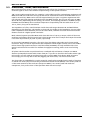
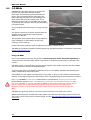
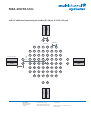
The numbering of MEA electrodes in the 8x8
grid (standard MEAs, ThinMEAs, 3-D MEAs,
ecoMEAs) follows the standard numbering
scheme for square grids: The first digit is the
column number, and the second digit is the
row number. For example, electrode 23 is
positioned in the third row of the second
column.
These numbers are the same numbers that are
used as channel numbers in the MC_Rack
program. Please make sure that you have
selected the two-dimensional MEA layout as the
Channel Layout in MC_Rack. For more details,
please refer to the MC_Rack user manual or
help.
Other electrode grids are described in the
Appendix.
11
MEA User Manual
4.2
Standard MEAs
The following standard MEAs are available: 100/10, 200/10, 200/10 i. r., 200/30, 200/30 i. r., 500/10,
500/10 i. r..
Standard MEAs have 60 electrodes in an 8 x 8 layout grid with electrode diameters of 10 µm or
30 µm, and interelectrode distances of 100 µm, 200 µm, or 500 µm.
Versions 200/10, 200/30, 500/10, and 500/30 are available with an internal reference electrode as
indicated by the abbreviation i. r.. You can connect the internal reference electrode directly to the
amplifier's ground and will not need silver pellets for grounding the bath anymore. Please refer to
the MEA1060 user manual delivered with your MEA amplifier for more information.
The flat, round electrodes are made of titanium nitride (TiN). MEAs with TiN electrodes are very
stable. Therefore, the MEAs can be reused several times and are perfect for long-time experiments
(up to several weeks and even months). The electrode impedance ranges between 30 kΩ and
400 kΩ, depending on the electrode diameter. Generally, the smaller the electrode, the higher is
the impedance.
Tracks and contact pads are made of titanium or ITO; insulation material is silicon nitride. ITO
contact pads and tracks are transparent, for a perfect view of the specimen under the microscope.
Using standard MEAs
Standard MEAs can be used for a wide variety of applications. They are robust and heat-stable.
They can be autoclaved and coated with different procedures for cell and tissue cultures.
Generally, they can be used for acute experiments as well as long-term cultures.
4.3
HighDenseMEAs
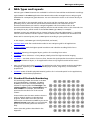
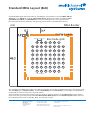
10 µm electrodes are arranged in two recording field with 5 x 6 electrodes each. The
interelectrode spacing is only 30 µm center to center.
The very high electrode density of the two recording fields on a HighDense MEA is only possible
by the special TiN electrode material and production process. This MEA type is especially useful for
applications, where a high spatial resolution is critical, for example for multitrode analysis.
For example, the very high spatial resolution of the HighDense MEAs is very useful for recording
from retina ganglia cells. The double recording field can also be used for coculturing two slices,
each on one recording field. The flat, round electrodes are made of titanium nitride (TiN). Tracks
and contact pads are made of transparent ITO; insulation material is silicon nitride.
Using HighDenseMEAs
The same material is used for standard MEAs and HexaMEAs. Therefore, they are equally robust
and heat-stable. They can be autoclaved and coated with different procedures for cell and tissue
cultures.
12
MEA Types and Layouts
4.4
HexaMEAs
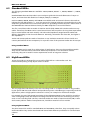
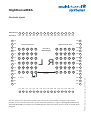
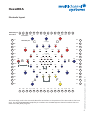
HexaMEAs feature a hexagonal layout, perfect for
recording from retina.
60 electrodes are aligned in a special configuration
with varying electrode diameters (10, 20, 30 µm)
and interelectrode distances (see picture). The
specific layout resembles ideally the regularity of
the retina's architecture. The density of neurons is
more important in the center than in the
peripheral. This is matched by the density of
electrodes on the MEA, which is also higher in the
center that in the peripheral.
The flat, round electrodes are made of titanium
nitride (TiN).
Tracks and contact pads are made of opaque Ti or transparent ITO; insulation material is silicon
nitride.
Electrodes in the center have a diameter of 10 µm with an interelectrode distance of 20 µm,
where the peripheral electrodes have a diameter of 20 µm and 30 µm.
Using HexaMEAs
The same material is used for standard MEAs and HexaMEAs. Therefore, they are equally robust
and heat-stable. They can be autoclaved and coated with different procedures for cell and tissue
cultures.
4.5
ThinMEAs
ThinMEAs are only 180 µm "thick", ideally suited for high-resolution imaging. ThinMEAs are like
standard MEAs, but the electrodes are embedded in a very thin and delicate glass substrate on a
robust ceramic carrier. The thin glass allows the use of oil immersion objectives with a high
numerical aperture.
Like standard MEAs, 60 electrodes are arranged in an 8 x 8 layout grid with electrode diameters of
10 µm and 30 µm, and interelectrode distances of 100 µm or 200 µm.
The flat, round electrodes are made of titanium nitride.
Tracks and contact pads are made of transparent ITO; insulation material is silicon nitride.
Using ThinMEAs
ThinMEAs are heat-stable and can be autoclaved. They can also be coated with different
procedures for cell and tissue cultures.
They should be handled with great care because of the thin and delicate recording area.
13
MEA User Manual
4.6
3-D MEAs
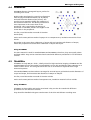
3-D MEAs are the ideal solution for acute slices,
because the three-dimensionally shaped
electrodes are intended to penetrate dead cell
layers. Using conventional flat electrodes, the
electrodes may interface with the damaged cell
layer rather than with the healthy cells. The 3dimensional electrode of a 3-D MEA may be able
to penetrate this cell layer and contact the healthy
cells above better.
The tip-shaped electrode results in a larger surface
area.
The spatial resolution is limited. 60 electrodes are
aligned in an 8 x 8 grid with interelectrode
distances of 200 µm.
The platinum electrodes are 50 to 70 µm high and
have a diameter of about 40 µm at the base,
ending in a fine small tip.
Tracks and contact pads are made of platinum; insulation material is SU-8.
3-D MEAs are produced for Multi Channel Systems by Ayanda Biosystems in Lausanne, Switzerland
(www.ayanda-biosys.com).
Using 3-D MEAs
Due to the production process, there may be more variations in the electrode impedance in
comparison with TiN electrodes, which is important for stimulation experiments, especially with
current.
3-D MEAs consist of several layers that are glued together. This leads to the fact that these MEAs
are very sensitive to distortions and deflections.
A yellow plastic plate is provided to stabilize the form of 3-D MEAs. 3-D MEAs should always be
used in combination with these plates.
These MEAs are only stable to temperatures of up to 80 °C; they are not suited for autoclavation
because of the high temperature and pressure that is applied during the autoclavation procedure.
Warning: 3-D MEAs are sensitive to distortions and deflections. Always put the provided
yellow plastic plate beneath a 3-D MEA before placing it into the MEA amplifier. Do not
autoclave 3-D MEAs or sterilize 3-D MEAS by heat. Avoid rapid temperature changes even if
they are within the recommended temperature range. Distortions of the MEA due to
mechanic pressure or temperature will lead to bad contacts and irreversibe damage the
MEA.
3-D MEAs are generally used for acute slices and therefore do not need to be coated.
When stimulating with 3-D MEA electrodes, please note that the safe charge injection limit of Pt
electrodes is much lower than of TiN electrodes. See also Recommended Stimulus Amplitudes and
Durations.
14
MEA Types and Layouts
4.7
EcoMEAs
EcoMEAs are a very cheap variant for medium
throughput applications like small screens where
material costs play a bigger role than in more
scientific MEA applications. New production
processes and the use of new materials made it
possible to create this high-quality MEAs at very
low prices.
EcoMEAs are opaque and are therefore useful only for applications where you do not need a
visual control under a microscope, for example for established cell cultures. Due to the special
production process, electrodes of EcoMEAs are available only with a diameter of 100 µm and an
interelectrode distance of 700 µm. Thus, ecoMEAs are useful for applications where a high spatial
resolution is not important, but which emphasize on cheap consumables. They have proven to be
especially useful for recordings from established cardiomyocyte cultures. They are not useful for
establishing a new cell culture, as the cell performance cannot be monitored. Multi Channel
Systems recommends to use standard 200/30 MEAs for establishing the cell culture first, then
switch to EcoMEAs.
Standard EcoMEAs are provided in the typical 8 x 8 layout. Custom layouts following your
personal specifications are possible at very reasonable prices. Please ask your local retailer for
details. Electrodes, tracks, and contact pads are made of pure gold. Due to the soft gold material
of the contact pads, the contact to the amplifier pins is excellent.
Using EcoMEAs
Like standard MEAs, EcoMEAs are very robust and heat-stable. They can be autoclaved and coated
with different procedures for cell and tissue cultures. The electrodes are very robust, too, and are
the only MEA electrodes that will endure more severe cleaning methods.
New EcoMEAs are very hydrophobic. They should be coated with nitrocellulose or treated with a
Plasma cleaner before use.
15
MEA User Manual
4.8
FlexMEAs
FlexMEAs are made of flexible polyimid material,
perfect for in vivo and special in vitro applications.
Only 12 µm "thick" and weighing less than 1 g, the
FlexMEA biosensor is very thin and lightweight.
FlexMEAs have 32 electrodes plus two
indifferential reference electrodes and two ground
electrodes. More layouts can be provided on
request. The flexible base is perforated for a better
contact with the surrounding tissue.
The electrodes have a diameter of about 30 µm
with an interelectrode distance of 300 µm.
Conducting material is pure gold.
Using FlexMEAs
FlexMEAs are usually connected to a headstage preamplifier that is connected to a filter amplifier
or programmable gain amplifier (see also the ME System product line of Multi Channel Systems).
FlexMEAs can be directly connected to a 32-channel miniature preamplifier from Multi Channel
Systems for in vivo experiments. FlexMEAs are stable at a temperature range from 10 °C to 40 °C.
Warning: Do not autoclave or sterilize FlexMEAs by heat. These MEA types are not heatstable and will be irreversibly damaged if the temperature is too high.
16
Appendix
5 MEA Handling
Warning: If possible, use only liquids or cleaning solutions with a neutral pH = 7 on MEAs.
Do not expose MEAs with a silicon nitride insulation or TiN electrodes to basic liquids
(pH > 7) or aggressive detergents for a longer period of time. Basic or aggressive liquids may
damage TiN electrodes irreversibly.
Warning: Do not to touch the electrode field in any way during the coating or cleaning
procedure. Keep all instruments, tissues, pipette tips, and similar at a safe distance from
the recording area. The electrodes are easily damaged (except EcoMEA electrodes).
5.1 Hydrophilic Surface Treatment
The surface of new MEAs is hydrophobic, and even hydrophilic MEAs tend to become hydrophobic
again during storage. A hydrophobic surface prevents attachment and growth of the (hydrophilic)
cells. The first step in preparing an MEA for use is therefore to ensure that the surface is
hydrophilic enough for coating and cell adhesion.
To test this without contaminating the surface, place a small drop of water on the MEA surface
outside the culture chamber. If the drop does not wet the surface, you likely need to perform one
of the following steps, in particular when using new arrays.
Literature
•
Ulrich Egert, Thomas Meyer; Heart on a Chip — Extracellular multielectrode recordings from
cardiac myocytes in vitro, "Methods in Cardiovascular Research", S. Dhein and M. Delmar (eds.)
(2004)
5.1.1 Plasma Cleaning
Laboratories with access to electron microscopy facilities are likely to have a sputter device or a
plasma-cleaning chamber (for example PDC-32G from Harrick Plasma, Ithaca, NY, United States).
MEAs can be treated in these chambers with low-vacuum plasma for about two minutes. The MEA
surface is exposed to a gas plasma discharge, which will make the surface polar and thus more
hydrophilic. The treatment gives a very clean and sterile surface that can be coated readily with
water-soluble molecules. Note that the effect wears off after a few days.
5.1.2 Protein Coating
If protein coating is acceptable in the planned experiments, there is another quick and simple way
to render the surface hydrophilic.
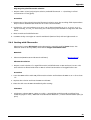
1. Sterilize the MEAs as described below.
2. Place approximately 1 ml of a concentrated, sterile protein solution (for example, albumin, fetal
calf serum or similar) onto the culture region for about 30 min.
3. Wash the culture chamber thoroughly with sterile water afterwards. The MEA can then be directly
used for cell culture.
17
MEA User Manual
5.1.3 Preculturing
Another pragmatic method is to coat the hydrophobic MEAs and to plate the cell cultures on the
MEA, and let it grow for some days (up to weeks) until the cells have transformed the surface so
that it is sufficiently hydrophilic. The “preculture” will generally show very bad growth and
viability, and needs to be discarded before plating the culture that will be used for experiments.
Please note that the MEA and the electrode performance may suffer under cell culturing.
Therefore, the above-mentioned methods are preferable.
5.2 Sterilization
Sterilization of MEAs is not necessary for acute slices.
Silicon nitride MEAs with TiN electrodes can be sterilized with standard methods for cell
culture materials using either 70 % alcohol, UV-light (about half an hour depending on the
intensity), vapor autoclavation, or dry-heat sterilization.
Warning: Do not autoclave or sterilize 3-D MEAs or FlexMEAs by heat. These MEA types
are not heat-stable and will be irreversibly damaged.
5.2.1 Sterilization with Ethanol and UV Light
1. Rinse MEAs with 70 % ethanol.
2. Let MEAs air-dry over night on a sterile workbench (laminar flow hood) with UV light turned on.
5.2.2 Steam Sterilization (Autoclavation)
→ Autoclave MEAs at 134 °C for 3 min.
5.2.3 Dry Heat Sterilization
→ Thermally sterilize MEAs in an oven at 121 °C for 15 min.
→ Thermally sterilize 3-D MEAs in an oven at 56 °C for 8 hours.
5.2.4 Sterilization with Hot Water
→ Expose MEAs to hot water (90 °C) for 1 min.
18
Appendix
5.3 MEA Storage
To maintain a hydrophilic surface after hydrophilization, it is recommended to store the MEAs
filled with water until use. Dry MEAs will get hydrophobic again after some time.
Store MEAs filled with sterile distilled water at 4 °C in the dark (that is, in the fridge, to prevent
microbiological contaminations) to maintain a hydrophilic surface.
5.4 MEA Coating
Coating of MEAs with various materials is used for improving the attachment and growth of cell
cultures or cultured slices. Coating is generally not required for recordings from acute slices.
Coating of MEAs has the same purpose than coating of other culture dishes. Therefore, you can
generally use the same standard protocols that you have established for coating culture
dishes for your cell cultures, provided that the involved chemicals are not aggressive and damage
the electrodes (see recommendations for the various MEA types).
In the following, some standard coating procedures are shortly described. You should try out
which coating procedure proves best for your application. The listed materials are only
recommendations; you may use any equivalent equipment. Most coatings are stable for several
uses of the MEA and do not have to be removed after use (except nitrocellulose).
Please note that the materials and procedures described in the following are only a summary of
published information from other sources (see references) or from personal communications with
MEA users, and has the intention of helping users finding the appropriate information for setting
up their experiments. Multi Channel Systems MCS GmbH has not tested or verified this
information, and therefore cannot guarantee that the information is correct. Please refer to the
referenced literature for planning and executing any experiments.
5.4.1 Coating with Nitrocellulose
Coating with nitrocellulose is a fast procedure that works with several cell types and tissues and
that is also successful with slightly hydrophobic MEAs. This method has the advantage that the
cells stick well to the surface. Nitrocellulose does not form a uniform layer on the MEA. The
coating leaves patches of nitrocellulose, which serve as a glue for the tissue, on the MEA surface.
The tissue is not likely to get detached even under severe mechanical disturbance (by perfusion,
for example). MEAs coated with nitrocellulose can be stored for a few days. Nitrocellulose coating
has to be removed after use.
Main advantages of this method are that nitrocellulose is cheap, coating is fast and easy, and it
is also easily removed after use.
Note: Nitrocellulose solutions cannot be stored for a longer period of time. The solution forms a
visible gelatinous precipitate after extended storage of at least half a year and will not produce
satisfactory adhesive coatings anymore. Prepare a fresh solution if there are visible precipitates.
Materials
•
Protran or other standard nitrocellulose membrane
•
100 % Methanol
(Whatman, PerkinElmer)
Nitrocellulose solution
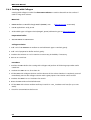
→ For preparing a stock solution, dissolve a piece of 1 cm2 nitrocellulose membrane in 10 ml
methanol. Stock solutions may be stored at room temperature in polystyrene tubes. For the
working solution, dilute the stock solution 10:1 with methanol. You can adjust the concentration
to meet your requirements.
19
MEA User Manual
Procedure
→ Directly before use, pipet 3–5 µl of the working solution onto the recording field and let it air-dry.
The recording field should be completely covered. It takes just a few seconds for the methanol to
evaporate.
Literature
Ulrich Egert, Thomas Meyer; Heart on a Chip — Extracellular multielectrode recordings from
cardiac myocytes in vitro, "Methods in Cardiovascular Research", S. Dhein and M. Delmar (eds.)
(2004)
5.4.2 Coating with Polyethyleneimine (PEI) (plus Laminin)
Polyethyleneimine (PEI) has been successfully employed for dissociated cell cultures and proven
to enhance cell maturation in culture compared to polylysine coated plates. Polyethyleneimine is a
positively charged polymer and thus changes the charge on the glass surface from negative to
positive. The tissue sticks even better with this method than with the nitrocellulose method, but
the polyethylenimine forms a uniform layer that can get more easily detached from the surface,
for example, by the perfusion. This coating method can optionally be combined with laminin.
Materials
•
Poly(ethyleneimine) solution (PEI)
(Sigma-Aldrich, Inc., P3143)
•
Boric acid, crystalline
(Fisher Scientific, A73-500)
•
Borax (sodium tetraborate)
(Sigma-Aldrich, Inc., B0127)
•
1 N HCl
•
Laminin, 1mg/ml
(Sigma-Aldrich, Inc., L2020)
Borate buffer
•
3.10 g boric acid
•
4.75 g borax
→ Dissolve in 1l distilled water. Adjust pH to 8.4 with1 N HCl.
PEI stock solution
•
0.05–0.1 % PEI dissolved in borate buffer
Laminin solution
•
20 µg/ml laminin in plating medium
Procedure
Note: It is necessary to thoroughly rinse off unbound PEI from the plates before use, as dried PEI is
toxic.
20
Appendix
1. Pipette 500 µl PEI solution onto the MEA. The recording field should be completely covered.
2. Incubate at RT for 1 h, or at 4 °C over night.
3. Remove the PEI solution and thoroughly rinse 4 x with distilled water.
4. Air-dry the MEA.
5. Sterilize with UV light for at least 1 h after coating.
6. (Place a drop of sterile laminin solution onto the MEA and incubate for 30 min. Aspirate, do not
rinse, and directly seed your cells. Alternatively, mix the cells with laminin solution before plating.)
Literature
•
Ulrich Egert, Thomas Meyer; Heart on a Chip — Extracellular multielectrode recordings from
cardiac myocytes in vitro, "Methods in Cardiovascular Research", S. Dhein and M. Delmar (eds.) (in
print)
•
Lelong, IH, et al. (1992); J. Neurosci. Res. 32:562-568
5.4.3 Coating with Polyornithine (plus Laminin)
Poly-D-lysine can be used as an alternative for polyornithine.
Materials
•
Polyornithine
•
Laminin, 1mg/ml
(Sigma-Aldrich, Inc., L2020)
Polyornithine solution
•
500 µg/ml polyornithine in distilled water
Laminin solution
•
5 µg/ml laminin in plating medium or PBS
Procedure
1. Incubate the MEA with polyornithine solution at RT for 2–3 hours or overnight at 4 °C.
2. Aspirate the polyornithine solution and rinse the MEA 3x with distilled water before direct use or
before the following coating with laminin. MEAs coated with polyornithine can be stored at 4 °C
for several weeks.
3. Incubate pre-coated MEA with laminin solution for at least 1 h.
4. Aspirate the laminin solution and directly plate cells.
Literature
•
Cellular Neurobiology, A practical approach, ed. By Chad and Wheal, IRL Press, Oxford
21
MEA User Manual
5.4.4 Coating with Poly-D-Lysine (plus Laminin)
Poly-D-lysine has been used by several groups. Results seem to be equivalent to a coating with
polyornithine. Some users complained about cell clumping and resulting cell death when using
poly-D-lysine and had better results when using polyethylenimine (PEI).
Materials
•
Poly-D-lysine 5 mg / 10 mL (= 0.05 % w/v) stock solution
(Sigma-Aldrich, Inc., P7280)
•
Laminin solution 1 mg/ml
(Sigma-Aldrich, Inc., L2020)
Laminin solution
•
20 µg/ml laminin in plating medium or PBS
Procedure
1. Incubate the MEA with poly-D-lysine solution and incubate at 4 °C over night.
2. Rinse MEA with sterile distilled water 3x to remove toxic unbound lysine and let the MEAs air dry
under sterile conditions (laminar flow) before plating the cells, or before the following coating
with laminin. MEAs can be stored at 4 °C for up to two weeks.
3. Incubate pre-coated MEA with laminin solution at 4 °C over night.
4. Aspirate the laminin solution and directly plate the cells.
Literature
•
Goslin et al., 1988, Nature 336, 672-674
•
Maeda et al., 1995, J.Neurosci. 15, 6834-6845
•
Gross et al., 1997, Biosensors & Bioelectronics 12, 373-393
5.4.5 Coating with Poly-D-Lysine (plus Fibronectin)
This coating method is used, for example, for culturing dissociated suprachiasmatic nucleus
(SCN) neurons (on standard 200/30 MEAs). It is very stable and therefore especially useful for
long-term cultures.
Materials
•
Poly-D-lysine 5 mg / 10 mL (= 0.05 % w/v) stock solution
(Sigma-Aldrich, Inc., P7280)
•
Fibronectin (BD BioCoat™ Fibronectin Cellware)
(BD Biosciences)
Fibronectin solution
→ Prepare a stock solution of 25 µg/ml fibronectin in distilled water or PBS and store it at 4°C.
22
Appendix
Poly-D-Lysine plus fibronectin solution
→ Prepare a 0.01 % (w/v) poly-D-lysine solution, and add fibronectin 1 : 1 (resulting in a final
concentration of 12.5 µg/ml).
Procedure
1. Pipette 10 µl of the poly-D-lysine plus fibronectin solution onto the recording field. Pipette about
50 µl of sterile distilled water near the rim of the culture chamber.
2. Incubate for 1 h in an incubator set to 35 °C, 65 % relative humidity, 9 % O 2, 5 % CO2; or 37 °C,
100 % humidity, 5 % CO2. To avoid a dry out of the liquid, place the MEA in a big Petri dish with
lid on.
3. Rinse 2x with sterile distilled water.
4. Let MEAs air-dry over night on a sterile workbench (laminar flow) with UV light turned on.
5.4.6 Coating with Fibronectin
Fibronectin is a more biological coating alternative, especially used for heart tissues. The
adhesion tends to be very stable, which allows longer cultivation times.
Materials
•
Fibronectin (BD BioCoat™ Fibronectin Cellware)
(BD Biosciences)
Fibronectin solution
→ Prepare a stock solution of 1 mg/ml fibronectin in distilled water or PBS and store it at 4°C. The
stock solution is diluted with water or PBS to a final concentration of 10 µg/ml before use.
Procedure
1. Cover the MEA surface with 300 µl fibronectin solution and incubate the MEA at 37 °C for at least
1 h.
2. Aspirate the solution and rinse the MEA 2x with PBS
3. Plate the cells onto the MEA immediately after coating.
Literature
•
Ulrich Egert, Thomas Meyer; Heart on a Chip — Extracellular multielectrode recordings from
cardiac myocytes in vitro, "Methods in Cardiovascular Research", S. Dhein and M. Delmar (eds.) (in
print)
23
MEA User Manual
5.4.9 Coating with Collagen
Coating with collagen is useful for short-term cultures. It tends to detach from the surface if
used for long-term cultures.
Materials
•
DMEM Dulbecco’s Modified Eagle Media (DMEM) / F12
•
0.01 N Hydrochloric acid, pH 3.0
•
Acid-soluble type I collagen solution(3mg/ml, pH3.0) Cellmatrix Type I-A (Nitta Gelatin Inc.)
(Gibco/Invitrogen, 21331-020)
Preparation buffer
•
200 mM HEPES in 0.08 N NaOH
Collagen solution
1. Add 1 ml of 10x DMEM/F-12 medium to 8 ml Cellmatrix Type I-A and stir gently.
2. Add 1 ml of preparation buffer and stir gently.
3. Incubate the mixture at 4 °C for 30 min to remove any air bubbles, if necessary.
4. Store at 4 °C until use.
Procedure
1. Sterilize the MEA before the coating with collagen and perform all following steps under sterile
conditions.
2. Incubate the MEA at 4 °C for at least 1h.
3. Fill the MEA with collagen solution until the bottom of the culture chamber is completely covered.
Immediately remove the collagen solution with a glass pipette. The solution can be reused.
4. Incubate the MEA in a CO 2 incubator for 30 min.
5. Rinse the MEA with sterile distilled water.
6. Fill the MEA with culture medium and keep it sterile in a CO 2 incubator until use (for up to one
week).
7. Check for contaminations before use.
24
Appendix
5.5 Cleaning of Used MEAs
5.5.1 General Recommendations for Cleaning MEAs
The cleaning procedure depends on the kind of coating and on the kind of biological preparation.
In the following, a few general considerations are listed.
•
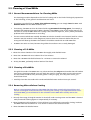
If you have recorded from an acute slice without coating, you can simply rinse the MEA with
distilled water and the MEA should be fine.
•
If necessary, the MEA can then be cleaned with any pH-neutral cleaning agent, for example, a
standard dish-washing detergent). When cleaning coated MEAs, parts of the coating may go off.
You have to recoat an MEA when the coating is not sufficient anymore, that is, when you observe
problems with cell attachment or recording.
•
If more severe methods are needed, the MEA can also be cleaned in an ultrasonic bath for a short
moment. But this method is a bit dangerous, because there are ultrasonic baths that are too
strong and will destroy the MEA. The behavior should be tested with an older MEA first.
•
EcoMEAs are easier to clean, because the golden electrodes are not so easily damaged.
5.5.2 Cleaning of 3-D MEAs
1. Rinse the culture chamber of the 3-D MEA thoroughly with distilled water.
2. Rinse the 3-D MEA with 70 % ethanol for a few minutes.
3. Rinse the 3-D MEA with distilled water for 1 minute to remove the ethanol.
4. Air-dry the MEA, preferably under a laminar flow hood.
5.5.3 Cleaning of EcoMEAs
The gold electrodes of EcoMEAs are very robust and are the only MEA electrodes that will endure
more severe cleaning methods. You can check the need for cleaning under a stereo microscope:
The electrodes should be shiny and look golden. If they are gray, or if they show a film, you
should clean them.
→ Carefully clean the electrodes with a swab and distilled water under microscopic control.
5.5.4 Removing Nitrocellulose Coating
Note: It is very important that you clean MEAs that have been coated with nitrocellulose and
remove all biological material first before removing the coating. If you applied methanol on an
uncleaned MEA, you would rather fix the cell debris on the MEA than actually remove the
coating.
1. Directly after usage, biological material is rinsed off under running water and the MEA is cleaned
with pH-neutral cleaning agents or enzymatically if necessary.
2. Rinse the MEA 2x with methanol. If nitrocellulose is not sufficiently removed by rinsing, incubate
the MEA filled with methanol for 15 to 30 min to dissolve the cellulose nitrate.
3. Rinse the MEA with distilled water.
25
MEA User Manual
5.5.5 MEA Cleaning with EDTA-Collagenase
Materials:
•
Collagenase Type I
•
0.5 mM EDTA
•
Phosphate buffered saline (PBS)
(Sigma-Aldrich, Inc., C0130)
(Gibco/Invitrogen, 14190-144)
Collagenase solution:
→ Dissolve collagenase type I in PBS at 20 U/ml.
Method:
1. Fill the MEA culture chamber with 0.5 mM EDTA and incubate for 30 min.
2. Rinse the chamber 3x with PBS.
3. Fill the MEA with collagenase solution and incubate for at least 30 min at 37 °C.
4. Discard the collagenase solution and rinse the MEA with distilled water at least 3x.
5. Air-dry the MEA, preferably under a laminar flow hood.
6
Culture Chamber Options
You have several options regarding culture chamber interface rings (without ring, glass ring,
plastic ring without and with thread) and culture chambers, which are especially useful for longterm cultures or experiments. For more details or pricing information, please ask your local
retailer.
6.1
Sealed MEA Culture Dish
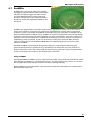
In order to allow long-term cultivation and recording, Multi Channel
Systems recommends the use of teflon membranes (fluorinated
ethylene-propylene, 12.5 microns thick) developed by Potter and
DeMarse (2001). The ALA-MEA-MEM membrane is produced in license
by ALA Scientific Instruments Inc., and distributed via the world-wide
network of MCS distributors.
The sealed MEA culture chamber with transparent semipermeable membrane is suitable for
all MEAs with glass ring. A hydrophobic semipermeable membrane from Dupont that is
selectively permeable to gases (O2, CO2), but not to fluid and H2O vapor, keeps your culture clean
and sterile, preventing contaminations by airborne pathogens. It also greatly reduces evaporation
and thus prevents a dry-out of the culture.
Reference
•
Reference: Potter, S. M. and DeMarse, T. B. (2001). "A new approach to neural cell culture for
long-term studies." J Neurosci Methods 110(1-2): 17-24.
26
Appendix
6.2
MEA Culture Chamber with Lid
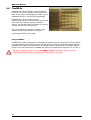
Another possibility is to use a MEA culture chamber with lid (available from Multi Channel
Systems), which is suitable for all MEAs with plastic ring and thread. It can be adapted by
inserting metal perfusion cannulas for setting up a continuous perfusion.
6.3
Removable Recording Chamber
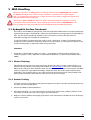
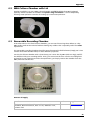
As an alternative to the fixed culture chambers, you can use silicone rings that adhere to a dry
MEA surface and can be removed without leaving any residue. This is especially useful for acute
experiments.
The removable recording chamber should be stored immersed in distilled water (simply put it into
a bottle filled with distilled water) for best adhesion properties.
You dry the silicone chamber with a clean tissue, put it onto the dry MEA (with no rings), and fill
the chamber with your recording buffer. Then, you can mount the slice onto the recording field
and perform your experiments. After the experiment, you simply remove the chamber from the
MEA, and rinse off the slice.
Sources of supply
Product
Product No. Supplier
flexiPERM conA, Single-Well Removable & Reusable TC
Chamber, Non-Toxic Silicon, area: 3.1 cm2, diameter: 2 cm,
volume: 4 ml
96077434
Greiner Bio-One
27
Appendix
7
Recording with MEAs
7.1
Mounting the MEA
7.1.1 Cleaning the Contact Pads
You should always clean the contact pads with alcohol before placing it into the MEA amplifier.
Even if you do not see any contaminations, a very thin grease layer (from touching the pads with
bare fingers, for example) may be present and results in a bad contact between the pads and the
amplifier pins. A bad contact will result in an increased noise level on the affected channel. This is
the most prominent handling error.
→ Carefully wipe the MEA contact pads with a clean and soft tissue moistened with pure alcohol.
7.1.2 Positioning the MEA
Warning: 3-D MEAs are sensitive to distortions and deflections. Always put the provided
yellow plastic plate first into the MEA amplifier, and then place the 3-D MEA on top of it.
Otherwise, the pressure applied by the MEA amplifier will irreversibly damage the MEA.
When placing an MEA into the amplifier, please make sure that the orientation of the MEA is
correct. The writing (NMI) should be on the right side (viewed from the front, with the sockets
of the amplifier in the back). (For 3-D MEAs: The writing (BOT ME60 V4) should be on the right
bottom.) Otherwise, the MEA layout will not match with the pin layout.
7.1.3 Grounding the Bath
Make sure that the bath is connected to the amplifier's ground.
→ Attach the provided silver wire or Ag/AgCl pellet to the amplifier's ground and place it into
the bath.
→ — OR — If you use an MEA with internal reference electrode, connect the ground to the
reference electrode socket (pin 15) with the provided connector.
Please see the user manual of the respective MEA amplifier for more information about mounting
MEAs and grounding.
29
MEA User Manual
7.2
General Performance / Noise Level
You can test an MEA before use by filling it with a standard saline buffer, for example PBS, and
recording the noise level of the MEA and the amplifier.
MEA amplifiers have a maximum noise level of +/– 8 µV. The noise level on the MEA depends on
the electrode size and material. The smaller the electrode, the higher is the noise level. TiN
electrodes have a larger surface area due to their microfold structures, and therefore they have
generally a lower impedance and a lower noise level than electrodes of the same size that are
made from other materials (for example, Pt electrodes).
The total maximum noise level for an MEA and the amplifier should be about +/– 40 µV peak to
peak for 10 µm TiN electrodes and +/– 10 µV for 30 µm TiN electrodes.
The larger Pt electrodes of the 3-D MEAs generally show a noise level comparable to the 30 µm
TiN electrodes.
The initial noise level may be higher if the MEAs are hydrophobic. New MEAs should be made
hydrophilic before use.
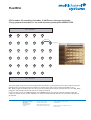
Typical noise level of a used standard 200/30 MEA
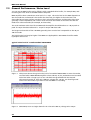
Figure 1
This picture shows the typical noise level of a standard 200/30 MEA on most electrodes,
recorded with a MEA1060-BC amplifier. Electrodes 43, 52, 53, and 84 show an increased
noise level after a longer cycle of use. The bath was grounded with the internal
reference electrode 15. Time axis: 1000 ms, voltage axis: ±50 µV. You should ground
some of the electrodes if you want to use this MEA for recording.
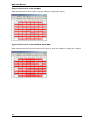
Figure 2
Same MEA, zoom to single channel # 22. Time axis: 500 ms, voltage axis: ±20 µV.
30
Appendix
Figure 3
Same MEA after grounding defective electrodes. Time axis: 1000 ms, voltage axis: ±100
µV.
31
MEA User Manual
Typical noise level of a new 3-D MEA
Bath grounded with a silver pellet. Time axis: 1000 ms, voltage axis: ±20 µV.
Typical noise level of a new standard 100/10 MEA
Bath grounded with the internal reference electrode 15. Time axis: 1000 ms, voltage axis: ±100 µV.
32
Stimulation
8
Stimulation
8.1
Using MEA Electrodes for Stimulation
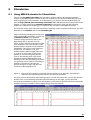
You can use any MEA electrode(s) for stimulation. Simply connect the stimulus generator
outputs to the MEA amplifier. Please see the user manual for the respective MEA amplifier and
stimulus generator for more details. As an alternative, you can also use special MEAs with four
pairs of large (250x50 µm) stimulating electrodes (MEA 200/30-stim) and a special stimulation
adapter, or target cells with an external electrode for stimulation. This and the following
chapters are intended for helping you to optimize the stimulation with MEA electrodes.
All electrodes suffer under electrical stimulation, especially under long-term stimulation. The wear
depends on the stimulus and on the electrode type.
When stimulating via MEA electrodes and
with standard MEA amplifiers, you will see
a stimulus artifact on all amplifier
channels during stimulation due to the
high charge that is injected into the
circuit, and the following saturation of the
filter amplifiers. The time constant of the
stimulus artifact depends on the amplifier
bandwidth; if the lower cutoff frequency
is quite low, for example, 1 Hz, the
stimulus artifact will be longer than with
e. g. 10 Hz. In most cases, it will not be
possible to record true signals that are
close to the stimulus pulse. This can be
avoided by using a MEA amplifier with
blanking circuit. The stimulating electrode
can generally not be used for recording in
parallel to stimulation, because the
injected charge is so high, and the time
constant for discharging so low.
Figure 4
The screen shot shows a prominent stimulus artifact on all channels, followed by a
response. The stimulating electrode No. 61 has been grounded.
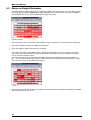
The next pictures demonstrate the blanking feature. On the left screen shot, you see the stimulus
artifacts on a non-stimulating electrode without blanking. On the right, you see the same
electrode and stimulation pattern, but with blanking. The stimulus artifacts have been completely
avoided, making it possible to detect signals shortly after the stimulus.
33
MEA User Manual
8.2
Capacitive Behavior of Stimulating Electrodes
Regarding the generally used stimulus pulses, stimulating electrodes behave as plate capacitors.
The charge cannot flow back to the stimulus generator due to the high output resistance and thus
is kept in the electrode. The electrode needs a quite long time to discharge itself after stimulation.
As a result, stimulus artifacts interfere with the recording, and electrodes deteriorate over time
due to electrolysis. You can avoid that by choosing an appropriate stimulus protocol that actively
discharges the electrode after the pulse.
When using voltage driven stimulation, the electrodes are discharged when the voltage level is
set to zero at the end of the (monophasic) pulse. Not so in current mode. When applying a
negative current pulse, the electrode is charged and needs to be actively discharged by applying
an inverted pulse with a matching product of current and time, that is, you need to stimulate with
biphasic pulses for current driven stimulation to reduce both the stimulus artifact and to
avoid an electrode damage. The easiest way is to use the same signal amplitude and the same
duration with an inverse polarity. For voltage driven stimulation, monophasic pulses are fine.
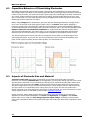
The following illustration shows the effect of a biphasic current pulse on the discharge of the
stimulating electrode. As you can see, the first monophasic pulse is followed immediately by a
pulse of the opposite polarity and the same product of current and time.
8.3
Aspects of Electrode Size and Material
Titanium nitrite (TiN) electrodes are generally more robust than electrodes from other
materials, for example, platinum (Pt). In the Appendix, you find safe charge injection limit curves
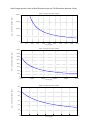
that document maximum current and stimulus durations for standard TiN electrodes. Please note
that these curves document the limits. Stimulus pulses should be kept safely below these limits.
The safe charge injection limit of platinum (0.4 mC/cm2) is much smaller than for TiN (23 mC/cm2).
This fact results in a considerably lower charge that you can inject into the electrode before
faradic reactions occur that will lead to electrolysis of the electrode. For more information on safe
charge injection limits of 3-D MEAs, please contact Ayanda Biosystems.
Please note that, when using voltage driven stimulation, the current flow to the electrode
depends on the electrode impedance. The lower the impedance, the higher is the current.
Please make sure to obey the safe charge injection limits always. Generally, TiN electrodes
have lower impedances than Pt electrodes, and larger electrodes also have lower impedances than
smaller.
34
Stimulation
When using TiN electrodes, it is extremely important to not charge the electrodes positively, as
this will lead to electrolysis. (This is not an issue for Pt electrodes.) Therefore, when using voltage
driven stimulation, it is important to apply negative voltages only. Positive voltages will shortly
charge the electrodes positively, even though the electrode is discharged at the end of the pulse.
As a consequence, biphasic voltage driven stimulation is not recommended. When using current
stimulation, it is required to use biphasic stimulation, and to apply the negative phase first,
to avoid a positive net charge on the electrode.
8.4
Recommended Stimulus Amplitudes and Durations
The higher the amplitude and the longer the stimulus, the higher is the impact on the electrode
performance. Therefore, the amplitude and duration should be as low as possible. It is advisable
to start with a low amplitude and duration, and then increase it slowly until responses are evoked.
The safe-charge injection limits in the appendix describe the relationship between maximum
pulse amplitude and time. The higher the amplitude, the shorter is the maximum duration of the
pulse. Do not apply pulses with a higher amplitude or for a longer time than is recommended for
the electrode type.
As a consequence of the points discussed above, Multi Channel Systems recommends using
negative monophasic voltage pulses to make sure that the voltage level of the stimulating
electrode is zero, and thus the electrode is discharged, at the end of the pulse.
According to the experience of MEA users, voltage pulses should be < 1 V (–100 mV to –900 mV)
for neuronal applications to avoid damage to electrode and cells. Generally, pulse durations
between 100–500 µs are used. (See also Potter, S. M., Wagenaar, D. A. and DeMarse, T. B. (2005).
“Closing the Loop: Stimulation Feedback Systems for Embodied MEA Cultures.” Advances in
Network Electrophysiology Using Multi-Electrode Arrays. M. Taketani and M. Baudry, Springer;
Wagenaar, D. A., Madhavan, R., Pine, J. and Potter, S. M. (2005). "Controlling bursting in cortical
cultures with closed-loop multi-electrode stimulation." J Neurosci 25(3): 680-8.)
For pacing cardiomyocytes, higher voltages and durations are generally required, for example,
–2 V for 2 ms. As these pulses are not supported by standard MEA electrodes, the use of larger
stimulating electrodes is recommended. A special MEA with four pairs of large (250x50 µm)
stimulating electrodes (MEA 200/30-stim) and a special stimulation adapter is provided for such
applications by Multi Channel Systems.
Warning: When using MEA electrodes of TiN material, use only negative voltages pulses or
biphasic current pulses applying the negative phase first. Always regard the safe-charge
injection limits as described in the appendix of this manual. Otherwise, electrodes can be
irreversibly damaged by electrolysis.
35
Troubleshooting
9
Troubleshooting
9.1
About Troubleshooting
The following hints are provided to solve special problems that have been reported by users. Most
problems occur seldom and only under specific circumstances. Please check the mentioned possible
causes carefully when you have any trouble with the product. In most cases, it is only a minor
problem that can be easily avoided or solved.
If the problem persists, please contact your local retailer. The highly qualified staff will be glad to
help you. Please inform your local retailer as well if other problems that are not mentioned in this
documentation occur, even if you have solved the problem on your own. This helps other users,
and it helps Multi Channel Systems to optimize the instrument and the documentation.
Please pay attention to the safety and service information (chapter "Important Safety Advice" on
page 7). Multi Channel Systems has put all effort into making the product fully stable and reliable,
but like all high-performance products, it has to be handled with care.
9.2
Technical Support
Please read the Troubleshooting part of the user manual first. Most problems are caused by minor
handling errors. Contact your local retailer immediately if the cause of trouble remains unclear.
Please understand that information on your hardware and software configuration is necessary to
analyze and finally solve the problem you encounter.
Please keep information on the following at hand
•
Description of the error (the error message text or any other useful information) and of the
context in which the error occurred. Try to remember all steps you had performed immediately
before the error occurred. The more information on the actual situation you can provide, the
easier it is to track the problem.
•
The serial number of the MEA. You will find it on the MEA case.
•
The amplifier type and serial number. You will find it on the device.
•
The operating system and service pack number on the connected computer.
•
The hardware configuration (microprocessor, frequency, main memory, hard disk) of the
connected computer. This information is especially important if you have modified the computer
or installed new hard- or software recently.
•
The version of the recording software. On the Help menu, click About to display the software
version.
37
MEA User Manual
9.3
Noise on Single Electrodes
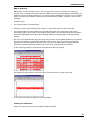
The noise level on single electrodes is significantly higher than expected or you see artifact signals.
In the following example (200/30 MEA, filled with PBS, silver pellet as bath electrode, shielded),
electrodes No. 53, 63, 73, 45, 55, 48, 58 show a high noise level.
Possible causes:
?
The electrode or the contact pin of the amplifier may be defective. To test this, do the following.
1. Open the amplifier and turn the MEA by 90 degrees.
2. Close the amplifier again and start the recording.
If the same electrode in the MEA layout is affected, the amplifier's contact is not ok. If another
electrode is now affected and the previously affected electrode is ok now, the MEA electrode is
not ok, but the amplifier is fine.
The following screen shot shows the same MEA than above that has been turned clockwise by
90 °. You see that different channels are now affected, which indicates that the amplifier is fine
but some electrodes on the MEA are defective.
— OR —
→ Use the model test probe to test the amplifier. If the noise level is fine without the MEA, bad MEA
electrodes cannot be the cause.
38
Troubleshooting
MEA is defective
MEAs wear out after multiple uses or over a longer time of use, for example for long-term
cultures. This is considered a normal behavior. MEAs are also easily damaged by mishandling, for
example if wrong cleaning solutions or too severe cleaning methods are used or if the recording
area is touched. If you observe a bad long-term performance of MEAs, consider a more careful
handling.
Possible causes:
?
The contact pads are contaminated.
→ Clean the contact pads carefully with a swab or a soft tissue and pure (100 %) alcohol.
?
The contact pads or the electrodes are irreversibly damaged. You could have a look at the
electrodes under a microscope: If they appear shiny golden, the TiN is gone and the electrode is
irreversibly damaged. Electrodes may be damaged without changing their visual appearance,
though.
→ Pick one of the bad channels after the other and ground it. See the MEA amplifier's user manual
for more information on grounding channels. In most cases, only one of the electrodes that
appear bad is actually defective, and the other ones are only affected by the single defective
electrode. Ground as many electrodes as you need for a good general performance.
In the following example, all defective electrodes have been grounded.
Grounded electrodes show a noise level that is lower than that of good electrodes.
→ If too many electrodes are defective, use a new MEA.
Contact pin is defective
Please see the user manual for the respective MEA amplifier.
39
MEA User Manual
9.4
Overall Noise / Unsteady Baseline
The baseline is unstable, signals are jumping or drifting.
Possible causes:
?
Bath electrode is not connected to ground.
→ Connect the internal or external bath electrode to one of the ground inputs of the amplifier.
?
AgCl bath electrode needs is not well-chlorided.
→ Rechloride the electrode or use a new one.
?
50 Hz hum: 50 Hz is the frequency of mains power in Europe. If the shielding and grounding of
the setup is not sufficient, electrical signals are picked up from the environment.
→ Use a proper shielding. For example, you can place aluminum foil over the amplifier that is
connected to any metal part of the MEA amplifier. You can also use special shielding equipment
like a Faraday cage.
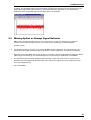
The following screen shot shows a recording of an MEA (200/30) without bath electrode and
without shielding. You see that the signals are so high that the amplifier gets saturated, and
you see a very strong 50 Hz hum.
The next pictures show the same MEA with bath electrode (silver pellet), but without
shielding. The baseline is very unsteady and oscillates with a frequency of 50 Hz.
40
Troubleshooting
The next screen shot shows the effect of shielding: The noise level is neglectible, and the baseline
is steady. The shielding has been achieved with a metal plate connected to the metal part of the
68-pin MCS High Grade cable connector and placed above the amplifier. You could also use
aluminum foil or a Faraday cage for the same effect, for example.
9.5
Missing Spikes or Strange Signal Behavior
MEAs wear out after multiple uses or over a longer time of use, for example for long-term
cultures. The insulation layer gets thin over time. This is considered a normal behavior.
Possible causes:
?
The insulation layer is too thin. As a result, the MEA gets the behavior of a low pass filter. This
means, that the signal frequency may be shifted to a lower frequency, and spikes are missing.
→ Optically control the MEA with a microscope. If concentric colored rings (Newton rings) are visible
(due to light interference), the insulation layer is too thin and you should use a fresh MEA.
?
The insulation layer has been abraded and is missing in parts. This will result in a short circuit
between the electrode/tracks and the bath. You will still see signals, but as an unspecific smear
over the complete array.
→ Use a fresh MEA.
41
Appendix
10
Appendix
10.1 Contact Information
Local retailer
Please see the list of official MCS distributors on the MCS web site.
User forum
The Multi Channel Systems User Forum provides an excellent opportunity for you to exchange
your experience or thoughts with other users worldwide.
Mailing list
If you have subscribed to the NeuroElectronics Mailing List, you will be automatically informed
about new software releases, upcoming events, and other news on the product line. You can
subscribe to the list on the MCS web site.
www.multichannelsystems.com
43
MEA User Manual
10.2 Ordering Information
Please see the MEA data sheet for more information about available MEA types. Please contact
your local retailer for pricing and ordering information.
10.2.1
MEA Systems
Product
Product Number
Description
MEA recording system for
inverted microscopes,
60 electrode channels
MEA60-1System
Complete with 5 MEAs, data
acquisition computer with MC_Card
and IPS10W, MEA1060-1 amplifier,
TC01, ALA MEA-PPORT2, and
accessories
MEA recording system for
upright microscopes,
60 electrode channels
MEA60-2System
Complete with 5 MEAs, data acquisition
computer with MC_Card and IPS10W,
MEA1060-2 amplifier, TC01, ALA MEAPPORT2, and accessories
MEA recording system for
inverted microscopes with
advanced perfusion,
60 electrode channels
MEA60-1SystemE
Complete with 5 MEAs, data acquisition
computer with MC_Card and IPS10W,
MEA1060-1 amplifier, TC02, PH01, ALA
MEA-PPORT2, and accessories
MEA recording system for
upright microscopes with
advanced perfusion,
60 electrode channels
MEA60-2SystemE
Complete with 5 MEAs, data acquisition
computer with MC_Card and IPS10W,
MEA1060-2 amplifier, TC02, PH01, ALA
MEA-PPORT2, and accessories
MEA recording system for
inverted microscopes,
120 electrode channels
MEA120-1System
Complete with 5 MEAs, data
acquisition computer with MC_Card
and IPS10W, 2 x MEA1060-1 amplifier,
TC02, ALA MEA-PPORT2, and
accessories
MEA recording system for
upright microscopes,
120 electrode channels
MEA120-2System
Complete with 5 MEAs, data acquisition
computer with MC_Card and IPS10W, 2
x MEA1060-2 amplifier, TC02, ALA MEAPPORT2, and accessories
Product
Product Number
Description
MEA amplifier for inverted
microscopes
MEA1060-1
MEA amplifier for upright
microscopes
MEA1060-2
Probe interface and 60 channel preand filter amplifier with custom gain
and bandwidth
MEA amplifier with blanking
circuit for inverted
microscopes
MEA1060-1BC
MEA amplifier with blanking
circuit for upright microscopes
MEA1060-2BC
10.2.2
MEA Amplifiers
44
Probe interface and 60 channel preand filter amplifier with custom gain
and bandwidth. The blanking circuit
prevents the amplifier from getting
saturated and thus prevents stimulus
artifacts.
Appendix
10.2.3
Accessories
Product
Product
Number
Description
MEA culture
chamber
CCIR
Suitable for all MEAs with plastic ring and thread.
Simply screw the culture chamber onto the plastic
holder on the MEA. An o-ring ensures that the chamber
fits tightly and is leakproof. Autoclavable. Complete
with lid.
MEA culture
chamber lid
CCL
Additional or replacement lid for MEA culture chamber.
Sealed MEA
culture dish
ALA MEA-MEM
MEA culture chamber with transparent semipermeable
membrane suitable for all MEAs with glass ring. Simply
slide the culture chamber over the glass ring. A
hydrophobic semipermeable foil from Dupont that is
selectively permeable to gases (O2, CO2), but not to fluid,
keeps your culture clean and sterile, preventing
contaminations by airborne pathogens. It also greatly
reduces evaporation and thus prevents a dry-out of the
culture. Autoclavable. Comes complete with membranes.
ALA MEA-SHEET
Set of 10 membranes for sealed MEA culture dishes.
ALA MEA-MEM5
Set of 5 membranes and MEA-MEM-TOOL for sealed
MEA culture dishes.
ALA MEA-MEMTOOL
Tool for smoothing and positioning the membrane on
the ALA MEA-MEM culture chamber, so that the
membrane is neat and flat on top of the culture
chamber.
MEA perfusion
insert
ALA MEA-INSERT
45
Technical Specifications
Date of Print: 05.07.2005
MEA Microelectrode Array
MEA type
TiN electrodes, SiN isolator,
TiN electrodes, SiN isolator,
and Ti contact pads
and ITO contact pads
100/10-Ti, 200/10-Ti, 200/10iR-Ti, 100/10-ITO, 200/30iR-ITO,
200/30-Ti, 200/30iR-Ti, 200/30-Ti- HexaMEA-ITO (10, 20, 30)
stim with 8 stimulation
electrodes, 500/10iR-Ti, 500/30iRTi, HexaMEA-Ti (10, 20, 30)
ThinMEA
3-D MEA-gr
EcoMEA
FlexMEA
ThinMEA (180 µm) 100/10-ITO,
ThinMEA (180 µm) 200/30iR-ITO
Temperature compatibility
0 °C to 125 °C
0 °C to 125 °C
0 °C to 125 °C
0 °C to 80 °C
0 °C to 125 °C
10 °C to 40 °C
Dimensions (W x D x H)
49 mm x 49 mm x 1 mm
49 mm x 49 mm x 1 mm
49 mm x 49 mm x 1 mm
49 mm x 49 mm x 1 mm
12 µm height
Weight
8g
8g
49 mm x 49 mm x 180 µm (glass
part)
8g
8g
8g
<1g
Base material
Contact pad and track material
Glass
Titanum
Glass
Indium tin oxide
Glass (on a ceramic carrier)
Titanum
Glass
Platinum
Gold
Polyimid 2611
Gold
Electrode diameter
As specified; 10, 20, and 30 µm
available
As specified; 100 and 200 µm
available; not applicable to Hexa
(10, 20, 30) ITO MEA layout
As specified; 10 and 30 µm
available
As specified; 100 and 200 µm
available
40 µm (at base)
100 µm
30 µm
Interelectrode distance
As specified; 10 , 20, and 30 µm
available
As specified; 100, 200, and 500 µm
available; not applicable to Hexa
(10, 20, 30) MEA layout
200 µm
700 µm
200 µm (16 electrode version), 300
µm (36 electrode version), 600 to
700 µm (72 electrode version)
Electrode height
Planar
Planar
Planar
Approx. 50 µm to 70 µm
Planar
Planar
Electrode type
Isolation type
Titanium nitride
Silicon nitride 500 nm (PEVCD)
Titanium nitride
Silicon nitride 500 nm (PEVCD)
Titanium nitride
Silicon nitride 500 nm (PEVCD)
Platinum
SU-8
Gold
Titanium nitride
Electrode impedance
30 kΩ to 400 kΩ, depending on
electrode type and diameter
30 kΩ to 400 kΩ, depending on
electrode type and diameter
30 kΩ to 400 kΩ, depending on
electrode type and diameter
approx. 400 kΩ (range from 250 to
500)
approx. 30 kΩ
approx. 50 kΩ
Electrode layout grid
8 x 8 (100/10, 200/30 i. r.),
8 x 8 (100/10, 200/10, 200/10,
200/30, 200/30 i. r.), 6 x 10 (500/10 i. hexagonal (Hexa (10, 20, 30))
r., 500/30 i. r.), hexagonal (Hexa
(10, 20, 30))
60
60
8x8
8x8
8x8
4 x 4 (14 electrode version), 6 x 6
(32 electrode version), 9 x 8 (72
electrode version)
60
60
60
i. r. = with internal reference
electrode
i. r. = with internal reference
electrode
Versions with 14, 32, and 72
electrodes available
14 and 32 electrode versions with 2
reference electrodes
32 electrode version with 2 ground
electrodes
Number of electrodes
i. r. = with internal reference
electrode
Optional: with 8 stimulating
electrodes
The product type specifies the interelectrode distance and the electrode diameter, that is, 100/10 means 100 µm interelectrode distance and 10 µm electrode diameter.
Culture chambers for MEAs
Glass ring (-gr)
Inner diameter (ID)
Outer diameter (OD)
Height
20 mm
24 mm
6 mm
Plastic ring without thread for
a lid (-pr)
26 mm
30 mm
6 mm
Plastic ring with thread for a
removable lid (-pr-T)
26 mm
30 mm
6 mm
No ring for custom use (-w/o)
-
with screw thread for lid
Page 1 of 1
© 2003 Multi Channel Systems MCS GmbH
Standard MEA Layout (8x8)
Standard MEAs (with TiN electrodes) in the 8x8 grid are available in versions MEA 100/10,
200/10 (i. r.), or 200/30 (i. r.); with optional ITO tracks. Dimensions refer to standard MEAs.
(ThinMEAs, 3-D MEAs, and EcoMEAs also follow the 8x8 grid. For other specifications
like electrode material, diameter, and spacing, please refer to the MEA data sheet.)
mm
MEA Border
Contact pads
100 µm or 200 µm
Electrode grid
21
31
41
51
61
71
12
22
32
42
52
62
72
82
13
23
33
43
53
63
73
83
14
24
34
44
54
64
74
84
15
25
35
45
55
65
75
85
16
26
36
46
56
66
76
86
17
27
37
47
57
67
77
87
28
38
48
58
68
78
∅ 10 or 30 µm
The numbering of MEA electrodes in the 8x8 grid follows the standard numbering scheme for square grids:
The first digit is the column number, and the second digit is the row number. For example, electrode 23 is
positioned in the third row of the second column.
These numbers are the same numbers that are used as channel numbers in the MC_Rack program. Please
make sure that you have selected the two-dimensional MEA layout as the Channel Layout in MC_Rack. For
more details, please refer to the MC_Rack user manual or help.
Multi Channel Systems
MCS GmbH
Aspenhaustrasse 21
72770 Reutlingen
Germany
Fon +49-7121-9 09 25- 0
Fax +49-7121-9 09 25-11
[email protected]
www.multichannelsystems.com
© 2002-2005 Multi Channel Systems
MCS GmbH
Product information is subject to change
without notice.
HighDenseMEA
Electrode layout
MEA1060 pins 33
21
Electrode #
C3L
A3L
32
31
A4L A5L
44
43
41
42
B4L
B5L
C4L
C5L
52
51
53
54
61
62
71
63
C1R C2R B1R B2R A1R A2R C3R A3R
22 B3L
B3R 72
12 A2L
Left electrode field
A4R 82
Right electrode field
A5R 73
23 A1L
A1L
A2L
A3L
A4L
A5L
Electrode #
A1R
A2R
A3R
A4R
A5R
13 B2L
23
12
33
32
31
MEA1060 pins
61
62
63
82
73
C4R 83
34 B1L
B1L
B2L
B3L
B4L
B5L
B1R
B2R
B3R
B4R
B5R
B4R 64
34
13
22
44
43
53
54
72
64
74
C1L
C2L
C3L
C4L
C5L
C1R
C2R
C3R
C4R
C5R
14
24
21
41
42
52
51
71
83
84
D1L
D2L
D3L
D4L
D5L
D1R
D2R
D3R
D4R
D5R
15
25
28
48
47
57
58
78
75
85
E1L
E2L
E3L
E4L
E5L
E1R
E2R
E3R
E4R
E5R
35
16
27
45
46
56
55
77
86
65
F1L
F2L
F3L
F4L
F5L
F1R
F2R
F3R
F4R
F5R
16 E2L
26
17
36
37
38
68
67
66
87
76
26 F1L
∅ 10 µm
14 C1L
15 D1L
25 D2L
L R
35 E1L
B5R 74
C5R 84
D5R 85
D4R 75
E5R 65
500 µm
E4R 86
F5R 76
30 µm
17 F2L
F4R 87
27 E3L
E3R 77
F3L
D3L
F4L
F5L
E4L
E5L
36
28
37
38
45
46
D4L D5L D1R D2R E1R
48
47
57
58
56
E2R
F1R
F2R D3R
F3R
55
68
67
66
78
The first letter of the electrode number code refers to the row number, the digit is the column
number, and the second letter refers to the electrode field (left or right) of the HighDenseMEA. The
specified MEA1060 pin numbers are the MEA System channel numbers that are used in the MC_Rack
program.
© 2005 Multi Channel Systems MCS GmbH
24 C2L
HexaMEA
Electrode layout
Electrode #
B7
22 B1
21
32
31
44
43
41
42
B9 B10 C5
C4
C5
Electrode #
C3
C2
C6
MEA1060 pins
31
12 B8
23 B6
B8
12
34 B3
24 B4
15 A10
B5
14
B
35 A7
C7
C9
44
42
54
∅ 20 µm
C7
71
21
33
B10
32
C10
41
C1
51
61
72
83
D10
84
64
74
E3
34
13 A10 22 A1 38 F1 77 E10 86
65
A9
A7
25
35
15 A2 16 F10 47 F2 67
27
A6
A3
17
36
26
26 A8
17 A6
A5
A
45
58
30 µm
F7
F3
48
56
D4
D3
E4
E
75
E7
E6
66
76
E9
E5
85
E8
78
A4
F9
F6
F4
28
46
57
55
60 µm
D2
72
D6
82
D8
73
D1
83
D7
64
D9
74
73
D9
E2
E1
D5
62
D7
B2
F11
63
82
B3
B1
71
D6
63
D2
D1
C10
D5
62
D8
D3
53
∅ 10 µm
C2
61
D
D4
23
16 A1
C1
C9
B7
A8
C8
C6
B6
90 µm
25 A9
54
C4
43
24
53
52
∅ 30 µm
C3
B4
51
C8
B9
13 B2
14 B5
C
52
D10 84
E5
85
E4
75
E3
65
E2
86
E6
76
E8
87
E1
77
87
F
F5
27 A2
37
68
A3
A4
A5
F11
F10
F9
F7
F1
F6
F2
F3
F4
F5
E10
E9
E7
36
28
37
38
45
46
48
47
57
58
56
55
68
67
78
66
The letter-digit code is the electrode identifier and refers to the position of the electrode in the hexa
grid. The specified MEA1060 amplifier pin numbers are the MEA System channel numbers that are
used in the MC_Rack program.
© 2005 Multi Channel Systems MCS GmbH
MEA1060 pins 33
MEA 500/10 i. r., 500/30 i. r.
Electrode layout
MEA1060 pins 33
21
32
31
44
43
41
42
52
51
53
54
61
62
71
63
Electrode #
K1
H2
K2
I2
I3
K3
H3
H4
K4
I4
I5
K5
H5
K6
I6
I1
500 µm
22 G3
G4
72
71
H6
82
I5
I6
G5
73
53
54
63
H3
H4
H5
H6
G6
83
32
42
52
62
82
F4
64
G1
G2
G3
G4
G5
G6
F5
74
13
23
22
72
73
83
F1
F2
F3
F4
F5
F6
F6
84
14
24
34
64
74
84
E6
85
E2
E3
AE4
E5
E6
25
35
65
75
85
E5
75
D1
D2
D3
D4
D5
D6
E4
65
16
26
27
77
76
86
D6
86
C1
C2
C3
C4
C5
C6
26 D2
17
37
47
57
67
87
D5
76
17
B1
B2
B3
B4
B5
B6
C6
87
36
45
46
56
55
66
A1
A2
A3
A4
A5
A6
D4
77
28
38
48
58
68
78
K1
K2
K3
K4
K5
K6
MEA1060 pins
21
31
41
51
61
I1
I2
I3
I4
33
44
43
H1
H2
12
23 G2
13 G1
34
F3
24
F2
14
F1
15 i. r.
25
E2
35
E3
∅ 10 or 30 µm
16 D1
C1
27 D3
B1
A1
C2
A2
B2
B3
A3
C3
C4
A4
B4
B5
A5
C5
A6
B6
36
28
37
38
45
46
48
47
57
58
56
55
68
67
78
66
The letter of the electrode number code refers to the row number, and the digit is the column
number. The specified MEA1060 amplifier pin numbers are the MEA System channel numbers that are
used in the MC_Rack program. The substrate-integrated reference electrode (i. r.) is connected to pin
15 of the MEA1060 amplifier.
© 2005 Multi Channel Systems MCS GmbH
12 H1
Electrode #
MEA-200/30-Stim
STIM
STIM
with 16 additional stimulating electrodes (8 à 30 µm, 8 à 250 x 50 µm)
200 µm
S
S
S
STIM
S
250 µm
21
31
41
51
61
71
12
22
32
42
52
62
72
82
13
23
33
43
53
63
73
83
14
24
34
44
54
64
74
84
S
STIM
15
25
35
45
55
65
75
85
S
STIM
16
26
36
46
56
66
76
86
17
27
37
47
57
67
77
87
28
38
48
58
68
78
S
S
STIM
STIM
200 µm
STIM
∅ 250 x 50 µm
2450 µm
∅ 30 µm
Multi Channel Systems
MCS GmbH
Aspenhaustrasse 21
72770 Reutlingen
Germany
Fon +49-7121-9 09 25- 0
Fax +49-7121-9 09 25-11
[email protected]
www.multichannelsystems.com
© 2002-2005 Multi Channel Systems
MCS GmbH
Product information is subject to change
without notice.
FlexMEA
36 Electrodes: 32 recording electrodes, 2 indifferent reference electrodes,
2 large ground electrodes; for use with miniature preamplifier MPA32I-FLEX
A6
Ground
A1
A2
A3
A4
A5
Ref
32
31
30
29
300 µm
B1
B2
B3
B4
B5
B6 ∅ 30 µm
26
25
24
23
27
28
C1
C2
C3
C4
C5
C6
19
18
17
20
21
22
D1
D2
D3
D4
D5
D6
14
15
16
13
12
11
E1
E2
E3
E4
E5
E6
7
8
9
10
6
5
F1
F2
F3
F4
F5
Ref
1
2
3
4
F6
Ground
The letter-digit code is the electrode identifier and refers to the position of the electrode in the grid.
Below are the recording channel numbers (in italics) that refer to the channel numbers in the
MC_Rack program. Please make sure that you have selected the linear channel layout in the MC_Rack
program. See the MC_Rack user manual or help for details.
If you use more than one MPA32I-FLEX and a ME64 System, the signal collector SC2x32 leads the
output channels of the second amplifier to channel number 33-64. Please see the SC2x32 data sheet
for details.
Multi Channel Systems
MCS GmbH
Aspenhaustrasse 21
72770 Reutlingen
Germany
Fon +49-7121-9 09 25- 0
Fax +49-7121-9 09 25-11
[email protected]
www.multichannelsystems.com
© 2002-2005 Multi Channel Systems
MCS GmbH
Product information is subject to change
without notice.
Safe Charge Injection Limits of Multi Elctrode Arrays with TiN Electrodes (diameter: 10µm)
s a f e c h a rg e in je c tio n lim its
m a x. p u ls e a m p litu d e [µ A ]
2000
1500
1000
500
0
0
5
10
15
20
25
tim e [µ s ]
30
35
40
45
50
s af e c harg e inje c tio n lim its
m ax. p uls e am p litud e [µ A ]
400
350
300
250
200
150
100
50
0
50
100
150
200
250
300
tim e [µ s ]
s af e c harg e inje c tio n lim its
m ax. p uls e am p litud e [µ A ]
60
50
40
30
20
10
0
300
400
500
600
700
tim e [µ s ]
800
900
1000
Safe Charge Injection Limits of Multi Elctrode Arrays with TiN Electrodes (diameter: 30µm)
s af e c harg e inje c tio n lim its
m ax. p uls e am p litud e [µ A ]
2000
1500
1000
500
0
0
50
100
150
200
250
300
tim e [µ s ]
350
400
450
500
s a f e c h a rg e in je c tio n lim its
m a x. p u ls e a m p litu d e [µ A ]
400
350
300
250
200
150
100
50
0
500
1000
1500
2000
2500
3000
tim e [µ s ]
s af e c harg e inje c tio n lim its
m ax. p uls e am p litud e [µ A ]
60
50
40
30
20
10
0
3000
4000
5000
6000
7000
tim e [µ s ]
8000
9000
10000