1
LTD Installation and troubleshooting
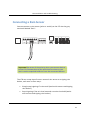
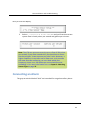
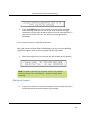
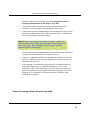
further out one branch at a time, measuring in every fork you meet (J2, J3, J4 etc.) until you locate the faulty branch.
Important! If you reach a branch that is looped back to the two‐
wire elsewhere, make sure to open the loop before measuring, or you won't detect the faulty branch.
If you reach a branch that is looped back to the two‐wire elsewhere, make sure to open the loop before measuring, or you won't detect the faulty branch.
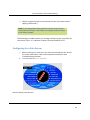
• If you have a decoder attached to the junction itself, make sure you measure on that as well, as the decoder and not the two‐wire could be the problem.
• If you get readings on both branches after the junction but they are significantly lower than at the controller, you have problems on the two‐wire on both the stretch from the controller to the junction, and further out as well. Detach the junction and start by finding the problem on the stretch from the controller ‐ then attach the junction again and work on each branch.
2
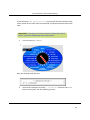
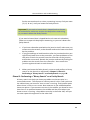
When you locate the faulty branch, move on and perform a binary search on the branch as explained in Chapter 5: Phase III: Performing a "Binary Search" on a Faulty Branch on page 88.
Phase III: Performing a "Binary Search" on a Faulty Branch
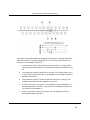
A binary search can help you locate a problem on the two‐wire in a structured manner. The concept of a binary search is this: Find a point on the cable where you know for sure current is running. Find another point where there is little or no current. Now measure in the middle between these two points. If you measure current in the middle, you know for sure that there is no problem between the middle and the point where you know current is running ‐ the problem must be in the other half, and you can now repeat this approach at the other half.
88