1
Editing the sound
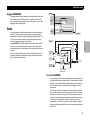
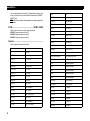
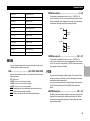
The arpeggiator automatically generates an arpeggio (broken chord) when
you hold down a chord on the keyboard. For programs that use two timbres, you can apply the arpeggiator to either or both timbres. This is a step
arpeggiator with six arpeggio types.
Audio In
EQ
Carrier
Vocoder
Modulator
Vocoder Sw= ON & Modulator AudioSrc =Timbre2
Vocoder
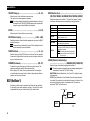
A vocoder analyzes the frequency characteristics of one signal called the
“modulator” (such as a human voice input via a mic) and applies these
characteristics to a filter that is processing a different signal called the “carrier” (such as an oscillator waveform), thus producing distinctive effects
such as an instrument that appears to be talking.
The microKORG XL+ contains a sixteen-band vocoder that can simulate
not only the classic vocoder sounds of the past but also create original
vocoder sounds where the tonal character or the level of each band can be
controlled.
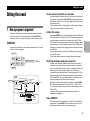
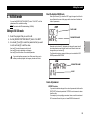
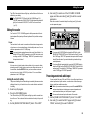
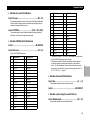
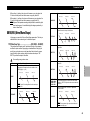
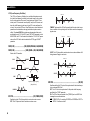
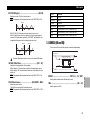
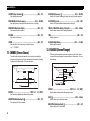
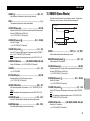
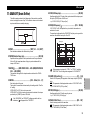
As shown in the illustration below, the vocoder consists of the carrier (the
signal being modified), the modulator (the signal that controls the modifying), and the vocoder section itself.
Vocoder Sw= ON
Synth
Timbre 1
EQ
Synth
Timbre 2
MASTER FX1
Vocoder
Editing the sound
Arpeggiator (ARPEGGIATOR)
HPF
Gate Send
Threshold
Audio In
Timbre2
Band1
GATE
Modulator
Timbre1
HPF
LEVEL
Band16
LEVEL
ANALYSIS
FILTER
E.F. SENS
DIRECT
LEVEL
ENVELOPE
FOLLOWER
RESONANCE
Carrier
Timbre2
SYNTHESIS
FILTER
To Timbre 1
EQ
Band. LEVEL PAN
LEVEL
CUTOFF (FC MOD)
FORMANT SHIFT
Vocoder section (VOCODER)
This consists of two sets of sixteen bandpass filters (the analysis filter and
the synthesis filter) and an envelope follower. The audio signal input to the
modulator is sent to sixteen filters (the analysis filter), and an envelope follower will detect the volume envelope (time-variant change) of each frequency band.
The carrier signal is sent to a separate set of sixteen filters (the synthesis
filter), and the envelope detected from the analysis filter is used to control
the volume of each band in the synthesis filter, thus varying the tonal character of the carrier signal and producing the impression that the carrier signal is talking. It is also possible to shift the frequencies of the carrier
bandpass filter. This allows you to raise or lower the frequency response
while preserving the character of the modulator, creating dramatic changes
in the sound.
21