1
analyzer “ON” button.
6. Press the Cal button on the MAXO2+ until you read the word CAL
on the analyzer display.This can take approximately 3 seconds. The
analyzer will now look for a stable sensor signal and a good reading. When
obtained, the analyzer will display the calibration gas on the LCD.
NOTE: Analyzer will read “Cal Err St” if the sample gas has not stabilized.
2.2.2 Direct Flow Calibration (Barb)
1. Attach the Barbed Adapter to the MAXO2+ by threading it on to the
bottom of the sensor.
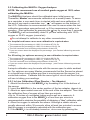
2. Connect the Tygon tube to the barbed adapter. (figure 2, B)
3. Attach the other end of the clear sampling tube to a source of oxygen
with a known oxygen concentration value. Initiate flow of the calibration gas
to the unit. Two liters per minute is recommended.
4. Allow the oxygen to saturate the sensor. Although a stable value is
usually observed within 30 seconds, allow at least two minutes to ensure
that the sensor is completely saturated with the calibration gas.
5. If the MAXO2+ is not already turned on, do so now by pressing the
analyzer “ON” button.
6. Press the Cal button on the MAXO2+ until you read the word CAL on
the analyzer display. This can take approximately 3 seconds.
The analyzer will now look for a stable sensor signal and a good reading.
When obtained, the analyzer will display the calibration gas on the LCD.
3.0 FACTORS INFLUENCING ACCURATE READINGS
3.1 Elevation/Pressure Changes
»C
hanges in elevation result in a reading error of approximately 1% of reading
per 250 feet.
» In general, calibration of the instrument should be performed when elevation at
which the product is being used changes by more than 500 feet.
»T
his device does not automatically compensate for changes in barometric
pressure or altitude. If the device is moved to a location of a different altitude, it
must be recalibrated before use.
3.2 Temperature Effects
The MAXO2+ will hold calibration and read correctly within ±3% when at
thermal equilibrium within the operating temperature range. The device
must be thermally stable when calibrated and allowed to thermally stabilize
after experiencing temperature changes before readings are accurate. For
these reasons, the following is recommended:
» For best results, perform the calibration procedure at a temperature close to the
temperature where analysis will occur.
»A
llow adequate time for the sensor to equilibrate to a new ambient temperature.
866.4.Maxtecwww.maxtec.com
www.maxtec.com
866.4.Maxtec
www.maxtec.com
5