1
1lllllllllllllIllllllllllllllllllllllllllllllll||l|llllllllllllllllllllllll
US005594733A
United States Patent [191
[11]
Patent Number:
Katoen et al.
[45]
Date of Patent:
[54] MULTI-STATION BUS SYSTEM HAVING
MEANS FOR POLLING AND UPDATING OF
GLOBALLY RELEVANT INFORMATION, IN
PARTICULAR A STATION ADDRESS, AND
4,608,685
8/1986 Jain et al. ............................ .. 370/858
3/1989 Narayanan et al. ..
5,177,739
1/1993 Basnuevo et al. ................... .. 370/858
[75] Inventors: Joost-Pieter Katoen; Marnix C. Vlot,
both of Eindhoven, Netherlands
[21] Appl. No.: 943,368
[22] Filed:
Sep. 10, 1992
Primary Examiner-Douglas W. Olms
Assistant Examiner-Dang Ton
Attorney, Agent, or Firm—Laurie E. Gathman
Foreign Application Priority Data
European Pat. OE. ............ .. 91202304
[57]
ABSTRACT
A communication system has multiple and uniformly
Int. Cl.6 ................................................. .. H04L 1N403
US. Cl. ......................... .. 370/449; 370/410; 370/503
Field of Search ................................ .. 370/858, 85.1,
weighted station interconnected by a shared digital bus. A
particular station comprises globally relevant information,
370/855, 85.12, 95.1, 95.2, 95.3, 94.1,
94.2, 94.3, 60, 60.1, 100.1, 105.1, 105.4,
105.5, 107, 108, 110.1, 85.2, 85.3; 340/8255,
825.51, 825.06, 825.07, 825.08; 375/354,
355, 356, 359, 365, 366
and, with a predetermined maximum recurrence time, trans
mits a data packet representing such item to any other
interested station. If unanimous counter signalization
occurs, the item is in order, other wise updating thereof is
undertaken. The unanimity is either by positive signaliza
tion, or by default.
References Cited
[56]
Netherlands .
“Single Chips 8—BitMicrocontrol1ers”, User Manual 1988,
Philips Electronic Components and Materials Division.
NY.
[51]
[52]
[58]
10/1989
OTHER PUBLICATIONS
[73] Assignee: U.S. Philips Corporation, New York,
[EP]
370/852
FOREIGN PATENT DOCUMENTS
8900717
Sep. 10, 1991
Jan. 14, 1997
4,814,974
STATION FOR USE IN SUCH SYSTEM
[30]
5,594,733
U.S. PATENT DOCUMENTS
4,387,458
20 Claims, 2 Drawing Sheets
6/1983 Carbrey .............................. .. 370/8512
12
SDAT(2)
. 11
SDAT(1)
I!
’
32
22 \\
. ‘ - -
TRANs
. - '
DETECT
INTERFACE
C‘RCU'T
23
\
42 \
TRANs
DETECT
INTERFACE
CIRCUIT
33 \
\\
UPDATE
MEM
31 \
\
\
DETECT
INTERFACE
CIRCUIT
43 \\
MEM
21
TRANs
UPDATE
\
MEM
UPDATE
41
Z‘EPZAQTQEE,
RECEJRDER
(E.G., WASHING
APPARATUS
APPARATUS
TELEvIsIoN
MACH'NE'
(E~G~. DRYER)
MONITOR, TUNER)
D‘SHWASHER)
2
3
(Sm)
(station)
4/
(Station)
\j 1
(I.
I
US. Patent
Jan. 14, 1997
Sheet 1 of 2
5,594,733
12
SDAT(2)
\_
, 11
SDAT(1)
/
32
22
\ TRANS
DETECT
INTERFACE
CIRCUIT
23
TRANS
DETECT 42 \\
TRANS
INTERFACE
CIRCUIT
33 \
\\
INTERFACE
CIRCUIT
43\\
MEM
21
DETECT
UPDATE
MEM
3‘ \
\
UPDATE
41
\
\ APPARATUS
MEM
UPDATE
\\
APPARATUS
(530x235?
(E.G., WASHING
APPARATUS
TELEVISION’
MAcI-IINE,
(E.G., DRYER)
MONITOR, TUNER)
D'SHWASHER)
3
(Station)
(Station)
(Station)
FIG. 1
_|'sT WV4>4VAVA>X4VAVA>X4VAVAVA>EVAVA
M0 MSA
SSA Acr cFAcIrgns EnnAcIII us EUDACIII us EUU Acm
I'—ncI=—-I-—ncF-I<—ucF—-I
FIEZA ‘
I
MSA/SSA
T
IfA_
1
I
US. Patent
Jan. 14, 1997
‘
START
Sheet 2 0f 2
>
/s1
/SZ
/53
55
r56
Y
FA —>FA+1 —-1
5,594,733
5,594,733
1
2
MULTI-STATION BUS SYSTEM HAVING
MEANS FOR POLLING AND UPDATING OF
GLOBALLY RELEVANT INFORMATION, IN
PARTICULAR A STATION ADDRESS, AND
STATION FOR USE IN SUCH SYSTEM
initiates an updating action with respect to its own relevant
information item. In particular, the originating station does
not address the stations of the relevant subset, as the
originating station may not know which stations are actually
present in the subset but rather it would only know that a
station which should have joined in the unanimous counter
signalization, did not. If a unanimous counter signalization
is not obtained then it means that the originally transmitting
FIELD OF THE INVENTION
station’s information was outdated or otherwise erroneous.
The invention relates to a communication system having
multiple and uniformly weighted stations that are intercon
Thereupon, the original station begins updating. The unani
nected by a shared digital bus. Such systems are in general
use. Uniformly-weighted is understood as meaning that
there is no single station present that acts as overall con
troller of the bus interactions. On the level of a single
mous counter signalization indicates, that all other stations
are in unison about the original information item. In this
way, the original station need not poll each station regarding
the correctness of an information item. The original station
instead puts the information item on the bus and if the
original station does not receive a signal which indicates that
the other stations are in unanimous agreement that the
information item is correct then the original station will
update or change the value of the information item there may,
transfer, a ?rst station may operate as a master, whereas one
or more second stations would operate as slaves. A subse
quent transfer could then have a different master station.
Moreover, the stations can have various different priority
levels, activity frequencies, and hardware provisions. The
bus as referred to supra is metaphoric for its medium, that is
it may be single—(that is the bus at any time has only a
20
circumstances signal a discord), or wired-AND. The counter
signalization could be a message, wherein the set of mes
single data value) or plural channel, galvanically intercon
nected, optical, radio broadcast, infrared, or other. The bus
medium may be uniform or mixed, such as a wired inter
connection, that has a two-way station for external commu
25
nication of infrared signals. The organization may have
sages generated would indicate unanimity or otherwise. In
this respect, all messages could indeed contain identical
signalization items, whereupon the original station would
check the unanimity. According to another solution, any
provisions for AND-ing/OR-ing logical states generated by
such message could, on a suitable communication layer,
such as bit, word, or other, by its occurrence alone, signal
lack of unanimity. Furthermore, the original station need not
always transfer the item itself, as an indirect indication,
abstract, or other representation would su?ice. It is not
the bus-connected stations. In other organizations, such
provision would be irrelevant. There are various uses for this
bus system including home based systems for audio/video
entertainment, home-environmental control (lighting, tem
perature, humidity), devices for executing household chores,
strictly necessary that all other stations connected should
actually have the facility for counter signalizing. Certain
stations could be slave-only stations. Alternatively, a station
telecommunication, safety control, and others. A particular
hazard of such a system is the low degree of organizational
consistency on the level of the stations themselves, as
may be too busy to answer and if it did not concur with the
unanimity, it could signal so upon the end of the next
exempli?ed by:
a particular station may be temporarily deactivated
because it is unplugged from the bus, switched-o?’ an
associated main switch, by its main plug is discon
nected, etc. Of course, the bus’ physical transport layer
recurrence interval. Various other reasons could put a par
ticular station out of the relevant subset speci?ed above.
According to a particular advantageous aspect of the
invention, the globally relevant information is an address of
should be immune against such disruption, but higher
the particular station itself. Generally, such addresses should
be unique, and the updating would take care of making the
protocol levels would at any rate be in?uenced;
a particular message could go astray, which in particular
address unique again. Many things could cause two or even
could occur in case of an infrared or broadcast medium.
This could cause various levels of inconsistency, in that
certain stations could receive information that differs
be various physical representations of the unanimity, such as
by using a wired-OR (a -one- signal could in particular
45
more stations to have the same address, and the present
invention would make the system stabilized again on a
unique address for all stations that would observe the polling
from other stations’ information, or could even be
operation. Another example of globally relevant information
totally absent;
would be the value of the actual or real time. The invention
at arbitrary instants, the bus system could become con
would keep the actual value of such globally relevant
nected to another bus system. Even if at each level of 50 information correct, even if the original station becomes
the separate bus system, consistency would prevail,
temporarily disturbed and does not know which other station
such need no longer be the case on the level of the
to address for acquiring the correct value.
composite system.
SUMMARY OF THE INVENTION
Amongst other things, it is an object in the present
If the original station broadcasts its own address as a
55
destination address, any other station responding thereto
would mean non-unanimity with respect to other stations
that would keep mum. This indicates that this address is
invention to solve in particular, but not limited to home
already assigned to another station and the original station
systems, the above inconsistency problems in a convenient,
must choose another address In this respect, the situation
consistent and unencumbering manner. According to one of 60 that all stations had the same address is considered as
degenerate. In practice, it will not occur.
the invention’s aspects, a particular station comprising a
globally relevant information item transmits, recurrently
The updating may go according to a predetermined pat
with a predetermined maximum recurrence interval, a data
tern. For an address, successive incremental ions by one
packet representing such information item for unanimous
would be good. Alternatively, updating according to a
counter signalization thereto by at least a relevant subset of 65 pseudo-random series would keep two updating stations
apart from each other. Especially in a start-up situation
actually interconnected stations thereto, but upon absence of
such unanimous counter signalization the particular station
where any station may start from a default address -zero-,
5,594,733
3
4
this would be advantageous: respective stations could then
follow respective different sequences.
After updating, the result of the updating may be signalled
to any relevant station, either by repeating transmitting a
data packet formatted like the original one, but with the now
twelve-bit master station address is transmitted from the
station wishing to transmit information to a destination
station. The twelve~bit destination station address is trans
mitted in the destination station address ?eld SSA. If a
station recognizes the destination address as its own address,
it transmits an acknowledge code in acknowledge code ?eld
ACI. If this acknowledge code is not received, it means that
the destination station is not present or does not function or
that the destination station address is received in a mutilated
updated information item, or by effectively addressing any
station present, for example, by adding destination default
address such as -zero-. This procedure keeps other stations
abreast of any new developments.
Advantageously, the system comprises a distinguishing
10
device for distinguishing among actual recurrence intervals
of respective ones among said stations. Each station could
have its own speci?c recurrence interval. Alternatively, the
recurrence interval could be a time-variable quantity in any
15
relevant station.
The invention also relates to a station for use in such
communication system. Various advantageous aspects are
recited in dependent claims.
BRIEF DESCRIPTION OF THE FIGURES
For a fuller understanding of the invention, reference is
attached to the following description taken in connection
with the accompanying drawings, in which:
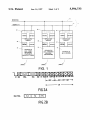
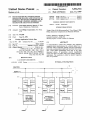
FIG. 1 shows diagrammatically the general structure of a
single-channel communication system;
ties. In these cases the communication is discontinued after
the acknowledge code ?eld. If the acknowledge code has
effectively been received, the master station transmits a
control code of, for example four hits in control ?eld CF.
After reception of this control code, the destination station
again transmits an acknowledge code in acknowledge code
?eld ACII. If this second acknowledge code is not received
by the master station, the communication is discontinued. If
the master station has received this second acknowledge
code a data ?eld DF occurs. The data ?eld may be divided
into various data or command sub?elds, each containing a
data byte DB, and end of data signalization EOD, and
acknowledge bit interval ACHI. Absence of the latter may
trigger repeat of the most recent sub?eld. If EOD is positive,
25
the transmission may terminate.
The structure of a station address is shown at FIG. 2B. It
comprises a service address SA, a type address TA and a
FIG. 2a shows diagrammatically the structure of a com~
munication operation on an information level performed on
the communication bus;
FIG. 2b shows the structure of a station address;
30
FIG. 3 shows a ?ow chart for assigning a station address
to a station.
DESCRIPTION OF A PREFERRED EMBODIMENT
General structure of the communication bus system
FIG. 1 shows diagrammatically a single-charmel commu
nication bus system. It comprises a communication bus 1
consisting of two data lines 11 and 12. In this case three
stations 2, 3 and 4 are connected to this communication bus.
form. No distinction is made between these three possibili
follower address FA. The service address SA comprises, for
example four bits and can thus distinguish sixteen services,
for example an audio-video service, a washing service, a
cooking/baking service etcetera. The type address TA com
prises, for example ?ve bits so that thirty-two stations can be
distinguished within one service. For example, within the
washing service a distinction can be made between a wash
35
ing machine, a drier, a dish washer, etcetera and within the
audio-video service a distinction can be made between a TV
monitor, a tuner, a video recorder, etcetera.
In practice the user may have a number of apparatuses of
the same type, for example, two or more video recorders.
Each station comprises an apparatus 21, 31, 41 which is
The follower address FA enables him to distinguish between
connected to the data lines 11 and 12 by means of an
interface circuit 22, 32, 42. Such an apparatus may be a TV
monitor, a video recorder, an audio recorder, an audio tuner,
a controllable set of lighting elements, etcetera. The com
munication bus is intended to transmit control signals from 45
these apparatuses of the same type. By three hits, eight
a ?rst station to a second station. Some stations will act as
master stations and others as slave stations. Some stations
will act as transmitters of data, some as receivers. All kinds
of mixed or alternating situations are possible. The commu
nication operations on the communication bus, which will
herein be described, are performed by the interface circuits.
A particular advantageous realization of the bus is DZB, c.f.
U.S. Pat. No. 4,429,384 that is single channel, twisted pair.
apparatuses of the same type can be distinguished.
The initialization
Now, a station address comprises a service address, a type
address and a follower address. The service address and the
type address have been assigned by the manufacturer and are
programmed in the station address memory of the interface
circuit. Programming of the follower address is left to the
user and does not take place until after the relevant apparatus
has been connected to the communication bus 1 by means of
the interface circuit. To this end this interface circuit has an
initialization program with the steps shown in FIG. 3 and
which is performed as soon as the apparatus is switched on.
More particularly the follower address FA is set to zero in a
referred to in: Single-Chips 8-Bit Microcontrollers, User 55 ?rst step 50. Subsequently the start bit ST is set on the
The interface circuit may be a MAB 8051 microcontroller,
manual 1988, Philips Electronic Components and Materials
Division; Chapter 3: The MAB 805l/C5l/52 microcontrol
ler family; Chapter 11: The DZB speci?cation. To distinguish
the different stations, each interface circuit has a memory
location 23, 33, 43 in which a station address is stored. A
typical station address comprises twelve bits.
The structure of a communication operation on an infor
mation level is shown in FIG. 2A. Such an operation starts
with a start bit ST. It is followed by a mode ?eld MO in
which three mode indication bits are transmitted. They 65
indicate the rate at which the following information will be
transmitted. In the master station address ?eld MSA the
communication bus in step 51, the mode bits of the mode
?eld MO in step 52, subsequently the station address MSA
of this station is set with FA=0 in step 53 and ?nally the
destination station address SSA of the destination station
with which communication is desired is set in step 54. More
particularly, the destination station address SSA is made
equal to the station address MSA of the master station.
Waiting for an acknowledge code takes place in step 55. If
this code occurs in the acknowledge code ?eld ACI (so that
ACI=l), the follower address is raised by one in step 56 and
the steps 51 to 55 are performed again. Whenever an
acknowledge code occurs (ACI=1) this means that another
5,594,733
6
5
system, with a predetermined maximum recurrence
station is connected to the communication bus which has the
same service address, type address and follower address as
the transmitting master station. If no acknowledge code is
interval between recurring transmissions of the data
packet;
received, it means that none of the other stations has a station
b) detecting means for detecting counter signalizations by
address which corresponds to that of the master station. The UI
last used follower address FA is then stored in the station
address memory in a step 57, thus ending the initialization
program.
c) updating means for changing the information item in
As described in the Reference, a master station does not
get access to the communication bus until a so-called 10
arbitration procedure has been formed. In this arbitration
procedure the mode indication hits, the service address bits
response to a non-unanimous counter signalization
from the subset of other stations, and wherein the
counter signalization of each station is one of (i) a
response by a station and (ii) no response by a station,
and the non-unanimous counter signalization for a
transmitted data packet is one of i) a response from less
than all of the stations of the subset when all of the
stations of the subset should have responded to the
transmission of the data packet and ii) a response from
and type address bits and now also the follower address bits
are involved.
The updating
In a system according to the invention, the stop block
actually starts a particular time-out, after which the system
a station of the subset when none of the stations of the
subset should have responded to the transmission of the
again reverts to block 51, and the same procedure as for
data packet.
initialization ensues. A particular provision, not shown, may
be taken in case the loop of FIG. 3 is cycled continuously,
indicating no free address is available. For brevity this has
not been shown in FIG. 3.
A few assumptions are as follows: ?rst, any unit has a
unique code D1 or some “random” generator for distinguish
ing itself from units of the same sort. As almost any unit
must contain some NVRAM already, this memory may also
contain such code. The randomness of the randomness
generator need not be extreme, inasmuch as any system
a subset of the other stations; and
2. The communication system as claimed in claim 1,
wherein the non-unanimous counter signalization for a
transmitted data packet is a response from at least one of the
stations of the subset which response is different than other
responses from other stations of the subset.
3. The communication system as claimed in claim 1,
25
wherein after the information is changed by said updating
means, the transrrritting means transmits to the other stations
on the digital bus a data packet representing the changed
information item.
usually contains only a moderate number of stations, say less
4. The communication system as claimed in claim 1,
than 50. Further, as long as a unit has not gained an address
30 wherein each station including transmitting means transmits
de?nitely, that is, when the unit has not yet decided which
the data packets such that the predetermined maximum
address to take, it may not respond to packets destined to its
recurrence intervals of each station are different and the
provisional address. Now, at the end of the time-out, the
station leaves block 58 for block 51. Each station may have
its own time-out value, or a time-out value that is random
ized among successive passages through block 58. Also, the
incrementing by l occurring in block 56 may be changed
into a quasi-randomized sequence of proposed station
addresses. A suitable solution is by a maximum-length
system further includes distinguishing means for distin
guishing between the predetermined maximum recurrence
35
retrocoupled shift register because this couples the quasi
randomness with the property that all addresses will be
actually passed.
Now, each unit will not try to get a unanimous counter
signalization very not often. A right percentage is that
intervals of each station.
5. A communication system as claimed in claim 1,
wherein the digital bus carries at any time only a single
datum.
6. A communication system as claimed in claim 1, con
?gured as a home-based system wherein a plurality of the
stations are each comprised by one of a television monitor,
a tuner, a video recorder, a washing machine, a drier and a
dishwasher.
7. A communication system as claimed in claim 1,
wherein said updating means changes the information item
overall load is at most 5%. On the other hand, user granu
larity must feel little in?uence of an incorrect addresses. It 45 according to a predetermined updating pattern.
is felt that an incorrect address should not exist for more than
8. The communication system as claimed in claim 1,
one minute in a home system. This could mean that the
wherein the information item is a proposed address of a
time-out should be a fraction of a minute.
station.
Particular globally relevant inforrnations would be:
the particular station‘s opinion of the content of other
9. The communication system as claimed in claim 8,
wherein the data packet contains the proposed address as a
station’ s information, cf. the global real time referred to
supra
the wish to use a particular resource. Normally, the
mous counter signalization as no response from any station
destination address and the detection means detects unani—
of the subset.
a more abstract or ephemeral wish, without specifying
10. The communication system as claimed in claim 8,
wherein the non-unanimous counter signalization is a
response from a station of the subset having an address
the object itself.
equivalent to the proposed address.
resource itself (peripheral, bus transport facility) is
interrogated directly, but the present solution allows for
55
11. A station interfaceable to a communication system
We claim:
having multiple and uniformly weighted stations intercon
1. A communication system having multiple and uni
formly weighted stations interconnected by a shared digital
nected by a shared digital bus wherein no single station
bus, wherein no single station acts as overall controller of
present acts as overall controller of bus interactions, com
bus interactions, characterized in that a particular station
prising:
comprises:
a) transmitting means for recurrently transmitting on the
digital bus a data packet, representing an information
item globally relevant to the other stations of the
65
a) transmitting means for recurrently transmitting on the
digital bus a data packet, representing an information
item globally relevant to the other stations of the
system, with a predetermined maximum recurrence
5,594,733
8
7
18. A method of communicating in a system having
interval between recurring transmissions of the data
packet;
multiple and uniformly weighted stations interconnected by
a shared digital bus, wherein no single station acts as overall
b) detecting means for detecting unanimous counter from
a subset of the other stations of the system; and
c) updating means for changing the information item in
5
response to a non-unanimous counter signalization
from the subset of other stations, and wherein the
counter signalization of each station is one of (i) a
response by a station and (ii) no response by a station,
and wherein the non-unanimous counter signalization
10
for a transmitted data packet is one of i) a response
from less than all of the stations of the subset when all
of the stations of the subset should have responded to
the transmission of the data packet and ii) a response
from a station of the subset when none of the stations
stations; and
15
20
13. The station as claimed in claim 12, wherein after the
information item is changed by said updating means the
packet representing the changed information item.
14. The station as claimed in claim 11, wherein the
non-unanimous counter signalization is a response from at
least one station of the subset but not all of the stations of the
subset.
15. The station as claimed in claim 11, wherein after the
information item is changed by said updating means the
information and the steps of transmitting the information
transmitting means transmits to the other stations a data
16. The station as claimed in claim 11, further including
means for distinguishing the predetermined time intervals of
each station of the communication system to which said
item are repeated such that new addresses are transmitted
35
stations are interfaced.
17. A station as claimed in claim 11, wherein the updating
means changes the information item according to a prede 40
termined updating pattern.
packet is one of (i) a response from less than all of the
stations of the subset when all of the stations of the
subset should have responded to the transmission of the
data packet and ii) a response from a station of the
subset when none of the stations of the subset should
have responded to the transmission of the data packet.
19. The method as claimed in claim 18, wherein the step
of transmitting transmits a proposed address and all stations
having the proposed address transmit a response and if no
station transmits a response the step of detecting detects a
unanimous counter signalization which indicates the pro
posed address is an unused address, and if a ‘response is
transmitted by a station then the steps of changing the
transmitting means transmits to the other stations a data
packet representing the changed information item.
unanimous counter signalization from the subset of
other stations, and wherein the counter signalization of
each station is one of (i) a response by a station and (ii)
no response by a station and wherein the non-unani
mous counter signalization for a transmitted data
of the data packet.
mitting the data packet and the non-unanimous counter
signalization is a response from any station having an
address equivalent to the proposed address.
representing an information item globally relevant to
other stations of the system, with a predetermined
maximum recurrence interval between recurring trans
missions of the data packet;
detecting counter signalizations by a subset of the other
changing the information item in response to a non
of the subset should have responded to the transmission
12. The station as claimed in claim 11, wherein the
information item is a proposed address of the station trans
controller of bus interactions, including the steps of:
recurrently transmitting on the digital bus a data packet,
until the step of detecting detects a unanimous counter
signalization.
20. The method as claimed in claim 18, wherein the steps
of changing, transmitting and detecting are repeated until a
unanimous counter signalization is detected.