1
Commodore Free Magazine
www.commodorefree.com
some special characters like +,-,* etc. but I could not find a TTF with all
graphical characters and the complete inverse set. So each character in BasEdit
is drawn with Draw Image onto the screen (simplified explanation...), I will
have to do the same thing for printer output but providing page and line
breaks. Nevertheless I can understand the desire to print the sources so I will
give my very best to implement a print feature in the future.
How did the project start and what prompted you to write such an
application
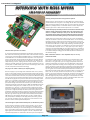
Since my first computer was a VIC and I try to relive that feeling I do most of
my 8-bit programming on the VIC. Being honest I have to admit that coding
Basic in 22 columns in 23 lines isn't as exciting as it was nearly 30 years ago, I
felt hopelessly confused by the crowded screen with up to 4 screen lines
belonging to one Basic line. Trying to edit a program with more than a few
lines on the VIC proved to be a nightmare for me. So I developed the idea to
use the PC for editing the sources having a big screen and all the possibilities a
PC can give.
Some readers will shun the idea of
1. writing Basic programs and
2. using a pc to do so, what are the advantages of writing software in Basic
over a lower language and using a pc rather than a real machine
I think that's a common misunderstanding about Basic being slow and ugly and
leading to unreadable code etc. Basic itself isn't a bad language, indeed it does
a good job with string handling - just trying to be as versatile in self
programmed assembler routines as Basic is with strings can be a coding
nightmare. Of course it's slow compared to assembler, but taking my above
sample of an input loop there is no need to be faster anyway, Basic does the
job as good as required! So for me it's always the right tool for the right job,
doing the tedious tasks of user input or string handling in Basic and maybe
outsourcing some time critical parts to assembler. And doing it on a PC is
something along the same lines using the right tool for the right job. If I want
to get some retro feeling I code on the real machine, but if I want to
concentrate on the source and algorithms I use BasEdit and let the result run
in an emulator. When finished and satisfied with the solution in the emulator
it's time to test on the real machine as this often; simply feels different; due to
screen resolution, keyboard etc. and sometimes the real machine simply
behaves differently to emulated one. For example the program Videopoker
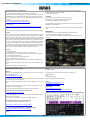
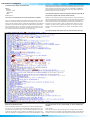
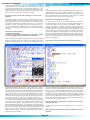
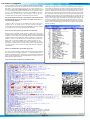
which is part of the BasEdit distribution as a sample file, was written in BasEdit
(the old one). It's for the unexpanded VIC and can be viewed in BasEdit in total
within one screen on the PC - on the Vic it's about 10 pages! with basic lines
spawning up to 4 screen lines which makes it at least very difficult to edit and
understand on the real machine.
The feature lists are quite extensive but have you any new features you want
to add
Lots!
I would like to enhance BasEdit to a full-fledged development environment
including character editor, screen builder, sprite editor etc. Another nice
feature would be an integrated assembler to generate hybrid programs with
Basic and Assembler parts or even complete assembler programs. I could take
this any further; there is lots of room for enhancements...
Would you welcome suggestions from readers
Yes, of course, lots if not most of the features BasEdit has are directly or
indirectly triggered by user requests. That started with syntax highlighting,
continues over syntax check, proof reader, ASCII-tokenizer, variable
shortening, jump trace, start address changer and even support for disk
images and FE3 loader files. I could never came up with all these great ideas
for myself as I am more concerned about programming BasEdit right now then
using it. Anders Persson for example requested an interface to start BasEdit
directly from his PRG Starter which resulted in some nice discussions about
how to translate filenames between PRG files inside disk images and the PC
file system as PETSCII<>ASCII. During that time I learned a lot about PETSCII
and the work the VICE team made, things I would have not came across
without user suggestions.
Is the software free to download and will you include the source code
Yes and no. BasEdit is free to download, but the sources are kept by me.
Maybe if I am satisfied with what BasEdit is one day I will release the sources,
but as long as I'm actively developing I would like to be the only one who
changes anything in the sources. Setting up some sort of source repository and
keeping track of changes, merging versions, testing other changes etc. simply
isn't the fun I want to get out of BasEdit. For the records: BasEdit consists of 29
files with more than 12.500 lines of code in 224 subs and 91 functions - so
even if I release the sources that does not mean that anyone beside me will
ever understand what is going on inside it...
I presume this project is amended and a current one how long will you
support the application
As long as I'm having fun with retro computing I think. I won't promise
anything
What software was used to write the application originally and then in the
conversion
Page 20