1
US 7,792,708 B2
10
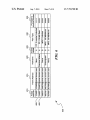
the frame, as Well as associates the frame With a service
account of a purchaser. A ?rst column 610 in the table con
tains a frame identi?er that is associated With a frame. The
digital frame into an outlet and turn on the frame. The digital
frame automatically connects to an appropriate Wireless tele
frame identi?er may be assigned by the manufacturer of the
frame, or the frame identi?er may be assigned by the service
sent to the frame. To reinforce the ease of installation, mes
provider. A second column 615 of the table contains a frame
may be consolidated into a single column (not shoWn).A third
the digital frame 100, or the materials 720 that accompany the
digital frame. The messaging encourages the end user to
simply turn on the digital frame. For example, as shoWn in
FIG. 7, the messaging 730 might state “Just Turn Frame On.”
To further enhance the end user’ s experience With the digi
tal frame 100, an automated product demonstration may be
column 620 of the table contains a nickname that a purchaser
may have assigned to the frame. A fourth column 625 of the
table contains an indication of the frame model. By referenc
automatically displayed on the digital frame When the digital
frame is initially installed, Whenever the digital frame is poW
ered on, When the user provides certain input to the digital
ing a database containing frame information (not shoWn), the
frame model provides the service provider With information
about the capabilities of the frame, such as storage limita
frame, or at other convenient times. To do so, the frame’s
processor 350 may execute computer-readable instructions
communications netWork and begins receiving content that is
saging 730 may be provided upon the product packaging 710,
address that alloWs a user to send content to the frame. The
frame address is typically assigned by the service provider. In
some embodiments, the frame identi?er and the frame
address may be identical, in Which case columns 610 and 620
tions, the type of content the frame can receive and display,
the processing poWer of the frame, etc. A ?fth column 630 of
the table contains a service plan that is associated With the
frame. For example, the frame may be alloWed to receive an
that implement a product demonstration and may access con
20
the storage medium 335, or they may be sent over the tele
communications netWork 200 by the seller, by the telecom
unlimited amount of data over the service provider’ s telecom
munication netWork, or the frame may be capped at a certain
munications service provider, or by their af?liates after instal
lation. In this Way, the end user may gain more familiarity
amount of data each billing period. As another example, the
purchaser may be billed a small amount each time that content
tent that depicts various features or capabilities of the digital
frame. The computer-readable instructions or content relating
to the product demonstration may have been preinstalled in
25
With the functionalities provided by the digital frame 100
is sent to the frame in order to cover the netWork costs asso
Without having to open and read instruction manuals or other
ciated With delivering the content. A sixth column 635 of the
documentation that may be shipped With the frame.
table contains an indication of the service account that is
associated With the frame. The purchaser’ s service account is
the initial account that is typically responsible for amounts
that are charged under the frame service plan. Other data (not
shown) might also be associated With each frame, such as a
service tag number, date of purchase, record of customer
service inquiries and resolutions, installed location of the
frame, etc.
Using the data re?ected in table 600, the telecommunica
FIG. 8 is a How chart of a process 800 for providing content
30
telecommunications service provider. Once a user has turned
on the digital frame 100 at an installation location, the frame’ s
communication component 325a Will automatically attempt
to initiate communication With a Wireless telecommunica
35
tions service provider or its af?liates can determine Whether
and hoW to route content to a particular digital frame, and hoW
to bill for such services. For example, using the frame model,
the service provider may determine the format of content that
40
vice provider to identify the frame. At a block 810, the regis
tration message is received by the system. At a block 815, the
system accesses data that is stored in table 600 and associated
With the received frame identi?er, Which data may reside on a
telecommunication service provider’ s netWork database 495.
example, by examining the purchaser’s service account, the
service provider may determine Whether to send content to
the digital frame, based on Whether the purchaser’ s account is
45
example, by accessing the purchaser’s account number and
the plan type, the service provider may determine Whether
and hoW to bill the purchaser for data sent to the digital frame.
While FIG. 6 depicts a table Whose contents and organiZa
tion are designed to make them more comprehensible by a
human reader, those skilled in the art Will appreciate that
actual data structures used by the facility to store information
tions netWork. The attempt to establish communication
involves sending a registration message to the service pro
vider over the netWork. The registration message includes the
stored frame identi?er to alloW the telecommunications ser
is to be forWarded or sent to a digital frame. As another
in good standing or Whether it has expired. As another
to the digital frame. The process is implemented by a hard
Ware and/or softWare system that is typically operated by the
50
The accessed data provides su?icient information about the
frame to alloW the system to determine the type, amount, and
format of content that may be sent to the frame. The accessed
data also alloWs the system to con?rm that the subscription
for the frame is current. At a block 820, the system determines
Whether any content has been queued for delivery to the
frame. If content has been queued for delivery, at a block 825
the system transmits content to the digital frame over the
telecommunications netWork. Once received by the digital
may differ from the table shoWn, in that they, for example,
frame 100, the content may be stored for subsequent presen
may be organiZed in a different manner; may contain more or
tation or immediately displayed. In this manner, an end user
less information than shoWn; may be compressed and/or
encrypted; etc.
55
FIG. 7 illustrates hoW messaging may facilitate an end
user’ s installation anduse of a digital frame. As shoWn in FIG.
7, once the end user receives a digital frame from a seller, a
purchaser, or another intermediary, the end user may unpack
the digital frame 100 from its packaging 710. The end user
may also receive other accompanying materials 720, such as
60
turning on the digital frame and With little or no required
initialiZation. During normal operation, content may be sent
by the system to the digital frame on a continuous or periodic
basis.
Once installed, the end user may receive assistance regard
ing the operation of the digital frame, even if the end user does
not have an account With the telecommunications service
provider. As described herein, the digital frame 100 may have
messaging 170 that lists the frame identi?er (or a similar
a user manual or other printed material or a CD-ROM or other
digital media. As Will be described in greater detail in relation
to FIG. 8, installing and using the digital frame at a display
location requires little or no technical knoWledge by the end
user. The digital frame requires only that the end user plug the
may be presented With content, such as photos, simply by
65
identi?er such as a service tag number) and contact informa
tion for accessing customer support services. For example,
the contact information might be a telephone number, an