1
5 Application state machines
User Manual
1
RU Builder
5 Application state machines
2
3
4
5
6
7
8
9
10
11
12
13
14
15
16
17
18
19
20
21
22
23
24
25
26
27
28
29
30
31
32
33
5.1 Commonalities of the application finite state machines
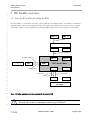
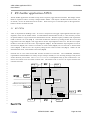
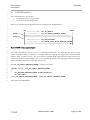
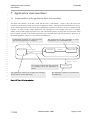
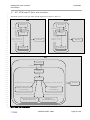
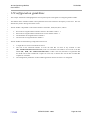
The finite state machines of the BUs, EVM and RUs have commonalities. Figure 9 shows the finite state
transition network (FSTN) which all three types of application follow. There are four common behaviors. Firstly,
all RU builder applications read and act upon configuration parameters when they receive a Configure SOAP
message. Secondly, all RU builder applications only participate in event building when they are enabled.
Thirdly, all RU builder applications throw away their internal data and any incoming I2O message frames when
they are halted. Fourthly all RU builder applications go to the Failed state when they encounter a fatal error. A
RU builder application cannot be recovered from the Failed state.
Configuration parameters are read and acted
upon when the application is configured
Halted
Configure
The application can only participate in event
building when it is in the Enabled state
Ready
Enable
Enabled
Halt
Fatal error
The contents of all internal data structures
are discarded when the application is
halted
The application releases all incoming I2O message
frames when it is in the Halted state
Failed
The application cannot be recovered from
the Failed state
Figure 9 FSTN of a RU builder application
CERN PH/CMD - 2006
Page 21 of 33