1
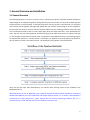
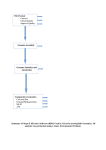
1. General Overview and Installation 1.1 General Overview The MethyQA pipeline is meant to assist the user in assessing the quality of bisulfite-‐treated methylation sequencing data. It achieves this goal by utilizing efficient perl and R scripts to first parse the data and then summarize them in useful formats. To execute the process, the user enters a command line in a Unix/Linux environment and the pipeline will begin and update the user with the overall progress of the assignment. By the end of the process, the user receives summary tables and plots analyzing bisulfite conversion rates at the chromosome-‐level as well as at the target-‐region level (the target input file is to be provided by the user). The user will also obtain graphical summaries analyzing the sequence structure for regions with high vs. low coverage and bisulfite conversion rates. This pipeline is developed with the aim of providing insights for experimental scientists in a timely manner. In particular, our pipeline can provide quality assessment for tens of millions of reads in less than one hour. The workflow of the pipeline is illustrated below. Note, the last two steps were developed by our research team utilizing various scripts included in the MethyQA code file. We demonstrate the use of MethyQA using a publicly available bisulfite-‐treated methylation sequencing dataset (GSE27003) for the cell line MCF10A and another dataset named “s7” in section 2. MCF10A data is considered to be the example of a “good” dataset with no obvious sequencing problems and “s7” is considered to be a ”bad” dataset that has a low bisulfite conversion rate. 2