1
US007587028B1
(12) Ulllted States Patent
(10) Patent N0.:
Broerman et a].
(54)
US 7,587,028 B1
(45) Date of Patent:
METHOD AND APPARATUS FOR
(58)
Sep. 8, 2009
Field of Classi?cation Search .............. .. 379/101,
GENERATING AND PLAYING DIAGNOSTIC
MESSAGES INDICATIVE OF MTA
379/1503, 21, 26.01, 26.02, 29.01, 29.08,
379/31, 201.12, 29.1, 207.04, 20708, 257;
PROVISIONING STATUS
370/241, 252
(75) Inventors: Keith Robert Broerman, Carmel, IN
(US); Glen Wakeman Ruch,
Indianapolis, IN (U S); Blaine Edward
See application ?le for complete search history.
(56)
References Cited
U-S- PATENT DOCUMENTS
Rafney’ IHdIaHaPPhS’ INTUS); David
Brlan Baehl, BR1121119130115, IN (Us)
5,062,131 A * 10/1991 Kanare et a1. ............... .. 379/33
5,146,488 A
9/1992 Okada et a1.
(73) Assignee: Thomson Licensing, Boulogne
5,150,402 A
9/1992 Yamada
5,903,626 A
5/1999 Iglehart et a1.
B1llancourt (FR)
(*)
Notice:
(Continued)
Subject to any disclaimer, the term of this
patent is extended or adjusted under 35
U.S.C. 154(1)) by 475 days.
(21) Appl. N0.:
FOREIGN PATENT DOCUMENTS
EP
1235 416 A1
8/2002
(Continued)
10/533,978
OTHER PUBLICATIONS
(22)
PCT Flled:
(86) PCT N0.:
§ 371 (6X1)
(2)’ (4) Date,
NOV‘ 12’ 2003
Search Report dated Apr. 23, 2004.
PCT/US03/36320
(Continued)
Primary ExamineriQuoc D Tran
(74)AZZ0rney, Agent, orFirmiRobert D. Shedd; Paul P. Kiel
May 5, 2005
(87) PCT Pub. N0.: W02004/045130
(57)
PCT Pub‘ Date: May 27, 2004
A method and an. apparatus, Which generates and plays diag
nost1c messages 1nd1cat1ve of a med1a term1nal adaptor pro
visioning status. The media terminal adaptor detects errors in
Related U 5 Application D at a
l '
(60)
(51)
(52)
its provisioning status or an out-of-service state. Thus, When
Provisional application No. 60/425,382, ?led on Nov.
12, 2002.
Int. Cl.
H04M 1/24
H04M 3/08
H04M 3/22
ABSTRACT
(2006.01)
(2006.01)
(200601)
the telephone connected to the media terminal adaptor is
taken off-hook and the media terminal adaptor that is not
provisioned, improperly provisioned, or placed in an out-of
service state by the service provider, the media terminal adap
tor Will generate an appropriate diagnostic audio voice mes
sage or tone sequence to the telephone instructing the listener
on hoW to proceed in order to resolve the problem.
US. Cl. ................ .. 379/15.03; 379/101; 379/29.1;
379/31; 370/241
20 Claims, 1 Drawing Sheet
:Eui‘ilEw-i Aumgumssismj:
l suFFm ,
L _ §_§__ _]
TUNE SEQiENCE FILE
D152?
OFF-HDOZSETEGTOR
—-—_—'——\
PROVISIONING
191mm} WIZZESLI'QSELE
OUFGiJRDER
PROVISIONING FAILURE
SPEED“
nETEc‘roR
DECODER
ZII
PROVISIONMG FAILURE
RESOLVER 1g
DISPLAY
22
''
DIAGNOSTIC AND KTAI
INFORMATION FILE !_
MEDIA TERMINAL ADAP‘IOR (“THE
COMIJNICATIONS
NEWIORK
US 7,587,028 B1
Page 2
5,917,807
6,018,567
6,246,671
6,654,722
U.S. PATENT DOCUMENTS
JP
2000-106573
4/2000
A
A
B1
B1
JP
JP
JP
]p
Jp
2000-315289
2000339289
2000-354111
2001_223764
2001_223795
11/2000
12/2000
12/2000
8/2001
80001
Jp
2002_57724
2/2002
6/1999
V2000
6/2001
11/2003
Lee et al.
Dulman
LattanZi et al.
Aldous et al.
2002/0080930 A1*
6/2002 Cho ...................... .. 379/90.01
2002/0114439 A1
8/2002 Dunlap
2002/0159577 A1 *
10/2002 Vardi et al. .......... .. 379/201.01
FOREIGN PATENT DOCUMENTS
JP
JP
JP
JP
JP
JP
JP
5-161183
6-164882
6-223272
6-225069
6-276233
7-261835
10-269107
6/1993
6/1994
8/1994
8/1994
9/1994
10/1995
10/1998
OTHER PUBLICATIONS
“Access and Terminals (AT); Digital Broadband Cable Access to the
Public Telecommunications Network; IP Multimedia Time Critical
Services; Part 6: Media Terminal Adapter (MTA) device provision
ing; ETSI TS 101 909-6” ETSI Standards, European Telecommuni
cations Standards Institute, Sophia-Antipo, FR, vol. AT-Digital, No.
V111, Jun. 2001, XP014006808 ISSN: 0000-0001.
Supplemental European Search Reportidated Feb. 3, 2006.
* cited by examiner
US. Patent
Sep. 8,2009
US 7,587,028 B1
_ ._ _ _ __
AUDIO IIIEssAeE
IOUTBOUND]
FILE 15
I BUFFER I
|
§_g_
I
TONE SEQUENCE FILE
I
JI‘ITER
|
"
"‘ " " _ “'
I- --|
L‘l _,
1i
DSP
OFF-HOOK DETECTOR
.12.
22
- - — — —-I
PROVISIONING
I
NORMAL MODE
ID‘AL TONEI
CONFIGURATION FILE
L- ._ - - -1
_2_§
POTS
ENDPOINT
CIRCUITRY
OUT-OF-ORDER
CONFIGURATION FILE
30
lg
_
SPEECH
PROVISIONING FAILURE
DETECTOR
DECODER
g;
20
PROVISIONING FAILURE
RESOLVER g1
DISPLAY
22
DIAGNOSTIC AND STATUS
'
INFORMATION FILE 95
MEDIA TERMINAL ADAPTOR (MTA) 12
L
E/5l)
/ 52
5
COMMUNICATIONS
/
HE'IWORK
FIG. 1
US 7,587,028 B1
1
2
METHOD AND APPARATUS FOR
GENERATING AND PLAYING DIAGNOSTIC
MESSAGES INDICATIVE OF MTA
PROVISIONING STATUS
provisioned, or placed in an out-of- service state such as by the
service provider, the MTA Will generate an appropriate diag
nostic audio voice message or tone sequence to the telephone
informing the user of the failure or out-of-order condition and
instructing the listener on hoW to proceed in order to resolve
the problem.
This application claims the bene?t, under 35 U.S.C. § 365
of International Application PCT/US03/ 36320, ?led Nov. 12,
BRIEF DESCRIPTION OF THE DRAWINGS
2003, Which Was published in accordance With PCT Article
21(2) on May 27, 2004 in English and Which claims the
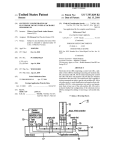
FIG. 1 illustrates a general block diagram of a media ter
bene?t of US. provisional patent application No. 60/425,
382, ?led Nov. 12, 2002.
minal adaptor (MTA) in accordance With the present inven
tion.
FIELD OF THE INVENTION
DETAILED DESCRIPTION OF THE PRESENT
INVENTION
The present invention relates to cable modems With
embedded media terminal adaptors, and more particularly, to
a media terminal adaptor (MTA) that determines provisioning
The present invention provides several methods to indicate
failure or an out-of-service condition and generates an appro
priate diagnostic audio voice message or tone sequence
through a telephone handset instructing the listener on hoW to
proceed in order to resolve the provisioning failure or the
out-of-service condition.
to the user in a readily understandable manner that the MTA
20
involve playing an audio sequence consisting of a voice mes
sage and/or a sequence of audio tones to indicate the speci?c
problem and What to do to resolve the issue.
BACKGROUND OF THE INVENTION
Media terminal adaptors (MTAs) are used to convert digital
data to analog audio for telephones. MTAs require a strict
provisioning sequence prior to becoming operational. In a
PacketCable environment a total of 25 steps must be complete
25
Internet protocol based cable netWork, is Well knoWn. There
fore, no further description as related to such communications
of the MTA 10 With a communications netWork 5 is needed.
30
and are a function of the MSO Provisioning Server (MTA
dynamic host con?guration protocol (DHCP) options and
MTA con?guration ?le), the service provider’ s domain name
35
decoder 20 and display 22. The DSP 12 includes an input jitter
Center (KDC). Failure to properly con?gure any of these
Existing cable modems and MTAs use discrete light emit
ting diodes (LEDs) or a 7-segment LED display to indicate
40
45
provisioning status and possibly, the ?rst provisioning step
?le 28 for operating the MTA When properly provisioned, an
out-of-service con?guration ?le 30 Which enables the service
provider to place the MTA 10 out-of-service, a provisioning
failure detector 32 and provisioning failure resolver 34. As
can be appreciated, the normal mode con?guration ?le 28
MTA 1 0 to communicate With the communications netWork 5
to Which it is attached.
(typically 5, 6, or 7-segment display) and the large number of
50
The MTA 10 uses discrete LEDs or a 7-segment LED
display 22 to indicate provisioning status and possibly, the
?rst provisioning step that has failed, as determined by the
provisioning failure detector 32. Display 22 may be used to
play the provisioning status via blinking LEDs, displaying the
status code in a binary format, etc. Many non-technical con
sumers are not able to easily correlate the blinking LED codes
With a table in the user manual in order to resolve their speci?c
display the provisioning status via blinking LEDs, displaying
55
problem.
buffer 38. The MTA 10 stores audible and/or DTMF tone
sequences in a tone sequence ?le 18 and audio messages in an
audio message ?le 16.
The MTA 10 also accesses a normal mode con?guration
de?nes the operational protocol of a properly provisioned
that has failed. Due to the small number of product LEDs
provisioning steps, it is dif?cult to indicate the precise cause
of a provisioning failure. Approaches have been used to dis
HoWever, for the sake of facilitating an understanding of
certain aspects of the present invention, an explanation of the
MTA 1 0 in accordance With the present invention is described
herein beloW.
Referring noW to FIG. 1, the MTA 10 of the present inven
tion includes a digital signal processor (DSP) 12 and plain old
telephone service (POTS) endpoint circuitry 14, speech
system (DNS) con?guration, and the con?guration of the
service provider call agent and Kerberos Key Distribution
items can leave the MTA in a non-provisioned or improperly
con?gured state Which Will render the MTA nonfunctional or
out-of-service. In this context, out-of-service means that dial
tone is not heard on the handset When the phone attached to
the MTA is taken off-hook.
The communications by MTA 10, like cable modems, With
a communications netWork 5, such as Without limitation an
to become operational, and 11 additional steps must be com
pleted in order to establish security associations With the call
agent. These provisioning steps are controlled by the Multiple
Service Operator (MSO) or Internet Service Provider (ISP)
10 has not been properly con?gured and the steps the user
should take to correct the condition, for example, by contact
ing their service provider to resolve the issue. These methods
As can be appreciated, there is a need for a MTA that
provides a diagnostic audio message that is easily under
standable to the user of the MTA When a there is a provision
the status code in a binary format, etc. In the present inven
tion, the MTA 10 also generates an audible diagnostic mes
sage to the user, over the attached telephone(s) 50 via handset
54, indicating: 1) the presence of a provisioning error, as
determined by the provisioning failure detector 32; 2) the
nature of the error (Which provisioning step failed); and 3)
ing failure or out-or-order condition. Additionally, there is a
need to provide a message to the user that the user can easily
What step should be taken to resolve the error, as determined
understand With regard to correcting the provisioning failure
by the provisioning failure resolver 34. For example, the error
or failure detected by the provisioning failure detector 32
or out-of-order condition.
SUMMARY OF THE INVENTION
Would be mapped to a resolution or corrective action to be
In accordance With the present invention, if a phone is
taken by the user, as determined by the provisioning failure
resolver 34. Such corrective action Would be provided to the
taken off-hook on a MTA that is not provisioned, improperly
user/ listener in the form of an audible message. The user may
65
US 7,587,028 B1
3
4
be directed to receive the diagnostic message via handset 54
by, for example, an indication on MTA 10.
In the present invention, the audible message can consist of
exists. Nevertheless, all steps required to make a MTA 10
operational With a communication netWork 5 Would need to
be checked for failure of any one provisioning step.
Regarding the message generation, the MTA 10 Will gen
either a voice message stored in the audio message ?le 16 or
a sequence of audio tones stored in the tone sequence ?le 18,
orboth. The voice message and/ or audio tone sequence can be
erate audio message from the audio message ?le 16 or tone
sequence ?le 18 by various techniques. One possible method
either canned (?xed, stored in local non-volatile memory) or
is to encapsulate the audio in an RTP (real time protocol,
RFC-l889/ 1890) packet stream to emulate the reception of
said data from the communication netWork 5. In this example,
the audio packet stream comprises an ordered sequence of
near-synchronous RTP packets and is sent to the DSP 12 and
dynamically generated. The audio clip could combine ?xed
voice audio With dynamically-generated voice audio such as
a speci?c telephone number to dial. The variable information
(VI) used to generate the dynamic portion of the message
could be stored in non-volatile memory or passed to the MTA
10 via a proprietary con?guration ?le TLV or management
the POTS endpoint circuitry 14. As With audio packets
information base (MIB) element. In this Way, the diagnostic
message can be tailored for a speci?c service provider (ser
vice provider name and telephone number), location infor
mation, etc.
depacketiZes the RTP packet stream having the audio data and
places it in its inbound jitter buffer 38 for use by the speech
In addition to or alternately, a sequence of audio tones
(including a ‘beep’ sequence or a series of DTMF tones or
20 converts the digital pulse code modulation (PCM) audio
received from the communications netWork 5, the DSP 12
decoder 20.
The message playing is effectuated as the speech decoder
data to analog samples, Which are reconstructed in the POTS
modern tones) stored in the tone sequence ?le 18 could be
played to convey the diagnostic audible message. DTMF
tones Would be suitable for machine recognition, by, for
example, test equipment used by a ?eld technician. The MTA
could detect Whether the test equipment is connected, for
20
example, by entering a tone mode using a prede?ned key
sequence on the phone keypad.
25
In addition to or alternatively, the telephone keypad 52 can
be used to request additional diagnostic or status information
from a diagnostic and status information module 36. The
generated audible message can prompt the user/listener to
Thus, the DSP 12, POTS endpoint circuitry 14 and speech
decoder 20 in combination With the audio message ?le 16 and
tone sequence ?le 18 provide the means for generating and
30
appreciated, conventionally, a telephone 50 can be taken off
hook by pressing a speakerphone button. Therefore, the diag
nostic audio message Would be played through the speaker on
detailed diagnostic information or status information from
such diagnostic and status information module 36. The MTA
operating status information can include, Without limitation,
the current up stream and doWnstream frequency, poWer level,
and signal to noise ratio.
The improved operation of the MTA 10 Will noW be
the base of the telephone 50.
Since there are numerous diagnostic audio messages,
describing all possible messages is prohibitive. Therefore, a
feW examples of diagnostic audio messages are described in
TABLE 1 beloW to permit understanding of the present inven
tion.
described in detail. The MTA’s DSP (digital signal processor)
12 and POTS endpoint circuitry 14 are enabled early in the
boot-up sequence, prior to the start of the MTA’s provision
ing. If the MTA’s provisioning is successful, the MTA 10
TABLE 1
enters its normal operating mode. Thereby, When the user
takes the phone handset off-hook, Which is detected by the
ERROR CONDITION
MESSAGE
Unable to obtain IP address
“Your MTA cannot obtain a network
address. Please contact XYZ Cable
Company at 317-587-3168.” Thank you.”
Missing DHCP options
“Your MTA requires one or more
missing DHCP options. Please
contact XYZ Cable Company at 317
587-3168.” Thank you.”
MTA is provisioned
50 but not enabled
“Your MTA has been
administratively disabled. Please
contact XYZ Cable Company at 317
587-3168.” Thank you.”
appropriate diagnostic audio message (voice and/or tone
sequence) When the user takes the phone off-hook, as
detected by the off-hook detector 26.
As previously described, provisioning of the MTA 10
requires, Without limitation, various steps to establish secu
rity associations With a call agent and those steps for establish
communications With a service provider Provisioning Server
playing the provisioning error messages.
The existing POTS endpoint circuitry 14 and control soft
Ware (off-hook detector 26) monitor the telephone’s hook
state and generate the diagnostic audio message When an
off-hook condition is detected by lifting handset 54 . As can be
enter one or more keypad digits in order to retrieve more
off-hook detector 26, the user/listener hears the dial tone. In
other Words, the POTS endpoint circuitry 14 sends an audio
dial tone signal to the telephone 50.
On the other hand, if the MTA’s provisioning Was not
successful or if the service provider placed the MTA in an
out-of-service state via the MTA’s out-of-service con?gura
tion ?le 30 or MTA’ s MIB element setting, as detected by the
provisioning failure detector 32, the MTA 10 Will play an
endpoint circuitry 14 and played to the listener through the
handset 54.
55
Numerous modi?cations to and alternative embodiments
of the present invention Will be apparent to those skilled in the
art in vieW of the foregoing description. Accordingly, this
description is to be construed as illustrative only and is for the
purpose of teaching those skilled in the art in carrying out the
invention. Details of the embodiment may be varied Without
using DHCP options, a service provider’s DNS con?gura
tion, and the con?guration of the service provider call agent
departing from the spirit of the invention, and the exclusive
and/or and the KDC. A feW examples of errors or failures
use of all modi?cations, Which come Within the scope of the
detected by the provisioning failure detector 32 Would
include Whether: I) the securing associations are established;
2) the DHCP options are de?ned; 3) the DNS con?guration is
de?ned; 4) the TFTP server con?guration is de?ned; 5) the
SNMP entity con?guration is de?ned; 6) the Kerberos server
con?guration is de?ned; and 7) an out-of-service condition
appended claims is reserved.
65
What is claimed is:
1. A media terminal adaptor for use in a communication
netWork adapted to have a telephone connected thereto, said
media terminal adaptor comprising:
US 7,587,028 B1
6
5
communication unit for connecting to a service provider
detecting a non-provisioned status of said media terminal
provisioning server in a normal mode When the media
adaptor; and
generating and playing the diagnostic audio message
terminal adaptor is in a provisioned state;
an audio message ?le for storing at least one of a ?xed or
dynamically generated diagnostic audio message and 5
variable information (V1) for generating the dynamic
portion of the diagnostic audio message;
through said telephone indicative of the detected non
provisioned status and providing corrective action to be
taken by the user When an off-hook condition is detected
When said telephone is taken off-hook.
12. The method according to claim 11, Wherein the step of
provisioning failure detector for detecting When the media
terminal adaptor has a non-provisioned status; and
generating and playing includes the steps of:
provisioning error message generator/player for generat 0
converting digital audio data to analog samples by a speed
ing and playing the diagnostic audio message through
decoder;
said telephone indicative of the detected non-provi
reconstructing by plain-old-telephone-service (POTS)
sioned status and providing corrective action to be taken
by the user When an off-hook condition is detected When
endpoint circuitry the analog samples; and
playing the reconstructed analog samples through said
telephone by the POTS endpoint circuitry, When said
said telephone is taken off-hook.
2. The apparatus according to claim 1, Wherein said provi
sioning error message generator/player comprises:
a speech decoder for converting digital audio data to analog
telephone is taken off-hook.
13. The method according to claim 12, Wherein the step of
generating and playing includes the steps of:
generating audio messages by encapsulating audio in an
samples; and
plain-old-telephone-service (POTS) endpoint circuitry for
20
reconstructing the analog samples and playing the
reconstructed analog samples through said telephone
When off-hook.
3. The apparatus according to claim 2, Wherein said provi
sioning error message generator/player generates audio mes
sages and transfers said messages to the telephone.
depacketiZing said packet stream; and
sending the depacketiZed packet steam to the speech
decoder.
30
14. The method according to claim 12, further comprising
the step of detecting When said telephone is taken off hook.
15. The method according to claim 11, Wherein said diag
nostic message includes combined ?xed voice text With
state of said telephone and generate the diagnostic message
dynamically-generated voice text.
16. The method according to claim 11, Wherein said diag
When an off-hook condition is detected When said telephone
is taken off-hook.
6. The apparatus according to claim 1, Wherein said diag
.
nous packets;
25
4. The apparatus according to claim 2, further comprising
an off-hook detector for detecting When said telephone is
taken off hook.
5. The apparatus according to claim 4, Wherein said POTS
endpoint circuitry and said off-hook detector monitor a hook
.
real t1me protocol packet stream to emulate reception of
data from a communications network, said packet
stream comprises an ordered sequence of near-synchro
nostic message includes tones.
35
nostic message includes combined ?xed voice audio With
17. The method according to claim 11, Wherein the step of
detecting said non-provisioned status includes the step of
dynamically- generated voice audio.
detecting an out-of-service status of said media terminal
7. The apparatus according to claim 1, Wherein said diag
adaptor.
nostic message includes tones.
8. The apparatus according to claim 1, Wherein When oper
40
ating in said normal mode, if said telephone is taken off-hook,
dial tone is sent to said telephone.
status Wherein said diagnostic message is a function of
said resolution.
9. The apparatus according to claim 1, further comprising
a provisioning error resolver for determining a resolution to
the detected non-provisioned status Wherein said diagnostic
45
message is a function of said resolution.
19. The method according to claim 18, further comprising
the step of:
accessing electronic diagnostic and status information by
said telephone identi?ed in said diagnostic message.
20. The method according to claim 18, further comprising
10. The apparatus according to claim 9, further comprising
an electronic diagnostic and status information module
adapted to be accessed by said telephone.
11. A method of generating and playing diagnostic mes
18. The method according to claim 11, further comprising
the steps of:
determining a resolution to the detected non-provisioned
50
the steps of:
sages by a media terminal adaptor having a telephone con
determining said media terminal adaptor is provisioned;
nected thereto, the method comprising the steps of:
and
sending a dial tone to said telephone When the telephone is
taken off-hook.
storing at least one of a ?xed or dynamically generated
diagnostic audio message and variable information (VI)
for generating the dynamic portion of the diagnostic
audio message;
55
UNITED STATES PATENT AND TRADEMARK OFFICE
CERTIFICATE OF CORRECTION
PATENT NO.
: 7,587,028 B1
Page 1 ofl
APPLICATION NO. : 10/533978
DATED
: September 8, 2009
INVENTOR(S)
: Broerman et al.
It is certified that error appears in the above-identified patent and that said Letters Patent is hereby corrected as shown below:
On the Title Page:
The ?rst or sole Notice should read -
Subject to any disclaimer, the term of this patent is extended or adjusted under 35 USC 154(b)
by 622 days.
Signed and Sealed this
Twenty-?rst Day of September, 2010
David J. Kappos
Director of the United States Patent and Trademark Oj?ce